|
Nearly 1 in 5 U.S. Adolescents and Young Adults Use AI Chatbots for Mental Health Advice
Use of artificial intelligence chatbots for mental health advice among U.S. adolescents and young adults rose by more than 40% over the past year, with nearly 1 in 5 now reporting they have used AI tools for support, according to a new study. The study found that 19.2% of young people ages 12 to 21 said they had used AI chatbots such as ChatGPT, Gemini, Character.AI and Meta AI for advice or help when feeling sad, angry, nervous or stressed. That is up from 13.1% in a similar RAND survey conducted a year earlier and is similar to the 19.8% who reported receiving counseling from a mental health professional. Researchers estimate that the 2025 figure represents about 8.2 million young people nationwide, suggesting that AI chatbots are becoming an increasingly common source of emotional and mental health support. The findings come as the United States continues to face a youth mental health crisis and AI chatbots have become widely available and heavily used by teens and young adults. Read more here.
Related: Characterizing Online Activities Contributing to Suicide Mortality Among Youth
| |
The Medical Frailty Exemption from Medicaid Work Requirements: Key Issues to Watch for in Upcoming CMS Guidance
The 2025 reconciliation law requires states to condition Medicaid eligibility for adults in the Affordable Care Act (ACA) Medicaid expansion group and enrollees in partial expansion waiver programs (Georgia and Wisconsin) on meeting work requirements starting January 1, 2027 or sooner at state option. The law specifies mandatory exemptions, including individuals who are “medically frail.” To ease the burden on individuals, the law directs states to use available information “where possible” to verify compliance with Medicaid work activities or exemption status, without requiring additional documentation from individuals. Given the abbreviated implementation timeline, states are moving forward with key decisions over how to implement the medical frailty exemption even as they wait for formal guidance from the Centers for Medicaid and Medicare Services (CMS), which is required to issue an interim final rule by June 1, 2026. This brief describes early state plans to operationalize the medical frailty exemption and identifies key issues that they are facing and may be answered in the forthcoming guidance. Read more here.
Related: CMS Launches Nationwide Framework to Implement Medicaid Work Requirements
CMS Finalizes Medicaid Work Requirements: Top Takeaways for Behavioral Health Providers
| |
New Study Examines 25 Years of Mass Public Shootings to Enhance Pre-Attack Threat Detection
A new study from the Regional Gun Violence Research Consortium at the Rockefeller Institute of Government reveals that perpetrators of mass public shootings consistently display observable warning signs across multiple areas of their lives prior to carrying out attacks. By analyzing 171 mass public shootings in the United States between 1999 and 2024, the report demonstrates that these incidents are rarely sudden or unpredictable. Instead, they represent the convergence of cumulative stressors, concerning behaviors, and explicit communications of intent that offer critical, missed opportunities for early intervention and prevention. The report, titled Sharing Information to Stop Mass Shootings (SISMS), examines 175 perpetrators who left behind identifiable pre-attack warning signs. Supported in part by the US Department of Homeland Security, the study shifts focus away from demographic profiling to closely evaluate actionable, observable communications and behaviors—such as grievance-driven planning, costuming, weapons practice, and verbal or online disclosures. Read more here.
| |
New Report: Online Gambling Puts Youth, Members of the Military and Others at Great Risk of Financial Harm, Addiction and Depression
Online gambling has exploded – and that explosion is undermining the finances and mental health of millions of people, especially young men, according to a new report from the Kindbridge Research Institute in partnership with UCLA. The numbers cited in the report are stark: Since the Supreme Court overturned a federal ban on most sports betting in 2018, participation in online gambling has soared from 15% in 2018 to 22% in 2024. Almost 20 million U.S. adults reported problematic gambling behavior multiple times in the past year in a recent survey. And 2.5 million US adults meet criteria for a severe gambling problem in a given year, with 5 to 8 million more likely to meet some portion of the diagnosis. Approximately 15% of people ages 18 to 34 showed “concerning gambling behavior,” compared to just 2% of adults 55 and older. The report attributes that vulnerability to poorer financial literacy, limited safeguards, the spread of highly visible “gambling-adjacent content” and heightened exposure to digital payments. Read more here.
Related: Senator John Liu Praises State Budget Agreement Requiring Insurance Coverage For Gambling Addiction Treatment
| |
Closing The Alignment Gap: The Next Frontier For Whole-Person Care
The policy signal is clear—the future of US health care is accountable, whole-person care that meets people’s primary, specialty, behavioral health (BH), and social service needs. Accountable and integrated care models administered by the Centers for Medicare and Medicaid Services (CMS) and state Medicaid programs have proliferated, aiming to coordinate care and improve population health for those with complex medical and social needs. To date, accountable care organizations (ACOs) and integrated care models addressing behavioral and maternal health have largely focused on payment and service delivery innovation. While both are necessary, neither has proven sufficient. For instance, Medicare’s ACO programs have delivered modest cost savings with improved clinical outcomes over the past decade, but their impact on broader population health remains less clear. Read more here.
| |
Developing a Primary Care-Specific Risk Adjustment Model: Lessons from MassHealth
In April 2023, Massachusetts’s state Medicaid and CHIP program, MassHealth, launched a statewide primary care sub-capitation initiative in which MassHealth invests in primary care to help providers shift their care model and operations away from typical fee-for-service medicine and toward more team-based, integrated primary care to improve their patients’ experience and quality of care. Primary care practices participating in MassHealth’s Accountable Care Organizations (ACOs) are paid a fixed per-member, per-month rate for a defined set of primary care services. ACOs already receive a global, risk-adjusted capitation payment from MassHealth for total cost of care. The primary care sub-capitation is a capitation payment for a subset of the total cost of care services (hence “sub” capitation) from ACOs to primary care practices. Read more here.
| |
How Community Supervision and Health Partners Collaborate to Support Corrections Reentry
Community supervision partners, such as parole and probation agencies, are uniquely positioned to assist with promoting individual health and success and enhancing public safety when a person returns to the community from incarceration. The goal of community supervision programs is to support successful reintegration and promote behavioral change by addressing the needs of individuals returning to the community on supervision, while improving access to services that target behaviors linked to criminal conduct, ultimately reducing recidivism and enhancing public safety. Proactively aligning community supervision with health and human services systems and providers develops a pathway for states adopting programs supporting health care continuity to address those behaviors and enhance outcomes during reentry and through the term of post-release supervision. Read more here.
| |
How 4 Systems Are Breaking the ED Boarding Cycle
Emergency departments across the country are caught in a familiar bind: behavioral health patient boarding for hours or days, medical beds occupied, staff stretched thin and a laundry list of resources often complicating the patients care journey. Four health systems are attacking the problem from different angles: mobile crisis response, telehealth-enabled treatment, flexible physician infrastructure and dedicated psychiatric stabilization units — with no one-size-fits-all approach. The most effective boarding strategy may be interception before a patient enters the hospital. Read more here.
| |
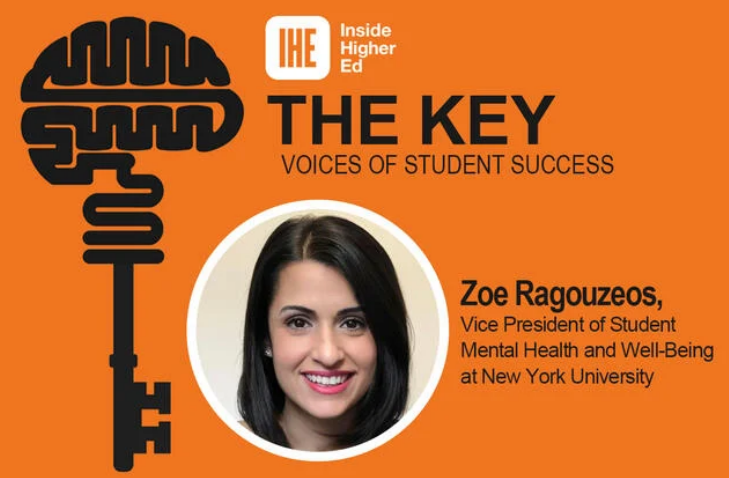
Podcast: Can Colleges Actually Build Student Well-Being?
As institutions face growing demand for mental health support, rising rates of loneliness and new questions about where students are turning for help, many campus leaders are being forced to rethink what student success actually requires. At the center of that shift is a fundamental question: What responsibility do colleges and universities have in ensuring student well-being?- Zoe Ragouzeos, vice president for student mental health and well-being at New York University, joined Inside Higher Ed student success reporter Joshua Bay on Voices of Student Success to explore where institutional responsibility begins and ends, how campuses can move beyond reactive approaches to mental health, and what it would take to build environments where students don’t just persist but truly thrive. Listen to the podcast here.
| | |
UPCOMING EVENTS & TRAININGS
The Future of Housing & Health: Where Systems Converge
June 4, 2 - 3 pm, NCHH
Leveraging Opioid Settlement Funds for Housing Supports: Strategies for Counties
June 8, 1 - 2 pm, NACo
It Takes a Village: A Case Study on Interdisciplinary Care for Pregnant Women with Opioid Use Disorder
June 8, 2 - 3 pm, PCSS-MOUD
Reimagining the Workforce to Expand Access and Sustainability of Integrated Care
June 9, 1 - 2 pm, CoE-IHS
Introducing SAMHSA’s CCBHC Toolkit for Engaging Service Members, Veterans, and Families
June 9, 2 - 3 pm, SAMHSA
State Peer-to-Peer Learning Session: Innovative Post-Crisis Follow-Up Procedures
June 9, 3 - 4 pm, SAMHSA
Beyond Dual Diagnosis: Understanding the Relationship Between Personality Disorders and Substance Use Disorders Among Adults
June 10, 12 - 1:30 pm, CTAC
From Coding to Braiding: Strategies for Financing and Sustaining Integrated Behavioral Health in Primary Care Settings
June 10, 1 - 2:30 pm, AHRQ Integration Academy
Safe Community Activities and Outings
June 10, 1:30 - 2:30 pm, NYS Justice Center
TAC Problem-Solving Series: Innovative Approaches to SMI - Competency Solutions
June 10, 7 - 8 pm, Treatment Advocacy Center
Addressing Cannabis Use Disorder in Primary Care Settings—A Lifespan Approach Advisory: Dissemination Webinar
June 11, 1:30 - 2:30 pm, SAMHSA
Balancing Public Meeting and Records Transparency Amid Rising Threats and Public Pressure
June 11, 2 - 3 pm, NACo
Weathering Uncertainty: Climate Change, Chronic Stress, and Mental Health
June 11, 3 - 4 pm, MindSite News
Mandated Reporting for First Responders & Law Enforcement
June 12, 10 - 11 am, NYS Justice Center
High-Impact Court Decisions for High-Risk Youth
June 15, 12:30 - 1:45 pm, CSG Justice Center
Essential Clinical and Peer Supervision Practices in Substance Use Disorder Services
June 17, 12 - 1:30 pm, NAADAC
Community Connect Webinar
June 17, 1 - 2 pm, USDA
The Critical Window: A New Behavioral Health Framework to Address Needs After Jail Booking
June 17, 2 - 3 pm, CSG Justice Center
Reframing Opioid Use Disorder and Co-Occurring & Co-Morbid Disorders Through a Systems Lens
June 23, 1 - 2 pm, National Council for Mental Wellbeing
Identifying Service Members, Veterans and Their Families
June 24, 12 - 1:30 pm, Suicide Prevention Coalition Academy
Treating Internet Addiction: AI, Pornography, Social Media, Online Gambling, & Gaming
June 24, 12 - 1:30 pm, NAADAC
Leveraging Homeless Courts and Care Courts to Support Individuals’ Homelessness, Mental Illness, and Substance Use Disorders Needs
June 24, 3:30 - 5 pm, SAMHSA's GAINS Center
Workforce Strategies for Tobacco Treatment: The Role of Community Health Workers and Peer Support Specialists
June 25, 12 - 1 pm, National Council for Mental Wellbeing
Provider Investigation Basics - 3-Day Virtual Training
July 7, 9, 9:30 am - 12:30 pm, NYS Justice Center
Driving Impact Through Data: Key Performance Metrics in CoCM
July 15, 1 - 2 pm, CoE-IHS
Understanding the Importance of Care Coordination for Individuals with Serious Emotional Disturbance or Serious Mental Illness who are Homeless
July 22, 2:30 - 3:30 pm, NASMHPD
Malicious False Reporting (New training!)
July 23, 11 am - 12 pm, NYS Justice Center
5th Annual School Mental Health Summer Academy
August 11 - 12, 9 am - 12:30 pm, SMHRTC
SAVE THE DATE - The 2026 New York State Suicide Prevention Conference
September 29 - 30, Ithaca, NY
| |
CLMHD CALENDAR
June
Mental Hygiene Planning Committee Meeting
June 4: 1 - 3 pm
LGU Clinic Operators Call
June 9, 10 - 11 am
Addiction Services & Recovery Committee Meeting
June 11: 11 am - 12 pm
Mental Health Committee Meeting
June 11: 3 - 4 pm
Children & Families Committee Meeting
June 16: 12 - 1:30 pm
Membership Call
June 17: 9 - 10:30 am
Developmental Disabilities Committee Meeting
June 18: 1 - 2 pm
CLMHD Offices Closed - Juneteenth
June 19
| |