| |
New Leadership Academy to Support the Addiction Workforce
The New York State Office of Addiction Services and Supports (OASAS) today launched the OASAS Leadership Academy, a new initiative to train hundreds of addiction professionals which will support and enhance the addiction workforce through the state, with the goal of retaining current and attracting new mid-level managers to the field. The leadership academy is a partnership with Kingfisher Services, and OASAS is providing $2,375,000 through the New York State Opioid Settlement Fund to support this initiative. “The dedicated professionals in New York State’s addiction workforce provide lifesaving care every day to thousands of individuals impacted by addiction,” OASAS Commissioner Dr. Chinazo Cunningham said. “Thanks to this innovative new leadership academy, we are helping to further their education and provide important training to support their career advancement, while also expanding and enhancing the valuable services available for New Yorkers in need.” Read more here.
Related: The Workplace: New York State's Next Fight for Addiction Support
|  | |
Attorney General James Sues TikTok for Harming Children’s Mental Health
New York Attorney General Letitia James and California Attorney General Rob Bonta today co-led a bipartisan coalition of 14 attorneys general in filing lawsuits against the social media platform TikTok for misleading the public about the safety of its platform and harming young people’s mental health. The lawsuits, filed individually by each member of the coalition, allege that TikTok violated state laws by falsely claiming its platform is safe for young people. In fact, many young users are struggling with poor mental health and body image issues due to the platform’s addictive features and are getting injured, hospitalized, or dying because of dangerous TikTok “challenges” that are created and promoted on the platform. Attorney General James and the bipartisan coalition of attorneys general are seeking to stop TikTok’s harmful practices and impose financial penalties on the social media company. Read more here.
Related: Frequent Social Media Use and Experiences with Bullying Victimization, Persistent Feelings of Sadness or Hopelessness, and Suicide Risk Among High School Students — CDC Youth Risk Behavior Survey, United States, 2023
|  | |
Governor Hochul Awards $10 Million Through Domestic Terrorism Prevention Grant Program
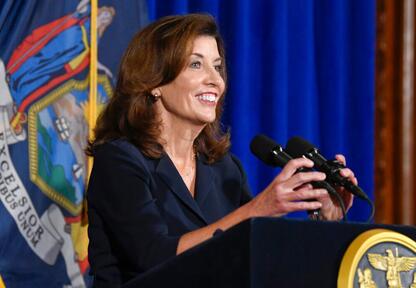
Governor Kathy Hochul last week announced $10 million in awards for the Domestic Terrorism Prevention Grant Program. Funds allocated through this program are aimed at enhancing the State’s nation leading efforts to prevent domestic terrorism and targeted violence across the State. This is the second year that grants have been available through this program. In the days after the May 14, 2022 attack in Buffalo, Governor Hochul issued Executive Order 18 requiring each county and New York City to develop plans to confront and prevent domestic terrorism and establishing New York’s first-ever Domestic Terrorism Prevention Unit (DTPU) within the State’s Division of Homeland Security and Emergency Services (DHSES) to oversee this critical initiative. Read more here.
|  | |
OPWDD Announces CMS Approval of its HCBS Waiver
The Office for People With Developmental Disabilities (OPWDD) is pleased to announce that the 1915(c) Comprehensive Home and Community-Based Services (HCBS) Waiver Renewal has been approved by the federal Centers for Medicare and Medicaid Services (CMS). The HCBS Waiver is the Medicaid program that provides opportunities for adults and children with developmental disabilities to receive services in their home or community. This Waiver Renewal is effective October 1, 2024 and will fund Home and Community-Based Services for nearly 100,000 people who are currently supported by OPWDD and its network of providers. It extends the actions included in last year’s October 1, 2023, Waiver Amendment and includes additional technical changes and service estimates to reflect current Waiver operations. The Waiver Renewal has been approved for the five-year period of October 1, 2024, through September 30, 2029. A copy of the approved October 1, 2024, Waiver Renewal is available on the OPWDD website here.
|  | |
A Controversial But Effective Treatment for Meth Addiction Gains Ground
Bernard Groves has spent five years trying to quit methamphetamine. He lost his job. He lost his car. He nearly lost his apartment. Worse than that, he says, his addiction has hurt his family. “I went [to lunch] with my auntie and I saw such sadness in her eyes,” Groves said. The 35-year-old checked himself into several rehab programs in San Diego and San Francisco hoping "to be that Bernard I used to be for the people that I love." But each time, Groves felt the progress he made in therapy morphed into people talking at him, telling him what to do. Eventually, he would always return to meth. Unlike opioid addiction, there are no FDA-approved medications for the more than 3 million Americans addicted to stimulants like meth and cocaine. Instead, the most effective treatment is low-tech — and more controversial: Give people retail gift cards usually worth less than $30 in exchange for negative drug tests. Research shows that it works, and after more than three decades of resistance, Policymakers are finally giving that strategy a chance. Read more here.
|  | |
Understanding Veterans in New York
A new report commissioned by the New York Health Foundation (NYHealth) and conducted by RAND offers a comprehensive assessment of the mental and physical health needs, access to care, and other factors like food security affecting recently separated veterans in New York. It offers the first comprehensive look at New York veterans’ health and social service needs since RAND’s landmark needs assessment nearly 14 years ago. The survey, conducted earlier this year, gathered insights from a random sample of 1,122 veterans who were discharged or separated from the military between January 2018 and January 2023 and now reside in New York. Read more here.
|  | |
Scientists May Have Found the Reason Why People with Schizophrenia Hear Voices
Schizophrenia is a poorly understood illness, but scientists now have greater insight into one of the disorder’s hallmarks, auditory hallucinations, thanks to new research published last week. People with schizophrenia often “hear” voices and sounds even when there are none — up to 80% of people with the mental illness have auditory hallucinations. Scientists have theorized that this happens when a person with schizophrenia struggles to recognize inner speech as self-generated. But nobody had been able to fully explain the mechanisms behind this phenomenon until now. “If you look into the cognitive neuroscience research on auditory hallucinations, they always talk about the patients losing the self, losing their agency, that they may have a breakdown in the inhibition function that separates the external world and internal world,” said Xing Tian, the study’s lead author and an associate professor of Neural and Cognitive Sciences at NYU Shanghai. “But something has to generate these ‘weird feelings.’” Read more here.
|  | |
Building Successful Managed Care Programs with Community Health Workers’ Expertise
Across the nation, states are pursuing strategies to meet Medicaid members’ health and social needs, including coverage and requirements for deploying community health workers (CHWs). Because CHWs can build trust and connect members to resources for whole-person care, they are ideally positioned to help identify and address these needs and provide insights into how programs can be designed to meet community member needs. This brief offers guidance to help managed care organizations (MCOs) and Medicaid agencies, along with providers, community-based organizations, and funders, incorporate CHW expertise in the design, implementation, and quality improvement of CHW programs. It draws from the Center for Health Care Strategies’ (CHCS) work in New Jersey, where a CHW Advisory Board was convened to provide practical input and identify best practices to help Medicaid MCOs develop CHW-led pilot programs under the state’s Section 1115 waiver. Read more here.
|  | |
Ophelia’s Playbook: How to Scale Medicaid OUD Treatment
Opioid use disorder (OUD) disproportionately impacts Medicaid beneficiaries, yet structural barriers – including lack of available clinicians – often keep this population from receiving treatment. Virtual OUD treatment provider Ophelia has expanded its Medicaid reach by inking new reimbursement contracts that cover the lives of 3 million New Jersey residents. “We’ve been live and treating patients in New Jersey now for more than two years but we hadn’t focused on building out our insurance coverage, which meant that patients in New Jersey were, for the most part, forced to pay out of pocket,” Zack Gray, founder and CEO of Ophelia, told Addiction Treatment Business. “We know that that is an irresponsible way to care for patients.” New York City-based Ophelia provides medication-assisted treatment (MAT) to people with OUD. Roughly 70% of Ophelia’s patient population uses Medicaid to pay for services, Gray said. Read more here.
| |
 | |
To Aid in Addiction Treatment, Lawmakers Tell DEA to Back Off Buprenorphine Enforcement
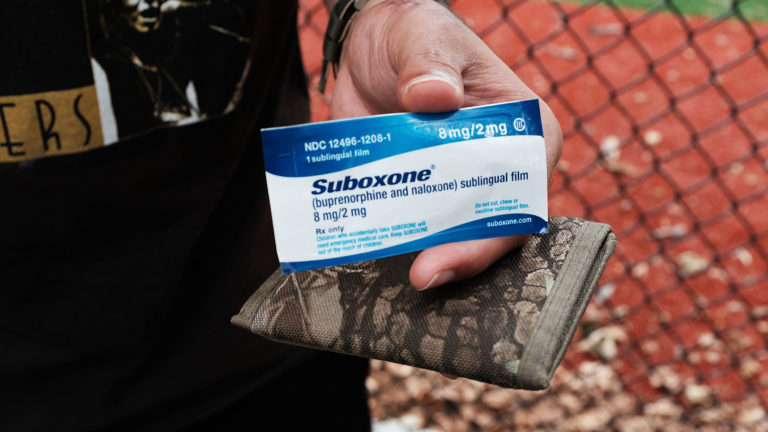
Two Democratic lawmakers are pushing the Drug Enforcement Administration to take a more lax approach to regulating buprenorphine, a medication used to treat opioid addiction. “Bupe,” also known by the brand name Suboxone, is one of just two medications currently approved to treat opioid cravings and withdrawal. And though it is associated with a 38% reduction in risk of opioid death, it remains stigmatized because it is chemically an opioid — and, accordingly, highly scrutinized by the DEA. But a new legislative proposal introduced this week by Sen. Martin Heinrich (D-N.M.) and Rep. Paul Tonko (D-N.Y.) would force the federal government’s drug police to back off from monitoring buprenorphine the same way it monitors more potent prescription painkillers. Read more here.
|  |  | |
UPCOMING EVENTS & TRAININGS
The Danger of Post-Traumatic Stress Disorder (PTSD) Stigma Among Marginalized Communities
October 10, 12 - 1 pm, PsychU
Medicaid Opportunities to Support Youth Leaving Incarceration
October 10, 1 - 2 pm, Center for Health Care Strategies
Rural Telementoring UnConference 2024
October 16, 11 am - 3 pm, RTTC
Workforce Journeys – Stories of Hope
October 16, 12 - 1 pm, MHANYS
Boosting Equitable Connected Healthcare Access & Adoption
October 16, 2 - 3 pm, TechTarget
Justice Center Code of Conduct Train-the-Trainer Session
October 16, 9:30 am - 12:30 pm, Justice Center for the Protection of People with Special Needs
MHOTRS Intensive Outpatient Program Webinar
October 17, 12 - 1:30 pm, MCTAC
New York State Trauma-Informed Network & Resource Center Conference
October 23 - 25, Saratoga Springs, NYSTINRC
Suicide Prevention in Religious Communities – The Present and Future
October 24, 12 - 1 pm, AgriSafe Network
Courts Navigating the Behavioral Health Continuum
October 24, 12 - 1:15 pm, National Center for State Courts
Liability and Risk Considerations When Adopting AI Technology
October 25, 1 - 2 pm, National Council for Mental Wellbeing
Improving Health Outcomes for Pregnant and Postpartum Individuals with Substance Use Disorder
October 30, 1 - 2:15 pm, Center for Health Care Strategies
Transforming Systems: Strategies for Gender-Responsive Reentry and Crisis Response
October 30, 2 - 3:30 pm, CSG Justice Center
Medications for Opioid Use Disorder (MOUD) in Criminal Justice Settings: Developing Partnerships between Correctional Professionals and Community-based Providers
October 31, 2 - 3:30 pm, SAMHSA's GAINS Center
Justice Center Code of Conduct Train-the-Trainer Session
November 13, 9:30 am - 12:30 pm, Justice Center for the Protection of People with Special Needs
| |
CLMHD CALENDAR
OCTOBER
Developmental Disabilities Committee Meeting
October 10: 1 - 2:30 pm
Mental Health Committee Meeting
October 10: 3 - 4 pm
CLMHD Office Closed - Columbus Day
October 14
Children & Families Committee Meeting
October 15: 11:30 am - 1 pm
Membership Call
October 16: 9 - 10:30 am
Mental Hygiene Planning Committee Meeting
October 19: 1 - 2:30 pm
Fall 2024 Full Membership Meeting
October 23-25, Clayton, NY (Jefferson County)
NOVEMBER
CLMHD Executive Committee Meeting
November 6: 8 - 9 am
Quarterly LGU Clinic Billing Staff Call
November 6: 11 am - 12 pm
LGU Clinic Operators Call
November 12: 10 - 11:30 am
Addiction Services & Supports (ASR) Committee Meeting
November 14: 11 am - 12 pm
Developmental Disabilities Committee Meeting
November 14: 1 - 2:30 pm
Mental Health Committee Meeting
November 14: 3 - 4 pm
IOCC Meeting
November 19: 1 - 3 pm - Empire State Plaza, Albany
Membership Call
November 20: 9 - 10:30 am
Children & Families Committee Meeting
November 26: 11:30 am - 1 pm
CLMHD Office Closed - Thanksgiving
November 28 - 29
| |