|
Meta to Pay Up to $17.1 Billion in Landmark Settlement Over Social Media Addiction Claims
Meta on Wednesday reached a landmark settlement with 47 states, the District of Columbia and U.S. territories, agreeing to pay up to $17.1 billion in penalties and make major changes to its products over claims it endangered children with addictive social media platforms. In a dramatic capitulation, the owner of Facebook and Instagram agreed to the financial penalties for violating federal child privacy and states’ consumer protection laws, the states announced. Meta also agreed to limit how long teenagers can spend on its platforms and to bans on features that stoke mental health issues, striking at the heart of the company’s business of engagement for advertising. The settlement effectively ends a bellwether federal trial in the U.S. Northern District of California in Oakland, where California, Colorado, Kentucky and New Jersey were seeking roughly $200 billion over accusations that Meta harmed children. Meta still faces numerous other lawsuits from school districts and individuals, some of which are scheduled for trial in the coming months. Read more here.
Related: Attorney General James Secures Up to $17.1 Billion and Groundbreaking Reforms from Meta to Protect Children on Social Media
How New York will spend its nearly $1B Meta settlement
Teens Are Divided on New Meta Restrictions
| |
Using Facts, Not Fear, Shows Promise in Reducing Substance Use
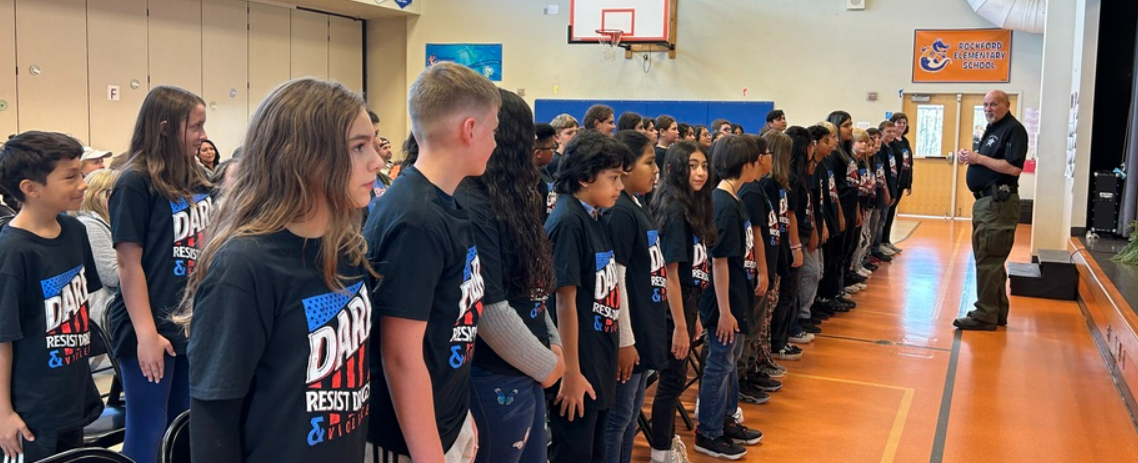
Substance use prevention can work, but only when communities rely on science—not instinct, fear or long-standing habits. “There is prevention science,” Kris Reed told a group of legislators and legislative staff convened by NCSL’s Health Program. “There’s research behind what we do, and we can be effective.” Reed is co-director of the University of Wisconsin-Madison’s Great Lakes Prevention Technology Transfer Center, which provides training and resources to substance use prevention professionals. She says the center’s efforts are designed to stop substance use before it begins. It is an upstream approach to reach people while they are still healthy to reduce risk. “That’s where we can save so much time, money, effort, lives,” Reed says. But prevention efforts don’t always follow the science. Reed points to the enduring influence of programs such as D.A.R.E. (Drug Abuse Resistance Education) and the “Just Say No” campaigns of the 1980s. Read more here.
| |
Violence Against Healthcare Workers and Staffing Shortages Fuel Hospital Strikes
Nurse Crystal Dhooghe, RN, is used to dealing with blood and broken bones in the emergency room. But she didn't expect to witness so much violence against her own colleagues. "I've seen nurses get shoved, pushed, scratched. The biggest one is bitten," said Dhooghe, who works at Henry Ford Genesys Hospital in Grand Blanc, Michigan. The prevalence of workplace violence in healthcare has fueled strikes in states such as Louisiana, New York, Pennsylvania, Rhode Island, and Michigan, where Dhooghe and many of her co-workers have been on the picket line since Labor Day last year. In a statement, Henry Ford Health spokesperson Dana Jay acknowledged violence against healthcare workers is a "national epidemic" and said the health system's efforts to address the problem include metal detectors, armed security officers trained to make "misdemeanor arrests," and de-escalation training. Read more here.
Related: Connecticut psychiatric hospital sees about 21% of staff out with on-the-job injuries
| |
Maternal Mental Health Is Making Headlines. Experts Say It’s Long Overdue
Adrienne Griffen had just given birth to her second child in 2001. The “baby blues” that had quickly subsided after her first pregnancy did not seem to be going away after her second – and they were much more intense. When she talked to her doctor, they abruptly informed her of their duty to call Child Protective Services if she hurt her children. “I am here to get help, so I don’t hurt my children,” she replied. “Well, we don’t want another Andrea Yates,” she recalls the doctor saying, referring to the Texas mom who drowned her five children in the bathtub that same year. It took another six months after that conversation for Griffen to get the help she needed for her postpartum depression. “It was like banging my head against a brick wall,” Griffen, now CEO of the Maternal Mental Health Leadership Alliance, told CNN. Twenty-five years later, a lot has changed, she said – but not enough. Read more here.
| |
Medicaid Psychotherapy Spending Up 156%
Medicaid spending on core psychotherapy services has more than doubled from 2018 to 2024, according to Behavioral Health Business’ analysis of data from a vital Centers for Medicare & Medicaid Services (CMS) system. Overall spending across all providers increased by 156% across the seven-year span to $6.68 billion. Additional spending was largely driven by increases in average payments across a core bundle of psychotherapy codes analyzed and, to a lesser degree, by increases in provider entities billing for those codes. The number of patients seen increased as well. Those growth numbers are slightly ahead of new providers suggesting that incumbents took on more patients over the years. Analysis also reveals the degree to which for-profit entities do not appear in the list of organizations that were paid the most across this seven-year period. Read more here.
| |
Counties Take Leadership Role in Tackling Homelessness
There's no place like home -- except when home is a park bench or a cold street. In the quest to find long-term housing solutions for residents with no homes of their own, New York county officials have been in the vanguard of crafting coordinated strategies that match the scale of the need and meet people where they are. Officials in Ulster, Tompkins and Jefferson counties discussed their housing assistance efforts following the release of a statewide study issued by Comptroller Thomas DiNapoli that took a snapshot of unhoused residents data in all regions of New York. The latest survey found that homelessness declined by 7.9% statewide in January 2025, dropping to a total of 145,560 individuals, after doubling between January 2022 and January 2024. Even so, the comptroller's report noted that the share of children in the overall homeless population remained "stubbornly high" in New York, representing 31.7% of the total. Ulster County Executive Jen Metzger said more people are facing challenges in keeping up with rising costs for housing, food and other supplies, which has helped nudge the number of unhoused people upward. Read more here.
Related: Despite Record Low in Veteran Homelessness, Half the States Saw Increases
Homelessness Is Falling Across Much of California, but Progress Is Fragile
| |
Ten Practices To Help Ensure Opioid Settlement Funds Heal Communities
States, counties, and cities have secured about $58 billion through 2038 via litigation against companies that fueled the overdose crisis, with the expectation that the funds would expand treatment, housing, harm reduction, and other evidence-based public health responses. Yet jurisdictions across the country continue to direct settlement dollars toward policing and incarceration, despite broad consensus among advocates, researchers, and many state administrators that these uses are inconsistent with the spirit of the settlements. Over the past year alone, jurisdictions have approved expenditures including police cruisers, tactical equipment, license plate readers, jail body scanners, and drug-sniffing dogs, even as frontline community programs struggle to secure basic funding for naloxone distribution, syringe services, and outreach. Public health advocates and people directly impacted by the crisis have seen success in pushing county commissions and city councils to spend opioid settlement dollars on evidence-based health solutions rather than policing and jails. Read more here.
| |
Are Suicide Attempts Contagious in Young People?
Knowing someone who had attempted suicide was associated with subsequent attempts in teens and young adults, a cohort study suggested. Among people ages 13 to 22 who did not have a prior suicide attempt, exposure to a suicide attempt within one's social network was associated with greater odds of subsequent suicide attempt onset, reported Kimberly Mitchell, PhD, of the University of New Hampshire in Durham, and Victoria Banyard, PhD, of Rutgers University in New Brunswick, New Jersey. This association remained significant after adjusting for depressive symptoms, they wrote in JAMA Network Open. In recent years, rates of depression and anxiety have jumped in teens and young adults, as have rates of suicidal thoughts and behaviors. Research on suicide has documented contagion effects associating exposure to suicide thoughts and behaviors in one's social network with subsequent suicidal ideation and attempts," Mitchell and Banyard noted. Read more here.
| |
What Is an EmPATH Unit? Inside the Model Reshaping Psychiatric Emergency Care
An individual experiencing a behavioral health crisis walks into the emergency department. Instead of lying on a gurney in the hallway or sitting in a chaotic waiting room, they’re led to a recliner chair in a calm environment and seen by a psychiatric provider typically within the hour. That’s the idea behind Emergency Psychiatric Assessment, Treatment and Healing, a model of care that a growing number of health systems are betting can help fix one of the most fractured corners of emergency medicine. EmPATH is a dedicated unit, separate from the ED, built for patients in a mental health or substance use crisis. Rather than boarding for hours or days, patients move into a calmer, more open environment where a psychiatric team can assess, stabilize and often discharge them — sometimes without ever being admitted to inpatient care. But the model is more of a framework than a blueprint. Hospitals that run EmPATH units are quick to point out that no two look exactly alike — the capacity, the staffing overnight, the intake rules all vary by system. Read more here.
| | |
UPCOMING EVENTS & TRAININGS
From Hire to Licensed: Accelerating Your Workforce Pipeline
August 27, 3 - 3:45 pm, National Council for Mental Wellbeing
Restoring Black Men’s Wellbeing Through Nature and Community (Part II)
September 2, 3 - 4 pm, NAMI
Exploring the Intersection of Housing and Civil Commitment: Civil Commitment for Substance Use Disorders and Mental Illness
September 3, 1 - 2:30 pm, SAMHSA's GAINS Center
Elevating Peers and Community Health Workers within Integrated Care Teams
September 10, 1 - 2 pm, National Council for Mental Wellbeing
Suicide Attempt survivor and Adolescent Support groups-Examples and opportunities
September 14, 12 - 1 pm, SPCNY
A Guide to Responsible Use of AI for Behavioral Health Settings
September 15, 12 - 1 pm, Becker's Hospital Review
National Recovery Month Virtual Event: Recognizing Addiction Transfer in Recovery
September 15, 12:30 - 1:30 pm, National Council for Mental Wellbeing
Using PSYCKES for FQHCs
September 15, 1 - 2 pm, OMH
Workforce Solutions Jams: HR1 & the Behavioral Health Workforce
September 15, 1 - 2 pm, National Council for Mental Wellbeing
Listening to Dually Eligible Individuals: Turning Insights into State Action
September 15, 2 - 3 pm, CHCS
Chasing Other Dragons – Atypical Intoxicants
September 16, 12 - 1:30 pm, NAADAC
Beyond Recruitment: Building a Workforce That Lasts
September 17, 2 - 3 pm, Behavioral Health Business
Supporting Your Supervisees in Suicide-Safer Care: Strengthening Confidence, Competence and Clinical Support
September 17, 2:30 - 3:30 pm, National Council for Mental Wellbeing
State Peer-to-Peer Learning Session: Crisis Stabilization – Urgent Care Centers and Peer Respite
September 17, 3 - 4 pm, SAMHSA
Strengthening CCBHC & Managed Care Collaboration: CCBHCs and Financial Sustainability
September 17, 3 - 4 pm, National Council for Mental Wellbeing
Final Coaching Call: Integrated Systems Care for Opioid Use and Co-Occurring/Co-Morbid Disorders
September 21, 12 - 1 pm, National Council for Mental Wellbeing
Creating a Trauma-Informed, Recovery-Oriented System of Care Series
September 24, 3 - 4 pm, National Council for Mental Wellbeing
REGISTRATION OPEN - The 2026 New York State Suicide Prevention Conference
September 29 - 30, Ithaca, NY
Transforming Documentation: From Pitfalls to Best Practices
September 30, 12 - 1:30 pm, NAADAC
Cross-Agency Data-Sharing: What Corrections Can Learn from Montana
September 30, 3 - 4:30 pm, CSG Justice Center
| |
CLMHD CALENDAR
September
Executive Committee Meeting
September 2: 8 - 9 am
CLMHD Office Closed - Labor Day
September 7
LGU Clinic Operators Call
September 8:10 - 11 am
Addiction Services & Recovery Committee Meeting
September 10: 11 am - 12 pm
Mental Health Committee Meeting
September 10: 3 - 4 pm
Membership Call
September 16: 9 - 10:30 am
October
Executive Committee Meeting
October 7: 8 - 9 am
Addiction Services & Recovery Committee Meeting
October 8: 11 am - 12 pm
Mental Health Committee Meeting
October 8: 3 - 4 pm
LGU Clinic Operators Call
October 13: 10 - 11 am
Developmental Disabilities Committee Meeting
October 15: 1 - 2 pm
Children & Families Committee Meeting
October 20: 12 - 1:30 pm
| |