|
AI in Mental Healthcare Presents Both Opportunities and Challenges
Artificial intelligence (AI) technology and its applications are reshaping many domains of modern life, including how individuals seek support for mental health needs and how they receive that care. Healthcare professionals are rapidly adopting AI-based applications designed to support workflow and care delivery, streamline processes, and help expand access to services. At the same time, patients now have easy access to generative AI chatbots—large language model tools designed to process and generate human-like text to answer a user’s questions. With AI adoption outpacing regulation, the safety, effectiveness, and privacy of these readily available tools remain unclear. Read more here.
Related: Why Healthcare AI is Missing the Point
| |
New York State Commission on National and Community Service Hosts First-Ever New York Youth Mental Health Corps Convening
The New York State Commission on National and Community Service last Thursday held a first-ever convening for the New York Youth Mental Health Corps (YMHC) in the Loretta C. Scott Center in Rochester.- The Youth Mental Health Corps was launched in 2024 as an innovative, public-private collaboration between AmeriCorps, the Schultz Family Foundation and Pinterest to help youth access critical mental health resources and create career pathways through AmeriCorps to address the national shortage of mental health professionals. “We join the Schultz Family Foundation, Pinterest and AmeriCorps in celebrating the growth of the YMHC and all our youth advocates who are elevating the incredible work happening across states and communities nationwide,” said Beth Tailleur, executive director of the New York State Commission on National and Community Service. “Governor Hochul has made addressing mental health challenges, particularly those faced by youth, a key focus of her administration. We are proud to work with our many partners, including a network of state service commissions and our own New York State Office of Mental Health, to address the critical youth mental health crisis in a unique and innovative way through the YMHC.” Read more here.
| |
Cross-System Strategies to Support Children with Complex Behavioral Health Conditions
NASDDDS is excited to join our partners with the Link Center, the National Association of State Mental Health Program Directors (NASMHPD), the National Association of State Head Injury Administrators (NASHIA), and NADD, in announcing the release of a new groundbreaking publication, Cross-System Strategies to Support Children with Complex Behavioral Health Conditions, authored by Nancy Thaler with contributions from Stacy L. Nonnemacher, PhD. This important resource responds directly to one of the most urgent challenges facing states and families: how to better support children with complex behavioral health needs who are often served across multiple systems, including behavioral health, child welfare, Medicaid, developmental disabilities, acquired brain injury, education, and juvenile justice. Grounded in neuroscience and focused on practical systems change, the publication offers a framework for coordinated, community-based support built around three essential pillars: a place that is safe, treatment to heal, and opportunities to grow.
| |
Keys to Success in Actually Reducing Hospital Readmissions
Several factors are involved in reducing hospital readmissions, according to the new CMO of Northwell Greenwich Village Hospital. Erin Muckey, MD, MBA, became vice president and CMO of the Northwell Health hospital in April. A board-certified emergency medicine physician, Muckey’s prior leadership experience includes serving as associate CMO and emergency department medical director at University Hospital in Newark, New Jersey. To reduce readmissions, hospital CMOs and other senior leaders need to focus on discharge planning, complex care coordination, and the social needs of patients, according to Muckey. “Discharge planning is just the beginning of efforts to reduce readmissions, and it is just as important to think about what happens after a patient leaves the hospital,” Muckey says. Read more here.
Related: Trajectories of mental health outcomes emerge following ICU discharge
| |
Socioeconomic Factors Are Becoming 'Biologically Embedded' in Children's Brains
The most powerful factors affecting a child's brain development involve socioeconomic opportunities, according to a study in the journal Science. The analysis of more than 2,300 9- and 10-year-olds found that environmental factors ranging from household income to education to neighborhood quality are associated with brain differences that can clearly be seen in MRI scans. The researchers also found that preteens who'd grown up in neighborhoods with lower incomes and limited social support had brain differences associated with less sleep and more stress. The research "highlights the fact that the environment in which we grow up and live has powerful impacts on our brain," says Russell Poldrack, a psychology professor at Stanford University who was not involved in the study. It also challenges earlier research that focused on links between brain development and factors like IQ and mental health. Read more here.
| |
Circles of Care: Home and Community-Based Services Supports for People of Color with Disabilities Leaving Institutional Settings
The U.S. Supreme Court 1999 Olmstead v. L.C. decision declared that unnecessary institutionalization constitutes discrimination under the Americans with Disabilities Act (ADA) and affirmed the right of persons with disabilities to live in the most integrated setting possible. Despite the promise of Olmstead, and the reallocation of Medicaid funding to HCBS, people with disabilities still encounter barriers to access HCBS. People of color using Medicaid HCBS experience higher unmet need than their White counterparts, even after adjusting for socioeconomic and health factors. Evidence suggests that culturally responsive and peer-based supports can strengthen pathways to independent living. Few studies address supports that help people of color with disabilities transition out of institutions and sustain community living. The purpose of this study is to explore the types of supports that help people of color with disabilities transition from institutional to community settings and remain integrated in the community. Read more here.
| |
Racial Gaps Persist in Mental Healthcare for Young Adults With Suicidal Thoughts
Young adults in racial and ethnic minority groups who have suicidal thoughts and behaviors are far less likely to receive mental health treatment than their white peers, according to a study published June 22 in JAMA Pediatrics. Researchers at Cambridge Health Alliance and Harvard Medical School analyzed 2022-23 data from the National Survey on Drug Use and Health, canvassing 27,400 young adults ages 18 to 25, including a subsample of 3,729 who reported suicidal thoughts, plans or attempts in the past year. Four findings:
- About 1 in 8 young adults reported suicidal thoughts and behaviors, but fewer than half of those who did received any mental healthcare.
- Among young adults with suicidal thoughts and behaviors, treatment rates were 21.5 percentage points lower for Asian youth, 19.9 points lower for Black youth and 14.4 points lower for Latine youth than for white youth, who had a 49.3% treatment rate.
- Multiracial youth were less likely to use psychotropic medication, at a rate 16.7 percentage points below their white peers.
- The authors said the gaps point to structural barriers, rather than differences in clinical need or patient preference. They recommended preserving insurance continuity during the transition from pediatric to adult care, expanding screening in nontraditional settings, using warm handoffs between providers and integrating mental health services into primary care and community settings.
| |
Making Naloxone Affordable For Communities
Naloxone is a cornerstone of the US response to the opioid overdose crisis, and state programs distribute much more naloxone than pharmacies. As of October 2025, however, the Massachusetts Community Naloxone Program, a naloxone distribution initiative sponsored by the state’s Department of Public Health, no longer permits hospitals to dispense program-supplied naloxone on site to at-risk patients, including at hospital-based substance use disorder clinics. Naloxone from this program can still be used for off-site community distribution and outreach, but not for on-site dispensing or stocking by hospitals, health centers, or substance use disorder treatment programs where patients are instead expected to use their insurance benefit to obtain naloxone via a pharmacy. Why would access be reduced, especially as fentanyl continues to dominate the non-medical drug supply? The answer lies with the price. Read more here.
Related: Expanding Access to Medications for Opioid Use Disorder Through Pharmacist State Scope-of Practice Flexibility
| |
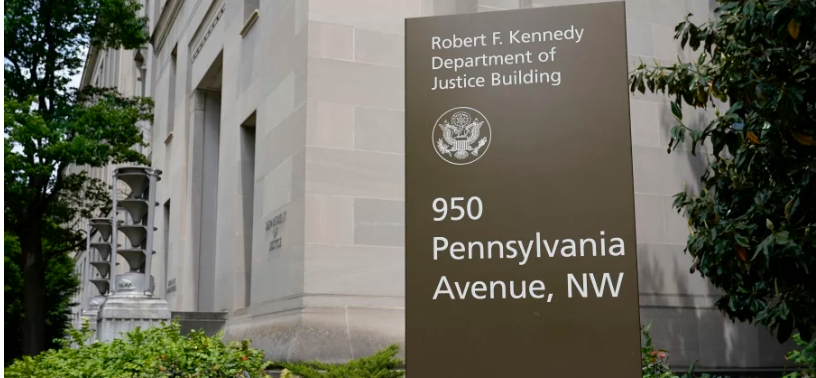
DOJ Memo Stokes Fear Among Disability Advocates of a Return to Institutionalization
The Justice Department released a memo this week that quietly calls into question decades of civil rights protections for Americans with disabilities and stirred fear and anger among advocates and families. The memo, an opinion from the Office of Legal Counsel, argues that states do not have to provide in-home or community-based care to people with disabilities who need support. These services allow many disabled Americans to continue to live, learn and work at home or in their own communities, among family and friends. "It is now the position of the United States government that people with disabilities don't have a right to be part of their communities," says Alison Barkoff, a health law and policy professor at George Washington University who led disability law and policy efforts during both the Obama and Biden administrations. "I can't overstate how significant this change in position is." Read more here.
Related: National Council Statement in Response to Department of Justice Memorandum
| | |
UPCOMING EVENTS & TRAININGS
Rural Resilience & Strategic Responses to the Opioid Epidemic
June 25, 2 - 3 pm, NACo
Mobile Crisis Response in Rural Areas
June 25, 3 - 4 pm, CMS NTAC
Evidence-Based Care & Support for Adolescents and Young Adults with Co-Occurring Substance Use Disorders and Eating Disorders
June 29, 12 - 1:30 pm, NEATTC
Food for Thought: Promoting Mental Wellbeing Through Diet and Nutrition in Integrated Care Settings
June 29, 1 - 2:30 pm, CoE-IHS
Defining, Identifying and Managing Risky Substance Use
June 30, 10 am - 12 pm, NCATTC
From Curious to Capable: AI's Impact on Organizational Culture and Practice in Behavioral Health
June 30, 1 - 2 pm, National Council for Mental Wellbeing
Evaluations that Matter: Turning Program Evaluation Findings into Insight and Action
June 30, 1 - 2 pm, SAMHSA
Integrating Medications for Alcohol Use Disorder Into the Certified Community Behavioral Health Clinic Model: Lessons Learned
June 30, 1 - 2 pm, PCCS
New Community Engagement Requirements Rule: What You Need to Know
July 1, 1 - 2 pm, National Council for Mental Wellbeing
Provider Investigation Basics - 3-Day Virtual Training
July 7, 9, 9:30 am - 12:30 pm, NYS Justice Center
Case-Based Discussion: Stigma Associated with MAUD within the Peer Recovery Community
July 7, 1 - 2 pm, PCSS-MAUD
Bridging Reentry and Housing: Strategies to Address Homelessness at the Reentry Touchpoint
July 7, 2:30 - 4 pm, SAMHSA's GAINS Center
Considering Ethics in Documentation of Clinical Supervision
July 8, 12 - 1:30 pm, NAADAC
Beyond Self-Care: Rethinking Care at the Organizational Level
July 9, 10 - 11:30 am, CEATTC
Change Management Is a Leadership Skill: Are You Pushing Staff Through Change or Pulling Them?
July 9, 1 - 2 pm, National Council for Mental Wellbeing
Recognizing and Responding to Gambling Disorder
July 14, 10 - 11:30 am, CEATTC
Driving Impact Through Data: Key Performance Metrics in CoCM
July 15, 1 - 2 pm, CoE-IHS
Leveraging Program Outcomes to Drive Policy Change
July 15, 1 - 2 pm, Social Current
Operationalizing Interdisciplinary Practice to Treat Opioid and Stimulant Use Disorder In Behavioral Health & Primary Care
July 16, 1 - 2 pm, National Council for Mental Wellbeing
Effectiveness of Telehealth Services to Treat Opioid Use Disorder in Primary Care Settings
July 21, 12 - 1:30 pm, MPATTC
Integrated Care in Rural Communities: Partnerships with Hospitals & Community Based Behavioral Health Providers
July 21, 1 - 2:30 pm, CoE-IHS
The Role of Accreditation in Elevating Minority-Led Social Service Agencies
July 22, 12 - 1:30 pm, NAADAC
Understanding the Importance of Care Coordination for Individuals with Serious Emotional Disturbance or Serious Mental Illness who are Homeless
July 22, 2:30 - 3:30 pm, NASMHPD
Malicious False Reporting (New training!)
July 23, 11 am - 12 pm, NYS Justice Center
Co-Occurring Substance Use Disorders and Eating Disorders
July 23, 1 - 2:30 pm, MPATTC
Building a Healthy Workplace Culture: Psychological Safety, Accountability, and Support
July 23, 1 - 1:45 pm, Social Current
Monitoring, Evaluation, Accountability & Learning: Leveraging Data to Enhance Tobacco Control and Recovery Initiatives
July 23, 2:30 - 3:30 pm, National Council for Mental Wellbeing
Evidence to Consider when Advising Patients on Buprenorphine Treatment Duration for Opioid Use Disorder (webinar)
July 29, 2 - 3:30 pm, NWATTC
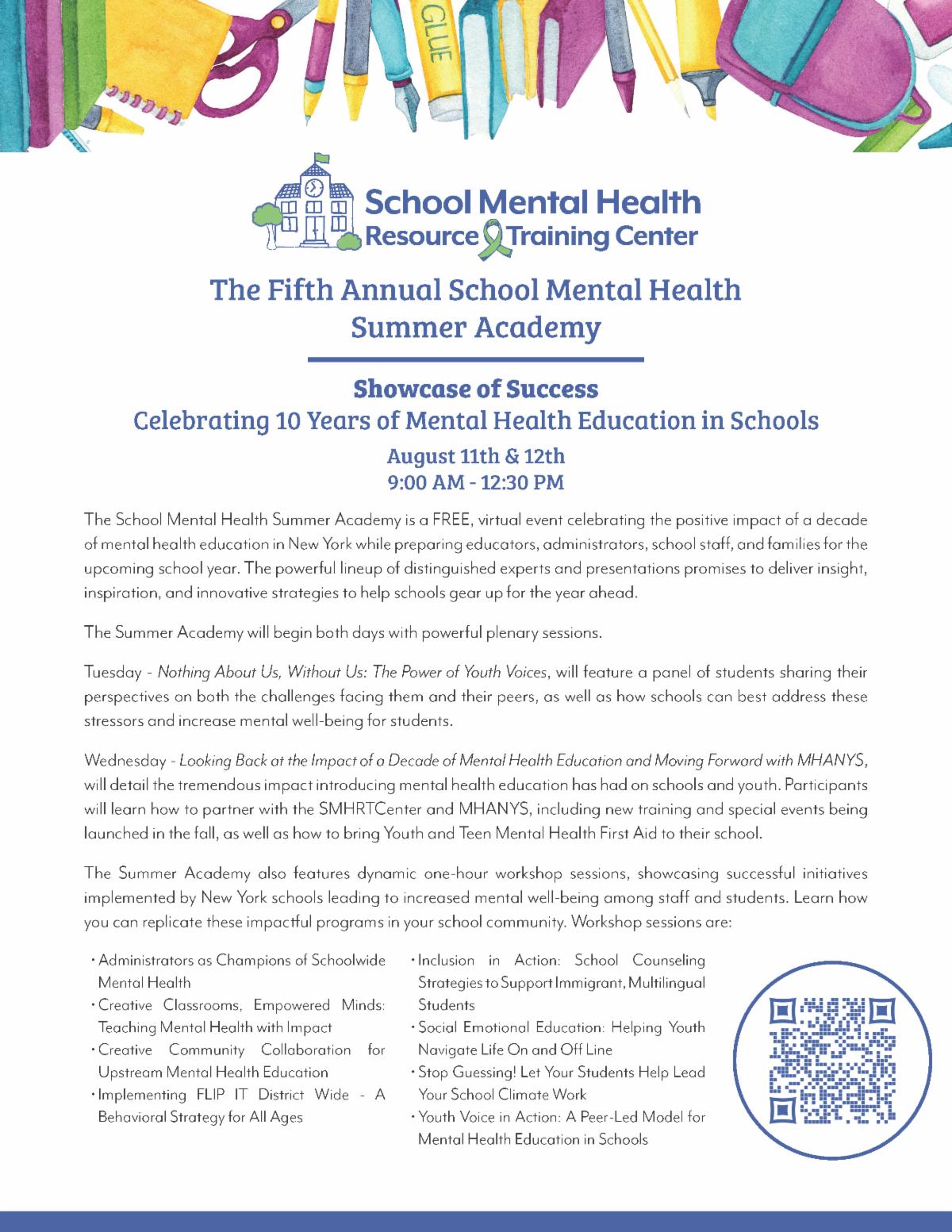
5th Annual School Mental Health Summer Academy
August 11 - 12, 9 am - 12:30 pm, SMHRTC
Clinical Strategies to Reduce HIV Acquisition and Promote Recovery among People with Stimulant Use Disorder
August 12, 1 - 2:30 pm, MPATTC
Building Integrated Care Teams for Co Occurring Behavioral Health and Substance Use Conditions
August 25, 4 - 5:30 pm, MPATTC
Anticipating Policy Change
August 13, 1 - 2 pm, Social Current
Chasing Other Dragons – Atypical Intoxicants
September 16, 12 - 1:30 pm, NAADAC
SAVE THE DATE - The 2026 New York State Suicide Prevention Conference
September 29 - 30, Ithaca, NY
Transforming Documentation: From Pitfalls to Best Practices
September 30, 12 - 1:30 pm, NAADAC
| |
CLMHD CALENDAR
JULY
Executive Committee Meeting
July 1: 8 - 9 am
CLMHD Office Closed - Independence Day Observed
July 3
Addiction Services & Recovery Committee Meeting
July 9: 11 am - 12 pm
Mental Health Committee Meeting
July 9: 3 - 4 pm
LGU Clinic Operators Call
July 14: 10 - 11 am
Membership Call
July 15: 9 - 10:30 am
Children & Families Committee Meeting
July 21: 12 - 1:30 pm
| |