|
After Three years, 988 Suicide & Crisis Lifeline Still Largely Unknown
A new national survey conducted by NORC at the University of Chicago reveals that awareness of the National 988 Lifeline remains low three and a half years after its launch. Only 10% of adults report being very or extremely familiar with 988 and around 60% report limited to no familiarity, indicating that new strategies may be needed to raise awareness among the general public. Adults ages 18-29 are significantly more likely to know about 988 than adults ages 65 and older, despite the fact that older adults are disproportionately affected by social isolation, loneliness, and suicide, and could benefit from 988’s services. When asked about reasons they might contact 988, 48% of adults say they would call or text if they were having suicidal thoughts. About one-third say they would contact 988 to help a friend or loved one (35%) or for mental health concerns such as depression or anxiety (34%). Thirty-six percent say they would not contact 988 for any reason. Read more here.
Related: DiNapoli: New York Can Do More to Enhance Strategies to Lower Suicide Rate
| |
A Powerful New Drug Is Creating a ‘Withdrawal Crisis’ in Philadelphia
Around 2 a.m., Joseph felt the withdrawal coming on, sudden and hard. He fell to the floor convulsing, vomiting ferociously. The delirium and hallucinations were starting. He shook awake his friend, who had let him in earlier to shower, wash his clothes and grab some sleep. “Do you have a few dollars?” he pleaded. “I have to get right.” The friend, a community outreach worker who had been trying for years to get him into treatment, looked up at him standing over her raving and unfocused. “Either leave or let me call an ambulance,” she demanded. At 34, Joseph had been through opioid withdrawals many times — on Philadelphia streets, in jail, in rehab. But he had never experienced anything as terrifyingly all-consuming as this. A new drug has been saturating the fentanyl supply in Philadelphia and moving to other cities throughout the East and Midwestern United States: medetomidine, a powerful veterinary sedative that causes almost instantaneous blackouts and, if not used every few hours, brings on life-threatening withdrawal symptoms. Read more here.
| |
Integrity Partners, South Central to Form New York’s Largest Rural Behavioral Health Network
Integrity Partners for Behavioral Health IPA (Integrity Partners) and the South Central Behavioral Health Network (South Central) have announced a merger. The merger will allow both networks to combine as equal owners and will unite two of New York State’s leading rural behavioral health alliances under the name Integrity Partners for Behavioral Health IPA. The merged network includes 46 behavioral health providers, 22 from Integrity Partners and 24 from South Central, serving more than 100,000 clients across rural New York. Supported by Integrity’s advanced statewide analytics infrastructure and data warehouse, the combined system will integrate data from 150,000 individuals. The merger also brings together primary care, behavioral health, and social service organizations, expanding integrated care across a wide range of communities. Read more here.
| |
FDA Panelists Questioned Antidepressants in Pregnancy. But Doctors Call Them a Lifeline.
Before giving birth to her second child, Heidi DiLorenzo was anxious. She worried about her blood pressure, and the preeclampsia that prompted her to be hospitalized twice during the pregnancy. She worried that some terrible, unnamed harm would come to her 3-year-old daughter. She worried about her ability to love another baby as much as she loved her first. But DiLorenzo, an attorney in Birmingham, Alabama, did not worry about taking Zoloft. She had used the medication to treat anxiety before she had her first child, and she continued it throughout that pregnancy and this latest one. And since having her second daughter, in September, she credits an increased dosage with pulling her out of the “dark hole” of sadness she felt postpartum. “I wouldn’t be as good of a mom to my girls if I didn’t take it,” DiLorenzo said. “I wouldn’t have the energy.” Read more here.
| |
The US Economy Has a $93 Billion Substance Abuse Black Hole
A new study has found that substance use disorders (SUD) cost the U.S. economy just under $93 billion in 2023 from a combination of missed work, reduced work productivity and lost household productivity. The study, published in the American Journal of Preventive Medicine on December 8, was conducted by a team at the Division of Injury Prevention at the Centers for Disease Control and Prevention (CDC). "Public health strategies addressing the prevalence of SUD and reducing lost productive time have the potential to reduce these losses and offer cost savings for the U.S. economy," the study authors wrote. Read more here.
| |
Mental Health Intervention Reduces Severe Depression, Anxiety for Vulnerable Groups
Living in a community without fluency in the local language or knowledge of its culture can add stressors for anyone. The experience is associated with heightened risk of mental health concerns and a range of problems related to quality of life. Yet newcomers and minorities in a community are more likely to lack access to affordable and effective mental health care services, compared to the population at large. Now, in one of the nation’s largest mental health therapy clinical trials, researchers have found a solution to significantly reduce depression and anxiety for vulnerable populations. The team reported findings earlier this year in The Lancet about a community health program that reduces mental health symptoms in 80% of participants, with many no longer considered to have clinical symptoms at all after the intervention. The study highlights the importance of culturally responsive care, or care that is tailored to the needs of particular communities, including immigrants and people in minority populations. Read more here.
| |
State Approaches for Medicaid Specialty Plans to Support Whole-Person Care
Medicaid specialty plans are a state policy approach used to align financing and administration in support of whole-person care, particularly for people with complex health needs. To improve outcomes for high-need populations, many states are using specialty plans as a way to deliver more coordinated services and tailored benefits. This brief examines design and evaluation considerations for states implementing specialty plan models within Medicaid. While specialty plan approaches are relevant for a range of Medicaid populations, the brief highlights five states — Arizona, Arkansas, Florida, New York, and North Carolina — that developed plans specifically for Medicaid members with serious behavioral health conditions.
| |
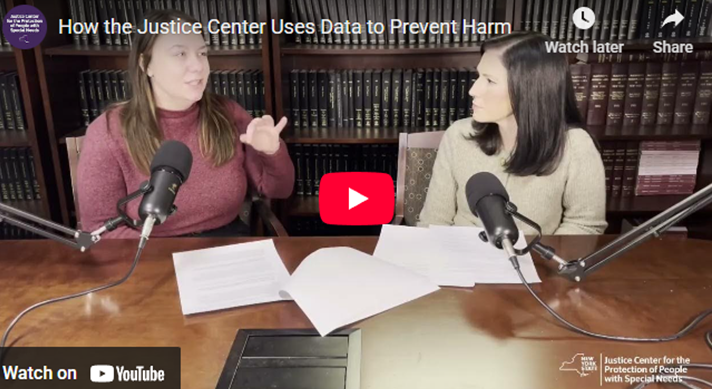
Podcast: How the Justice Center Uses Data to Prevent Harm
Most people recognize the NYS Justice Center for its role in investigating abuse and neglect, but a critical part of that work happens long before an incident occurs. In a new episode of the Could This Happen in Your Program podcast, the Justice Center’s Data and Analytics unit shares how it uses incident reports to identify systemic risks, respond to trends like food-choking incidents, and work directly with providers to prevent harm. Featured guest Michelle McCrum, Director of the Office of Data and Analytics, offers a behind-the-scenes look at how data is strengthening safety across New York’s service system. Listen to the latest episode here.
| | |
UPCOMING EVENTS & TRAININGS
Workforce Development Series 4
December 18, 1 - 2 pm, MTM Services
Overview of Civil Commitment and Assisted Outpatient Treatment
December 18, 1:30 - 3 pm, SAMHSA's GAINS Center
H.R.1 Series: Navigating the Medicaid Program and State Budgeting
January 6, 12:30 - 1:30 pm, CSH
Adult Children of Parental Addiction: Trauma and Healing
January 7, 12 - 1:30 pm, NAADAC
Risk Assessment for Suicide and Overdose
January 8, 12:30 - 1:30 pm, Zero Overdose/Zero Suicide
From Awareness to Action: Igniting Ideas for Addressing Social Isolation and Loneliness in Clinical Practice
January 14, 2026, 12 - 1 pm, CCSMH
From Insight to Action: Affirming Clinical Strategies for LGBTQ+ Clients with Co-Occurring Disorders
January 14, 12 - 1:30 pm, NAADAC
Navigating Workforce Challenges
January 14, 1 - 2 pm, National Council for Mental Wellbeing
Carry the Message Toolkit
January 15, 2 - 2:30 pm, NCSACW
Supporting Wellness Through Supervision: Workforce Wellness Series
January 15, 2 - 3 pm, SAMHSA
How to Conduct a Quality Substance Use Evaluation
January 21, 12 - 1:30 pm, NAADAC
Transitional-Aged Youth (TAY) Services
January 22, 2 - 3 pm, National Council for Mental Wellbeing
Centering Families in Outpatient Treatment
January 29, 2 - 2:30 pm, NCSACW
Data Management: Person-Directed Approaches and Perspectives
February 4, 1 - 2:30 pm, CSH
Navigating Ethical Boundaries: Decision Making for Peer Support Specialists and Addiction Counselors
February 11, 12 - 1:30 pm, NAADAC
Toolkit for Trauma-Informed Care
February 12, 2 - 2:30 pm, NCSACW
Integrated Safety Planning (Suicide Safety Plans & Overdose Safety Plans)
February 19, 12:30 - 1:30 pm, Zero Overdose/Zero Suicide
Older Adults Behavioral Health Services
February 19, 2 - 3 pm, National Council for Mental Wellbeing
Process Addictions: Maladaptive Coping Across the Ages
February 25, 12 - 1:30 pm, NAADAC
Strengthening Helping Professionals: Ethics, Resilience, & Attachment-Informed Approaches
March 11, 12 - 1:30 pm, NAADAC
Means Reduction Counseling and Overdose Prevention Strategies
March 12, 12:30 - 1:30 pm, Zero Overdose/Zero Suicide
| |
CLMHD CALENDAR
DECEMBER
Mental Hygiene Planning Committee Meeting
December 18: 1 - 2 pm
CLMHD Office Closed - Christmas
December 25
CLMHD Office Closed - New Year's Day
January 1, 2026
JANUARY 2026
CLMHD Executive Committee Meeting
January 7: 8 - 9 am
Addiction Services & Supports (ASR) Committee Meeting
January 8: 11 am - 12 pm
Mental Health Committee Meeting
January 8: 3 - 4 pm
LGU Clinic Operators Call
January 13: 10 - 11 am
Developmental Disabilities Committee Meeting
January 15: 1 - 2 pm
CLMHD Office Closed - Martin Luther King, Jr. Day
January 19
Children & Families Committee Meeting
January 20: 1 - 2 pm
Membership Call
January 21: 9 - 10:30 am
| |