|
Attorney General James Sues Nation’s Largest Vape Distributors for Fueling the Youth Vaping Epidemic
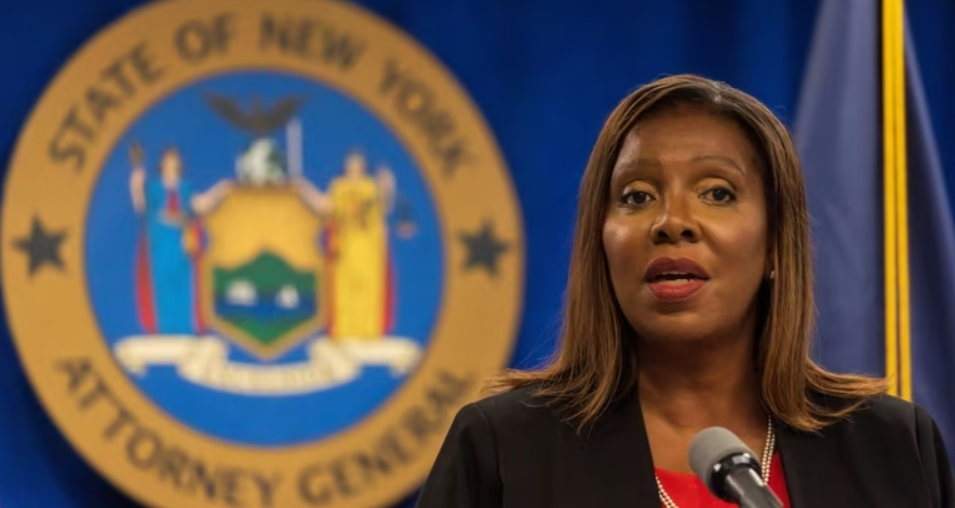
New York Attorney General Letitia James last Thursday announced a lawsuit against 13 major e-cigarette, or “vape,” manufacturers, distributors, and retailers for their role in fueling the youth vaping epidemic. These companies are responsible for illegally distributing, marketing, and selling flavored disposable vapes – including popular brands such as Puff Bar, Elf Bar, Geek Bar, Breeze, MYLE, and more – which have become extraordinarily popular among minors. An Office of the Attorney General (OAG) investigation found that these companies market highly addictive, candy- and fruit-flavored nicotine products to underage consumers, mislead customers about the safety and legality of their products, illegally ship products to New York, and violate health regulations designed to curb youth vaping. Read more here.
| |
Governor Hochul Expands Access to Mental Health and Substance Use Disorder Treatment for New Yorkers
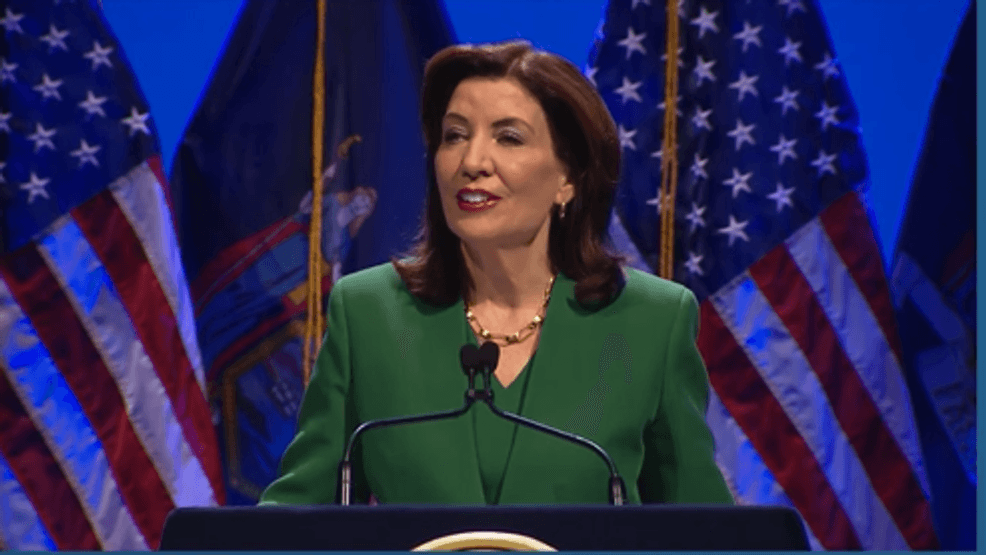
Governor Kathy Hochul today announced that new network adequacy regulations for behavioral health services will now entitle New Yorkers to an initial appointment for behavioral health care within 10 business days of the request, or seven calendar days following hospital discharge. Under the regulations adopted by the New York State Department of Financial Services and State Department of Health, insurers unable to meet these timeframes will have to offer out-of-network mental health or substance use disorder coverage without increasing the cost for the consumer. Additionally, insurers are required to update their provider directories to include clearer details on the availability of behavioral health services, including provider locations (city/town and zip code), telehealth availability and languages spoken by the provider. Read more here.
| |
Governor Hochul Announces Three Agency Commissioner Nominees
Governor Kathy Hochul on Monday announced the nomination of three New York State agency commissioners. The Governor nominates Denise Miranda as Commissioner of the State Division of Human Rights, Amanda Lefton as Commissioner of the Department of Environmental Conservation; and Willow Baer as Commissioner of the State Office for People With Developmental Disabilities. “As we work to make New York the best place to raise a family, it's critical to have a team in place with the skills and experience to make that goal a reality,” Governor Hochul said. “These three nominees have proven themselves to be strong leaders with a record of achievement — and they will play a pivotal role leading these state agencies.” Read more here.
| |
F.D.A. Expands Access to Clozapine, a Key Treatment for Schizophrenia
The Food and Drug Administration has taken a crucial step toward expanding access to the antipsychotic medication clozapine, the only drug approved for treatment-resistant schizophrenia, among the most devastating of mental illnesses. The agency announced on Monday that it was eliminating a requirement that patients submit blood tests before their prescriptions can be filled. Clozapine, which was approved in 1989, is regarded by many physicians as the most effective available treatment for schizophrenia, and research shows that the drug significantly reduces suicidal behavior. Clozapine is also associated with a rare side effect called neutropenia, a drop in white blood cell counts that, in its most severe form, can be life-threatening. Read more here.
| |
Practical Approaches to Centering Equity in Health Care Quality: Shared Lessons from New York City’s Hospital Systems
In 2022, UHF convened a task force of 22 leaders from nine local hospital systems. The group’s goals were to develop a framework to help organizations better understand the drivers of inequities and to identify and share promising practices from task force members to help advance health equity throughout the city. A new report, Practical Approaches to Centering Equity in Health Care Quality: Shared Lessons from New York City’s Hospital Systems, chronicles this critical work and shares lessons and insights on how to coordinate efforts to improve health equity and health care quality. The ultimate goal: reduce persistent health disparities that exist across the city. Read more here.
| |
Federal and State Funding Sources for Substance Use Disorder Treatment
To address the ongoing challenges of the opioid and overdose crisis, states are considering how to most effectively target various funding sources to provide treatment and recovery services for opioid use disorder (OUD) and substance use disorder (SUD). Funding from the Medicaid program and the Substance Abuse and Mental Health Services Administration (SAMHSA) comprise the majority of spending on SUD treatment but may be supplemented by opioid settlement funds, state funding, and other federal grant programs that serve populations with SUD. Understanding where investments are already being made can help to better target the use of new funding and resources. An organized approach for assessing and tracking multiple funding streams, through different state agencies and different parts of state budgets, can help state agencies strategically align resources to support a full continuum of SUD services. Read more here.
Related: FDA approves rapid initiation of Sublocade for opioid use disorder
| |
Culturally Responsive Mental Health Care Drives Better Patient Outcomes, Provider Success
While matching patients with clinicians of similar backgrounds improves outcomes and care satisfaction, staffing constraints often make this challenging.
Many providers have turned to practicing culturally responsive care as one way to improve connections between patients and providers who do not necessarily share lived experiences. Mental health providers use the practice to apply behavioral health techniques in a way that acknowledges and respects patients’ cultural backgrounds. Training programs and educational institutions are increasingly promoting cultural responsiveness – but work remains to be done in the behavioral health industry to fund and operationalize the practice. Some behavioral health providers are staking their foundations on culturally responsive practices. Read more here.
| |
The Miscalculation of Teletherapy: Why Digital Mental Health Goes Beyond Virtual Sessions
The urgent need to treat patients safely during the pandemic led to a telehealth boom. Telehealth opened the door to new treatment pathways for all of medicine, none more so than for therapy. While the promise of teletherapy to expand access to care is significant, the reality is it does not serve the needs of all those seeking treatment – and in fact, for many, it continues to keep behavioral health care out of reach. Consider a factory worker who clocks in at dawn and cannot slip away for a midday therapy session. Many shift-based workers juggle multiple jobs, fatigue, and limited downtime. Telling them to fit teletherapy into a break assumes not only steady internet access but also technology that can handle a video call. Telehealth also doesn’t solve the access issues for individuals who can’t afford out-of-pocket costs or find a provider accepting their insurance. We have convinced ourselves that teletherapy alone can solve the access issues in the US. Unfortunately, virtual therapy and telehealth visits still mirror the same barriers found with traditional therapy. Read more here.
Related: Medicaid Beneficiaries Less Likely to Access SUD Services Via Telehealth
| |
The Challenge Of Medicare And Medicaid Integration For Dual Eligible Individuals Under 65
Policy makers are working to improve Medicare and Medicaid integration for individuals dually eligible for both programs, but current efforts often overlook the unique needs of those under age 65. Research shows that younger dual-eligible individuals face greater challenges, including mental health conditions, disabilities, and housing insecurity, compared to those 65 and older. Before expanding integration strategies, it is important to consider the specific health, social, and community-living support needs of the 4.6 million younger dual-eligible individuals. Experts have identified four key considerations to help ensure future policies better serve this population. Read more here.
| |
Harnessing The Power Of Health Data To Combat Gun Violence
Advanced data infrastructure is essential for addressing public health challenges in the US, yet the current system has significant limitations, delaying detection and mitigation of threats. Unlike economic indicators, health data are siloed, incomplete, and often outdated, reducing the urgency with which policymakers and the public can respond. The gun violence epidemic exemplifies these data failures, as firearms are the leading cause of death among children and adolescents, yet data remain fragmented and difficult to integrate. Misclassification in hospital records, policy restrictions on firearms trace data, and reliance on sources like the Gun Violence Archive hinder efforts to fully grasp the crisis. However, technological advancements—such as electronic health records, health information exchanges, and the CDC Data Modernization Initiative—are paving the way for innovation. With bipartisan support for data modernization and growing state and local efforts, there is an opportunity to strengthen infrastructure and improve responses to public health crises. Read more here.
| |
|
UPCOMING EVENTS & TRAININGS
Forging Partnerships Between Schools and the Crisis-Coordinated System of Care
February 27, 2 - 3 pm, SAMHSA
Creating Well-Being: An Introduction to Mental Health and Wellness Initiatives shared by Schools & Mental Health Organizations in New York State
February 27, 3:30 - 4:15 pm, School Mental Health Resource Training Center
Transforming Efforts to Prevent Firearm Suicide
March 5, 1 - 2 pm, NY Health Foundation
The 4 A’s of Effective Leadership: Strategies to Prevent Burnout and Increase Retention
March 5, 2 - 3 pm, Relias
Supporting the Uptake of Behavioral Health Apps and Technology
March 6, 2 - 3 pm, College for Behavioral Health Leadership
Building a Peer Support Team That Your People Will Actually Talk To
March 6, 3 - 4:15 pm, Justice Clearinghouse
Core Principles of Addiction Counselor Ethics
March 7, 9:30 am - 12:30 pm, NCATTC
Effective Sharing of 'Lived Experience' While Maintaining Boundaries
March 7, 1 - 3 pm, NCATTC
Leveraging Leadership to Develop and Deliver a Plan for Transformative Care Design and Delivery
March 11, 2 - 3 pm, National Council for Mental Wellbeing
Collaborative Documentation & AI: Reducing Administrative Burden and Enhancing Care
March 12, 12 - 1 pm, Eleos Health
Youth and the Legalization of Marijuana
March 12, 3 - 4:30 pm, NAADAC
Mental Health Care in Crisis: What Clinicians and Leaders Need to Know
March 13, 12 - 1:45 pm, NEJM Group
Equity as a Foundation for Leadership
March 13, 3 - 4 pm, College for Behavioral Health Leadership
Not Being Jaded: Talking to Youth Who Might Be Getting Faded - Unpacking Youth Substance Use with Strategies to Support Care Teams
March 14, 12 - 1:30 pm, Grayken Center for Addiction TTA
Enhancing and Strengthening the Behavioral Health Workforce: How to Meet the Needs of Rural and Frontier Communities
March 17, 2 - 3 pm, Bazelon Center for Mental Health Law
Professional Boundaries Training
March 19, 9:30 am - 12:30 pm, Justice Center for the Protection of People with Special Needs
Comics for the Brain, the Mind, and Everything Else
March 20, 12 - 1 pm, NYSPHA
Building Digital Trust: The Role of Healthcare Professionals on Social Media
March 20, 5:30 - 7 pm, NYAM
Justice Center Code of Conduct Train-the-Trainer Session
March 26, 1 - 4 pm, Justice Center for the Protection of People with Special Needs
Workforce Well-Being and Resilience During Times of Change
March 26, 2 - 3:15 pm, Social Current
Sequential Intercept Model (SIM) of Peer Support in Criminal Justice
March 26, 3 - 4:30 pm, NAADAC
How GE Appliances Approaches Alcohol Use & Employee Health
March 27, 12 - 1 pm, Behavioral Health Business
Group Facilitation Skills for Alcohol & Other Substance Use Counselors
March 28, 10 am - 12 pm, NCATTC
New York State Behavioral Health Tobacco Summit
April 2, 9 - 4:30 pm, NYSOMH/NAMI-NYS
Advocacy in Action: Behavioral Health Integration and Systems Change
April 22, 1 - 2 pm, Social Current
Collaborative Care: Strengthening Provider Relationships with Autistic and Neurodivergent Population
May 7, 1:30 - 3 pm, School Mental Health Resource Training Center
| |
CLMHD CALENDAR
MARCH
CLMHD Executive Committee Meeting
March 5: 8 - 9 am
LGU Clinic Operators Call
March 11: 10 - 11 am
Addiction Services & Supports (ASR) Committee Meeting
March 13: 11 am - 12 pm
Mental Health Committee Meeting
March 13: 3 - 4 pm
Children & Families Committee Meeting
March 18: 11:30 am - 1 pm
Membership Call
March 19: 9 - 10:30 am
Mental Hygiene Planning Committee Meeting
March 20: 1 - 3 pm
APRIL
CLMHD Executive Committee Meeting
April 2: 8 - 9 am
LGU Clinic Operators Call
April 8: 10 - 11 am
Addiction Services & Supports (ASR) Committee Meeting
April 10: 11 am - 12 pm
Mental Health Committee Meeting
April 10: 3 - 4 pm
Children & Families Committee Meeting
April 15: 11:30 am - 1 pm
Membership Call
April 16: 9 - 10:30 am
Developmental Disabilities Committee Meeting
April 17: 1 - 2 pm
CLMHD Spring 2025 Full Membership Meeting
April 30 - May 2, Albany
| |