|
U.S. Drinking Drops to New Low, Poll Finds
Americans are drinking less, a new Gallup poll suggests. Data from a national survey released last week showed that only 54% of U.S. adults said they consumed alcohol. This is the lowest percentage in Gallup’s 90 years of collecting data on drinking behavior. Those who did drink alcohol said they were consuming less, the poll found. Gallup’s annual poll has tracked a steady downturn in drinking: From 1997 to 2023, at least 60% of Americans said they consumed alcohol. That number fell to 58% in 2024, then to a record low this year. And for the first time since Gallup began asking respondents what they thought about the health effects of moderate drinking, the majority of Americans said they believed that even one to two drinks a day negatively affected a person’s health. Read more here.
| |
New Crisis Center in Plattsburgh to Help Fill Gap in Behavioral Health Services
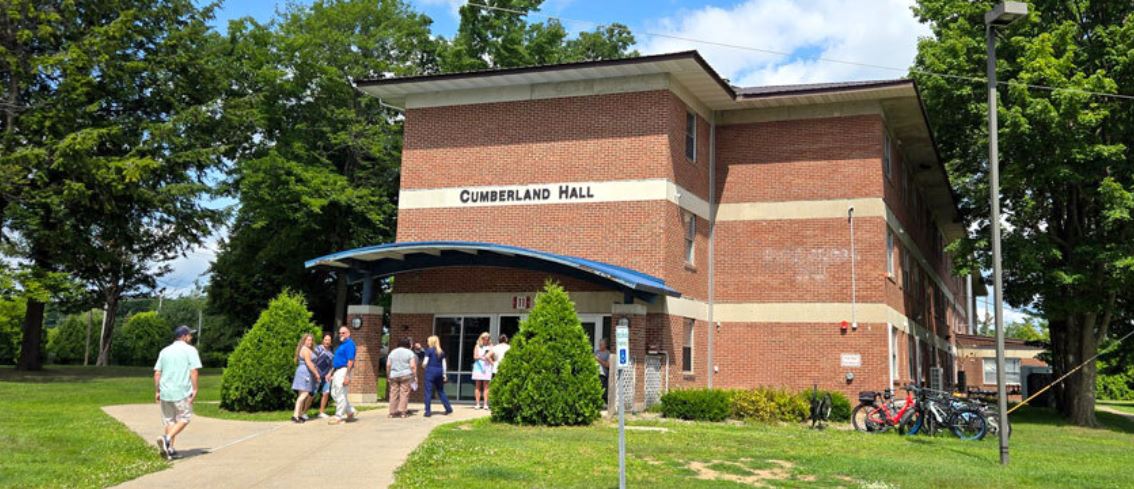
Emergency rooms are set up to handle medical emergencies. They’re less equipped to help people in a mental health or addiction crisis. That can make it harder to get patients connected with the treatment and resources that can help them on the path toward recovery. A new intensive crisis stabilization center in Plattsburgh is designed to help fill that gap. "A place to call, 988, right? Someone to come, and then a place to go, and so we would be the place to go," said Ron "Buster" Garrow, the center's program director. Garrow and the folks at Champlain Valley Family Center have spent the last three years getting the facility up and running. It’s located on the first floor of Cumberland Hall at the MHAB Life Skills Campus, which offers transitional housing to people in recovery. The center is designed to accommodate up to eight adults and four minors at a time. Garrow said they’ll be able to come in 24/7/365 to get the help they need for very serious behavioral health problems. Read more here.
| |
The National Suicide Hotline For LGBTQ+ Youth Went Dead. States Are Scrambling To Help.
On July 17, the option went dead for LGBTQ+ youth to access specialized mental health support from the national 988 Suicide & Crisis Lifeline. The Substance Abuse and Mental Health Services Administration (SAMHSA) said a month earlier that it would no longer “silo” services and would instead “focus on serving all help seekers.” That meant the elimination of the “Press 3” option, the dedicated line answered by staff specifically trained to handle LGBTQ+ youth facing mental health issues ranging from anxiety to thoughts of suicide. Now, states such as California, Colorado, Illinois, and Nevada are scrambling to backfill LGBTQ+ crisis support through training, fees, and other initiatives in response to what advocates say is the Trump administration’s hostile stance toward this group. Read more here.
| |
New "Turn the Page on Stigma" Campaign to Address Stigma in Addiction Treatment
The New York State Office of Addiction Services and Supports (NYS OASAS) recently announced the launch of a new PSA campaign designed to address the stigma among addiction treatment. The “Turn the Page on Stigma” campaign will feature television PSAs, billboards, and online ads designed to educate people about the stigma related to addiction services. The goal is to emphasize that there is an individual behind the disease, and that they are not defined by their addiction. Stigma presents significant challenges for individuals with substance use and behavioral health issues. It can prevent people from seeking or staying in treatment, accessing vital services and supports, and cause them to feel ostracized, leading to social isolation. On a community level, stigma fuels pushback against new treatment facilities, limiting access to care. Read more here.
| |
Universal Screenings Could Be a Game-Changer for Youth Mental Health – If the System Doesn’t Break
Back-to-school season is an inherently exciting time. Changing grades – maybe transitioning from elementary school to middle school, or from middle school to high school – and reuniting with favorite friends, teachers and coaches is an annual milestone ingrained in many of us. Beyond the ad campaigns for supplies, new shoes and backpacks, back to school is also the time of year when kids have more watchful eyes on them. As a result, it’s also a time when reports of family incidents, home abuse and mental health issues climb. Of course, to couch the educational system as a “catch-all” net for mental health or abuse issues that might have been missed over the summer or at home would be negligent. But beginning with the 2027-2028 school year, Illinois could be the state to change that with its roll-out of universal mental health screenings in public schools. Students in third grade or higher will be eligible for free annual screenings, though they aren’t mandated. Read more here.
Related: Best Practices for Strengthening Medicaid-Covered School-Based Health Care Services Via Telehealth
| |
N.Y. District Attorneys Set Sights on Raise the Age Tweaks Next Year
As New York prosecutors celebrate discovery changes they pushed Gov. Kathy Hochul to include in this year's budget, district attorneys across the state hope to keep momentum with their top ask for next year: amending the law that increased criminal responsibility in the state to 18 — known as Raise the Age — after a swell of youth gun violence in Albany. District Attorneys Association of the State of New York President Mary Pat Donnelly told Spectrum News 1 that changing the law is the organization's No. 1 priority in next year's state budget process. "The governor’s budget is an effective way to get this done, so certainly, we would love to see that happen," said Donnelly, who serves as the district attorney in Rensselaer County. "...There needs to be a revisit, and we need to evaluate what's happened since it's been in play." This focus on Raise the Age comes after a 17-year-old died in Albany last month and 10 people were shot in two mass shootings on the Fourth of July perpetrated by youthful offenders. Read more here.
| |
How Embedded Data Analysts Are Transforming State Corrections Systems
While corrections agencies across the country collect vast amounts of data and make significant investments in data management systems, many lack the staff time and resources to effectively translate this information into actionable insights or use data to make compelling cases to policymakers and the public about the importance of their work. The Resident Analysts (RA) program, launched in 2023 by The Council of State Governments (CSG) Justice Center, is addressing this critical gap. Initially piloted in 4 states, the CSG Justice Center embedded skilled data analysts within departments of corrections at no cost to the agencies. These corrections departments—California, Louisiana, West Virginia, and Wyoming—were selected from 27 applicants nationwide to participate in this innovative initiative, and the results have transformed how DOC leaders use data to set key performance indicators to improve system outcomes, make important operational decisions, respond to policymakers, and improve safety in facilities. Read more here.
| |
Children In a Mental Health Crisis Can Spend Days Languishing in the ER
Children who go to emergency departments in a mental health crisis and need to be hospitalized often end up stuck there for days, a new study finds. That happens in roughly one in ten of all mental health emergency visits for children enrolled in Medicaid across the country. The most common mental health crises that led to such extended stays, or boarding, were depressive disorders and suicidal thoughts and attempts, according to the study published in JAMA Health Forum. "So a child shows up at an emergency department with a mental health condition, [and] about one in ten times, they're staying for three days or longer," says lead study author John McConnell, director of the Center for Health Systems Effectiveness at Oregon Health and Science University. Read more here.
| |
These Parents Don't Only Fear the Death of Their Child. They Fear Dying First.
Karen and Jeff Groff have read the same children’s books to their son Danny for nearly four decades. At 6 feet, 1 inch tall, 39-year-old Danny Groff enjoys sitting in between his parents on their couch in Upper Arlington, Ohio holding a stuffed Bert Muppet toy. He leans in toward his mother as she reads "Curious George Rides a Bike," and breaks into a smile when she whispers, "George got curious." Danny Groff has Lennox-Gastaut syndrome, a rare and severe type of epilepsy that typically develops in early childhood. About 50,000 people in the U.S. and 1 million people worldwide have the condition, according to the LGS Foundation. Every time a seizure happens, brain damage occurs that can lead to learning difficulties and other lifelong disabilities. Danny Groff has seizures daily, and Karen Groff said he has the developmental abilities of a 2-year-old. He also has Type 1 diabetes, which means he can only stay part time at his adult day program. The staff there can't distribute the insulin he needs to live. He spends mornings at the program with his peers, and the rest of his time at home with his parents. Read more here.
| | |
UPCOMING EVENTS & TRAININGS
Building Rural Recovery Ecosystems
August 20, 12 - 1:30 pm, NCROTAC
Suicide and Substance Use Disorders: A Current Epidemic
August 20, 12 - 1:30 pm, NAADAC
How States Can Leverage Medicaid to Reduce Recidivism and Improve Health Outcomes
August 20, 1 - 2 pm, CSG Justice Center
How Measurement-informed, Transdiagnostic Care Can Improve Behavioral Health Outcomes
August 20, 2 - 3 pm, CETA Global
Contracting to Provide Peer Services: Is Your Organization Ready?
August 20, 2 - 3 pm, SAMHSA
Part 1: Creating a Trauma-Informed Recovery Oriented System of Care (TI-ROSC)
August 20, 2 - 3 pm, National Council for Mental Wellbeing
Legal Challenges and Alcohol Use Among Rural Youth
August 20, 3:30 - 4:30 pm, PCSS
2025 Suicide Prevention Summit - VIRTUAL
August 23 - 24, 9 am - 4:30 pm, Mental Health Academy
Part 2: Creating a Trauma-Informed Recovery Oriented System of Care (TI-ROSC)
August 25, 1 - 2 pm, National Council for Mental Wellbeing
Safeguarding New York’s Efforts to Address the Opioid Overdose Epidemic
August 25, 1 - 2 pm, NY Health Foundation
Behind the Curtain - A Discussion of Lessons Learned through Integrated Care Concept Planning
August 26, 1 - 2 pm, National Council for Mental Wellbeing
Beyond Depression and Anxiety: Scaling CoCM for Serious Mental Illness and Opioid Use Disorder
August 26, 2 - 3 pm, National Council for Mental Wellbeing
Practical Strategies to Expand the Rural Behavioral Health Workforce
August 27, 10 - 11:30 am, NCROTAC
Breaking the Cycle: Interrupting Intergenerational Trauma in Substance Use Disorders
August 27, 12 - 1:30 pm, NAADAC
Real Stories, Real Change: Turning Lived Experience Into Advocacy
August 27, 2 - 2:30 pm, National Council for Mental Wellbeing
Solving the EHR Puzzle: Exclusive Data on Pain Points, Priorities & Platforms
August 28, 12 - 1 pm, Behavioral Health Business
Crisis Systems for All: Leveraging Data to Assess Outcomes Across Populations and Plan Your Community Crisis System Approach
August 28, 1 - 2 pm, SAMHSA
Eating Disorders and Suicide
August 28, 1 - 2 pm, SAMHSA/Eating Disorder Center of Excellence
Partnering With Crisis Services in Early Serious Mental Illness Programs
September 3, 12 - 1 pm, SAMHSA
Key Strategies to Tackle Unsheltered Homelessness - Session 1
September 4, 1 - 2 pm, CSH
Beyond Recidivism: A New Era of Measuring Reentry Success
September 4, 2 - 3 pm, CSG Justice Center
Creating Optimal Access for OUD Services Utilizing Stages of Change
September 4, 3 - 4 pm, PCSS
Toward Whole-Person Care: Integrated Substance Use and Primary Care Integration
September 8, 2:30 - 4 pm, National Council for Mental Wellbeing
Runaway & Homeless Youth in NYS: Services, Referrals, and Mental Health Intersections Part 2
September 8, 2:30 - 4 pm, CTAC
Mental Health Awareness: Shedding Light on the Interplay between Suicide & Stigma
September 10, 12 - 1 pm, PsychU
Scaling Telehealth And Other Emerging Technologies To Mitigate The Health Care Workforce Crisis
September 10, 2:30 3:30 pm, Manatt Health
Key Strategies to Tackle Unsheltered Homelessness - Session 2
September 11, 1 - 2 pm, CSH
National Recovery Month Virtual Event: Recovery Ready, Set, Go!
September 16, 2 - 3 pm, National Council for Mental Wellbeing
Supporting Older Adults with Behavioral Health Needs
September 18, 10 am - 12 pm, SPOP
The Essentials for Contracting: Models, Contract Negotiation, and Compliance for Peer Organizations
September 18, 2 - 3:30 pm, SAMHSA
| |
CLMHD CALENDAR
SEPTEMBER
CLMHD Office Closed - Labor Day
September 1
CLMHD Executive Committee Meeting
September 3: 8 - 9 am
LGU Clinic Operators Call
September 9: 10 - 11:00 am
Addiction Services & Supports (ASR) Committee Meeting
September 11: 11 am - 12 pm
Mental Health Committee Meeting
September 11: 3 - 4 pm
Membership Call
September 17: 9 - 10:30 am
IOCC Meeting
September 18: 1 - 3 pm
Developmental Disabilities Committee Meeting
September 25: 1 - 2 pm
| |