| National Patient Safety Week | March 16, 2023 | | |
"Memorize, inquire, understand, communicate, verify, then perform. If you need more clarification during these steps, stop and take a time-out before proceeding." | |
A Leadership Perspective on Patient Safety
from John Higginbotham, Director of Corporate Operations
| |
When we engage a patient, I view the encounter as if my family is standing before me; they have high expectations!
One of the first promises in the Hippocratic Oath is "First, do no harm." Not just for a physician, this Oath is for everyone in healthcare.
There is a matrix of elements in the delivery of healthcare. The nucleus is my mindset, and the connectors to each component are my five senses. Memorize, inquire, understand, communicate, verify, then perform. If you need more clarification during these steps, stop and take a time-out before proceeding.
Walk through each step of the process and use appreciative inquiries to validate. These principles apply to medication administration, storage of goods, disposal of hazardous drugs, proper operation of medical equipment, clean and combustible-free workplace, and safety and security of our care environment. First, do no harm.
|
| |
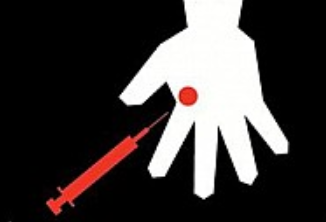
Safe Injection Practices
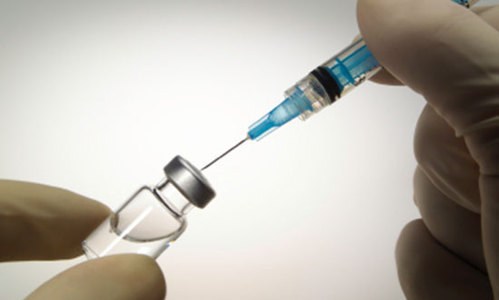
The World Health Organization (“WHO”) defines a safe injection as one that “does not harm the recipient, does not expose the provider to risk, and does not result in waste that is dangerous for others.”
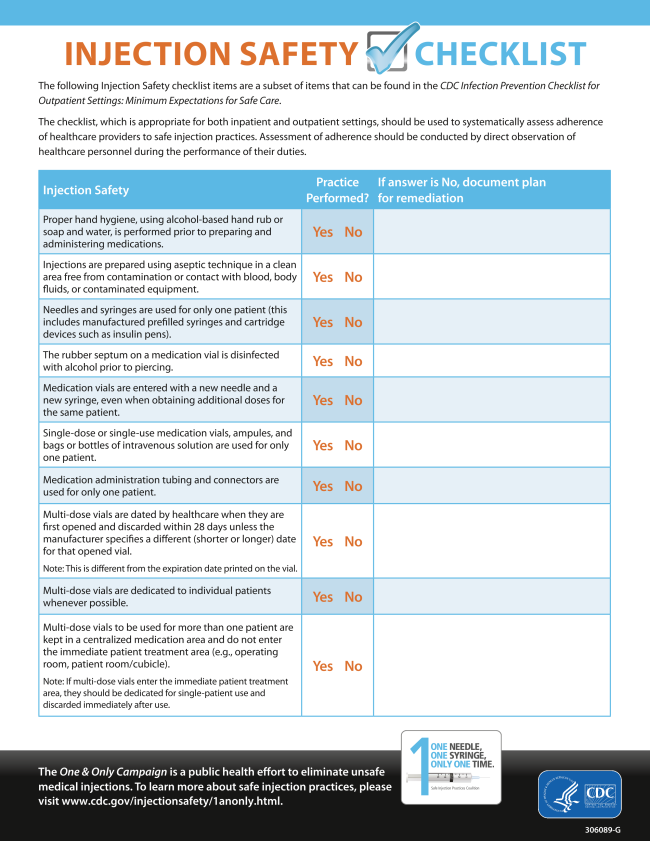
For a safe injection to take place, healthcare workers must follow an established set of steps which include infection control (hand hygiene, one needle for one patient), medication safety (production, preparation, administration), and pharmaceutical waste and sharps disposal.
| |
Safe injections can be categorized into four main steps | | |
|
When a healthcare worker puts a patient at risk for unsafe injection practices, it is usually due to carelessness or lack of awareness that they are performing an unsafe practice.
Common reasons for unsafe injection practices may include:
- Lack of knowledge of the Stanford Medicine Partners medication administration policies.
- Being inadequately trained and unaware of safe injection practices.
- Being rushed and taking shortcuts (thinking they are being careful).
- Forgetting previously learned safe injection practices.
Safe injections can be categorized into four main steps:
-
Safe Production - starting with the manufacturer producing sterile medication.
-
Safe Preparation - medications are being prepared in a “Medication Safety Zone” which is a clean area without interruptions.
-
Safe Administration - following Standard Precautions and the “7 Rights of Medication Administration.”
-
Safe Disposal - of the needle and syringe.
SMP’s Medication Safety Initiative includes a second clinical HealthStream course that focuses on Safe Injection Practices. The course is now available, and all clinical staff must complete it no later than Friday, April 28th.
Reference: World Health Organization: Injection Safety
| | |
Pharmaceutical Waste
Pharmaceutical waste is not created equal. Hazardous medications, non-hazardous medications, trace chemotherapy, and controlled substances —all must be handled separately according to their classification.
Pharmaceutical waste is subject to the rules of several regulatory agencies, and proper pharmaceutical waste disposal is complex. Working with experienced pharmaceutical waste disposal companies such as Daniels and PharmWaste Technologies assist with maintaining our compliance with federal and state regulations, in addition to providing cost savings due to proper segregation and disposal.
| | |
Daniels picks up Regular Pharmaceutical Waste and Sharps Pharmaceutical Waste during normal service. | |
Hazard Pharmaceutical Waste service needs to be scheduled. | | |
Needlestick: What if it happens to you?
Needlesticks can occur for different reasons ranging from engineering control issues to user error. Regardless of how or why you sustain a needlestick injury, follow the steps below:
CARE
Wash the wound and surrounding area with soap and water.
REPORT
Report the incident to your supervisor. Your supervisor will contact HR for a referral to Occupational Health for both you and the source patient.
- Immediately seek evaluation and treatment for the needlestick from our Occupational Health provider.
- Identify and document the source patient (if known). Depending upon the known immunity of the healthcare worker, the source patient may be asked to test for HIV, Hepatitis C, and Hepatitis B.
- The source patient will also be given a referral to Occupational Health for appropriate testing.
DOCUMENT
Save the malfunctioned needle/syringe and the remaining box of needles/syringes with the same lot number.
Your supervisor will document the injury in the EHS SAFE Reporting system including:
- the type and brand of the device which caused the injury
- the department where the injury occurred
- an explanation of how the incident occurred
TESTING
You will be confidentially tested for HIV, Hepatitis B, and Hepatitis C if your immunity is uncertain or unknown.
PROPHYLAXIS
Post-exposure prophylaxis ("PEP") will be provided when the source patient is unknown, refuses to be tested, or patient tests positive for HIV, Hepatitis B, and/or Hepatitis C.
FOLLOW-UP
Follow-up will be provided and includes testing, counseling, and monitoring of post-exposure prophylaxis toxicity.
Reference: www.cdc.gov/niosh/topics/bbp/emergnedl.html
|
| |
|
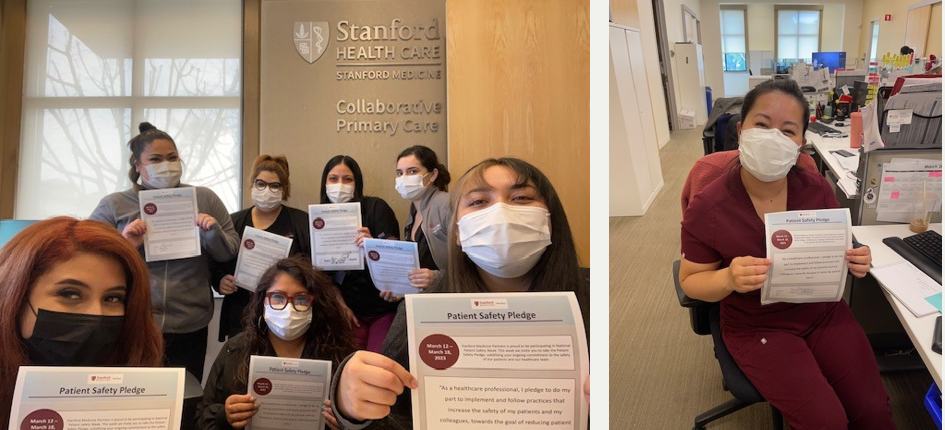
Collaborative Primary Care team members celebrate Safety Week with their signed pledges.
Top Left: Front row: (L-R) Destiny Dickerson, MA; Joanna Lamas, MA; Julie Moreno, PSR; Back Row (L-R): Ashley Katena, PSR; Sydney Hernandez, PSR; Carmen Chavez, MA; Gloria Valdovinos, MA.
Top Right: Nicole Nguyen, MA.
| | |
|
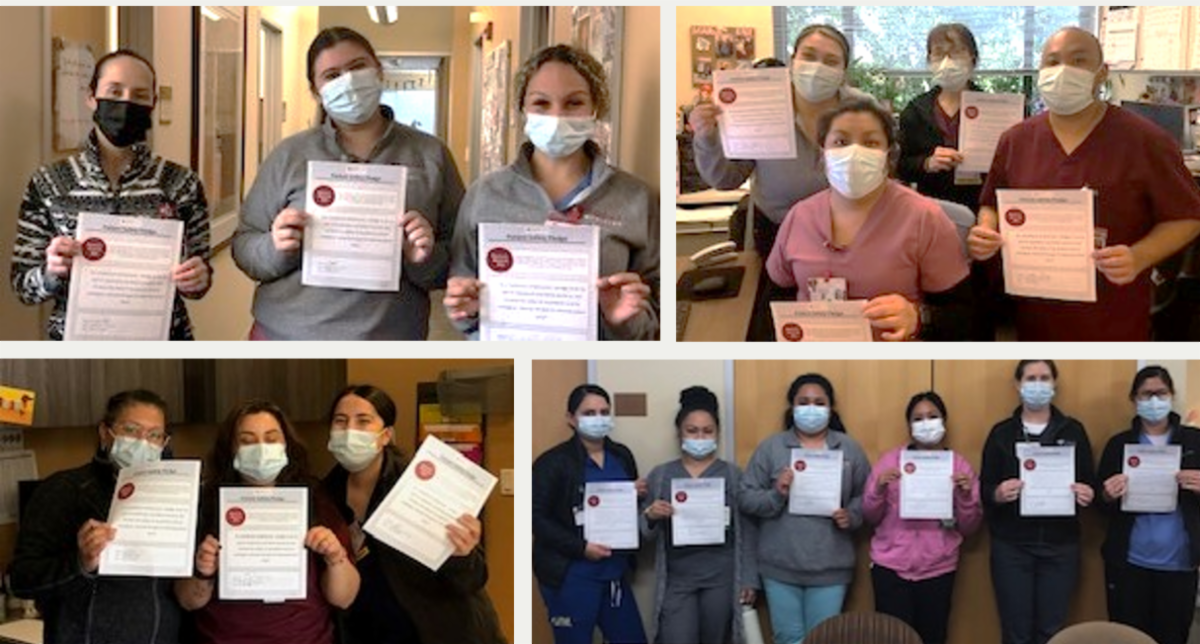
Menlo Medical Clinic staff sent photos of their signed pledges.
Top Left: OB/GYN and ENT MAs (L-R): Ariana Ruelas Medina, Mariah Diggs, and Zoey Poulicakos.
Top Right: OB/GYN and ENT MA 2s (L-R): Deyanira Bautista, Soledad Mireles, Jacinda Truong, and Alex Nazarita.
Bottom Left: OB/GYN and ENT MA 3s (L-R): Raven Rice, Roxana Rodriguez, and Vannesa Ortiz.
Bottom Right: OB/GYN RNs (L-R): Cindy Rubio, Yenisei Adelantar, Karenne Azares, Catherine Salvador, Camilla Dollahite, and Denise Gutierrez.
|
| |
Daily Challenge
-
What are your top three takeaways from Wednesday’s newsletter?
- Why are they important to patient safety?
- How will you modify your practice in the future based on what you have learned?
Email your answers to Megan Berry. The first three responses will receive a $10 Starbucks gift card! Winners will be announced in Friday’s newsletter.
Today's Winner
Today’s winner of the $10 Starbuck gift card is Karina Erazo, MA, MMC Peds!
|
| | | | |