- Featured Project: Pro-Inclusion Napa - Navigating Difficult Interactions with Kindness
- Napa Food Project- Celebrate 10 Years with Us on September 26
- Neighborhood Reads Continues Dolly's Legacy
- Inspiring Inclusion: Gracias a Todos! Hispanic Heritage Month
- Spotlight on Local Nonprofits
- Highlights from CanDo's Community Calendar
- Random Ramblings: America's Forbidden Fruit and Forgotten First Soda
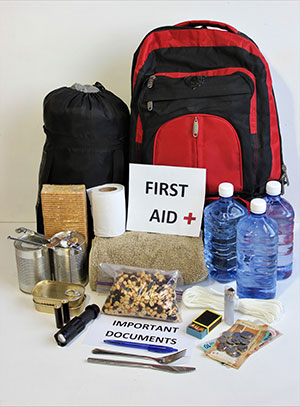
- Quick Tip: Build Your Emergency Go Bag
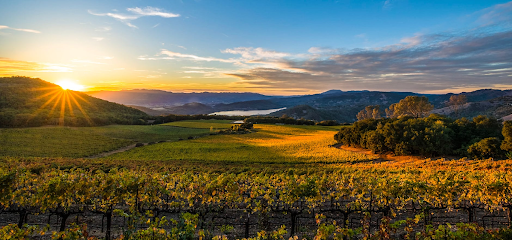
- Bits & Pieces: Why Napa Is Perfect for Growing Grapes
|
| |
CanDo's Pro-Inclusion Napa
Navigating Difficult Interactions with Kindness
By Susanne Deiss-Costanzo, PIN member and guest writer
| | |
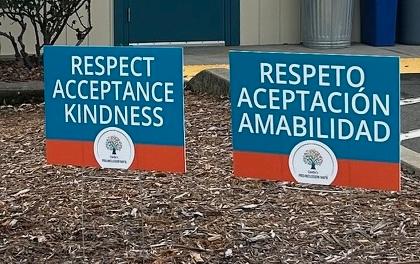
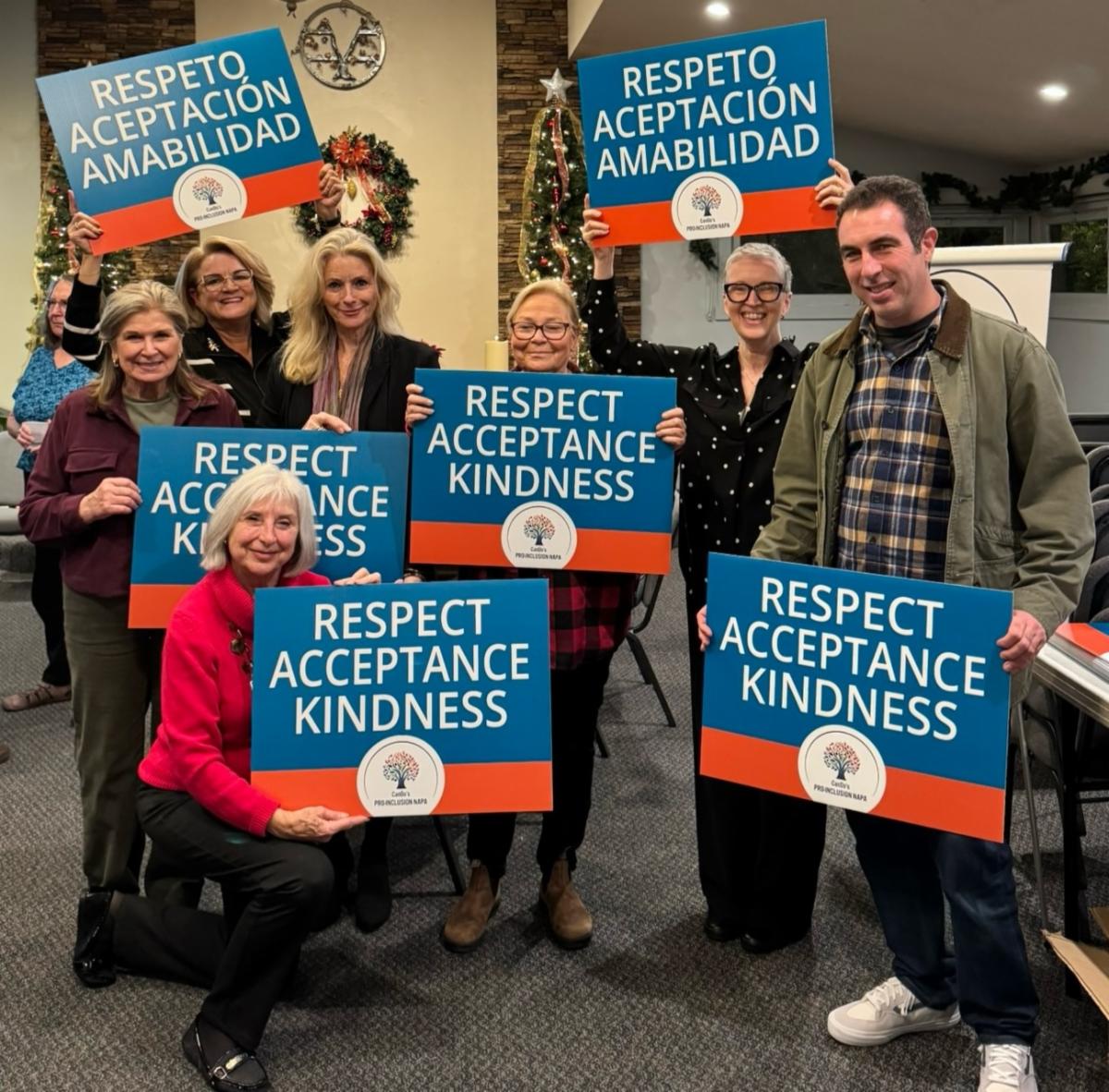
In January of 2026, CanDo’s Pro-Inclusion Napa (PIN) launched our second major project, the Positive Yard Sign Campaign, as part of our continued commitment to combat hate speech and divisiveness and to create an inclusive community where everyone feels a sense of safety and belonging. The signs are simple and express our core values: “Respect. Acceptance. Kindness.” – “Respeto. Aceptación. Amabilidad.” Since the campaign began, residents, faith communities, schools and businesses have requested more than 1,200 signs with more being distributed each week.
But the campaign is about much more than signs. For many residents, respect, acceptance, and kindness are values to practice every day. What happens, though, when those values are tested by cynicism, judgment, or outright hostility?
This question was explored at PIN’s August 18 general membership meeting, where PIN co-founder and Steering Committee member Laura Keller Coyote and member Julie Murphy led a workshop on navigating difficult interactions with kindness and composure. Drawing on their professional experience, they offered several practical strategies.
Practice self-regulation
Effective engagement often begins internally. When confronted with hostility, your natural response may be to fight, flee, or freeze, but conscious breathing and focusing on your values of kindness and acceptance can help you remain calm and composed rather than mirror another person’s reactivity. Simply introducing yourself, speaking with a kind, warm, measured voice, and asking the other person’s name can transform your encounter with a stranger into a conversation with a neighbor.
Lead with empathy and listen to understand
At its core, inclusion involves the deep work of empathy–the effort to understand another’s experience so that they feel seen. Begin with authentic curiosity and listen attentively—even when you disagree. Your open-ended questions and genuine interest in someone’s story can move a conversation beyond arguments and assumptions. Validating the other’s feelings and showing genuine care are ways you can help people feel heard and respected without requiring agreement. And when differences cannot be resolved, it may be possible for you to respectfully agree to disagree.
Use relaxed, non-threatening body language
An open stance and visible hands communicate that you are not a threat. Standing at a 45-degree angle rather than directly face-to-face can reduce tension, while avoiding prolonged eye contact gives both you and the person you are speaking with space to de-escalate.
| | |
Redirect divisive conversations
When an interaction turns toward political provocation, focusing instead on shared values—such as neighborhood safety, dignity, and mutual respect can help you restore common ground and acknowledge your shared humanity.
We often judge others by their outward behaviors instead of using our curiosity and empathy to discover the deeper meaning of what another person believes and values. This is a place to find connections and build relationships. These practices remind us that inclusion is not simply a message we display; it is something we embody in how we treat one another. Our goal is to do so with respect, acceptance, and kindness.
Many thanks to Napa's Community Projects for their support of Pro-Inclusion Napa!
| | |
Napa Food Project- CELEBRATE WITH US!
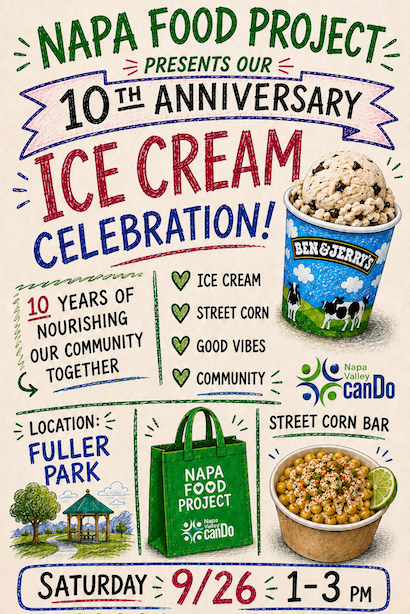
On September 26, CanDo's Napa Food Project is marking 10 years with a community celebration at Fuller Park (newly renovated!) — ice cream, street corn, good company, and a chance to reflect on a decade of collective effort. Mark your calendar now.
Whether you're a longtime volunteer, a curious newcomer, or someone who's been meaning to get involved, this is the event for you. The food project volunteer commitment is just six times a year — you can start simply by becoming a donor, or step into a Neighborhood Coordinator (NC) role when you're ready.
We hope to see our current NCs there in full force, sharing their strategies, stories, and enthusiasm with the next generation of volunteers. Green bags and sign-ups for new donors will be available on the day.
| | Neighborhood Reads Continues Dolly's Legacy | | |
In the wake of Dolly Parton's passing, we've been thinking about how to honor her legacy — and the answer felt clear: keep going. CanDo's Neighborhood Reads Project continues its partnership with First 5 Napa County and the Napa County Office of Education to bring a free, age-appropriate book each month to Napa County children ages 0–5, through Dolly's own Imagination Library. Families simply register, and the books arrive right at their doorstep.
Dolly believed a book in a child's hands could change everything. Every registration, every book that reaches a Napa County family, keeps that belief alive. There's no better tribute than making sure this program keeps growing right here at home.
How you can help:
- Spread the word! Post Imagination Library flyers and bookmarks at Little Free Libraries around Napa so more families know this program exists.
-
We also keep Napa's 40+ LFLs stocked with books in good condition, giving them a second home instead of the landfill. Spot an LFL that needs refilling? Let us know at neighborhoodreadsNapa Valley CanDo.org and we'll get you books to share.
| | | | You can volunteer for one of our dynamic projects, even for just an hour or two, or help one of the many local organizations we support. Each individual action connects to others. Together, we‘re making our Valley and world better. | | |
Gracias a Todos! Hispanic Heritage Month
by Chris England, Pro-Inclusion Napa Volunteer and guest writer
| | |
As you enjoy a frosty margarita on a hot September afternoon or treat yourself to a hearty meal at one of Napa’s many Mexican restaurants, celebrate National Hispanic Heritage Month!
The month, September 15 to October 15, coincides with the milestones and independence dates of multiple Central American countries, as well as Mexico.
The Napa Valley owes an enormous debt of gratitude to the Latinx people and their vibrant culture for countless contributions to local history.
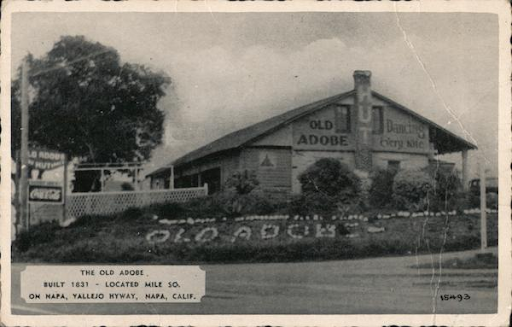
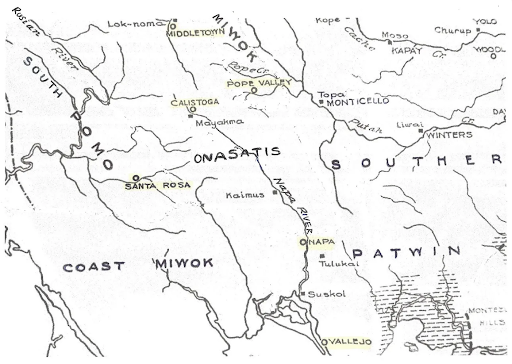
| | Of course, the local indigenous people, the Wappo, Patwin, and Miwok, predated Spanish colonization in Napa. But, as the Spanish empire extended north, the “Californios”, Mexican gentry, were awarded vast land grants by the distant Mexican government. Don Cayetano Juarez had his “Rancho Tulocay” – its single remaining building, the oldest structure in Napa, is now occupied by La Cheve Bakery. | | Historic hand-drawn map of the band and tribal territories around Napa, Solano, Sonoma and Lake counties. From the Suscol Council.org | | |
Don Mariano Vallejo, whose hacienda was in Sonoma, owned “Rancho de Napa”, which included the southernmost part of the valley. In those days, the early 19th century, much of the region included agriculture and cattle ranching.
As you drive along the Silverado Trail, seeing different aspects of the valley at every turn, it’s not so difficult to imagine vaqueros on horseback, driving cattle in dusty sunlight.
As European settlement moved north and west, many white “squatters” discovered the fertile bottomlands of the valley and settled here. Although they were technically on Mexican land, it was far away from the central Mexican government and difficult to govern. In fact, Senor Vallejo felt that “Alta California” would be better administered as part of the growing United States.
| | | |
With the discovery of gold in California and the completion of the Transcontinental Railroad, white settlement intensified along with labor forces of other races, and California became a global destination. When it achieved statehood in 1850, California retained most of its Latinx population.
Systemic racism was rife; all non-whites, including Latinx and Chinese laborers, were abused and degraded as a source of cheap labor. Wage exploitation and residential segregation were considered part of the natural hierarchy. Even with today’s improved education, support services and resources, some still hold those attitudes.
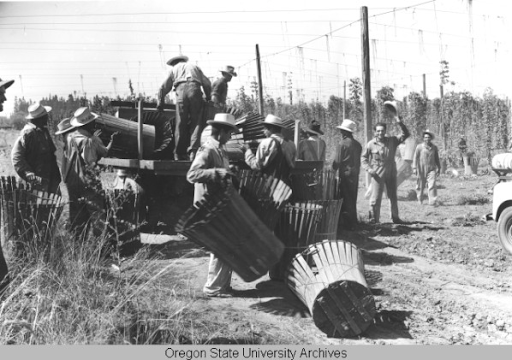
In the mid-20th century, because of the World War II labor shortage, the Bracero Program was initiated, bringing more Latinx labor into the valley under short-term contracts. Many temporary migrant labor families chose to stay, making the early successes of local wineries possible. Abuse and degradation continued. Any form of protest resulted in immediate deportation.
| | |
But the perseverance and resilience of the Latinx people gave them strength; in 1966, the United Farm Workers labor union was established to advocate for the rights of agricultural laborers in the United States. It set in motion a movement for support for marginalized agricultural communities. In 2011, the Napa Valley Farmworker Foundation was founded to provide viticulture training and to connect workers to community resources.
The cultural importance of the Latinx community is a source of local pride, an engine for social change and economic success.
We celebrate the Hispanic people of the valley with gratitude and pride; their vibrant culture and determination have helped to establish the global reputation of the Napa Valley.
Gracias a Todos!
| | Napa County Organizations Supporting our Hispanic Community | |
-
Puertas Abiertas, providing multicultural support, emergency assistance and system navigation.
-
Napa Valley Together, offering “Know Your Rights” education, immigration legal services, and citizenship preparation.
-
UpValley Family Centers, providing immigration services and family centers.
-
Napa County Hispanic Network, bringing opportunity to the community by offering scholarships and programs that inspire the next generation of Napa County Latino community leaders
-
Napa County Hispanic Chamber of Commerce empowers Latino entrepreneurs, professionals, and community leaders by creating opportunities for business growth, leadership development, and meaningful connections.
-
Napa Valley College is a designated Hispanic-Serving Institution (HSI), which means it receives grant funding to assist with strengthening institutional programs, facilities, and services to expand the educational opportunities for Hispanic Americans and other underrepresented populations.
| |
-
Napa County System Navigators help connect mental health services, transportation, resources, and referral services to individuals and families throughout Napa County with a focus on the needs of the Latino community.
-
Mariposa-Bridging Brothers provides a safe, supportive space where students can connect, grow, and lead. Its programs are designed to meet the social-emotional needs of local youth, helping them build confidence, resilience, and a sense of belonging.
-
¡Viva Mariachi! Festival at Napa Valley College offers a unique opportunity for our community to learn about the thriving programs throughout the U.S. that are effective in promoting student success, all while enriching the cultural vitality and musical traditions of their institutions and surrounding communities. Usually occurs in March.
-
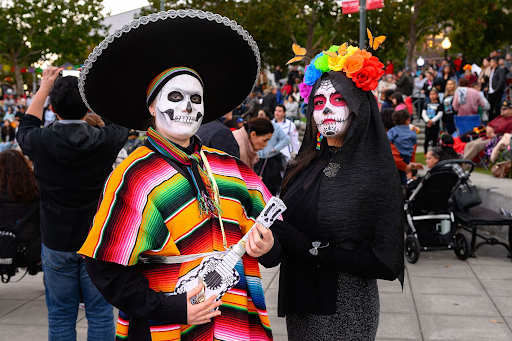
Día de los Muertos celebrations aim to create a family-friendly event where our diverse Napa community feels seen and heard through art, tradition, music, dance, and food; and where the spirit of Dia de los Muertos is driven by cultural awareness, understanding, and acceptance. Nov. 7, 2026 at Veterans’ Park.
| | More Opportunities to Support Our Community | | |
Volunteer Opportunities & Events to Support Local Nonprofit Groups
Tell 'em you heard about it through CanDo!
| | If you represent a local nonprofit, you may submit a COMMUNITY EVENT or VOLUNTEER OPPORTUNITY by completing our online form. | | Your event will be posted to the CanDo website upon receipt and will be published in the next newsletter, published the first Tuesday of every month. | | |
Flyer or image is required and must be sent as a jpg or png (NOT PDF).
SUBMISSION DEADLINE: 6PM on the Sunday prior to the publication day.
| | Looking for Local Volunteer Opportunities? | | |
Local community members can connect with the causes they are passionate about.
Go to VolunteerNow.org and type in Napa or your zip code.
| |  | |
Explore volunteer, event, and action listings to discover ways to make a positive impact in your community.
Go to Idealist.org and type in Napa or your zip code.
| | | |
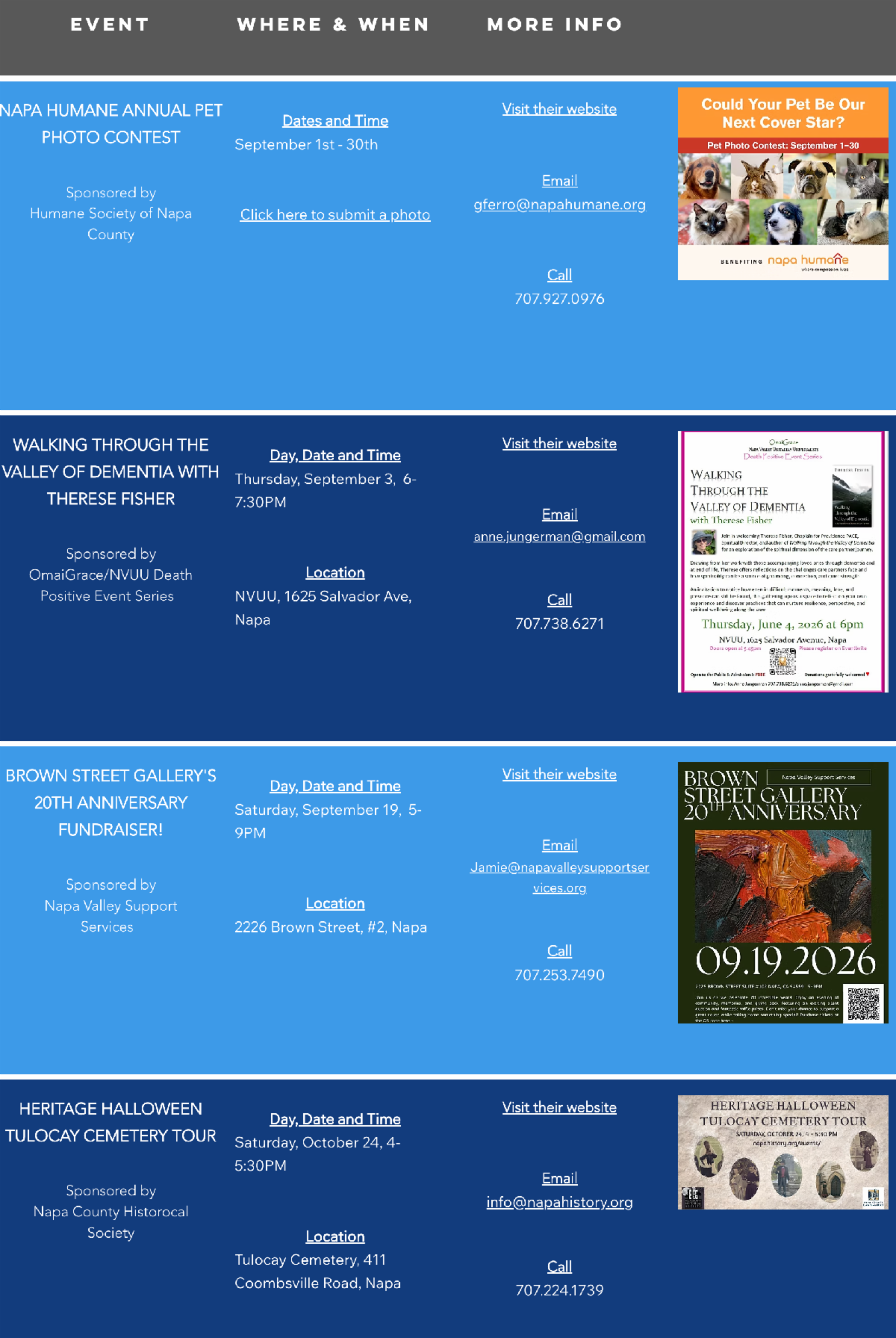
Highlights from CanDo's Community Calendar, September 1 - October 6
Please note: we are not responsible for errors in these listings. We take this information directly from promotional websites, usually the sponsoring site.
| | |
Sept. 1: Trivia Night at Barnhouse, Napa. FREE
Ends today, Sept. 1: The Beauty of Napa Valley: Photography of Bob McClenahan. FREE
Sept. 2: Trivia Night at Napa Yard, Napa. FREE
Sept. 2: Trivia Night at Folklore, Napa. FREE
Sept. 3: Historic Yountville Walking Tour. Registration required. FREE
Sept. 4: Fuller Park Tree Walk - UC Master Gardeners of Napa County
Sept. 5: Walk With Us - St. Helena - First Sat. of each month. FREE
Sept. 5: River Otter Ecology Project - Carolyn Parr Nature Center
Sept. 7, 14, 21, 28, Oct. 5: BE WELL Mobile Services - Napa County Health/Human Services - Every Monday. FREE
Sept. 8: Monthly Wetlands Slow Stroll - American Canyon. FREE
Sept. 9: Meet Me in the Street, American Canyon. FREE
Sept. 10: Dine and Donate Benefiting Mentis - Mary's Pizza Shack, Napa
Sept. 10, 11, 12: Auditions for Elf the Musical, Adults and Youth.
| | |
Sept. 12: Napa Valley Writers Club - "The Embodied Writer: How Wellness Enhances Craft"
Sept. 13: Calistoga Harvest Table 2026 - Lincoln Ave., Calistoga
Sept. 15: Napa Food Project orientation, 6 PM. Email napafoodproject@nvcando.org
Sept. 17: Matinee Movie Classics - "Adam's Rib" (1949) - Napa Library. FREE
Sept. 19: CA Coastal Cleanup Day - Various locations county-wide. Participate or volunteer!
Sept. 19: Bale Grist Mill Harvest Dinner & Auction - St. Helena - 180 Years
Sept. 20: Fiestas Patrias - Mexican Independence Day - Napa Oxbow Commons. FREE
Sept. 25: Moonlight Movies - Carneros Resort and Spa - Ferris Bueller's Day Off. FREE
Sept. 25: Puro Corazón 2026 - Fundraiser for Puertas Abiertas - Eagle Vines Golf Club
Sept. 29: Michael Leonardi Foundation Music + Awareness Concert - The Barn Napa Valley Car Club
Oct. 1: Young Professionals Napa Valley Coffee Break - Deuces Market, Napa - First Thursday of each month - FREE
| | |
Random Ramblings
CanDo's President, Camille Gentry Kaijankoski, kindly shares some of her favorite online discoveries in this space.
| |
America's Forbidden Fruit and Forgotten First Soda: Ask Gastropod
Fan favorite Ask Gastropod is back, and we’re celebrating the season by solving a pair of trans-Atlantic mysteries!
First up: if you have a purple candy in Europe, it’s nearly guaranteed to be flavored with a tart little berry called blackcurrant—while the same color candy in the US is almost always grape. One intrepid Gastropod listener wanted to know: why the difference?
We’ve got the story of how a tree so important it was on early Americans coins inspired the botanical witch hunt that made a delicious fruit illegal on this side of the pond.
Plus, lager and ale lovers around the world would be deeply confused by the warmly spiced soda that Americans call “root beer.” So where did this non-alcoholic beverage come from, what are these mysterious roots, and why is it called beer? It’s a tale of tea, teetotalers, and a ubiquitous ugly baby—and because we at Gastropod will put our stomachs on the line to get to the truth, we attempted to brew the original recipe to taste it for ourselves.
Listen to the podcast here (50 min.)
| | |
Quick Tip
🎒 Build Your Emergency Go Bag
| | |
September is a great time to check your emergency Go Bag and make sure it’s ready to grab if you need to evacuate.
Napa County recommends keeping essential supplies together, including:
- Water and non-perishable food
- Flashlight, batteries and phone charger
- First-aid supplies and medications
- Important documents and emergency contacts
- N-95 masks for wildfire smoke
- Personal hygiene items and a change of clothing
- Food, water and supplies for pets
👉 CanDo Tip: Check your Go Bag twice a year. Replace expired items, check batteries and medications, update important documents, and make sure everyone in your household knows where it is. If you have pets, don’t forget to consider their needs too! Extra water & pet food will help in case of emergency.
Learn more:
| | 🍇 A Little Napa Valley History: Why Napa Is Perfect for Growing Grapes | | |
Have you ever wondered what makes Napa Valley such a special place for growing grapes? It starts with the land.
Napa Valley's dry Mediterranean climate, warm sunny days and cool evenings provide ideal conditions for grapes to ripen while maintaining acidity. The Valley's mountains, elevation and proximity to San Pablo Bay also create numerous microclimates.
The soil is just as important. Napa Valley contains 33 soil series and more than 100 soil variations, shaped by millions of years of volcanic activity, erosion and geological changes. This diversity allows different grape varieties to thrive throughout the Valley.
Napa's wine history began nearly 200 years ago, with George Yount planting grapes in 1839 and Charles Krug establishing the Valley's first commercial winery in 1861. The region's international reputation grew dramatically after two Napa wines won the famous 1976 Paris Tasting.
Today, Napa's vineyards remain protected by the 1968 Napa Valley Agricultural Preserve, America's first agricultural preserve.
The next time you drive past a Napa vineyard, take a moment to appreciate it—the Valley's unique combination of climate, soil, geography and generations of farming knowledge is what makes Napa truly special.
Learn more:
| | | | |
Hate has talked so loudly for so long. Greed has talked so loudly for so long. Liars have talked so loudly for so long. Love has got to stop whispering.
~ Marianne Williamson, American self-help author, speaker, and activist
| | |
PO Box 855
Napa, CA 94559
Email: info@nvcando.org
Phone: (707) 225-8942
Tax ID: 46-2670379
| | | | New to CanDo? Want to receive this nifty eNewsletter? It comes out bright and early the 1st and 3rd Tuesdays of the month, full of ways you can volunteer and connect with community. | | |
You Want to Help. We Make it Easy is a registered trademark of the Neighborhood Food Project. Used by permission.
| | | | |