Fall Conference 2026: Beyond the Bin
Now accepting Award Nominations & Sponsorships
| |
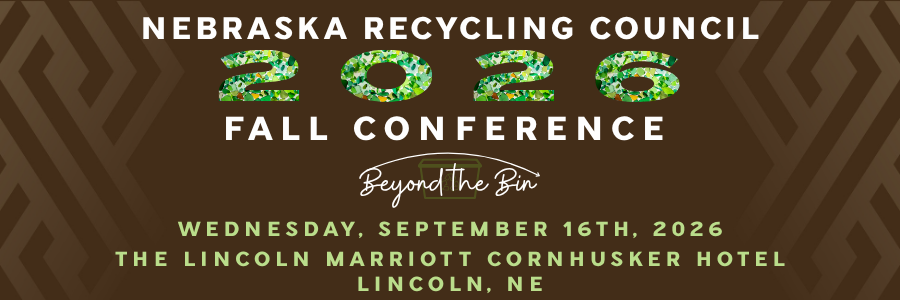
Join the Nebraska Recycling Council for the 2026 Annual Fall Conference, Beyond the Bin. Our solution-driven conference will focus on the future of recycling, waste reduction, and circular economy practices. This year’s theme highlights strategies that go beyond the recycling bin, featuring community-driven approaches to reduce waste, recover valuable materials, and address special waste and organics management. Attendees will connect with national industry leaders and local practitioners to exchange ideas, explore best practices, and drive meaningful change across Nebraska and the Midwest.
Early bird registration is open - use code EARLYBIRD26 for 20% off your registration!
| |
We’re excited to announce that nominations are now open for our annual awards! This is a great opportunity to recognize the individuals, organizations, and initiatives making a meaningful impact in waste reduction, recycling, and sustainability across Nebraska.
Know someone doing outstanding work? Whether it’s a colleague, partner, community leader—or even your own organization—we encourage you to submit a nomination and help us celebrate the efforts driving positive change.
Join us in highlighting the people and projects creating positive change in our communities. Submit your nomination today!
| | Partnership Opportunities |
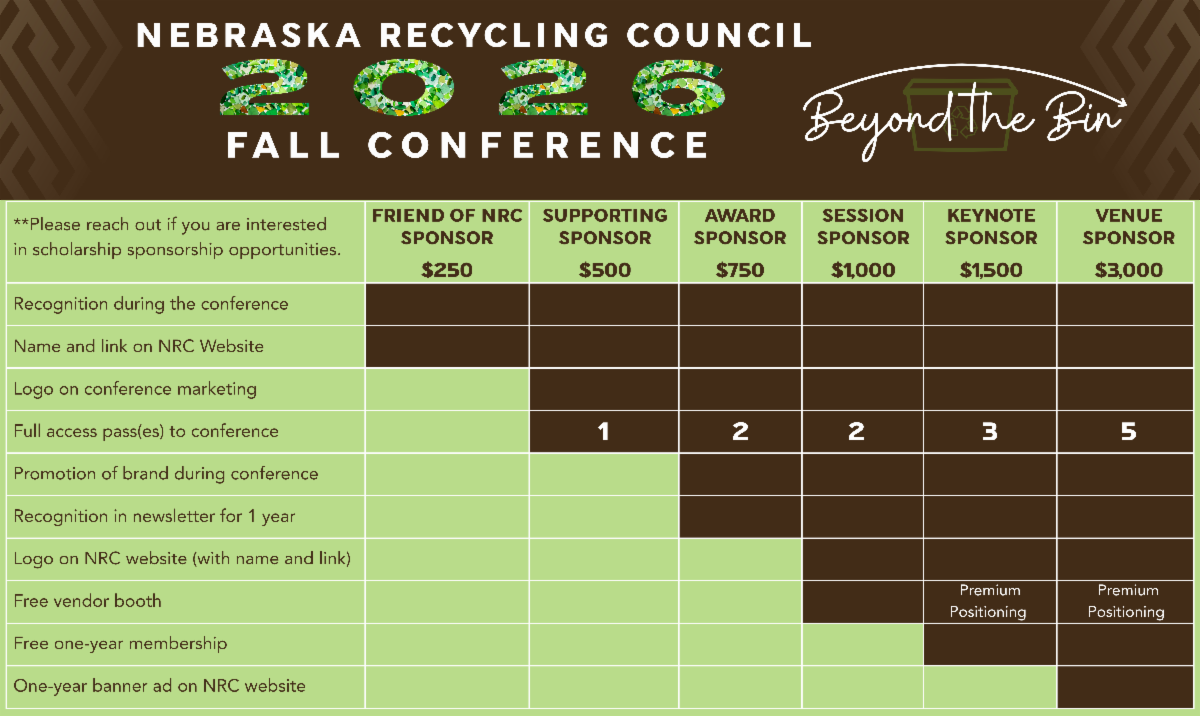
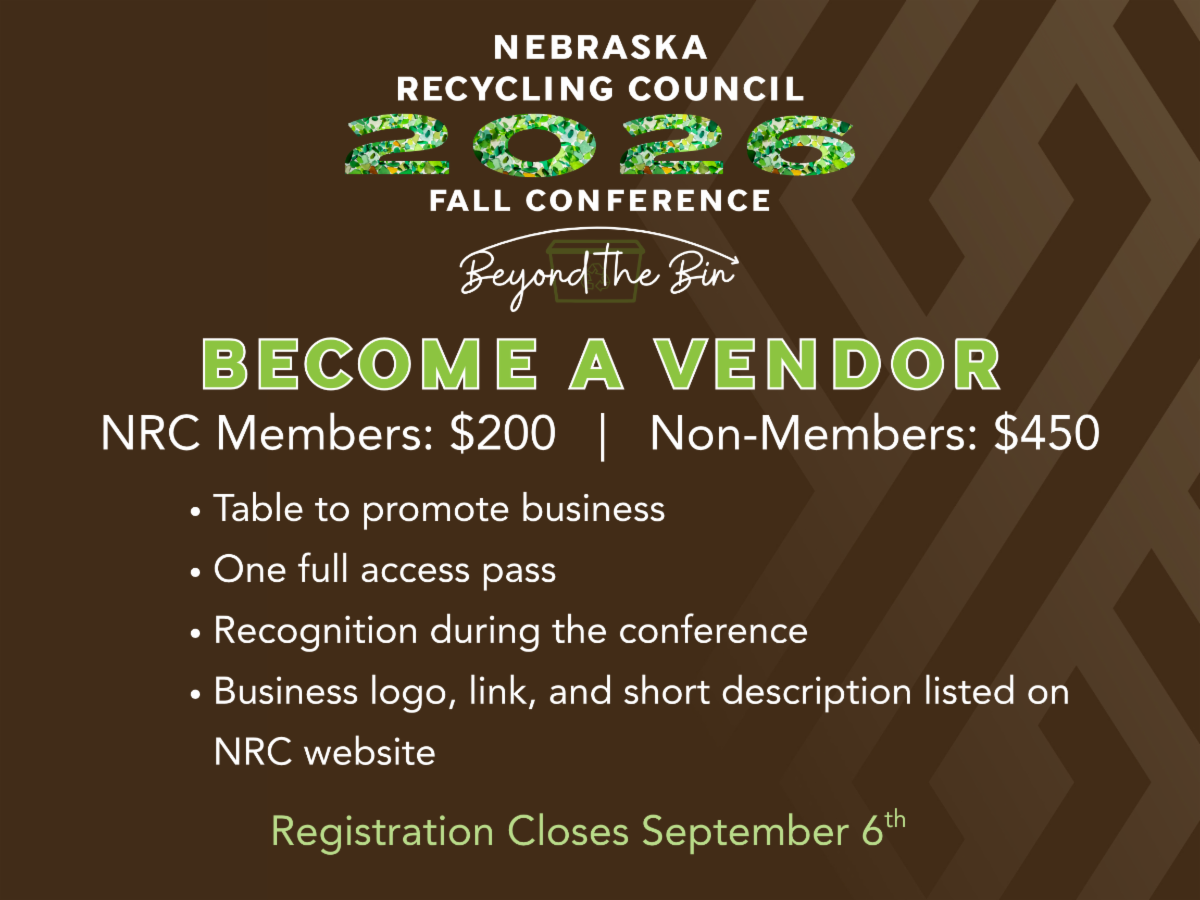
Secure your spot as a sponsor or vendor and position your organization in front of a highly engaged audience of recycling, composting, and waste management professionals from across Nebraska. Our annual in-person conference brings together more than 100 industry leaders, municipal representatives, businesses, nonprofits, and service providers for a full day of networking, education, and collaboration to advance sustainable materials management across the state.
The event features educational sessions led by industry experts, opportunities to build valuable professional connections, and a dynamic vendor showcase where attendees can explore innovative products, services, and solutions. The day concludes with an evening reception designed to encourage continued conversation and relationship building in a relaxed setting.
As a sponsor or vendor, your support helps make this important event possible and gives your organization meaningful visibility through event promotions, on-site recognition, and direct engagement with attendees. Sponsorship offers a unique opportunity to strengthen brand awareness, showcase your commitment to sustainability, and connect with decision-makers and professionals shaping Nebraska’s recycling and waste reduction efforts.
| | |
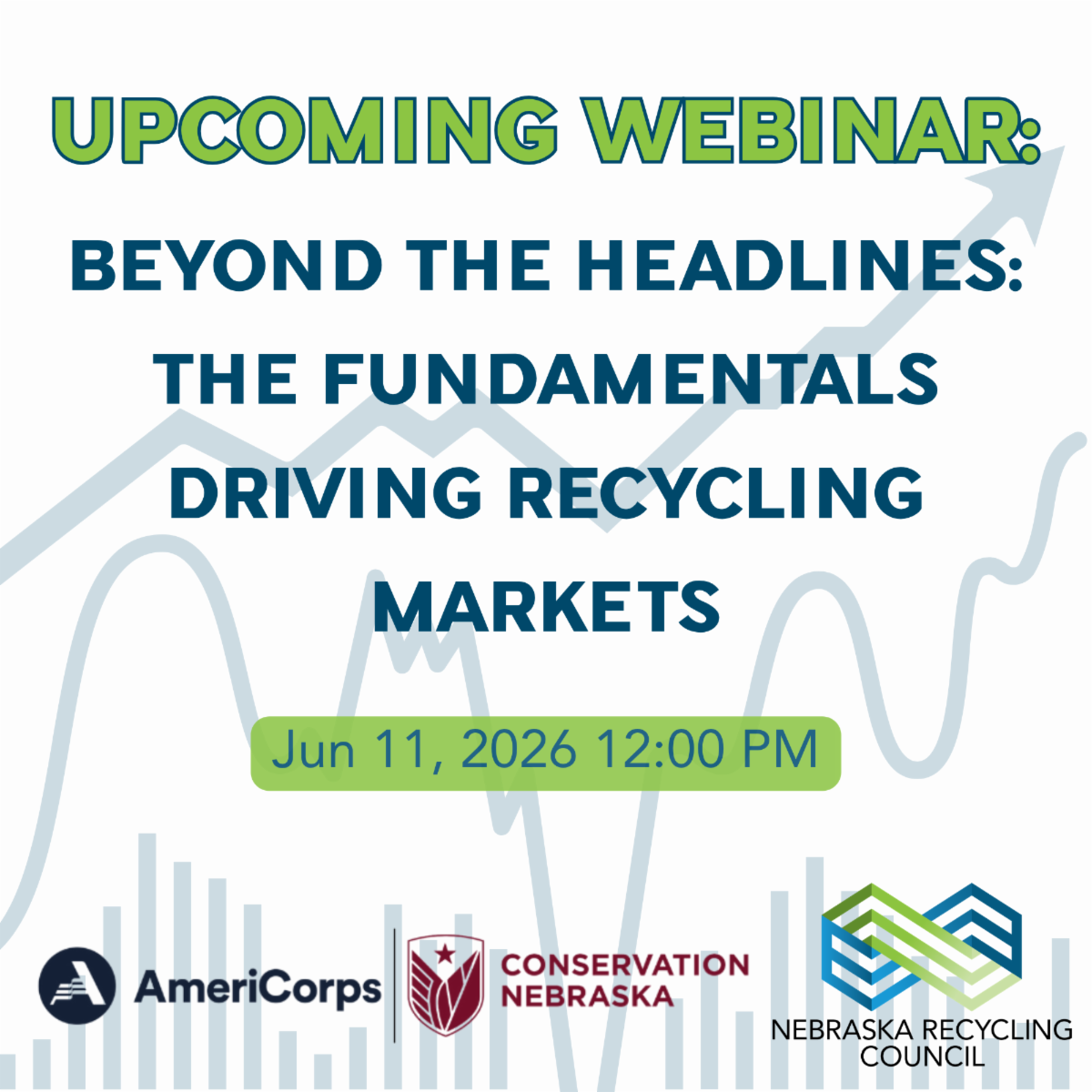
Upcoming NRC Webinar
Beyond the Headlines: The Fundamentals Driving Recycling Markets
| |
Watch this exclusive online webinar featuring Emily Sanchez, Chief Economist at the Recycled Materials Association (ReMA) and Kimberly Carroll Steward, Executive Director at the Nebraska Recycling Council, for an inside look at the national economics of recycling in the U.S.
Recycling markets can feel chaotic — but the long-run story is shaped less by the headlines and more by fundamentals: manufacturing demand, construction activity, labor markets, and the global appetite for recycled feedstocks. Emily Sanchez, Chief Economist at the Recycled Materials Association (ReMA), will cut through the noise to explain what's actually moving recycled metals, paper, and plastics markets right now, and what to watch in the months ahead.
Emily Sanchez is the Chief Economist at the Recycled Materials Association, where she uses data analytics and economic analysis to make sense of the recycled materials industry, end-use industries, global trade, safety, and distribution and logistics issues.
A Virginia native, Emily holds a Bachelor's in Psychology with a minor in Statistics from James Madison University and an M.S. in Applied Statistics and an M.A. in Economics from George Mason University. Emily currently serves as Chair of the Board of the National Economists Club. She has previously served the NEC as President and as Vice President of Programs.
| | Reuse: Preventing Waste Before It Starts | |
By Grace Barton
Most people are familiar with simple ways to reduce waste: carrying a reusable water bottle, bringing reusable grocery bags, or shopping secondhand. But reuse is about more than swapping disposable items for reusable ones. It’s about reducing the need for new products to be made in the first place.
While recycling remains important, many materials, especially plastics, are difficult to recycle effectively. Reuse helps prevent waste before it is created by keeping items in use longer and reducing demand for single-use products.
Of course, reuse only works when items are actually reused. A reusable grocery bag, for example, has a greater environmental footprint to produce than a plastic bag, but repeated use quickly offsets that impact. The longer we use an item, the more value we get from the resources used to make it.
Reuse can also mean borrowing instead of buying. Tools, household items, and equipment that are only used occasionally do not always need to be owned individually. Borrowing from neighbors, friends, or community programs helps reduce waste while building stronger community connections.
That idea has led to the growth of tool libraries and “Libraries of Things” across the country, and is showing up here in Nebraska as well. In Lincoln, the Near South Tool Library at Hope House allows residents to borrow tools for up to two weeks.
Several Nebraskan public libraries also offer Libraries of Things, including:
Contact your local library to find out what they offer beyond books.
Sometimes the best way to reduce waste is simply to pause before making a purchase and ask: Will I use this often? Could I borrow this instead? Is there a longer-lasting option available? Small decisions like these add up over time. By reusing what we already have, sharing resources within our communities, and choosing durable products whenever possible, we can reduce waste before it is ever created.
| | | | |