Welcome back to the Network Newsletter!
|
|
Network Members-Only Website Update
|
|
After a brief hiatus, we are finally back with a bi-monthly Network Newsletter.
The last couple of months we have had some technical difficulties getting the network website up and running. We are so sorry for the delay! In addition, we have a slight change to the domain name. To access all the member resources and information simply head over to
members.texashungernetworks.org
and enter the password
mynetwork
. *note the new domain name!*
The Network serves to bridge together Hunger Free Community Coalitions (HFCC) from across the state of Texas. The Network allows HFCCs to learn from each other and to lay the groundwork for a statewide, bottom-up approach to ending hunger in Texas.
|
|
|
|
Share articles and research with other coalitions, stay up to date on upcoming events, and get notifications when new resources have been added to the Network website.
|
|
|
This month's newsletter
at a glance...
|
|
- Meet the Editor
- Shine the Spotlight: McKinney Hunger Coalition
- Upcoming Events: Friday Summit Session
- Best Practices: Boerne Community Coalition
- Special Announcements: Meals-to-you, "
I Was Hungry", and Hunger Action Month
- Public Policy: Child Nutrition Reauthorization
- Helpful Resources: Guide to creating a School Pantry
- Food for Thought
|
|
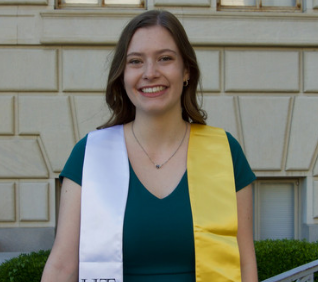
Hey there! I'm Brooke Dal Santo I recently graduated undergrad from the University of Texas at Austin (hook 'em!) and I just started my service year as a Baylor University Hunger Free Community AmeriCorps VISTA member with Texas Hunger Initiative about a month ago. I'm excited to work with THI this year both with the coalition network and building new coalition work in the Austin area. One of my duties will be to work on this newsletter every-other month and I'd love for you all to reach out to me with any and all exciting updates of your coalitions by emailing me at
brooke_dalsanto@baylor.edu
|
|
|
McKinney Hunger Free Coalition
|
|
Gearing up efforts for a Summer Meals Program in 2020
|
|
|
|
Founded: August 2018
Mission: Establish a collaborative, community-based organization of McKinney’s non-profits offering access to meals for hungry children, seniors and families.
|
|
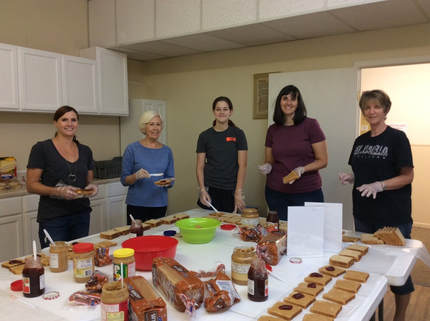
The McKinney Hunger Free Coalition was created to help a group of very dedicated local organizations come together and increase the overall efficiency of feeding hungry McKinney citizens. They discovered that while each group worked to achieve their own mission, they were not clear how other organizations were going about accomplishing their goals. Thus they gathered as a coalition to focus on three main objectives: to promote networking, to gather and share information, and to advocate for the hungry in their community.
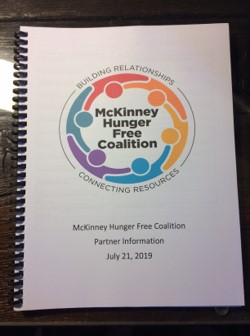
Realizing there was a lack of understanding among the coalition partners of what each group was doing in the community, they started their group's work by increasing the communication between groups in the hunger/food insecurity sector. This led the coalition to create a partner information booklet, outlining the programs each group offered. The booklet was shared both electronically and via print. Once finalized, the MHFC plans to draft a simpler summary for public consumption. This document will be very helpful when groups are working with clients, to help them quickly refer them to other agencies or groups for the services they need.
|
Printout of the MHFC partnership booklet that will be used as resources throughout their coalition
Next, the young coalition needed a do-able goal that would promote collaboration while making the community aware of the problem of food insecurity. As the Coalition sought to find a group mission, they quickly landed on the need to increase the level of children feeding during the summer. The group’s first step was to establish a Summer Feeding Action Team. This team is working to prepare and create a plan of action for the 2020 summer meals program with the theme of “We can do better.”
|
|
By collaborating with the school district, the team discovered that from 2018 to 2019 McKinney lost half of its summer feeding sites and the participation level went down significantly. In 2019, only 5 sites were open in McKinney. (vs. 10 in 2018) and some of those sites were open only 4—5 weeks during the summer. Additionally, the team found that 40% of the students lived 20-30 minutes away from the feeding site established for them.
Therefore, in 2020, the team’s goal is to address these barriers and to increase the number of children fed next year. The team has started brainstorming and researching ways to get meals to the kids instead of making kids and their families come to the food. So far, they have taken inspiration and advice from different programs around the country including Oklahoma, New Mexico, Texas. The most helpful model is an existing pop-up food program in Plano run by Custer United Methodist Church. This program feeds 200 people per day on average.
Moving forward, MHFC hopes to unite and engage their members by building and endorsing new summer meals sites for 2020. While still in the beginning stages of their plan, we are amazed by their determination and excited to see what they accomplish in 2020 and beyond!
|
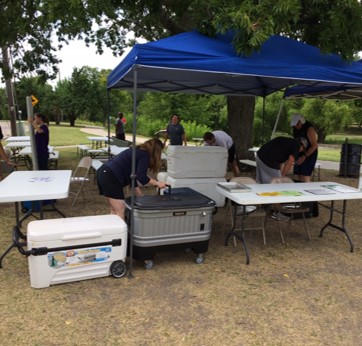
A source of inspiration for their 2020 Summer meals program comes from a pop-up by Custer Road UMC in Plano that offers free meals for anyone who needs them.
|
|
|
SAVE THE DATE: Friday, October 4
th
Hunger Free Communities – Networking Session
Baylor University
|
|
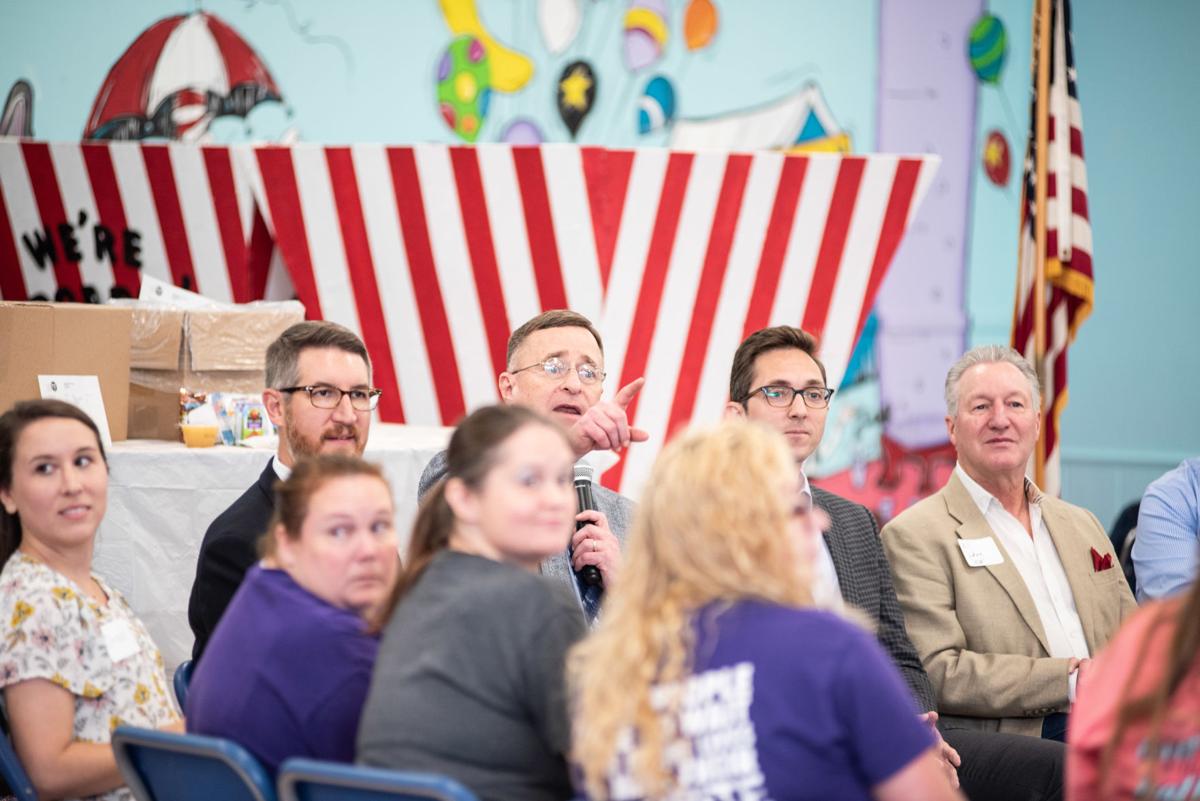
For those of you attending our annual Together at the Table: Hunger and Poverty Summit next month, you are invited to a special networking session just for you!
This will be a time of fellowship, sharing, and collaborating on Hunger Free Communities work.
You will receive an agenda and invitation in the next few weeks.
We will be reviewing the last year, discussing our annual survey of Network members, as well as creating a space to troubleshoot, discuss barriers, and share successes.
I look forward to seeing you all there!
|
|
Statewide Field Director
Austin Regional Director
**NOTE: If you have not planned to come to the Summit, but would like to attend this session – please email
Katie_Nye@Baylor.edu
for details and to RSVP.
|
|
Case Study: Boerne Community Coalition
|
|
Cultivating partnerships and trust in their community
|
|
Founded: 2015
Mission: To improve the quality of life for children and families in our community by creating, connecting, and providing them with needed resources and services.
|
|
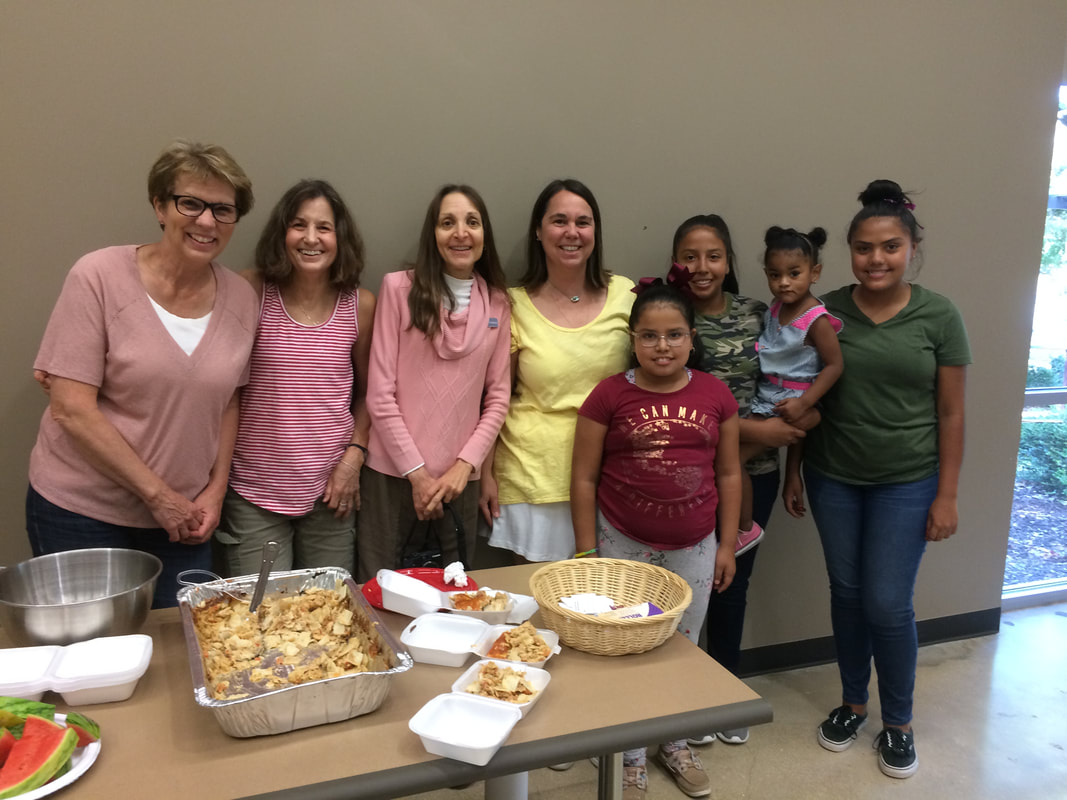
Boerne Community Coalition is an all-volunteer operated organization that works in partnership with countless organizations in the city of Boerne who all share the same vision – "children in our community should not be at risk of being hungry". This coalition implements
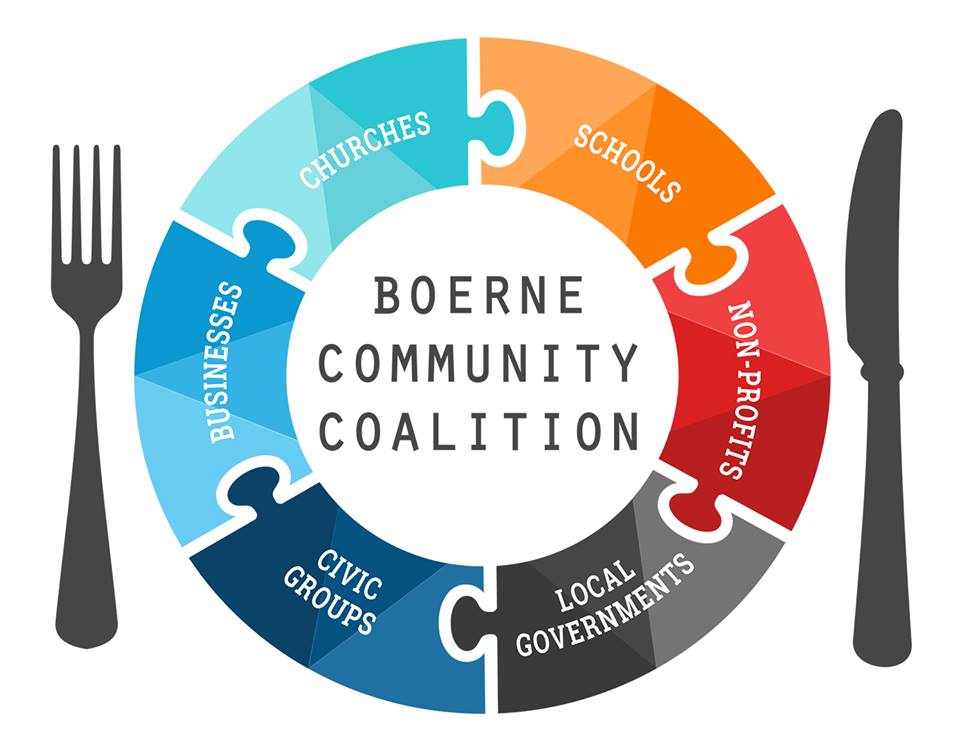
multi-sector organizational structure (a Hunger Free Communities best practice) and relies on the involvement and participation of different groups in Boerne including churches, Boerne ISD, the Boys and Girls Club, the YMCA and so much more. By working with many groups, they follow another THI best practice: an
asset-based approach; they focus on issue development that builds off existing resources in place in the community. An example of this is their involvement with the “Blessings in a Backpack” program that provides elementary schoolchildren in Boerne with a backpack of food to take home for 38 weekends during the school year. The coalition steps in and helps feed these kids when the program is unable to, like the first couple of weeks of the school year, during the summer, and to a non-ISD preschool.
|
|
From all this, it shouldn’t be surprise that feeding kids is one of the biggest things they do. One of the first events they implemented was using a food truck and bringing summer lunches to 8 "pockets" of poverty previously identified, but their efforts were not as successful as they hoped. However, the involvement of a church and their relationship within the neighborhoods and their residents proved to be the key to garnering the trust of those they hoped to serve. This summer, because of a long-standing relationship within one of the neighborhoods, they began a summer outreach program and delivered up to 47 lunches each weekday, provided Hearts of Love weekend food bags on Fridays, and hosted a picnic, story time and craft with the Public Library on Wednesdays. In all, they found that actively seeking the right people who were trusted in a community, helped them overcome a huge barrier to providing for those in need. They now partner with local enrichment programs and camps to provide scholarships and encourage families to enroll their children. This summer alone, over 4,400 lunches, 1,000 weekend food bags, and 100 scholarships were provided to qualifying children enrolled in 11 partner camps and programs, which includes the neighborhood outreach, a church youth group, and a daily sign up at the Public Library.
|
|
|
These examples are just a few of the many programs BCC is implementing. To learn more visit their website or feel free to email their leader, Jessica Buffington, at
jessica@boernecommunitycoalition.com
|
|
Some more insight:
Boerne is a 501(c)3 and has experience with the application process. They have found this status helpful with receiving and getting large donations. If you'd like to learn more about their non-profit status, email their treasurer, Laura Gray, at
laura@boernecommunitycoalition.com
|
|
A Summer Meals Program: "Meals-to-You"
Distributing meals to kids in hard-to-reach rural Texas counties
|
|
Video published by McLane Global shows the efforts that went behind this pilot program.
|
|
Eustace ISD, the USDA and the Texas Hunger Initiative met with recipients, community members and leaders.
|
|
|
This summer, the U.S. Department of Agriculture (USDA) Food and Nutrition Service partnered with the Texas Department of Agriculture and Texas Hunger Initiative to help keep over 34,000 Texas children in several low-income rural areas fed during the summer through a summer meals demonstration pilot project. The USDA-THI summer meals demonstration project, called Meals-to-You, was launched this summer in five counties – Henderson, Leon, Concho, Kimble and Upton Counties – covering 20 school districts in Texas where traditional congregate summer meals programs were either not offered or not accessible for all or part of the summer.
Read more information about the program
here
|
|
 |
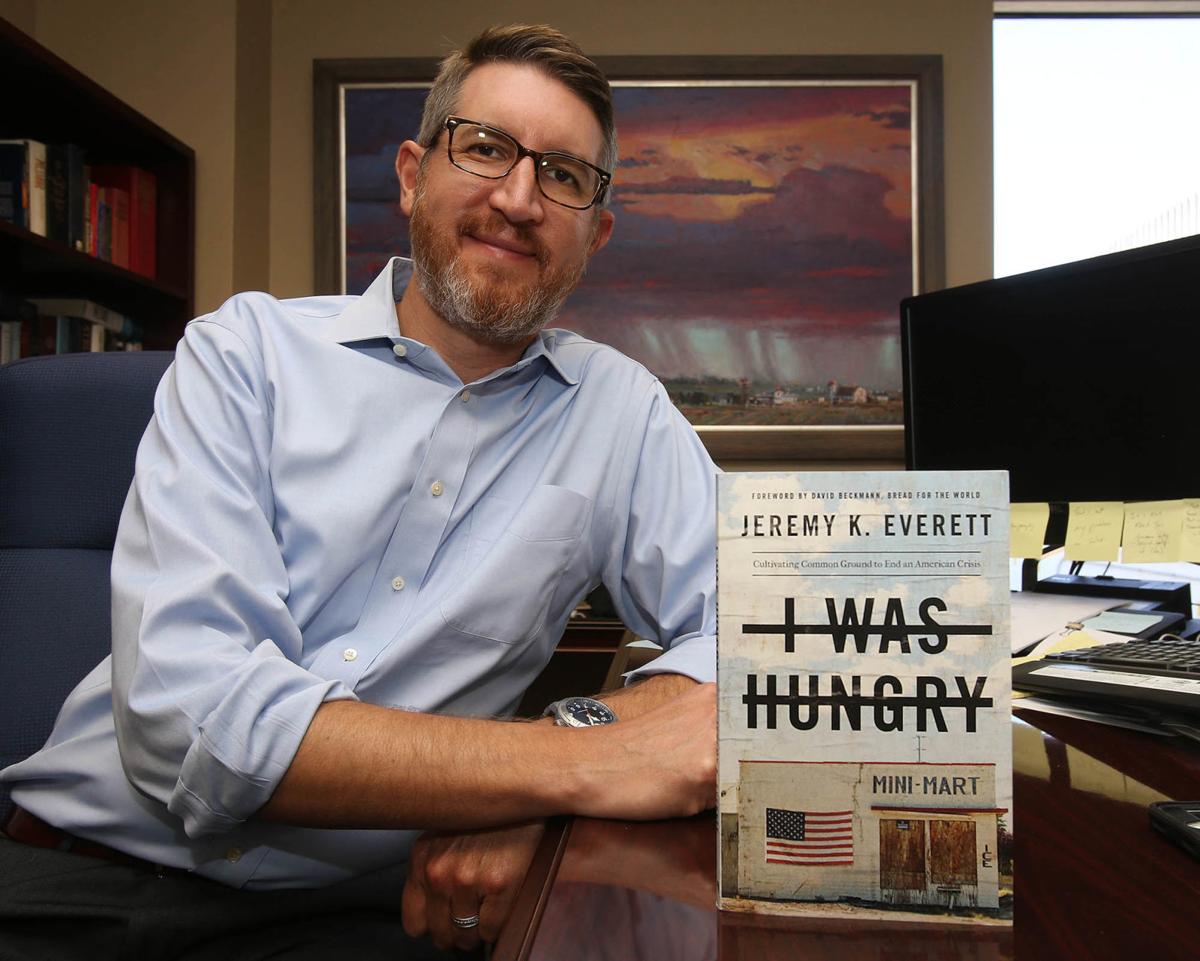
Texas Hunger Initiative’s founder and director Jeremy Everett, recently published
I Was Hungry. This book contains anecdotes of his own work advocating for the hungry and poor along with an assessment and strategy for addressing the current food insecurity crisis.
Find out more info about the book
here.
|
|
|
|
Jeremy's new book was highlighted in a recent
article
by the Waco Tribune-Herald
|
|
|
|
September is Hunger Action Month!
|
|
"September is Hunger Action Month – a month when people all over America stand together with
Feeding America and the nationwide network of food banks to fight hunger. It's a month to spread the word and take action on the hunger crisis, and dedicate ourselves to a solution.”
It's a great time to spread the word about what your coalition is doing to take action on food insecurity.
Official color of Hunger Action Month: Orange!
We would like to encourage each coalition to share what they are doing to celebrate Hunger Action Month via our
Facebook Group
!
|
|
Public Policy: Learn, Share, and Take Action
|
|
Child Nutrition Reauthorization
|
What is it? What can I do?
|
FRAC has a great resource on CNR
here
read and share!
|
|
With Congressional recess wrapping at the beginning of September, food policy experts and Congress are gearing up to push Child Nutrition and WIC Reauthorization (CNR). According to
Emily Gartenberg with Share Our Strength
, CNR provides one of the best federal policy opportunities to address childhood hunger in America. Every five years, Congress reviews different child nutrition programs, and can change regulations around these programs.
Both the Senate Agriculture and House Education and Labor Committees have held
hearings
on CNR, and several “marker” bills (bills containing provisions that are intended to be included in a larger reauthorization package) have already been introduced. Currently the Senate Committee on Agriculture has indicated that they are looking to pass a bi-partisan CNR bill.
Read more and learn how to contact your representatives
here
|
|
A Guide to Getting Started: How to Implement a School Food Pantry
Salud America!
, a national-Latino focused organization based in UT Health San Antonio has created a
School Food Pantry Action Pack
. This Action Pack is a free online toolkit that provides information, material customization, and technical assistance to help school personnel start a School Food Pantry at their campus or district.
For more information, click
here
.
|
|
Other Helpful Links:
Alliance to End Hunger Resource Library
This ever growing database serves as a one-stop shop and home base for anti-hunger organizers featuring toolkits, case studies, research, online tools, community plans and other resources generated by the Alliance to End Hunger, our national partners and hunger-free community coalitions across the country.
Community Toolbox
Millions of people use the Community Tool Box each year to get help taking action, teaching, and training others in organizing for community development
Double Up Texas:
Get more fruits and veggies FREE with your Lone Star SNAP Card and Double Up Food Bucks. See where you can use your Lone Star SNAP Card in your area
.
|
|
|
A look at news, blogs, research and journal articles on topics
surrounding hunger across the state of Texas and the country
|
|
U.S. Census Bureau
The Supplemental Nutrition Assistance Program (SNAP) reduced poverty by just over 1 percentage point (about 3.1 million people) for the three-year period from 2016 to 2018, according to data released by the U.S. Census Bureau September 10th.
TedRadio Hour
"
16 million children face hunger in the U.S., which can prevent them from performing well in school. Chef Sam Kass describes a simple solution with a potentially huge impact: free breakfast.
"
Feeding America and Research Experts
"Food insecurity is associated with higher health care expenditures and impacts every community in the United States. This study utilized national health survey data and Map the Meal Gap to estimate $52.9 billion additional health care expenditures annually are associated with food insecurity among adults."
Time
"Millions of seniors across the country quietly go hungry as the safety net designed to catch them frays. Nearly 8% of Americans 60 and older were “food insecure” in 2017, according to a
recent study released by the anti-hunger group Feeding America. That’s 5.5 million seniors who don’t have consistent access to enough food for a healthy life, a number that has more than doubled since 2001 and is only expected to grow as America grays."
|
|
|
|
|
|
|