|
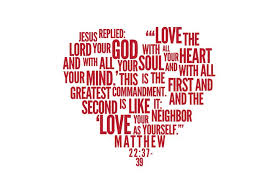
And this is how they will know that you are my disciples,
that you will have love for one another.
I am always intrigued and fascinated by the research
that has taken place in the universities, in particular Stanford,
regarding brain research, neuroscience,
about how our brain develops and
how it comes to its whole operation.
It is fascinating to read.
They have real data to support,
so much of what we have instinctively known, but were not sure.
The difference between nature and nurture!
How much of our actions are determined
by just the way we are, nature.
Versus how much can be brought about by nurture,
the way we develop habits and patterns.
It works out that there is a correlation.
There there is a bit of both, in fact.
The brain is a muscle and the pathways
that are found through the brain govern actions.
Those that govern repeated actions, in particular,
are in different parts of the brain,
and they actually can be determined
in certain ways by certain behaviors.
These pathways are called neural pathways,
and they can be programmed in real ways.
How they get programmed inside our brains
is with the use of simple pattern behaviors over and over again.
In other words, the more times we do something,
the more they tend to become automatic responses
for us by using our brain.
These neural pathways are fascinating.
They tell us that the little things matter.
When we do certain things a certain way,
especially when we are teaching our children,
we are actually forming neural pathways in their brains
that allows them then to repeat these behaviors almost automatically.
Then we become known for those neuropathways.
But here is what is really fascinating.
They have started to understand
that now the brain can connect with other people
and have a physiological reaction
to people whom are not physically present to us.
They have started to name it “empathy connection.”
We might call it love, compassion,
when we connect with somebody
who is not even physically there.
We can actually feel their presence
and have an emotional response,
a physiological response in our brain.
Neural pathways seem to keep working
even though the person is not there.
I know Jesus was not using this language in today’s gospel,
but he is talking about how they will know us by who we are.
They will know that you are followers if you love one another,
or if you see this constant behavior in your life.
They will recognize in your behavior
that you are a follower and a believer in me.
You see, it is not enough just to believe in Jesus Christ.
We have to become followers of Jesus Christ,
and that requires action, and those actions
need to be consistent with who we claim to follow, Christ.
And the question is then, how do we do this?
What does this look like?
Certain groups of people seem to manage to have certain behaviors
that they are known for, and
you can recognize that behavior right away.
But there is a lot of training that is behind those.
Think of any of the armed services for a moment,
like the military or the marines.
They have a certain code and a certain way they operate,
and they will operate from that out of pure instinct.
It is not nature, it is training.
It is training over and over again.
That is why they do it.
It is what we do with our children as parents
and hopefully they will learn the trained behavior.
We can always hope!
But here is what is interesting.
There are certain groups that
have certain characteristics that stand out.
I do not want to pick on a group,
but I think it is illustrative and helpful.
Filipinos, for example.
Filipinos, we often wonder whether is it nature or nurture,
but they have this incredible ability
to be able to care for others in a profound way.
They become nurses and doctors and educators.
They are just phenomenal.
In particular, if you ever noticed that
in the hospital a huge proportion of our nurses are Filipino.
In particular, hospice nurses, and they are brilliant at it.
They seemed to have a natural edge in how to do that,
to be caring and and really wonderfully compassionate.
But if you look into their culture,
they are certain things with which they agree upon.
They value elders in such a way
and it is not just their own elders,
as in their parents, their grandparents,
but all grandparents, all elders are treated with a level of respect.
You just do not see this in other cultures.
You just do not recognize it.
Now, I will tell you, they also work on it.
In fact, right after the last mass,
I had a Filipino nurse who is a trainer of nurses say to me,
“Oh, we work at that. We drill that into them.
We absolutely drill it into them.
Day after day, each patient is another mother,
another sister, another father, another grandfather.
That is who they are.
When you see in them, that is who you want to see.”
They form that neural pathway in their brain,
and it becomes an automatic response.
It is a bit of nurture and it is a bit of nature,
but it is the ability to be able to change
and to be well known for being that way of caring.
I wonder what it would be like
if we took a page from the Filipino community book,
and decided to be that caring,
to be that loving, and
to hold all elders and all people in that response.
And that we would train our own brains and our own hearts
to respond in an automatic way
that we treat everyone with magnanimity.
We treat everyone with kindness.
We treat everyone with love.
We treat everybody no matter where they are from.
That is the challenge of the gospel.
See, that is what Jesus is calling us to do.
He is calling us to to love one another,
and he means love one another.
He means love everyone, not just the inside group.
And that becomes the real challenge.
What does that look like?
How do we do that?
So first, you have to look at what
the Filipino community have done.
If we are going to form a culture like that,
then we have to learn from that.
They see all elders, all youth as having dignity, of having value.
That is where we need to start.
We need to start with recognizing
that every human being has a value,
a inherent human dignity.
And no matter what they do or what they say
or what they profess or where they are from,
that we will treat them with respect and with love.
When we then follow that value set,
that premise, and we operate out of it,
small little ways are constantly developing our neural pathway
by being kind to every single person that we meet.
And we get practice and practice to the point
where it just becomes an automatic response.
So what would it be like if this community was known for that?
What if we say,
“What is it that they do over at Saint Simons?
My gosh, they are all so kind.
They are all so wonderful.
They are all so caring.
They seem to treat everyone with respect.”
You see, that is the challenge of the gospel.
That is what Jesus is asking of us today,
that is the call to action for us, to love one another.
Then they will come to recognize,
“Oh yeah, over and over Saint Simon,
they are doing something.
Something they are eating,
something they are drinking,
something they are doing,
something is happening over there
because they all are a certain way.”
That is our challenge, my friends.
That we become true followers of Christ
in all the little ways in our life.
So, the neural pathways are not just in our brain,
but they are also in our hearts.
That we have an automatic response to all in our life.
That we love one another as Christ has loved us.
And this is how they will know that you are my disciples,
that you will have love for one another.
|