|
August 18, 2025
Welcome to 2025-2026, the Neuroscience Department's second year. I hope everyone enjoyed the summer. This year holds both advances, for the department and us individually, and also challenges. Our labs continue to make discoveries, develop critical technologies, and train outstanding scientists. Educationally, we are expanding our class offerings, growing our undergraduate major, and investing in our graduate program. This is all exciting progress.
But we are also facing pressure from looming federal cuts in science funding, political attacks on universities, and policy changes that threaten to undermine the incredible scientific enterprise in the U.S. I am thankful that at Berkeley, we are bolstered by our deep culture of inquiry and scientific approach, and our belief in the goals of improving lives through science. We benefit from strong support from Berkeley campus, and from our amazing community of students, postdocs, staff and faculty who are dedicated to making a difference through research and teaching. Thank you for your commitment and ideals.
| |
Dan Feldman, Neuroscience Department Chair | | Our scientific, training, and educational mission | |
The Neuroscience Department fosters cutting-edge research into brain function, nervous system diseases, and neurotechnology. Our discoveries enable tomorrow's cures and new technologies, and answer deep questions about the human mind, cognition, and biological computation. We provide advanced scientific training for some of the country's top PhD students and postdoctoral researchers, who are from a broad set of backgrounds and who are tomorrow's scientific leaders. We offer undergraduate education in neuroscience for a wide range of students interested in science and health-related careers.
| | Sulci in prefrontal cortex. Häkkinen, J. Neurosci. 2025 (Weiner and Bunge labs) | |
Faculty News - Summer 2025
Welcome to faculty Alex Huth and Liberty Hamilton, who arrived in July. The Huth lab studies how the brain processes language and meaning, using functional MRI and computational methods. The Hamilton lab studies speech processing in the brain and its development, using intracranial recording and EEG. Alex and Liberty join existing Neuroscience faculty Jack Gallant, Frédéric Theunissen, Bob Knight, plus Steve Piantadosi (Psych) and Gopala Anumanchipalli (EECS), to give Berkeley one of the strongest centers for studying speech and language in the nation.
The Redwood Center for Theoretical Neuroscience celebrated 20 years at UC Berkeley, under leadership of Neuroscience faculty Bruno Olshausen, advancing knowledge in neuroscience, machine learning, and AI.
Our labs published a remarkable 76 papers in June and July. Papers include the Adesnik lab in Neuron on ensemble codes in visual cortex, the Beery and Landry labs in Curr. Biol. on the neurobiology of friendship bonding in voles, the Isacoff lab in PNAS on synaptic plasticity, the Feller lab in Cell Rep. and J. Neurosci. on retinal development, the Yartsev lab in Nature on memory-related neural ensembles in flying bats, the Wilbrecht lab in PLoS Comput. Biol. on dopamine and Bayesian inference, the Feldman lab in Nat. Comm. on brain mechanisms for attention, the Jagust lab in Nat. Comm. on factors affecting tau deposition in the human brain, the Brohawn and Flannery labs in Sci. Rep. on vision restoration with optogenetics, the Dan lab in Cell on circuits for growth hormone release during sleep, the Wallis lab in J. Neurosci. on neural mechanisms for reversal learning, the Ivry lab in eNeuro on sensorimotor adaptation, and the Weiner and Bunge labs in J. Neurosci. on brain functional connectivity and reasoning.
Awards and prizes
-
Markita Landry was awarded a Guggenheim Fellowship for her work on developing nanotechnology for neuroscience and plant research. Last year, Landry was also named a Blavatnik National Awards Laureate in Chemical Sciences.
-
Yvette Fisher won both a prestigious McKnight Scholars Award in Neuroscience, and the HHMI Freeman Hrabowski Scholar Award.
-
Preeya Khanna and Stephan Lammel both won 2025 Rennie Fund Awards for the Study of Epilepsy
| |
PhD Program News
Warm welcome to incoming Year 1 Neuroscience PhD students India Carter (undergrad: Ohio State), Stefan Hajduk (Czech Technical Univ Prague), Taylor Li (UCSB), William Liu (UC Berkeley), Jason Miller (Georgia Tech), Sam Reifenstein (UCSC), and Natalia Stone (McGill). We also welcome new transfer students into Neuroscience from the Hamilton and Huth labs: Nilay Agarwal, Suna Guo, Jianing Mu, and Leah Du.
This summer, graduate student Angel Garcia (Feller lab) won a HHMI Gilliam Fellowship. Jessica Gustin-Murray (Isacoff lab) won a NSF Graduate Fellowship, Atehsa Sahagun (Fu lab) won a NIH F31, and Lily Nguyen (Fisher lab) also won a F31. Congratulations to all!
Neuro PhD student papers this summer included Krisha Aghi and Ryan Schultz on synaptic release dynamics (Aghi, Shulz et al., Curr. Biol. 2025), Hayley Bounds on functional interactions in recurrent networks (Bounds & Adesnik, Neuron 2025), Karina Bistrong on development of direction selectivity in the retina (Bistrong et al., Cell Rep 2025), and Katie Cording on striatal circuit dysfunction in a neurodevelopmental disorder (Cording et al., eLife 2025).
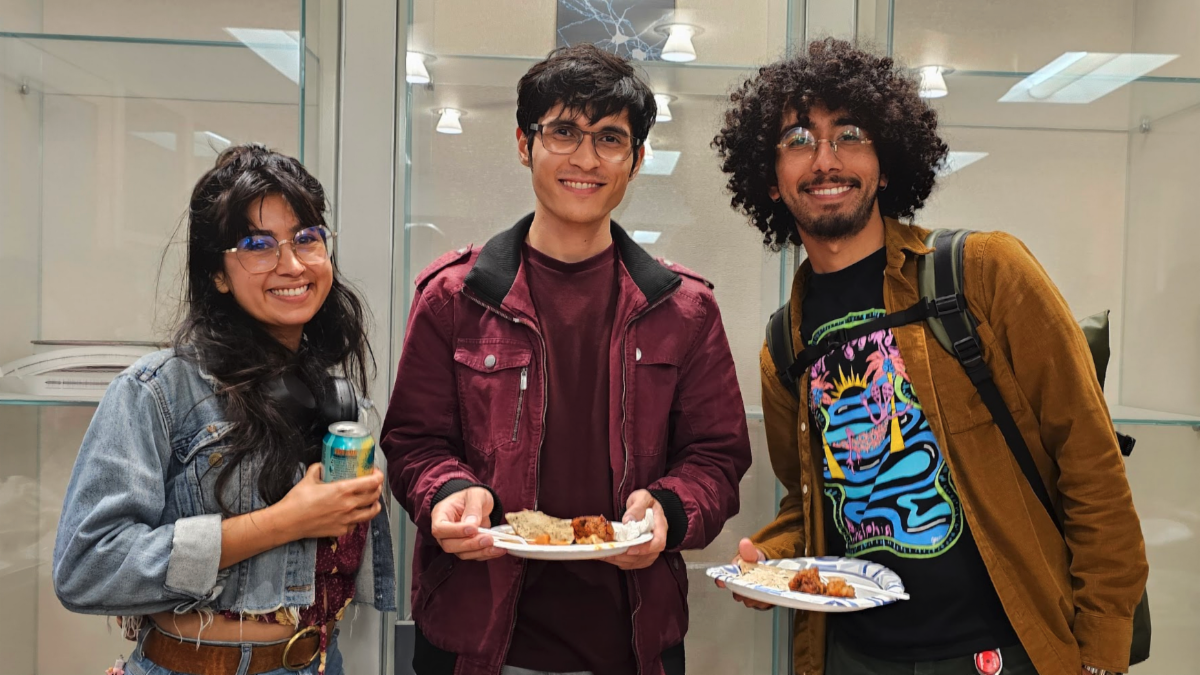
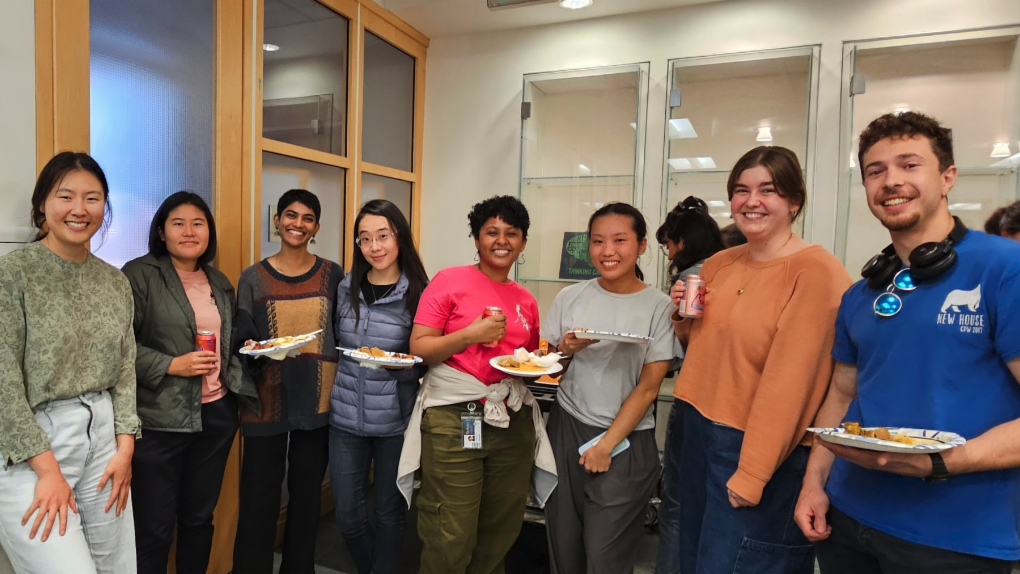
| | Returning and new PhD students at NeuroCamp 2025 | | Program updates. To build on its long-standing success, and to address federal funding uncertainties, we are adding a Direct Admit component to the Neuroscience PhD program. This program will allow students who are interested in PhD study in a specific faculty lab, who are invited to apply by that faculty member, and who then pass admissions, to enter the program and directly join that faculty lab in Year 1. The regular admissions program, with rotations in Year 1, will continue to be the main component of the PhD program. The first direct admit applicants will be considered for admission this fall, for entry in the Fall 2026 cohort. | |
Join the Slack!
New lab members, please join the Neuro Department Slack. We have channels for #job-ads, #announcements, and #postdocs for postdoc activities. To join, please email neuroscience@berkeley.edu (for members of department labs only).
| |
Get our emails!
Not getting department emails and seminar announcements? You need to get on your lab email listserv, which is maintained by each lab. The department sends its events emails to the collection of lab email lists. Ask your lab manager or PI to get you listed!
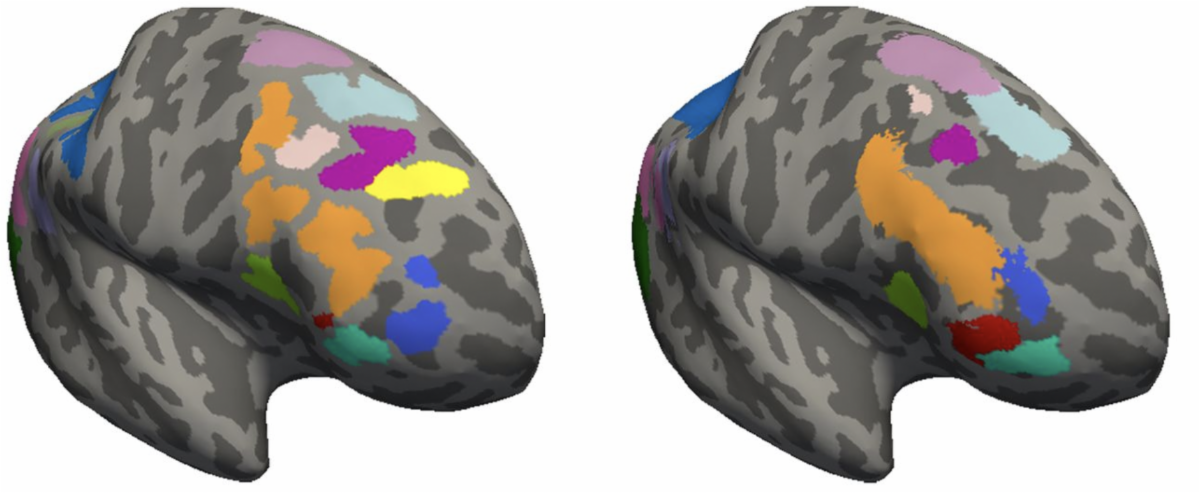
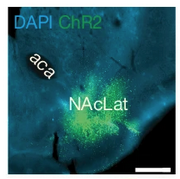
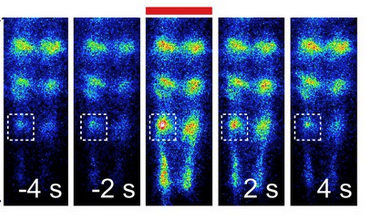
| | Left: Gazit Shimoni, Tose et al., Nature 2025. Right: Mali et al., eLife 2025 | |
Postdoctoral Researchers
The department has programs for postdocs, including the Neuroscience Academic Job Search Workshop Series, the Neuroscience Postdoc Departmental Seminars, and our new postdoc mentorship program which pairs postdocs with a faculty member outside their own lab, The mentorship program was launched in Spring 2025 with 7 postdoc-mentor pairs, and we will have an additional call for new participants in September. Postdocs are strongly encouraged to attend the Neuroscience Seminar Series each Thursday, and to meet others at the pre-seminar receptions.
For information, please Join the Slack #postdocs channel, and visit the postdocs page on the department website.
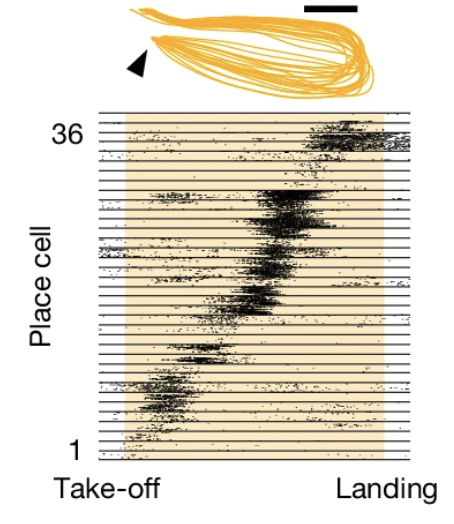
Papers published by postdocs this summer include Angelo Forli (Yartsev lab) on neural ensembles for spatial memory in bats (Forli et al., Nature 2025 -- the image above is from this paper), and Rachana Somaiya (Feller lab) on activity-dependent development of retinal transcriptomes (Somaiya et al., J. Neurosci 2025).
Congratulations to Natsumi Komatsu (Landry lab), who will start a faculty position in Bioengineering at University of Illinois Urbana-Champlain, and to Deepa Ramamurthy (Feldman lab) who is starting her own lab at UC Riverside. And congrats to Andrew Hill (Fisher lab) for being awarded a F32 fellowship.
To let us know about your papers and accomplishments, use the link at the bottom.
| |
Neuroscience Undergraduates
The Neuroscience major is growing rapidly. We currently have 150 declared and intended majors, including juniors and seniors. Overall, this represents about half of our full-strength goal of 300 majors.
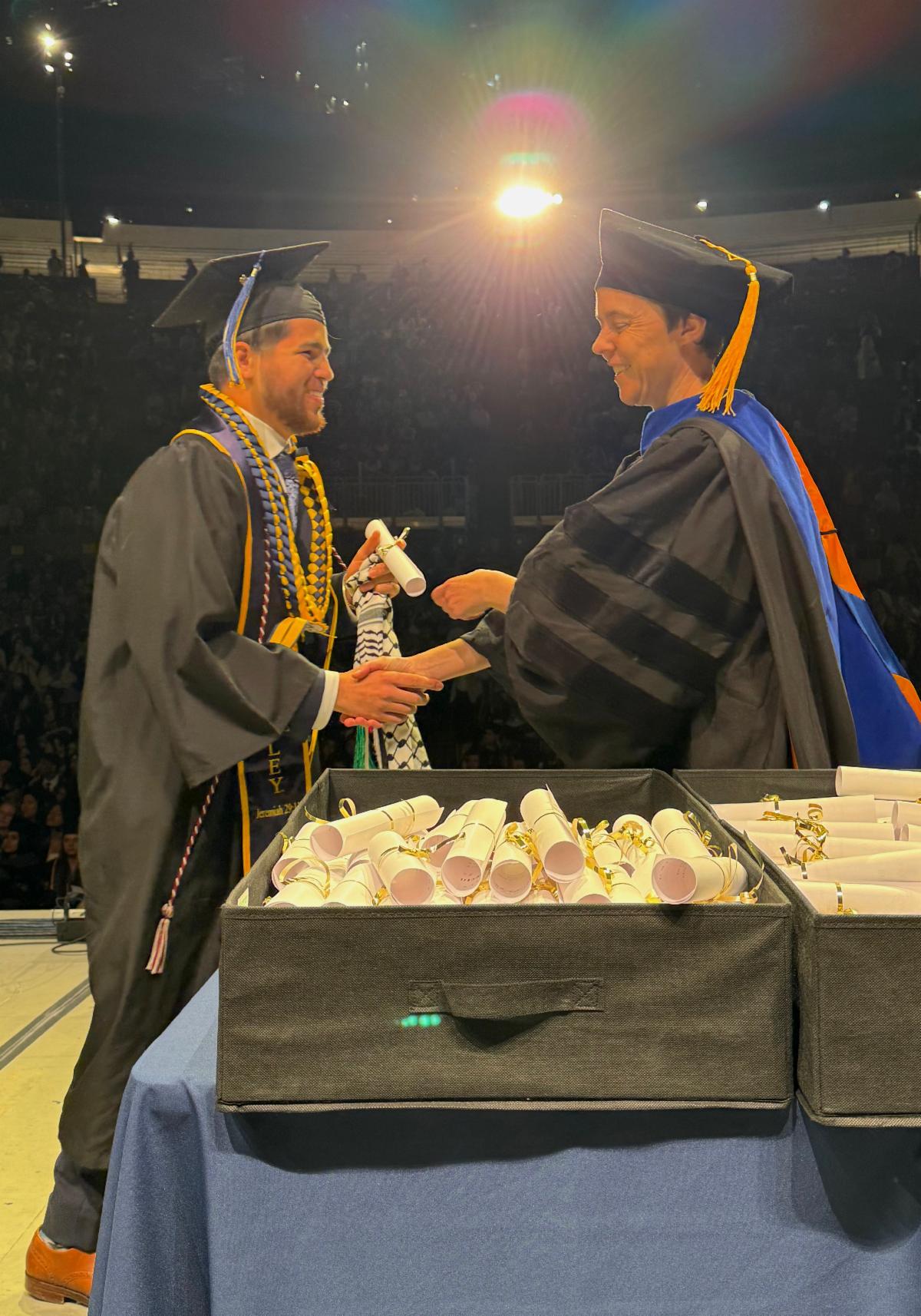
In May 2025, we graduated our very first class of 10 undergraduate majors. Beginning in Spring 2026, we will hold our own departmental commencement ceremony, where we expect to graduate 100+ majors per year.
New courses for 2025-2026. This year, we will add 7 new undergrad courses to complete the Neuroscience curriculum. This includes new courses in Computational Neuroscience, Cognitive and Computational Lab, Brain Behavior and Environment (capstone), Neuroethology (capstone), Psychedelics, and a new Cognitive Neuroscience course. This will bring us to 24 undergraduate lecture or lab courses, not counting independent research or honors classes.
| |
Community
As we begin a new academic year, we affirm our commitment to promoting broad participation in science, supporting our graduate students, and creating a climate of inclusion and belonging for everyone in the neuroscience community at Berkeley. We welcome and support all Neuroscience Department members, recognizing that we come from many different backgrounds and life experiences, which enrich the scientific effort.
The department's Equity Committee consists of faculty and staff, plus graduate student and postdoc representatives, who oversee our climate and DEIB-related programs. Any individual or group who wants to discuss community or climate issues can contact the Equity Committee chair, Prof. Lance Kriegsfeld, our Equity Adviser, Prof. Markita Landry, or the department chair Dan Feldman. We are here to listen and help.
We will be emailing department members a list of community and climate resources, including the department's Code of Conduct, at the beginning of each academic year.
| |
Upcoming Events
Every Thursday afternoon, the department has an event (seminars and social hours) in the Neuroscience lobby in 132 Barker Hall. Seminars are at 3:30pm. Social events at 4:00pm.
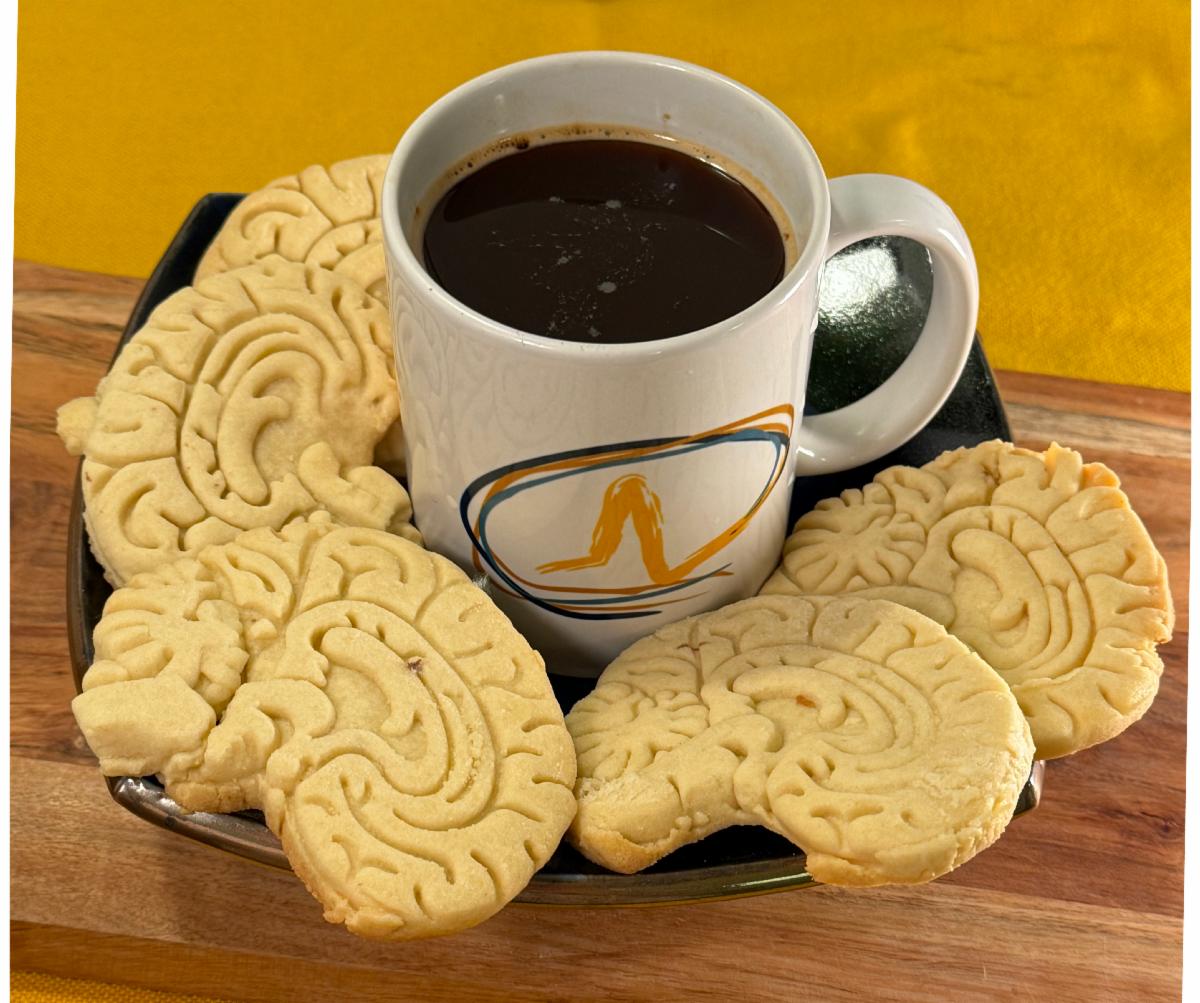
- Aug 28, Social gathering (Cookie Convergence)
- Sep 11, Neuroscience Seminar (Gina Turrigiano, Brandeis)
- Sep 25, Neuroscience Seminar (Pavan Ramdya, EPFL)
- Oct 2, Neuroscience Seminar (Arash Afraz, NIMH)
Please join for the Neuroscience Department Welcome Picnic, Thursday, Aug 21, 4:30-6:30 PM, Barker Lawn (RSVPs were due last week).
All members of Neuroscience Department labs are welcome to area-level research meetings, which are generally monthly. For details and contact information, see the Department Areas web page. These events are:
- Hardly Strictly Molecular and Cellular Neuroscience. One Tues per month.
- Systems-Behavioral Neuroscience Club. First Weds of the month.
- Cognitive Neuro Colloquium. Alternate Mondays.
- Computational Neuroscience Meeting. Once a month, dates TBA.
Want to get involved in outreach related to neurological disease? The department is a sponsor for the Northern California Breakthrough for Brain Tumors 5K, a run/walk fundraising event for the American Brain Tumor Association. The ABTA is a nonprofit organization that provides education, patient support, and research related to brain tumors. The BT5K will take place on Saturday, Sep 6, in Oakland. Berkeley Neuroscience will have its own tent at the event. One of our Neuro majors, Ashita Gulati, will be the volunteer coordinator for the Berkeley tent. To learn more about how you can get involved, and if you would like to register to participate, please see this information and signup sheet.
| | | | |