November 15, 2024

Newsletter for November 15, 2024

This Issue:

  • Huge Thanks For Those Who Joined Us For 2024 Annual Meeting!
  • Election Of Nevada Farm Bureau Officers
  • If You Attended The 2024 Annual Meeting – We’d Appreciate Your Feedback
  • BLM Releases Their New Sage Grouse Plan
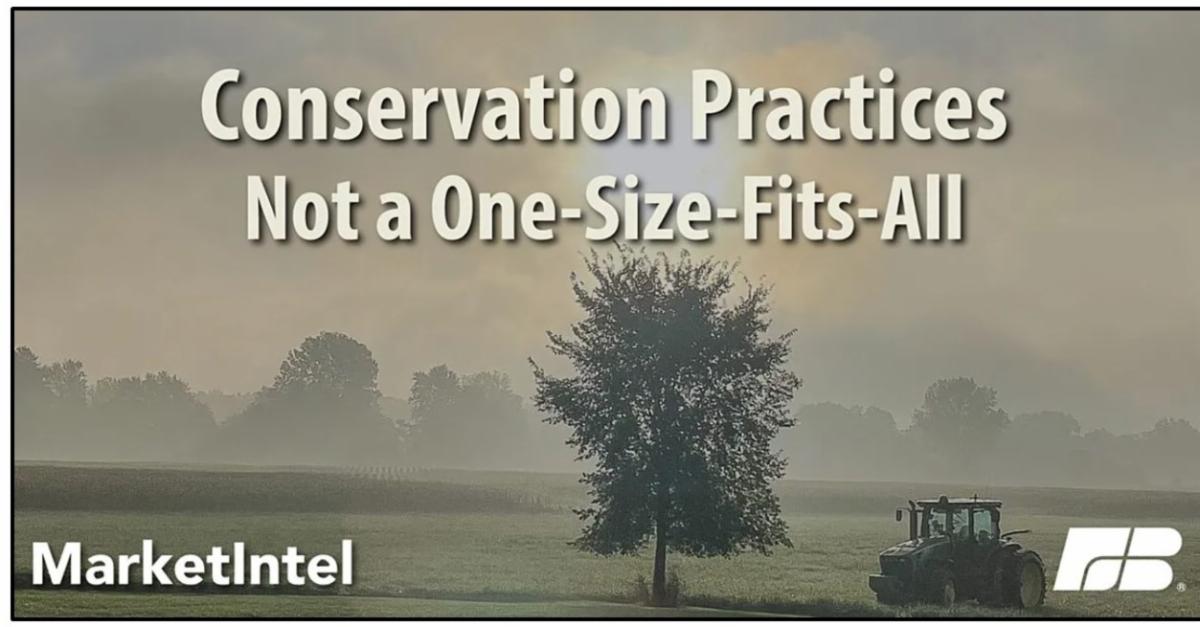
  • AFBF Market Intel Shares Specifics On Variety Of Conservation Practices Being Used
  • Applications again open for voluntary water rights retirements in Diamond Valley - The application deadline is Nov. 27, 2024
Nevada Farm Bureau Website

Huge Thanks For Those Who Joined Us For 2024 Annual Meeting!

The 105th Nevada Farm Bureau Federation Annual Meeting was held in Fallon, NV at the Rafter 3C Complex, November 7th and 8th.  Thank you for those Farm Bureau members who attended to participate in the information conferences that were held as well as those who represented their county Farm Bureaus as voting delegates.  Voting delegates set the course of Farm Bureau’s advocacy when they adopted the 2025 Nevada Farm Bureau Policy, which will soon be posted on the Nevada Farm Bureau website.


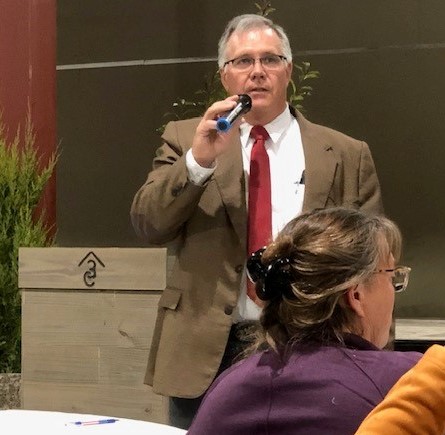
Thank you also for those who presented information during the number of information sessions that took place throughout the two-day event. Thank you for the sponsors who helped with the financial support as well as the information that they provided at their information tables.


Sponsors for the Nevada Farm Bureau 2024 Annual Meeting included:


American Ag Credit; Bayer; COUNTRY Financial; USDA Farm Service Agency; USDA NASS; Nevada Department of Agriculture; USDA Natural Resources Conservation; Nevada Agricultural Foundation; Nevada Small Business Development Center & Grown in Nevada; Nevada Dairy Farmers; UNR College of Agriculture - Biotechnology & Natural Resources; University of Nevada Extension, Reno Extension; Las Vegas Livestock; and Farm Bureau Bank


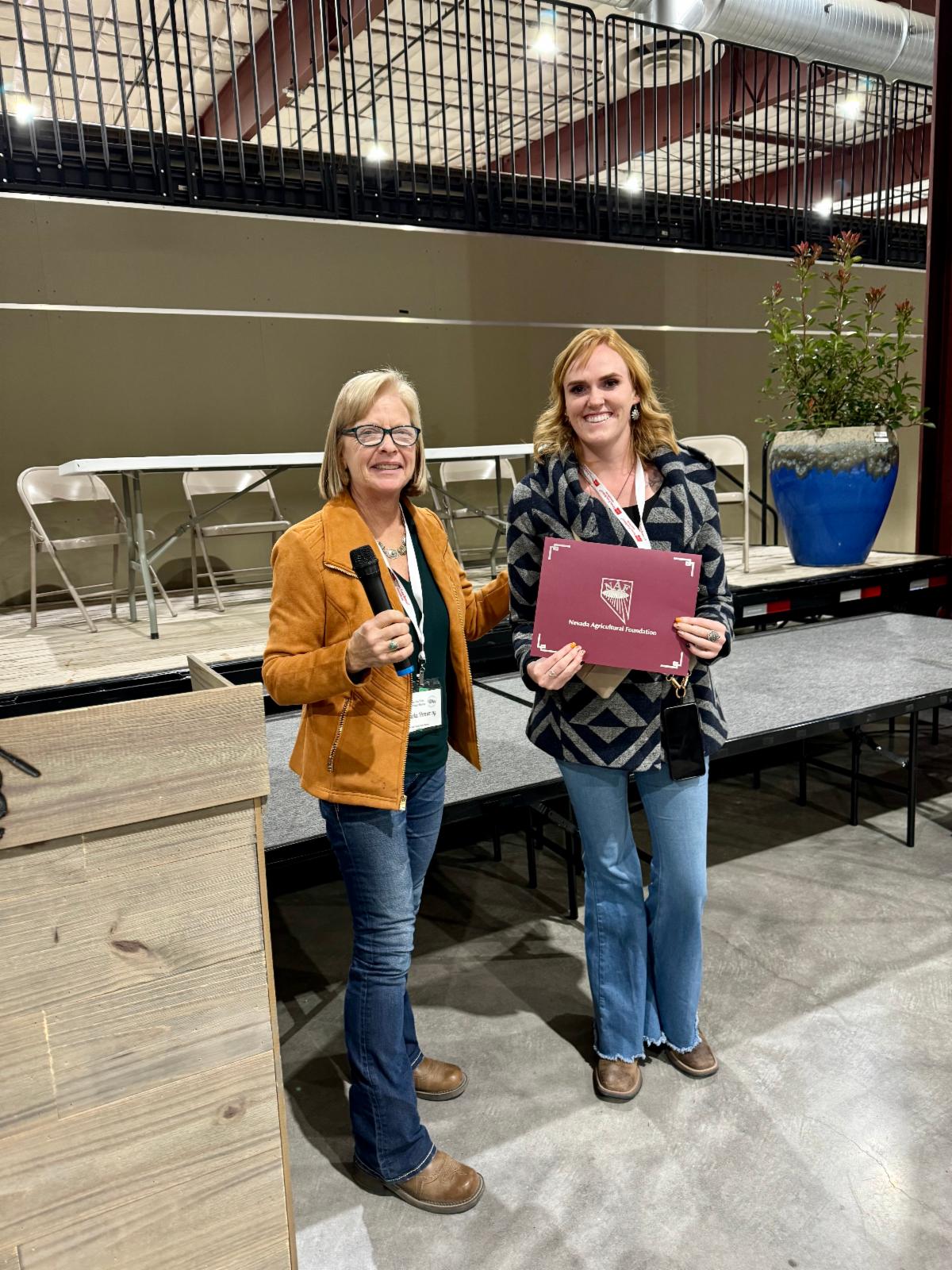
Carla Pomeroy Presented the Nevada Agricultural Foundation Ag In The Classroom Volunteer of the Year Award to Rachel Godecke. Godecke received a $1,000 stipend to use in her Ag In The Classroom program.

Election Of Nevada Farm Bureau Officers

Bevan Lister of Pioche, NV was re-elected to his seventh one-year term as President of Nevada Farm Bureau and Darrell Pursel was re-elected as Vice President, also serving in a one-year term.  Two district directors were elected to serve on the Nevada Farm Bureau Board of Directors.  They included Craig Shier of Winnemucca for a two-year term and Dann Mathews of Panaca for a one-year term.  Two new leaders for the Nevada Farm Bureau Women’s Leadership Committee were elected for one-year terms.  Jill Combs of North Las Vegas was elected as Chairman of the Women’s Leadership Committee and Cindy Hardy of Logandale was elected as the committee’s Vice Chair.

If You Attended The 2024 Annual Meeting – We’d Appreciate Your Feedback

We would greatly appreciate your feedback on the 2024 Nevada Farm Bureau Annual Meeting, if you were able to attend and participate.  Please send an email to doug@nvfb.org to share your thoughts on what was good or what you would prefer to be done differently in the future.  If more than one of your family members attended, we would welcome their response as well…

BLM Releases Their New Sage Grouse Plan

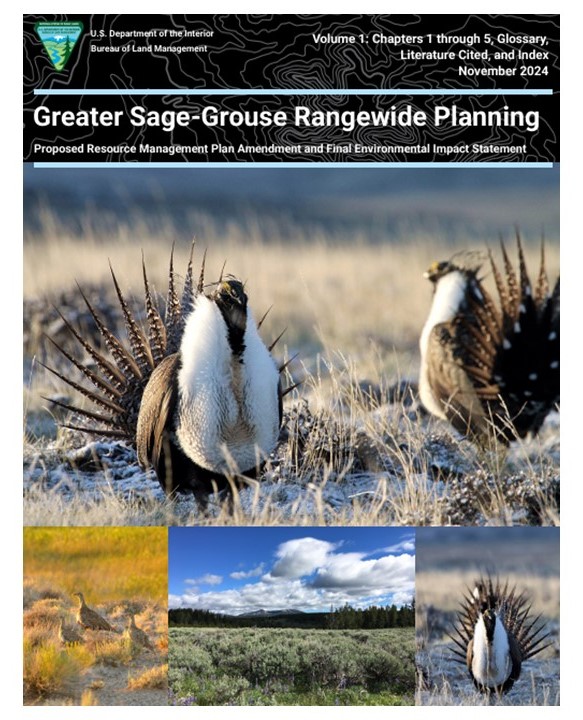
On November 8, 2024 the Department of Interior announced the Bureau of Land Management’s (BLM)  2024 Greater Sage Grouse Plan with amendments to 77 resource management plans across 10 Western states, including Nevada.


In determining their plan going forward, BLM selected their preferred Alternative as the route to take in management of their lands for the benefit of Greater Sage Grouse (GRSG).  The selected Alternative 5 states…

“Alternative 5 was identified as the preferred alternative in the Draft EIS.  Alternative 5 considers other potential alignments of habitat management areas (HMAs) and associated management to try to balance GRSG conservation with public land uses. If state governments updated the GRSG management area boundaries in their specific state plans, the BLM is considering those boundaries on public lands in Alternative 5. HMAs are similar to but refined from Alternative 4 and restrictions would generally be similar to Alternative 4; with the exception of Wyoming which would follow the oil and gas management direction in Alternative 2; and the fact that Alternative 5 considered options with fewer restrictions on resource uses and provided more opportunities for considering compensatory mitigation to offset impacts on GRSG and its habitat than Alternative 4. Areas previously identified as sage grouse focal areas (SFAs) are generally managed as priority habitat management areas (PHMA). The primary difference between management of SFAs in the 2015 Plans and PHMAs in this planning effort is that PHMA would not include a recommendation for withdrawal or prioritization strategies for oil and gas leasing and grazing permit renewals.”


In describing the merits of the plan that the federal agency has decided, Interior Secretary Deb Haaland said…


“Guided by the best available science, we are committed to the continued balance in our multi-use mandate for America’s public lands. For too long, a false choice has been presented for land management that aims to pit development against conservation. This Administration’s collaborative work has demonstrated that we can do both successfully. Through collaborative work in local communities, developed over decades, we are presenting science-based and thoughtful proposals to protect the greater sage-grouse and its habitat.”


For those who might wish to protest the proposed amendments, the formal process provides for using the BLM National NEPA Register by December 16, 2024.  There is also a process for Governors to submit consistency with state and local plans which is needed prior to the Sage Grouse Plan and the land management plan amendments going forward. 

AFBF Market Intel Shares Specifics On Variety Of Conservation Practices Being Used

There are many different conservation practices to use in enhancing agricultural lands, but it seems that there is an obsession with planting cover crops and conservation tillage as the magic keys which are promoted as the true way.  American Farm Bureau Federation (AFBF) associate economist, Samantha Ayoub filed this overview in the recent Market Intel report offering an overview on a national basis the different conservation practices that American agricultural producers are using.

Applications again open for voluntary water rights retirements in Diamond Valley - The application deadline is Nov. 27, 2024

The Central Nevada Regional Water Authority (CNRWA) opened a final round of applications to retire groundwater rights in Diamond Valley on November 14, 2024 using funding from the Nevada Water Conservation and Infrastructure Initiative (WCII). The WCII is meant to purchase and permanently retire groundwater rights from willing sellers in groundwater basins with insufficient water supply to serve all water rights and domestic wells. 


After completing the retirement of groundwater rights from previously approved applicants, CNRWA anticipates having approximately $380,000 remaining to retire additional water rights in Diamond Valley. CNRWA will utilize the remaining funds to retire as much water as possible from willing sellers. In addition to the previous criteria adopted by the Board, CNRWA may prioritize applications based on the lowest cost per acre-foot of water to be retired in this final round. 


Applications will be accepted electronically at: https://cnrwa.com/grrp/ or can be mailed or delivered to: 

Eureka County Natural Resources 


P.O. Box 682 

701 S. Main St. 

Eureka, NV 89316 


Applications must be received by November 27, 2024. To get an application, go online at the links above or contact Jeff Fontaine at 775-443-7667. 


The Nevada Department of Conservation and Natural Resources (DCNR) manages the program, which is supported by funding from the American Rescue Plan Act. Funding for this final round of applications is subject to the approval of DCNR.

Have A Great Weekend!