September 20, 2024

Newsletter for September 20, 2024

This Issue:

  • County Farm Bureau Annual Meeting Dates Set
  • Don’t Miss The Ranching For Revenue Session Planned For Sept. 26
  • Keeping You Posted On Major Energy Corridor Process
  • Farm Bureau Submits Comments On Proposed Dairy Pricing Changes
  • Nevada Farm Bureau Policy On Whether To Consider “Conservation” As Beneficial Use
  • Nevada Cooperative Extension Planning Two Open House Sessions
  • Nevada Farm Bureau Urging A “NO” Vote On Question 3
Register For The 105th Annual Meeting

County Farm Bureau Annual Meeting Dates Set

At this point there are six county Farm Bureaus who have announced their 2024 annual meeting dates.  They are:

  • Central Nevada County Farm Bureau- November 1st
  • Churchill County Farm Bureau – October 9 at the Golf Course in Fallon
  • Clark County Farm Bureau – October 29
  • Humboldt County Bureau – October 12 (6 p.m.) at the Humboldt County Extension Office
  • Lincoln County Farm Bureau – October 29, (6 p.m.) at the Firehouse in Caliente
  • Lyon County Farm Bureau – October 16 at the Lions Club House in Yerington


Don’t Miss The Ranching For Revenue Session Planned For Sept. 26

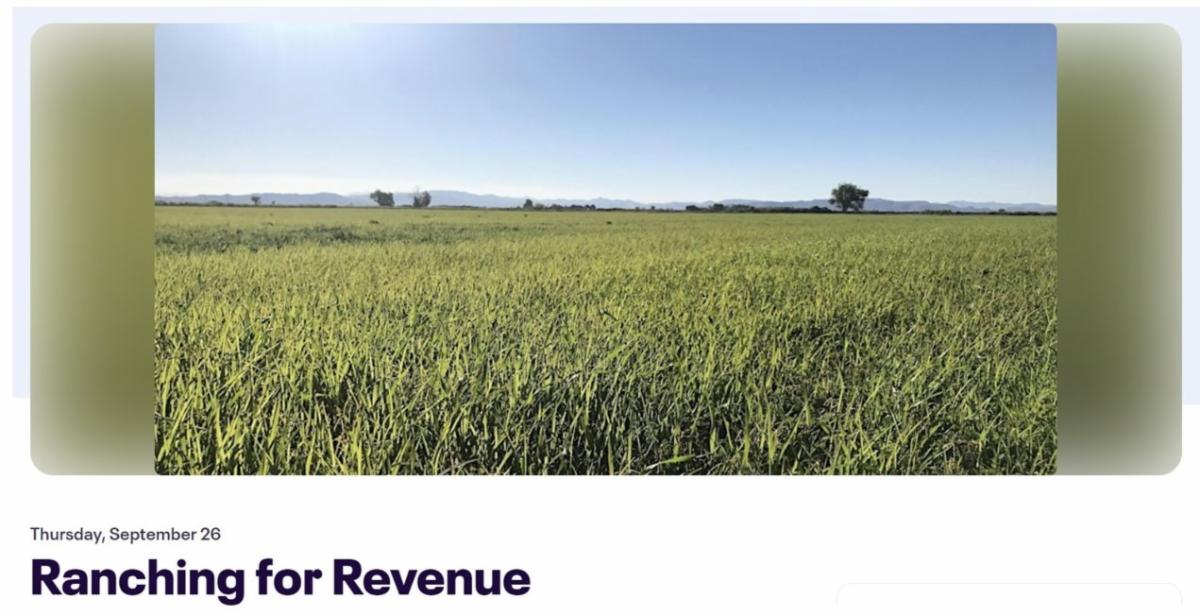
Hope you are marking on your calendar for this week, the opportunity to participate in the “Ranching For Revenue” workshop.  A special day-long training session is being planned for ranchers who are interested in building up their management skills and seeking to consider ways for enhancing your ranch profitability.  The workshop is scheduled for Thursday, September 26 and will start at 8 a.m.  It will be held at the Elko Basque Center, 1601 Flagview Dr., Elko, NV.  Click here to be taken to the site to use for registering for this conference.  The $42 registration fee will cover your lunch and information presented during the session.


Each section is led by professionals who have extensive scholarly and farming backgrounds. This workshop is geared to accommodate large scale farming and ranching operations looking to implement a more holistic approach but is also suitable for hobby farmers and gardeners working with small plots. High School and college students with an interest in agriculture are encouraged to attend.


For more information, contact Adrienne Snow, Extension outreach specialist at adriennes@unr.edu or by calling 775-247-6458. Persons in need of special accommodations or assistance should contact Paul Lessick, Extension civil rights and compliance coordinator, at plessick@unr.edu or 702-257-5577 at least five days prior to the scheduled event with their needs or for more information.

Keeping You Posted On Major Energy Corridor Process

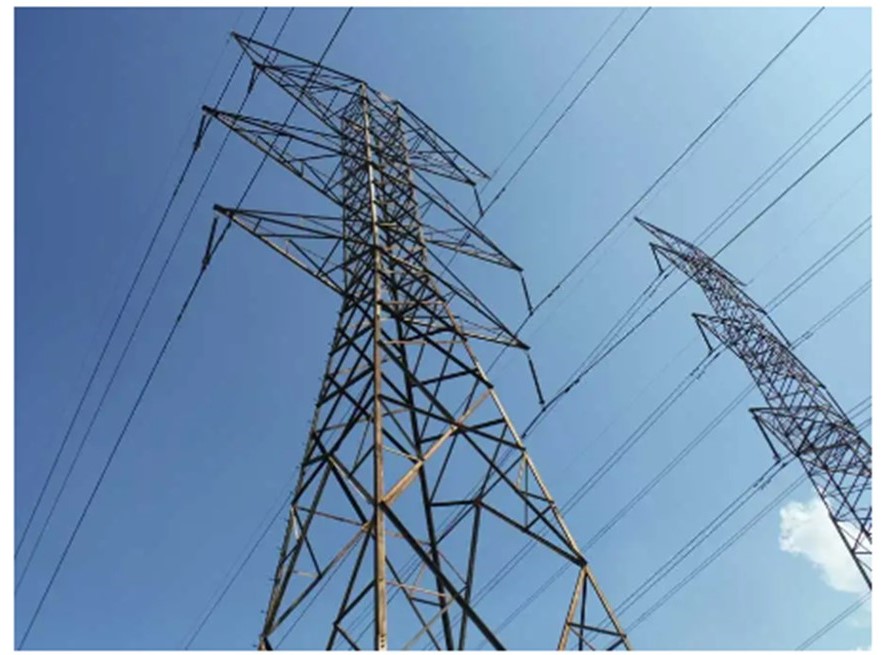
The Bureau of Land Management (BLM) has published the Draft Environmental Impact Statement (DEIS) and Resource Management Plan Amendment for the proposed Greenlink North Transmission Project .  This proposed project seeks to have authorized a transmission corridor with a 525-kilovolt transmission line that would run from Ely to Yerington, approximately 235 miles.  If approved it will involve lands in White Pine, Eureka, Lander, Churchill and Lyon Counties.


BLM is the lead agency for the 90-day public comment process, which will end on December 11, 2024.  Beyond the document that we’ve provided a link for above, the plans for public involvement also will offer a combination of virtual and in-person public meetings.


These virtual and in-person meetings include:


Virtual - October 15, 2024 from 5:30-7 pm. You can register at the following Zoom link


Ely, Bristlecone Convention Center, 150 W 6th Street – October 29, 2024 from 5-7 pm.

Eureka, Eureka Opera House, 31 South Main Street – October 30, 2024 from 5-7 pm.

Sparks, Nugget Casino Resort, 1100 Nugget Avenue – November 13, 2024 from 5-7 pm.


Nevada Farm Bureau is reviewing the document and is planning to offer public comments. 

Farm Bureau Submits Comments On Proposed Dairy Pricing Changes

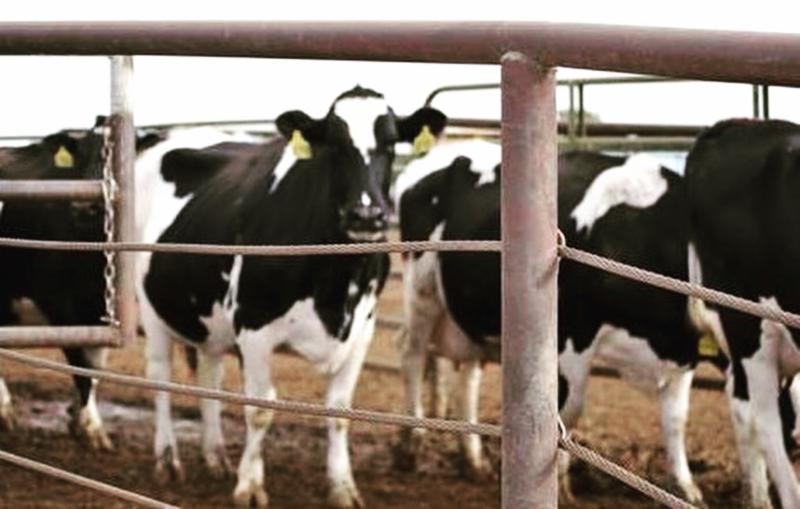
Changes to Federal Milk Marketing Orders (FMMO)  being considered by USDA could hurt farmers the FMMO system is designed to protect. The American Farm Bureau Federation delivered that message last week in comments to the proposed changes.


Farm Bureau President Zippy Duvall also communicated these points in a follow-up letter to Agriculture Secretary Tom Vilsack.


“The FMMO system relies on fairness and transparency, and we fear some of these changes could disrupt the balance that ensures producers and processors both benefit from the system,” wrote President Duvall. “Producer trust in this system depends on its fairness and the help it provides in balancing the terms of trade between farmers and processors. If the system does not reward that trust, it is at risk.”


Proposed changes that present serious concerns include the lack of an adjustment to the Class II differential, the introduction of a new milk class for extended shelf life (ESL) milk, and the delayed implementation of updated milk composition factors, which would undermine the economic viability of dairy farmers nationwide.


Of most concern are the large recommended increases in make allowances. “We understand that price formulas should allow for the true costs of dairy manufacturing, but the current proposals are based on biased, voluntary and incomplete survey data. They do not provide a reliable foundation for such significant changes,” Duvall wrote.


AFBF is encouraged by several of the proposed recommendations including the return to the “higher-of” Class I base price, increases in Class I differentials, updates to milk composition factors, and the removal of 500-pound barrels from the National Dairy Products Sales Report.


AFBF Economist Daniel Munch further got into the details in this Market Intel paper covering the subject.

Nevada Farm Bureau Policy On Whether To Consider “Conservation” As Beneficial Use

In last week’s newsletter we surfaced the proposed concept of changes to Nevada’s Law on forfeiture of water rights that are not being put to beneficial use.  One of the potential outlines of an approach for change might involve going to a system where after five years of a water right not being put to beneficial use, the Nevada Division of Water Resources would send a letter of notification of a pending forfeiture of the water right and the directive that the issue would need to be resolved by putting the water that is not being used to beneficial use in the coming five year period.  As the second five-year timeframe came to a close the water right owner would be notified that the water right was forfeited.


“Conservation Use” As A Beneficial Use?


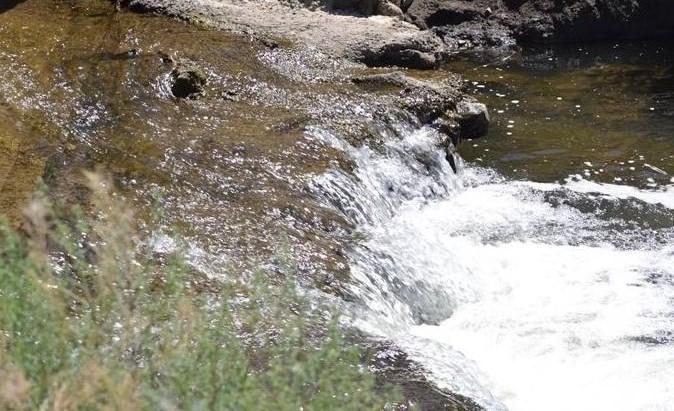
This week we’re asking you to consider your thoughts on developing another type of beneficial use, where the use doesn’t use any water at all.  The proposal is to establish “Conservation Use” – which is actually not using water as a beneficial use.  This concept is that nature and water dependent ecosystems need to have water and that even though the “use” isn’t actually using water…it is still a beneficial use.


It is also somewhat related to programs that have been getting started where buy-outs of water rights and retirement of these water rights are geared to reducing over-appropriated and over-pumped groundwater basins.  If water rights have been retired, what process would work for making certain that the un-used water doesn’t get reappropriated and put back into use?  Designating “conservation use” as a beneficial use is one option that is being considered as a way to lock it down from being reappropriated.


Language From Last Session:


A retirement program was brought forward in legislation last session but was not passed.  SB 176 was proposed and worked on extensively by all types of different water advocates.  On pages 4 and 6 of the 1st redraft of this legislation, the solution to not bringing retired water rights back, after a buy-out handled the process in this fashion with similar amendments to NRS 533.370 and NRS 533.371…(adding the new language that is highlighted in blue below)


Sec. 2. NRS 533.370

…  2. Except as otherwise provided in subsection 10, [where there] the State Engineer shall reject an application and refuse to issue the requested permit if:

(a) There is no unappropriated water in the proposed source of  [, where the] ; 

(b) The groundwater that has not been committed for use has been reserved pursuant to NRS 533.0241 ; 

(c) The groundwater has been retired pursuant to section 6 of this act; or [where its] …


Sec. 3. NRS 533.371 is hereby amended to read as follows: 

533.371 The State Engineer shall reject the application and refuse to issue a permit to appropriate water for a specified period if the State Engineer determines that:

1. The application is incomplete; 

2. The prescribed fees have not been paid; 

3. The proposed use is not temporary; 

4. There is no water available from the proposed source of supply without exceeding the perennial yield or safe yield of that source; 

5. The groundwater that has not been committed for use from the proposed source of supply has been reserved pursuant to NRS 533.0241; 

6. The groundwater has been retired pursuant to section 6 of this act; 


How Nevada Farm Bureau Policy Might Be Changed To Address This Issue?

While Nevada Farm Bureau policy does support voluntary buy-outs and retirement of water rights in over-appropriated and over-pumped groundwater basins, we currently don’t have policy which speaks to keeping the retired water (associated with a retired water right) from staying retired and not coming back for appropriation in the future.


Your thoughts and engagement in your county Farm Bureau’s policy development process are welcomed and strongly encouraged…  What do you think Farm Bureau policy should say?

Nevada Cooperative Extension Planning Two Open House Sessions

Two sessions are being planned for Nevada Extension to show off their stuff, co-hosting their open house with Washoe County Commissioner Alexis Hill in Reno and Clark County Commissioner Marilyn Kirkpatrick in Las Vegas.


Reno’s session is planned for October 3rd from 4 to 6 p.m. at the University of Nevada, Reno, Joe Crowley Student Union.  It will be in the Great Room of the facility (1664 N. Virginia St., Reno, NV).  To RSVP for the Reno session – Click Here


The Las Vegas session will be held on October 14th from 4 to 6 p.m. in the Rotunda of the Clark County Government Center (500 S. Grand Central Parkway, Las Vegas, NV). To RSVP for the Las Vegas session – Click Here.


Light refreshments will be served along with the information on the programs available through Nevada Extension.

Nevada Farm Bureau Urging A “NO” Vote On Question 3

The Nevada Farm Bureau Board of Directors, following presentations by both the supporters of passage of Ballot Question 3 and those who are opposed to passage, made the decision to support a vote against passage of this proposed change to Nevada’s Constitution.  


Ballot Question 3, if adopted would amend the Nevada Constitution to establish a system of “Ranked-choice voting.”  Ranked-choice voting (RCV) is an alternative voting method where voters rank candidates in order of preference instead of choosing just one. If a candidate receives more than 50 percent of first-preference votes, they win. If not, the candidate with the fewest votes is eliminated, and their votes are redistributed to the voters' next preferences. This process continues until a candidate secures a majority of the votes. 


As the team working to persuade Nevada voters to vote “NO” on Ballot Question 3 have shared, this proposal would be bad for Nevada:


1. Complex and Confusing: RCV can be confusing for voters. The process of ranking candidates and understanding how votes are redistributed can lead to mistakes and spoiled ballots, disenfranchising voters. 


2. Longer and Costlier Elections: Counting RCV ballots is more complicated and time-consuming, leading to longer waits for election results. This complexity also increases the cost of administering elections. 


3. Reduced Voter Turnout:*Studies have shown that voter turnout can decrease under RCV due to its complexity. When people don't understand the system, they are less likely to participate. 


4. Potential for Unfair Outcomes: In some cases, RCV can result in the election of a candidate who did not receive the most first-preference votes, which can feel unfair to voters. 


Please visit this website to learn more details and consider adding your name with those who are voting “NO” on Nevada Ballot Question 3.

Have A Great Weekend!