November 6, 2026

Newsletter for November 6, 2026

X Share This Email

This Issue:

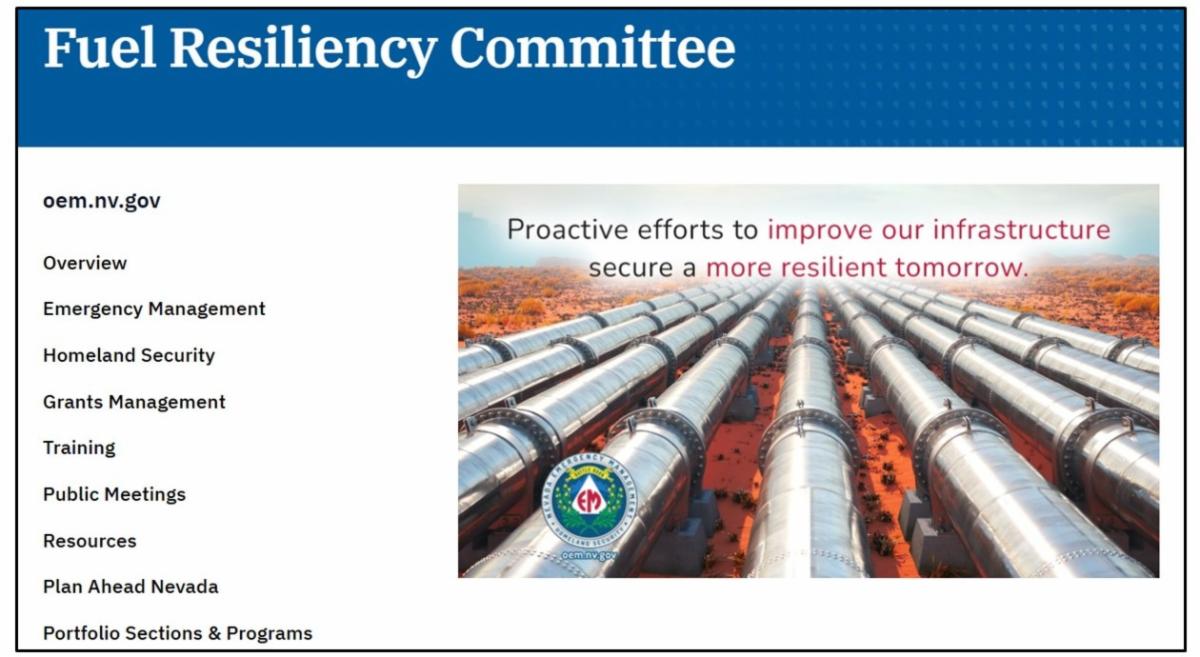
  • The Nevada Fuel Resiliency Committee Shares Their Recommendations
  • White Pine County Farm Bureau Leader, Janille Baker A Graduate Of Fall AFBF Women’s Communication Boot Camp
  • New Additional Practices Available For Regenerative Agriculture
  • Nevada Farm Bureau Resolutions Committee Meets In Preparation For State Annual Meeting

The Nevada Fuel Resiliency Committee Shares Their Recommendations

On November 2nd the Nevada Fuel Resiliency Committee announced a series of recommendations aimed at strengthening the state’s fuel supply, reducing dependence on California, and protecting Nevada consumers and businesses from supply disruptions and price volatility.


The Fuel Resiliency Committee was established by Nevada Governor Joe Lombardo and assigned to identify vulnerabilities in Nevada’s fuel supply chain and developing strategies to ensure the state can maintain reliable access to gasoline, diesel, and aviation fuel during emergencies.


The committee’s recommendations center on three primary priorities:


Diversifying Nevada’s Fuel Supply

  • Support pipeline projects that would bring additional fuel supplies into the region, including the Western Gateway Project and proposed expansions to the UNEV pipeline system.
  • Develop the infrastructure necessary to receive transportation fuel by rail, providing an alternative to pipeline deliveries during prolonged disruptions.
  • Explore opportunities to expand existing rail receipt capabilities through private-sector partnerships.
  • Evaluate opportunities to establish additional supply connections with neighboring states and regional fuel markets.

Increasing Strategic Fuel Reserves

  • Work toward increasing Nevada’s available fuel supply from approximately seven days to 14 days through additional storage capacity in Nevada and neighboring states.
  • Identify opportunities to expand storage at existing fuel terminals and develop new storage facilities, including in more isolated areas of the state.
  • Pursue public-private partnerships and potential state and federal funding opportunities to support additional storage infrastructure.

Strengthening Emergency Preparedness

  • Establish clear emergency protocols to prioritize fuel distribution for first responders, critical infrastructure, and the movement of essential goods during a supply disruption.
  • Develop emergency agreements with fuel suppliers, terminal operators, transportation companies, and retailers to maintain access to fuel during declared emergencies.
  • Identify and prepare necessary state and federal regulatory waivers to accelerate fuel deliveries and allow available fuel supplies to be used when normal requirements impede emergency response.
  • Identify critical fueling locations and facilities that may need backup generator capabilities.
  • Develop contingency plans for alternative fuel transportation, including identifying temporary rail transfer sites that could begin operating within 72 to 96 hours.

White Pine County Farm Bureau Leader, Janille Baker A Graduate Of Fall AFBF Women’s Communication Boot Camp

Fourteen farm and ranch women leaders, including Janille Baker of Baker, NV, graduated from the fall session of the American Farm Bureau Federation’s Women’s Communications Boot Camp. The participants completed an intensive four-day course featuring hands-on training in public speaking, media engagement and message development. Graduates will use their skills to advocate for farmers and ranchers, support issues important to rural communities and help tell agriculture’s story.


“Women are influential leaders in agriculture, driving progress through their commitment and engagement,” said Isabella Chism, an Indiana row crop farmer and chair of the AFB Women’s Leadership Committee. “As Boot Camp graduates strengthen their communications skills, they will be even better equipped to serve their communities and advance Farm Bureau’s mission at the local, state and national levels.”


Along with the focused training sessions, Janille also had the opportunity to test her training with meetings on Capital Hill with staff members of the Nevada Congressional delegation.

New Additional Practices Available For Regenerative Agriculture

Nevada farmers and ranchers will have access to five additional conservation practices under the U.S. Department of Agriculture’s Regenerative Pilot Program in fiscal year 2027, federal officials announced. 


We want to give credit to the digital newsletter “This Is Reno” for sharing with us the news from USDA’s Natural Resources Conservation Service when the agency said the expanded program will provide financial assistance for practices intended to improve soil health, water quality and agricultural sustainability. 


The agency added five practices for Nevada producers: conservation cover, soil carbon amendment, pasture and hay planting, range planting and tree and shrub establishment. The additions were developed through the NRCS’s locally led conservation process, which allows state technical advisory committees to recommend practices based on regional environmental conditions and agricultural needs. 


“The Regenerative Pilot Program delivers a streamlined, outcome-based conservation model—empowering producers to plan and implement whole-farm regenerative practices through a single application,” said LaKeisha Barber, acting NRCS state conservationist in Nevada. “The initiative highlights USDA’s commitment to putting Farmers First and advancing the Make America Healthy Again agenda by building a healthier, more resilient food system.” 


The USDA said it increased funding for the program from $700 million to $1 billion for fiscal year 2027. Of that amount, $650 million will be available through the Environmental Quality Incentives Program, while $350 million will be distributed through the Conservation Stewardship Program. The program allows producers to combine multiple conservation practices into a single application rather than applying separately for each project. Federal officials also announced changes to eligibility requirements for the Conservation Stewardship Program. 


Under the revised guidelines, applicants must address Nevada’s identified critical soil and water resource concerns on at least 75 percent of their land, down from the previous requirement of 100 percent. The agency said the change is intended to give farmers and ranchers more flexibility while maintaining conservation goals. Additional changes include expanded options for monitoring and evaluating conservation results on cropland, grazing land and forestland Both beginning and experienced agricultural producers are eligible to participate. 


Farmers and ranchers can apply throughout the year through their local NRCS service center. Applications for both federal conservation programs can be submitted through the regenerative agriculture application process.

Nevada Farm Bureau Resolutions Committee Meets In Preparation For State Annual Meeting

The Nevada Farm Bureau Resolutions Committee met on November 5th to develop the proposed policy resolutions that will go before voting delegates on November 13th.


Because of the annual meeting the weekly Grassroots Newsletter will not be produced on November 13th.