|
Legislation is being advanced from the Joint Interim Standing Committee on Natural Resources and their Subcommittee on Public Lands that will take some form for the purpose of conservation of groundwater. The majority of the conversations have been on how to practice conservation by not requiring water to be pumped for an extended period of time – without running into the loss of the water right from forfeiture.On Tuesday, October 29th, the USDA National Veterinary Services Laboratories confirmed that a pig on an Oregon farm has been tested positive for being infected with H5N1, marking the first detection of H5N1 in swine in the United States. Earlier, (Friday, October 25th) the Oregon Department of Agriculture had announced that poultry on this farm represented the first H5N1 detection in Crook County, Oregon.
The farm’s five swine were euthanized to facilitate additional diagnostic analysis.
This farm is a non-commercial operation, and the animals were not intended for the commercial food supply. There is no concern about the safety of the nation’s pork supply as a result of this finding. In addition, the farm has been quarantined to prevent further spread of the virus. Other animals, including sheep and goats on the farm, remain under surveillance.
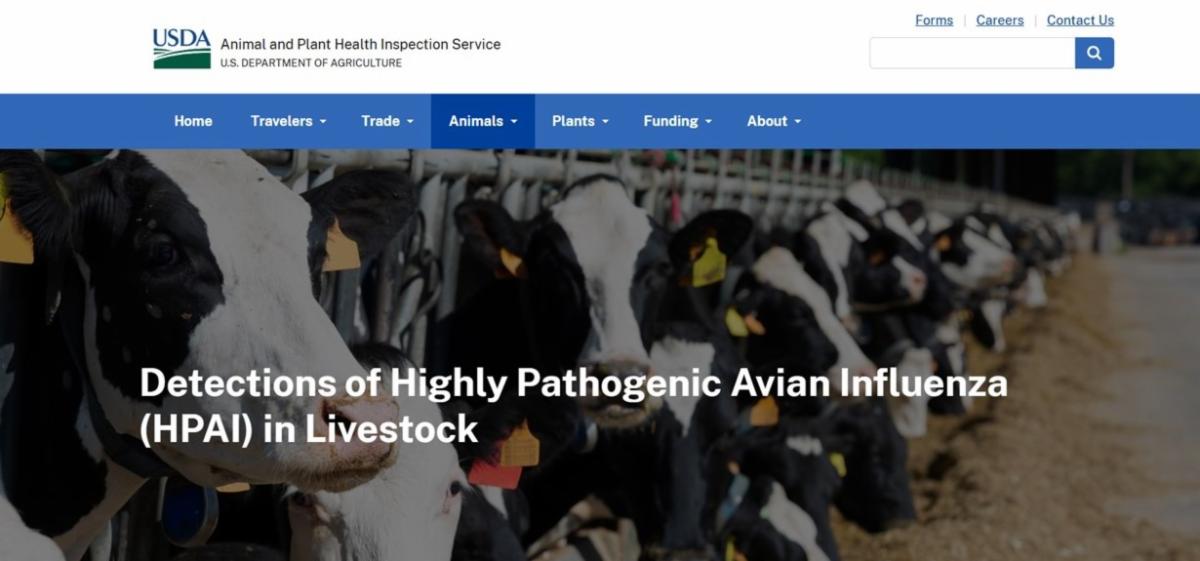
Due the continued concerns over dairy infections, USDA has announced that, in partnership with state veterinarians, APHIS will implement a tiered strategy to collect milk samples to better assess where H5N1 is present. The goal is to better inform biosecurity and containment measures, as well as to inform state-led efforts to reduce risk to farm workers who may be in contact with animals infected with H5N1.
In May 2024, USDA implemented a Federal Order requiring the testing of cattle before interstate movement, which has helped to limit H5N1’s spread to new states. In the past 30 days, the number of states with known avian influenza detections in dairy herds has dropped from 14 to two. However, USDA believes that additional steps are needed to proactively support effective biosecurity measures, which are key for states and farmers to contain and eliminate H5N1 infections from their livestock.
APHIS plans to first sample milk in bulk at the regional level, with additional testing at the farm level if necessary, until herds in an area are determined to be free of the virus. USDA will continue to work with state and private veterinarians on the final details of implementation and will share guidance documents soon.
USDA continues to support the rapid development and timely approval of an H5N1 vaccine for dairy cows, in addition to other species. Two vaccine candidates for use in dairy cows are currently undergoing field trials.
APHIS emphasizes to farmers nationwide that biosecurity is the best weapon against the spread of H5N1, and farms should practice good biosecurity even if the virus has not been detected in their state or vicinity. Data collected over the past seven months has shown that H5N1 can be transmitted on equipment, people, or other items that move from farm to farm, including between dairies and poultry facilities.
|