|
School readiness (ages 3–5) reflects whether young children are developing the skills needed to successfully transition into school. This composite measure captures five domains of early development: early learning, social-emotional development, self-regulation, motor development, and health.
Child flourishing reflects positive aspects of children’s social and emotional well-being, including curiosity and interest in learning, resilience, secure relationships with parents, and overall contentment. These strengths are increasingly recognized as key building blocks for healthy development and learning.
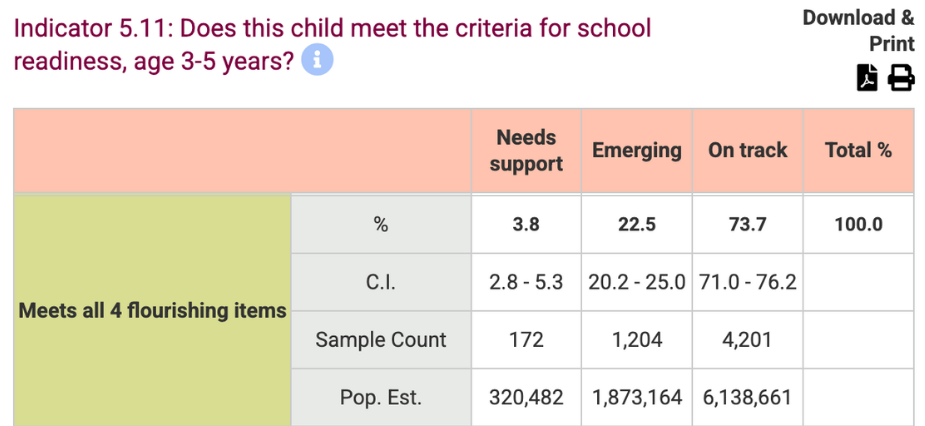
Measures of school readiness and child flourishing provide critical insights into the early foundations that support children’s long-term health and well-being. Using the DRC Interactive Data Query (IDQ) subgroup feature, users can explore how these measures relate to one another and what they reveal about early childhood development in the United States. The NSCH data illustrates a strong relationship between these measures with higher levels of flourishing associated with higher degrees of school readiness. These findings highlight the importance of nurturing children’s social, emotional, and developmental strengths in the early years to support readiness for school and lifelong well-being.
The ability to stratify measures in the IDQ extends beyond school readiness and child flourishing. Users can also explore how outcomes vary by family resilience and a range of other child and family characteristics. Learn more in our new guide: Using the DRC to Look at Subgroups.
|