If You Can't View the Images Please Click Here

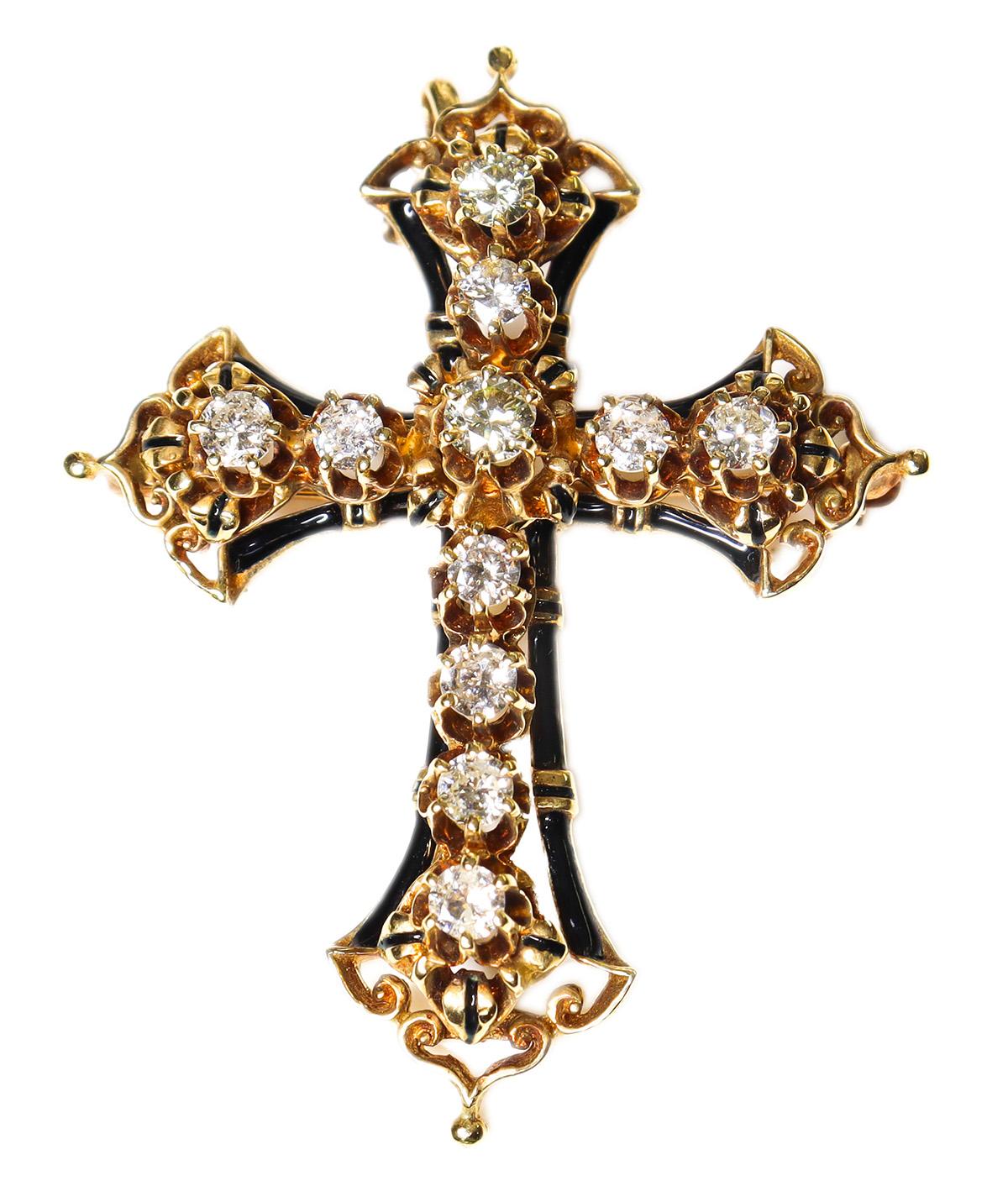
2 Carat Diamond Cross


14 K gold with black enamel trim. Two carats total diamond weight.


11 bright white diamonds set into a triple use piece.


It can be worn on a chain, as an enhancer on a strand of pearls, or used as a pin with its pin and catch mechanism 'invisible' from the front side.


Two inch measurement from top to bottom.


$2,150


Civil War Naval Cutlass


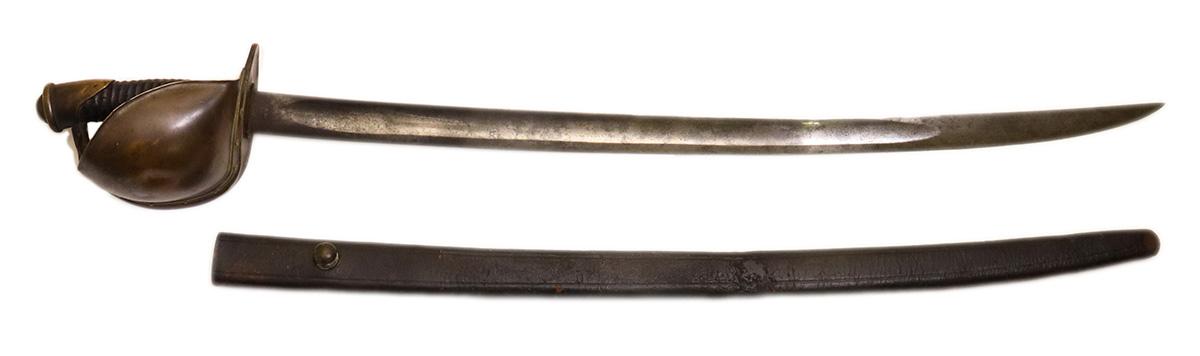
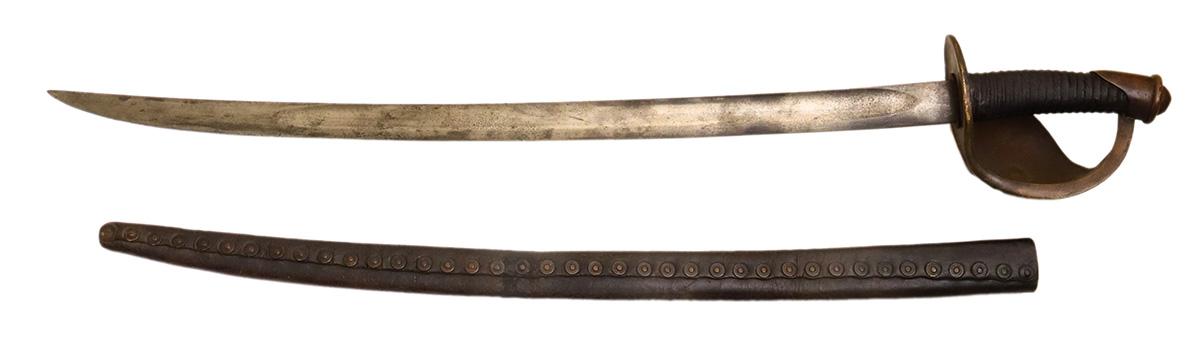
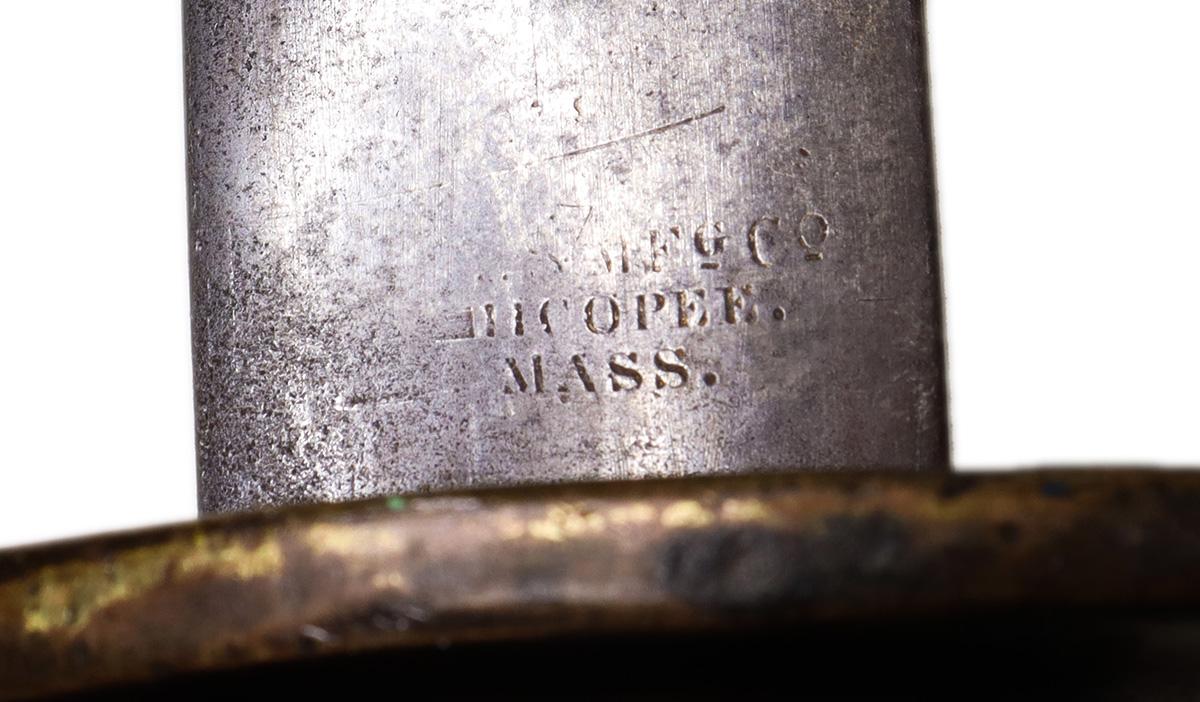
This Model 1860 U.S. Naval cutlass is dated 1863 and was made in Chicopee Falls, Massachusetts by The Ames Manufacturing Company.


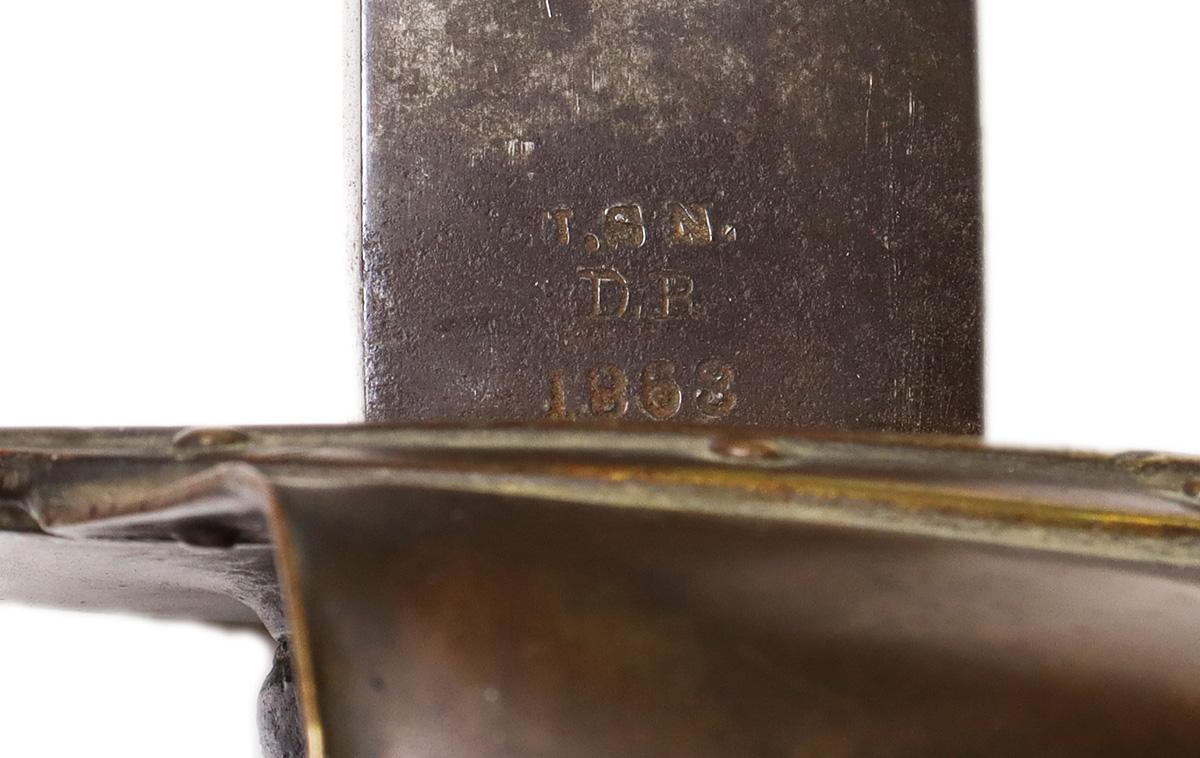
USN above the date and inspector's mark identifies it as U S Navy.

The military inspector was David Rice whose initials DR often appear on American swords.


The hand guard and pommel are made of brass that has been darkened by age and use.


The original brass wire wrapping around the handle is missing, which is very common.


The rarest part of this sword is the nice original scabbard. Leather doesn't usually survive well over 150 years, and leather exposed to salt water that long is almost always troubled. This leather survived remarkably well. Still present are the many brass tacks that held the the seams in place.


The sword's condition is average. The blade has the usual amount of pitting that naval cutlasses acquire. The hand guard does have two moderate dents, one being in the center. The date is very clear, while the maker markings are a little worn.


Overall, this sword and scabbard combination make for a very impressive addition to your Civil War collection


$2,450


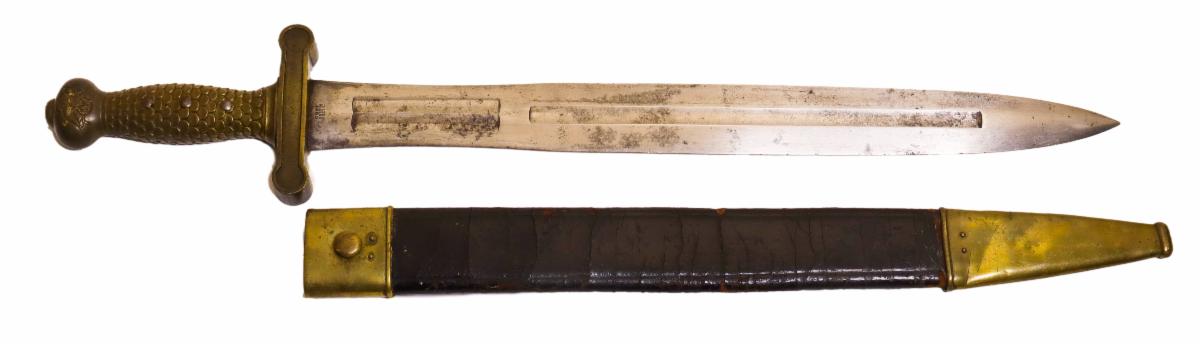
Civil War Short Artillery Sword


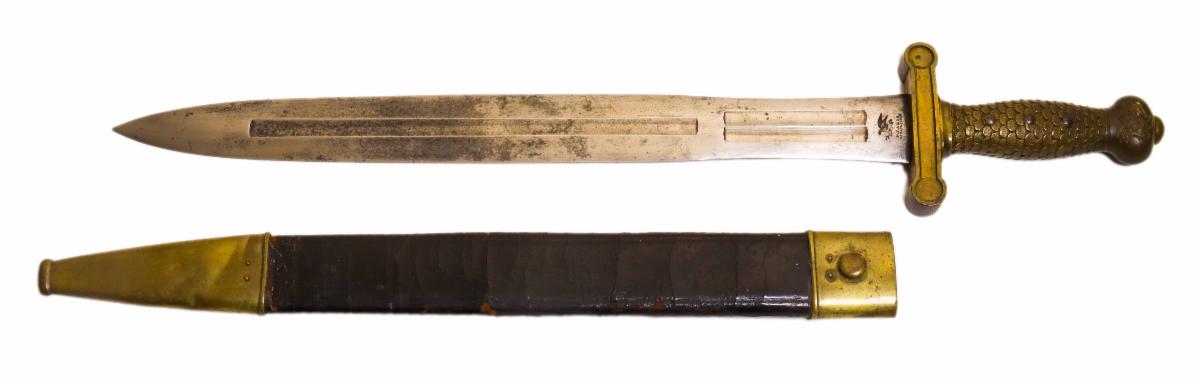
Modeled after the Roman gladius, this beautiful U.S. sword is very eye appealing.


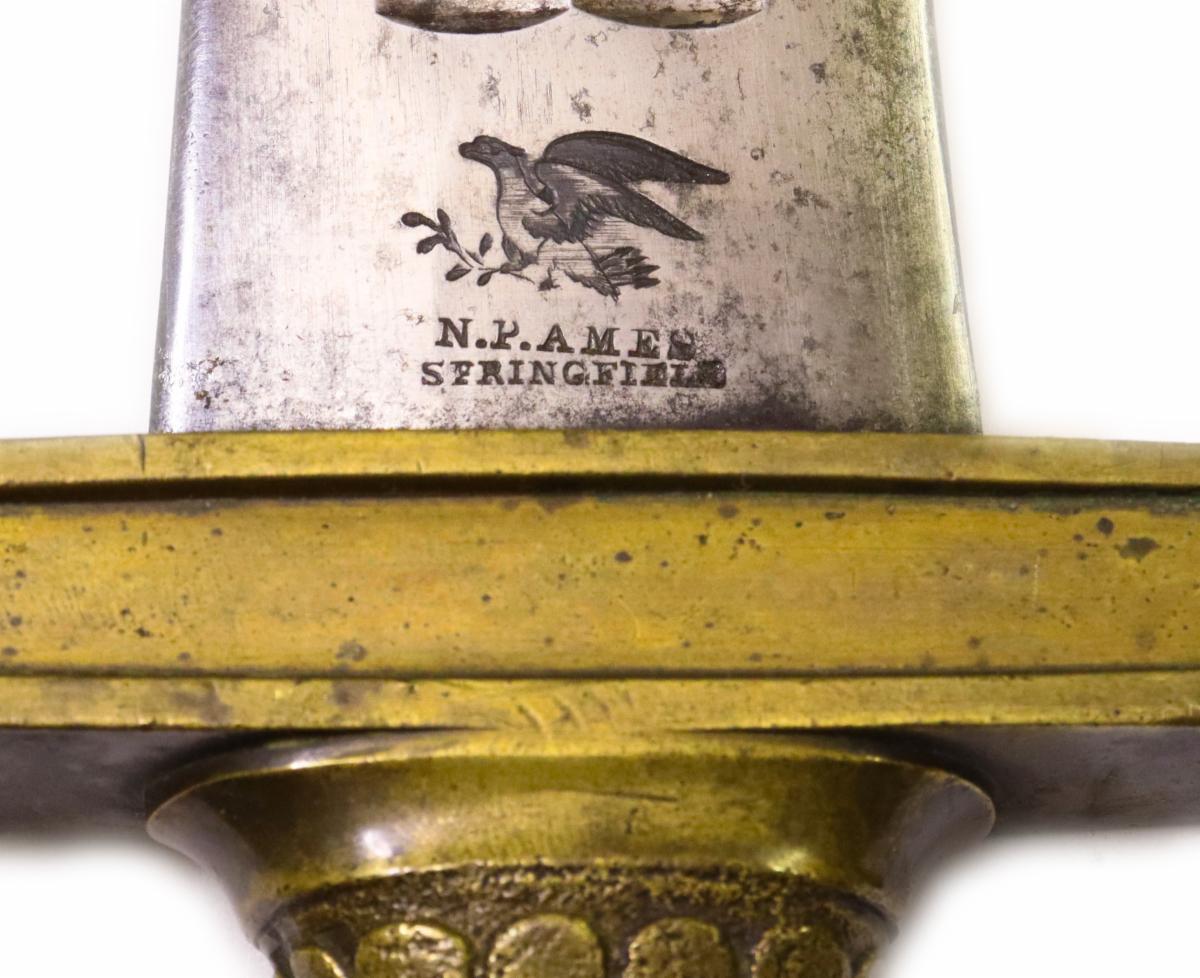
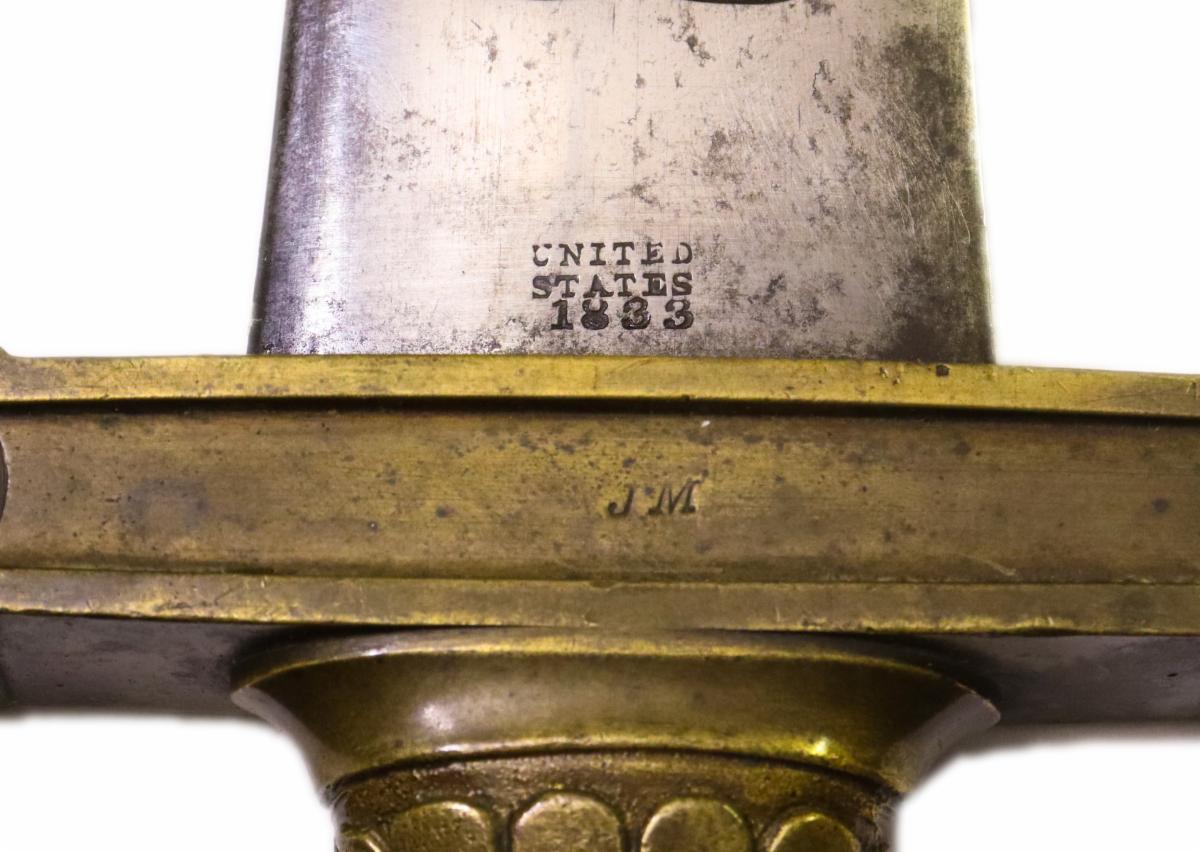
It is a model of 1832, manufactured in 1833 by N.P. Ames of Springfield, Massachusetts. Probably used in the Mexican War but most of this model saw heavy usage in the Civil War.


It would have been imprudent for those managing the artillery to be armed with the regular musket and long sword, however these soldiers required some protection in the event of attack. This shorter blade made it easier to carry and fight in a hand to hand combat scenario.


The brass handle with its beautiful scale type design adds a good bit of weight to the piece. The pommel boasts a very crisp American Eagle with a shield in front of its chest.


Rarer than the sword is the original leather scabbard. It has brass fittings at both ends.


The markings are very sharp with N.P.Ames and an eagle holding an olive branch and arrows on one side and the date of 1833 on the other.


$2,250


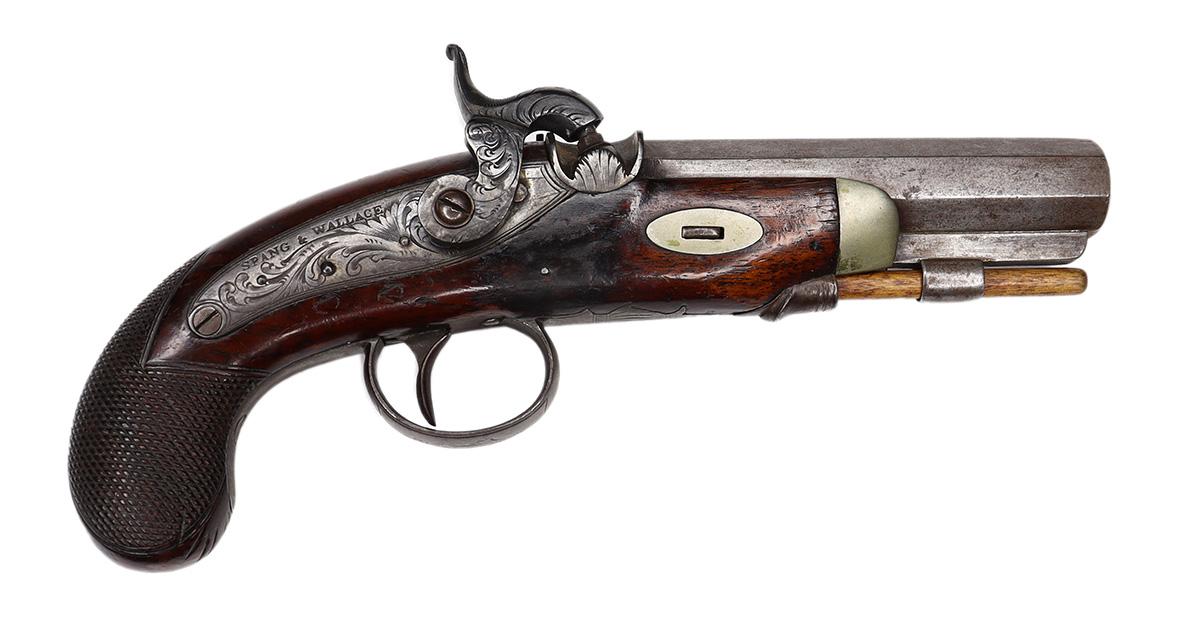
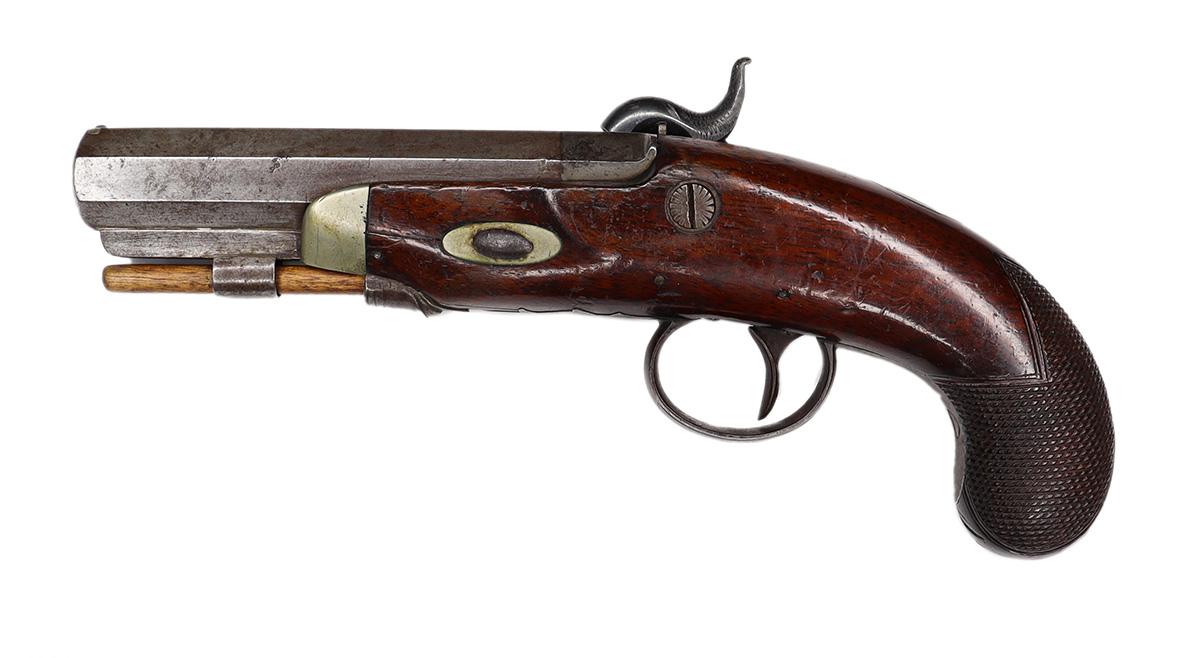
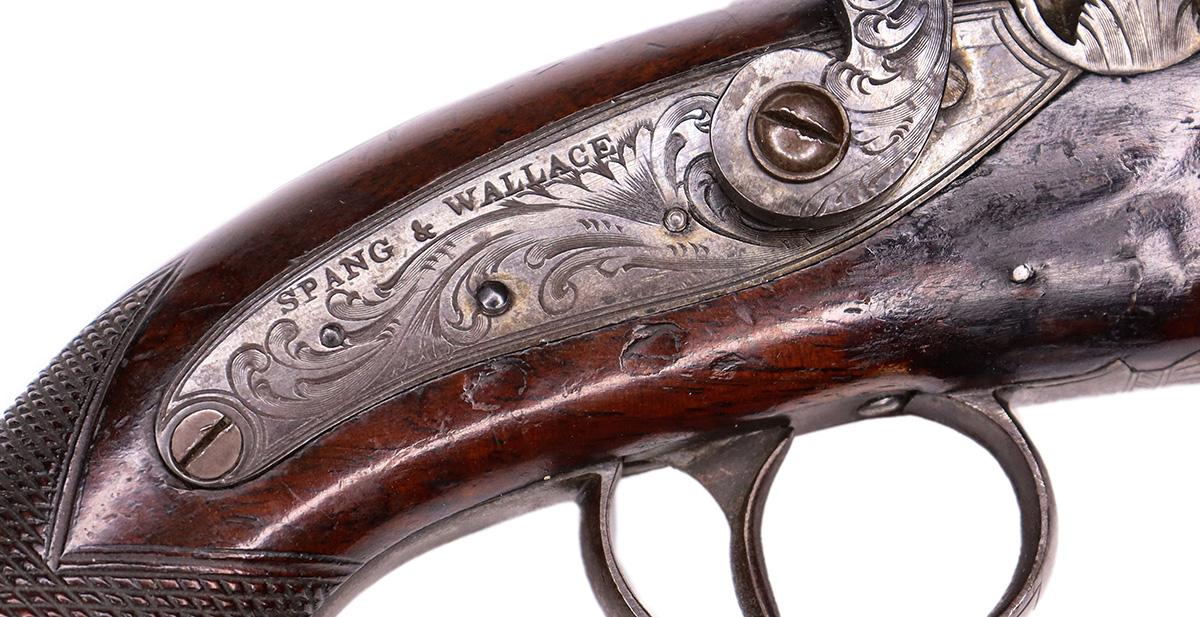
Spang & Wallace Deringer Type Pistol - circa 1850


.41 caliber percussion. 8 1/2 inches overall.


Engraved hammer, lockplate, and triggerguard. Silver initial plate on top of stock.


Not made by Henry Deringer, but it is nearly identical in style and design.


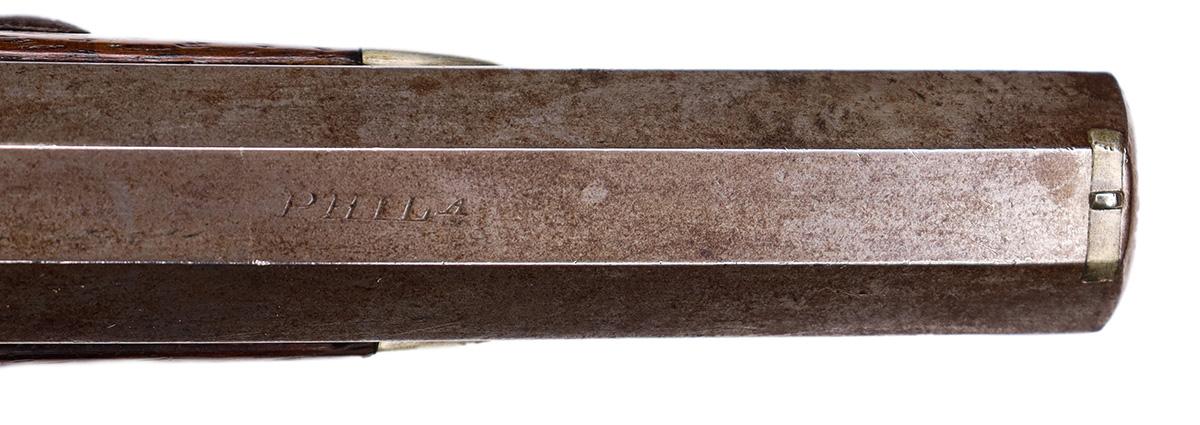
The name Spang & Wallace is very bold on the lockplate. Phil a is clear on top of the barrel, indicating Philadelphia provenance.


A pin head is visible, just below the hammer, in a darkened area of the wood where a repair was made some time ago.


$2,850

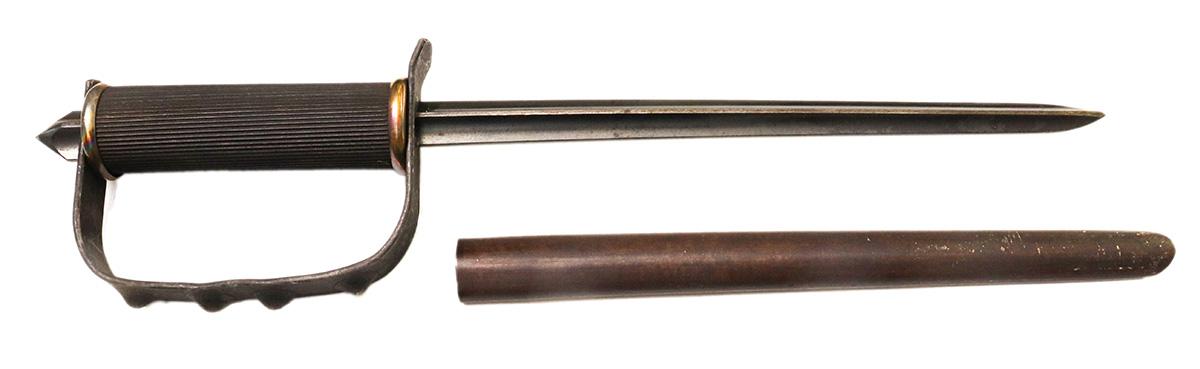
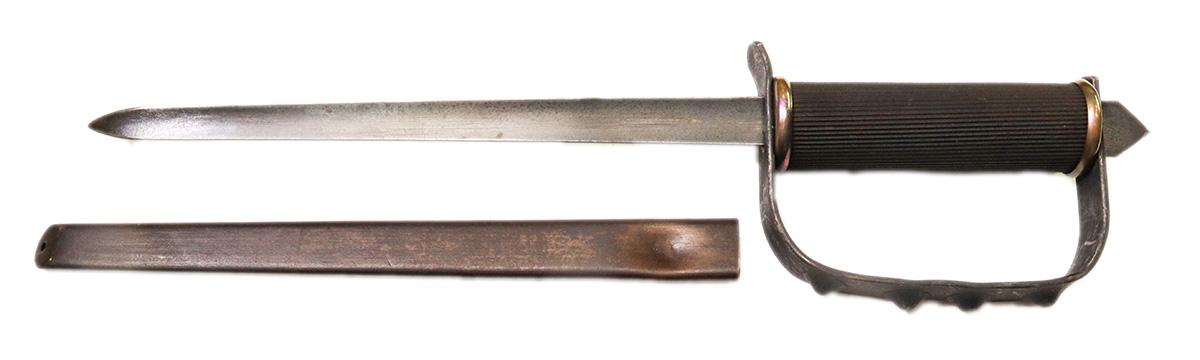
World War II Trench knife


Before there was the C.I.A., America had the O.S.S. (Office of Strategic Services).


Offered here is a trench knife used by one of its units in the Philippines during World War II. The combination of brass knuckles and a long knife blade should have been enough to intimidate and fatally wound an enemy. To really make it deadly they added a skull crusher at the end of the handle as well.


The blade is what draws a lot of attention because our army recycled old 1873 trapdoor Springfield bayonets to make these trench knives. Rubber hoses created the handgrips. Truly a unique piece of history.


$650

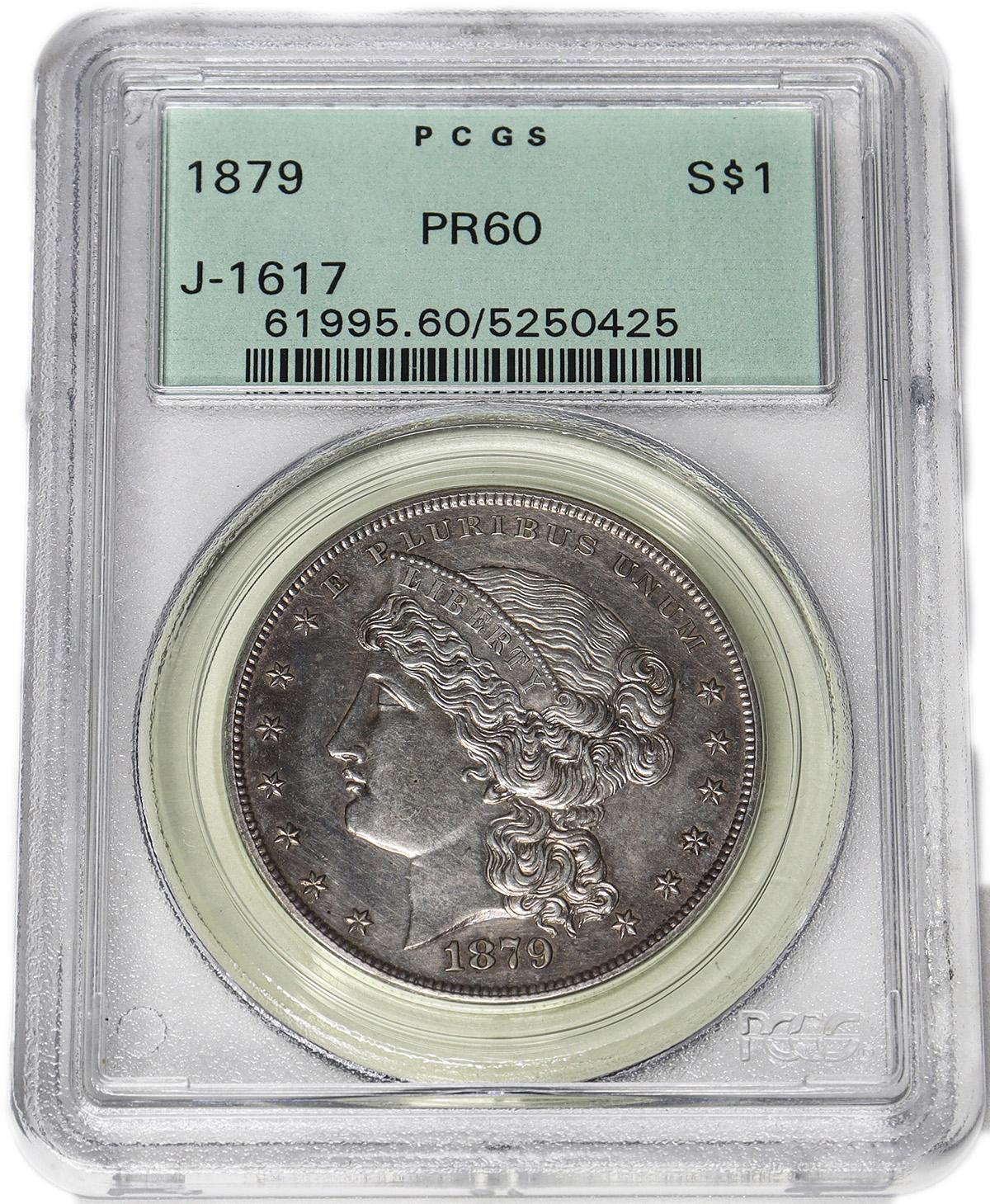
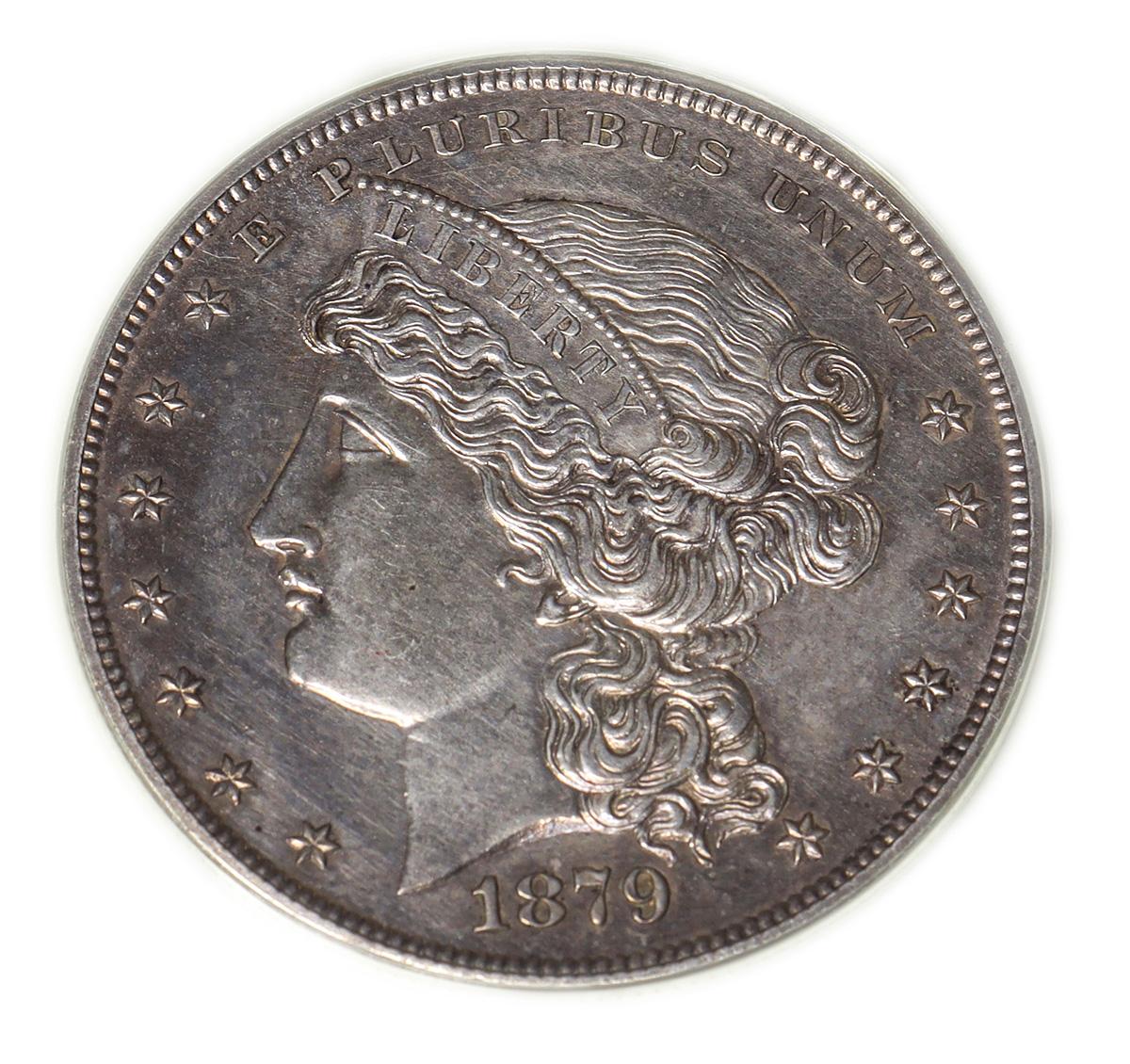
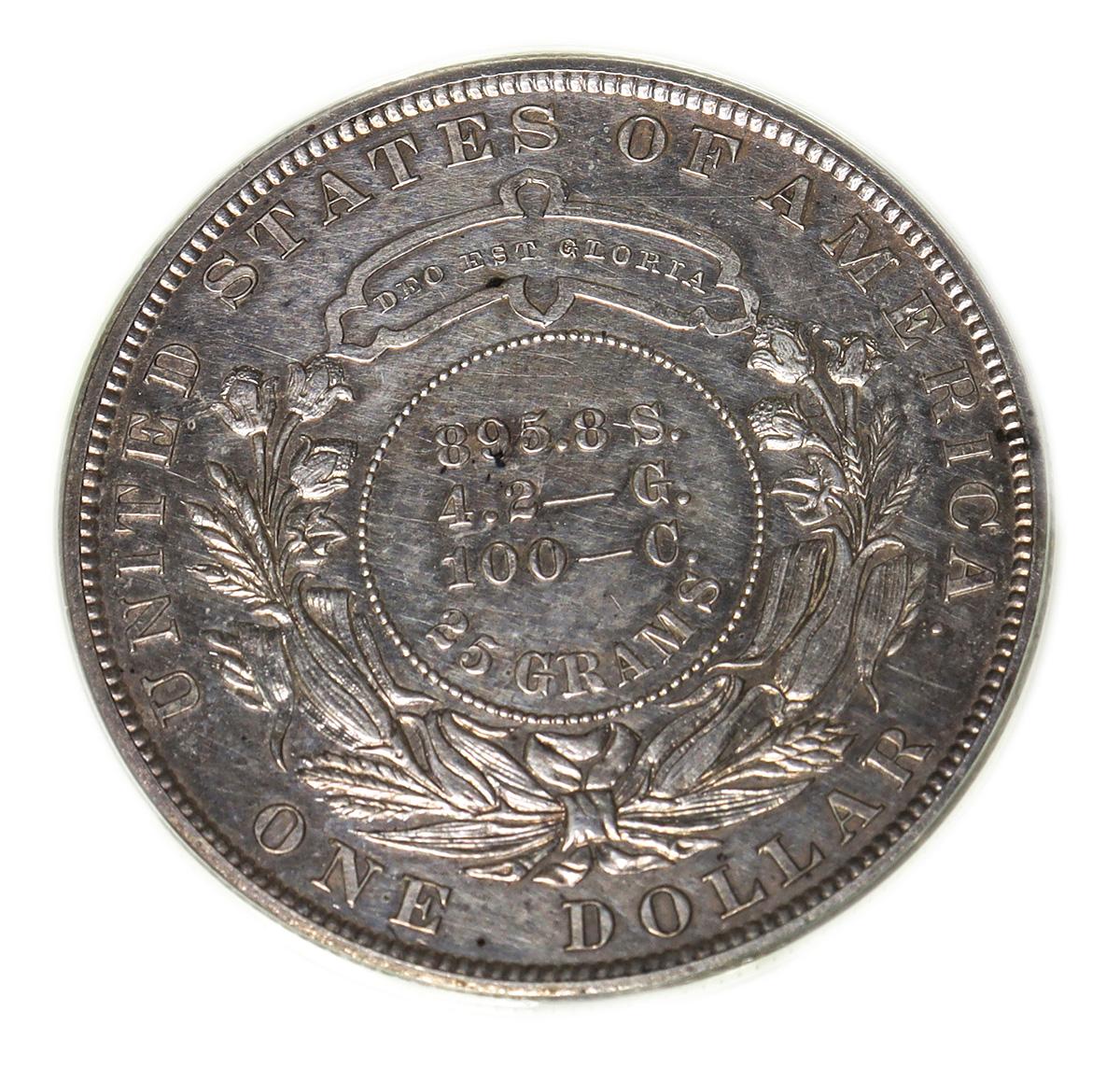
Proof 60 Pattern Silver Dollar


In the numismatic community we often encounter coins known as patterns. They are test designs that sometimes became coins after modifications and sometimes were lost into oblivion. Pictured is such a coin.


Graded in an older PCGS holder is the Judd pattern 1617, struck in proof condition and graded Proof 60.


Minting of Morgan silver dollars actually began in 1878, the year before this pattern was introduced. This pattern's intended purpose was to change the design of one of our most popular coins ever made. Obviously that never happened.


$3,400

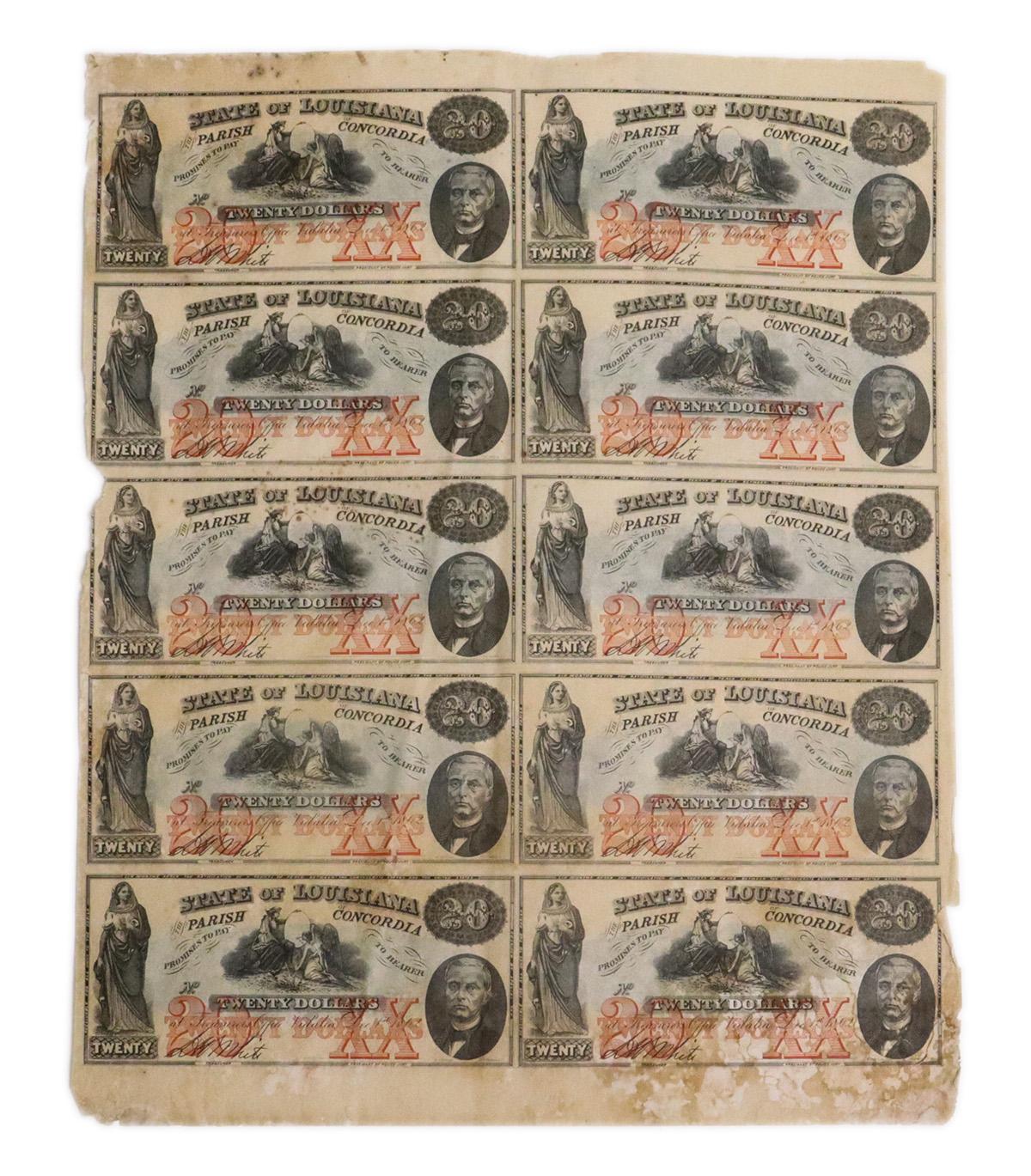
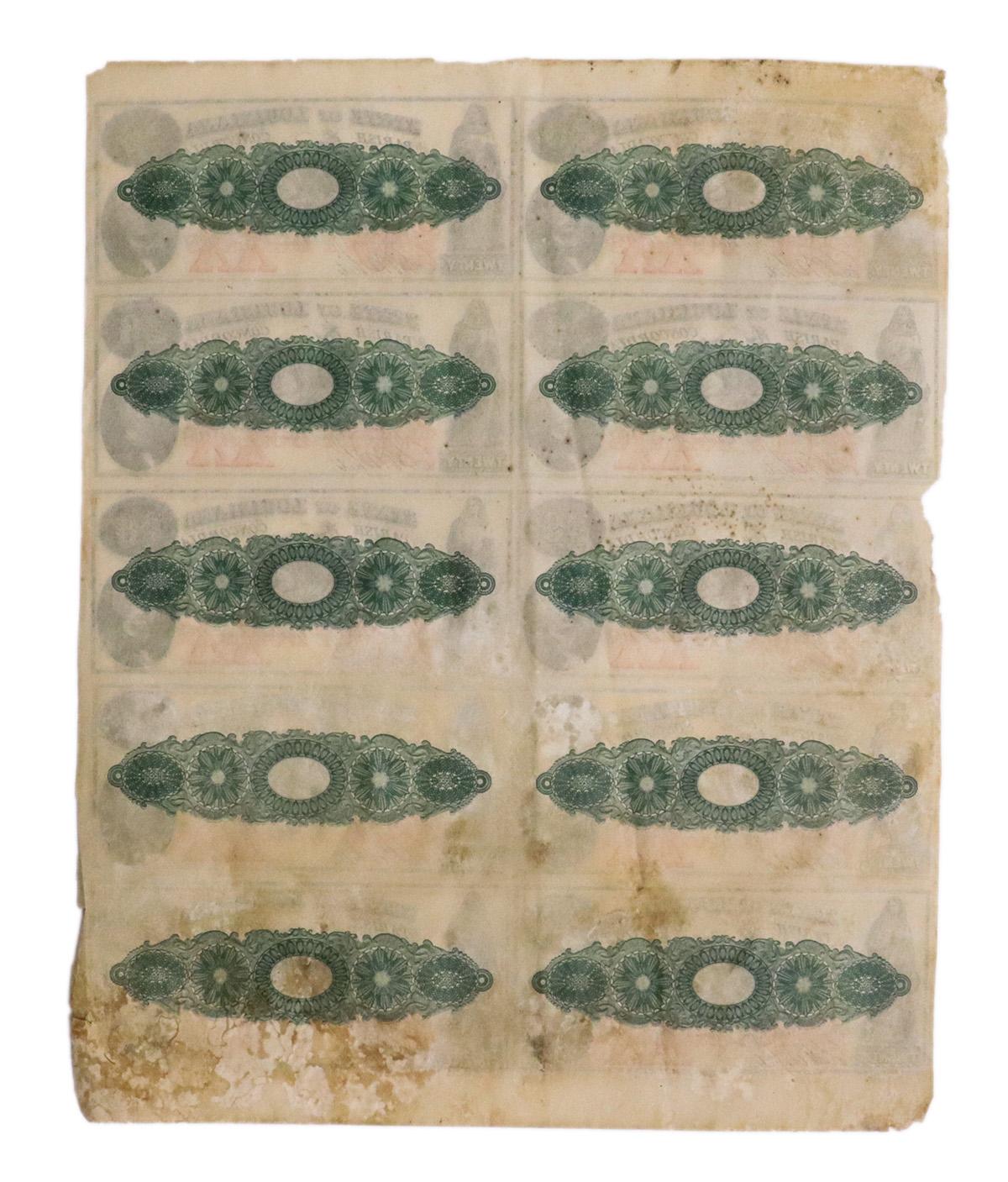
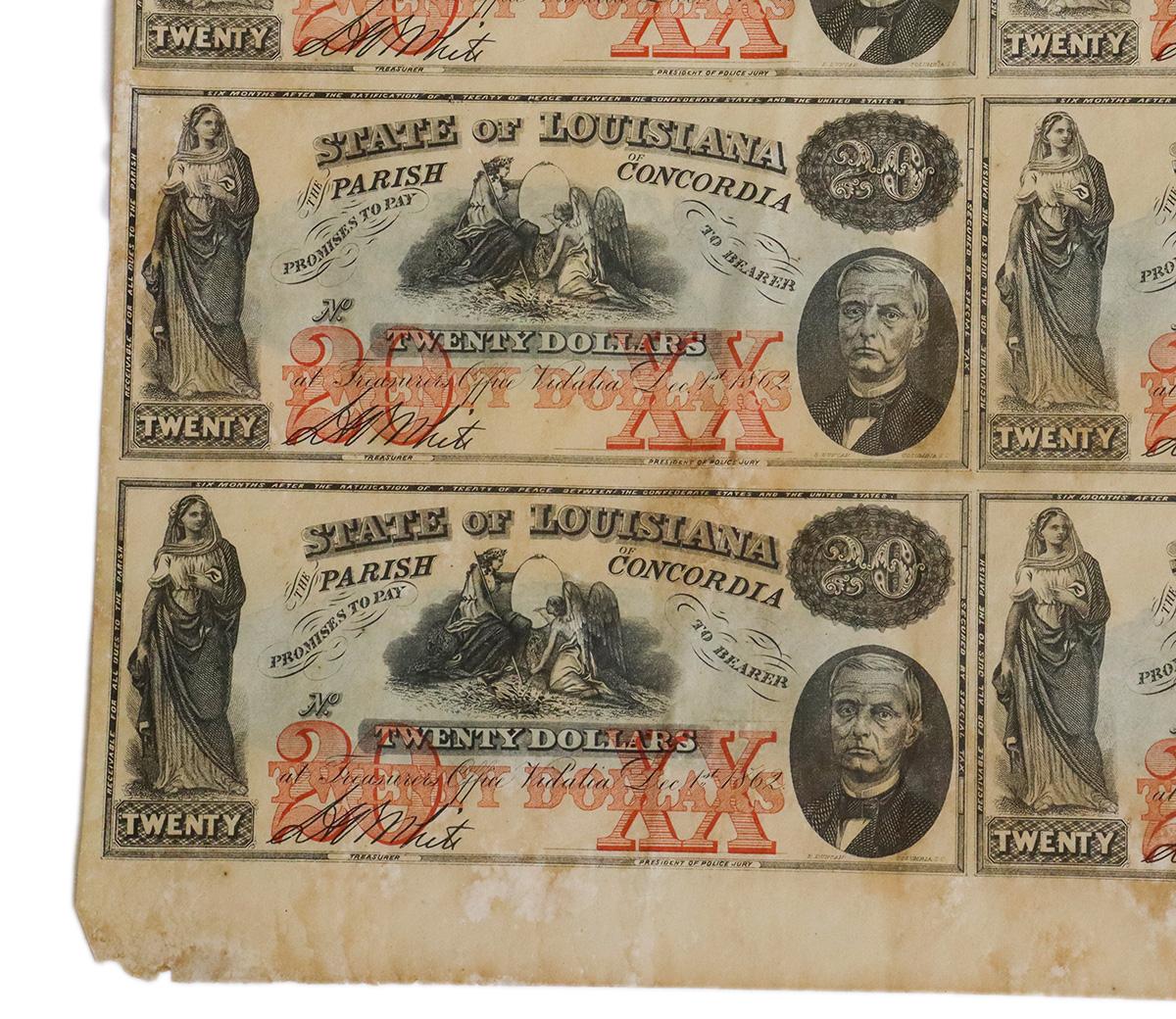
Uncut Sheet of Concordia Parish Notes


circa 1862


During the Civil War this small Louisiana parish printed its own currency, as did other parishes and counties of the day. The usual vehicle was sheets like this one that were hand signed and then cut so that distribution could be made.


Some damage to the edges is apparent, as well as water damage to the bottom of the sheet. It is still quite original and ready to be framed to suit.


$875


1(800) 535.1853 - (504) 522-3305 - jhcohen@bellsouth.net - cohenantiques.com
Facebook