|
Daily Transportation News
May 1, 2026
| | | New California Regulations Allow Heavy-Duty Driverless Vehicle Testing, Deployment | |
|
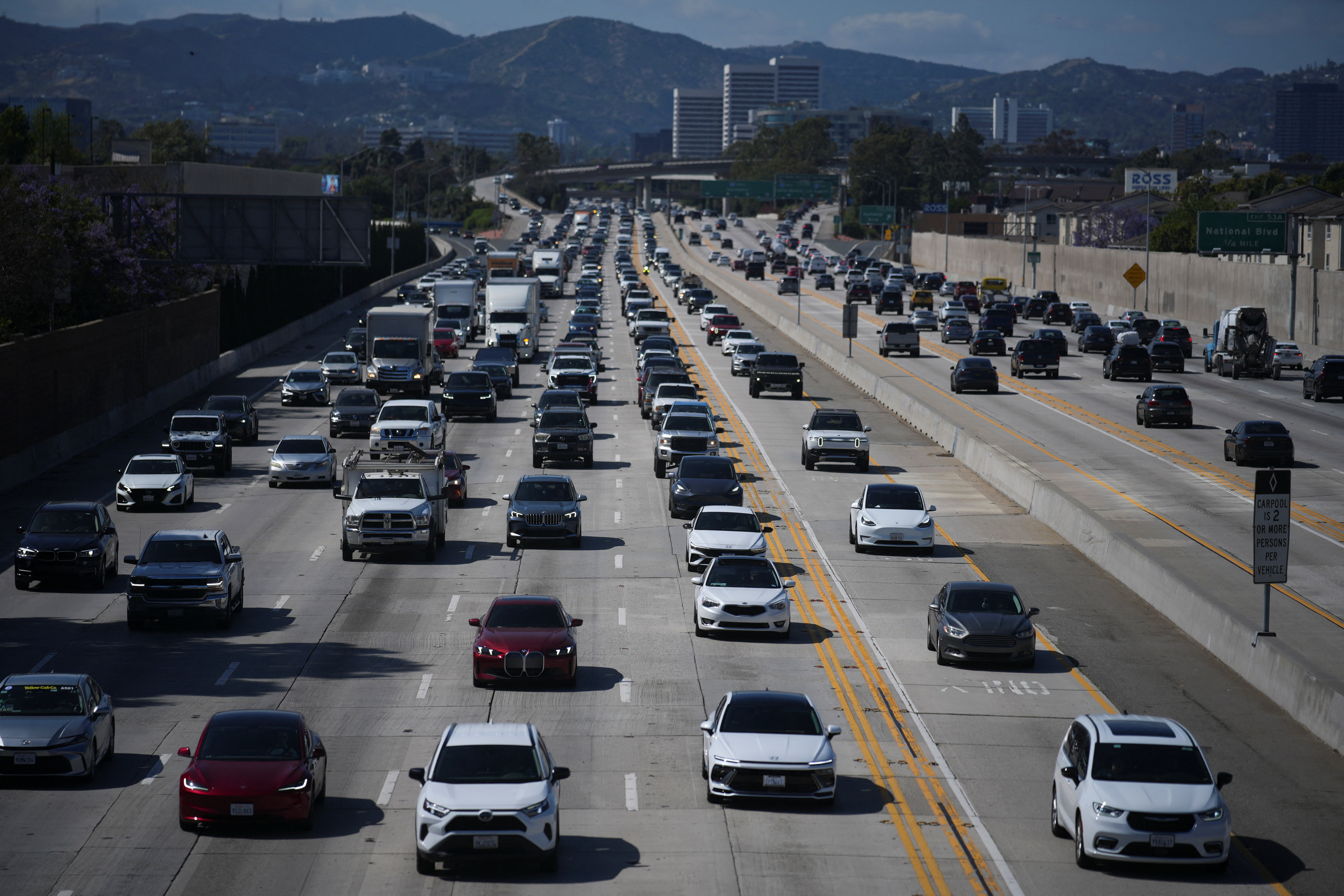
The California Department of Motor Vehicles (DMV) on Tuesday adopted new regulations on autonomous vehicles (AVs) to curb public safety issues and keep manufacturers in check.
New regulations include expanding “safety and oversight requirements for” all types of AVs, the DMV said in a statement released Tuesday.
This will allow law enforcement agencies to cite AV companies for moving violations and have those companies respond to first responder calls within 30 seconds and authorize local emergency officials “to issue electronic geofencing directives to clear AVs from active emergency zones.”
“California continues to lead the nation in the development and adoption of AV technology, and these updated regulations further demonstrate the state’s commitment to public safety,” DMV Director Steve Gordon said in the statement. “These updates support the growth of the AV industry by enhancing public safety and transparency while adding additional accountability for AV manufacturers.”
The regulations, along with the passage of Assembly Bill 1777, ensure that local government emergency officials can issue temporary “do not enter” or “restricted area” zones to allow manufacturers to respond to any public safety incidents.
“Any AV already inside the zone must exit and no additional AVs may enter,” the DMV stated. “AVs that violate this restriction may be subject to permit restrictions or suspension, depending on the circumstances of the incident.”
Each AV manufacturer must complete 50,000 miles or 500,000 miles of testing for light-duty and heavy-duty vehicles, respectively.
The regulations also give the DMV the authority to place “targeted operational restrictions on AV manufacturers … when necessary for public safety.”
Source: The Hill
Click Here to Read More
| | IATR Advisory Board Welcomes Laura Chace, President and CEO of ITS America, As Newest Member | |
|
Laura Chace
President and CEO of ITS America
| |
IATR is happy to announce that the newest advisory board member is Laura Demeo Chace, President and CEO of the Intelligent Transportation Society of America (ITS). Laura was named President and CEO of ITS America in August 2021. Her focus is to champion policies and investments that make our transportation systems safer, more innovative, and more efficient. Working collaboratively with agencies and industry leaders, she advances technology-driven solutions that improve how people and goods move – enhancing quality of life, supporting a thriving economy, and maintaining America’s global competitiveness.
Matt Daus, President of IATR, said, “I am pleased to welcome Laura Chace to the IATR Advisory Board. Laura brings a deep and well-rounded understanding of the intersection between transportation policy, emerging technology, and infrastructure investment, and her leadership at ITS America has been instrumental in advancing innovation across the mobility ecosystem. As the regulatory landscape continues to expand to include new modes, technologies, and stakeholders, her insight will be especially valuable in helping our members navigate these complexities. IATR has long emphasized the importance of collaboration between the public and private sectors, and Laura’s experience working across government, industry, and advocacy organizations aligns closely with that mission. Her perspective will help strengthen our ongoing efforts to share global best practices, support forward-looking regulatory frameworks, and promote safe, efficient, and sustainable transportation systems. We look forward to her contributions and to working together to advance a more innovative and coordinated future for mobility.”
Laura has extensive experience in strategic planning, operations, communications, and advocacy, and a proven record of implementing complex initiatives with strong engagement and collaboration among stakeholders. Chace has served on several advisory committees to the U.S. Department of Transportation regarding the integration of emerging technologies into our transportation system. Chace brings 20 years of experience in trade association management, having previously worked at USTelecom and the American Trucking Association. Early in her career, she served at the U.S. Department of Justice Office and in the White House. She holds a Bachelor of Arts degree from Colgate University.
Upon her acceptance of the advisory board position, Laura said, “I am honored to join the leaders on the Advisory Board for the International Association of Transportation Regulators. I am committed to playing a dynamic role in providing insight and guidance to further IATR’s mission of building an innovative and multimodal future of transportation. Collaboration is essential – and I’m proud to work alongside fellow board members to advance our shared priorities that strengthen transportation systems nationwide.”
As transportation regulation and technology progress rapidly, numerous government entities and stakeholders have become involved in overseeing, coordinating, or regulating both new and established industry participants. IATR members now handle regulations not only for taxicabs and limousines, but also for pedicabs, Transportation Network Companies (TNCs), liveries, black cars, smartphone app firms, jitneys, shuttles, microtransit services, and public and private paratransit. Many regions gather transport data from licensees and interact with technology vendors, auto manufacturers, and other businesses connected to for-hire ground transportation providers, drivers, and vehicle owners by permitting, authorizing, franchising, or regulating them.
The expanding regulatory landscape encompasses airport authorities, multi-modal public transit agencies, local transportation and traffic departments, state highway and transportation agencies, public utilities commissions, consumer affairs agencies, taxi and limousine/for-hire departments, police departments, state agriculture departments, and weights and measures agencies or divisions. Additionally, State Departments of Motor Vehicles, certain Federal agencies, international ministries, land transport authorities, and social service (Non-Emergency Medical Transportation) regulators are now included. IATR's diverse membership includes government agencies, which helps us collaborate with similar nonprofit organizations that serve educational and advocacy functions. These partnerships align closely with the objectives and mission of the IATR.
It is with this ever-changing landscape of new forms of mobility, oversight, decarbonization, and road safety that IATR includes various organizations on its advisory board to ensure the best guidance, insight, and practices are being discussed at conferences, within the organization’s subcommittees, and via joint projects and industry hack-a-thons. Advisory board members include Together for Safer Roads, the American Public Transportation Association (APTA), the University Transportation Research Center (UTRC), and the Non-Emergency Medical Transportation Accreditation Commission.
| | |
USDOT Reboots Key Bridge Contract, Expands Infrastructure Funding Nationwide
The U.S. Department of Transportation (USDOT) recently announced updates on the Francis Scott Key Bridge rebuild in Maryland and new investments to support infrastructure development projects nationwide. USDOT confirmed that the State of Maryland will seek new construction partners for Phase 2 of the Francis Scott Key Bridge project following a decision to rebid that portion of the contract. The move comes after project cost estimates increased from $1.8 billion to more than $5 billion, prompting additional review of the budget and timeline.
Click Here to Read More
How Transit Agencies Can Hire and Keep Front-Line Workers
Some 3,000 public transit agencies and providers employ over 160,000 bus, subway and streetcar operators and more than 55,000 maintenance personnel to serve 20 million daily rides, according to 2023 UI data. “Transit agencies need to ensure that their workforce is growing and remains big enough to handle the demand for people to use transit,” Freemark said. Pay scales vary widely among transit systems. Median wages for the transit labor force in Los Angeles, New York City and Washington, D.C. are between $25 to $30 per hour, while Atlanta, Boston, Chicago, Dallas, Houston and Philadelphia are in the $20 to $25 per hour range, according to UI data. Miami’s median wage for transit workers is under $20 per hour.
Click Here to Read More
Philadelphia Cuts the Ribbon on Renovated Intercity Bus Terminal
Intercity bus service will finally return to a permanent Philadelphia terminal this Friday when the renovated Filbert Street bus station officially reopens after a three-year closure. The Philadelphia Parking Authority completed $5 million in improvements to the former Greyhound station at 10th and Filbert streets.
Click Here to Read More
| |
Light Rail Project Aims to Revitalise Toronto’s Eastern Waterfront
The light rail line is intended to serve the Port Lands redevelopment zone around the former docklands and a new island called Ookwemin Minising at the mouth of the Don River. According to the Waterfront Toronto development authority, Waterfront East Transit will provide ‘a critical piece of infrastructure needed to help revitalise Toronto’s eastern waterfront’.
Click Here to Read More
Transport Expansion Plans Included in Canada-Ontario Partnership to Build
The national government’s share will come through its Build Communities Strong Fund. Much of the money is intended to support a reduction in development charges and a harmonised sales tax rebate aimed at making new housing more affordable, but there will be a substantial element for investment in public transport. Under the GO 2.0 initiative, the two governments will explore options for expanding GO Transit commuter rail services across the Greater Golden Horseshoe region, using corridors owned by the freight railways.
Click Here to Read More
Claims for Pothole-Induced Vehicle Damage Skyrocket in Quebec City
Potholes appear to be wreaking havoc on cars in Quebec City. According to data Radio-Canada obtained through an access-to-information request, the number of filed damage claims exploded in 2025 and, for now, this year is also off to a rough start for drivers. In 2025, Quebec City received 469 claims from drivers, more than triple the total of 127 from 2024.
Click Here to Read More
| |
Forest Raises £27m to Continue Scaling E-Bikes in London
London-based shared e-bike operator Forest has raised £27 million to support its continued expansion across the capital. The latest funding brings Forest’s total Series B round to £40 million and includes investment from its e-bike supplier Okai, which now takes a minority stake in the company. The raise follows a strong year for Forest which reports rider numbers doubling year-on-year. Forest has also secured key wins in recent months, including its appointment as the sole operator in Richmond.
Click Here to Read More
Driver Shortage Pushes Bus Depots Toward Automation
Europe’s public transport operators are entering a period where staffing pressure and fleet electrification meet in the same place: the bus depot. Around 105,000 bus and coach driver positions remain unfilled across Europe (IRU figures cited in sector analyses), and a meaningful slice of working time is still spent on low-speed, non-revenue movements inside the fence.
Click Here to Read More
China’s Rolls-Royce Rival May Have Found a Shortcut into Europe
For years, European automakers were worried that it was only a matter of time before Chinese brands would flood the continent with cheap EVs built in enormous factories back home. But the plot thickened when some of those Chinese brands were not content with merely selling cars in Europe. They want to build them there, too. The latest challenger is Hongqi, the Chinese luxury brand operated by FAW.
Click Here to Read More
| |
Electric Minibus Taxis Are Coming to Cape Town
The minibus taxi is ubiquitous in southern Africa. These vehicles are the backbone of the urban economy, providing affordable mobility for millions. In Cape Town, South Africa’s second most populous city, they are central to the transport landscape. Around two-thirds of the city’s public transport users rely on paratransit services (which respond flexibly to demand), carrying about 830,000 daily passengers across 1,466 routes, and run by private individuals or associations rather than the state.
Click Here to Read More
From Oil Shock to Electric Shift: How African Cities Are Rewiring Transport for Energy Security
As geopolitical tensions in the Middle East unsettle global oil markets, their effects are felt far beyond producing regions. In cities such as Nairobi and Johannesburg, the consequences arrive quickly: higher fuel prices, weaker currencies, and rising inflation. Heavy reliance on imported fuel, priced in dollars, means external shocks are rapidly transmitted into domestic economies. Transport systems, which underpin both urban mobility and the movement of goods, sit at the centre of this exposure.
Click Here to Read More
EV Sales in Europe and Asia Soared Following the Start of the War in Iran
As domestic sales of electric vehicles rev up across Europe and Asia, juiced in part by high gasoline prices, car manufacturers are scrambling for traction in a still uncertain market. Many are pursuing collaborations with China as it continues to dominate global EV supply chains. Throughout it all, speculation abounds that an EV tipping point approaches.
Click Here to Read More
| | |
NEMTAC National NEMT Rate Structure, Modes of Transportation and Trip Economics Survey
(Phase 2)
| |
|
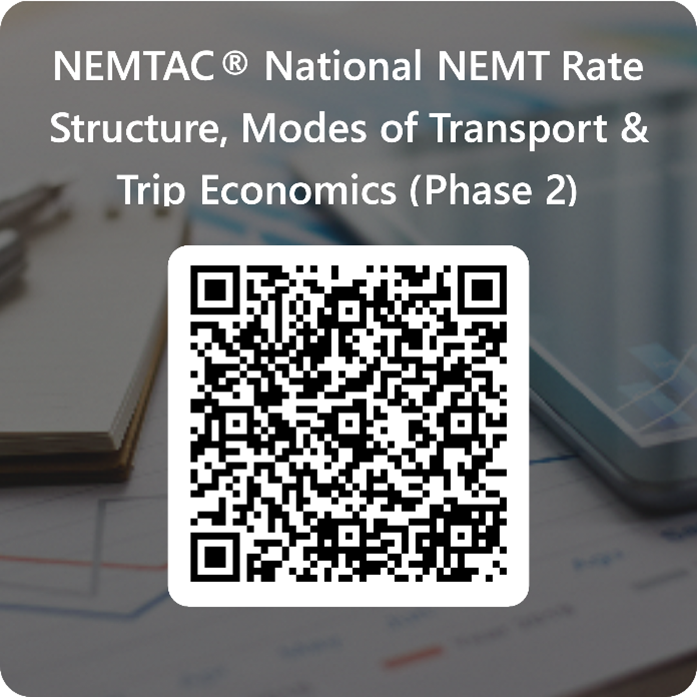
NEMTAC® is conducting a national, voluntary survey to establish a clearer, industry-wide view of how non-emergency medical transportation (NEMT) services are structured, priced, and delivered across real operating environments.
This Phase 2 survey builds on earlier findings and now includes:
- Rate structure design (base, mileage, minimums, and add-ons)
- Levels of service aligned with NEMTAC standards
- Trip viability under real operating conditions (urban, rural, distance, assistance)
- Expanded rate bands to capture the full range of current reimbursement environments, including lower-rate structures reported across multiple markets
The survey is:
- Anonymous and aggregated
- Not a rate-setting exercise
- Not an audit or evaluation of any provider, broker, or program
This survey is intended for NEMT providers, brokers, and transportation managers operating across Medicaid, Medicare Advantage, commercial, and private-pay environments.
Your participation will help establish a neutral, system-level view of how current rate structures perform under actual operating conditions.
Peter Hicks, Executive Director of NEMTAC, on this important survey: “The first survey established the foundation. This second phase is where the data becomes more precise, and even at this early stage, we’re seeing insights that will directly inform how standards evolve and are implemented.”
Most respondents complete the survey in under 5 minutes. Please answer only the questions applicable to your role.
If appropriate, you may share this survey within your organization or network. Broader participation improves the accuracy of the aggregated findings.
You can access the survey here: https://forms.office.com/r/uUG8zXS5B9
NEMTAC will publish a summary of findings following the survey close.
You can also find out more about Transform 2026 which will take place in Orlando, Florida on August 16-19 by clicking here.
| |
|
Message from IATR President Matthew W. Daus
At the International Association of Transportation Regulators (IATR), our regulators are at the forefront of addressing both the challenges and opportunities facing the mobility paradigm. Our IATR members, partner organizations, and regulated industries will continue on our shared quest to fulfill the mission of our non-profit educational organization - to bring about Multi-Modal Mobility Innovation for All! This mission can best be accomplished through information sharing, collaboration, identifying and promoting best practices, and educating our membership. These educational updates and electronic media clips are affectionately known as “IATR snips” and endeavor to cover all aspects of mobility around the globe - especially news and developments involving safety, technology innovation, multi-modal integration, automation, sustainability, electrification, accessibility, regulatory modernization, and equity.
If you would like more information about the IATR, you can visit our website at www.iatr.global. Current members can renew their memberships when you log in to your IATR portal on the top right-hand side of our website, or click here. If you forgot your membership password, please email our Membership Director, Eric Richardson, at erichardson@iatr.global.
| | | | | |
|
RENEW YOUR MEMBERSHIP FOR 2026:
Weekly news snippets
Access to the membership database
Videos and files from recent conferences
Discounted rates for future conferences, and more!
Renew your membership at http://www.iatr.global or email info@iatr.global for any questions!
| | | | |