|
Response Teams Work to Prevent GWSS Spread from Nursery Shipments
GRAPEVINES
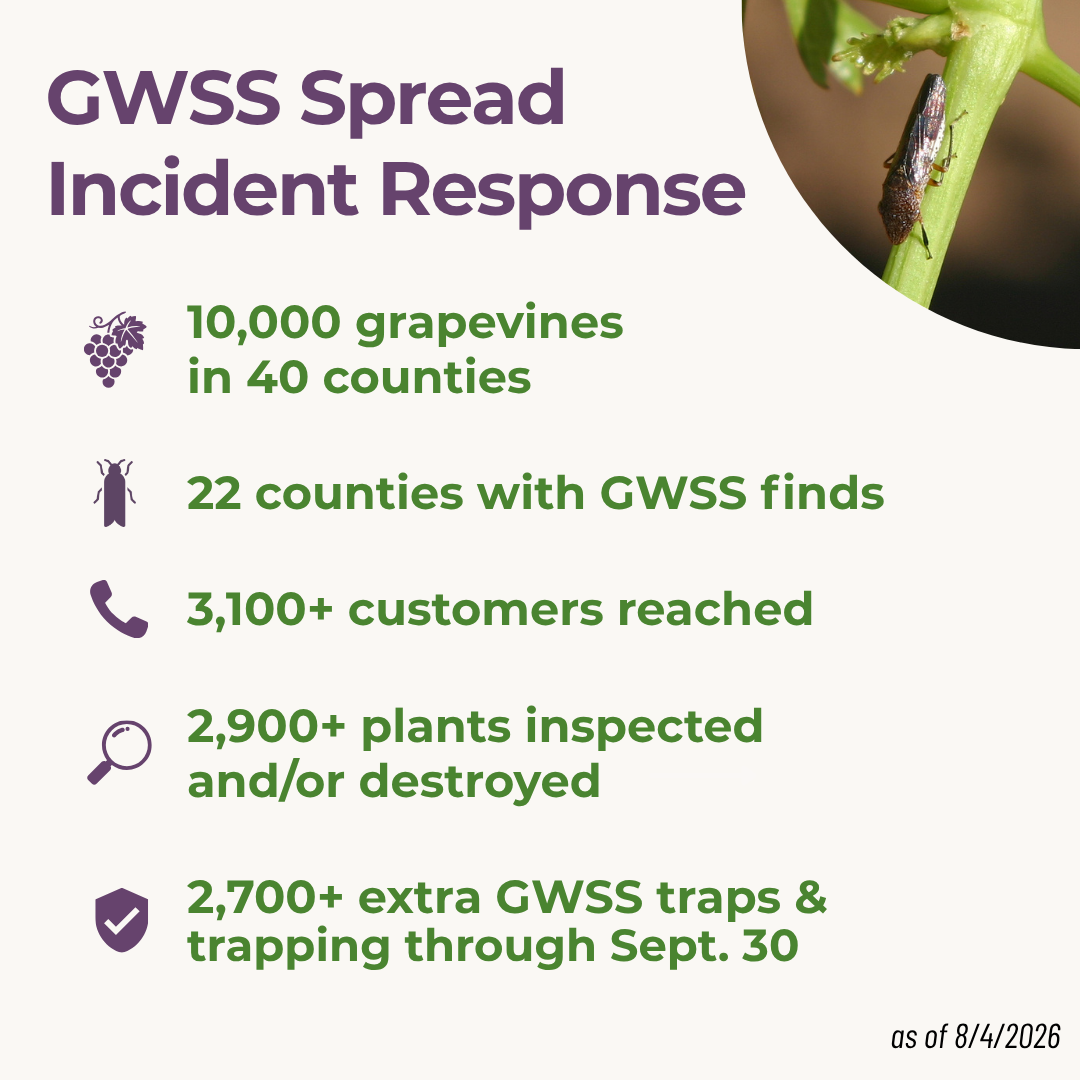
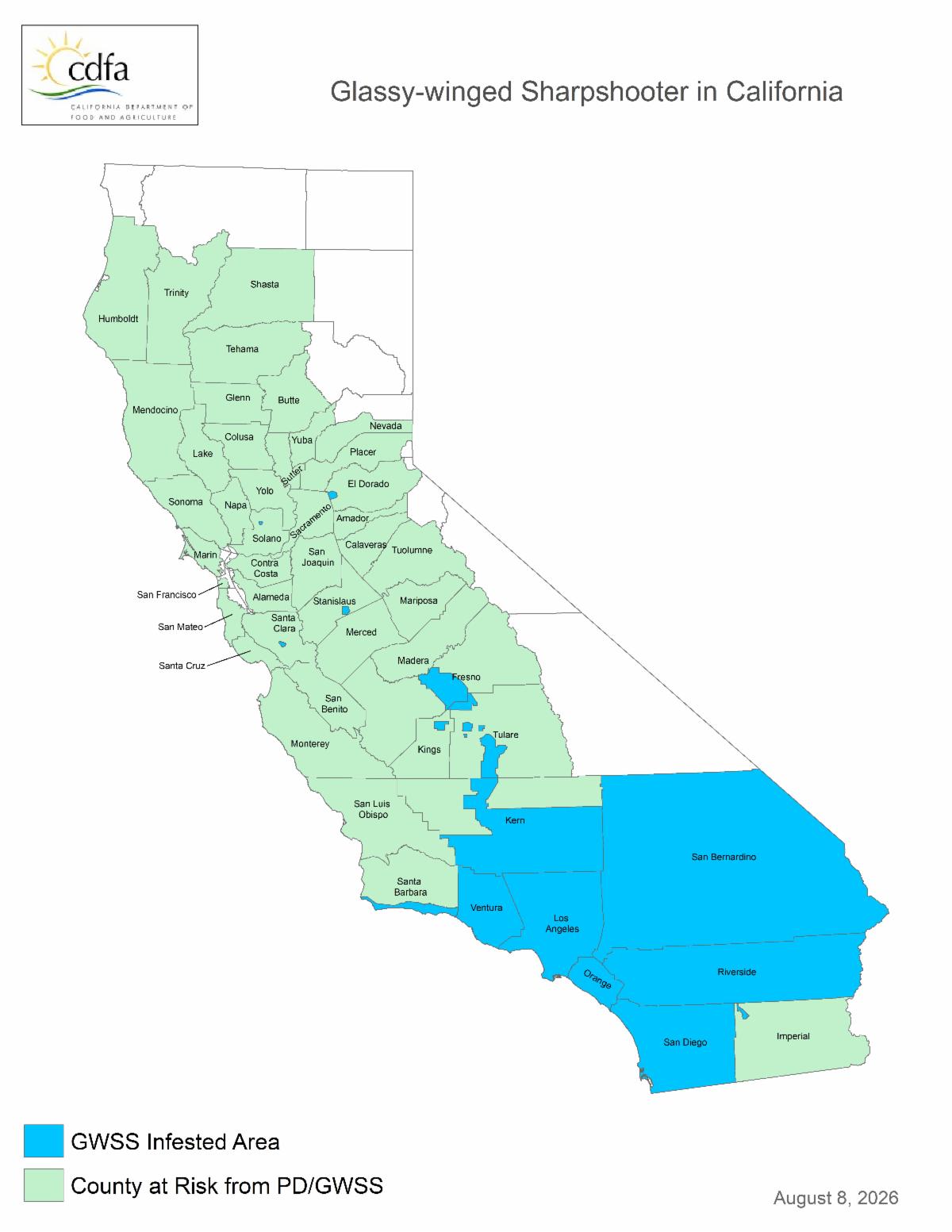
State and county agriculture officials continue working to track down the nearly 10,000 grapevines that may have carried the glassy-winged sharpshooter (GWSS) into 40 Northern California counties from a Fresno County nursery.
So far, county officials have contacted more than 3,100 customers, inspected and/or destroyed more than 2,900 plants and placed more than 2,700 additional GWSS traps. As of Aug. 18, GWSS has been found on the grapevines in 22 counties. Finds are largely eggs or young insects, though 14 adults have been found in 10 counties.
Trapping at grapevine trace-forward sites will continue through September. If funding is secured for enhanced monitoring, detection trapping could resume as early as February 2027. Routine GWSS detection trapping will continue through the fall and resume in summer 2027 as part of counties’ regular pest surveillance.
The initial response cost an estimated $3.2 million. The California Department of Food and Agriculture estimates another $8.2 million will be needed for the first 12 months of continued response work and has requested state and federal funding. The PD/GWSS Board has committed $820,000 of winegrape grower funds to help continue the response.
DESERT WILLOWS
Officials are continuing to investigate desert willow plants shipped from Texas that also carried GWSS into California. The plants reached 87 Costco stores across the state, with customers purchasing 376 plants in 18 counties. Costco has contacted nearly 300 customers to help locate the plants.
As of Aug. 11, officials had confirmed 330 GWSS egg masses on plants from these shipments. No GWSS nymphs or adults have been found in the samples, but officials did find one egg mass of broad-headed sharpshooter, another invasive insect that can spread Pierce’s disease.
CDFA and its partners are continuing to investigate the situation, and the Texas nursery cannot ship plants to California until the pest problem has been addressed.
People who suspect they have found GWSS should contact their local agricultural commissioner’s office. For pictures of the pest and for more information, visit bit.ly/GWSS-Costco.
|