|
NOW APPROVED |
|||||||||||||||||||||||||||||||||
|
|
|||||||||||||||||||||||||||||||||
|
|||||||||||||||||||||||||||||||||
New Indication for IMCIVREEIMCIVREE is the first and only treatment that targets impairment of the hypothalamic MC4R pathway, the root cause of weight gain and increased hunger in acquired hypothalamic obesity (HO)1,2 Please see full Indication and Important Safety Information below. |
|||||||||||||||||||||||||||||||||
Acquired HO is a distinct disease of MC4R pathway impairment that is characterized by weight gain following hypothalamic injury.1,2Injury to the hypothalamus can impair production of α-MSH, the endogenous MC4 receptor ligand. Deficient α-MSH production leads to decreased MC4 receptor activation and impaired MC4R pathway function, which can disrupt satiety signaling and decrease energy expenditure. α-MSH=alpha-melanocyte stimulating hormone
|
|||||||||||||||||||||||||||||||||
Study design1 |
|||||||||||||||||||||||||||||||||
|
142 patients participated in the randomized, Phase 3, double-blind, multicenter, placebo-controlled pivotal trial that assessed the safety and efficacy of IMCIVREE in acquired HO. The study enrolled adult and pediatric patients 4 years and older with obesity due to hypothalamic injury or dysfunction. MC4R=melanocortin-4 receptor 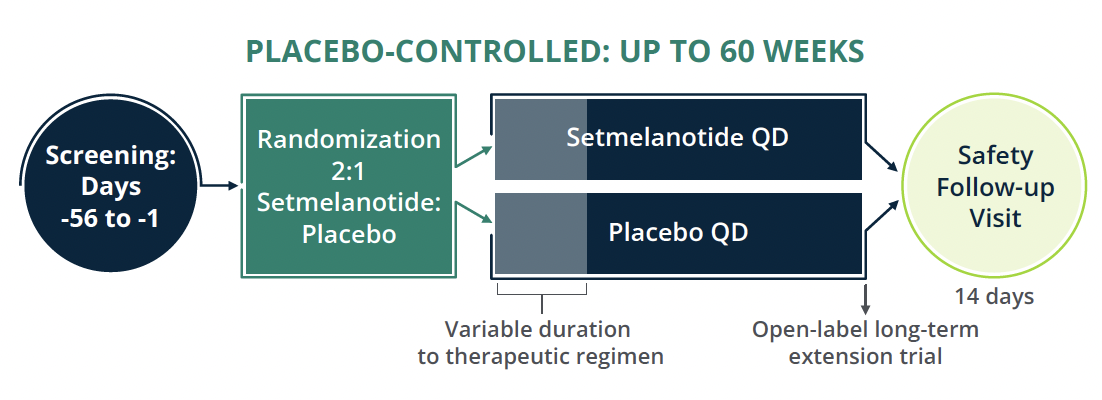
|
|||||||||||||||||||||||||||||||||
|
|||||||||||||||||||||||||||||||||
IMCIVREE clinical trial efficacy |
|||||||||||||||||||||||||||||||||
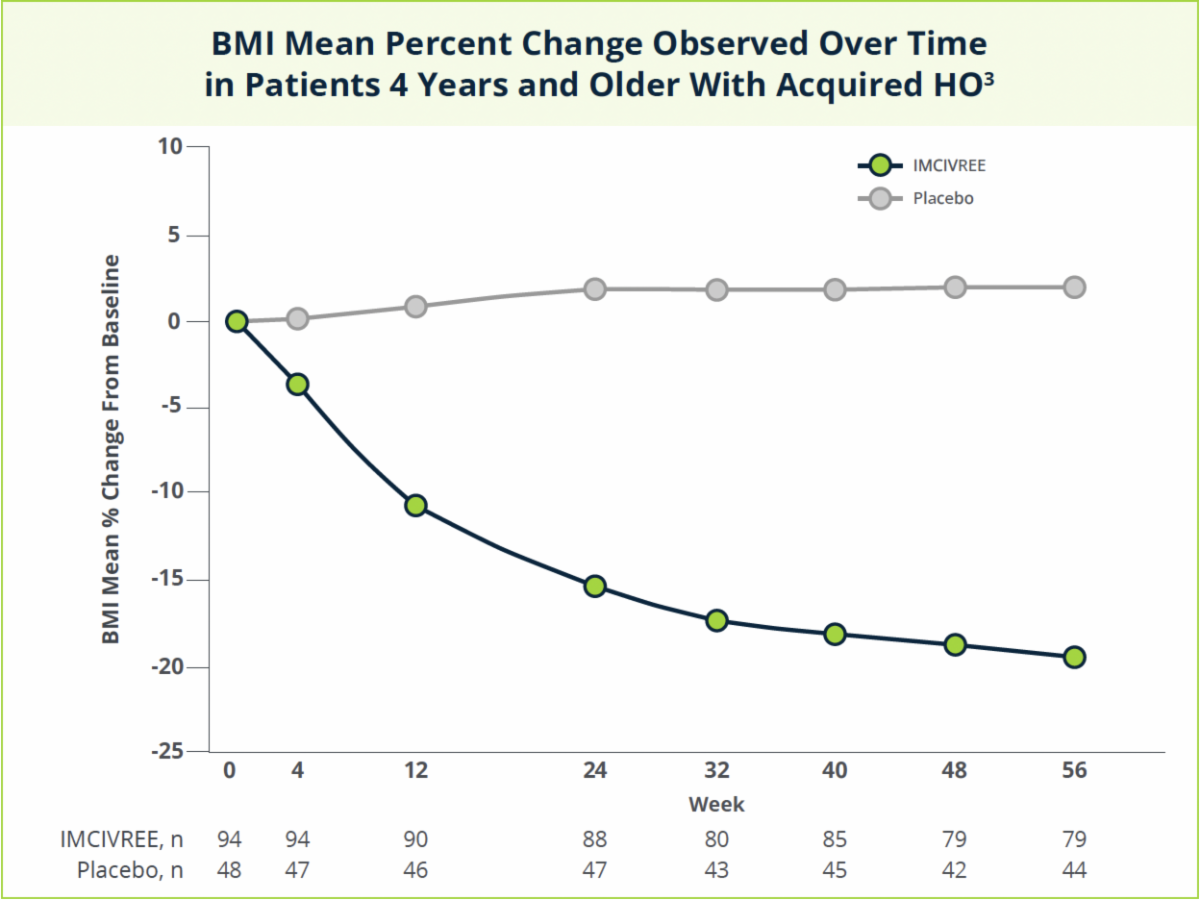
BMI reduction1 |
|||||||||||||||||||||||||||||||||
|
|||||||||||||||||||||||||||||||||
|
For pediatric patients <18 years old, a reduction was also observed in BMI Z-score (LSM difference: ‑1.3) and percent of the BMI 95th percentile (LSM difference: ‑25.5) with IMCIVREE compared with placebo.3 |
|||||||||||||||||||||||||||||||||
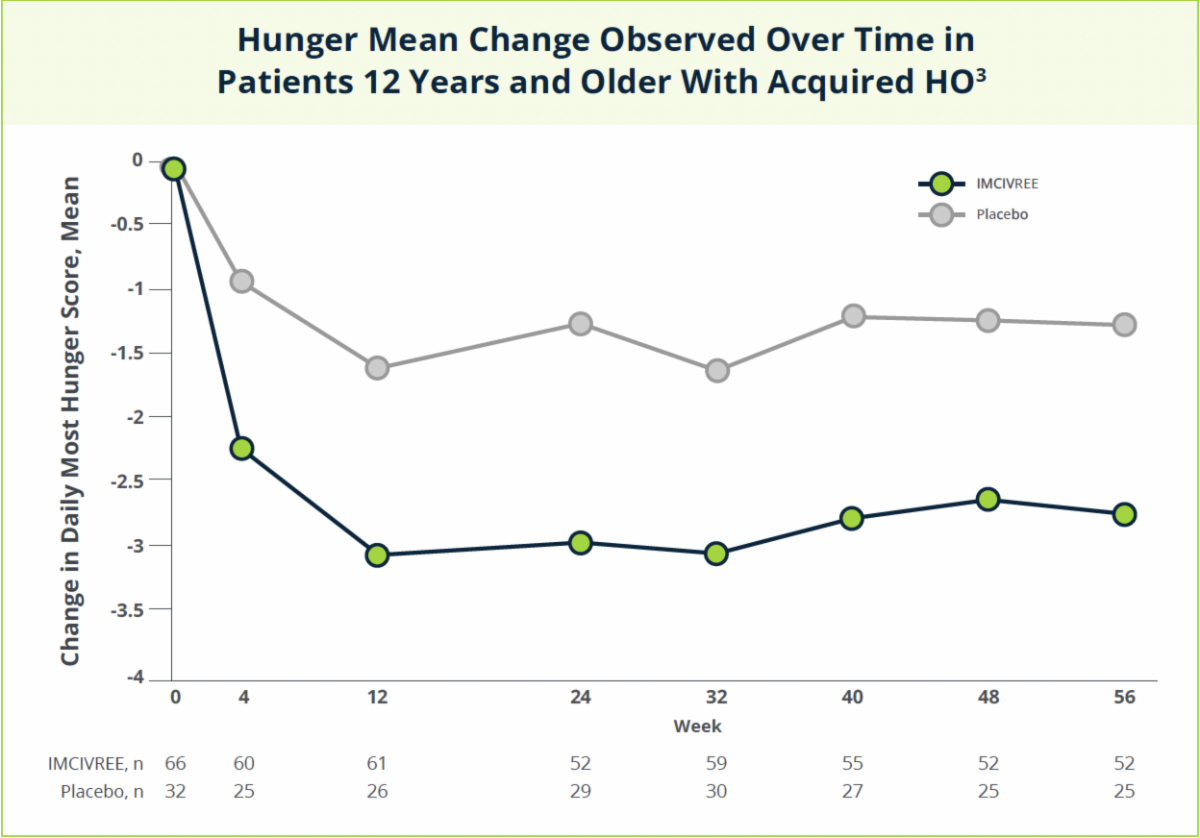
Hunger reduction1,2 |
|||||||||||||||||||||||||||||||||
|
|||||||||||||||||||||||||||||||||
|
*LSM difference after 52 weeks at therapeutic dose. |
|||||||||||||||||||||||||||||||||
Safety profile |
|||||||||||||||||||||||||||||||||
|
Adverse Reactions Occurring in ≥5% of IMCIVREE-Treated Patients Aged 4 Years and Older With Acquired HO
1 Includes skin hyperpigmentation, skin discoloration, nail pigmentation, freckles, pigmentation disorder 2 Includes headache and migraine 3 Development of new melanocytic nevi and darkening or increase in size of existing melanocytic nevi |
|||||||||||||||||||||||||||||||||
|
The safety of IMCIVREE has been evaluated across multiple indications in more than 700 patients over 10+ years, through clinical trials and real-world experience.3 |
|||||||||||||||||||||||||||||||||
Indication and Important Safety Information |
|||||||||||||||||||||||||||||||||
|
Indication IMCIVREE is indicated to reduce excess body weight and maintain weight reduction long term in adults and pediatric patients aged:
Limitations of Use IMCIVREE is not indicated for the treatment of patients with the following conditions as IMCIVREE would not be expected to be effective:
Important Safety Information CONTRAINDICATIONS Prior serious hypersensitivity to setmelanotide or any of the excipients in IMCIVREE. Serious hypersensitivity reactions (e.g., anaphylaxis) have been reported. WARNINGS AND PRECAUTIONS Disturbance in Sexual Arousal: Spontaneous penile erections and increased frequency of penile erections in males have occurred. Inform patients that these events may occur and instruct patients who have an erection lasting longer than 4 hours to seek emergency medical attention. Depression and Suicidal Ideation: Depression and suicidal ideation have occurred. Monitor patients for new onset or worsening depression or suicidal thoughts or behaviors. Consider discontinuing IMCIVREE if patients experience suicidal thoughts or behaviors, or clinically significant or persistent depression symptoms occur. Hypersensitivity Reactions: Serious hypersensitivity reactions (e.g., anaphylaxis) have been reported. If suspected, advise patients to promptly seek medical attention and discontinue IMCIVREE. Skin Hyperpigmentation, Darkening of Pre-existing Nevi, and Development of New Melanocytic Nevi: Generalized or focal increases in skin pigmentation occurred in the majority of IMCIVREE-treated patients. IMCIVREE may also cause development of new melanocytic nevi or darkening of pre-existing nevi. Perform a full body skin examination prior to initiation and periodically during treatment to monitor pre-existing and new pigmented lesions. Acute Adrenal Insufficiency with Acquired HO: Patients with acquired HO and secondary adrenal insufficiency reported serious adverse reactions related to acute adrenal insufficiency in 5% of IMCIVREE-treated patients and no placebo-treated patients. In patients with secondary adrenal insufficiency, monitor for clinical signs of acute adrenal insufficiency. Sodium Imbalance in Patients with Acquired HO and Central Diabetes Insipidus: Patients with acquired HO and concomitant central diabetes insipidus (DI)/arginine vasopressin (AVP) deficiency reported hyponatremia in 6% of IMCIVREE-treated patients and 2% of placebo-treated patients and hypernatremia in 5% of IMCIVREE-treated patients and 4% of placebo-treated patients. Monitor serum sodium levels with changes in fluid intake and hydration status. Adjust the doses of concomitant therapies for DI/AVP deficiency as needed. ADVERSE REACTIONS
USE IN SPECIFIC POPULATIONS Treatment with IMCIVREE is not recommended when breastfeeding. Discontinue IMCIVREE when pregnancy is recognized unless the benefits of therapy outweigh the potential risks to the fetus. Please see full Prescribing Information for additional Important Safety Information. |
|||||||||||||||||||||||||||||||||
|
References: 1. IMCIVREE [prescribing information]. Boston, MA: Rhythm Pharmaceuticals, Inc; 2026. 2. Roth CL, Scimia C, Shoemaker AH, et al. Setmelanotide for the treatment of acquired hypothalamic obesity: a phase 2, open-label, multicentre trial. Lancet Diabetes Endocrinol. 2024;12(6):380‑389. doi:10.1016/S2213‑8587(24)00087‑1 3. U.S. National Library of Medicine. Identifier: setmelanotide. ClinicalTrials.gov. Accessed January 15, 2025. |
|||||||||||||||||||||||||||||||||
|
|||||||||||||||||||||||||||||||||
|
|
|||||||||||||||||||||||||||||||||