|
In this issue:
Arboretum All-Star:
California Fescue
BotLat: All About Alliums
Demonstration Garden:
Nevada County
Demonstration Garden:
Placer County
Event Calendar
Gardening Q & A's
Oh, Ho, The Mistletoe
Pruning Roses in Winter
Unusual Edibles:
Variegated Water Celery
| |
A New Look for the "Curious Gardener!"
You'll notice some changes in our format. The newsletter is no longer in a PDF format, long articles are now linked to the Master Gardener county websites and this issue is an abbreviated edition. Please bear with us while we're mastering the new layout and making any future changes to improve your reading experience. We are retaining our ongoing articles and creating new articles based on the topics you requested in the recent reader survey. We're looking forward to production of a full-length Spring 2026, issue.
| | |
California Fescue
A Multi-Purpose All-Star
by Elaine Kelly Applebaum
UC Master Gardener of Placer County
Are you looking for a small plant to add color or texture contrast to a shaded flower bed? Or maybe you need a deer-resistant groundcover for under an oak tree or to stabilize a slope.
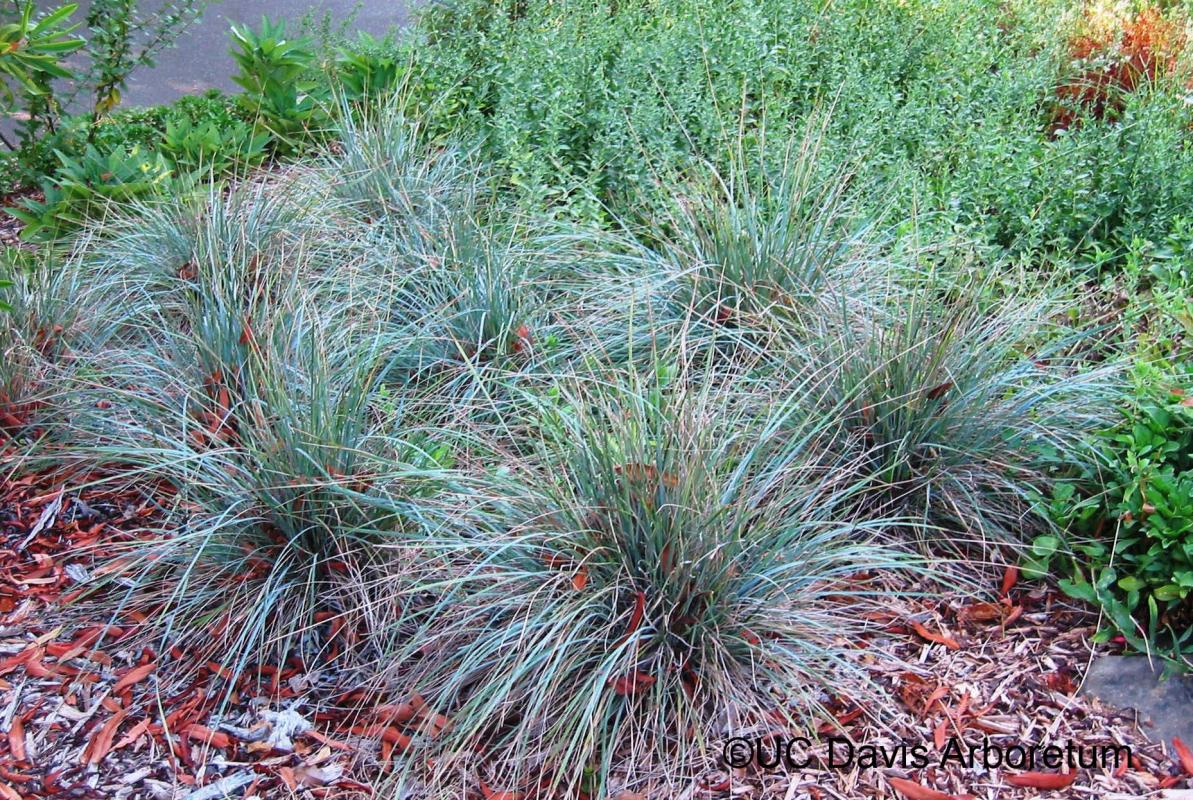
| California fescue (Festuca californica) | |
Selected by the UC Davis Arboretum as both a “Future Favorite” and an “Arboretum All-Star,” California fescue (Festuca californica) is a versatile, native, bunch grass that can perform all these roles. Its blue-green blades grow in a clump two to three feet wide and slightly taller. In late spring to early summer, green flower spikes emerge above the clump, then turn purple, and age to yellow. Native to coastal areas of California and Oregon, this multi-purpose plant does best with afternoon or full shade in our hotter region. It is low water use and tolerates most soils, including serpentine. It provides habitat for butterflies, moths and caterpillars and needs very little maintenance. For more information please see: https://calscape.org/Festuca-californica-(California-Fescue).
What role can California fescue play in your garden?
| | | |
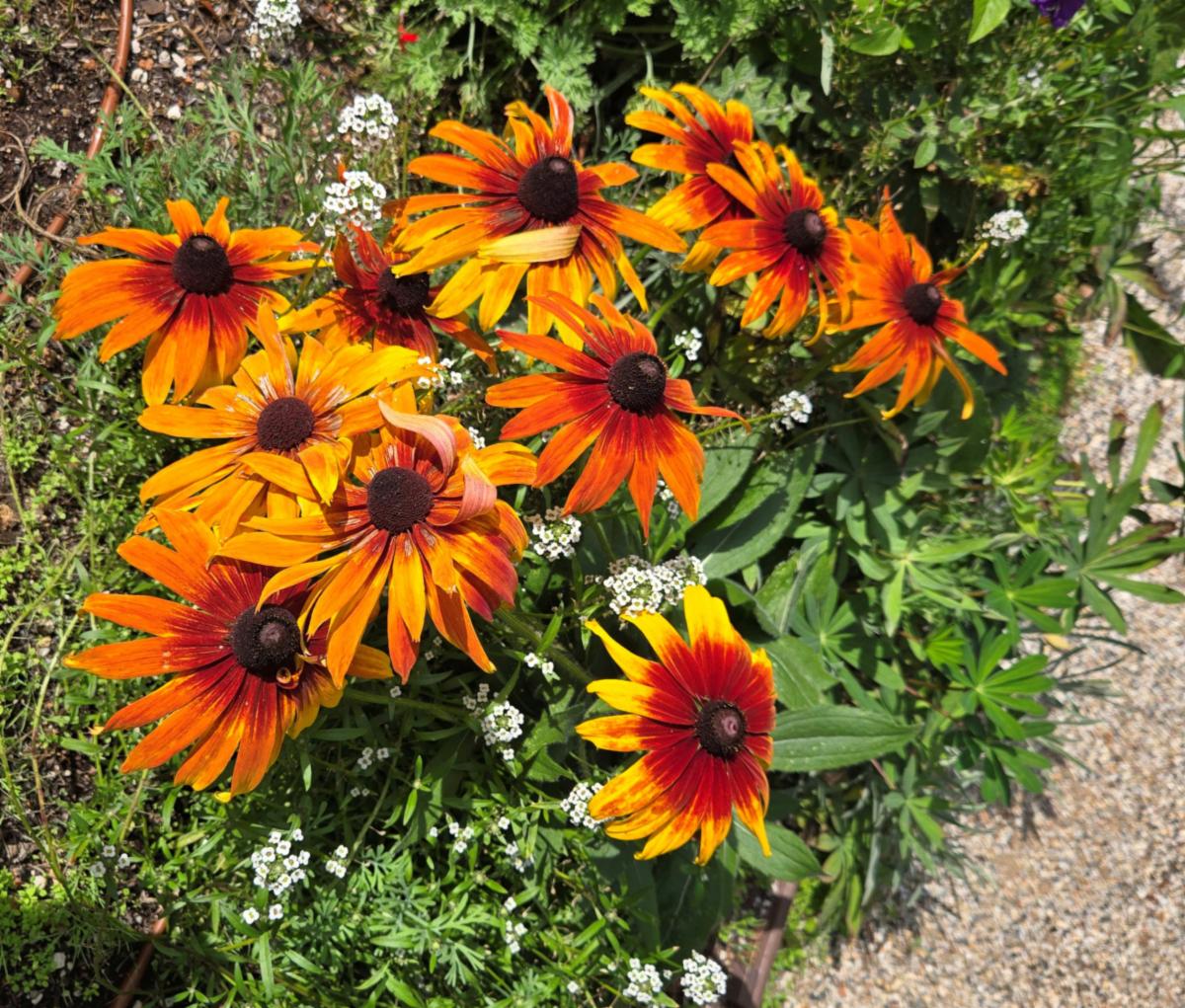
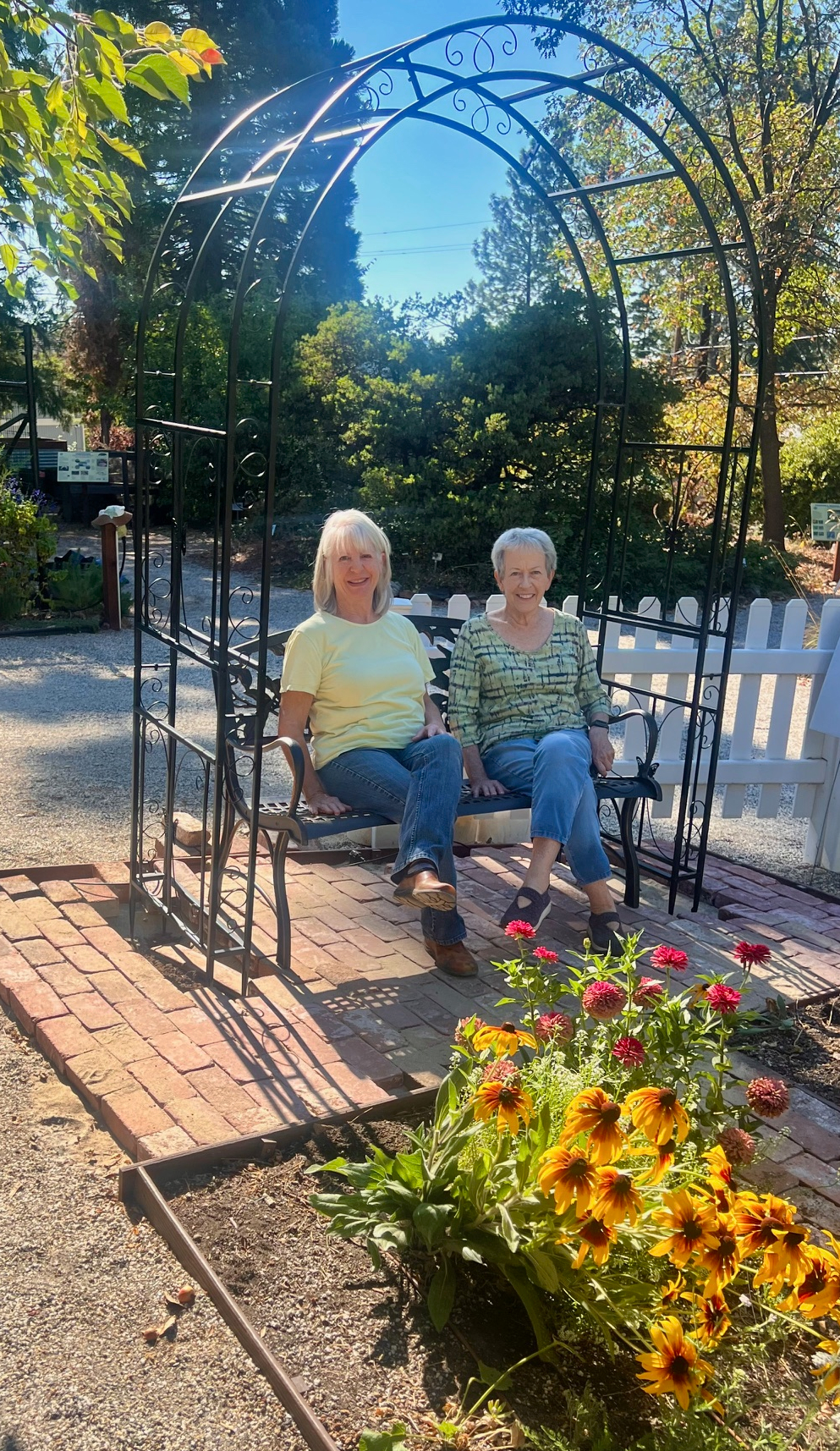
Top Left: Colorful rudbeckia with black eyes.
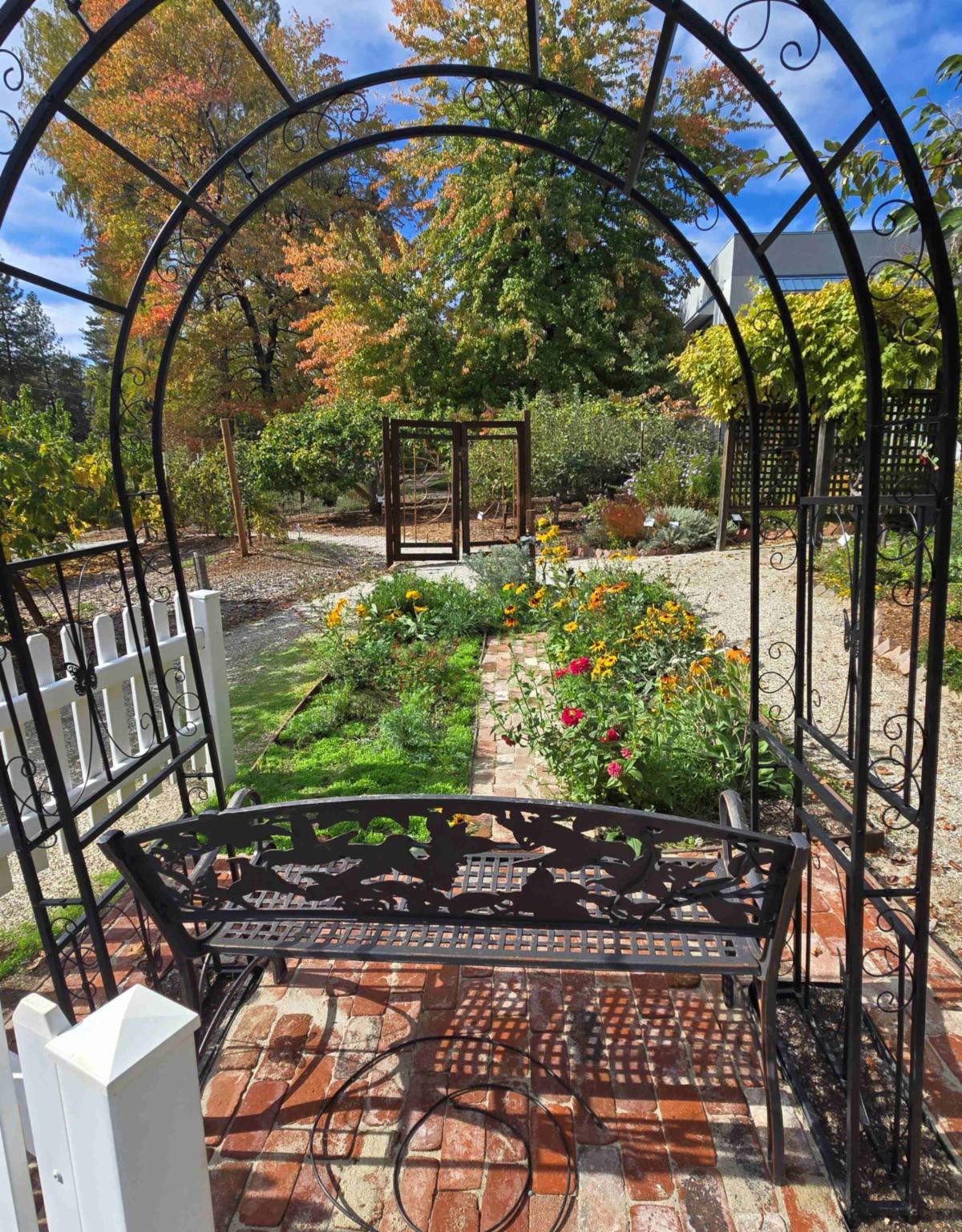
Bottom Left: New trellis and bench in the Cottage Garden.
Bottom Right: Master Gardeners, Jan and Denise, enjoying the new bench.
| | | |
Pruning Grafted Roses in Winter
Article and photos by Ann Beinhorn, UC Master Gardener of Placer County
Before you begin pruning your grafted roses for winter, apply some helpful principles:
- Start observing from the bottom up. Note any diseased wood or leaves and remove all leaves. Clean up debris under the rose.
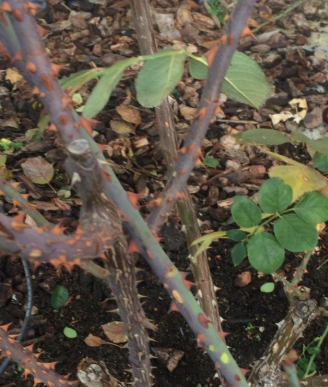
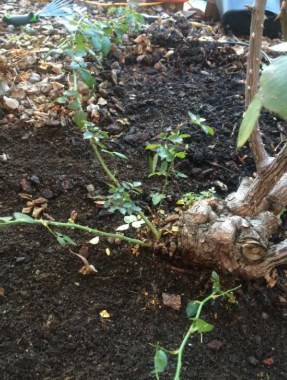
- Identify the graft, old canes (grey cane, white prickles), new canes (green or brown cane, red prickles), and suckers coming from the rootstock.
| | |
Left: New canes (green/brown) and old canes (grey and/or striped).
Right: Graft and rootstock suckers. See where former canes were removed.
| |
- Wear leather gloves. Use sharp, *clean tools. (Clean with disinfectant often, at least between plants.)
- Remove dead wood, diseased wood, crossing branches & spindly growth.
- Select preferred canes by pruning above outward-facing nodes or buds.
- On older plants, remove 1-2 oldest, minimal flowering cane/s. Encourage growth of flowering wood; allow for new canes to fill in.
- In all, remove about 1/3-1/2 of healthy wood..
- Clean up under the plant. Top-dress with compost & new mulch.
| |
| |
Rose Care in a Changing Climate
Date: January 26, 2026
Time: 10:00am to 11:30am
This is an in-person event:
Utility Exploration Center
1501 Pleasant Grove Boulevard
Roseville, CA
| | | |
|
Master Gardeners of Placer County
Demonstration Garden News
by Karen Lopez, UC Master Gardener of Placer County
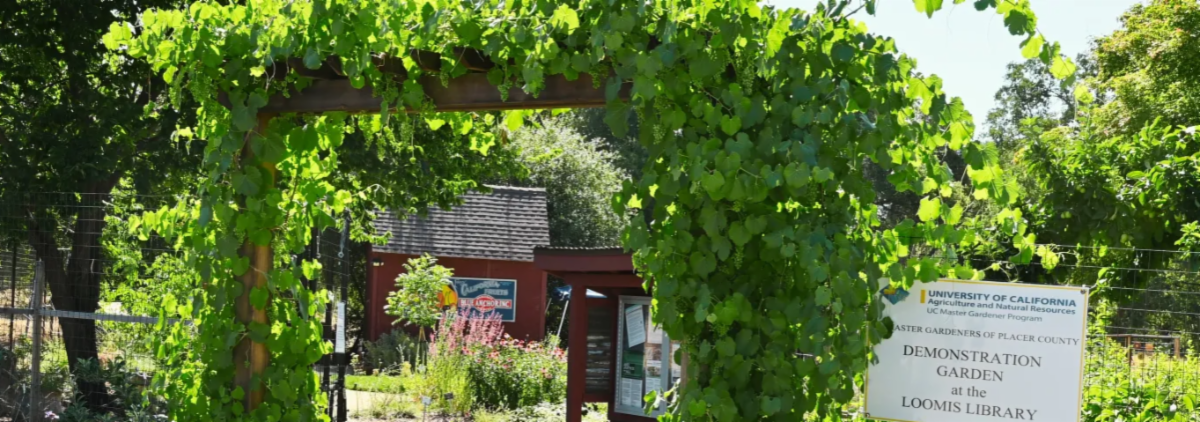
In our first, full fiscal year, July ‘24-June ‘25, we had 106 Master Gardeners of Placer County volunteers who spent over 3,000 hours in the garden. These volunteers contributed in a number of ways, including assisting at special events, working with youth and elderly, planting, weeding, trimming, general maintenance, answering questions from the community and expanding their own ongoing training. The garden welcomed 3,970 visitors in our first year.
The MGPC demonstration garden was recognized by the Placer County Water Agency for reducing water usage at the Loomis Library.. A preliminary evaluation showed a 24% water savings by removing the turf and installing the demonstration garden at the Loomis Library. Fantastic water savings! Additionally, the demo garden was featured in the most recent Association of California Water Agencies publication as a case study that will serve as a model for other communities reviewing options for turf removal. We are very proud of the impact the MGPC demo garden has made in its first year and we are excited about the opportunities that lie ahead!
| | | | |
Garden Q&As
by Linda Wold and Lynn Merrick
UC Master Gardeners of Placer County
What are some winter gardening tasks that are commonly overlooked?
Our mild winters can often lead to neglected seasonal tasks, but tackling them now can yield great benefits when spring arrives. Here are some essential winter chores you shouldn't ignore:
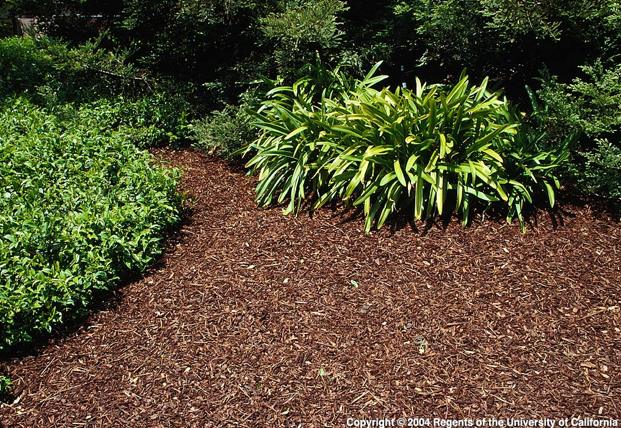
- Refresh your mulch: Apply an additional 2-4 inches of organic mulch around your garden beds to suppress weeds, maintain soil temperature, and retain moisture but keep a mulch-free area next to plant trunks and stems.
- Maintain your tools: Clean off rust, lubricate moving parts, and sharpen pruners to help minimize disease transmission and make pruning more efficient.
- Service your irrigation system: Flush the lines, inspect emitters and sprinklers for clogs or leaks, and adjust timers to account for the lower evaporation rates during cooler months.
-
Check on young or delicate plants: Provide temporary windbreaks or frost covers to protect them during cold snaps and chilly nights and move containers into a garage or protected location.
For additional winter tasks, click here.
| |  | |
The Colorful Health Benefits of Variegated Water Celery
Article and photo by Lorie Lowrie
UC Master Gardener of Placer County
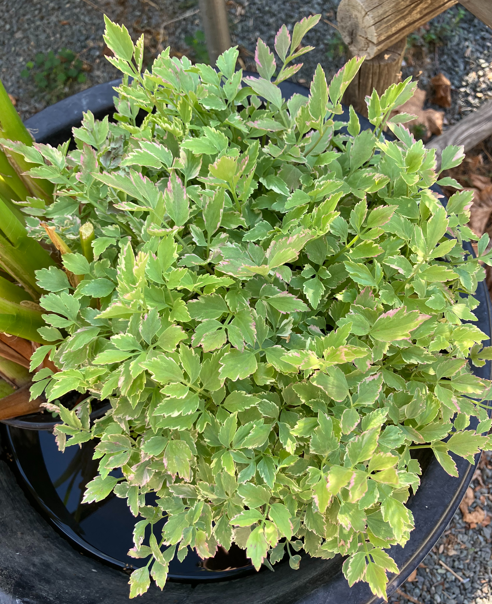
Variegated water celery, botanically known as Oenanthe javanica 'Flamingo', is prized for its attractive tri-color foliage of green, cream, and pink. Beyond its ornamental appeal, this perennial herb—a relative of parsley—is recognized for its edible qualities and potential health benefits, echoing those of common celery.
Rich in bioactive compounds like phthalides and various flavonoids, Oenanthe javanica is traditionally used to support antioxidant and anti-inflammatory activity. It has also been explored for its potential in managing conditions such as hypertension and hyperlipidemia, suggesting a favorable role in cardiovascular health.
The young stems and leaves are edible, tasting like spicy parsley or celery, frequently used in salads and stir-fries, popular in Asian dishes. Grow it in moist soil or shallow water (1–2 inches deep), in full sun to part shade, allowing it to be an efficient nutrient filtration plant for water features. Control its rapid spread by frequently harvesting runners and cutting it back.
| | | |
Nevada County
Nevada County Madelyn Helling Library,
Nevada City
Workshops are FREE, Saturdays, 10:00 to noon
Feb 7
10:00 to noon
Hands On Fruit Tree Pruning
Feb 14
10:00 to noon
Gardening for a Lifetime
Feb 21
10:00 to noon
Roses
Feb 28
10:00 to noon
Garden Journaling and Planning
Mar 14
10:00 to noon
Totally Tomatoes
Mar 21
10:00 to noon
Straw Bale Gardening
Mar 28
10:00 to noon
BioChar
Mark your calendar for NC Annual plant sale May 9, 2026 9:00 to noon.
| | | |
Placer County
Jan 10
10:30 to 11:30
Winter Care and Pruning
of Deciduous Trees
Loomis Library
Jan 17
2:00 to 3:00
Harvesting Sunshine:
The Journey of Growing Citrus!
Lincoln Library
Jan 24
10:00 to 11:30
Rose Care in a Changing Climate
Roseville Utility Exploration Center
Pre-register in advance by clicking here
Jan 31
9:00 to noon
Second Annual Seed Swap
Loomis Veteran's Hall
Feb 14
10:30 to 11:30
Soil
Loomis Library
Feb 21
10:00 to 11:30
Fruit Tree Care
Roseville Utility Exploration Center
Pre-register in advance by clicking here
Feb 21
2:00 to 3:00
Sweet, Nutritious and Wildly Popular: Grow Your Own Blueberries
Lincoln Library
Mar 14
10:00 to 11:30
Tomato Mastery: The Art & Science of
Growing Delicious Tomatoes
Loomis Library
Mar 21
2:00 to 3:00
Fruit Tree Care
Lincoln Library
| | | UC Master Gardeners Websites | | | | |