We love reading about creative ways to engage children in learning about democracy and elections, or about how tallying and chart-making can help build mathematical literacy.  

Quotable & Notable

“New Mexico voters didn’t just approve the allocation of more dollars. They changed their constitution so that it now enshrines a right to education for children ages zero to five alongside the previous guarantee for children in grades K-12, making it the first state with such a guarantee. That language is ‘a commitment by the state to really invest [beyond] just one election cycle or a term of an elected official... This really shows that it’s going to be a structural part of our state.’”

who: Bryce Covert (article author) and Jessa Cowdrey (vice president of CHI St. Joseph’s Children)


where: “New Mexico is the First State to Guarantee a Right to Early Childhood Education. Universal Child Care Could Come Next” in Early Learning Nation 

Fact of the Week

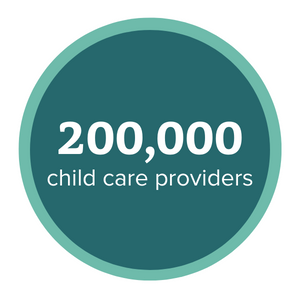
A White House report has confirmed that 200,000 child care providers received federal relief dollars that helped keep their doors open through the American Rescue Plan Act (ARPA). States are now facing substantial funding cliffs as federal relief dollars expire in 2024. 

FYI

Groundwork Ohio opened applications for its latest Early Childhood Leadership Fellowship cohort, which provides emerging early childhood professionals with training and support to enhance leadership skills. Learn more here.  

Crane in the News

Crane postdoctoral researcher Dr. Laura Cutler worked with the Ohio Statewide Family Engagement Center to produce their latest newsletter edition on promoting family literacy. Read more here. 

Beyond the Buckeye State

New Mexico has made history as the first state to guarantee a right to early childhood education. But what exactly does that mean? The short answer is that on Tuesday, voters overwhelmingly voted to pass an amendment to their state constitution to support early childhood education, defined as "nonsectarian and nondenominational education for children until they are eligible for kindergarten” and to establish permanent funding for it. Specifically, the amendment increased the percentage taken out of New Mexico’s Land Grant Permanent Fund (from 5% to 6.25%) to go towards early childhood programs – to the tune of $150 million a year. The LGPF is funded by oil and gas profits and already funds public K-12 education, universities, and other beneficiaries. The Hunt Institute’s Dan Wuori has a thoughtful Twitter thread about how New Mexico has set important precedents, and Vox describes the decade-long path that led to this victory.


Also passed by ballot measure this week, Colorado residents voted for universal free meals for all public-school students.  

What We're Reading

Ohio lawmakers are proposing to end the retention provision of the third-grade reading guarantee meant to ensure that third graders are reading proficiently by the end of grade three. Education Week reports on the pause in third grade retention during the pandemic and how many states are starting to bring it back. Twenty-five states and D.C. have retention laws in place, including Ohio, amid a mix of research generally showing short-term academic gains fade out and negative consequences, like increased likelihood of suspension. 


Education Week also outlines the research on holding children back and the arguments both for and against. Supporters of the policy point to necessary supports for students struggling with reading comprehension and opponents argue that it disadvantages students who are already experiencing adversity.  


CLASP’s Alycia Hardy penned an important piece about the inequities facing Black child care workers in particular, and the need to confront our nation’s racist history built on their exploitation. 

Research Round-Up

A new working paper in National Bureau of Economic Research (NBER) examined whether the federal welfare work requirements passed in the 1990s had an impact on children’s home environments. (Specifically, welfare in the U.S. shifted from an entitlement program to one with stricter requirements including linking benefits to employment.) Researchers found that these reforms had “significant and substantial negative effects on mothers’ provision of emotional support.” Specifically, new work requirements did not appear to affect the amount of time or resources mothers spent engaging in cognitively stimulating activities with young children. But the requirements were associated with lower scores on providing emotional support to children (to the magnitude of 0.3-0.4 standard deviations lower). Interestingly, the researchers describe how their findings are consistent with previous studies demonstrating that welfare work requirements negatively impacted older children in key areas including how close children felt to their mothers, whether mothers knew their child’s whereabouts, etc. While welfare policy reforms were meant to incentivize work and promote marriage and family stability, findings such as these from NBER illustrate the importance of assessing its impact on women and children in other ways, included unintended consequences. Early Learning Nation describes more about the paper, the history of welfare reform, and policy options for the future. 

This edition written by: Jamie O'Leary and Caitlin Lennon
• • • • • • •
If you like this newsletter, forward to a friend! Subscribe here.
• • • • • • •
 
Twitter  Linkedin