|
Kicking off this **brand new series** - we are excited to partner with the team at Daltile!
Here are some tips, tricks + refreshers on best practices when specifying Tile.
(Fun Fact : Today is National Tile Day!)
| |
01
FIRST, LET'S TALK ABOUT TILE TYPES
↓ HERE ARE THE THREE PRIMARY TYPES :
| | |
Ceramic tile is made from a mixture of natural clay, sand, and water that’s shaped, glazed, and fired at lower temperatures than porcelain. This results in a tile that’s slightly more porous and softer—making it easier to cut and install.
Glazed Wall Tile is a non-vitreous ceramic tile intended for interior use and not required to withstand excessive impact or exposure to freeze/thaw cycling.
| | |
Porcelain tile is a subtype of ceramic. All porcelain tiles are ceramic, but not all ceramic tiles are porcelain. Porcelain is made with a finer clay mixture and fired at much higher temperatures, making it denser, harder, and less porous. This results in a tile with a durable surface that performs exceptionally well in areas prone to moisture, wear, and heavy foot traffic. Porcelain tile has a water absorption rate of less than 0.5%.
The Porcelain Tile Certification Agency (PTCA) created a product certification program for porcelain tiles, based on strict compliance requirements.
Not all porcelain is created equal! Make sure the manufacturer can confirm that it is certified porcelain & verify where it is manufactured.
| | Quarry tile uses natural clay or shale and is extruded instead of pressed. It is typically gray, red, or brown because of the natural materials used to manufacture the product. It is unglazed. Quarry tile is great for the back of the house areas since it has some absorption. Grease or water can seep into the pores of the tile creating a less slippery environment. Alternatively, liquid sits on the surface of non-porous flooring material (like epoxy), and it could create a slippery walking surface. | |
02
LET'S BREAK IT DOWN EVEN FURTHER
↓ HERE ARE THE MAIN CATEGORIES OF PORCELAIN TILE :
| | |
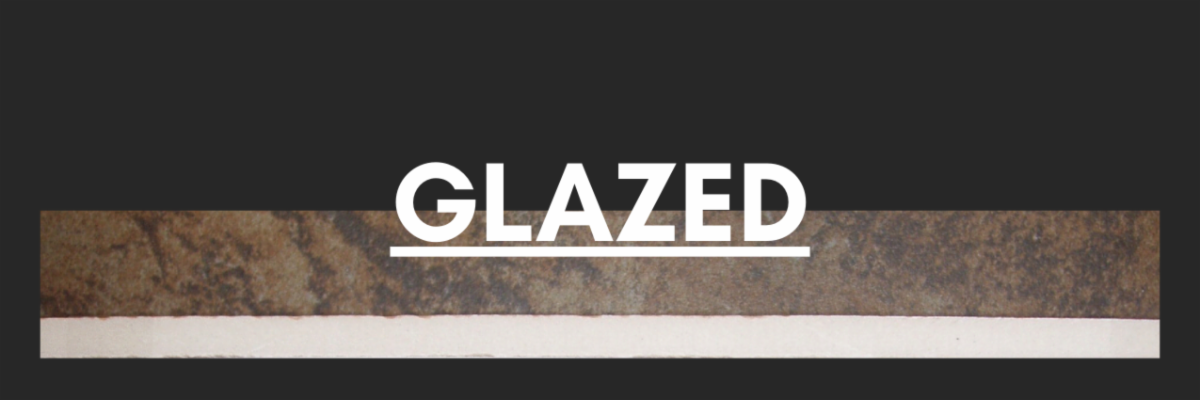
Glazed – Typically, glazed tile is the most cost-effective option offering a wide array of visuals. It has an impervious facial finish fused to an impervious porcelain body. Glazed tile has a high range of flexibility from a design, pricing and technical standpoint using digital printing, etc. Glazed tile is typically suitable for commercial applications (always consult manufacturer’s guidelines). Think of glazed tile like a radish; it is red on the outside with a white center.
You see on the picture above that the surface has decoration, and the body of the tile is gray porcelain.
| | |
Unglazed – Tile that has the same color and pattern on the surface as well as in the body of the tile is considered unglazed. Think of it like a carrot; the pattern and color go all the way through. There are limited visual options with unglazed tile. A common term to refer to an unglazed tile is through body.
The picture above illustrates how the color and pattern go all the way through the body of the tile.
| | |
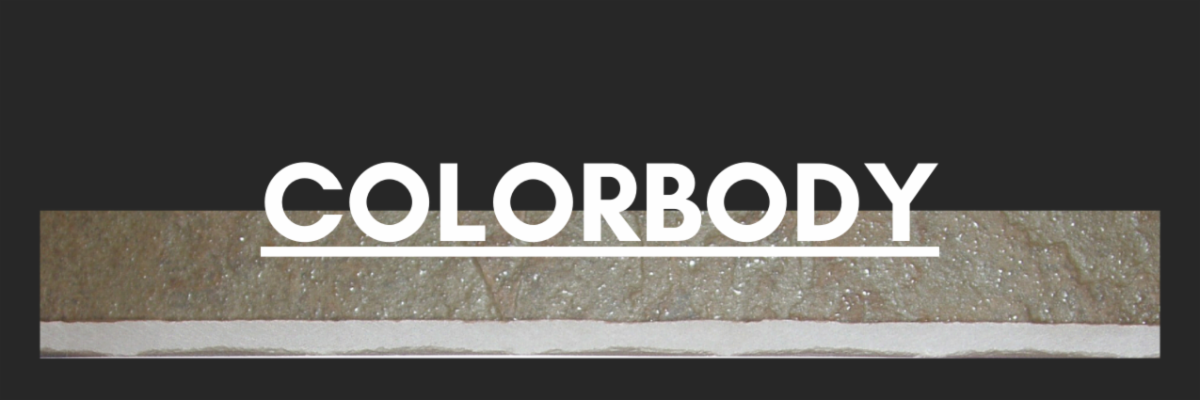
Colorbody (the best of both!) – the most common body type that delivers consistent coloring with body & glaze. The surface design does not continue through the tile body, but color from the surface design does.
Colorbody: You will notice above that the surface of the tile has a glaze, and the color of the body reflects color in the glaze.
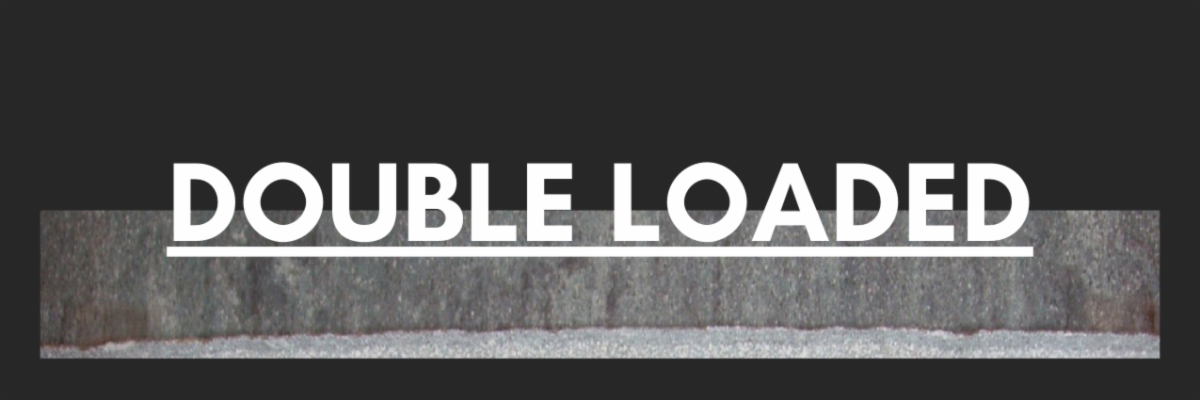
| | Double Loaded: This is a subset of color body. Body coloration varies between top (mixed colors to create visual movement) and bottom (lower cost speckled body). See above how the top quarter of the tile is a through body, and the bottom three-quarters are gray porcelain. | |
03
LET'S TEST THE TILE
↓HERE ARE THE ANSI REQUIRED ASTM TESTS USED TO DETERMINE
THE BEST TILE FOR THE APPLICATION :
| | | |
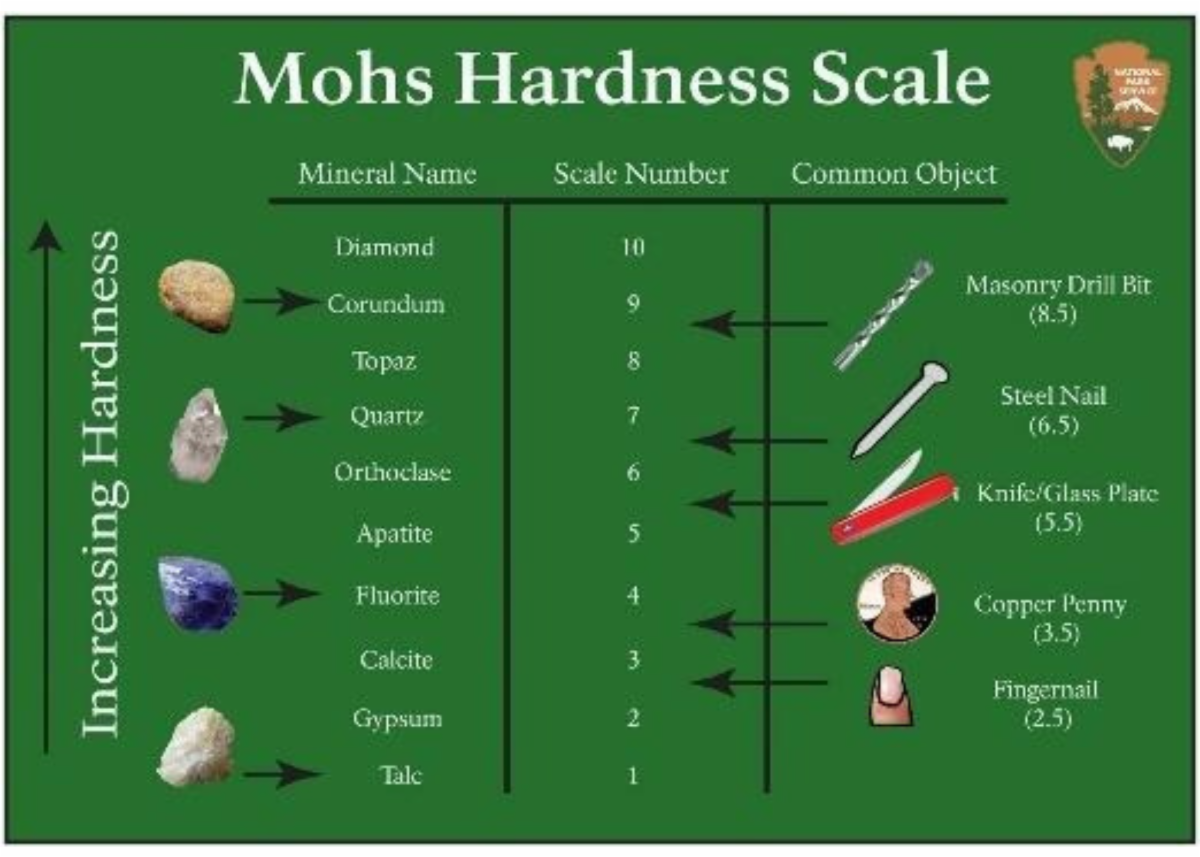
MOHs HARDNESS SCALE :
This tests the relative hardness of glazed tile. The softest mineral is Talc - 1 & the hardest mineral is diamond – 10. Values of 5-7 are suitable for residential floor applications & 7+, which is quartz, is recommended for commercial applications.
| |
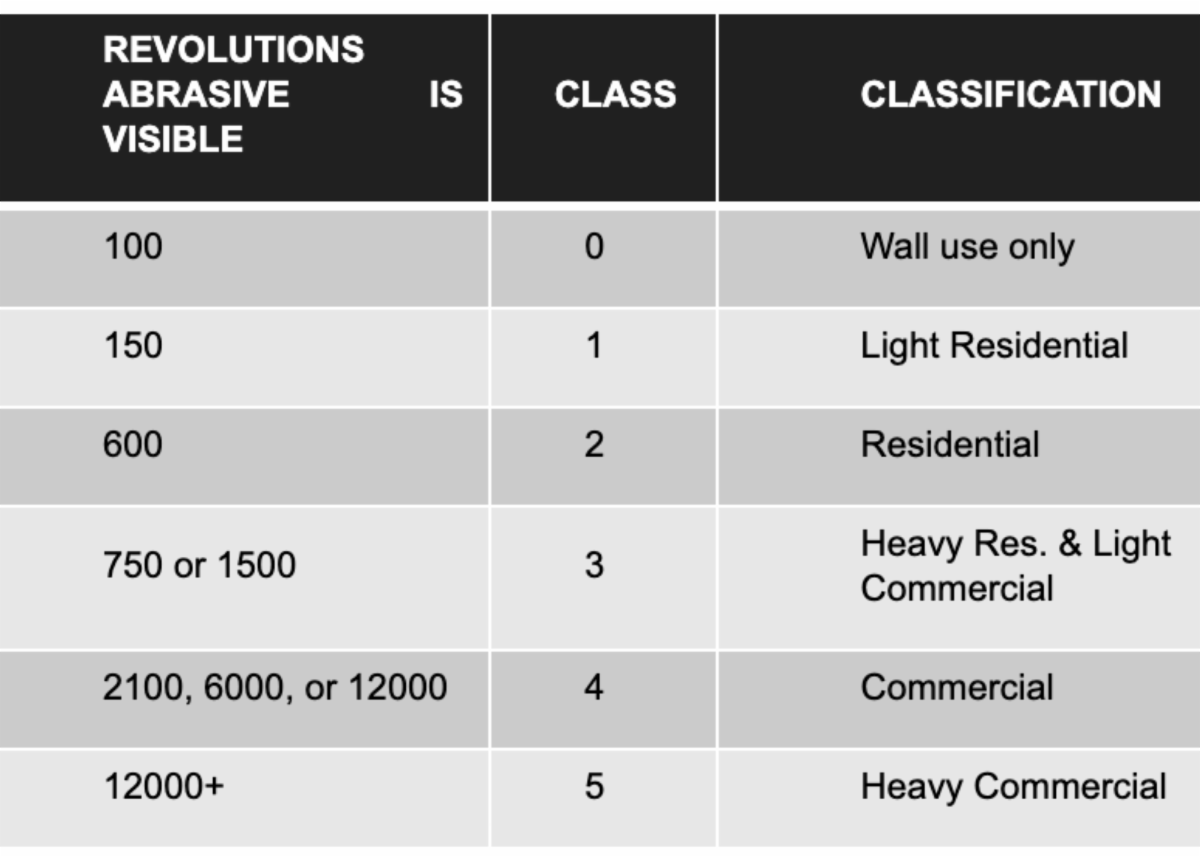
ASTM C1027 :
Glazed tiles are tested for visible abrasion resistance as well according to test method ASTM C1027. Tiles are evaluated and categorized based on visually noticeable changes in gloss or color following increased cycles of abrasion. It is rated on a scale of 0 to 5, 4 is what is required for Commercial.
| | | | |
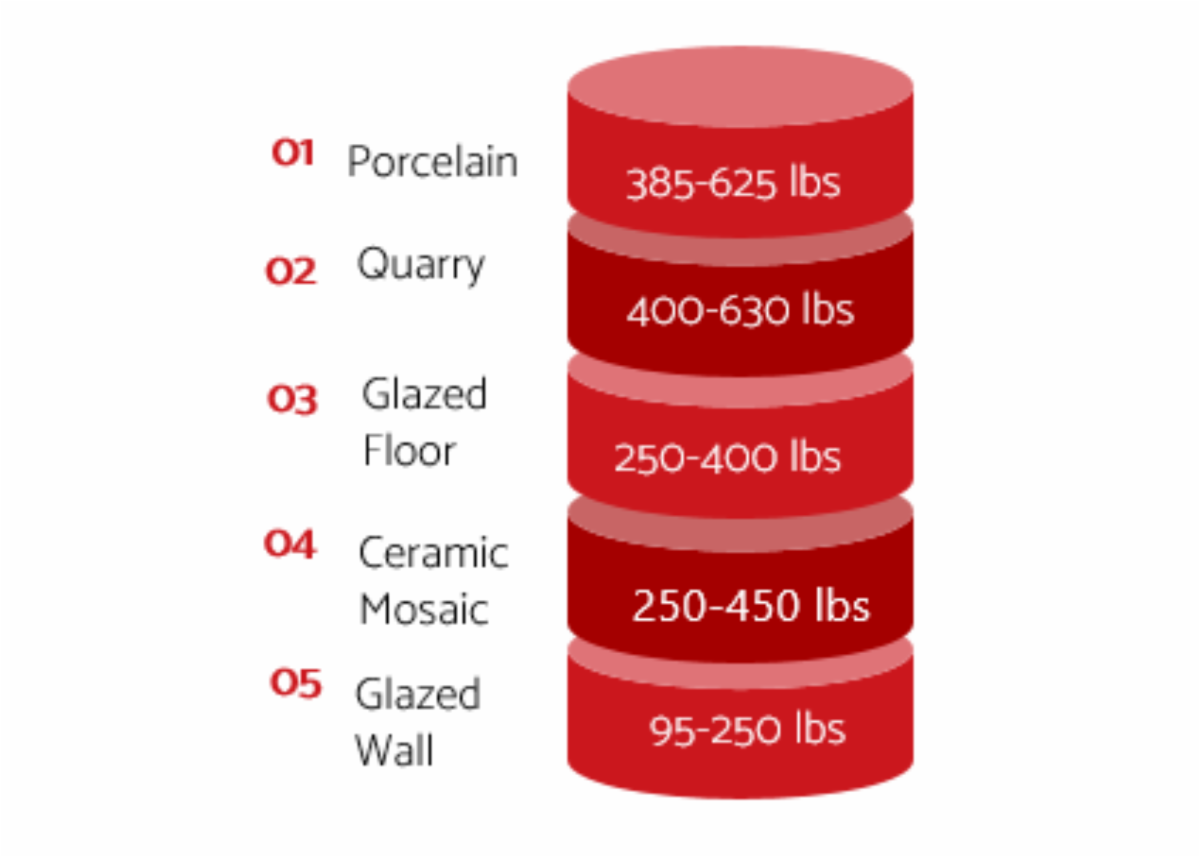
ASTM C648 :
The breaking strength is important to note if you are specifying tile for heavy industrial floor use. The test dictates a force be applied to an unsupported portion of the tile sample until breakage occurs. ANSI A137.1 requires tile to meet or exceed 250 lbs in this test to be suitable for floor use. Quarry tile can withstand 400-630 lbs which is why it can go in areas with heavy equipment.
Tile integrity is critically dependent upon proper installation.
| | |
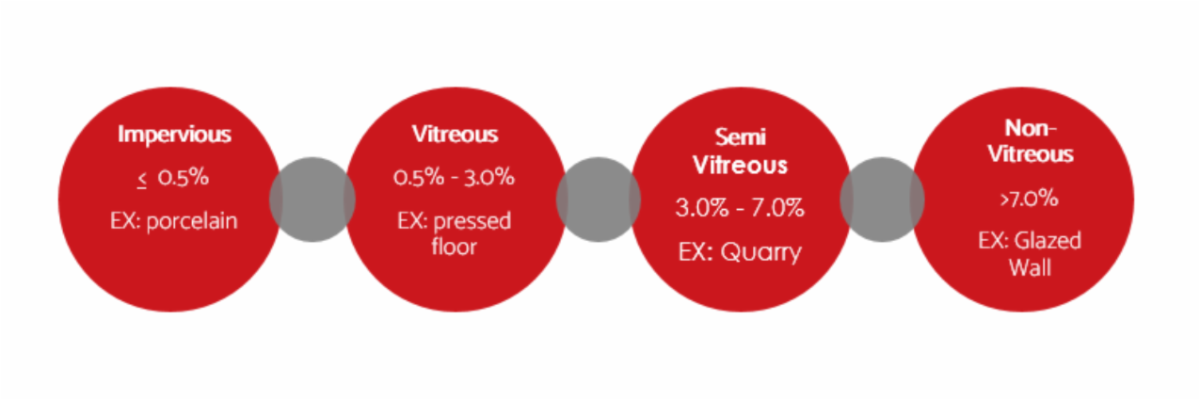
ASTM C343 :
Water Absorption is important to consider because of 3 reasons: stain resistance, freeze thaw conditions & knowing what setting materials to use. This ASTM test involves weighing individual tiles, saturating them with water, then weighing again. The percentage difference between the two conditions is referred to as the water absorption value.
| | |
DCOF :
The required usage of a space and understanding the potential for slip/falls is important in any flooring selection. These are the factors to consider when selecting tile regarding slip resistance: type of use, foot traffic, contaminants, maintenance, grout joint spacing, facial texture, slope of floor, and manufacturer’s recommendations.
- Understanding DCOF is one of the best ways to help minimize those issues. DCOF or Dynamic Coefficient of Friction is critical when knowing what finishes to specify for the floor.
- The standard for DCOF is 0.42 for interior floors.
-
DCOF testing measures walking conditions on wet soapy tiles. This industry standard is tested on wet surfaces only. The ADA only requires a stable, firm and slip resistant surface for walking surfaces. Specifying a tile that meets or exceeds 0.42 assists in meeting that ADA criteria.
- Third party organizations all note that it is the responsibility of the specifier to use the appropriate floor finish. Post-occupancy maintenance also plays a role in long term slip resistance of a floor.
- Additionally, a higher DCOF is not always better and/or required based on the application. A typical interior commercial floor is well suited for 0.42 rating. Much higher ratings can lead to maintenance or tripping issues. Specialty applications do have different DCOF recommendations – like a pool deck at 0.60 and 0.65 for ramps & stairs.
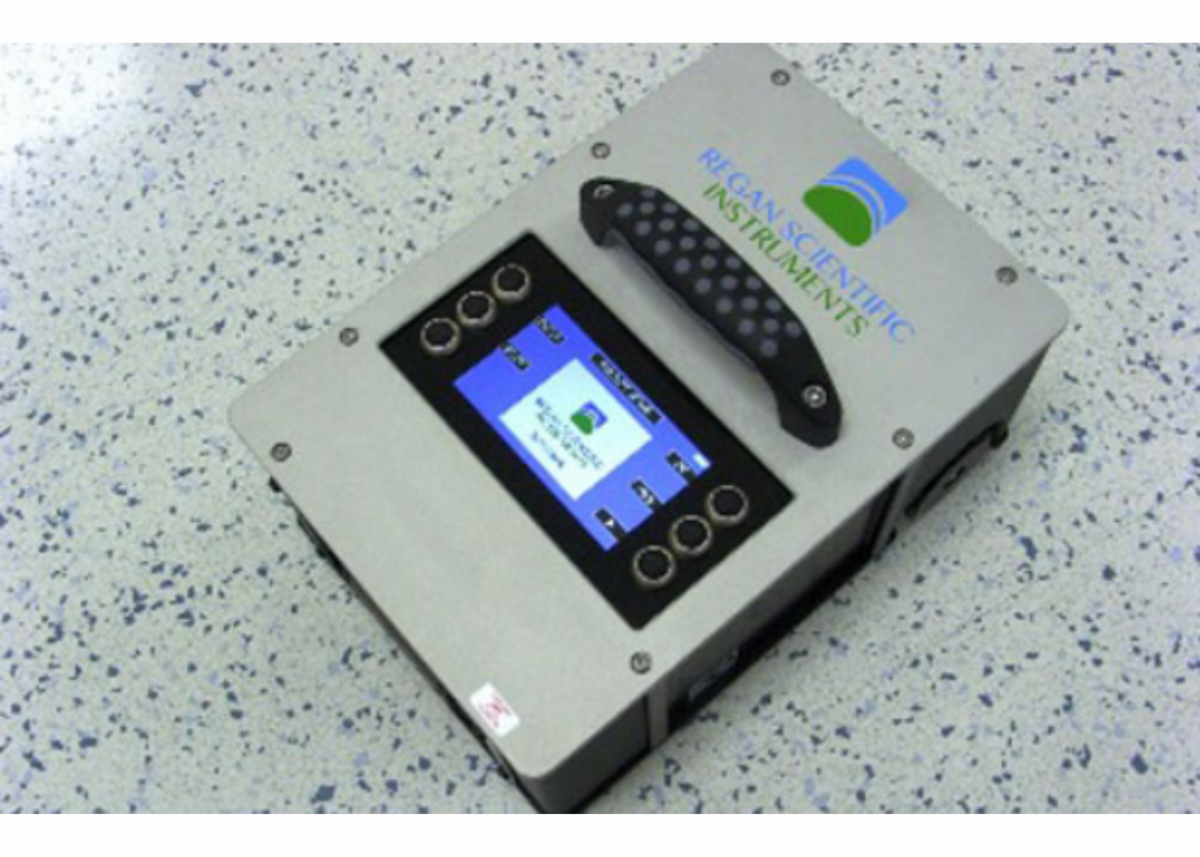
- DCOF is measured by a BOT 3000. It recreates and realistically measures conditions similar to walking on the tile. The test always uses slightly soapy water.
| |
04
INTERESTED IN READING MORE?
↓ HERE ARE KEY TILE INDUSTRY STANDARD PUBLICATIONS :
| |
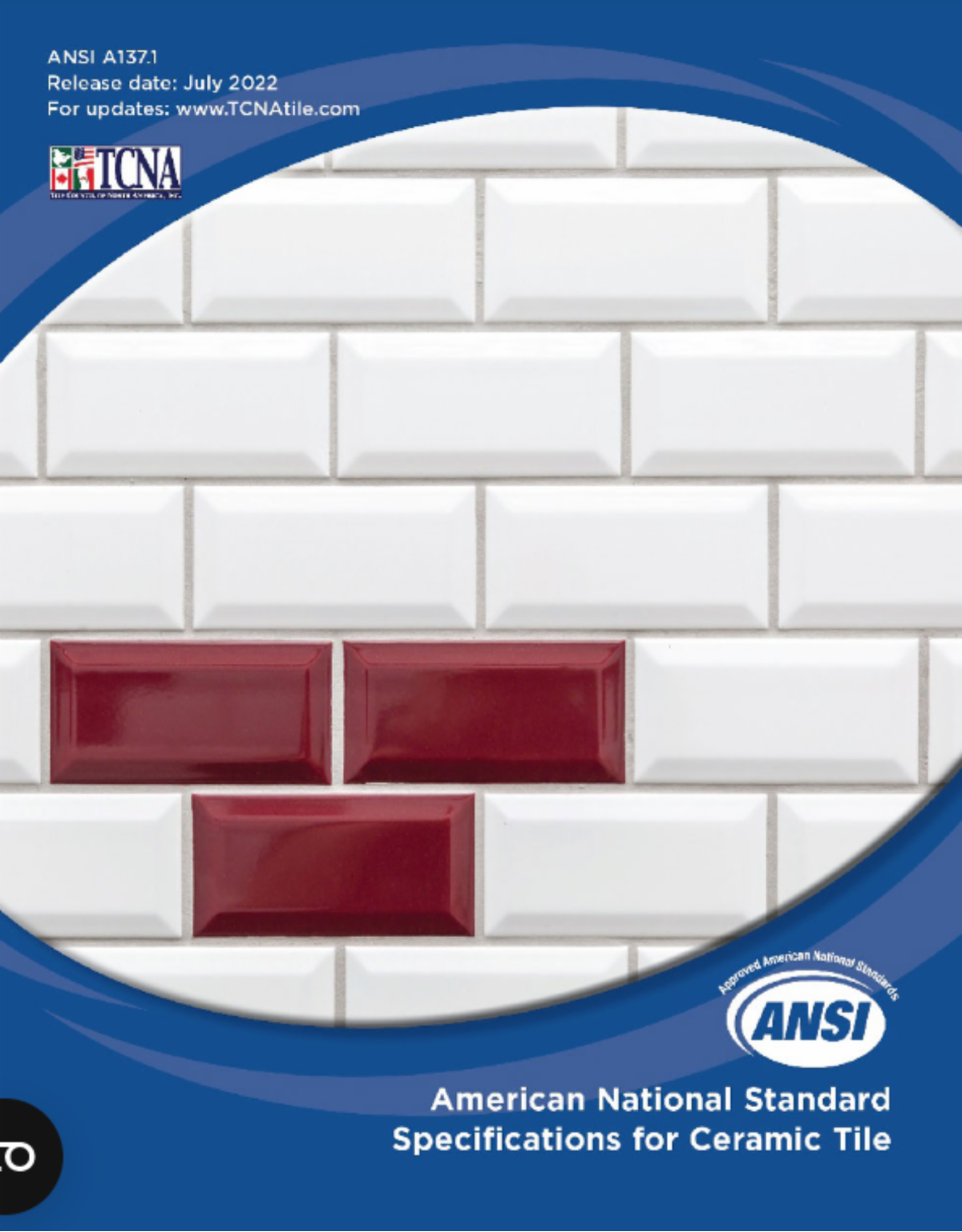
ANSI 137.1 :
This publication presents voluntary standard specifications for ceramic tile. It lists and defines various types, sizes, physical properties, and grading procedures for ceramic tile, including mosaic tile, quarry tile, pressed floor tile, glazed wall tile, porcelain tile, trim units, and specialty tile.
| |
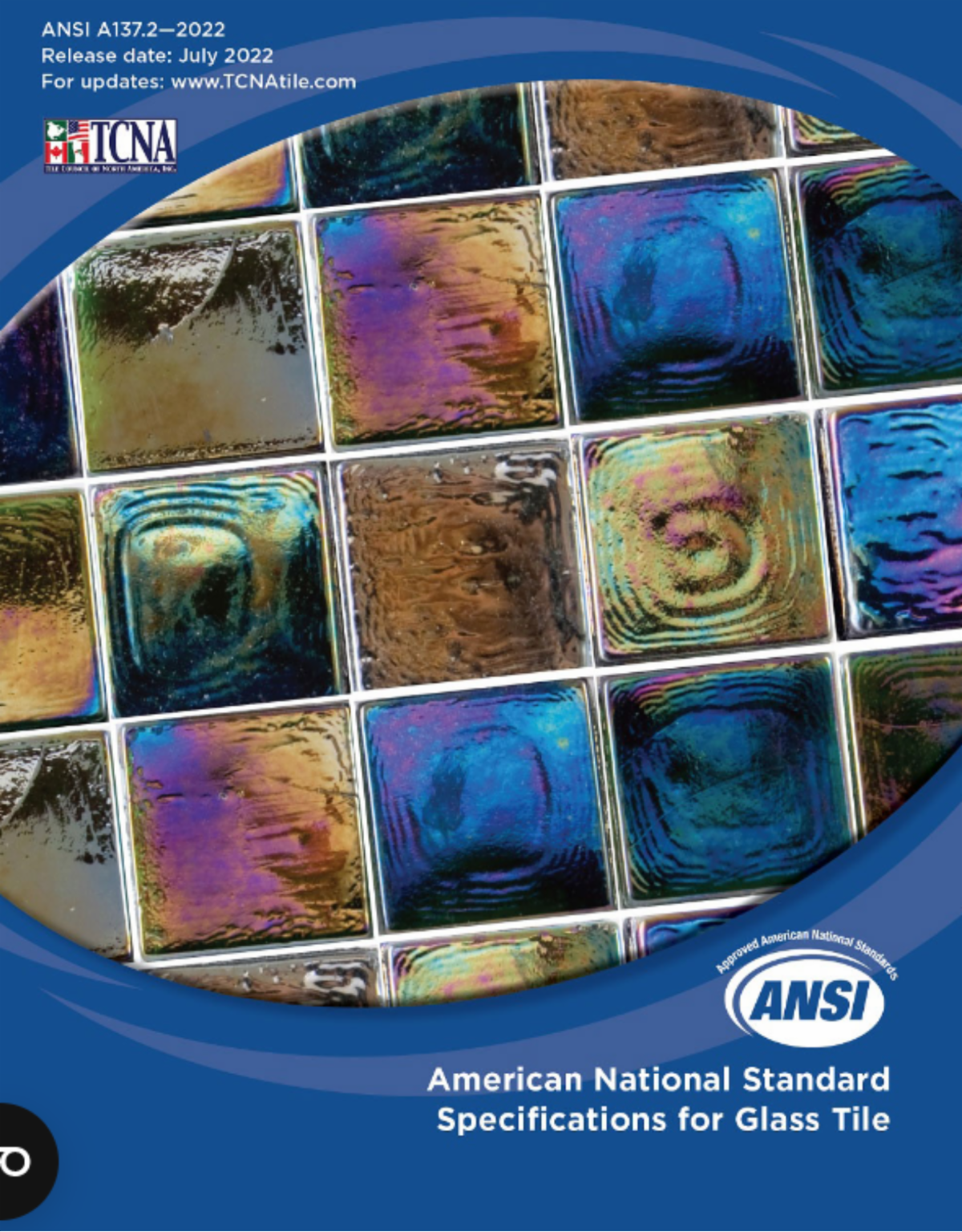
ANSI 137.2 :
This is a voluntary standard that lists and defines various types, sizes, and physical properties for glass tile specifically.
| | |
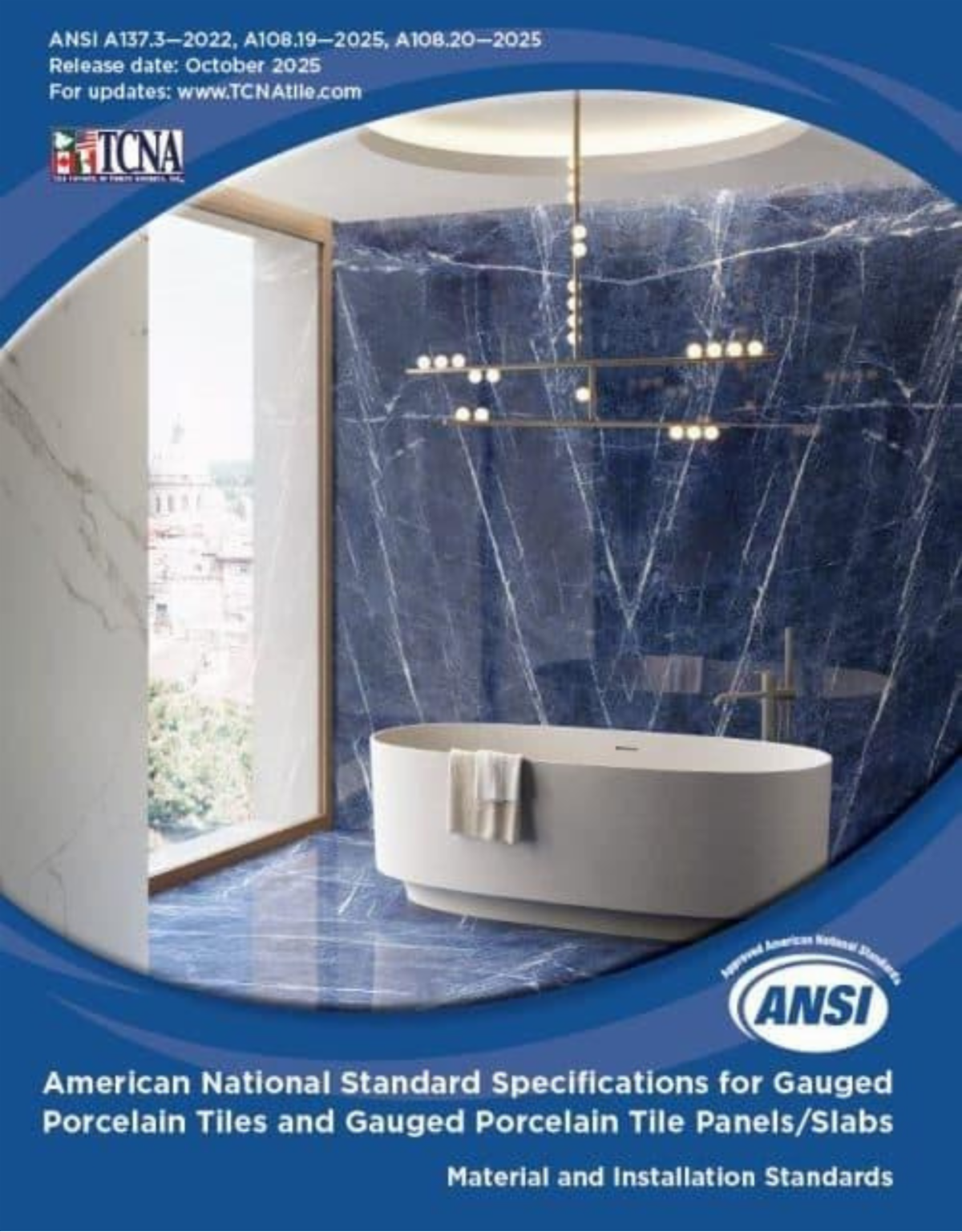
ANSI 137.3 :
This standard describes the minimum physical properties and grading procedures for gauged porcelain tiles and gauged porcelain tile panels/slabs. “Gauged” means manufactured to a thickness that is specific and largely associated with installation and use. Tile panels/slabs are those that are one square meter in facial area or larger.
| |
ANSI A108, A118, & A136.1 :
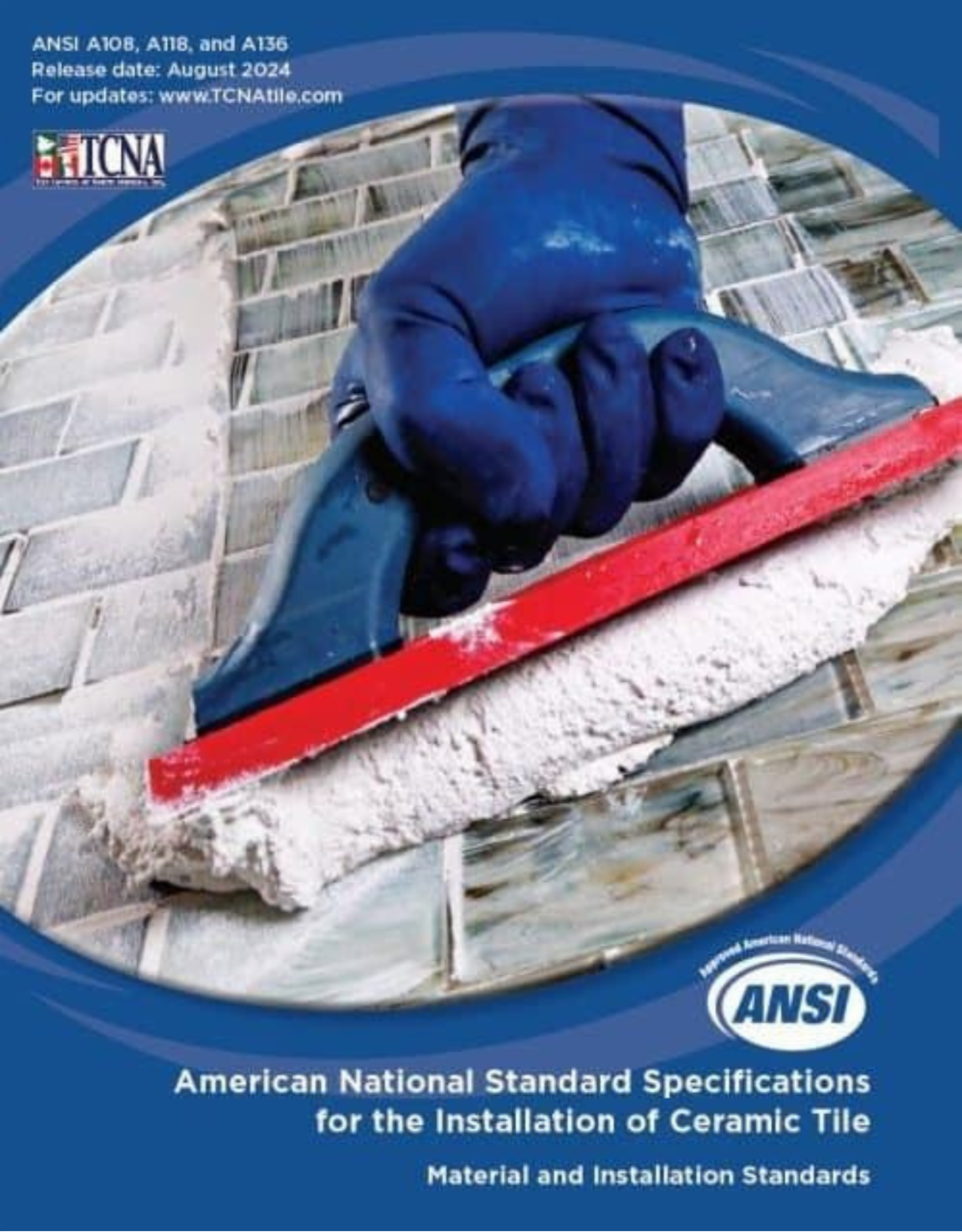
A108 defines the installation of ceramic tile. A118 & A136 defines the test methods and physical properties for ceramic tile installation materials such as grout and mortar. These standards are intended to be referenced or included in the ceramic tile section of project specifications.
| | |
TCNA – TILE:
THE NATURAL CHOICE :
If you want to learn how tiles can contribute towards sustainability efforts, this is a great resource. Tile is one of the most sustainable flooring materials available due to its long-life span and low maintenance costs over time.
| | |
TCNA HANDBOOKS :
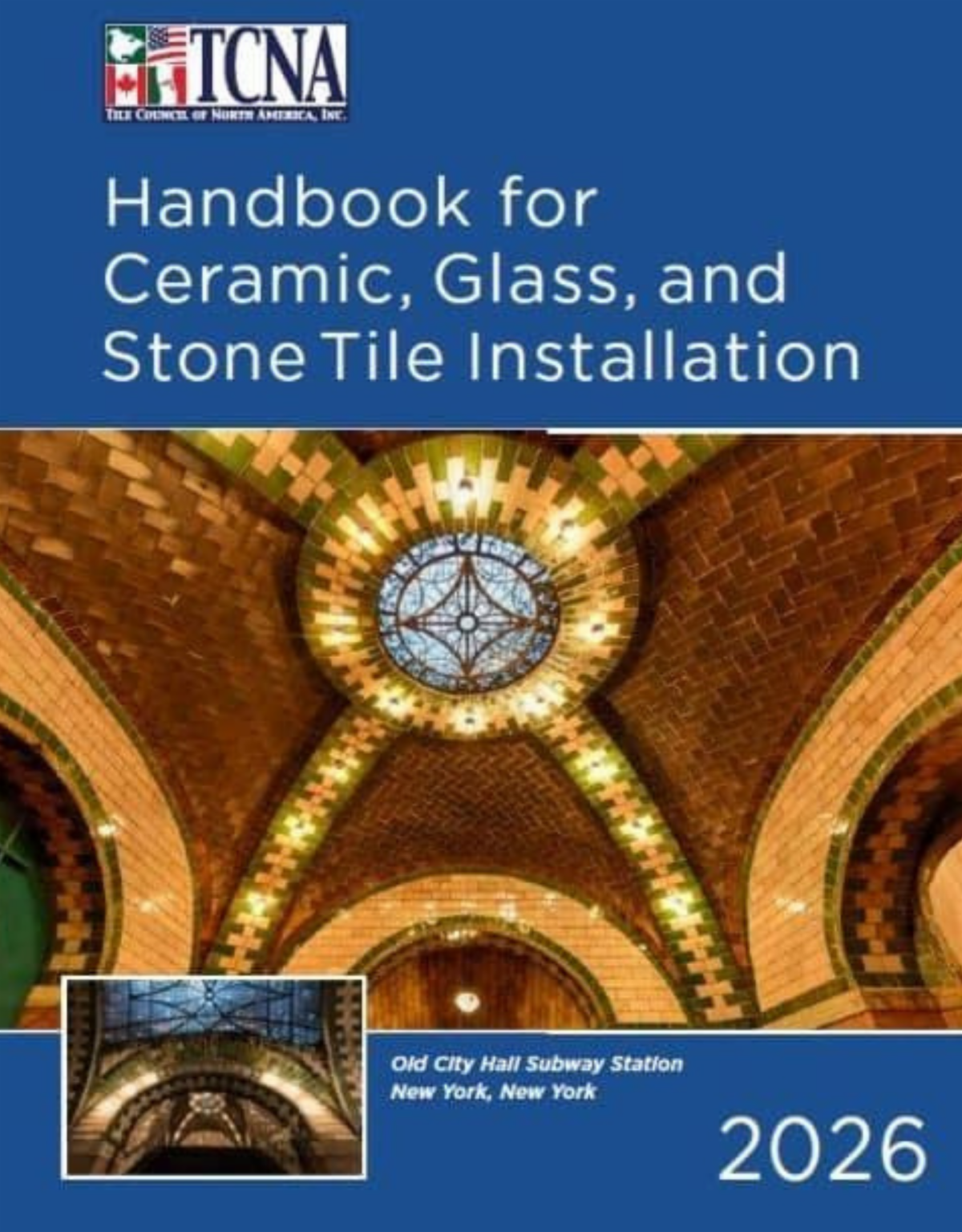
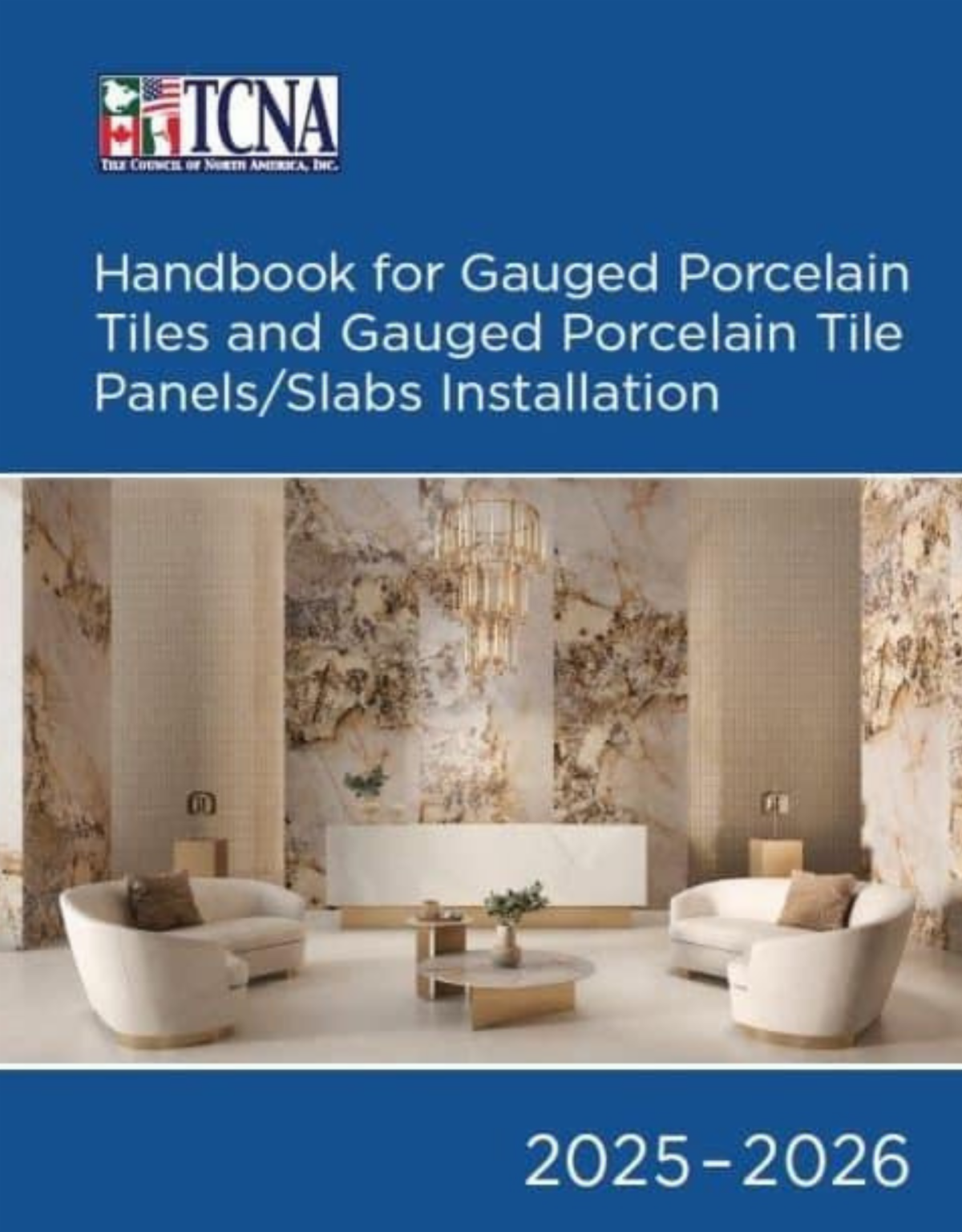
A guide to assist in clarifying and standardizing installation specifications and methods for tiling. Each installation recommendation, or method, requires a properly designed, constructed, and prepared substructure using materials and construction techniques that meet nationally recognized material and construction standards. There are two main handbooks: one for more standard type of tile installations including ceramic, glass and stone tile, and one for Gauged Porcelain Tiles and Panels/Slabs.
| |
05
LASTLY, REMEMBER THE 4 T'S OF TILE :
TILES ARE AN AMAZING CHOICE WHEN CHOOSING FLOORING MATERIALS.
| | |
Unlimited color and visual options,
won’t go out of style.
| |  | Resistant to stains, chemicals, weather, abrasions/scratches, freeze-thaw, & fire. | | | Low maintenance and easy to clean. | | | Low carbon footprint, no VOCs. | | |
06
UPCOMING VIRTUAL CEU OPPORTUNITIES THIS WEEK :
WE ARE PRESENTING CONSTRUCTION SPECIFICATIONS ON
FEB. 24 + 25TH. WE WOULD LOVE YOU TO JOIN US!
| | |
**IN ADDITION, DALTILE HAS CONTINUING EDUCATION UNITS AVAILABLE THROUGH OUR A&D SALES TEAM ON THESE TOPICS BELOW :
- Advanced Ceramic Tile Methods, Standards and Materials
- Construction Specifications
- Exterior Porcelain Pavers
- Insight into Quartz Surfacing
- Large Gauged Porcelain Tile & Slabs
- LVT Flooring
- Natural Stone: A New Dimension
- The Tile Industry and Green Building
| | |
At Daltile, they firmly believe that a strong representative is an extension of the design team and can assist a specifier in identifying the appropriate tile for each application. Please reach out to any of their amazing nationwide team of A&D Sales Reps
(Find Your Rep here) to assist in the selection process.
| | | | |