November kicks off National Family Literacy Month. Check out a new initiative by Crane and Read Ohio that outlines research-backed tips for families of young children – Read Together, Grow Together. Tuned In will be off next week in observance of Veteran’s Day – see you on November 17! 

Quotable & Notable

“American Falls [Idaho] swings conservative, too. Yet the town has proudly embraced a goal that backers describe as ‘progressive’: universal preschool. Residents have rallied around a simple mantra — ‘read, talk, play’ — and turned it into a movement.


That homegrown success has been fueled by a broader experiment spreading across the state, where communities build their own systems for early childhood education. These ad hoc projects are known as ‘collaboratives,’ and they bring together educators, school district leaders, and nonprofit and business executives to identify and dismantle barriers to early childhood development. It’s known here as ‘early learning done.’ ” 


Who:

Emily Tate Sullivan


Where:  

How a Small Town in a Red State Rallied Around Universal Preschool published in EdSurge 

Fact of the Week


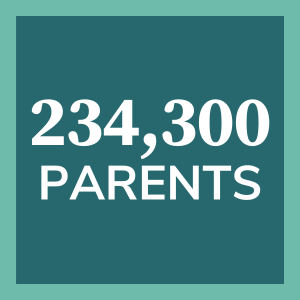
A new investment in Kentucky enables early care and education staff working over 20 hours a week to receive free child care for their own children. A brief from the Center for the Study of Early Childcare Employment estimates that 234,300 early childhood staff nationwide could benefit from such a policy. 

Policy Radar

New program to support care for children with special needs 

Gov. Mike DeWine and Director of the Ohio Department of Children and Youth Kara Wente launched a new initiative to improve access for child care and support services for children with special needs. Read more about the PROMISE (Promote Resources, Opportunities, and Meaningful Inclusion through Support and Education) program here. 


Children at the ballot box 

Children’s Funding Project provides an overview of several state and local ballot initiatives across the US that promise investments in children and that are worth watching over the next week.

New from Crane

Spectrum News 1 spoke with Jamie O’Leary about upcoming changes to Ohio’s third-grade reading guarantee and about data trends suggesting that retention has not led to improvements to reading results. You can view the show here. 

Beyond the Buckeye State

A new partnership between several universities, colleges, and state agencies and education groups in Nebraska will work toward creating an inclusive system to prepare early childhood educators for the field. Over the next three years, the RESPECT collaboration plans to develop a standard set of early education competencies that will help early childhood teachers finish their bachelor’s degree in a variety of avenues.  


In 2020, voters in Colorado approved a sales tax on tobacco products that helps fund preschool for 4-year-olds in the state. Due to a higher tax collection than anticipated, voters are being asked to decide this fall if the state should be allowed to keep the excess tax revenue to continue funding more slots for pre-K.

What We're Reading

An op-ed by Berta Velilla, CEO of Southwest Ohio’s largest Head Start provider, outlines what is at stake if Congress cuts – or flat funds – Head Start programs. 


A growing number of students enrolled in postsecondary education are “parenting students,” and recent efforts have highlighted the importance of supporting them. (Learn more about one federal grant, CCAMPIS, here.) But did you know that Black student fathers in particular comprise nearly 20 percent of student parents? A brief published by CLASP provides important context to the discussion around child care for student parents and for Black fathers specifically.

Research Round-Up

A new study published in Family Relations discovered encouraging findings about the influence of parental responsiveness on preschooler's development in families from low-income backgrounds. Researchers from the College of Social Work at Ohio State and several other universities analyzed observational data from 1,173 families that participated in the Building Strong Families project. The project observed mothers’ and fathers' interactions with children separately and compared responsiveness to children’s pro-social behaviors. Results show that the more responsive that both parents are to children, the better outcomes for their social development. Findings show that it didn’t matter whether the mother and father lived together for these positive social outcomes to be true. In a recap from Ohio State News, co-author Joyce Y. Lee notes that “there is often this belief that if the father is not in the home, he must be absent and that’s terrible for the child...that’s not what we found. Parents can still coordinate how they respond to their children and work together for the good of the child...Parenting programs could prioritize specific strategies for promoting shared parental responsiveness among mothers and fathers who are no longer romantically involved.”  

This edition written by: Jamie O'Leary and Janelle Williamson

• • • • • • •

If you like this newsletter, forward to a friend! Subscribe here.

• • • • • • •

crane.osu.edu

Twitter  Linkedin