|
Analysis of the
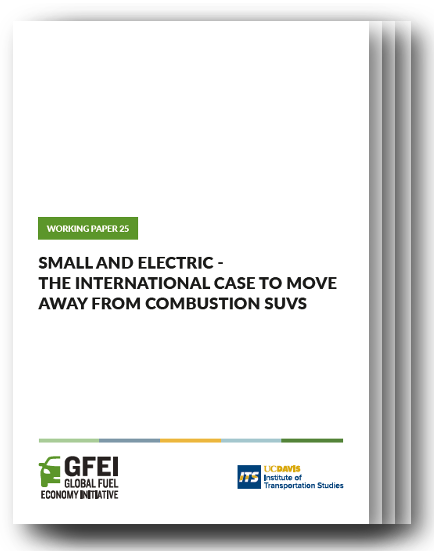
global car market since 2005 shows a global trend toward larger and heavier vehicles—driven in large part by higher manufacturer profitability on these bigger models—and growing sales of electric vehicles. It suggests that the upward pressure on vehicle prices coming from higher sales shares of SUVs is slowing stock turnover, thereby retarding the shift to electric vehicles.
Larger vehicles both require more materials—including hard-to-access minerals—and consume more energy to manufacture and operate. Focusing on larger EV models, the report warns, undermines the potential of EVs to reduce climate and environmental impacts, as it makes electric cars more expensive for consumers and slows market adoption.
The report explains how China, which now accounts for 27% of global passenger car sales, has secured a competitive edge in manufacturing smaller EVs, with strengths across key aspects of EV production, including battery supply chains, manufacturing efficiency, and software. This, the report observes, limits legacy manufacturers’ perceived strategic opportunity and dampens their enthusiasm to diversify away from internal combustion engine (ICE) vehicles. The report argues that a shift towards producing smaller EVs at scale presents a strategic necessity to overcome existing challenges, offering a way to stay competitive, lower consumer costs, and accelerate decarbonization efforts while also promoting diversification of EV and battery supply chains.
The report makes a series of public policy recommendations to address these challenges, including:
- Introducing targeted incentives, taxation, or other pricing mechanisms and regulatory support to shift the car market towards smaller vehicles.
- Considering the use of measures, such as temporary tariffs based on the share of domestic content or negotiated price undertakings, that can support the diversification of EV and battery value chains in geographies that are exposed to supply chain vulnerabilities.
- Promoting investments in cost-effective, accessible and affordable charging infrastructure to support a wider
range
of
models
and to make
EVs with
smaller batteries more appealing.
- Scaling up research and innovation to close global competitiveness gaps, with a focus on productivity-enhancing technologies in battery manufacturing (including upstream steps of the battery value chain), and advanced material-efficient battery designs.
“This report shows that the current trend toward bigger vehicles really undermines the positive impact of electrifying the global fleet,” said author Pierpaolo Cazzola, Co-Director, ITS-Davis European Transport and Energy Research Centre. “Our research shows that smaller electric vehicles are not only better for the environment, for climate and for consumers, they are also a key to successfully navigating the industrial transition.”
Sheila Watson, Deputy Director of GFEI secretariat at the FIA Foundation, added: “Size matters in the race to electrification. ICE vehicles are already too big and too expensive. This trend must be reversed as we move to an electric fleet and work towards a resilient and sustainable mobility future."
|