|
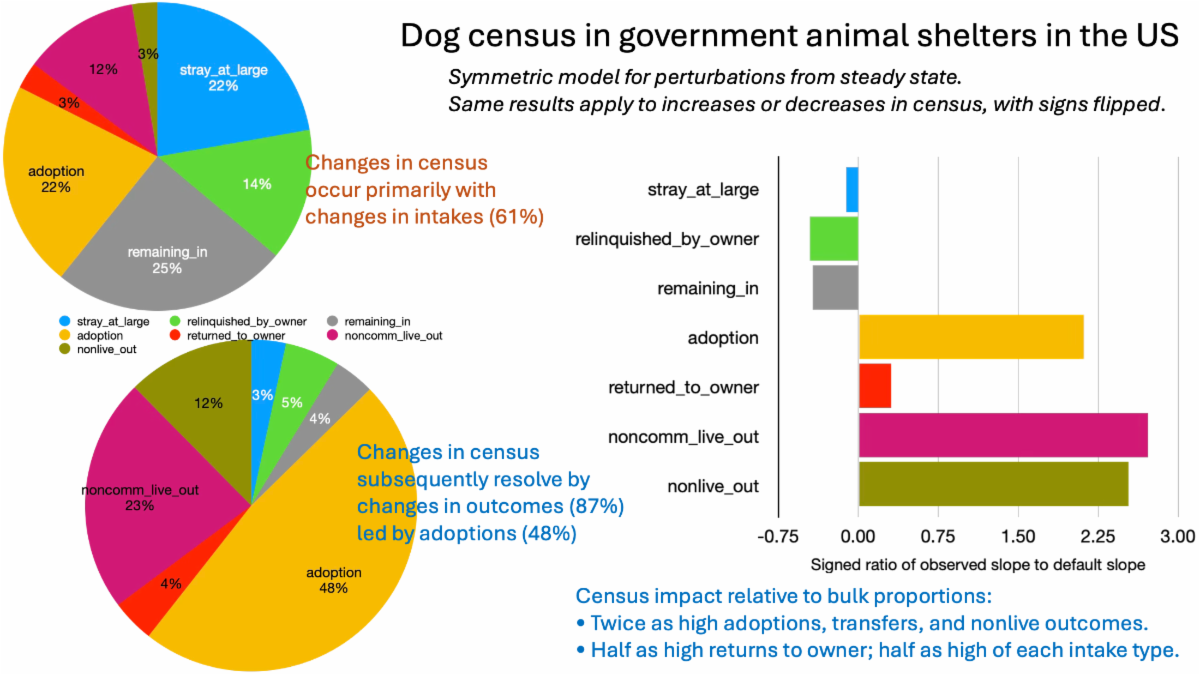
We are proud to announce that our volunteer data scientist, Michael Mavrovouniotis, published another important and insightful peer-reviewed paper titled, "Shelter Dog Census Changes Track Intakes but Resolve Slowly via Outcomes and Especially Adoptions."
From the article's summary:
"Animal shelters take in dogs and later find outcomes for them, such as adoption or returning them to an owner. When more dogs arrive in a month than leave, the number of dogs in care—the census—goes up. We asked two questions: which arrivals and departures explain the month-to-month swings in the number of dogs in care, and how does a shelter work off a build-up of dogs once it has occurred? Using three years of monthly reports from shelters across the United States, we found that month-to-month swings track arrivals more closely than departures. A build-up of dogs, however, is worked off mainly by moving dogs out, especially through adoptions, over a period of several months. Shelters therefore appear to increase their efforts to secure live outcomes when they are fuller, and the number of adoptions a shelter achieves is not a fixed quantity. Understanding these typical patterns may help shelters respond to changes earlier and more effectively."
We thank Michael for his incredible work to help guide animal shelter policies with data focused solutions and his ongoing support to SCIL!
You can read his full study HERE.
And if you want to read Michael's previous publications, which we highly recommend, see them all on our website HERE.
|