|
New Scholarship
The Center for Field Sciences and the Society of Black Archaeologists are proud to announce the Carrel Cowan-Ricks Scholarship. Professor Carrell Cowan-Ricks was a groundbreaking Black woman archaeologist, and this scholarship is intended to honor the work and legacy of Cowan-Ricks and other under-recognized African American women in the field of archaeology. Read more about the life and legacy of Professor Carrell Cowan-Ricks.
The Future of CRM & Field Schools
Yesterday, the current and president-elect of the Society for American Archaeology issued a statement addressing the recent firing of numerous federal archaeologists. Without archaeologists at government agencies to manage and oversee compliance, the fate of our shared cultural heritage on federal lands – both public and military – is under serious threat. Not mentioned in the SAA statement is Donald Trump’s Executive order to freeze the expenditure of funds appropriated by the Inflation Reduction Act of 2022 (IRA) or the Infrastructure Investment and Jobs Act of 2021 (IIJA). How will these actions impact the CRM sector and what should we tell students about future careers in CRM?
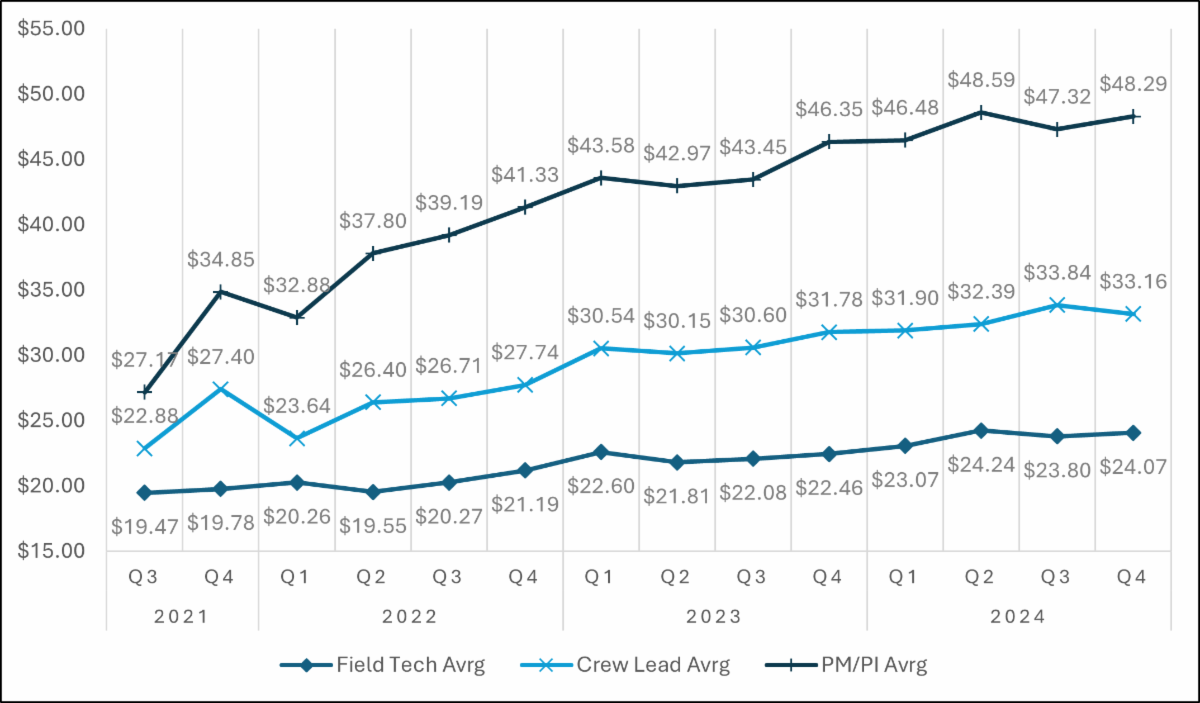
It is challenging to know what the actions and outcomes of the current Trump administration will be. The DODGE agency was tasked with deep cuts in government spending and Trump was elected, in part, by strongly campaigning for a dramatic reduction of the national debt. Yet CRM funding is not exclusively coming from federal sources. In many cases, funding is provided by state agencies, private and quasi-private (power generators, etc) actors, and tribes. Heritage protection laws exist at many levels of the government. While federal funding and compliance reduction will hurt the CRM sector – especially in the West where the government owns millions of acres – it will not eliminate the need for it. The strong present demand for CRM employees may be reduced but not eliminated. Wages are strong and growing (Fig 1), especially in the West and Southeast. Well-paying careers in CRM are still feasible.
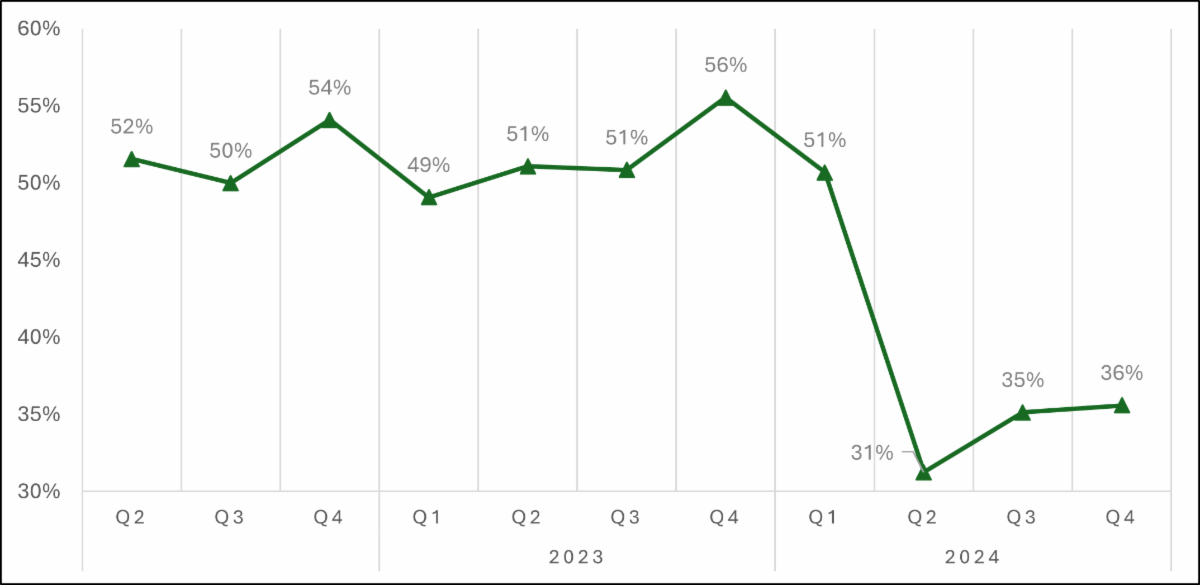
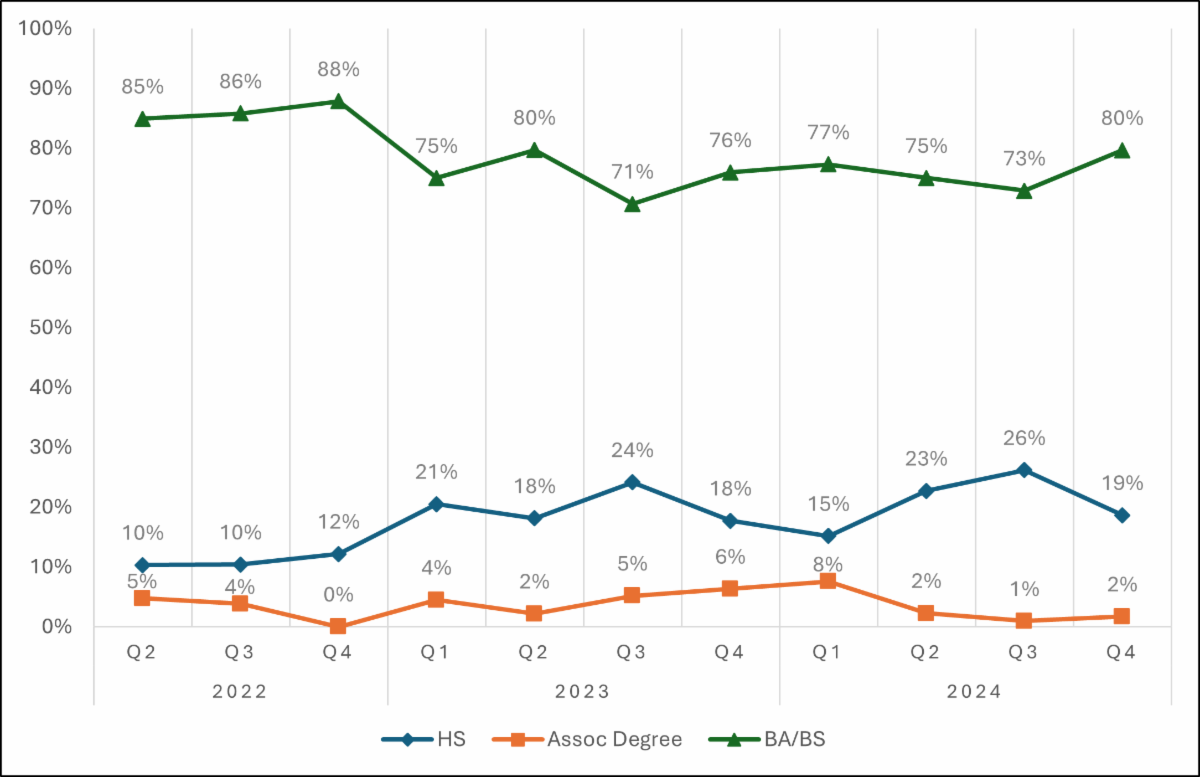
A trend that needs reversing is the recent “dumbing down” of the CRM workforce, especially at the entry, Field Tech level. Just one-third of positions now require a field school as a requirement – compared with over one-half of all published positions three years ago (Fig 2). And, 20% of the Field Tech workforce now has only a high school education (Fig 3). A reduction in demand for CRM workforce will allow the entire sector to catch up and increase education and training levels, coming back to workforce quality as it should be.
As the SAA Statement made clear, there is no good data to examine the impact of Trump’s policy on the CRM sector. The SAA is trying to collect data through a voluntary survey. Such a survey is voluntary, advertised to SAA membership only and therefore, limited in its ability to reflect reality. To help with this data vacuum, the Center for Field Sciences and the Twin Cairns Intelligence Unit will now provide the SAA with its quarterly job report at no cost. This job report collects employment postings on a range of sites, and should provide hard data about changes in employment, wages, and type of employers. We hope that the SAA will make this report available to all interested stakeholders.
While we cannot predict the future, it seems that the CRM sector is here to stay. Well trained students will find good paying jobs, and some will have great careers. This may not happen at the federal government at the scale of the past three years but will continue at the private, state and tribal levels.
Sincerely,
Dorian Chee
|