|
The Dismantling of
the Voting Rights Act
In response to the Supreme Court decision in the voting rights case Louisiana v. Callais, CBCF President & CEO, Nicole Austin-Hillery, issued the following statement:
“The CBCF acknowledges the Supreme Court’s ruling in Louisiana v. Callais, which carries serious implications for key provisions of the Voting Rights Act. As a nonpartisan 501(c)(3) institution dedicated to the nation’s civic health through public education and leadership development, we remain steadfast in our mission: ensuring that the interests of Black Americans, and all underrepresented and historically marginalized groups, are prioritized and protected. The Voting Rights Act is a cornerstone of this mission."
Read more from CBCF’s press release here.
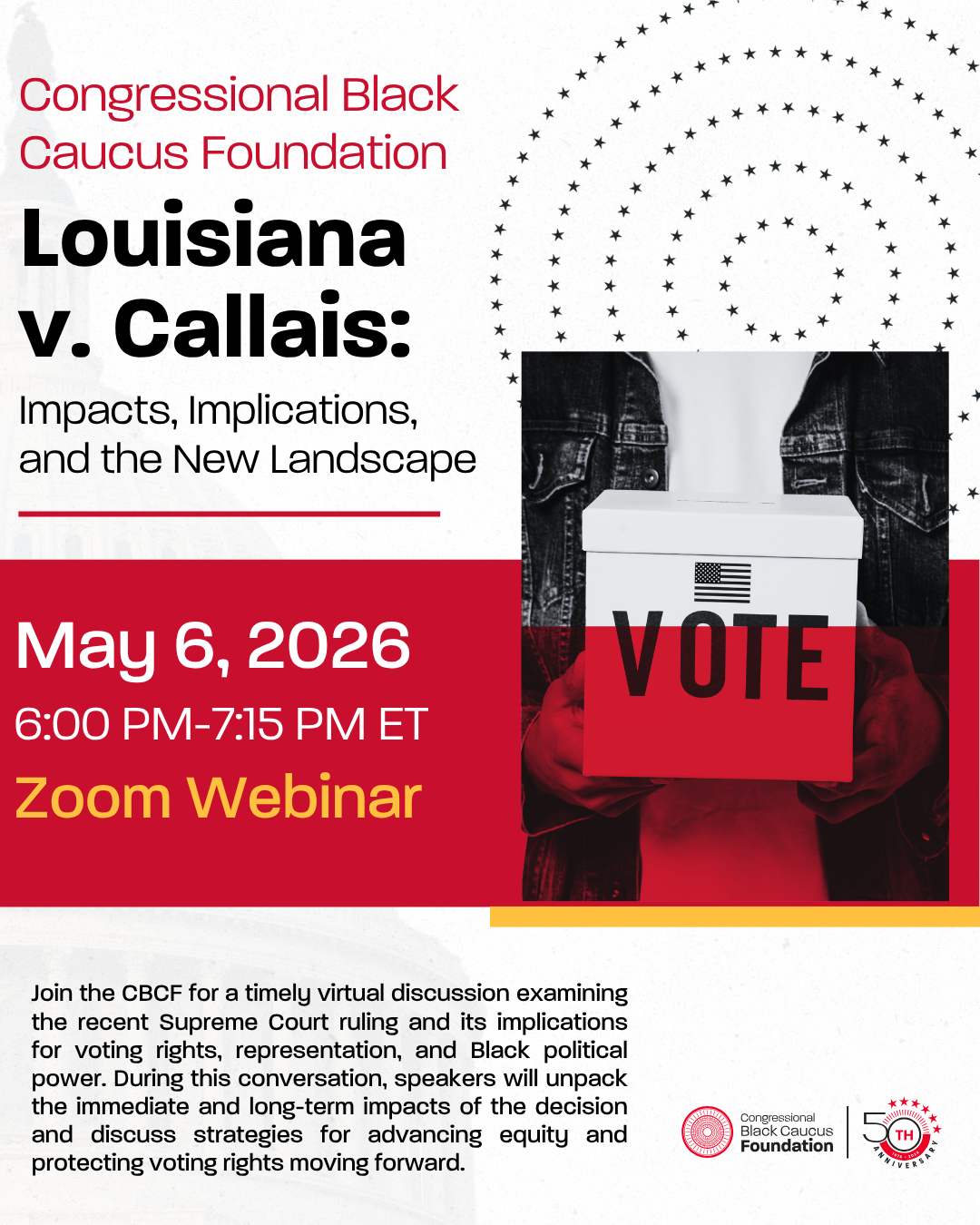
In light of this ruling, CBCF invites you to join a timely and important virtual discussion tonight:
Louisiana v. Callais: Impacts, Implications, and the New Landscape
Wednesday, May 6, 2026
6:00 PM – 7:15 PM ET (Zoom)
| | |
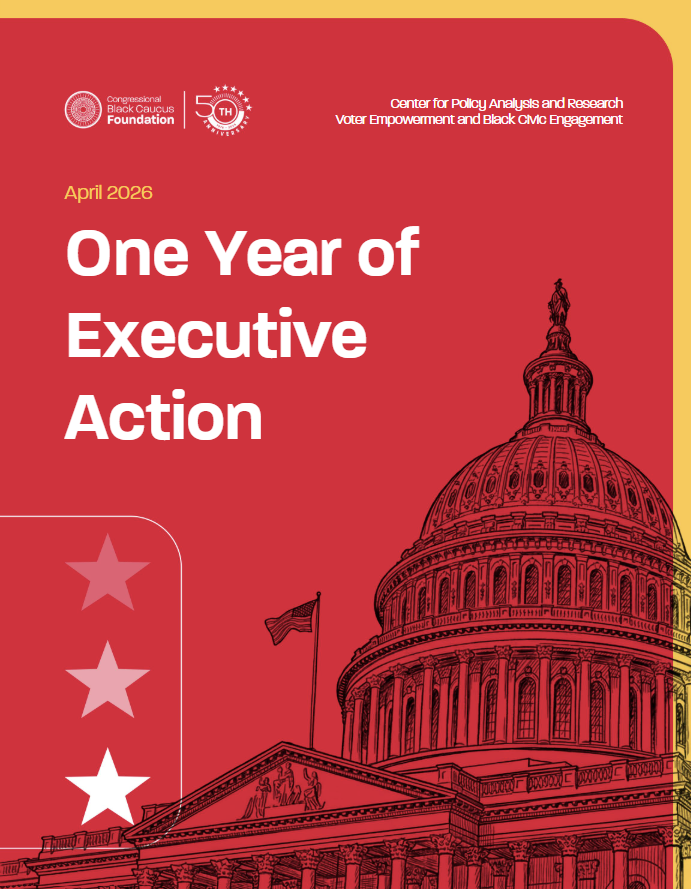
One Year of Executive Action
Marking the anniversary of our Executive Order Tracker, this report analyzes the executive orders we’ve tracked, highlighting an unprecedented volume and scope of directives reshaping federal policy in key areas affecting Black communities, along with data on what has already changed. Over the past year, a clear pattern has emerged: policy shifts that diverge sharply from the previous administration’s priorities, with far-reaching implications for civil rights, racial equity, and democratic accountability.
Our report underscores the need for continued legislative oversight, public engagement, and policy responses to mitigate harm and preserve hard-won gains.
| | See below for more on our podcast recording about the Tracker with the Brookings Institution. | | |
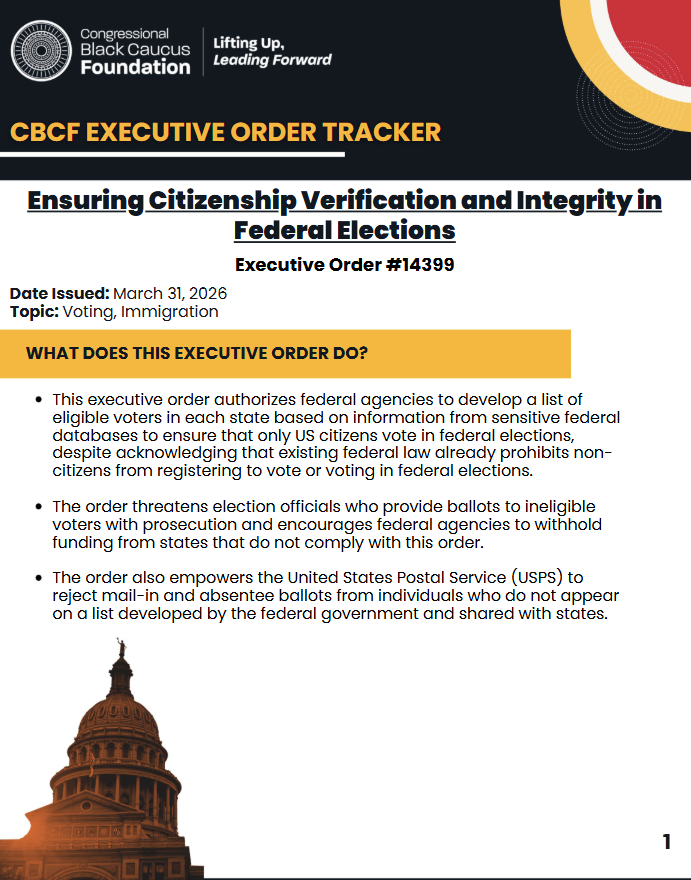
Ensuring Citizenship Verification and Integrity in Federal Elections
This executive order authorizes federal agencies to develop a list of eligible voters in each state based on information from sensitive federal databases to ensure that only US citizens vote in federal elections. The order acknowledges that existing federal law prohibits non-citizens from registering to vote or voting in federal elections. The order also empowers the United States Postal Service to reject mail-in and absentee ballots from individuals who do not appear on a list developed by the federal government and shared with states.
| | |
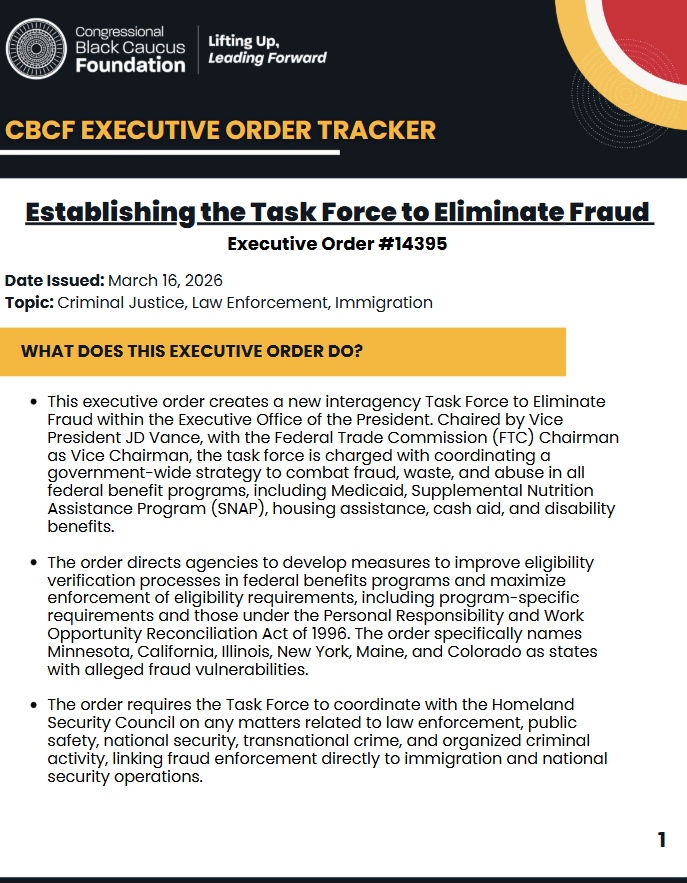
Establishing the Task Force to Eliminate Fraud
This executive order creates a new interagency Task Force to Eliminate Fraud within the Executive Office of the President. Chaired by the Vice President, the task force is charged with coordinating a government-wide strategy to combat fraud, waste, and abuse in all federal benefit programs, including Medicaid, Supplemental Nutrition Assistance Program (SNAP), housing assistance, cash aid, and disability benefits.
| | |
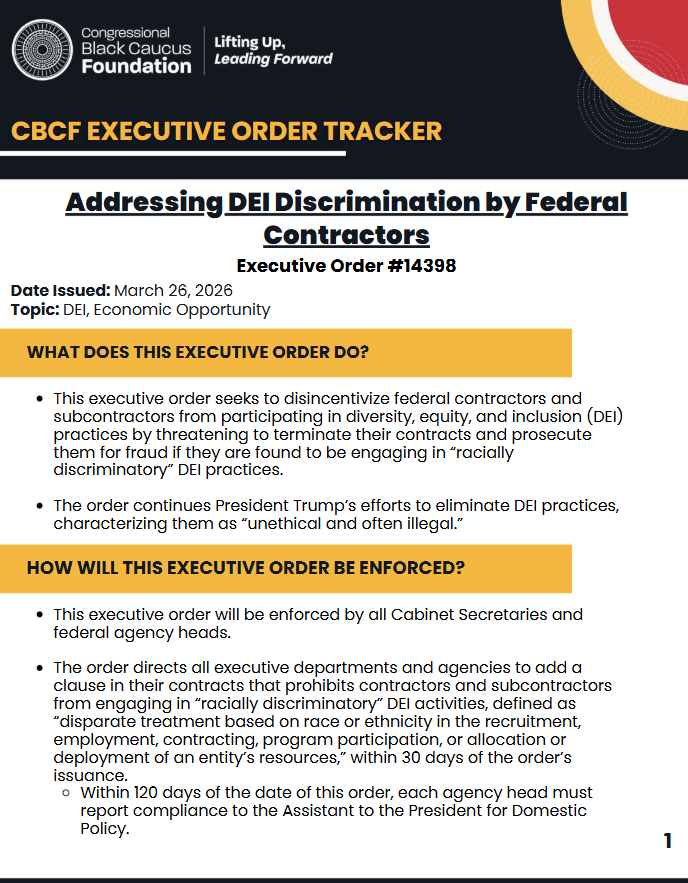
Addressing DEI Discrimination
by Federal Contractors
This executive order seeks to disincentivize federal contractors and subcontractors from participating in diversity, equity, and inclusion (DEI) practices by threatening to terminate their contracts and prosecute them for fraud if they are found to be engaging in “racially discriminatory” DEI practices. The order continues President Trump’s efforts to eliminate DEI practices.
| | |
CPAR Research Program
Our research is powered by your voices. In 2025, CPAR published three original reports based on survey and focus group insights from our community. Want to be part of what we build next?
Complete the short demographic survey below (about 4 minutes) to participate in our 2026 research.
| |
|
Research in the Moment: Current Event Highlights
An AI Law in Colorado, a Test for Disparate Impact
On April 28, a federal judge in Colorado issued a delay in enforcing a state law designed to prevent discrimination in artificial intelligence (AI). The law requires companies to ensure their AI systems do not produce discriminatory outcomes in areas like housing, employment, lending, and beyond. The U.S. Department of Justice (DOJ) joined the lawsuit challenging the law, arguing that requiring companies to prevent unequal outcomes could itself violate the Constitution if it forces them to consider race. The judge’s intervention follows the White House's urging of Congress to preempt or override state AI laws deemed unduly burdensome.
At the center of the case is “disparate impact,” a long-standing civil rights standard used to address policies that appear neutral but lead to unequal outcomes across racial groups, even without proof of intent. The DOJ’s position challenges that approach and comes alongside broader federal actions that signal a shift in civil rights enforcement, including efforts to scale back disparate-impact protections and limit state-level regulation of AI.
For Black communities, the stakes are significant. AI systems already shape access to opportunity and often rely on historical data that can reflect existing discrimination and reproduce disparities. Civil rights groups are urging Congress to preserve these protections, while CBC Chair Yvette Clarke has introduced the AI Civil Rights Act to establish federal standards. Without clear safeguards, automated systems could face less accountability than the human decisions they increasingly replace.
Eric’s ID Law: Maryland’s New Approach to
Disability Disclosure in Police Encounters
“Eric’s ID Law” took effect in Maryland in October 2025 after years of advocacy led by Eric Grantham and his mother, Linda Carpenter-Grantham, through their nonprofit Blue Runway for Autism. The law allows residents to voluntarily add a butterfly symbol to their state-issued identification to signal a non-apparent disability like hearing impairments, autism, and other mental health challenges. Since Maryland’s adoption of the law, other states, including Delaware, Georgia, and New York, have begun taking steps toward adopting their own versions of the law, reflecting growing national interest in developing local tools to help guide more positive interactions and outcomes between law enforcement and community members.
This law can be especially impactful for Black communities. Research shows that Black people with disabilities are more likely than other racial groups to experience serious harm, including being killed, during encounters with law enforcement, as these encounters often escalate at disproportionate rates. The voluntary designation offers a form of preemptive communication in situations where individuals may not be able to - or may not feel safe to -verbally disclose a disability. Simultaneously, the policy’s effectiveness depends heavily on whether officers are trained to recognize and appropriately respond to the symbol in real time, and consistent incorporation of the policy into de-escalation practices. The law also raises complex questions about privacy and self-disclosure, as individuals must weigh the potential benefits of signaling a disability against concerns about stigma, over-surveillance, or the risk that the information could be misinterpreted in already unequal policing contexts.
| | |
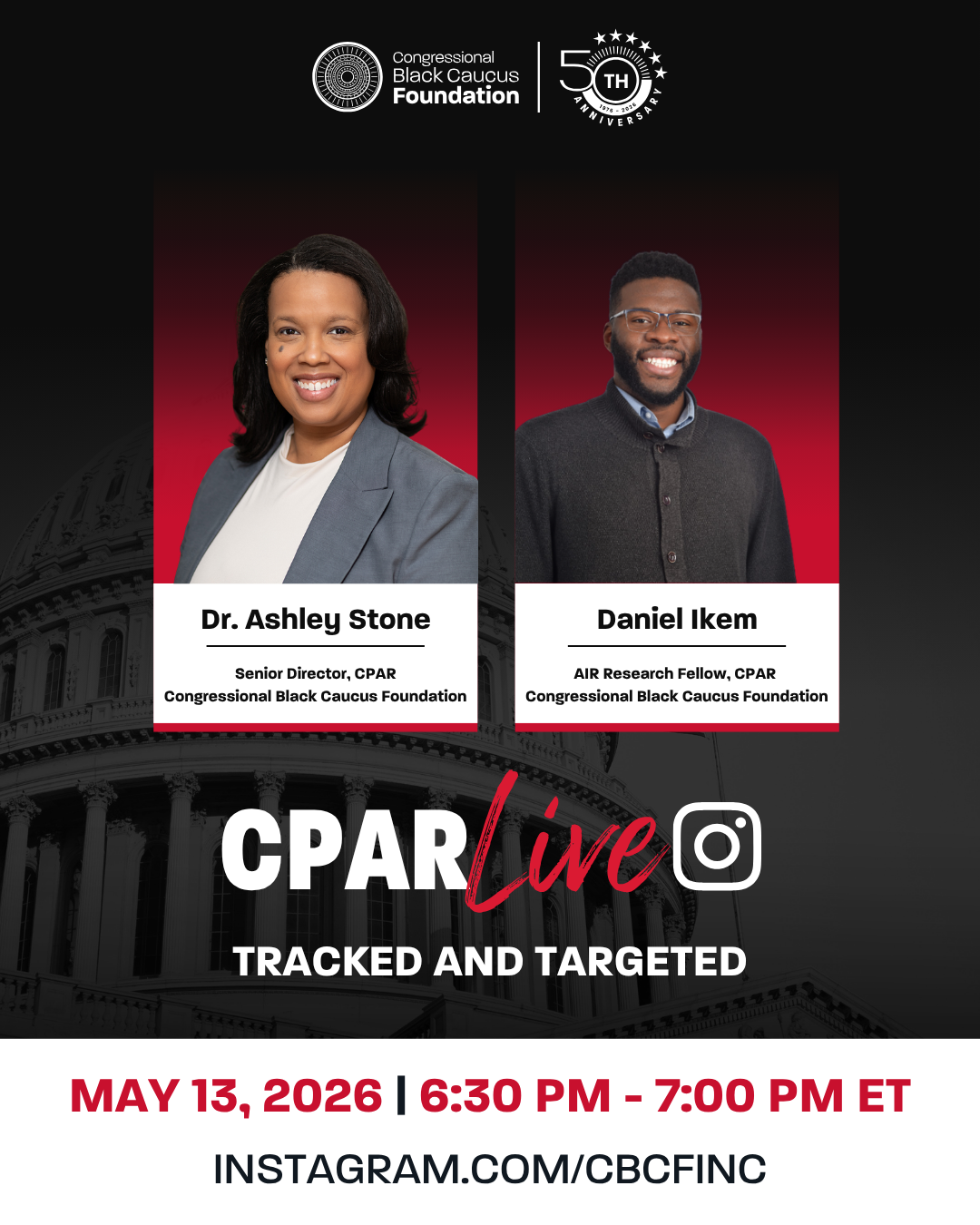
CPAR Live on Instagram!
Join us for our first #CPARLive on May 13th at 6:30 p.m. (ET) featuring our Technology and AI Research Fellow, Daniel Ikem. He will discuss his latest work, Tracked and Targeted, exploring how reproductive health apps are collecting and sharing sensitive data, and what that means for the privacy and safety of Black women. Follow us on Instagram @cbcfinc to be part of the conversation!
| | |
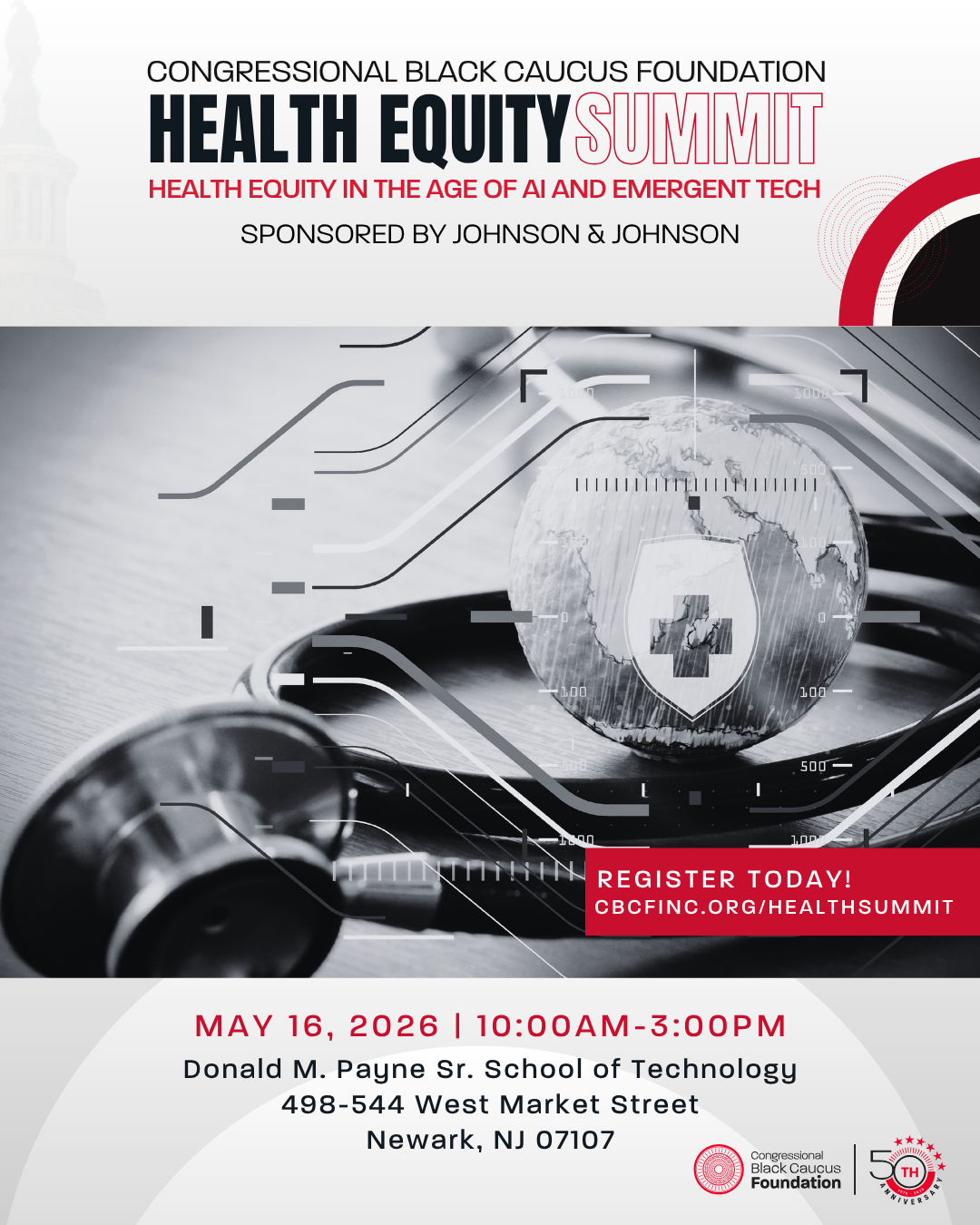
Join the Conversation on Health Equity in Newark, New Jersey!
Health Equity in the Age of AI and Emergent Tech is a health equity summit that will bring together scholars, technologists, healthcare leaders, policymakers, and community advocates to examine the impact of artificial intelligence and emerging technologies on healthcare equity. The discussion will explore how innovations in AI, digital health, and medical technology can improve access and outcomes for Black communities while addressing concerns around bias, accountability, data justice, and equitable care.
| | |
Executive Power and the Future of American Democracy
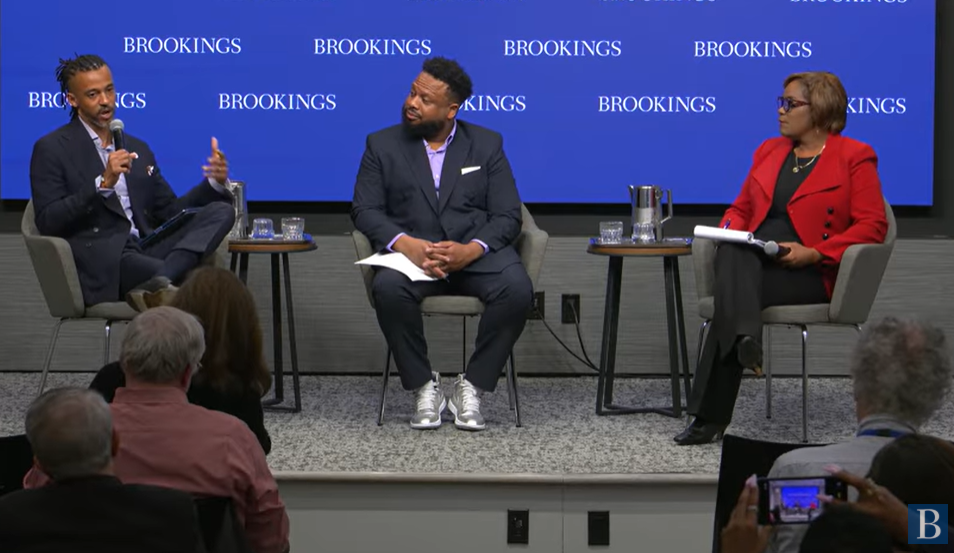
The Congressional Black Caucus Foundation and Brookings Institution recently convened a stakeholder briefing and discussion examining executive overreach and its disproportionate impacts on communities of color. Held at Brookings Institution, the conversation highlighted CBCF’s Executive Order Tracker and explored the implications of shifting executive power on civil rights, racial equity, democratic accountability, and the future of American democracy. Attendees engaged with scholars and policy experts on evidence-based strategies to advance transparency and protect democratic institutions.
| | |
Meet the 2025-2026 John R. Lewis
Social Justice Fellows!
| | |
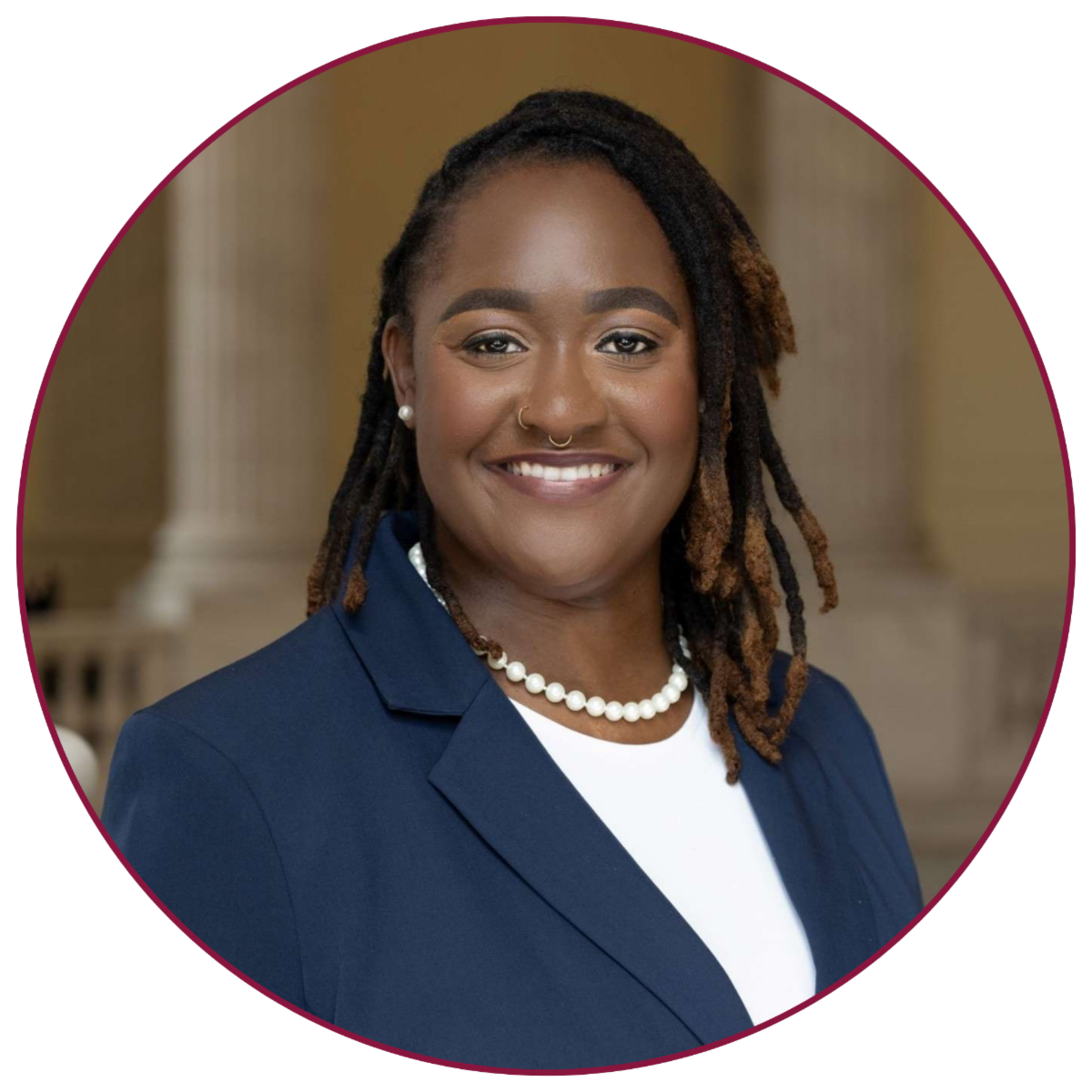
Desha Holden-Nelson is a Black maternal and family health program and policy specialist. Desha earned her Bachelor of Science and Master of Public Health degrees at Xavier University of Louisiana. She uses a two-generation approach to improve intergenerational health via policy and her work as a doula, lactation counselor, and childbirth educator.
| | |
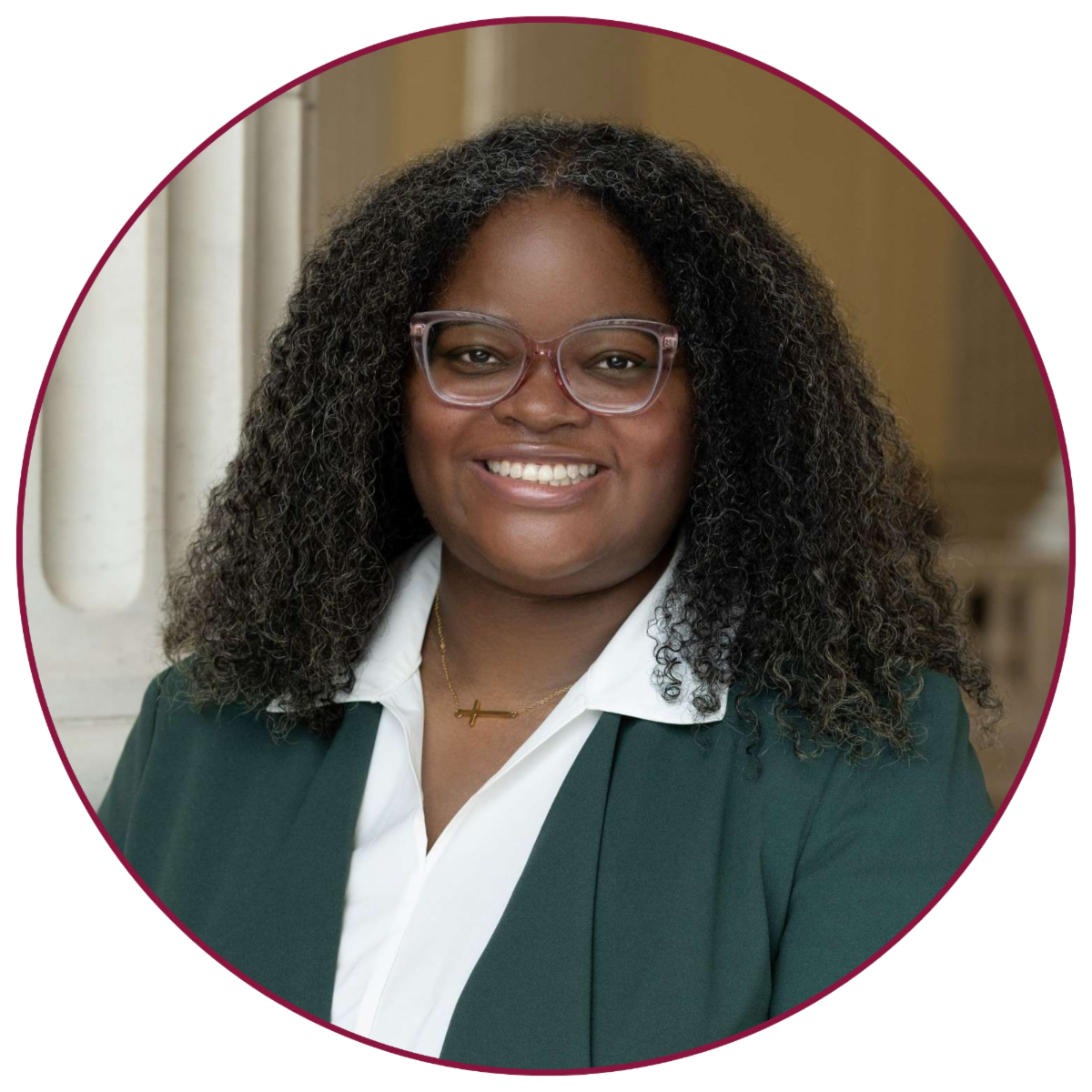
Ashya Smith, a Detroit native, is dedicated to using her skills in policy analysis, research, and advocacy to promote health equity. She holds a Bachelors degree in International Studies: Global Health from the University of Michigan and a Masters degree in Public Health in Health Policy from the University of North Carolina at Chapel Hill. She had roles with the Center for Health and Research Transformation, Birth Detroit, United States of Care, and the CDC John R. Lewis Undergraduate Public Health Scholar Program at UCLA.
| | | | |