|
NEMWI Weekly
Update
September 22nd, 2025
| |
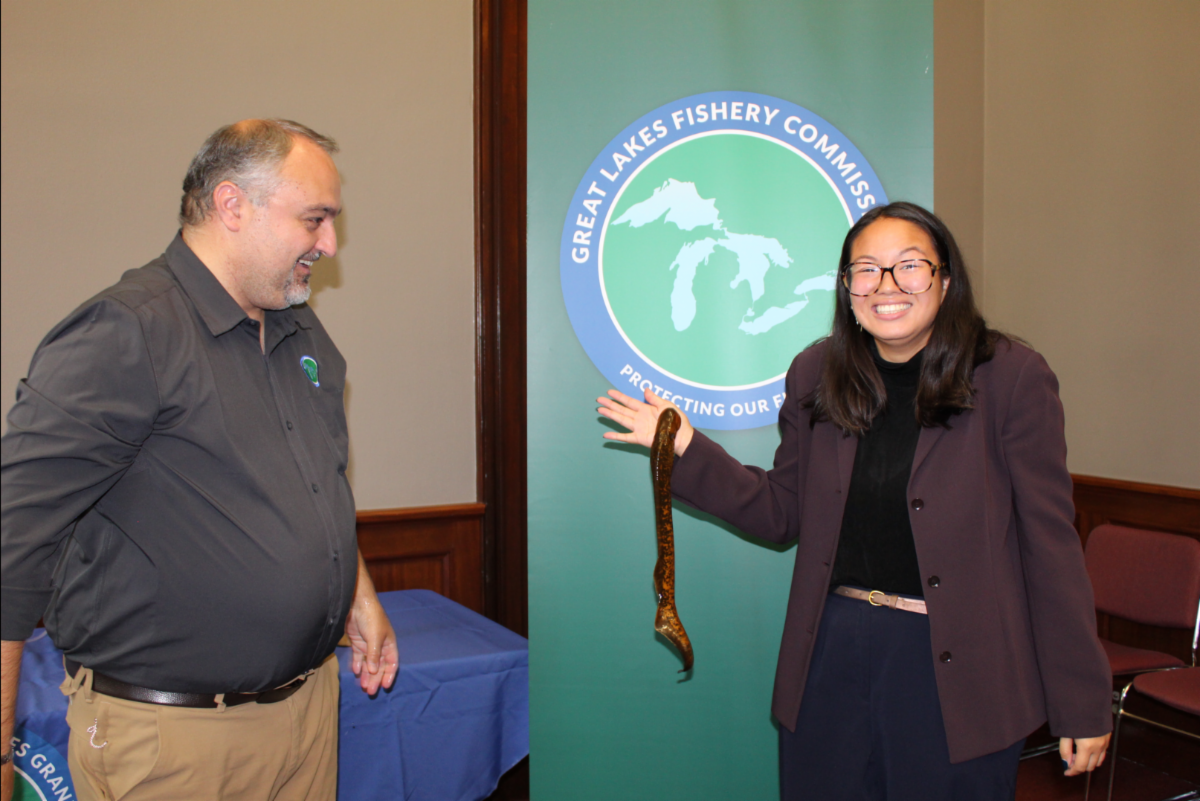
| NEMWI, GLFC Host Sea Lamprey Capitol Hill Event | NEMWI Intern Christina Uytingco handles a sea lamprey under the supervision of Greg McClinchey, GLFC Director of Policy and Legislative Affairs | |
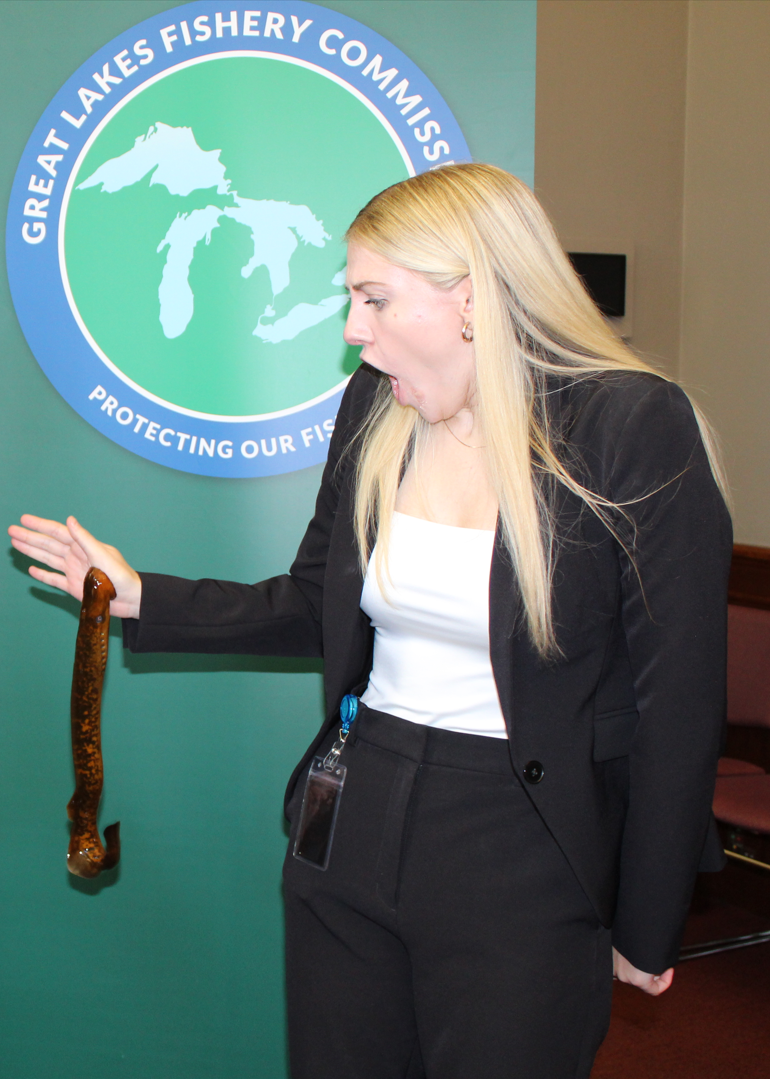
The Northeast-Midwest Institute (NEMWI) and the Great Lakes Fishery Commission (GLFC) co-hosted a live sea lamprey encounter on Capitol Hill last week. The event, held in cooperation with Sen. Bernie Moreno and the Great Lakes Task Force, gave attendees a chance to see these invasive species up close. Nearly 80 people attended from 25 Congressional offices and committees.
Sea lamprey, invasive to the Great Lakes, pose an existential threat to the Great Lakes fishery. Lamprey attach themselves to fish and drain their blood, killing the fish. One sea lamprey can kill 46 pounds of fish in its lifetime. They are controlled by the lampricide TFM, deployed by the Great Lakes Fishery Commission, that kills sea lamprey larvae without harming anything else in the ecosystem and has reduced lamprey populations by 90% from their peak. It was noted that this control must continue; in its absence, sea lamprey populations would quickly rebound and imperil the $5.1 billion Great Lakes fishery.
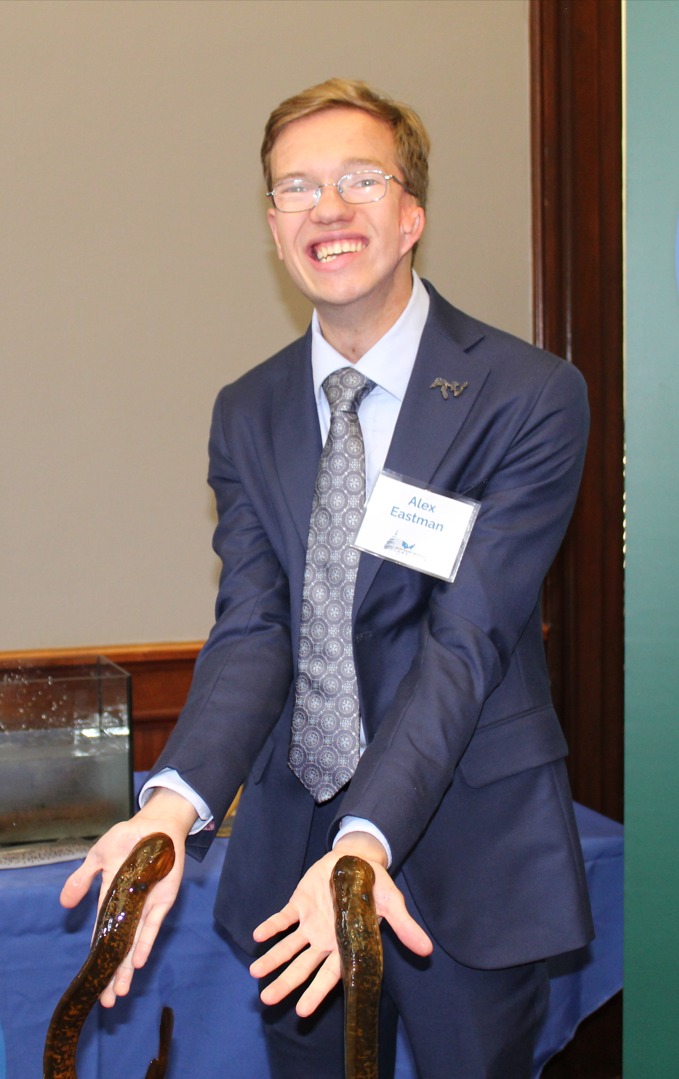
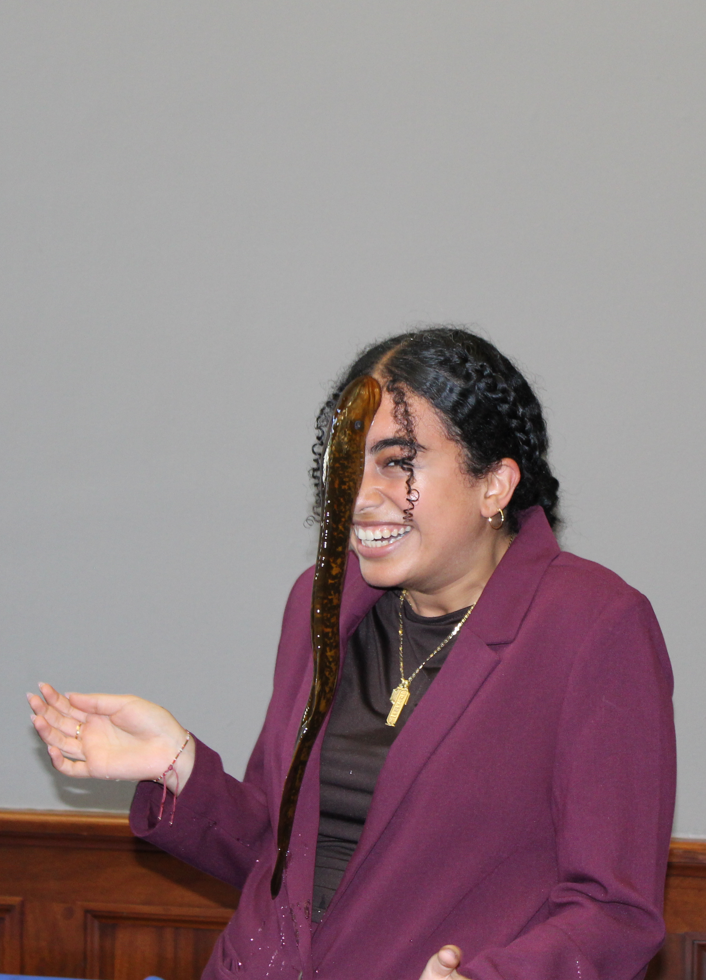
| | | NEMWI Program Manager Alex Eastman (left) and interns Christina Mina (center) and Logan Rau (right) with sea lamprey attached | | |
NEMWI Updates Great Lakes Legislative Tracker
The Northeast-Midwest Institute has updated its Great Lakes and Water Legislative Tracker with Congressional actions over the previous month. Two bipartisan bills introduced by Senator and Senate Great Lakes Task Force Co-Chair Gary Peters (D-MI) and Senator Jon Husted (R-OH), the Great Lakes Fisheries Research Reauthorization Act and the Great Lakes Mass Marking Program Act, have been added to the tracker due to their potential impact on Great Lakes research and fisheries management.
The Great Lakes Fisheries Research Reauthorization Act would reauthorize the U.S. Geological Survey’s (USGS) Great Lakes Science Center for another five years. The center, headquartered in Ann Arbor, MI, conducts essential work that includes surveys of native and invasive fish populations, development of species reintroduction plans, and advancing fisheries research technologies. These efforts support fisheries management strategies coordinated with tribal, state, and local partners across the Great Lakes region. Companion legislation in the House of Representatives advanced out of committee earlier this summer, and now awaits consideration by the full House.
The Great Lakes Mass Marking Program Act would codify and provide $2.7 million in dedicated annual funding for a U.S. Fish and Wildlife Service program that marks hatchery-raised fish before their release into the Great Lakes. The mass marking process provides vital data to evaluate hatchery effectiveness, monitor fish population trends, and guide long-term fishery management decisions. Currently, this work is funded through the Great Lakes Restoration Initiative (GLRI), but the bill would shift funding responsibility, freeing up GLRI resources for additional restoration projects.
“The Great Lakes are essential to Michigan’s economy and way of life, and our fisheries play a big role in that,” said Senator Peters in a press release. “That’s why I’m proud to lead these bipartisan bills to support the folks who protect our Great Lakes ecosystem and fish populations, while boosting Michigan’s robust fishing industry.”
We cannot afford to sacrifice what the Great Lakes Fishery Research Program brings to the table. I’m proud to introduce a bill to protect this program and the fisheries that remain critical to Ohio,” Sen. Husted added.
The House version of the Mass Marking Act passed the full House of Representatives in July.
Additionally, the Harmful Algal Bloom and Hypoxia Research and Control Amendments Act (HABHRCA) of 2025 passed in the Senate on September 10th and now moves over to the House. This bill would reauthorize vital research and monitoring programs in hopes of better understanding and reducing the increasing severity of harmful algal blooms, which threaten food security and can reduce oxygen levels in the water in hypoxic events that kill fish and other marine life and harm coastal ecosystems and economies.
See these updates and others on NEMWI’s Great Lakes and Water Legislative Tracker here.
Reported by NEMWI Intern Christina Mina, University of Texas at Dallas
| | | |
Trump Administration Defends Biden-Era EPA Rule on PFAS Cleanup
The Environmental Protection Agency’s designation of two widely used “forever chemicals” (PFOA and PFOS) as hazardous substances under the Comprehensive Environmental Response, Compensation, and Liability Act (CERCLA, or Superfund) has received backing from the Trump administration. In a recent court filing, the Justice Department announced it would uphold the Biden-era rule, despite broader efforts from the administration to scale back chemical regulations.
The rule, finalized in early 2024, expands EPA’s authority to compel cleanups of PFAS-contaminated sites and hold polluters financially responsible. Exposure to PFAS has been linked to cancers, high cholesterol, immune system suppression, and fertility issues. By designating PFOA and PFOS as hazardous substances, EPA can identify potentially responsible parties (PRPs), expedite cleanups, and ensure that the cost of remediation falls on polluters rather than taxpayers or communities.
EPA Administrator Lee Zeldin said the administration is aiming for balance. “When it comes to PFOA and PFOS contamination, holding polluters accountable while providing certainty for passive receivers that did not manufacture or generate those chemicals continues to be an ongoing challenge,” he said. Zeldin also urged Congress to establish statutory exemptions for water utilities, landfills, and other “passive receivers” that may handle PFAS but are not original sources of contamination.
Environmental advocates applauded the administration’s decision to defend the rule. “These hazardous substance designations promote the remediation of contaminated sites across the country,” said Jonathan Kalmuss-Katz, an attorney at Earthjustice. At the same time, he criticized EPA for separately moving to delay and narrow PFAS drinking water standards, warning that “millions of people” could remain exposed before full remediation efforts take effect.
PFAS contamination has emerged as one of the nation’s most pressing environmental health challenges. These chemicals that were used for decades in firefighting foam, nonstick cookware, and industrial applications persist in the environment. They have been detected in drinking water systems nationwide and in the blood of nearly every American. With both the Biden and Trump administrations now backing the hazardous substance designation, EPA officials are preparing a broader framework for reviewing additional PFAS under Superfund. The agency has indicated it will weigh both the public health benefits and the economic costs of future designations.
To keep up with the actions of the Environmental Protection Agency in the Trump Administration, see NEMWI’s EPA Tracker here.
Reported by NEMWI Intern Rachael Stein, University of Colorado at Boulder
| | |
|
Alliance for the Great Lakes Holds Webinar on Large Water Users, Including Data Centers
The Alliance for the Great Lakes held a webinar on Tuesday, September 9th, to discuss the rising water demand caused by data centers, agriculture, and critical mineral industries in the Great Lakes region. One of the speakers, Helena Volzer, J.D., Senior Source Water Policy Manager for the Alliance, recently published a report titled "A Finite Resource: Managing the Growing Water Needs of Data Centers, Critical Minerals Mining, and Agriculture in the Great Lakes Region" detailing these industries' impacts and policy implications.
Data centers were a particular point of concern during the call, due to the obscurity surrounding the extent of water usage of the centers. "Unless the data center itself is withdrawing water, registration and consumptive use permit requirements don't apply," Volzer explained, meaning that less than a third of data centers actually track their water usage. This, alongside NDAs that conceal the project proposals which include initial water production estimates, has led to a lack of data that could inform policy solutions. Additionally, the overlapping water consumption from data centers themselves and the increased energy production they require makes calculating water consumption difficult. João Ferreira, Regional Economist for the Weldon Cooper Center of Public Service at the University of Virginia, preliminarily estimates that data center energy consumption across the Great Lakes will be equivalent to the energy usage of 8 million households by 2030.
Volzer advocates for increased regional demand studies before the installation of new facilities, tracking and water use reporting requirements for data centers, and increased efficacy standards, such as requiring recirculation of water in such centers.
The report goes into further detail on different cooling technologies for data centers, their respective water demands, and the differences in different types of data centers. Access the full report here.
Reported by NEMWI Intern Christina Mina, University of Texas at Dallas
| | | |
Connect With the Northeast-Midwest Institute
on Social Media
The Northeast-Midwest Institute is on social media with new updates and information on its regional research and policy education program and with announcements for upcoming briefings and events. NEMWI is posting our research reports on current regional issues and ongoing policy education on the page to make keeping up with our policy work easier than ever. The Institute also is updating the page with announcements of upcoming policy briefings and webinars. NEMWI is excited for the opportunity to connect with as many people as possible.
Please check out our LinkedIn here, our Twitter/X here, our Facebook here, and our Bluesky here. Be sure to like and follow us to keep up to date with NEMWI!
On Bluesky, also check out our Great Lakes feed at "NEMW Great Lakes Feed" and if you are a Great Lakes organization on Bluesky, contact Great Lakes Program Manager Alex Eastman at aeastman@nemw.org so that we can add your posts to the feed!
| | | |
|
Great Lakes Events
(all times eastern)
| | | |
In the House:
The House has district work periods this week.
In the Senate:
The Senate has state work periods this week.
| | | | |