|
Final BUI Removed at Black River AOC
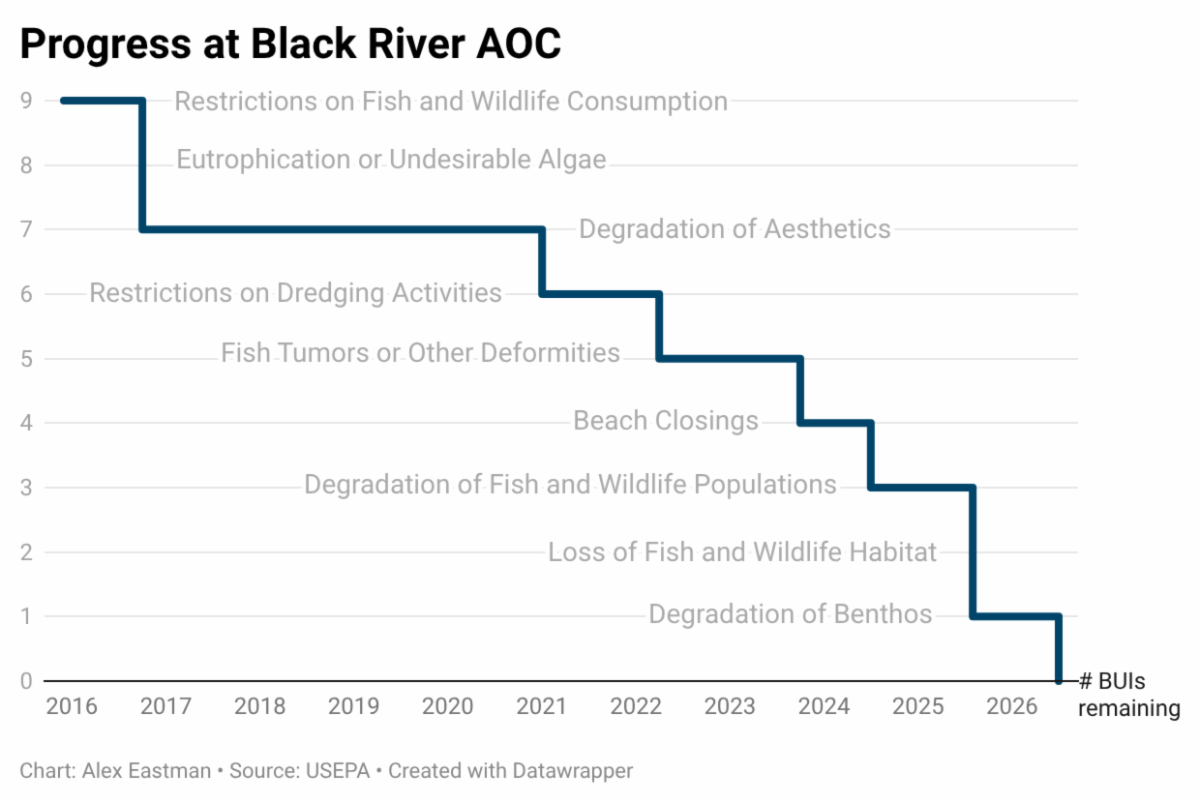
The EPA announced last week that the last of the nine beneficial use impairments (BUIs) at the Black River Area of Concern (AOC) has been removed, putting Black River on course to be delisted. All management actions at the site were completed by May 2024, and since then, environmental conditions have improved enough to remove the final five BUIs, most recently Degradation of Benthos, which describes inadequate conditions for ecosystem-critical benthic organisms. Removal of this BUI means that the once-contaminated sediment at Black River has recovered enough to support these organisms.
“This is a major milestone for the Black River and the communities that have worked for years to restore it,” said Ohio Governor Mike DeWine. “Today’s announcement shows that long-term investments in water quality and habitat restoration make a real difference. Together, we’ve transformed the river into a healthier place for wildlife, recreation, and the people who call this region home.”
Progress has been fueled by the Great Lakes Restoration Initiative, which has invested $26 million cleaning up Black River since 2010. The federal government, Ohio EPA, and Ohio Lake Erie Commission, alongside other state, local, and tribal partners, have worked collaboratively to rehabilitate the site. In 2024, restoration work was completed at a 260-acre former steel mill that had been a source of water contamination. The City of Lorain, Ohio, capped and covered steel slag to prevent runoff and restore natural habitat.
With its BUIs removed, The Black River AOC could be delisted (have the AOC designation removed) as soon as 2027, following a public comment period later this year. It would become the ninth AOC to be delisted, and the eighth since the start of the GLRI in 2010.
|