|
The Impact of Earmarks and Appropriations on State Revolving Fund Programs in Great Lakes States
Congress in 2022 resumed the use of earmarks, which are grants requested by members of Congress for specific projects in their districts and states. A large and growing portion of the EPA’s Clean Water State Revolving Funds and the Drinking Water State Revolving Funds have been dedicated to earmarks, which poses problems for water infrastructure in the Great Lakes region. Because earmarks circumvent the states’ revolving fund programs and are given directly to projects as loans, this money does not “revolve,” and cannot be leveraged to fund projects in the future. The practice of carving money for earmarks out of the SRFs instead of funding them through a separate appropriation means that the SRF programs receive vastly less money each year.
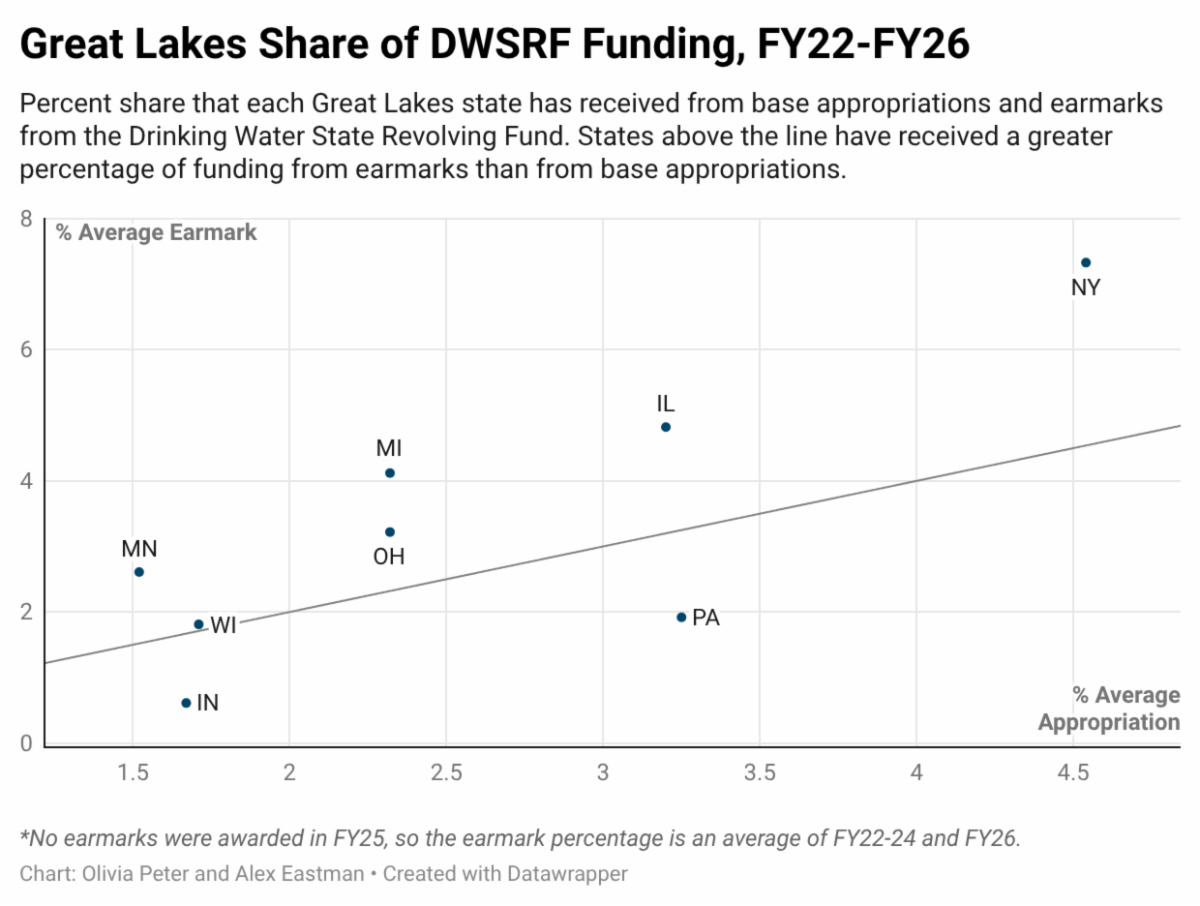
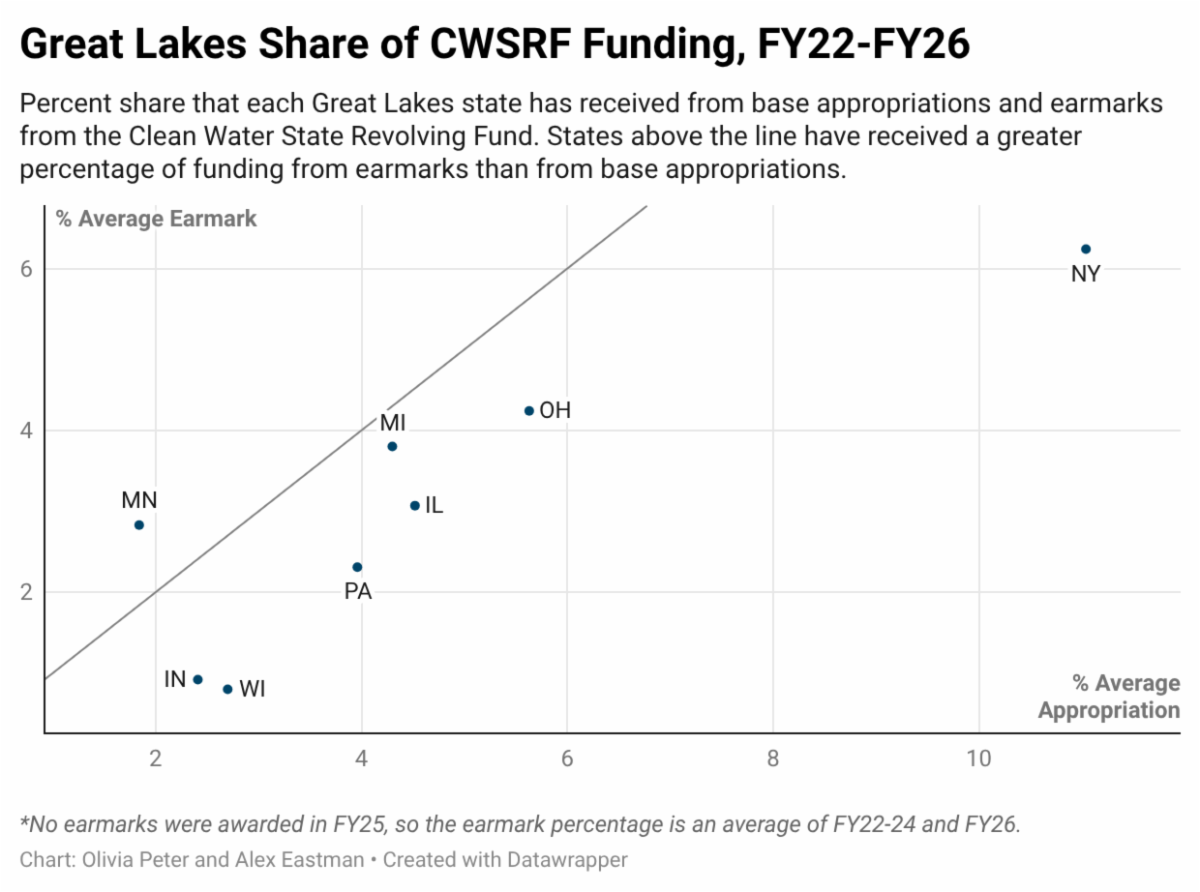
But how much money is the region garnering in earmarks, and is it in line with what the region deserves? Since their reintroduction in 2022, the Great Lakes region has received roughly 26% of the earmarks within the DWSRF and about 24% of the earmarks within the CWSRF. The below graphs compare each Great Lakes state’s share of base SRF appropriations – determined by EPA formulas – and their shares of earmarks, which depends on lawmakers securing funding for projects.
In the DWSRF, Great Lakes states consistently received a higher share of earmarks than base appropriations. On the whole, the region received 6% more than it “deserved,” though Indiana and Pennsylvania received comparatively fewer earmarks. The amount and percentage of earmarks also fluctuates greatly year to year. Ohio received 5.1% of DWSRF earmarks in FY23, but just 3.1% in FY26.
|