January 2025 | Issue #160 | |
*make sure to click "View entire message" to get access to the full newsletter!* | | |
Read ME Agriculture - Deadline approaching! | | |
|
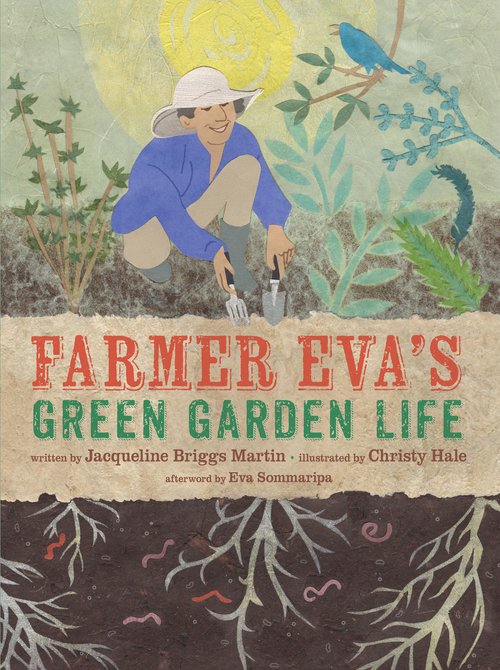
The 2025 Read ME Agriculture will be held March 17 - 21 for Maine grades PK-4 students. This year's book is "Farmer Eva's Green Garden Life," about a real New England farmer from Massachusetts, written by Jacqueline Briggs Martin, who grew up on a dairy farm in Maine, and illustrated by Christy Hale.
Every classroom that participates will receive a copy of the book and accompanying educator’s guide, with aligned classroom activities.
To best serve the hundreds of classrooms that participate in Read ME each year, the 2025 program will be a hybrid model where classrooms can choose from in-person and virtual options. Classrooms may choose their own reader or ask MAITC for help. Contacts may register their own classroom or schools may choose 1 contact to register multiple classrooms.
| |
|
Register Today! Please complete this google form by January 20, 2025. If you're registering multiple classrooms, MAITC will contact you by email to fine tune your participation.
If you or someone you know is interested in being a volunteer reader, please fill out this form and we will be in touch to try to pair you with a classroom in your area.
| | |
New Hampshire Maple Symposium | | |
|
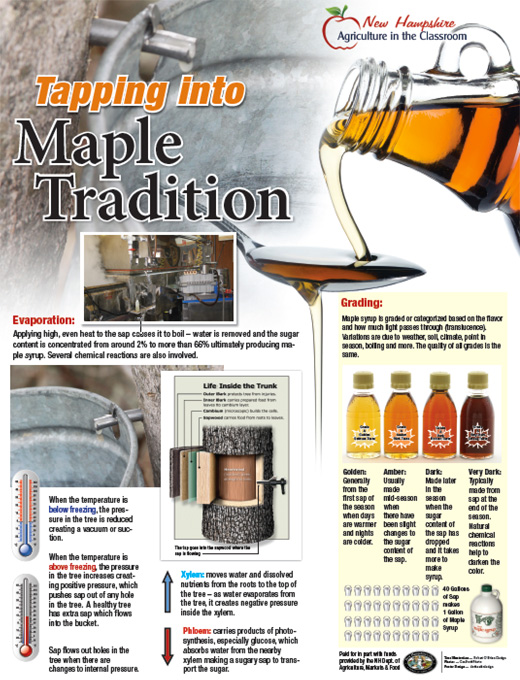
New Hampshire Agriculture in the Classroom is hosting a maple symposium, designed for educators looking to get started with tapping trees as part of their curriculum, as well as teachers looking for new ideas to expand what they do with maple in their school and in the community. There will be industry experts, veteran teachers across all grade levels, and in-house experts as well. The Symposium will include a tour of Gilford Elementary School’s state-of-the-art sugar shack. A maple-themed lunch will be included.
Professional Development Hours Certificate will be available for all registered participants. The symposium will take place on January 31st, at Gilford Elementary School in Gilford, NH. Register HERE, email NHAITC with any questions.
| | | |
James and the Giant Cabbage | | |
|
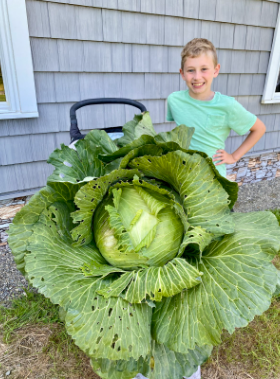
James' cabbage tipped the scales at 23 pounds!
Click here to register your 3rd grade classroom for the 2025 program!
| |
|
The Bonnie Plants 3rd Grade Cabbage Program has a mission to inspire a love of vegetable gardening in young people, teach kids where their food comes from, and grow the next generation of gardeners.
Each year they send more than one million free O.S. Cross cabbage plants to 3rd Grade classrooms across the country, whose teachers have signed up for the program. At the end of the season, teachers from each 3rd grade participating class select the student who has grown the “best” cabbage, based on size and appearance. The program then awards a $1,000 to one student in each participating state.
This year, the winning cabbage from Maine was grown by RSU 22 3rd grader James! James regularly fed his cabbage banana water, which he made by soaking a banana peel in water overnight. Sometimes his Dad would add his used coffee grounds, too! Late in the growing process, he noticed holes in the leaves and had to investigate. He discovered there were tiny, camouflaged caterpillars eating the plant! James enjoyed searching for them, but he did NOT like picking them off. That was mostly his Mom's job.
Congratulations, James!
| | |
ReTreeUS Plants 100 Orchards | | |
Our friends at ReTreeUS have planted their 100th orchard! To celebrate, they gathered at beautiful Beach Plum Farm in Ogunquit, Maine, where they planted 30 beach plum trees to expand Beach Plum's vibrant community gardens.
ReTreeUs would like to send a special THANK YOU to everyone who joined them for this special occasion and to all the volunteers, supporters, and partners who have helped reach this incredible milestone. Here's to the next 100 orchards! | | |
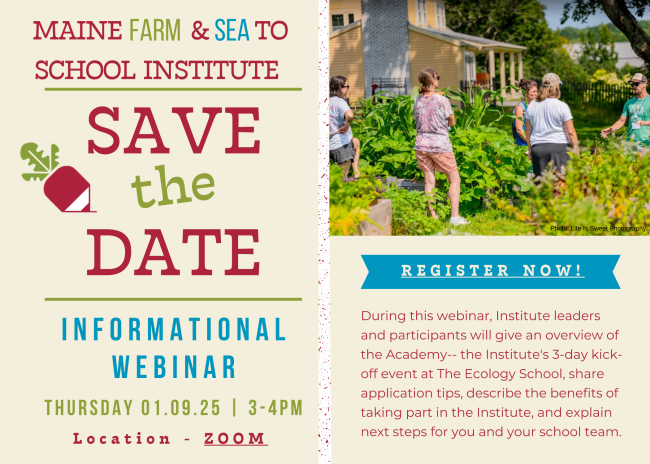
The Maine Farm & Sea to School Institute is a year-long professional program for school food system change. Learn more about the institute by attending the informational webinar on January 9th from 3-4pm via zoom. Register here. | | |
Professional Development Opportunity | | |
|
Hosted by three livestock specialists from the University of Maine Cooperative Extension, the Maine Farmcast features weekly conversations with experts from across the country sharing insights and advice for both new and seasoned farmers running operations of any size.
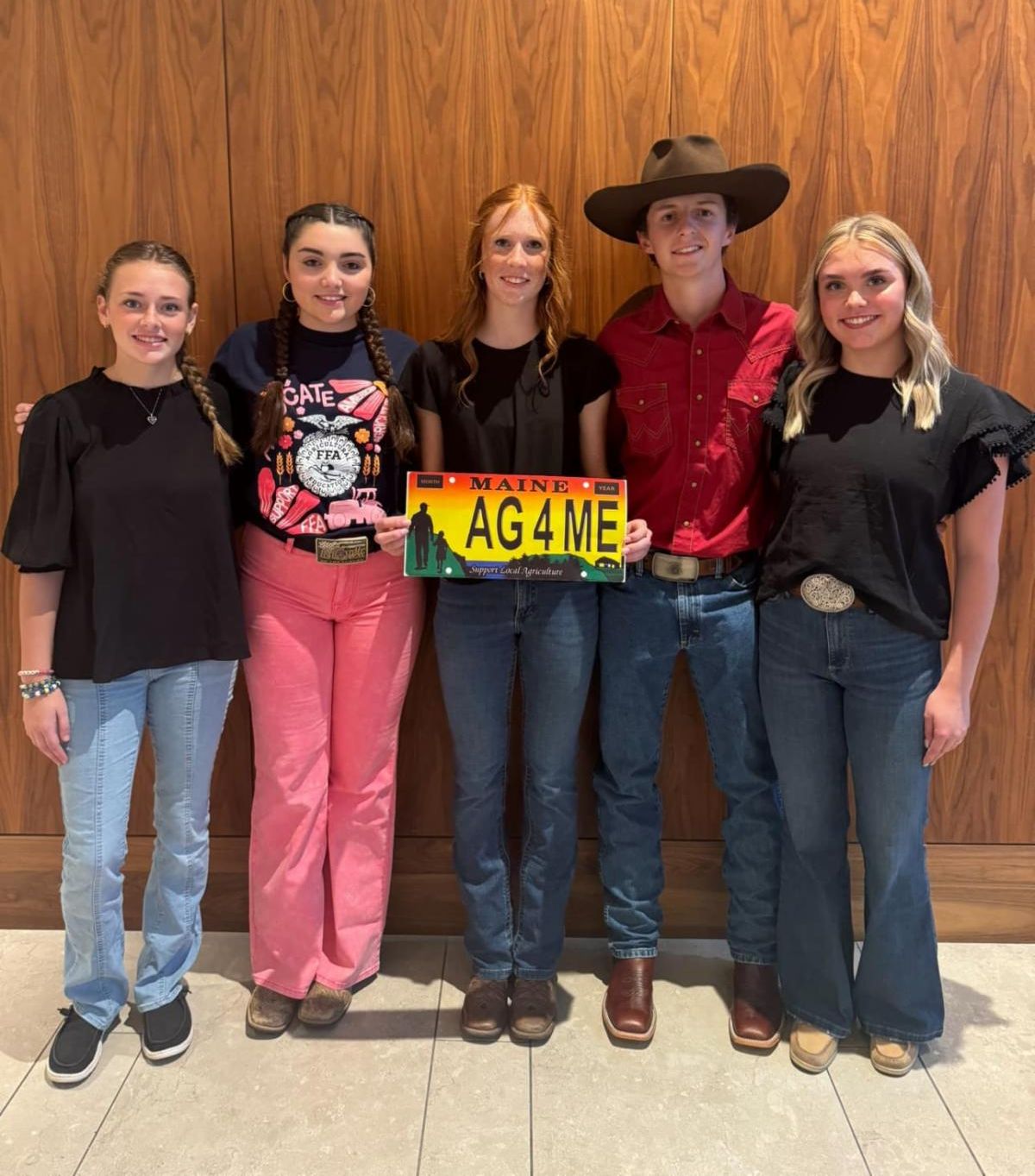
On the November 11 episode of Maine Farmcast, the hosts welcomed a group of Maine 4-H Ag Ambassadors.
The Maine 4-H Agriculture Ambassador Program is intended for youth ages 14-18 and provides them with the opportunity to connect to local agriculture, build relationships with industry professionals, develop professional and advocacy skills, and explore careers in agriculture. Following completion of a 6-week training, participants serve a year long term as a member of a Maine 4-H Agriculture Ambassador team in an area of their choosing. Ambassador teams participate in 4-6 events throughout the year where they represent the Maine 4-H program and educate others about their chosen content area. The goal of the Maine 4-H Ag Ambassador Program is to provide experiences for youth to explore their interest in agriculture. The program focuses on:
- connecting youth with their local food systems and industries
- exploring the richness and diversity of the Maine food system
- developing “ag-vocacy” skills
- increasing access to career and post-secondary opportunities in agri-science and food system
List to the episode here, or click on the hyperlink to learn more about the Maine 4-H Agriculture Ambassador Program.
| | | |
Funding for NAITC & MAITC - How You Can Help | | |
|
National Agriculture in the Classroom (NAITC) is at risk of losing the curriculum matrix which provides free lesson plans and resources to bring education standards to life with agriculture in the K-12 classroom. The USDA/NIFA grant supporting NAITC was reduced by 50% for FY2024. Please consider reaching out to your Elected Officials to express your support to restore funding to the Agriculture in the K-12 Classroom Program. Share how agricultural literacy integration impacts your classroom and the benefits it provides to your students. Learn more here.
Most funding for our local program comes from the Agricultural Specialty License Plate. If you have the opportunity to get a plate, that’s helpful to our Maine program!
You can also donate to our nonprofit board which provides scholarships for teachers to attend the NAITC conference, our Summer Teacher’s Institute, and other professional development opportunities for educators.
| | | |
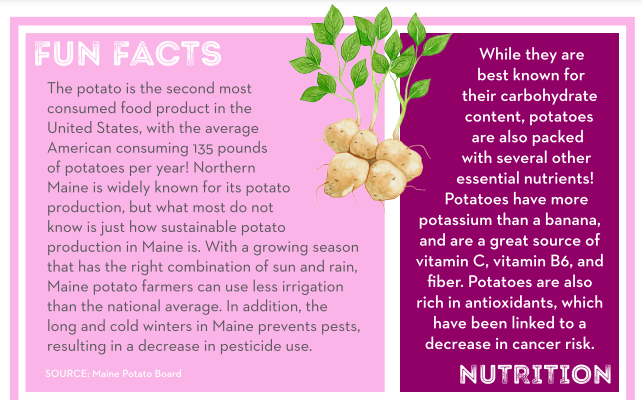
Harvest of the Month -January is Maine Potatoes! | | | |
Teacher Resources Section | | |
|
Lessons
Agriculture and Me. Grades. K-2. Students categorize sources of basic agricultural products alphabetically.
Agriculture Counts. Grades K-2. Students read a story about our nation's first survey of agriculture, discuss reasons for counting things, and gain practice by sorting and counting a variety of objects related to agriculture.
My Farm Web. Grades 3-5. Students use the visual representation of a web to explore the role of agriculture in their daily lives and understand how most of the necessities of life can be traced back to the farm.
Powerful Potato. Grades 3-5. Students observe a potato grow with and without soil, chart potato geography on a world map, and hold a potato dress up contest.
Where Does It Come From? Grades 3-5. Students explore the connection between geography, climate, and the type of agriculture in an area by reading background information and census data about the agricultural commodities beef, potatoes, apples, wheat, corn, and milk.
My Agricultural Connections. Grades 6-8. Explore how we are each connected to agriculture through our food, clothing, shelter, fuel, and more. Students will be introduced to agriculture and begin to recognize the depth and complexities of agricultural systems locally and globally.
The Big Deal About Big Ag. Grades 9-12. Discover how technological advances and economic forces influence the size of farms in the United States. Evaluate the pros and cons of large-scale agriculture for the production of our food, fuel and fiber and identify the similarities and differences in commercial vs subsistence farming.
Looking for more? Explore the Agricultural Literacy Curriculum Matrix HERE
| |
|
Chocolate: How It's Made
Solid chocolates have only been around since the 1800s. 70% of the world's cocoa beans are grown in West Africa. See how raw ingredients are expertly combined to create delicious milk chocolate.
| |
|
How It's Made: Cotton Yarn
In just under five minutes, this video shows how cotton is processed in modern factories. See cotton cleaned, carded, coiled, drawn, stretched, spun, and wound onto giant spools—all by machines. In 48 hours raw cotton is transformed into cotton yarn.
| | |
Activities & Resources
Potato Farming in Maine's Changing Climate. A full module from the Gulf of Maine Research Institute.
Make a Real Mr. Potato Head! A fun activity to go along with the Maine Harvest of the Month featured product - Maine Potatoes!
Why Seasons Make No Sense | It's Okay to Be Smart. Learn why we divide our year into seasons with this video from PBS Teachers. Did you know the word "season" was born on the farm?
Fascinating Farms Around the World. Take an interactive journey around the world to visit 16 farms. These are not your ordinary farms with cattle, sheep, hay, or grain. These farms produce specialty crops such as salmon, tulips, alligators, wind, mussels, coffee, leeches, lavender, yaks, seaweed, ostriches, rice, sunflowers, salt, ostriches, solar power, and alpacas. This journey would be an excellent supplement for elementary geography and agriculture lessons to teach students about less common types of farms.
Hookin' Up and How it Works on the Farm. The farm is a rich environment to learn about wheels, levers, pulleys and wedges. This DVD will take you splitting wood, plowing, and using levers and pulleys to make work easier. Let the farm help your class to understand the application of simple and complex machines.
Tractor Timeline- A History of Tractors. Use this interactive tractor timeline to learn about the history of tractors. Dive into the history of tractor development and see how the evolution of these farm implements has changed how we farm and made it possible to increase our crop yields.
Seeds of Success Toolkit. This toolkit compiles a wealth of knowledge from school gardeners across the country to provide the necessary resources to initiate and sustain a successful school food garden. In the Toolkit, you will find answers to the who, what, where, why, when, and how behind developing a youth garden program so you can feel confident in your planning and implementation. You can download the Toolkit in its entirety or as individual chapters.
| | |
Funding from this plate has impacted up to 200,000 students annually with lessons, materials, volunteers and teacher training. Annually up to $60K is distributed in grants to schools, FFA, 4-H and other Non-profit programs for Ag education initiatives by the Maine Agriculture in the Classroom Council.
| |
|
Donate today to The Maine Agriculture in the Classroom Association. The nonprofit, completely volunteer, portion of MAITC. These funds are used directly to support teacher scholarships and recognition, and support volunteer participation for Ag education programs. Your donation is completely tax deductible and you can make a one-time donation or a recurring monthly donation which will support the mission, "to promote the understanding of agriculture and natural resources among students, educators, and the general public." If you have any other questions or would like to join this group please contact the chairman, Laurie Bowen. Donate Here.
| | |
|
The MAITC Association is organizing a fundraiser for materials and teacher scholarships this year. Hats and T-shirts with the MAITC logo and a picture of the agriculture specialty license plate are available to order for a small donation.
For more information contact Nancy Wright at dnwright191@gmail.com
| |
|
Our Mission Statement
"To promote the understanding of agriculture and natural resources among students, educators, and the general public"
| | |
|
28 State House Station
Augusta, ME 04333
(207)287-5522
| |
| | | |