In this edition of the G&G Storyteller, we highlight our involvement with the StrongHearts Native Helpline as well as its new Alaska Initiative. Our next story highlights the recent Tribal ICE Contracts that made major headlines across Indian Country. We then dive into the complicated topic of blood quantum. Lastly, we do a 2025 year reflection as well as some thoughts for Indian Country moving forward in 2026.
Here is a link to access all the G+G Network. It is easy to share on your phone or online!
https://linktr.ee/GGAdvertising
Have an idea for a story or topic we should cover? Email us at gng@gng.net
In the last few months G&G has had the privilege of working with the StrongHearts Native Helpline team to improve exposure and brand awareness of the helpline. One of the primary goals is to strengthen outreach and services to Native Americans and Alaskan Native victims and survivors of domestic and sexual abuse and violence. StrongHearts Native Helpline is a 24/7 safe, confidential and anonymous domestic and sexual violence helpline for Native Americans and Alaska Natives, offering support and advocacy.
In December of 2025, StrongHearts announced an Alaska-specific initiative, focused on expanding and strengthening outreach and access to services for Alaska Natives. As the National AIAN helpline, StrongHearts has always been available to our American Indian and Alaska Native relatives living in and outside of Indian Country. As the project advances, StrongHearts aims to develop and launch a dedicated phone line specifically designed to support Alaska Native survivors, staffed by Alaska Native advocates. Current funding will support the hire of two advocates, and StrongHearts will continue to seek additional sources of funding to hire additional advocates.
“Specialized support is essential,” said Minnie Sneddy of Strong Hearts. “It provides cultural context, acknowledges historical trauma, and empowers survivors with Native-led services, creating a space where they feel understood and respected.” Officials say more than 84% of American Indian and Alaska Native people experience violence in their lifetime.
Anyone in need of help can call the Strong Hearts Native Helpline at 1-844-762-8483. Or to chat with someone online go here: https://strongheartshelpline.org/
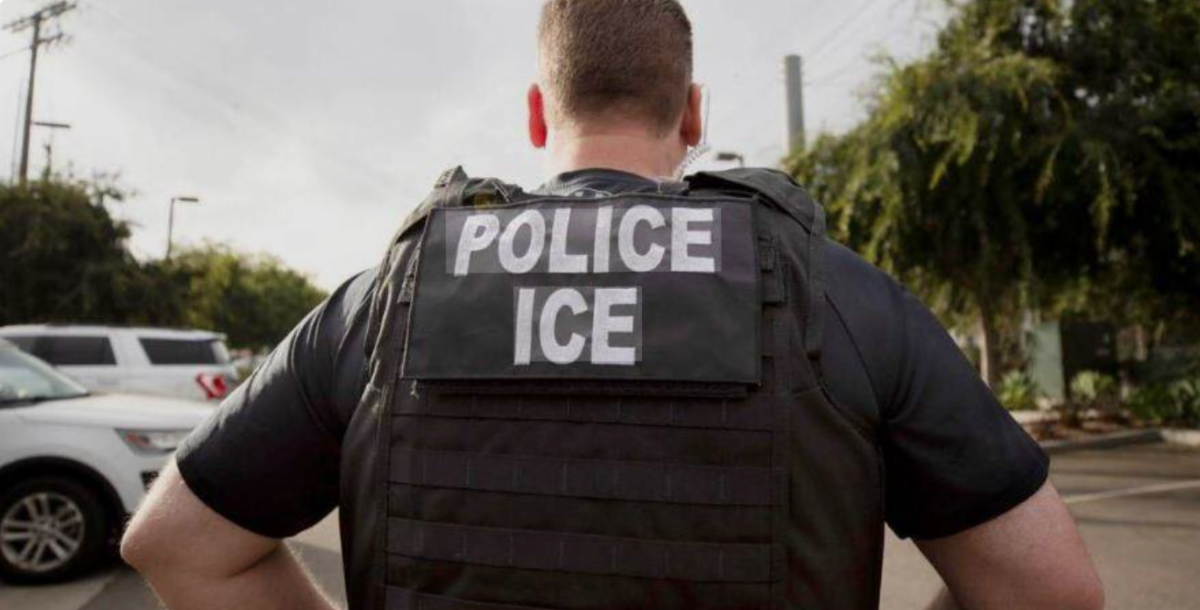
Back in early December, The Prairie Band Potawatomi Nation fired senior leaders of its tribally owned business for accepting a nearly $30 million deal to assist U.S. Immigration and Customs Enforcement. Prairie Band LLC, the Tribe’s company, had landed a contract to assist in the design of detention centers for ICE. The tribe said the project does not align with its values. “As a sovereign Nation, our values guide the decision we make,” the tribe said in the Facebook announcement, “and we acknowledge that this contract does not align with those principles.” The tribe said it will reevaluate its internal review and approval process for taking on federal contracts. It also plans for all future agreements to “align clearly with our values and mission.”
Last week, a subsidiary of Oneida ESC Group, a corporation owned by the Oneida Nation of Wisconsin, cancelled a US $3.8 million contract with ICE for engineering and inspection of federal facilities after the Oneida government became aware of and condemned the contract. The Oneida government also replaced the subsidiary's board of managers. “We know our Indian reservations were the government’s first attempts at detention centers. We were placed here because we were treated as prisoners of war,” said Prairie Band Tribal Chairman Joseph “Zeke” Rupnick, in a statement on YouTube.
Prairie Band and Oneida Nation are not the only two Tribes or Tribal business entities who hold Federal contracts with ICE. Bering Straits Native Corporation (BSNC): A subsidiary, Global Precision Systems, staffs the El Paso Processing Center for ICE, holding significant federal contracts, also Poarch Band of Creek Indians owns an LLC with contracts for financial/admin services for ICE. Many Tribes have Tribal business councils, but many of these councils are not being run by the Tribal Nation Councils. Tribal corporations operate independently from nations, so they can expand into different economic ventures. It also protects the nation from certain legal liabilities. The flip side of this is that business councils can decide on contracts that the Tribe may not even be aware of and/or misrepresent the values of an entire Tribal Nation.
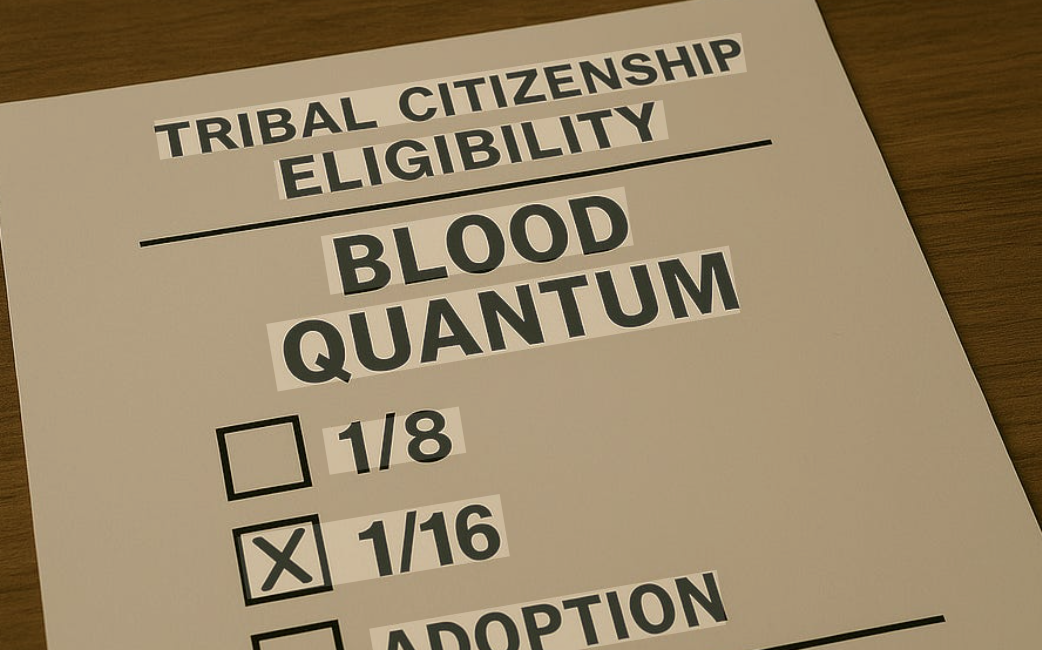
Blood quantum. It’s a complicated, controversial, and personal topic that has major impacts on citizenship and belonging in Indian Country. The conversation around blood quantum is continuously evolving. Blood quantum appears as a fraction and is “calculated” based on an individual’s family tree. In the early 1700’s colonies used blood quantum to restrict the rights of people with "Indian blood," especially those with half or more Native ancestry. During the Allotment Period (1887-1934) the U.S. government began integrating blood quantum to divide reservation lands and manage treaty obligations, defining who qualified for land allotments. The Indian Reorganization Act (IRA) of 1934 promoted self-governance and encouraged tribal constitutions. The federal government heavily influenced tribes to include blood quantum as a citizenship requirement.
Many Native Nations currently use blood quantum to determine who can and cannot become a citizen. For example, the Lower Brule Sioux Tribe requires members to have 1⁄4 or more blood quantum from Lower Brule. If a prospective citizen’s blood quantum is lower than 1⁄4, they are not eligible to become a citizen of the Lower Brule Sioux Tribe. Other Tribes go off of lineal descent. So based on genealogy and your family tree, if you can trace and prove that you are a descendant of a Tribal Person of that Nation you can become a member. Cherokee Nation of Oklahoma is an example of a Tribal Nation that uses Lineal Descent. Recently Crow Nation in Montana made the news by making every enrolled Tribal member a “Full Blood” regardless of the fraction of Crow Indian Blood.
Some worry that if blood quantum rules are relaxed or eliminated, scarce resources (per capita payments, housing, other services provided by their Tribal government) will become even more scarce due to rapid population growth. Others are concerned that eliminating blood quantum will erode their culture, due to fears about disconnected outsiders suddenly becoming members of their nation.
Those who are against continued use of blood quantum often mention survival as a primary reason for their viewpoint. Data projections have shown that some Native nations will experience steep population declines in the near future if they continue with their current blood quantum requirements. Opponents also mention that the federal government implemented blood quantum as a tool for genocide, removal, and erasure, to strip Native people of their land and evade the United States’ treaty-obligated responsibilities.
Every year brings its own mix of challenges and progress, but 2025 stood out as a year of movement across Indian Country. In 2025, Native Nations saw mixed signals when it came to federal support for environmental justice and clean-energy development, with major implications for sovereignty, community well-being, and long-term planning on tribal lands. The 2025 federal government shutdown also showed us how quickly Tribal programs can be destabilized when Washington shifts direction.
Federal agencies underwent downsizing and restructuring, including reductions within departments overseeing grants, operations, and tribal programs. Many Tribal communities saw delayed contracts, stalled infrastructure projects, and gaps in services that were similar to the disruptions experienced in 2020. Amid these uncertainties, Tribal leaders and some federal agencies emphasized a critical point: Their political status is grounded in treaties, trust obligations, and sovereign nation-to-nation relationships. These commitments remain legally binding regardless of shifting national trends or the rollback of DEI initiatives elsewhere. Even as agencies faced budget reductions or cuts, the Department of the Interior reiterated its support for tribal sovereignty, reinforcing that federal obligations to sovereign Native Nations continue despite administrative transitions or changing policy priorities.
The stories of 2025 share a common theme: they all reflect the resilience, creativity, and determination of Native peoples working to shape our futures on our own terms. From classrooms to courtrooms, from film screens to community centers, 2025 demonstrated both progress and possibility. As we are moving forward now in 2026, these milestones serve not just as markers of achievement, but as motivation to continue the work — strengthening Native sovereignty, uplifting Native youth, and ensuring that Indigenous cultures and voices thrive in every area of American life.