View in Browser

 
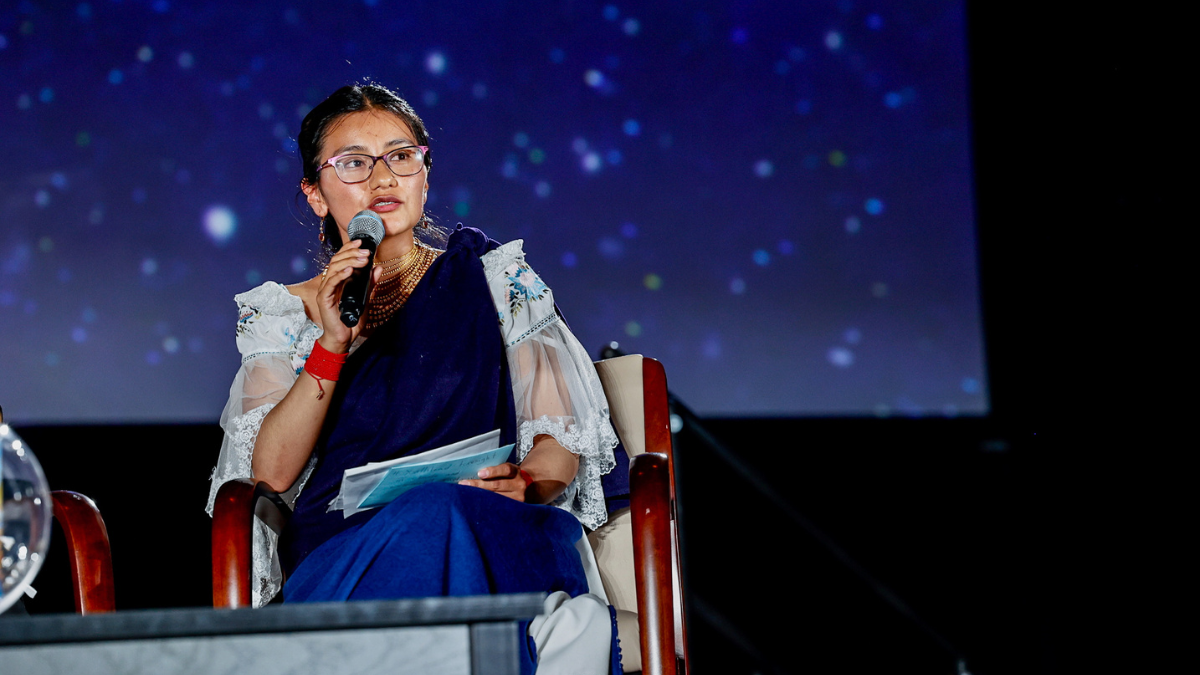
Woman wearing traditional clothing and glasses speaks into a microphone while seated on stage, holding notes against a dark, starry background.
 

May Newsletter

In this month’s newsletter, we’re highlighting a voice from our community, someone who’s breaking barriers for women in STEM. Leticia Tituaña, an Indigenous Kichwa visionary from Ecuador, blends math and cultural knowledge to drive social justice and sustainability. Keep reading to learn how she inspires change!


Breaking Barriers in STEM

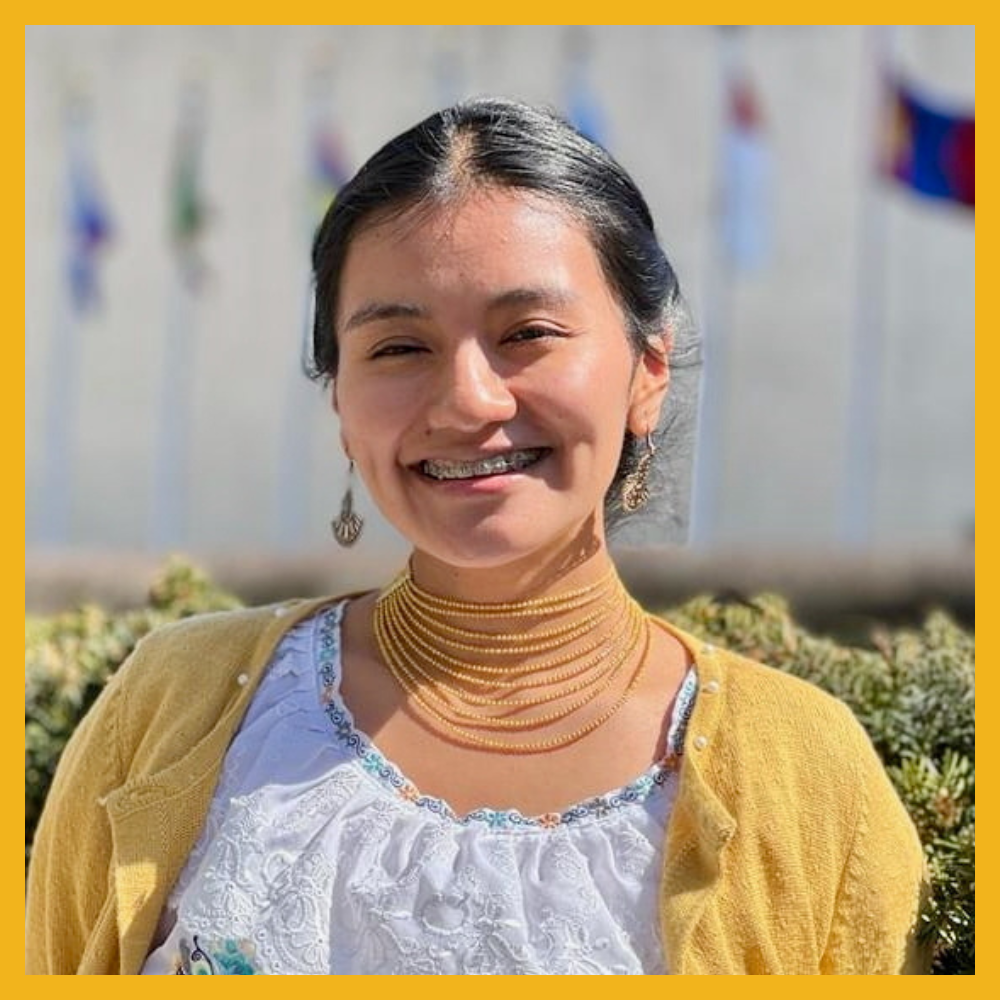
Leticia Tituaña is a trailblazer in both the engineering and gender equality spaces. A member of the Indigenous Otavalo community, Leticia holds a degree in chemical engineering and is the founder of Warmi STEM, an organization dedicated to increasing opportunities for Indigenous women in STEM fields. She has represented Ecuador as a delegate and speaker at major international events, including United Nations conferences on climate change and water action. 


Leticia’s leadership and commitment to education have earned her recognition as a Future Rising Fellow, One Young World Ambassador, and finalist for the 2022 Ibero-American Award for Social Leadership. She became part of the Mathkind community two years ago when she participated as a panelist in our Math Marathon 3.0.


A VOICE FOR CHANGE


Math has always been present in our daily lives: in every step we took in the fields, in every drop of water collected, and in every flower we observed. We knew that if the flowers fell away, our harvests would too.


Everything was a cycle, everything was connected, and every action had consequences. The greatest of these was realizing that as the population grew, water became scarcer and flowers less abundant. This signaled that we had to act differently. 


That’s how my interest in mathematics and my commitment to social justice came to be. During my undergraduate studies, I understood how science contributed to the growth of the gross domestic product in the largest city of my country. However, science did not advance on its own: it was the result of the union between contemporary science, ancestral knowledge, and the often-overlooked work of mathematics.


As I mentioned at the beginning, everything is connected. That’s why it makes no sense to separate the knowledge of Indigenous communities from that of the scientific community.

 
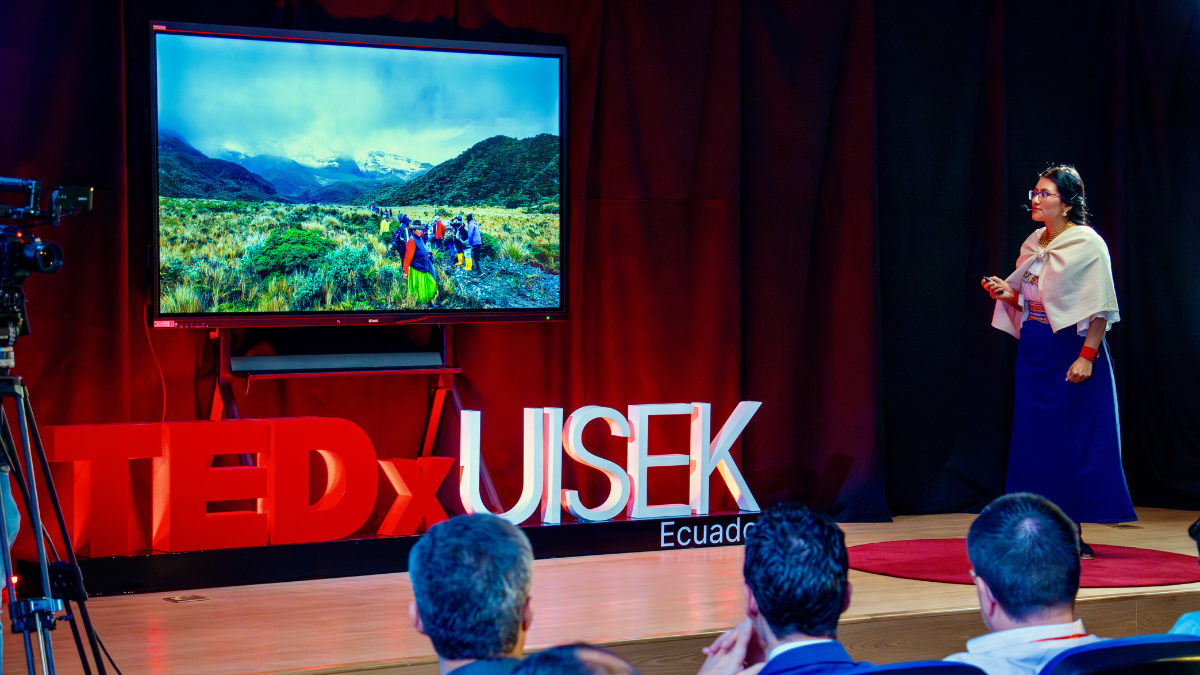
Female speaker in traditional attire presents on stage at TEDxUISEK Ecuador, standing beside a large screen displaying a scenic mountain landscape with people hiking.
 

This reflection became my inspiration to support Mathkind—an ideal opportunity to show that ancestral knowledge is also science, and that mathematics is a fundamental part of how we live. Participating in the Math Marathon allowed me to discover the diversity of mathematical perspectives held by a group of women. At that moment, math was seen like never before. Our view shifted, and new shared knowledge emerged.


Math is part of our identity. Supporting programs that highlight the role of mathematics in diverse contexts uniquely strengthens our communities and reminds us that knowledge, in all its forms, is a bridge to a more just and equitable future.

 
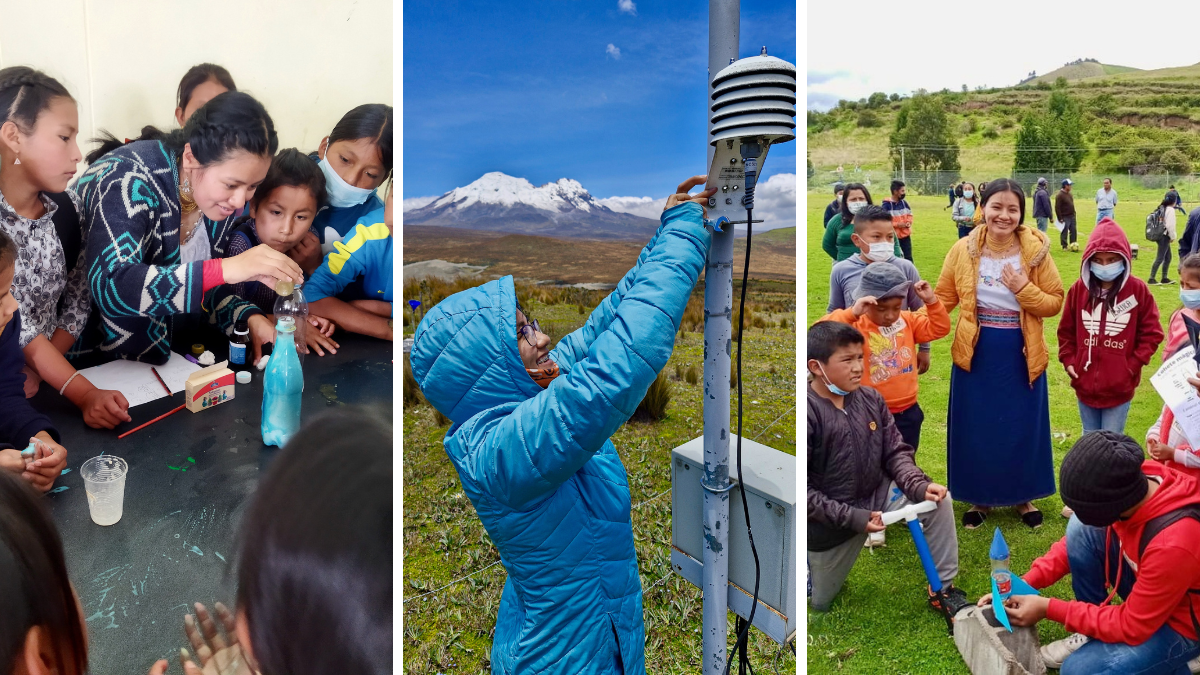
Collage of three images showing a woman engaging with children in science activities, adjusting weather equipment in a mountainous landscape, and smiling while interacting with a group of students outdoors.


Stay Connected!

Facebook      Instagram      X