|
New irrigation system giving a flush of growth to Springdale
Director Toby Edwards has become the literal Rainmaker of Springdale
| |
|
In business, a rainmaker is an entrepreneur who innovates and drives,
winning accounts almost by magic. In native American lore, a
rainmaker is an early prognosticator who had rudimentary grasp of
weather patterns and could appear to "conjure" a rainstorm with a word
or a spell.
Over at Camden's Springdale Racecourse, Toby Edwards is proving to be both.
Learn how the new irrigation system at the historic central South
Carolina track aims to highlight the Carolina Cup and Colonial Cup as championship meets bookending the National Steeplechase Association season. The Colonial Cup comes back this fall after seven years away from the condition book.
| |
|
As lovely as she’s been to central South Carolina – what with three-and-a-half seasons of soft, southern weather along with the giving and forgiving native sandy loam upon which thoroughbred horses have thrived for centuries, Mother Nature is at times an uncooperative partner.
Too much rain, not enough rain, rain at the wrong time, all the rain all at once, achingly long stretches of drought with no rain at all -- these are the issues that used to keep Carolina Cup Racing Association executive director Toby Edwards obsessively checking the weather app on his phone.
All the time.
| |
|
Moisture matters, Edwards (pictured, right) explains, with turf growth key to producing a safe, level racing surface at the Springdale Racecourse for their spring Carolina Cup meet and their newly-returning this November Colonial Cup meet.
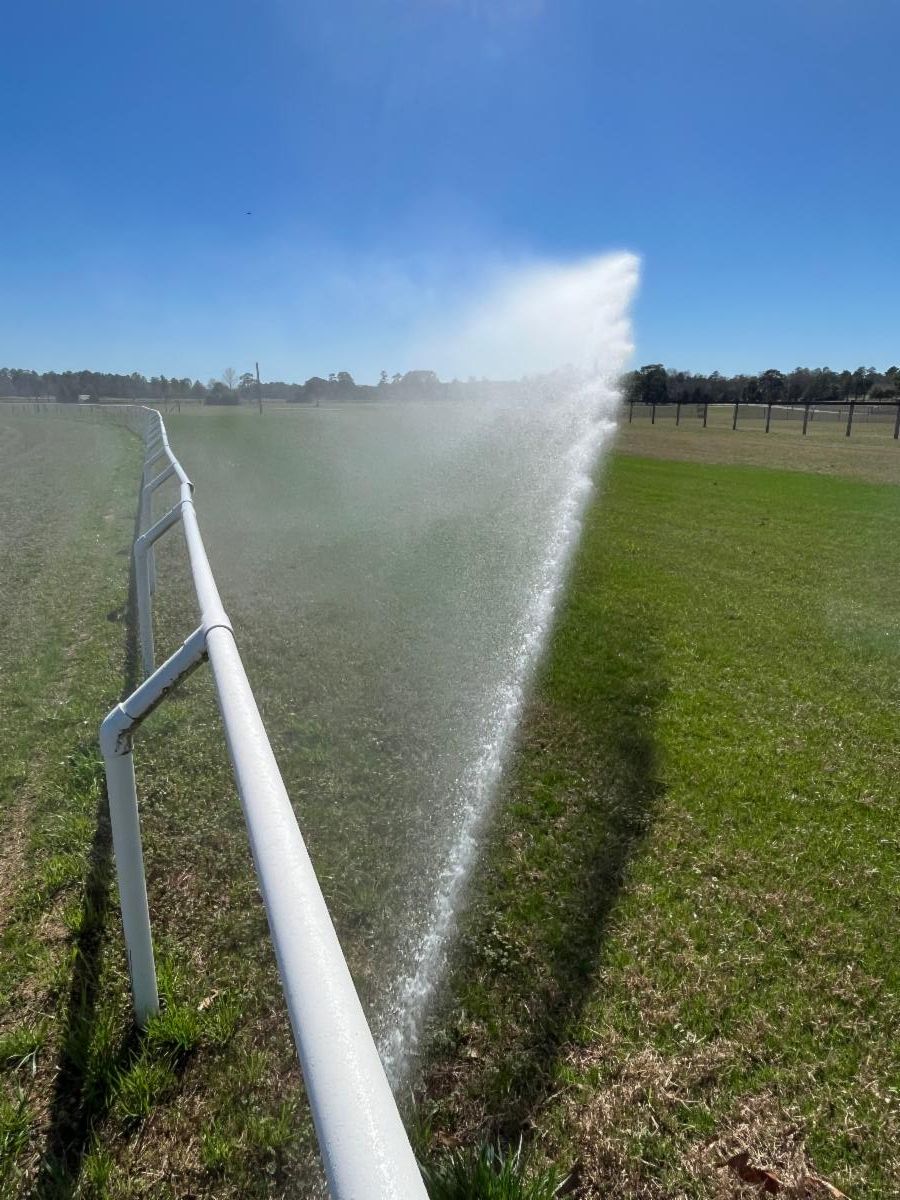
A newly installed irrigation system promises – and delivers – exactly the right amount of moisture at exactly the right time in just the right places. Edwards tells it what to do and when.
“We used to have to count on rain from the sky,” Edwards said. Now they’ve traded for “rain” from the ground. “This new irrigation system takes it to a whole new level.”
Imagine a small black knob emerging from the turf -- Edwards punches in a special code. A misty but strong spray of water shoots out of the sprinkler head, watering hundreds of square feet as it rotates. The Rainmaker controls all of it, from the timing to the amount measured in gallons per minute.
With that kind of power, in ancient times Edwards probably would have been elected tribe chief.
| |
This week's weather forecast for Camden. Which Edwards no longer even bothers looking at. | |
|
The timing was exquisite – last year, CCRA made a proposal to the South Carolina state legislature, “to invest in Springdale,” requesting a grant to fund the irrigation system that would cost hundreds of thousands of dollars. “We want to offer truly championship racing, and for that, you have to offer a truly championship course,” Edwards said. “The only way to do that is to irrigate.
“Overseeding, weed control and fertilizers, they’re all water-activated,” translation: there has to be rain immediately following application, Edwards said. “We played a guessing game all the time, pretending we were weather forecasters.
“You were spending time, money and effort wishing and hoping the weatherman was right.
“With irrigation, you’re in complete control of the amount of moisture delivered to your course. I can even tell it which heads to run in what order and how much water put out.
| |
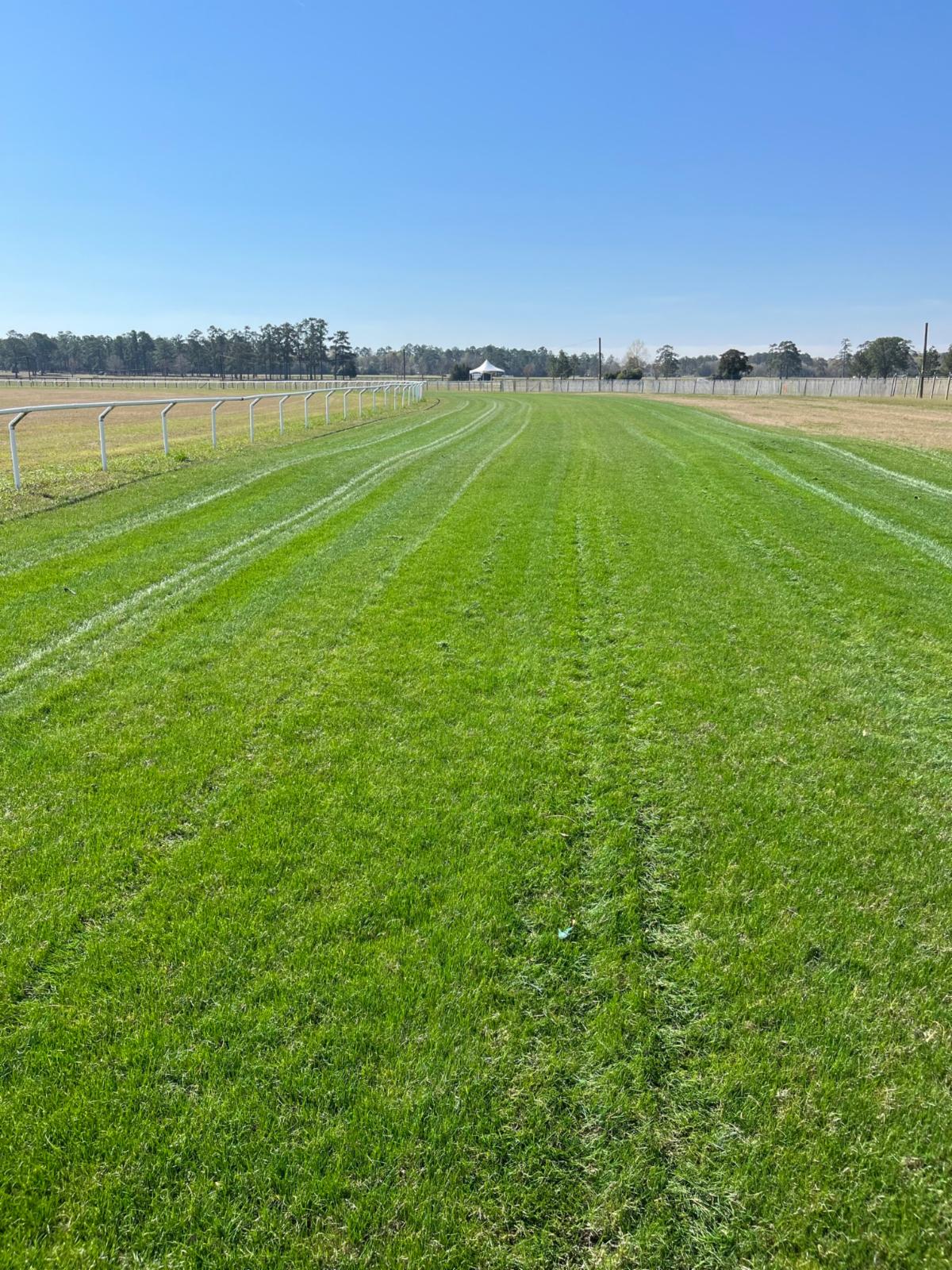
“It has been a learning curve, but this system has been fully operational since October. It guarantees we’ll get good summer growth, which ensures good turf for the (returning, Colonial Cup) fall meet, and it helped the perennial rye back in winter, so we’ve got great turf for next week” at the March 30 Carolina Cup. | | |
|
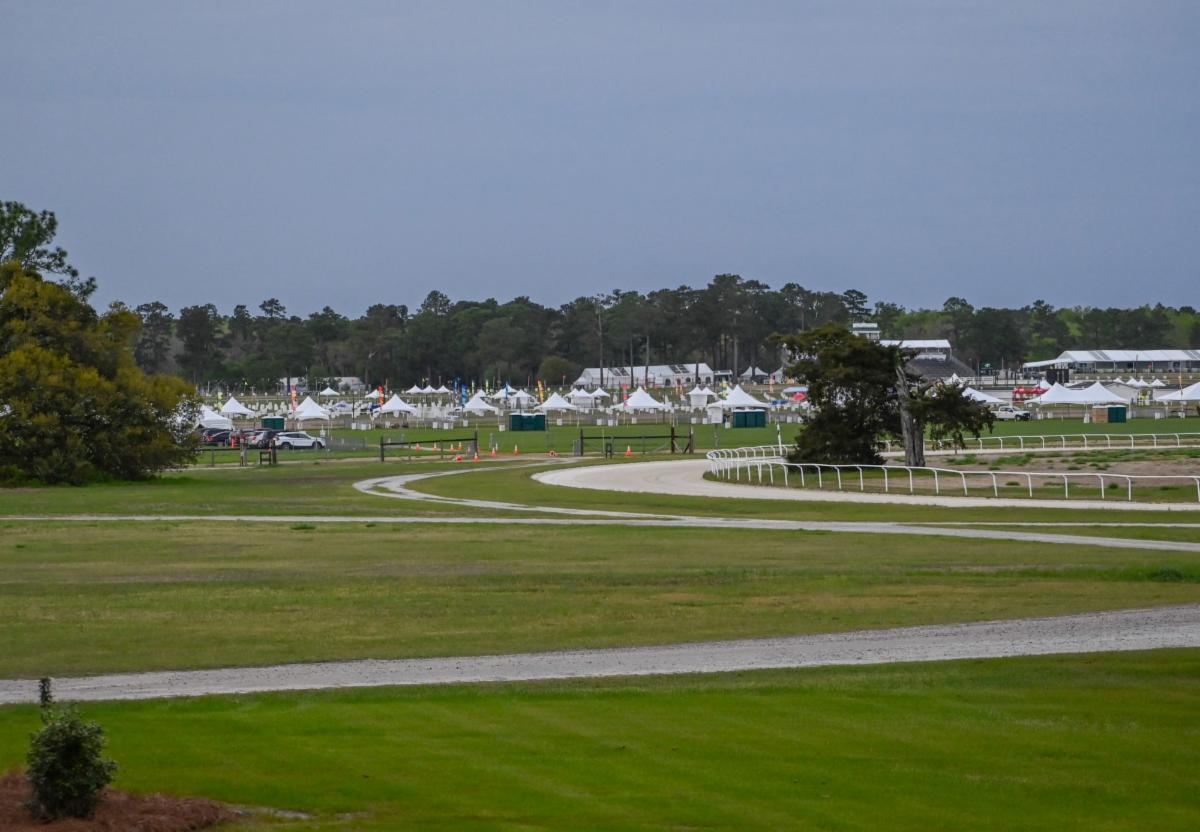
The turf is looking fantastic for the March 30th edition of the Carolina Cup Races.
Photo courtesy of Toby Edwards
| |
|
|
Custom-designed for Springdale by Smith Turf and Irrigation – they also designed irrigation for Churchill Downs’ turf course, Camden’s irrigation system covers 2 ¼ miles with 130 in-ground, pop-up sprinkler heads. The longer outer course isn’t yet irrigated, but Edwards says the system allows for expansion when more state funds become available.
“Jeff (Teter, former champion jump rider and longtime Springdale course manager) reports that the course has an excellent stand of rye,” overseeded then well-watered since October by the new system, echoed former CCRA director, and four-time champion jock John Cushman. “Camden’s sandy soil drains unbelievable, and adding this irrigation to the course really makes it sure they’ll get good grass, every meet, every year.”
Edwards notes that Springdale’s summer cover, Bermuda grass, is already starting to green up, too.
“The course looks great.”
| |
|
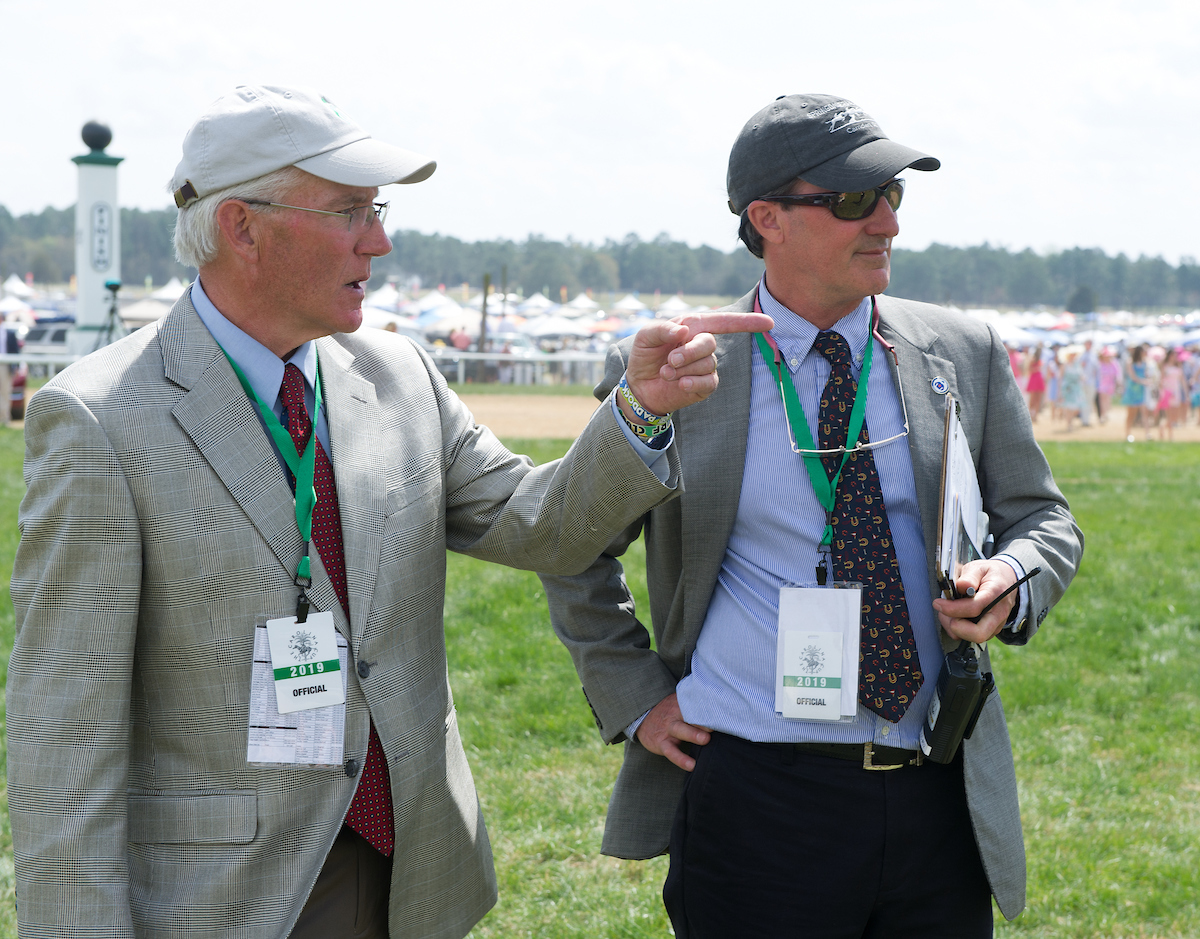
Cushman (left, with Toby Edwards, ©Tod Marks) was Springdale director 1990 to 2000; he returned in 2018 to help Edwards transition into his position.
“The best thing about Camden is the footing,” sandy loam, Cushman explained. “It never really gets hard, there’s no clay.
“But the issue anywhere in the Carolinas is how good is your summer grass. Rye looks good in the winter, but your turf is built in the summer.
“If we get no rain at just the wrong time, it affects everything.
“The irrigation system takes the guesswork out of it.”
NSA president Al Griffin says the improvements are timely. “Toby Edwards and the Carolina Cup folks have really upped the game at Springdale,” Griffin said. “The focus on turf quality is much appreciated by the horsemen. (Bringing back) the Colonial Cup this fall creates two opportunities to run on the irrigated course,” a win-win situation for the facility and the sport.
Find entry and nomination details at nationalsteeplechase.com.
Find more history on the Carolina Cup and Springdale Racecourse at carolinacup.org.
Read more about Jeff Teter in this TGSF feature, by Don Clippinger.
Read more about John Cushman in this TGSF feature by Betsy Burke Parker.
| | |
|
The Steeplechase Owners and Trainers Association posted earlier this week:
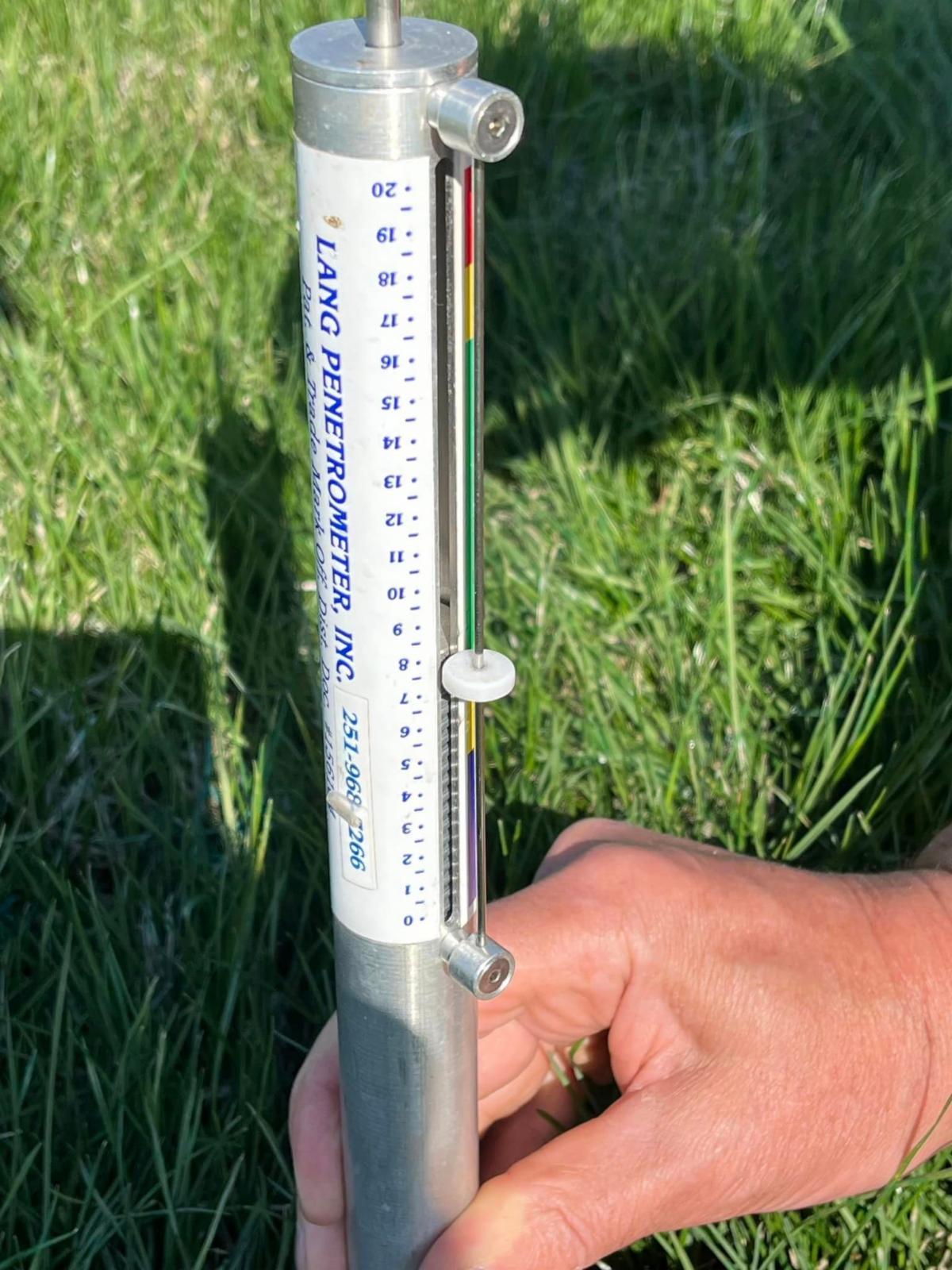
Thank you to Toby Edwards for inviting our SOTA representative to walk the race course for next Saturday’s hunt meet! The course is nice and spongy with great compaction and moisture levels. The team at Springdale Racecourse has worked hard to ensure their course is pristine for the 2024 Carolina Cup Races.
| |
|
|
|
|
Camden history
First plotted in the South Carolina backcountry in 1733, Camden ranks as the state’s oldest inland city. The town was surveyed by Joseph Kershaw, who designed wide boulevards punctuated by public squares in 1758.
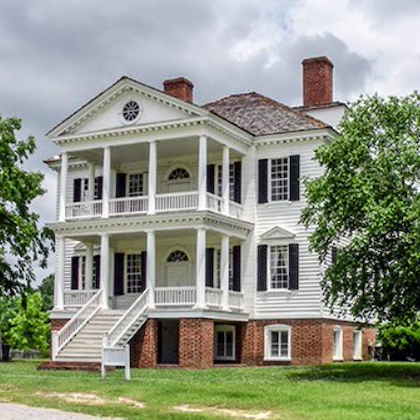
The heart of the colonial town lies at Historic Camden, a 107-acre living-history museum that preserves five of the earliest homes from the colonial era, including a reconstruction of the 1777 Kershaw-Cornwallis House (pictured) that served as the headquarters of the British Army during the British occupation of Camden, August, 1780 to May, 1781.
| | | |
|
Springdale history
Camden’s Springdale Racecourse, built in 1928, is one of South Carolina’s winter colonies built up by visiting sportsmen and women from New York and other northern states as railroad travel made escaping harsh northern winters a no-brainer.
🌴 The first race meet was held at the facility in 1930. Harry Kirkover and Ernest Woodward designed the original Carolina Cup course – originally over timber.
🌴 The headliner swapped to stuffed brush obstacles in 1968.
🌴 CCRA is a 501(c)4 non-profit formed in 1963. Proceeds from the race meets are directed to the Health Services District of Kershaw County that benefits uninsured, underinsured and underserved locals through education, food banks, a free clinic and more. The association has given millions back to the community since the link was created by former Springdale owner Marion duPont Scott.
| |
|
🌴 CCRA manages the Springdale Racecourse property as a training center, with two training tracks, a steeplechase schooling area and about 150 stalls as well as hosting two jump meets.
🌴 The National Steeplechase Museum was founded in 1998 under the direction of the Carolina Cup Racing Association. The museum started as the Carolina Cup Racing Museum, but when horsemen and others started donating items for the museum’s collections, they donated things from all race meets, not just the Carolina Cup. After about a year the museum became the National Steeplechase Museum.
🌴 Scott acquired the Springdale property and adjacent acreage in 1953 from Mrs. Ambrose Clark of Aiken. Scott, already known as “the First Lady of American Steeplechasing,” won the 1938 English Grand National with Battleship. Her Montpelier racing stable won more than 50 stakes, over fences and on the flat, and more than $5 million in purses.
🌴 Upon her death in 1983, Scott gifted Springdale to South Carolina.
| |
|
Colonial Cup history (set to return this fall)
The Colonial Cup returns to the NSA fall calendar this November 17 following a seven-year hiatus.
The Colonial Cup started in 1970 by Springdale owner Marion duPont Scott.; the fall meet, featuring the eponymous open steeplechase stake, was last run in 2016. The November headliner is the $150,000 grade 1 Colonial Cup stake.
The nation’s first international steeplechase, the inaugural Colonial Cup was the first $100,000 purse in jump racing.
Scott was a lifelong horsewoman and philanthropist who owned horse farms in Delaware, Virginia and Camden. She died in 1983 at age 89. She was a great-granddaughter of the founder of the DuPont chemical company.
| |
The Carolina Cup is a South Carolina tradition that has achieved premier social event status in the state. This annual ‘rite of spring’ draws over 30,000 fans from across the world to enjoy the riveting sport of steeplechase horse racing. For additional information and tickets, visit CarolinaCup.org. | | | | |