Newest Insights Changing How We Approach PCOS, Fertility and Endometriosis

Newest Insights Changing How We Approach PCOS, Fertility and Endometriosis


-------------------------------------------------------------------------------------------


The Reproductive Tract Microbiome and Female Fertility: Dysbiosis, Disease Links, and Emerging Therapeutic Strategies


Your reproductive tract is an ecosystem full of important microbes that interact with many functions in your body.


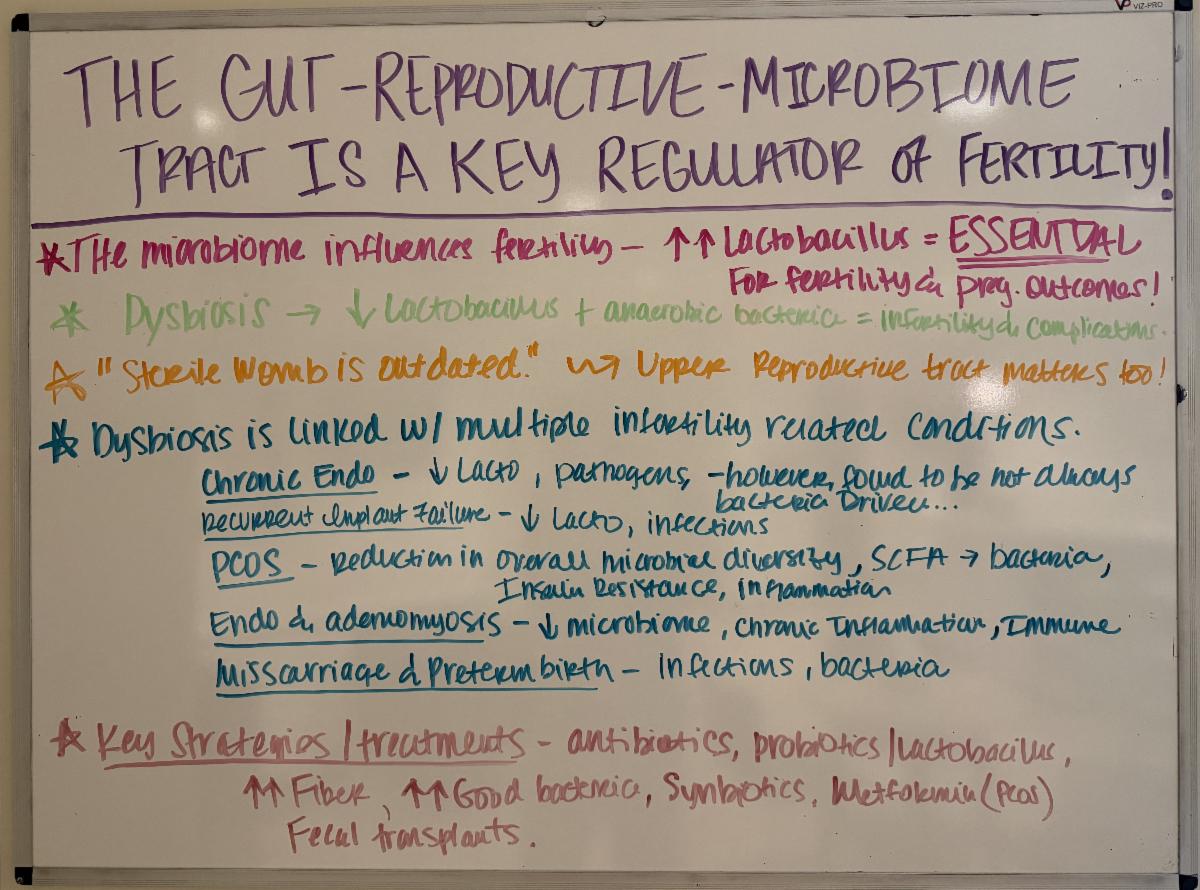
Based on a recently published review article in Fertility and Sterility, a highly respected international OB/GYN medical journal, certain fertility and pregnancy outcomes appear to correlate with whether that ecosystem is healthy and Lactobacillus-dominant, as it should be, or not.


Infertility, miscarriage, recurrent pregnancy loss, preterm birth, PCOS, endometriosis, and adenomyosis can all be connected to dysbiosis. Restoring healthy microbial constitution is one more avenue that we can use to address these health concerns.


Research discussed in this article is adding to the evidence that there is a gut-uterus axis, a gut-ovary axis, a gut-immune axis, gut-pancreas axis, in addition to the gut-brain axis often discussed elsehwere.


At Mint Health, we have been working in the Functional Medicine model with these ideas for over a decade, and are excited to see the important concepts gaining such traction.


Watch our YouTube discussion above to break it down!


1. The vagina is normally dominated by Lactobacillus


These organisms:


• Produce lactic acid to Maintain a low pH

• Reduce pathogen growth

• May support the implantation environment for early pregnancy in the uterus


When we lose lactobacillus, we can get lower pregnancy implantation rates, lower pregnancy rates overall, higher miscarriage risk, and other gynecologic disease states.


2. The endometrium (uterine lining) also has bacteria (we used to think it was sterile)


We are starting to understand that these bacteria differ in women with infertility, recurrent pregnancy loss, and other GYN conditions like endometriosis and PCOS versus people who don't have these conditions.


3. The microbiome is connected to inflammation and immune signaling throughout the whole body


This can include the microbiome in the mouth, intestinal tract, uterus, vagina, and other mucosal surfaces in the body.


There are many connections between dysbiosis and inflammatory cytokines in the blood, immune dysregulation, endometriosis and PCOS, and fertility and pregnancy outcomes.


In regards to PCOS, the severity of the microbial disruption is also correlated with the severity of associated metabolic disturbances - insulin resistance, lipid and blood fat changes, and inflammation markers like CRP.


4. What can the interventions be to improve dysbiosis?


Antibiotics/antimicrobials can be helpful in some ways, but are not the whole answer, and are often a double edged sword.  As we know, overusing antibiotics in clinical practice can be a huge problem in medicine. 


If used, antimicrobials should be combined with directed probiotics and microbiome restoration strategies.


-------------------------------------------------------------------------------------------


-------------------------------------------------------------------------------------------


The referenced article discusses things like microbiome transplants, which is still in the early science stage and can be useful in select circumstances . . . . BUT . . . . . truly the most enduring way to impact microbiome health is through consistent and foundational action steps that have to do with dietary ecology, environmental toxicology, and food systems.


What are these? 


 The strongest evidence for improving microbiome diversity and metabolic signaling in humans is still:


• Dietary fiber (a variety of types including resistant starch)

• Polyphenols in food

• Minimally processed foods, especially avoiding ultra processed foods

• Not to mention exercise, and autonomic nervous system (avoiding constant flight/fight)


THESE THINGS CAN BE DONE ALONGSIDE OTHER INTERVENTIONS, BUT SHOULD NEVER BE SKIPPED!


-------------------------------------------------------------------------------------------


Together these support:


• The growth of healthy/desired microbes

• Short Chain Fatty Acid (SCFA) production- essential for the health of intestinal lining cells

• Gut barrier function

• Estrogen metabolism

• Immune regulation


-------------------------------------------------------------------------------------------

Why are ultra-processed foods (which most people are regularly consuming) such an issue?


• Reduced microbial diversity

• Emulsifier-related barrier disruption (for example food additives like polysorbate-80 and carrageenan erode the mucus lining of the gut leading to disrupted microbiome and inflammation)

• And metabolic inflammation in general


-------------------------------------------------------------------------------------------


Environmental impacts must also be addressed for enduring microbiome health.


Why? Because entities like glyphosate, BPA, phthalates, and microplastics also affect gut microbiome, estrogen signaling, reproduction, and immune signaling


-------------------------------------------------------------------------------------------


So, if you have fertility struggles, PCOS, endometriosis, miscarriages, or are just concerned about starting off with a healthy pregnancy/baby, incorporating the concepts of microbiome into your approach is essential.


If you don't want to be pregnant or are finished with pregnancies, but suffer with PCOS or endometriosis/adenomyosis, your microbiome health is still critical due to the impacts this has on metabolic health, whole body immune tolerance and inflammation, and your long term health.


Do not be fall into the trap of "expensive supplement stacks" you purchase on line to achieve this purpose. That's not the answer! There is no singular answer that can apply to each individual, and it's never "just one thing."


We are happy to help you on the journey of navigating these foundational action steps through IFM's Functional Medicine Matrix here at Mint Health.


Stay strong. Stay consistent. Keep moving forward.


Elizabeth Buchert, MD, IFMCP

Mint Health


________________________________________

Ready to Take the Next Step? Check us out!

Who Do We Serve at Mint Health?

Who do we serve?

Why a Membership at Mint Health?

Why a membership?

Why Should I Join Mint Health?


Mint Health is a membership-based Functional Medicine (FM) office that also includes GYN services. The FM process is a research -based investigation into your unique biology. Through advanced, comprehensive testing, questioning, and personal attention, we aim to understand and improve the underlying drivers of your health issues.


Here at Mint Health, we have TWO (2) IFM-CERTIFIED practitioners that have been certified since 2017!!!


Renee Beyer Boudreaux APRN, IFMCP and Elizabeth Buchert MD, IFMCP have been working together since 2017 guiding patients on their wellness journeys and they want to continue that with YOU!


Please consider visiting the Institute of Functional Medicine (IFM) for more information on how to take control of your health with Functional Medicine.


Ready to Become a Patient at Mint Health? We are thrilled to get started with you! Click on Become a Patient for the next steps to get started!


Not Sure How a Functional Medicine Approach May Help You?


Let's find out! Book a Discovery Visit!


Click on Schedule Now and choose either of our IFM-certified providers and the visit reason as "Discovery Visit".


We absolutely understand that this approach to health and medicine is a different kind of commitment and on that also comes with an out-of-pocket obligation from you, the patient.


To make sure this commitment is right for you, our providers are more than happy to meet for a "Discovery Visit" prior to committing to either membership. The main goal of this visit is to answer the questions:

  • How can Mint Health and a FM approach address my specific health concerns?
  • Which membership is tailored more for my needs and goals?


(This visit will be billed to your insurance, and you will be responsible for any coinsurance, deductible, or copay as per your plan)


Our patients' results inspire us to continue the work we love. Learn more right here!


Can I Use HSA/FSA Funds for the Membership?


Health Savings Accounts (HSA) and Flexible Spending Accounts (FSA) allow individuals to pay

for qualified medical expenses with pre-tax dollars. These accounts can help reduce healthcare

costs and can often be used to cover extra expenses, such as your Functional Medicine membership here at Mint Health, which focuses on health and wellness coaching services.


Every HSA/FSA provider is unique in what their documentation requirements are. It's important for you to verify with their provider before submitting expenses.


Typically, you will need a Letter of Medical Necessity (LMN) from our providers stating that health and wellness coaching is recommended to treat or manage a medical condition. Eligible expenses should be tied to the prevention, treatment, or management of a medical condition to qualify.


You will also need a claim summary (receipt) that we will provide showing you paid for it out of your pocket (with a separate payment method). Your HSA/FSA will review their required documentation you submit and after their review, reimbursement would be direct to you if approved.


Please let us know if you would like more information!


Mint News


As we embark on this new chapter in our office, we want to extend our heartfelt welcome to both new and returning patients. We’re truly grateful that you’ve chosen to make us part of your wellness journey—whatever that may look like for you. Our team is fully committed to guiding you toward greater health and balance, and we’re honored to walk beside you as you begin to function, heal, and thrive—just as you were designed to.


The purpose of this Mint newsletter is to empower you with practical wellness insights while keeping you connected to what’s happening here in the office.


Facebook  Instagram  TikTok