|
From the Pastor's Desk
When Transition Begins
Dear brothers and sisters in Christ,
One of the most meaningful insights I encountered during my training in transition ministry is also one of the simplest: every transition begins with an ending. At first, this may sound obvious. Yet, in the life of a congregation, it is not always easy to recognize. We often imagine transition as the space between what was and what will be, as if the past were still fully present while the future slowly comes into view. But in truth, transition begins when something has already come to an end.
This matters because endings need to be acknowledged. When a pastor concludes a ministry, when a familiar rhythm changes, or when a congregation enters a new season, the community does not simply move forward by turning the page. There is often gratitude, grief, uncertainty, relief, hope, and many other feelings present at the same time. All of that belongs to the transition. It is part of the honest work of being the Church together.
The end of one chapter does not mean that what came before no longer matters. On the contrary, faithful transition gives us the opportunity to give thanks for what has been, to name the gifts received, to learn from the experiences shared, and to recognize the ways God has been present along the way. We do not honor the past by trying to remain in it. We honor it by receiving it truthfully and allowing it to become part of the foundation from which we move forward.
At the same time, transition is not simply a waiting room for the future. It is a real season of ministry. God is not absent while a congregation prepares for what comes next. The Holy Spirit continues to gather the Church, sustain its worship, strengthen its relationships, and call its people into service. Even in times of change, the Church remains the Church because Christ remains present with his people.
This is why interim ministry is not merely about “holding things together” until the next chapter begins. It is a time for listening, reflection, healing where healing is needed, and renewed attention to the identity and mission of the congregation. It is a time to ask not only, “Who will come next?” but also, “Who are we being called to be now?”
There is grace in this kind of work. It reminds us that Christian hope does not require us to deny endings. Our faith is centered on a God who brings life out of death, promise out of uncertainty, and new beginnings out of places that first had to be entrusted into God’s hands. To acknowledge an ending is not a lack of faith. It is often the first faithful step into what God is preparing.
As we share this season together, my prayer is that we may walk through it with honesty, patience, and trust. May we give thanks for the story that has brought this congregation to this moment, remain attentive to God’s presence among us now, and look toward the future with hearts open to the guidance of the Spirit.
With every blessing,
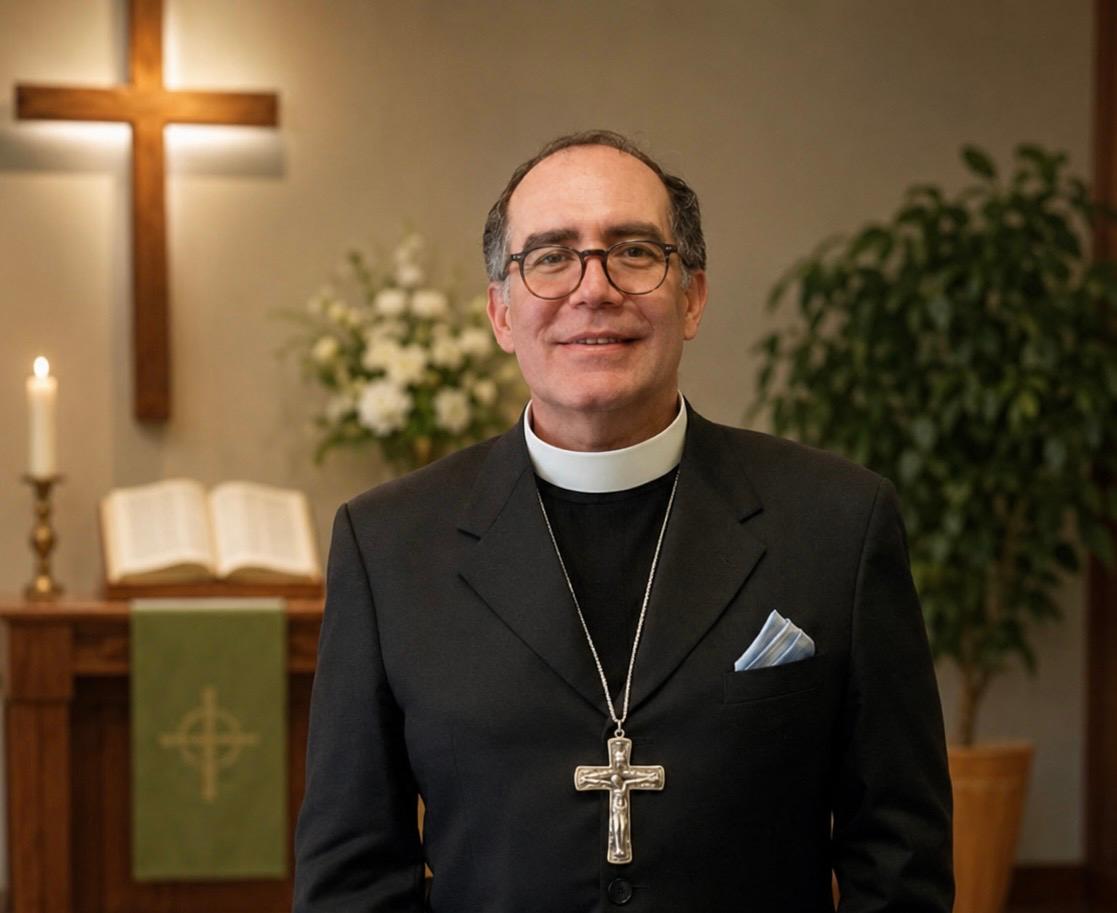
The Rev. Luis I. Echandía
|