Council of Producers & Distributors of Agrotechnology

Terry Kippley, CPDA

October 19, 2023

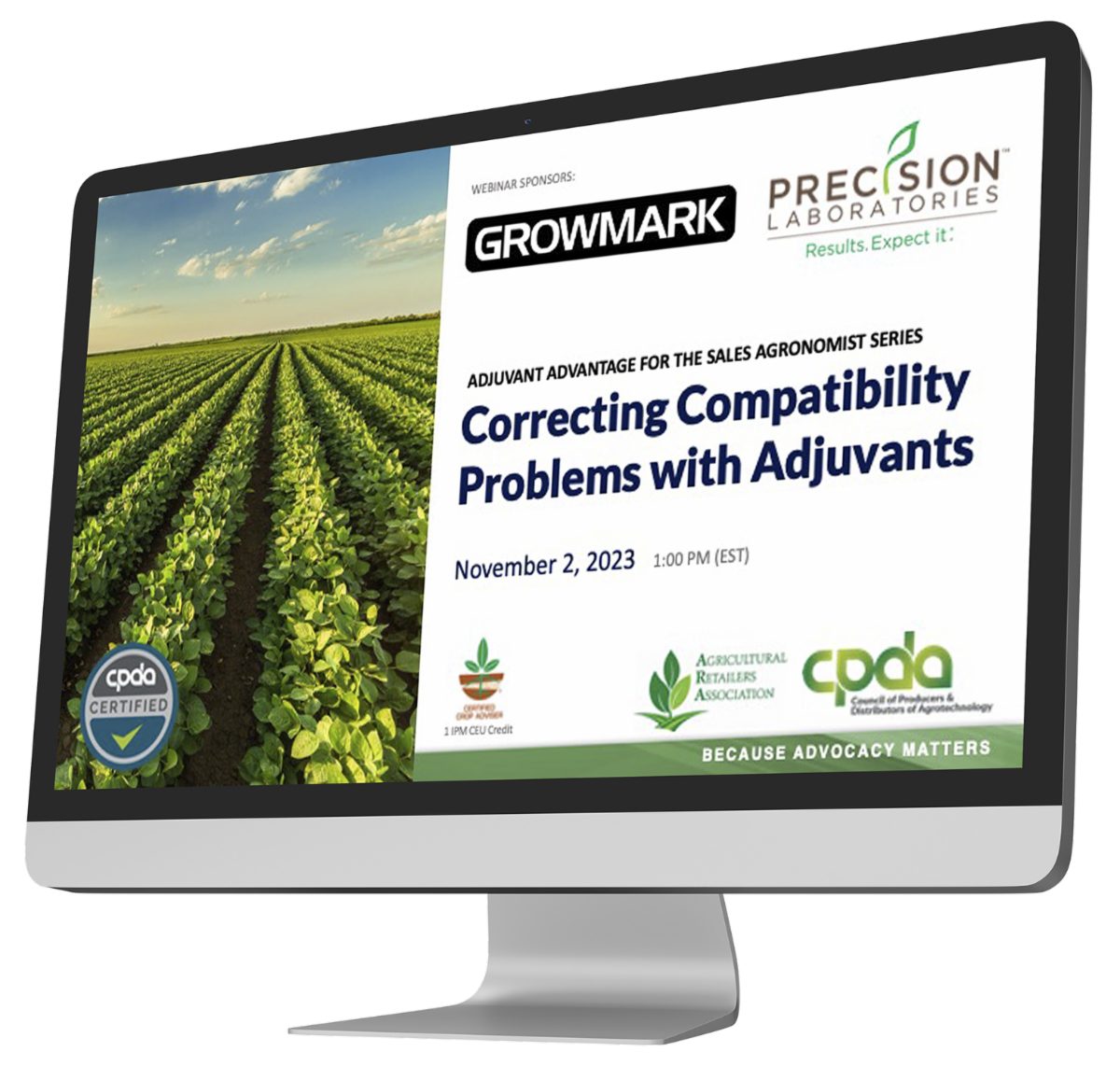
This issue contains several important items including an update on CPDA member feedback on EPA backlogs issues, an important change in Washington State as it pertains to Adjuvant Confidential Business Information, and upcoming dates for key webinars on EPA’s eCSF and our next collaboration with ARA on the Adjuvant Advantage for the Sales Agronomist sponsored by Growmark and Precision Laboratories November 2, 2023.

UPDATE: Member Feedback on OPP struggles with IT problems

Following up on the last News & Notes around EPA difficulties, we asked for CPDA member feedback on what their challenges were. Below is a summary of the feedback we received. EPA’s delays and backlogs in dealing with PRIA (and “non-PRIA”) actions are extremely frustrating and acutely felt by CPDA members. CPDA members succinctly summarize several problems that are specific to generic registrants.

Data compensation related issues:

  1. Current issues with the Front-End processing of applications in a timely manner raise the question: “What is the submission date for determining data citation / compensation?” The 21-day screening period followed by a roughly 11–12-month review process previously provided a timeline for accurate assessment of compensable data. A Registrant seeking to limit the liability for compensable data would submit a follow-on/me-too application after the compensability period expires for the particular data of interest. If one can no longer predict the PRIA Start Date of an action relative to the submission date, this entire strategy is compromised.
  2. The data compensation situation is further exacerbated by delays in getting a decision once the PRIA clock has started. If the 12-month PRIA timeline for a Me-Too Technical Active Ingredient stretches into 2+ years, the compensability period for some data cited at the time of submission may expire prior to EPA relying on the data to issue the Me-Too decision.
  3. PRIA applications for a Me-Too Technical Ingredient and associated end-use products are typically made simultaneously as associated Primary / Secondary (Parent / Child) submissions. Data compensation negotiations typically engage in settlement discussions once the Technical Product has been registered. When EPA delays registering the associated End Use Products, the Generic Registrant can be locked into data compensation liability without any mechanisms in place to generate revenue from the End Use products. This is an unnecessary financial burden generated by EPA based upon their inability to make timely decisions on data packages submitted concurrently.
  4. CPDA has added an important request to a forthcoming PRIA Coalition letter expressing concerns over EPA’s IT problems for receiving and processing PRIA and non-PRIA submissions from registrants. We are seeking to have the Agency “allow for minor interim revisions of individual documents in a submission while an action is under review.” Currently when US EPA finds an issue - even a very minor correction needed to a Label and/or a Confidential Statement of Formula (CSF( under review, registrants are required to resubmit the entire package through the Agency’s central Data Exchange (CDX), as CDX does not have the ability for a registrant to upload a revised Label or CSF on a submission. This redundancy, often multiple times prior to approval of the action, creates a massive duplication; generates more work for EPA’s front-end screeners; and makes tracking the completion of an action very challenging for the registrant and the Agency.


Marketplace related issues:

  1. Excessive delays in the decision process have resulted in products missing the growing season and missing markets. For example, a “Me-Too” Technical submission in made late 2021 should be available for Market Year 2023 based on the original PRIA date.  Delays of more than one year beyond the original PRIA date have put that product at risk of missing even the 2024 season. This situation denies Generic Registrants the opportunity to deliver alternative choices to the growers. 
  2. EPA cautions that ‘the current situation will add 3 to 6 months or more to all PRIA actions, regardless of delays for other reason’. Given that some current decisions are 12 months beyond their original PRIA date, new actions can be expected to be delayed as much as 18 months. Since a Generic Registrant cannot make a submission while the Basic Registrant’s data retains exclusive use privileges, EPA artificially extending the proprietary and monopolistic position of the Basic Registrants by failing to act in a timely manner.


Summary:

The current backlog of overdue decisions coupled with new issues have created a situation where Generic Registrants cannot reliably make business plans for delivery of product to growers. The Agency is obligated to correct this situation.


Washington State Department of Agriculture (WSDA): New Adjuvant Labeling Requirements on the Way

Last Friday, we were informed that new WSDA regulations and guidance regarding adjuvant labeling were on the way. At this point, we can’t provide detailed information on what CPDA members can expect. Here is the WSDA blurb in its entirety:


Adjuvant Registrants

WSDA will be modernizing the requirements for spray adjuvant labels. Beginning in 2024, registrants will need to update their older labels to meet the current requirements. This will include the use of WSDA approved names for the top three principal functioning agents in the product. Adjuvant registrants will be contacted soon with further information regarding this process. Reminder: Any revised adjuvant labels must be reviewed and approved by WSDA prior to their distribution within the state.


This story began in 2018 when WSDA announced that in order for adjuvants labels to be in compliance with state law, “the top three principal functioning agents (PFAs) are not considered confidential business information and must appear on the label with the combined percentage of all PFAs.”

CPDA was successful in addressing WSDA’s concerns back then by putting forth a PFA and ingredient naming framework that protected confidential formulas.

That agreement lasted almost five years as earlier this year, Washington Attorney General Bob Ferguson made clear to WSDA that adjuvant labels must disclose all ingredients in the formulation to a degree of specificity that would publicly divulge confidential and proprietary adjuvant formulas based on the public’s right-to-know.


It’s also important to note that Attorney General Ferguson is a candidate for Governor in the 2024 election and, at this point, is the likely Democrat nominee and future Governor.


To address this, CPDA has been working for the last year with Ben Bucholz, the Executive Director of Washington Friends of Farms and Forests on a solution that protects CPDA member confidential formulas.


CPDA has already raised questions whether this regulation is consistent with Washington Code 15.58.150(d), which makes it unlawful:

  • “For any person to use for his or her own advantage or to reveal, other than to the director or proper officials or employees of the state, or to the courts of the state in response to a subpoena, or to physicians, or in emergencies to pharmacists and other qualified persons for use in the preparation of antidotes, any information relative to formulas of products acquired by authority of RCW 15.58.060.”

Once we have more details, we will respond accordingly. We are hopeful that the “WSDA approved names” will protect confidential business information.


ARA Fall Board Meeting

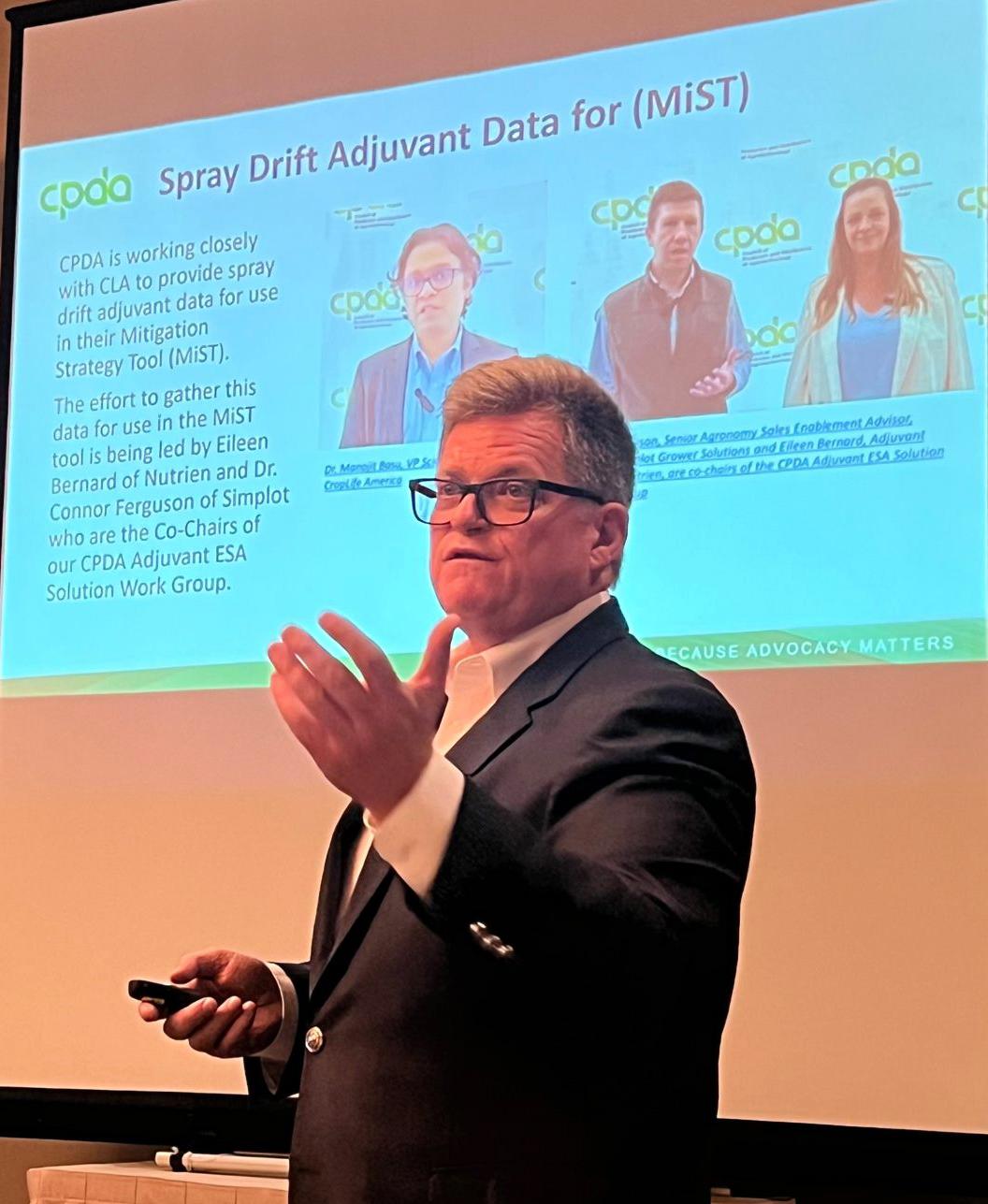
Thank you Daren Coppock, Richard Gupton and Hunter Carpenter for the opportunity to participate in the ARA Fall Public Policy meeting. I highlighted the work CPDA members are doing for a No-Spray buffer work around using adjuvants to reduce off target movement. I appreciate the leadership of Croplife’s Manojit Basu, PhD, Eileen Bernard of Nutrien and Connor Ferguson of Simplot on this important industry initiative.


We continue to advocate for the inclusion of report language in the 2023 Farm Bill for the creation of Pesticide Centers of Excellence and through the enhanced use of adjuvants in the USDA NRCS practice standards.

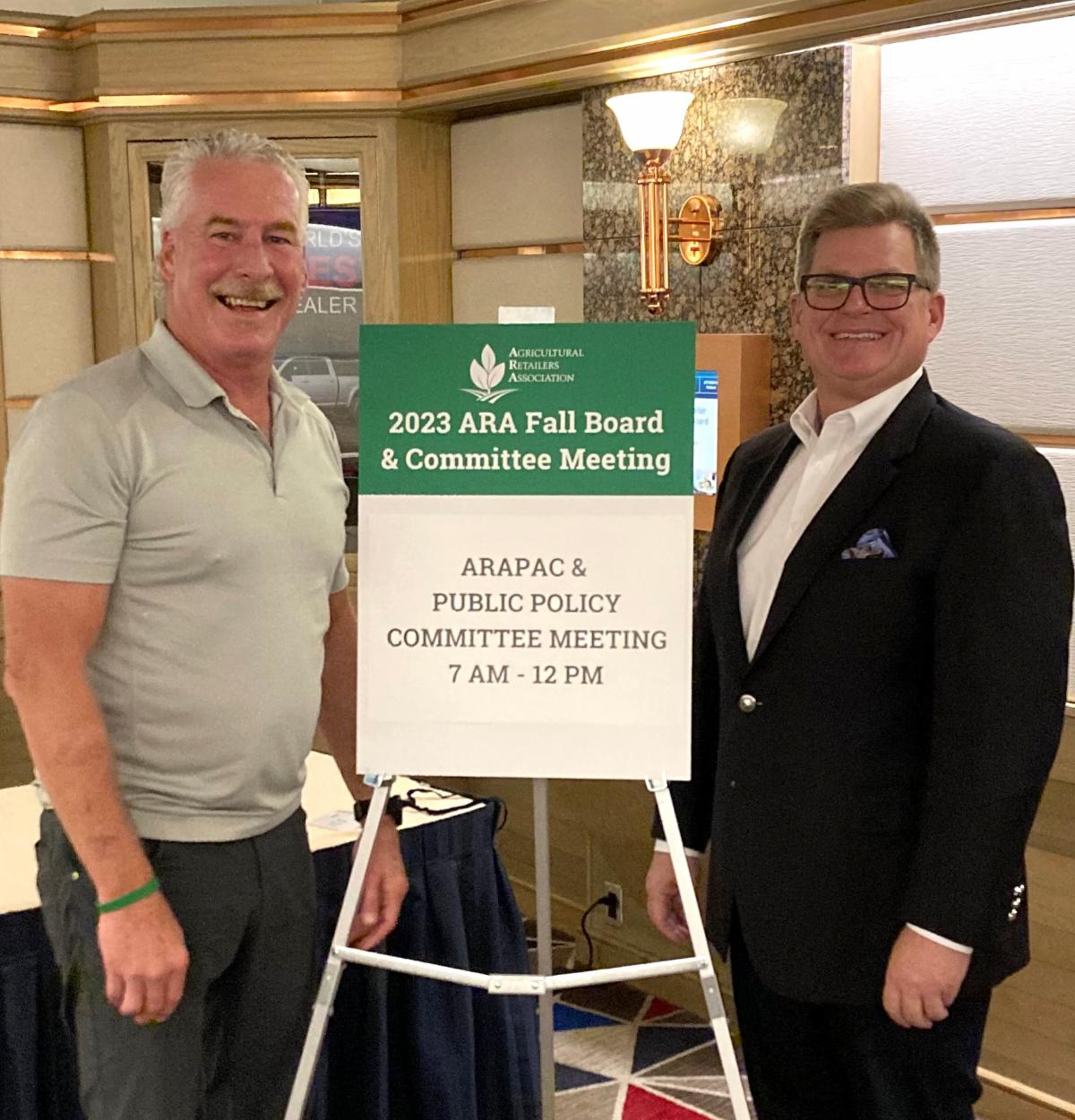
CPDA member Jeff Pritchard, CEO, Westlink and I caught up at the ARA Fall Board & Committee meeting.


Nebraska/Montana Argi-business DC Fly-In

I was asked by CPDA member Kalo’s Tim Tackes, Northwest Manager to provide a Federal Legislative Update during the Nebraska and Montana Agri-business association DC-FLY. We discussed CPDA legislative policy around our efforts to propose a workaround for ESA Mitigation in lieu of no spray buffers. Our initiatives continue with data to demonstrate to the EPA that adjuvants can reduce off target movement.

Tim Tackes, Northwest Manager, Kalo.


Adjuvant Advantage for the Sales Agronomist Webinar Series: November 2nd

Our successful webinar series, in partnership with ARA is back for another 5-part series discussing topics from adjuvant drone application to tank clean out. The series will run from November 2023 thru February 2024.


Our first webinar in the series will be on November 2nd at 1:00pm EST.

Register
 

Industry Events

eCSF Demo

with HCPA, RISE, CLA & CPDA


Monday, October 30, 2023

11:00–12:00pm EST

Link to Teams Meeting

ASTM Committee E35 Meeting in DC on Pesticides


November 7–9, 2023

Washington Hilton, Washington, DC

Register

CPDA State & Federal Regulatory Update


Monday, November 13, 2023

2:00–3:00pm EST

Link to Teams Meeting
 

Launching the Future of Ag Retail

Building on more than 30 years of bringing the ag retail industry together to learn and share ideas, the 2023 ARA Conference & Expo will convene Nov. 28-30 in Orlando. This year's theme of Launching the Future of Ag Retail reflects the need to adapt to take on our current challenges while positioning ourselves to meet the challenges of the future head on.

Learn More
 

Until next time...


Connect with us!

LinkedIn  Email  Web