Covering Kids & Families of Indiana Newsletter |
|
|
|
Some Things That Became Law in Indiana This Week
Many of the bills passed in the 2023 legislative session went into effect July 1st. This is the typical start date for new laws, unless there is an emergency written into the law or a law is written with a delayed start to allow, for example, an agency to prepare for implementation. Below are some laws related to CKF-IN’s policy priorities that went into effect earlier this week.
SEA 252 - Hoosiers with Medicaid may have more access to long-acting, reversible contraceptive devices (LARCs). This law allows for unused LARCS ordered for a Medicaid patient to be transferred to another Medicaid patient. Previously, the LARC had to be discarded. (Read more here.)
SEA 265 – This law has retroactive and future effective dates. The family cap for TANF was removed and was retroactive to January 1, 2022. The expansion of TANF to pregnant women who meet income requirements is effective July 1, 2024. The language requiring the Division of Family Resources to change TANF eligibility started this week, July 1, 2023; however, the increase does not go into effect for recipients until July 1, 2025 and ends July 1, 2027.
SEA 480 – Much media coverage has been devoted to this law that prohibits gender affirming care for Hoosier minors. The ACLU of Indiana filed a lawsuit challenging the law, and a federal judge issued a preliminary injunction temporarily pausing the implementation of the law. (Read more here and here.)
HEA 1001 – The fiscal year in Indiana is July 1 – June 30, so the budget is set up to fund two years of state activity on that schedule. This budget included a historic investment in public health thanks, in part, to the work of Governor’s Public Health Commission and SEA 4. The budget includes $75M in the first year and $150M in the second year, which “shall be used to establish a partnership responsibility between the state, local government, and health care providers for the provision of core public health services.” Indiana school districts will stop charging families for curricular materials, including textbooks, iPads, and Chromebooks. These fees are currently waived for families who qualify for free or reduced lunch programs. On My Way Pre-K and Early Childhood Learning both got funding bumps in this budget.
HEA 1006 - This law sets new rules and a timeline for how a person who's been arrested should be evaluated, treated, and potentially committed for mental illness. It also establishes a local mental health referral program to provide mental health treatment for certain persons who have been arrested.
HEA 1091 – This law extends the period of time to submit required eligibility information in Indiana Health Coverage Programs (IHCP) for children up to 19 years old. The law also removes the five-year waiting period to be eligible for Medicaid for lawfully residing immigrants who are children or pregnant persons.
HEA 1138 - Child care facilities and preschools will now have their drinking water tested for lead by January 1, 2026. If lead levels are above 15 parts per billion, the owner of the child care facility or preschool must take steps to remedy the problem.
HEA 1492 – This new law addresses school safety definitions, funding, and required programs/groups. For example, counties are now required to have a county school safety commission and school corporations/charter schools are required to have a school safety committee.
HEA 1568 - This law allows but does not mandate Indiana pharmacists to prescribe hormonal contracteptives. Note: While the law is in effect, there are other procedural steps that must be completed before full implementation.
HEA 1591 - Thanks to this newly enacted law, the state’s On My Way Pre-K program is no longer a pilot program.
HEA 1608 – Effective this week, no instruction on human sexuality is permitted in grades Kindergarten through 3rd, and schools are required to inform parents if a student request to be called by a different name or pronoun than on the school’s record. The ACLU of Indiana has filed a lawsuit challenging this law. (Read more here.)
HEA 1635 – Starting this week, high school transcripts must no longer include certain immunization information.
|
|
|
|
Notice of Updates to Continuous Eligibility
The Office of Medicaid Policy Planning (OMPP) has posted notice of a proposed change to Medicaid and CHIP. This is in response to HEA 1091, which required FSSA to extend the 12-month continuous eligibility to children up to 19 years old. (Before this bill, continuous eligibility was only for children up to 3 years old.) These changes will go into effect January 1, 2024. CKF-IN thanks OMPP for this speedy response to legislation.
|
|
|
|
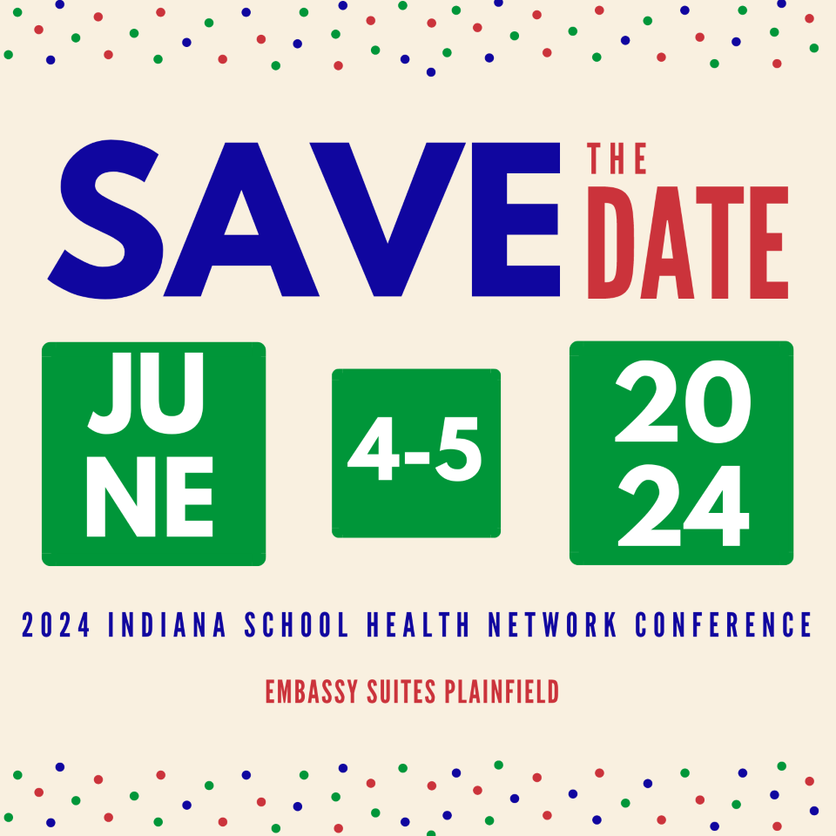
NEWS FROM THE INDIANA SCHOOL HEALTH NETWORK |
|
|
|
AR Verbal Consent
During the Public Health Emergency, the Indiana Family Social Services Administration (FSSA) began allowing Hoosiers to give verbal consent by phone for someone to become an ongoing Authorized Representative (AR) for Medicaid. This policy can be found in the FSSA Indiana Policy Manual Section 2005.10.00 which contains additional important information regarding the role of the AR.
2005.10.00 Authorized Representative relationships agreed to over the telephone
A verbal authorization is acceptable from the member for any Authorized Representative (AR). A three-way call will need to be completed between the member and AR to obtain and confirm the specific AR details. The information must be entered on the Authorized Representative or Legal Guardian Detail page during the call. After the AR information is entered into the eligibility system and the applicant and AR agree on the terms of authorization, it will remain in the system as an authentic and verified agreement unless/until the AR or applicant/recipient withdraws the authorization. AR details must be documented in case notes.
|
|
|
|
Webinar Series on Marketplace
Beyond the Basics is offering a two-part series in preparation for Marketplace Open Enrollment.
Part I: Introduction to Plan Selection Tools for 2024
July 18th at 2 pm
Part II: Under the Hood: Building Your Own Plan Selection Tools for 2024
August 16th at 2 pm
|
|
Medicaid Coverage Opportunities for Justice-Involved Populations: CMS Guidance and States’ Approaches
In a new webinar, Manatt Health will share an overview of the federal guidance and other states’ approaches to pursuing and obtaining approval for a Justice-Involved Reentry Initiative 1115 Demonstration to provide critical services to support reentry.
July 13th at 3 pm
|
|
|
|
CMS Assister Microlearning Modules
The Centers for Medicare and Medicaid Services (CMS) is releasing new Marketplace microlearning modules to help guide assisters through the process of helping consumers apply for coverage, enroll in coverage, and understand the Marketplace Eligibility Determination Notice.
|
|
|
|
Understanding the True Extent of Financial Hardship in Indiana
What is the bare minimum cost of household basics needed to live and work? This webinar hosted by Indiana Assets & Opportunity Network in partnership with Prosperity Indiana will discuss recently released calculations from United Way for household survival budgets by county in Indiana. They will also cover why many people are struggling to meet their basic needs despite being employed and which populations are disproportionately affected by hardship.
July 18th at 11 am
|
|
|
|
|
|
Enrollment Trends
Total Membership increased again in May. With 2,231,726 members, there were 1,106, or 0.05%, more members in May 2023 than in April 2023.
|
|
|
|
|
© 2023 Covering Kids & Families of Indiana | All Rights Reserved |
|
|
|
|