|
International Civil Liberties Monitoring Group
Coalition pour la surveillance internationale des libertés civiles
August 31, 2026 - 31 août 2026
| Bimonthly news round-up about national security's negative impact on civil liberties in Canada and abroad | | The Damage of De-risking: ICLMG report launch with Tim McSorley in conversation with Amira Elghawaby | | |
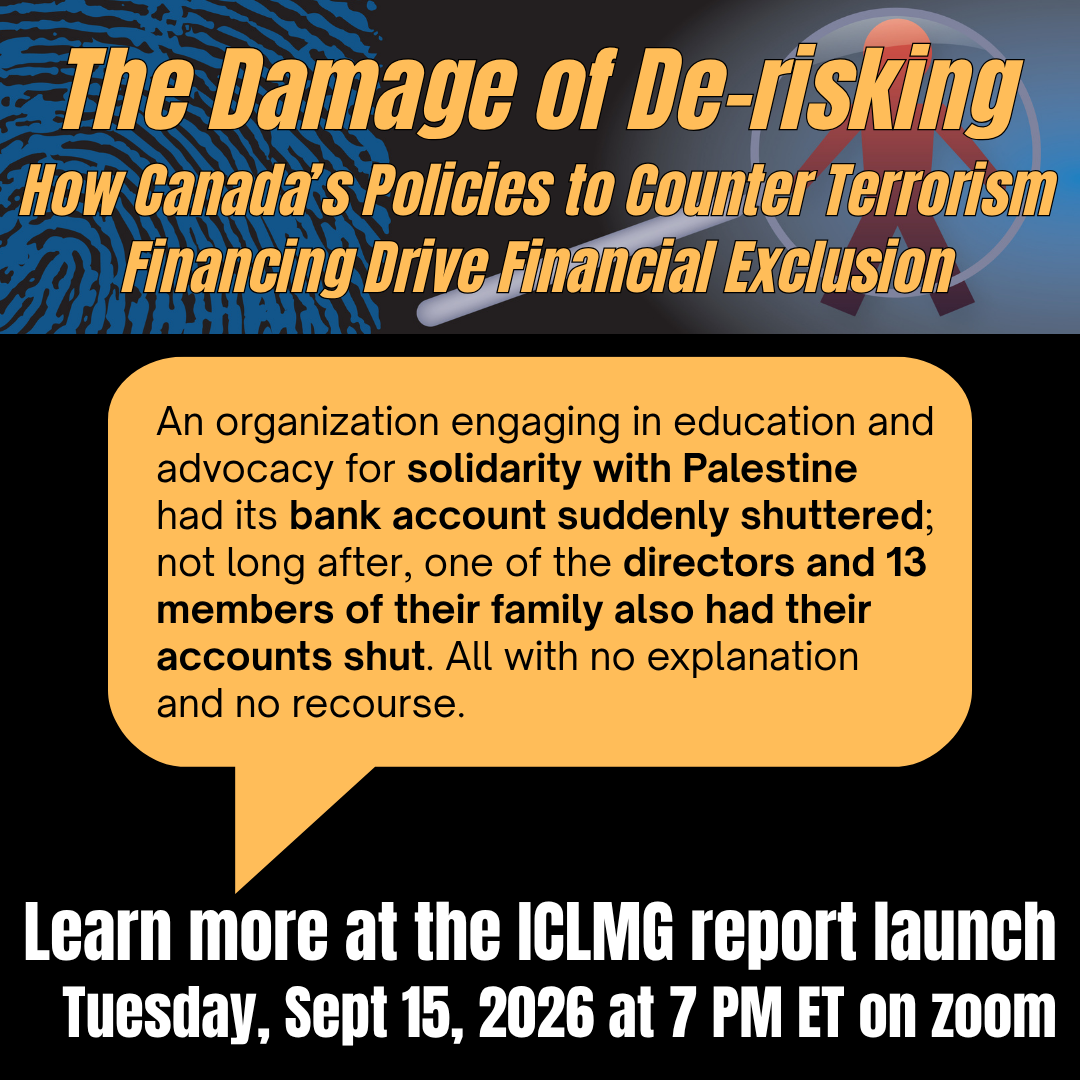
Join us for the virtual launch of ICLMG’s latest report: “The Damage of De-risking: How Canada’s Policies to Counter Terrorism Financing Drive Financial Exclusion”
NEW: ICLMG’s National Coordinator and report author, Tim McSorley, in conversation with former Special Representative on Combatting Islamophobia, Amira Elghawaby
Tuesday, September 15, 2026 at 7 PM ET, online
Register here!
An organization engaging in education and advocacy for solidarity with Palestine has its bank account suddenly shuttered; not long after, one of the organization’s directors and 13 members of their family also have their accounts shut. All with no explanation and no recourse. A humanitarian organization providing aid to civilians in Syria and other populations in crisis is suddenly told that their online donation processor would be shutting their account in 30 days, with no explanation.
This is the reality of de-risking: the practice whereby financial institutions terminate or restrict access to financial services for certain clients or sectors to avoid perceived regulatory, compliance, or reputational risk, rather than managing that risk through proportionate, individualized and evidence-based mitigation measures. This has resulted in unjustified and discriminatory decisions that significantly impact both individual and organizational clients, including non-profits and charities.
Our report shows that the de-risking of non-profit organizations in Canada, particularly those that are active in Muslim communities or carrying out humanitarian activities abroad, is not a series of isolated commercial decisions made by individual banks, but a predictable structural outcome of Canada’s anti-terrorist financing framework.
During the webinar, we will present our analysis of Canada’s anti-terrorist financing ecosystem and its impacts, share case studies from individuals and organizations who have been impacted by de-risking, and outline our recommendations to remedy the situation.
Speakers:
Tim McSorley is the National Coordinator of the International Civil Liberties Monitoring Group. He joined the coalition in 2016. In 2021, he authored the report The CRA’s Prejudiced Audits: Counter-Terrorism and the Targeting of Muslim Charities in Canada, a precursor to this new report.
Amira Elghawaby is a journalist, human rights advocate, and the Founder and Executive Director of the Muslim Communities Research Observatory. She served as the first ever federal Special Representative on Combatting Islamophobia from 2023 to 2026.
Register above to receive the link and reminders before the event. And please share and invite your friends and colleagues: Bluesky + Instagram + Facebook + LinkedIn + Twitter + Source
| | Anti-terrorism measures hindering Muslim charities' humanitarian efforts: study | | |
The Canadian Press 16/08/2026 - Strict measures to prevent terrorism financing are prompting Muslim charities in Canada to withdraw humanitarian assistance from countries in need, such as Syria and Yemen, because they fear losing access to banking services if they operate there, a new study warns.
The study by University of Toronto law and history professor Anver Emon makes a dozen recommendations, aimed at various federal agencies, to help charities and other non-profit organizations provide assistance abroad without fear of repercussions. The treatment of Muslim charities has come under scrutiny in recent years. Critics claim they have been unfairly singled out in the fight against terrorist financing.
A National Security and Intelligence Review Agency report released last October found “a lack of rigour” in the way the Canada Revenue Agency selects charities for audits over terrorism concerns. The report said the process introduces risks of bias and discrimination. Emon, who co-authored an influential 2021 report on audits of Muslim charities, takes a broader look at Canada’s anti-terrorism financing measures and sanctions regime in the latest study.
The study acknowledges these mechanisms exist to protect the integrity of the financial system, prevent its misuse by criminals or terrorist organizations and uphold Canada’s international obligations as a member of the international Financial Action Task Force, which sets global standards. It says the measures and tools also lead to unintended consequences. Muslim charities are especially vulnerable because they are committed to providing humanitarian aid to hard-hit regions that Canada also deems high-risk for terrorist financing, the study says.
The consequences include a phenomenon known as “financial derisking” — where banks and other financial institutions cut off services to clients — and “humanitarian derisking,” where non-profits scale back or end humanitarian commitments due to the risk of running afoul of anti-terrorism measures or sanctions.
The study says that given the power imbalance between financial institutions and their clients, service contracts are typically drafted to maximize an institution’s discretion, giving it broad authority to end service.
“In practice, this can mean they terminate a client’s account with limited notice and without disclosing the reason. Clients must withdraw their funds within a set time frame, after which the institution ceases to provide services,” the study says.
“Once ‘derisked’ in this manner, Canadian organizations — including registered charities in good standing with the CRA — lose access to essential financial services and cannot fulfil their operational requirements.”
The study notes that when the Taliban regained control of Afghanistan in 2021, Canadian charities operating in the country suddenly faced the prospect of criminal liability — because humanitarian funds that could incidentally benefit the Taliban could also be considered support for a listed terrorist entity.
In 2023, Canada amended the Criminal Code to permit delivery of basic humanitarian assistance when reasonable efforts are made to minimize any benefit to terrorist groups. Development projects with longer timelines and broader goals are subject to a separate authorization regime administered by Public Safety Canada. Charities providing humanitarian aid in jurisdictions considered to be at high risk for terror financing may rely on the Criminal Code’s humanitarian exception to avoid liability, the study says.
“However, the scope of ‘humanitarian’ aid under this exception remains unclear, leaving (non-profit organization) leaders and advocates uncertain when further assistance would trigger Public Safety Canada’s authorization regime,” it says.
The ambiguity exposes organizations to potential criminal liability and has led them to conduct their own risk assessments, often resulting in “self-imposed humanitarian derisking” from areas in urgent need of humanitarian and development support, the study adds. Read more - Lire plus
| They served in an Iranian force Canada lists as terrorist. They say they were conscripts — but now may face removal | | |
The Toronto Star 25/08/2026 - Reza Gharehchahi says he would be the first to call out the Islamic Revolutionary Guard Corps as a terrorist group.
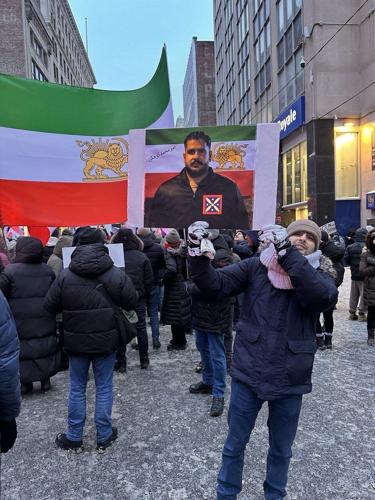
Since coming to Canada on a study permit in 2022, the Iranian has signed petitions and joined political rallies to condemn the IRGC-backed regime in Tehran, speaking out for the voiceless back home, including two close friends he says were killed in government crackdowns.
Earlier in August, with a pending permanent residence application in process, the Montreal resident suddenly found himself accused of being a member of the IRGC, which Canada has designated a terrorist entity under the Criminal Code since June 2024.
On a single day, a large number of Iranian immigration applicants were notified by the Immigration Department that they may be inadmissible because they previously were conscripted to serve the organization. The Unheard Conscripts Advocacy Network believes the number to be several hundred.
“Conscription is mandatory in Iran and we cannot flee from that,” said Gharehchahi, 35, who has a background in engineering and was assigned to IRGC’s dam-construction projects in 2014 and 2015, after his undergrad studies in Iran. “We all get punished if we don’t do our conscription over there.”
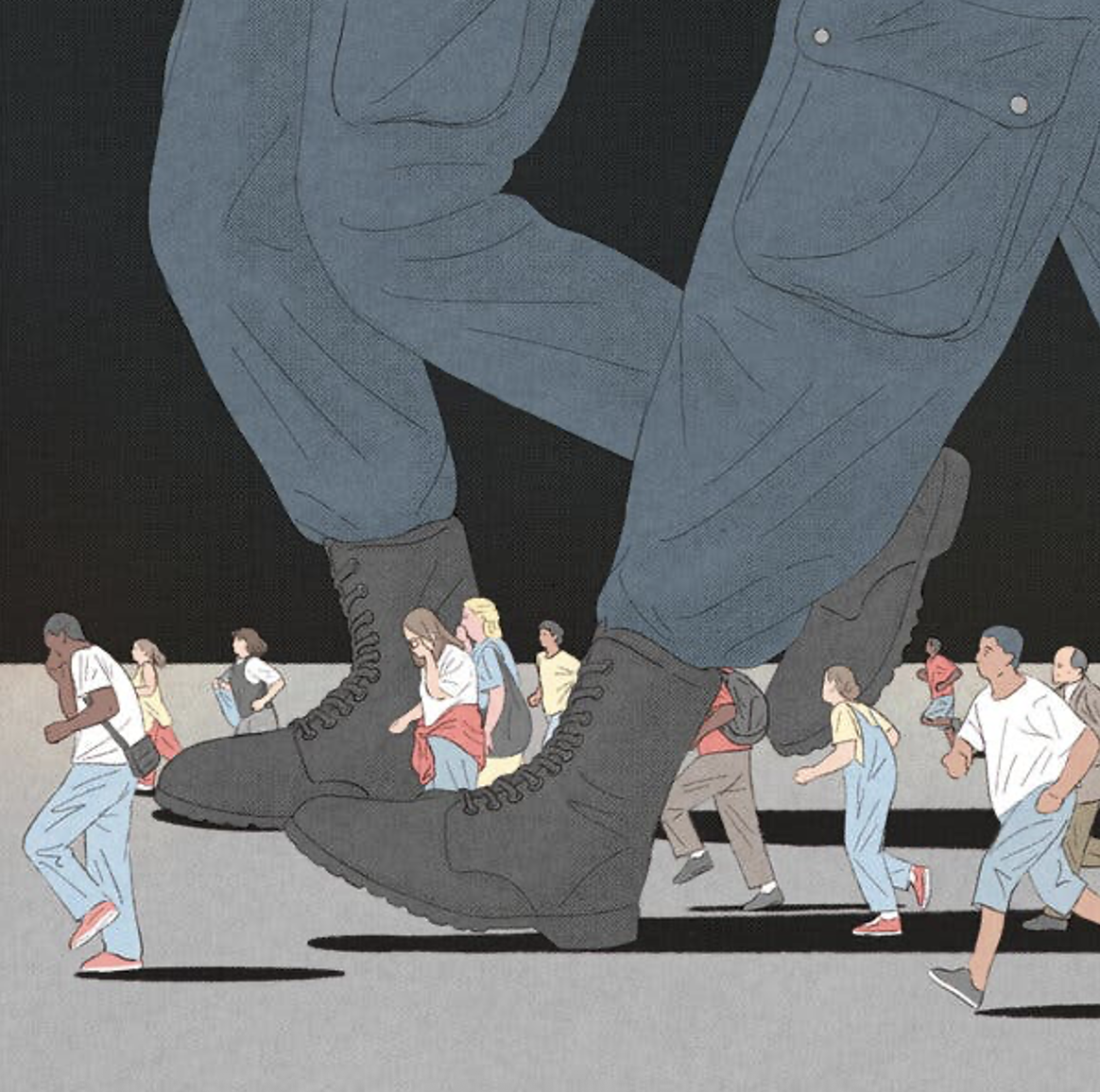
Since Ottawa’s listing of the Islamic Revolutionary Guard Corps, immigration officials have begun flagging individual Iranian applicants for inadmissibility over alleged ties to the force. But the recent mass notifications — based on possible IRGC membership as a result of service in the force — have shocked the community. People worry the approach is capturing innocent conscripts who have never participated in terrorism.
Is Canada targeting the right people?
The Liberal government’s response to IRGC has been prompted by the group’s downing of Ukraine International Airlines Flight PS752 in 2020, alleged involvement with other designated terrorist groups and brutal repression of Iranian people. The federal government has also been criticized for admitting IRGC officials in Canada.
With concerns over the regime’s harassment and intimidation of the diaspora in Canada, the Conservatives have urged stronger enforcement to ensure non-citizens are deemed inadmissible if “involved in regime-linked businesses, spreading propaganda, or human rights abuses.” The opposition also wants inadmissibility be extended to immediate non-citizen family members of regime officials.
“The government of Canada has wanted to show the Iranian community in Canada and the rest of the world that it takes the issue of the human rights violations in Iran seriously,” said Toronto lawyer Lorne Waldman, who has had more than 30 consultations with anxious applicants in Canada flagged for potential inadmissibility since Aug. 7.
“[...] Unfortunately, (border and immigration officials) are targeting the wrong people. They’re targeting the people who oppose the regime ... and they’re creating a lot of hardship for people who came to Canada seeking refuge.”
The Canada Border Services Agency says 48 people have been reported inadmissible based on membership in the group as of July 6. Nine have left Canada, while the rest await the determination of their admissibility by the Immigration and Refugee Board. The CBSA has also launched 180 investigations and identified 37 people in Canada believed to be senior regime officials.
The Liberal government has been aware of the impact on conscripts of the IRGC designation, but said its approach would be “careful and measured.” “If an individual was conscripted at one point in time and no longer serves with the IRGC, that would affect the analysis,” said then justice minister Arif Virani in 2024, as cited by Radio-Canada, just before the terrorist group designation that year.
In a recent response to the Unheard Conscripts Advocacy Network, the border agency made it clear any person “whose membership in the IRGC can be established” is inadmissible, “regardless of their seniority or their rank.” “Although a person’s conscripted service is among the factors used to determine whether a person is inadmissible as a member of an organization, it would not be the only factor that is weighed and considered as part of that process,” CBSA told the group.
However, that’s little comfort to the 1,500 members of the network, given a Federal Court ruling last November against an IRGC conscript, said Toronto immigration consultant Yalda Ghani, who is of Iranian descent. In that case, a conscript soldier granted asylum in 2019 was deemed inadmissible in his permanent residence application. The judge ruled in part that she was satisfied with the officer’s determination that the “applicant’s admission of membership” was “sufficient to meet the membership requirement” within the meaning of the law. [...]
IRGC ‘conscription is not membership’
Reza Rajaei came to Canada on a work permit in 2022, and the tech worker was invited to apply for permanent residence under B.C.‘s provincial immigration program in 2024. Rajaei, along with his wife and daughter, is among those who received the notification from CBSA this month for his mandatory service to IRGC.
The Burnaby man said the broad-brush definition of IRGC membership would essentially make most Iranians inadmissible because all males over 18 are subject to mandatory conscription with few exceptions and deferrals. One has to complete the service in order to get jobs and loans, buy cars and houses, be eligible for passports and open a business.
“I didn’t have any option,” said Rajaei, 42, who says he served in the military in 2007 and 2008 in human resources doing data entry, filing and helping people with forms. “I’m not a religious guy. I’m not a political guy.”
Both Rajaei and Gharehchahi said it’s unfair that honest applicants like them who declare their conscription service in their applications are getting punished while committed IRGC members who don’t reveal their ties could get a pass. “We were never a member of that organization,” said Gharehchahi. “Conscription is not membership.” [...]
The Unheard Conscripts Advocacy Network urged the Immigration department to publish clear guidance to officers in assessing inadmissibility involving IRGC mandatory conscripts and create a specialized unit, ensuring that “decisions fully consider the complexities of the Iranian context.” Read more - Lire plus
| |
ACTION Take 2 Minutes to Urge Repatriation of Canadian Muslim Men, Women and Children Illegally Detained in Syria, Iraq
| | |
Homes Not Bombs 15/08/2026 - Please spend 2 minutes to send a letter (template below) to help free 16 Muslim Canadian children, women and men illegally detained without charges for almost a decade in Syria and Iraq.
Even though their captors (as well as the US State Department, the UN, and many human rights organizations) have repeatedly begged Canada to repatriate them, Canada has spent millions in court to prevent Canadians from enjoying their Charter-protected right to come home.
For years, Canada’s Guantanamo Bay – where Muslims have been off-shored beyond reach of law & rights, respect & dignity – was in NE Syria. After the return of 32 long-detained women and children due to public and legal pressure, 16 Canadians – men, women & kids – remained illegally detained there under conditions the UN calls "akin to torture" because Ottawa refused to repatriate them.
In the same way the Trump administration has used El Salvador as an illegal dumping ground – a policy condemned by a US Federal Court as the President wrongfully “asserting a right to stash away residents of this country in foreign prisons without the semblance of due process that is the foundation of our constitutional order” – Canada is behaving in a similarly illegal and unconstitutional manner.
From Syria to Iraq
As of February 2026, most of the Canadian men were illegally rendered to Iraq along with 5,700+ others in an act of mass rendition almost ten times the size of Guantanamo Bay. None of these men has ever been charged with an offence, much less faced an opportunity to challenge their arbitrary detention in a fair, impartial, transparent proceeding.
Amnesty International has pointed out that Iraq remains a country rife with arbitrary detention, torture, a systemic failure to conduct fair trials, and execution in so-called national security cases.
But Global Affairs Canada and Public Safety Canada continue to spend millions to prevent their return, while the women and children remain in a terrifying and volatile state of detention in Syria. Canada has refused to grant temporary residence permits to the two mothers of five Canadian children who remain detained, and on numerous occasions, the mothers have been given a sickening, forced family separation dictate by Canada: if you want your children to be free, you must stay behind, likely separating them forever.
This is state-sponsored Islamophobia in action. The Federal Court of Canada concluded in 2023 there is absolutely no evidence that the men in the “BOLOH” (Bring Our Loved Ones Home”) case have ever been involved in acts of violence or criminality, but unfortunately, they have all been tarred with the same unsubstantiated security brush simply because as Muslim men they were in Syria at a particular time in history and had no way of escaping. The men have directly communicated to the government of Canada that if it has ANY concerns about them, they are happy to face allegations in a fair, open, transparent judicial proceeding in Canada.
When the Two Michaels were arbitrarily detained in China, Canada started a global coalition against such detention and did everything under the sun to bring them home, as well they should. And yet when it comes to arbitrarily detained Muslim Canadians, the government has not only looked away. It has actively fought Canadian families to prevent their loved ones from exercising their Charter right to come home.
Please follow the instructions below and send a letter. This human rights nightmare must be ended.
Matthew Behrens
Stop Canadian Involvement in Torture
WHAT YOU CAN DO
1. Write a letter to the Ministers of Public Safety, Immigration and Global Affairs Canada (template below, feel free to personalize)
2. Sign and share this petition: https://www.change.org/p/canada-must-free-16-canadian-kids-women-men-illegally-detained-in-iraq-and-syria
3. Learn more at https://homesnotbombs.blogspot.com/, which holds a collection of archived stories on this human rights issue. Source
The transfer of thousands of detainees from SDF prisons to Iraq included Syrians with no connection to ISIS in their original detention documents
ACTION Canada must urgently repatriate all Canadians from NE Syria and Iraq!
| | Sikh activist says he received new RCMP ‘duty to warn’ of threat to life | | |
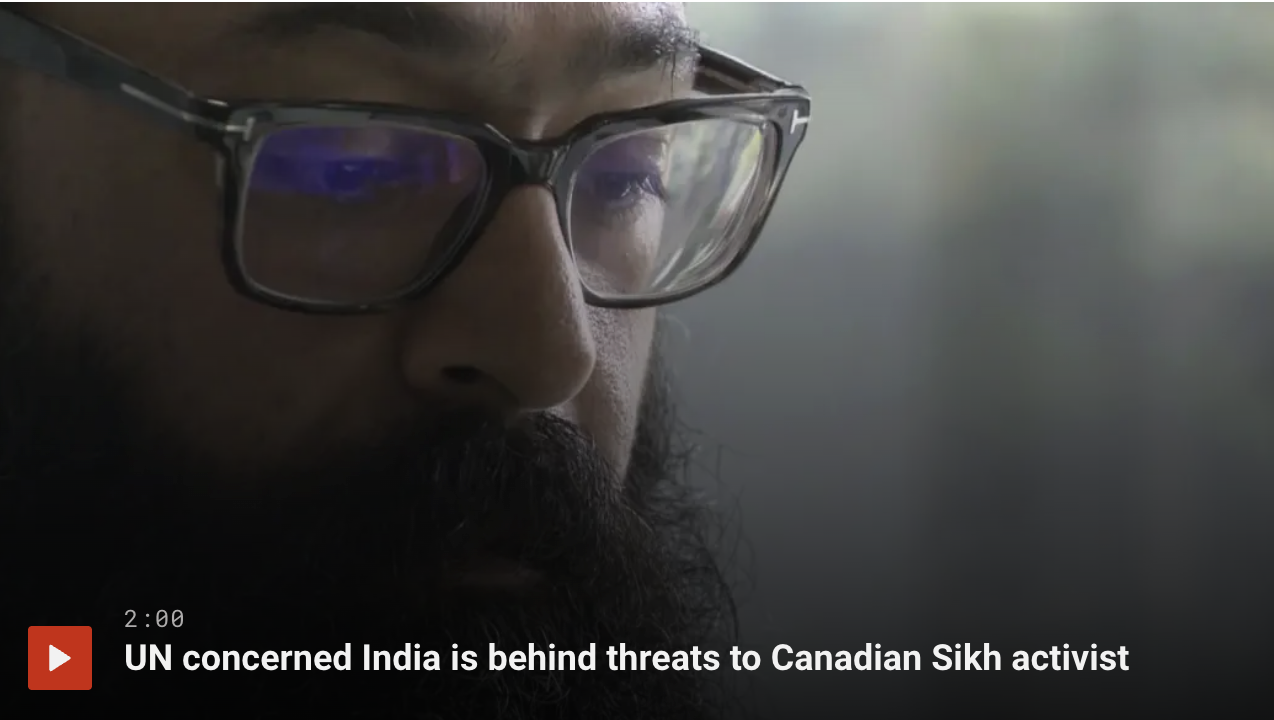
Global News 26/08/2026 - A prominent Canadian Sikh activist says he received a new “duty to warn” notification from the RCMP this week informing him of a credible threat to his life, which he calls proof that transnational repression by India of the pro-Khalistan movement is ongoing.
Gurpatwant Singh Pannun, a dual Canadian-U.S. citizen and lawyer with the New York-based group Sikhs for Justice, added he also received a similar threat notification from the FBI earlier this month.
“(The RCMP) stated that since I’m a Canadian citizen … this is our duty to give you a warning that there is exactly the same thing as what the FBI stated, that there’s a credible threat to your life,” Pannun said in an interview Wednesday. He said the RCMP would not divulge who was behind the threat or the motivation behind it. “They stated since this threat is credible and imminent, it is still under investigation,” he said.
Pannun added that several other pro-Khalistan activists have also recently received “duty to warn” notifications from Canadian law enforcement. He said those names were included in a so-called “kill list” of over 100 Canadians who Pannun alleges are under surveillance by Indian intelligence. He said the RCMP officials visited him in New York in June after Pannun alerted the federal government to the list, which he then gave to the RCMP. He said the “duty to warn” notifications began some time after that meeting.
Pannun has already faced an assassination plot that U.S. court documents last year said was led by a senior Indian intelligence officer. The U.S. Justice Department alleged that officer had recruited Nikhil Gupta, an Indian national and businessman suspected of drugs and weapons trafficking, to conduct the killing.
Gupta, 54, pleaded guilty in February to U.S. charges of murder-for-hire, conspiracy to commit murder-for-hire and conspiracy to commit money laundering. He is due to be sentenced in November, and could face about 20 to 24 years in prison under recommended federal sentencing guidelines.
Pannun was a close associate of Hardeep Singh Nijjar, who was gunned down outside a Sikh temple in Surrey, B.C., on June 18, 2023 — a killing Canada has blamed on India. Both victims were involved in a symbolic referendum on Khalistan, the independent state they had campaigned to establish in what is now India’s Sikh-majority Punjab. The Indian government considers such activities as terrorism, and has banned Pannun’s group Sikhs for Justice as an unlawful organization.
The group has since organized multiple symbolic Khalistan referendums, including an upcoming ballot in Edmonton in October. Pannun says the new threat won’t prevent him from attending the referendum in person. “Actually, that is encouraging me,” he said. “I may not have gone, but now, now I will make sure that I attend because I’m not afraid of their bullets. “We are responding to India’s violence with our votes, and that is our right.”
He added, however, that the new threat underscores India’s continued transnational repression and urged the Canadian government to act. Earlier this year, ahead of Prime Minister Mark Carney’s trip to India to meet with Prime Minister Narendra Modi, a senior official said during a background call with reporters that the government believed India was no longer plotting attacks on Canadians.
That statement has been refuted by Liberal MPs and appeared to contradict findings by the RCMP and other Canadian security agencies. Carney, who has sought to repair ties and strike new economic deals with India as he steers Canada away from reliance on U.S. trade, has hedged on publicly reviving the accusations against Modi’s government. Read more - Lire plus
| | Canada Faces Calls To Review Safe Third Country Agreement As Haitian Deportation Concerns Grow | | |
Canadian Immigration News & Information 08/2026 - Human rights organizations and refugee advocates are urging the Canadian government to re-evaluate the application of the Safe Third Country Agreement along the Canada-United States border. The renewed calls follow a decision by the United States to terminate Temporary Protected Status for hundreds of thousands of Haitian nationals residing in the country. Advocates argue that the loss of legal status in the U.S. exposes affected individuals to deportation, prompting heightened concern over how Canada handles refugee claims at land border crossings.
Under the Safe Third Country Agreement, individuals seeking refugee protection must make their claim in the first safe country they arrive in, unless they qualify for specific exemptions. The policy rests on the premise that both Canada and the United States maintain comparable human rights standards and fair asylum processing systems. However, shifts in U.S. immigration enforcement—such as the termination of relief programs like Temporary Protected Status—frequently reignite debate over whether the agreement adequately protects vulnerable populations seeking safety north of the border.
The agreement applies to individuals attempting to enter Canada at land border ports of entry, as well as between ports of entry along the shared land border. Standard provisions mean that claimants arriving from the United States without an explicit exemption are turned back to seek asylum through the U.S. immigration system. Exemptions currently exist for individuals with close family members who have legal status in Canada, unaccompanied minors, and individuals holding specific Canadian visas or study permits, as detailed by Immigration, Refugees and Citizenship Canada.
Advocacy groups contend that turning back Haitian nationals who no longer hold valid legal status in the United States risks putting them at direct risk of removal to Haiti, where severe political instability and safety concerns persist. While Canadian officials have not announced any official changes or suspension of the bilateral agreement in response to these calls, immigration policy analysts note that bilateral agreements remain subject to ongoing administrative review and legal scrutiny by domestic courts.
This situation directly impacts Haitian nationals currently in the United States who are contemplating moving north to present asylum claims, as well as refugee service organizations in Canada preparing for potential changes in border arrivals. It also affects non-governmental legal aid providers who assist claimants navigating complex border processing rules and eligibility screenings at ports of entry.
Individuals considering entering Canada to make a refugee claim must verify whether they meet one of the strict statutory exemptions under the agreement prior to arriving at the border. Because presenting a claim without meeting a designated exemption results in an immediate turn-back to U.S. authorities, prospective claimants should consult official legal resources or authorized legal representatives, and monitor policy updates published through official government channels. Source
Trump administration video showing Haitian deportees in chains sparks outrage
Afghans, Cubans and others sent to Africa as Trump expands 'third-country' deportations
ICE arrests jumped to nearly 50,000 in July, the highest monthly total of Trump’s second term
Trump Admin Plans Largest Visa Revocations in History, of up to 200,000 people who have sought asylum between 2016 and 2026
The Sex Criminals and Child Abusers of ICE and CBP
Appeals court dismisses case challenging Alien Enemies Act, does not address question of Trump's use of the wartime law
ACTION Canada: End the Safe Third Country Agreement
ACTION September 20: Cross-Country Day of Action for Migrant Rights
| RCMP must rescind inappropriate request for media to involve police before publishing news stories | |
CAJ 09/07/2026 - The Canadian Association of Journalists (CAJ) is deeply concerned by a recent Saskatchewan RCMP email urging journalists to check with police before publishing details about ongoing investigations — an attempt to give police a veto over independent editorial decisions.
Two RCMP officers were recently injured in a shooting in Melville, Saskatchewan. Following that incident, the RCMP emailed journalists asking them not to publish information provided by witnesses as it could “reshape memories that influence future interviews” and “impact future jury pools.” The email suggests that any media “in receipt of a special detail” should reach out to the RCMP before publishing that information.
The email further discourages media from reporting on details of incidents as it could impact victims of crime and their family and friends. “In a democracy, police must not control what information journalists publish. Reporters play a crucial role in keeping Canadians safe by giving them timely information that police do not always provide,” said Paul Schneidereit, CAJ vice-chair. “The RCMP needs to rescind this inappropriate call asking journalists to ask permission before reporting stories.”
In the 2020 Nova Scotia mass shooting, for example, the RCMP took 12 hours to tell the public that the shooter was driving what looked like a police car. The CAJ has spent decades working with the RCMP to ensure they respect basic democratic freedoms. This has included multiple private meetings with senior RCMP officers as well as public education campaigns and, when those have failed, court challenges. In 2021, for example, the British Columbia Supreme Court ordered the RCMP to stop blocking journalists from covering an ongoing protest over logging. In 2025, the RCMP formally apologized for violating a journalist’s rights. And CAJ President Brent Jolly recently testified in support of Amber Bracken, who is suing the RCMP for unjustly arresting her.
Journalists routinely weigh what the public has a right to know against potential harms to victims, witnesses, fair-trial rights and active police operations. That judgment is central to responsible reporting. It cannot be outsourced to police, and it must never be subject to police veto. It is not the role of RCMP nor any public body to control what the media may publish. Suggesting that the media rely only on RCMP released narratives and information about incidents is a clear violation of press freedom.
The role of journalism is to hold institutions and people in power accountable, including the RCMP, to publish information in the public interest, and to give victims of crime and others a public platform to have their voices heard. It is the role of newsrooms, not police, to determine what information is in the public interest and to uphold journalistic principles including minimizing harm. Police investigations, meanwhile, must be able to withstand media scrutiny while the justice system has legal safeguards in place to protect an accused person’s right to a fair trial such as publication bans on pre-trial proceedings, changes of venue and jury sequestration. Source
| | Israel says killing of Canadian aid worker was not a crime | |
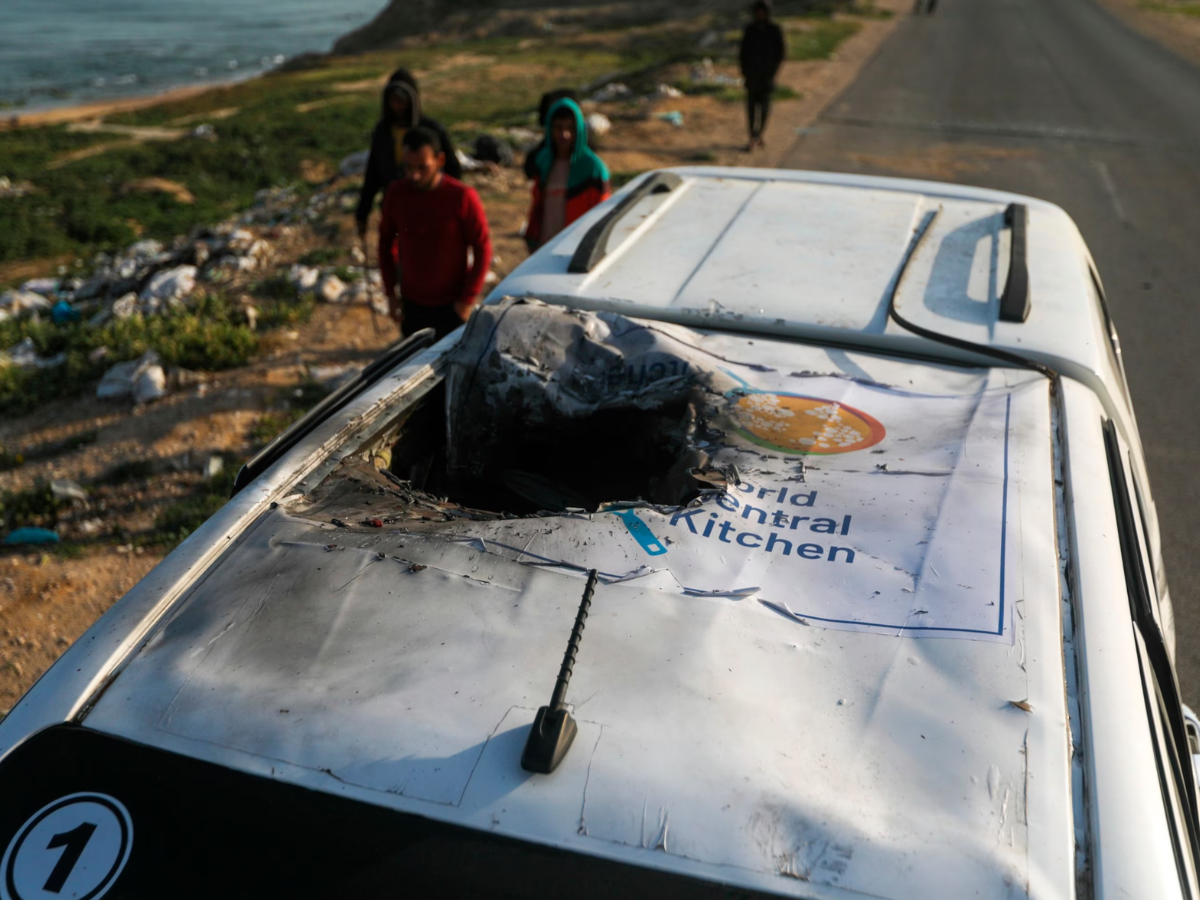
CJPME 19/08/2026 - On this World Humanitarian Day, Canadians for Justice and Peace in the Middle East (CJPME) is urging the Canadian government to hold Israel accountable for the killing of Canadian aid worker Jacob Flickinger in April 2024. Just today, the Israeli army announced that there will be no criminal investigation into the incident, in which a series of Israeli airstrikes deliberately targeted a humanitarian convoy in Gaza, killing 33-year-old Flickinger alongside 6 international and Palestinian volunteers with World Central Kitchen.
At the time of the killing, then-Prime Minister Trudeau condemned the incident and called for a "fully open, transparent, independent and rapid investigation." Such an investigation has never taken place. Instead, two years later, an internal review by the Israeli army has decided that the attack "did not cross the criminal threshold" and there will be no criminal investigation or further measures.
“This is a complete failure of accountability,” said Yara Shoufani, President of CJPME. “Will Prime Minister Carney allow Israel to get away with the murder of a Canadian aid worker, with no consequences? We call on the Prime Minister to hold Israel accountable, and end Israel’s cycle of impunity.”
In the absence of an investigation that can meet the standards previously set by Canada, CJPME urges Prime Minister Carney to impose sanctions on Israel and hold officials accountable for their role in this crime. CJPME further believes that Canada should have supported the demands of World Central Kitchen for an independent, third-party investigation, a demand that Trudeau never explicitly endorsed, unlike other countries who lost citizens in the attack. Although then-former Foreign Minister Mélanie Joly had clearly stated that "Israel needs to respect international humanitarian law, and we will make sure that is the case," the outcome of Israel’s internal review makes it clear that this will not happen.
“Once again, Israel has proven that it is either incapable or unwilling to investigate its own crimes. Canada’s calls for accountability mean nothing if they continue to put their trust in Israeli authorities to hold themselves accountable for war crimes and genocide,” added Shoufani. Source
Israeli strikes on Gaza kill 17 Palestinians
Israeli strikes kill 11 in Lebanon
Israel Kills 4 Children as It Warns Palestinian Kids Not to Fly Kites
ACTION Elbit Out of Canada
| Calling Israeli Settlers “Terrorists” Helps Cover Up Their State Backing | The label of “terrorism” is a political tool whose meaning has been shaped by those with the power to wield it. | |
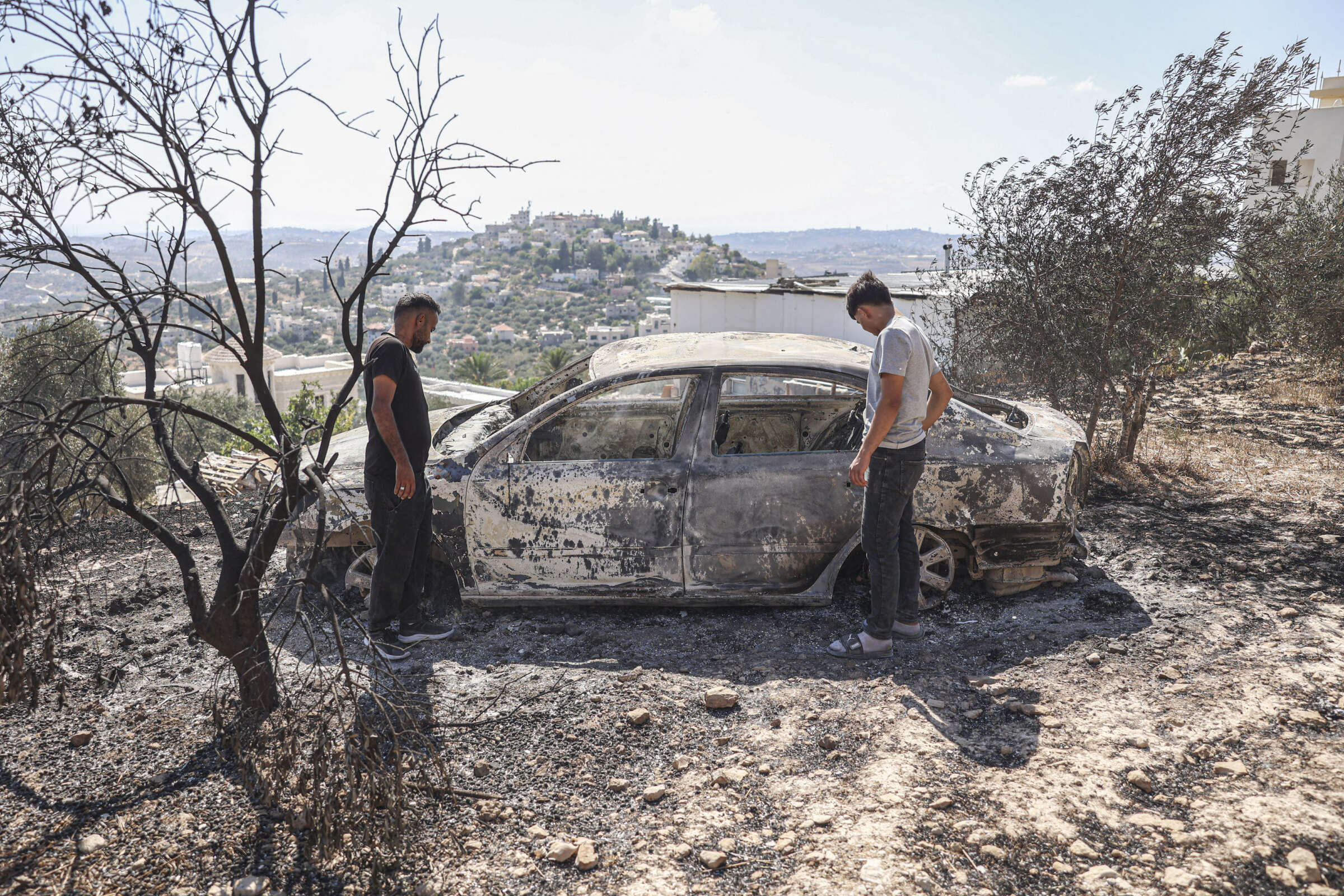
Truthout 29/08/2026 - On August 9, dozens of Israeli settlers surrounded three Palestinian homes in Qusra, south of Nablus. They blocked residents from leaving safely, cut water and electricity, damaged water pipes, and prevented food and other essential supplies from reaching the families inside. Days later, U.S. Ambassador to Israel Mike Huckabee — a longstanding supporter of the Israeli colonial enterprise — called those responsible “Israeli terrorists,” echoing the growing use of the term in the mainstream media and by human rights groups, the UN, and diplomatic circles.
For Palestinians who have endured over a century of systemic settler colonial violence, this rhetorical shift may be tempting to welcome as a step toward accountability. But embracing the “terrorism” framework would ultimately harm our cause and our people.
Settler colonial violence is, of course, real and terrifying, but “terrorism” is the wrong framework for understanding and confronting it, because it was designed to serve imperial designs and make settler violence look like an aberration. In this way, the label of “Israeli terrorism” often misleadingly characterizes settler violence as confined to the Israeli far right, even though it’s the product of a broad Israeli consensus and a systemic feature of Israel’s colonial regime.
The Origins of the “Terrorism” Label
The terrorism framework did not emerge from positive or emancipatory values, but has been exclusively weaponized against oppressed and marginalized peoples in the service of imperial agendas. While in the 1960s, the terrorism framing was used by western imperial interests against anti-colonial struggles (Algeria, South Africa, Vietnam, to name a few), the post 9/11 global “terrorism” narrative shifted to focus on a new “global enemy” — Islamic fundamentalism — and used to justify military occupations and atrocities across the world under the banner of the “War on Terror.” More dangerously, it was used to build a legal arsenal encroaching on people’s rights and freedoms, undermining the rule of law and peoples’ sovereignty under the cover of legality.
Palestinians know intimately what this framework enables. For decades, the “terrorism” label has been used to criminalize the Palestinian liberation movement, from designating much of the Palestinian political spectrum as “terrorist,” to carrying out colonial violence under the guise of “counterterrorism” — assassinating, imprisoning, and torturing Palestinians in Jenin, Tulkarem and across Palestine. The same framework has been used to stifle Palestinian civil society, including through Israel’s designation of six leading Palestinian organizations as “terrorist” organizations. And today, the language of counterterrorism has been used to justify the genocide in Gaza against 2.2 million Palestinians.
The Zionist regime even uses the counterterrorism framework to punish Palestinians victims of the settlers’ violence. Case in point, the day after a group of armed settlers attacked Palestinian residents of the village of Til (framed as “confrontation” by the mainstream media), the Israeli army announced a “counterterror” operation in the entire Northern West Bank.
There is a reason why terrorism has no agreed-upon definition under international law. It is a political tool whose meaning has been shaped by those with the power to wield it. A framework built and weaponized by imperial powers against colonized peoples cannot become the tool through which we dismantle colonial violence.
Another danger of embracing the “terrorism” label for settlers is that it exceptionalizes their violence, turning masked settlers who kill Palestinians, burn their homes, and attack their villages into a violent fringe — “bad apples” supposedly detached from an otherwise legitimate Israeli state and Zionist establishment.
But this violence is neither marginal nor new. Armed Zionist militias carried out expulsions, massacres, and attacks on Palestinian communities long before the establishment of Israel, culminating in the Nakba of 1947–48 and continuing through the occupation that followed the June 1967 War. Today’s settler violence belongs to this same continuum of dispossession.
Nor do settlers act outside the state. Their violence operates alongside — and is enabled and protected by — the military, police, courts, and other state institutions that dispossess Palestinians. They facilitate the demolition of homes, the seizure of land, restrictions on water access and freedom of movement, the imprisonment of Palestinians, and the forcible displacement of communities. Settlers are not an aberration from this system, but are among its agents.
The 1994 Ibrahimi Mosque massacre illustrates this clearly. American colonial settler Baruch Goldstein murdered 29 Palestinian worshippers and was condemned by the Israeli government at the time as an extremist. Yet in the massacre’s aftermath, it was Palestinians in Hebron who were subjected to collective punishment for a massacre they did not commit. The “extremist” could be disavowed while the colonial system around him was strengthened.
Today, calling violent settlers “Israeli terrorists,” or insisting that figures like Israeli National Security Minister Itamar Ben-Gvir “do not represent us” performs a similar function. While such rhetorical evolution is celebrated in Western establishment circles as a welcome widening of the Overton window, it does not arise from “miraculous epiphanies” driven by “moral urgency,” to paraphrase Mohammed El Kurd’s Perfect Victims.
On the contrary, it allows Western governments and Israel’s supporters to distance themselves from the most visible brutality without confronting the system they continue to support. The selective sanctioning of a handful of “extremist settlers” — sanctions that can be imposed and removed according to political convenience — follows the same logic, offering the appearance of accountability while leaving support for the broader system intact. The “terrorist” label becomes a convenient smokescreen: remove the bad apples, and the system itself can remain unquestioned.
Not a Right-Wing Issue
Framing settlers as “terrorists” reinforces another convenient fiction: that the violence of occupation belongs to Israel’s extremist far right, rather than reflecting a much broader political consensus.
While there are differences in rhetoric, pace, and strategic vision within Israeli politics — the so-called “left” favoring a more gradual and internationally palatable approach, while the far right openly advocates accelerated annexation and erasure — these differences obscure a large consensus within Israeli Jewish society calling for Palestinian dispossession and continued Israeli control. The divide is often less over the underlying project than over how aggressively and how visibly to pursue it.
This illusion is particularly visible during the current Israeli election campaign, as Western governments once again cling to the hope that ousting Netanyahu could restore Israeli institutions and reopen the path to “dialogue.” Yet Israeli politicians themselves repeatedly expose the limits of this distinction. When the UK condemned the E1 settlement plan, Foreign Minister Gideon Sa’ar defended the Jewish people’s right to live throughout the “Land of Israel,” invoking the Balfour Declaration as having recognized that right. In June, Netanyahu again rejected Palestinian statehood between the Jordan River and the sea, while Smotrich openly advances annexation in support of the Greater Israel vision. Even within the supposedly centrist opposition, positions on Palestinian land and settler violence reveal far more continuity than the language of “extremists” suggests.
Calling the most visible settlers and far-right politicians “terrorists” helps preserve this illusion. It allows Western governments to imagine that the problem lies with Netanyahu, Ben-Gvir, or a radical settler fringe — and that removing them could restore a more acceptable Israel — rather than confronting the structures that have sustained Palestinian dispossession for decades.
Erasing the Palestinian Right to Resist
Finally, the terrorism framework reinforces the fiction of “two sides.” Once a few government figures and settlers are framed as “terrorists,” their violence can easily be mirrored against Palestinian armed resistance: Israeli terrorists on one side, Palestinian terrorists on the other. Colonization is thus recast as a tit-for-tat conflict between two equivalent violent actors, erasing the profound imbalance of power between colonizer and colonized and denying Palestinians’ right to resist.
This false symmetry has concrete political consequences. When the EU sanctioned violent West Bank settlers, it simultaneously added Hamas figures to the same sanctions framework, as though condemning settler violence required an equivalent Palestinian target. The result is precisely the “both sides” logic the terrorism framework reproduces: an equivalence between the violence of an occupying power and the resistance of an occupied people.
The inconvenient reality is that decades of international impunity are the central reason why the colonial settlers’ movement has reached such levels of unleashed violence today. Calling settlers “terrorists” offers another escape from that accountability: it isolates individual perpetrators while leaving intact the system that arms, protects, and enables them.
I believe the “terrorism” label should not be used for any group, globally. West Bank settler violence is state-backed settler colonial violence. It is part and parcel of a century-long Zionist settler colonial project. Confronting this violence means confronting the institutions, policies, and structures that produce it — not simply the individuals who carry it out. Call it what it is. Source
| 25 Years of the Global War on Terror | |
CODEPINK 13/08/2026 - Twenty-five years ago, the U.S. launched what it called the “Global War on Terror” in the immediate aftermath of the September 11th attacks. Immediately, anti-Muslim and anti-immigrant sentiment spread like wildfire through the establishment media, the flames being fanned by the Bush Administration. Similar patterns continue today, whether it comes to Palestine, Cuba, Venezuela or Iran.
At that time, Politicians in the United States quickly passed legislation authorizing war on Afghanistan, which led to twenty years of deadly and brutal occupation. Despite Afghanistan having absolutely no relation to 9/11, feminist organizations and high-profile women quickly fell in line to manufacture consent for the invasion under the guise of women’s rights. These tactics were rinsed and repeated after October 7, 2023. Soon after 9/11, the U.S. government passed the PATRIOT Act, which allowed it to spy on its own people, paving the way for the surveillance state we have today. The length of the occupation of Afghanistan and the subsequent invasion of Iraq was used to justify inflating the ever-growing Pentagon budget, which threatens to reach $1.5 trillion soon.
The Global War of Terror never ended, and the surveillance and anti-immigration infrastructure has only expanded since. We are no safer now than we were twenty-five years ago. The departments and tactics that saw their first iterations in that era, such as the Office of Homeland Security, evolved and grew. ICE roam the streets, executing people in broad daylight; Flock cameras metastasize around the country, anti-Muslim hate crimes continue and torture black-sites like Guantanamo detention center remain open.
Ending the Global War of Terror means putting a stop to everything it created and changing the trajectory that the Bush Administration set us on, and every Administration since decided to continue. Ending the Global War of Terror means:
👉🏼 Cutting the Pentagon budget
👉🏼 Abolishing ICE and DHS
👉🏼 Accountability for the war criminals
And for the movement for social justice, it means feminist organizations refusing to be used as tools for warmongers and imperialists. Educate each other, inspire others and take action with us now! Source
Five years after the fall of Kabul, 'war on terror' ghosts have come home
Judge Throws Out Key 9/11 Confession as Tainted by Torture
U.S. kills two in eastern Pacific boat strike: The Trump administration’s targeting of vessels has killed at least 223 people in dozens of strikes on boats in the Pacific and Caribbean since September 2025
“They Want People Scared”: Former Palestine Action Member Blasts Trump’s Terror Sanctions
EVENT The Forever War and the First Amendment - Hybrid Symposium on Sept 9 & 10
| | These Protesters Were Charged With Terrorism. Who’s Next? | | |
The New York Times 18/08/2026 - This summer, a federal judge sentenced a group of eight anti-ICE activists to a collective 450 years in prison in what has become the first “test case” for the Trump administration’s crackdown on left-wing activism.
The government’s case is built on events that occurred last year in front of the Prairieland ICE detention facility in Alvarado, Texas, on the Fourth of July. That night, activists set off fireworks as part of a noise demonstration to show solidarity with the people detained inside. Then a few separated from the group, vandalizing cars, slashing tires on a government van and breaking a surveillance camera. When a police officer arrived on the scene and pointed his weapon, one of the demonstrators, Benjamin Song, fired an AR-15-style rifle, injuring the officer in the neck.
The government referred to the group of demonstrators as a “Northwest Texas antifa cell,” suggesting the activists were part of a coordinated effort to commit a terrorist attack on the ICE facility. What Mr. Song and the others did that night are crimes, to be sure. Mr. Song injured a police officer. Some damaged federal property. All of them were convicted of rioting. Civil rights advocates who watched the case expected those protesters to get sentences of a handful of years. Instead, even people on the periphery of the action — whose worst offense was spray-painting a guard post — got anywhere from 30 to 70 years in prison.
The decades-long sentences in the Prairieland case were only possible because prosecutors brought forth an unusual charge: “material support” for terrorism. This law, used primarily to prosecute Muslims in the years after 9/11, is now being broadly applied under the Trump administration against people the president characterizes as his political enemies. Who and what constitutes “terrorism” could have broad implications for our civil liberties. If Mr. Trump’s statements are any indicator, what happened at Prairieland is not likely to be an isolated incident.
The law that prosecutes material support to terrorism, created in 1994 and expanded two years later after the bombing of a federal building in Oklahoma City, is two-pronged: one part prosecutes support for a terrorist organization, and the second prosecutes support for specific acts of terrorism. Both come with lengthy minimum sentences and a possibility of a lifetime in prison. But what could constitute “support” is so ambiguous that, shortly after the law was created, it had confused even senior government officials. During an interagency background briefing, one Clinton administration official wondered if even “$25 of dues” to a group could count as material support.
As it turned out, prosecutions for small donations and increasingly vague definitions of support would happen in a few years. In the aftermath of the attacks of 9/11, prosecutors accused hundreds of people of supporting terrorism this way. “Support for terrorism” could entail anything from translating a magazine to even offering nonviolent alternatives to a militant group. It did not matter whether the defendant directly helped carry out an assault or belonged to a terrorist organization: They could be prosecuted as if they were.
The post-9/11 years were a time of a single-minded effort to quash threats of Islamic terrorism before an attack could be carried out. But the ambiguity of the law, in particular its focus on prevention, made the material support statute ripe for abuse by overzealous prosecutors. Take the case of a Kurdish imam in Albany, N.Y., named Yassin Aref, who was arrested in 2004 and charged under both parts of the material support law.
Prosecutors alleged that Mr. Aref saw a man (who turned out to be a government informant) “loan” money to a member of Aref’s mosque. The informant fabricated a story, telling Mr. Aref and the man that he had acquired the funds he was offering them by selling ammunition to a terrorist group that was planning to assassinate a Pakistani envoy. Mr. Aref nodded along with the vague details of the informant’s tale and, in keeping with Islamic customs of money lending, agreed to witness the loan. According to prosecutors, that was enough to show his support for terrorism, a crime of which Mr. Aref was eventually convicted, serving 15 years in prison. A Human Rights Watch report later highlighted Mr. Aref’s case as one of many examples of dubious uses of antiterrorism laws.
In those years, law enforcement swept through Muslim communities, goading young men — including those with no criminal record — into making statements in support of terrorist plots, then slapping them with material support charges. Of the nearly 1,000 defendants prosecuted by the United States on charges of international terrorism after 9/11, more than half were convicted of material support for terrorism, including in cases when no act of violence occurred.
An Albany Times Union columnist who was following Mr. Aref’s trial at the time wrote, “Someday we’ll look back on the present national paranoia over terrorism and the excesses done in its name with the same national embarrassment that Americans feel for Senator Joe McCarthy’s communist witch hunts of the 1950s and our appalling treatment of Japanese Americans during World War II.”
Twenty years later, the witch hunt appears to have only expanded, albeit with a different political focus. Last September, two months after the demonstration at the Prairieland ICE facility, Charlie Kirk was assassinated. After the murder, the president’s adviser Stephen Miller described left-wing political organizations as a “vast domestic terror movement.”
Weeks later, Mr. Trump issued a memo directing the F.B.I.’s Joint Task Terrorism Forces — a network expanded in the aftermath of 9/11 — to investigate and disrupt “domestic terrorism” and political violence. He also signed an executive order designating antifa as a “domestic terror organization,” describing it as a “militarist, anarchist enterprise that explicitly calls for the overthrow of the United States government.” But antifa, short for “antifascist,” is a leaderless political movement composed of disparate strategies and aims.
The U.S. government has no legal designation for “domestic terrorist groups.” Yet even when it is just talk, the Trump administration’s use of the term had an impact on the Prairieland case. In the original indictment, released in July 2025, prosecutors did not level any charges of material support for terrorism. By November, after filing two rounds of indictments, prosecutors had charged all eight defendants with the crime.
As a deeply reported Texas Monthly story detailed, the Prairieland defendants were hardly members of a cohesive terrorist cell. Some were part of a Signal chat that was used to plan the demonstration. Several of them were attached to various organizations, like the Democratic Socialists of America and an anticapitalist reading group.
Even if one reads these loose associations as proof of a coordinated attempt, legal experts told me it would not rise to a terrorism charge. The demonstrators were already faced with a cocktail of severe charges after their arrest, including attempted murder. (Mr. Song would be convicted of attempted murder; the other four defendants charged with it were acquitted.) But the material support charge allows the court to impose some of the harshest sentencing in its legal arsenal. “It’s an act of judicial terrorism, designed to keep people from coming to protest,” Shayana Kadidal, a senior lawyer for the Center of Constitutional Rights who has worked on material support cases, told me.
This law has not only been used against individuals; prosecutors have also turned it against nonprofits, ultimately shutting down a major Muslim charity and complicating the work of others. “Once terrorism laws are in place, they are hard to roll back,” Katherine Tomaszewski, a lawyer who has helped charities in such cases, told me. “No one wants to be seen as ‘soft on terror.’” The danger, she pointed out, is in the law’s being so “overbroad and unchecked” that it can be manipulated.
We’re already beginning to see the Trump administration building on such precedents. In the aftermath of Mr. Kirk’s murder last year, the White House called for investigations of liberal foundations and donors, like the philanthropist George Soros and the businessman Reid Hoffman, for their role in what they claim is fomenting political violence (read: financing liberal nonprofits). The Justice Department instructed federal prosecutors to explore possible charges against Mr. Soros’s Open Society Foundations, including racketeering, wire fraud and material support for terrorism.
It could well get worse from here. “The label of ‘terrorism’ is a powerful political tool,” Sufia Khalid, a lawyer representing one of the Prairieland defendants, told me. For the last two decades, the “terrorism” charge was leveled almost exclusively at a religious minority, lulling some into believing that such laws would not affect them. Now, the domestic use of the terrorism charge threatens to cast its net even wider. Source
How Anti-ICE Protesters Became Prisoners in Trump’s War on Antifa: “We are not terrorists.”
Leak: Top Democratic Org's “Anti-Extremism” Project Targets Left
Conservative Groups Side With Minneapolis Protesters Against Trump Crackdown
| | HHS Issues False Report Linking Support For Gender Affirming Care With “Authoritarianism” And Violence | The report suggests that “gender ideology” acts as an “accelerant” for “political violence.” | |
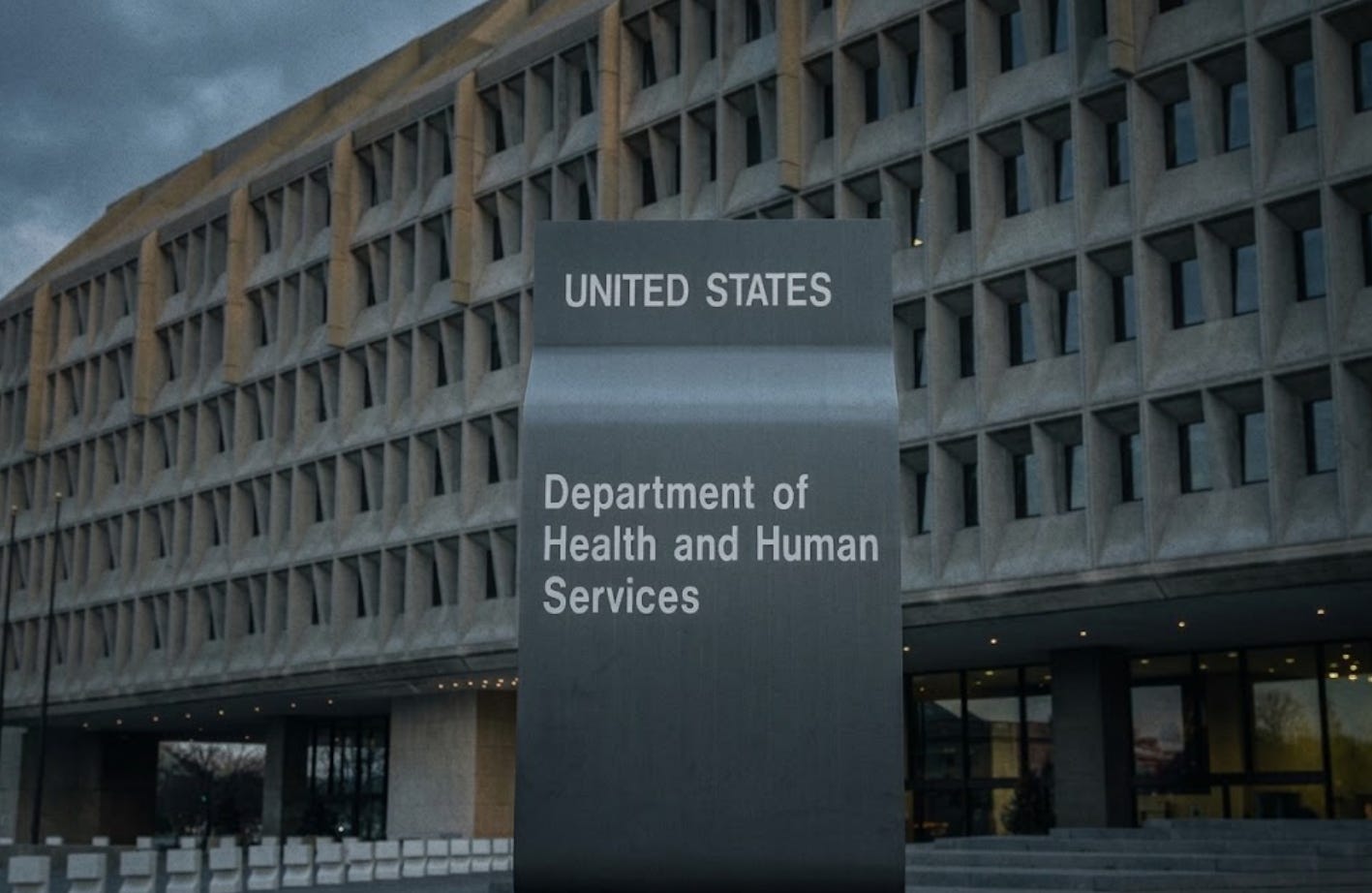
EITM 28/08/2026 - If you use a trans person’s preferred name or call them by their requested pronouns, then you are more likely to support political violence, a new report commissioned by the Department of Health and Human Services claims.
It adds to a growing body of pseudoscientific literature that has been manufactured by the right and used to justify attacks on the LGBTQ community.
The report, titled “Where the Clinic Meets the Movement: Does Gender Ideology Arm Left-Wing Authoritarian Psychology?”, is based on a survey that polled over 1,200 Americans. It claims to gauge respondents’ support of “the official positions of clinical institutions” on gender-affirming care—institutions like the American Psychiatric Association and the World Professional Association for Transgender Health—and on participants’ propensity towards what these researchers call “left-wing authoritarianism.”
The report draws on these answers to market the argument that “gender ideology” acts as an “accelerant” for “political violence.” But the report doesn’t actually measure what it says it does. Like much of Trumpian science, it uses methodologically indefensible tactics to fuel a transparently predetermined, ideological outcome.
“This so-called study, sponsored by an extreme right-wing advocacy organization, is another example of the outcome leading the research - MAGA Republicans want to sow hatred against our fellow Americans in a desperate attempt to distract from their failures ahead of the midterms,” Kelley Robinson, president of the Human Rights Campaign, said.
The survey does not indicate whether it was governed by oversight from an institutional review board (IRB). It was not published in a journal. It did not undergo peer review. And it is tied to conservative advocacy groups like the Network Contagion Research Institute as well as the Manhattan Institute, whose staffer Leor Sapir also co-authored the HHS’ widely condemned “Gender Dysphoria Report.”
Based on responses, researchers weighed participants’ opinions on a “Clinical Gender Affirmation Scale,” which they claim measures support of major medical groups’ guidelines for treating transgender patients. In actuality, the survey simply asked about the perceived importance of respecting transgender people through name and pronoun usage, not gender-affirming pharmacological or surgical care.
One question does not even contain an opinion at all. It simply states the well-established fact that rejecting a trans person’s gender identity causes “psychological distress.” Then the study asked respondents to react to a series of statements meant to measure one’s affinity for “left-wing authoritarianism”—as opposed to right wing authoritarianism. This included asking about the killings of figures like Charlie Kirk and United Healthcare CEO Brian Thompson, but also statements such as, “Anyone who opposes gay marriage must be homophobic.”
They also claim the survey measures a person’s sympathy for “gender ideology,” without ever defining what that is. This might be because there is no established definition for the far-right buzzword. According to Human Rights Watch, however, the notion of “gender ideology” is a “Hydra-like global conspiracy myth,” stemming from the Catholic Church, designed to fearmonger about women’s rights, reproductive justice, and the LGBTQ community.
“These are not scales that have ever been validated. They just made them up on their own,” said Andrew Flores, an associate professor of government at American University and a distinguished visiting scholar at the Williams Institute, during an interview with Erin in the Morning. Flores’ own work on how authoritarian principles intersect with anti-trans bias was explicitly referenced in the report. “It is very much stacking the deck in favor of trying to find these correlations.” [...]
R.G. Cravens, a political scientist and senior manager of research and analysis at the SPLC, told Erin in the Morning these reports are dangerous additions to the right’s anti-trans playbook. The federal government and the anti-LGBTQ movement have been trying to claw their way into validity for years by using (or abusing) the academic publishing industry. Barring that, they’ve sought the seal of approval from a federal agency.
“It is anti-LGBTQ ideology seeking legitimation from the federal government, from HHS,” Cravens said. “The hard right will claim this is evidence that trans people, especially, are violent, terroristic threats. And they’ll try to use that to erode rights and civil liberties.”
These efforts have been turbocharged under Trump. In May 2026, the White House added “pro-transgender” groups to a report on its counterterrorism strategy. Conservative behemoths like the Heritage Foundation created the idea of “Transgender Ideology-Inspired Violent Extremism” to target trans people in the aftermath of the assassination of Charlie Kirk. Project 2025, the Foundation’s widely circulated blueprint for establishing an authoritarian theocracy, argues transgender expressions should be classified as “pornographic,” and that teachers or librarians who address the topic should be put on the sex offender registry.
“To what extent will this be used to justify the pursuit of criminal cases against doctors, or against LGBTQ people directly?” Cravens asks. “That’s an open question.” Read more - Lire plus
| It’s Time to Rein in Lethal AI Drones | |
Tom Dispatch 26/08/2026 - Drone warfare, for many years, meant mostly one thing: A U.S. Predator drone, a missile-armed winged lawnmower in the sky, stalked a single target and then assassinated him. Or someone, at least. Top-secret Pentagon documents showed that 90 percent of those killed during one campaign in Afghanistan were not the primary targets, according to a 2015 investigation by The Intercept.
This type of drone war now seems quaint.
Last week, Ukrainian forces unleashed a blitz of almost 800 drones on Russian targets, only two days after launching a similar salvo. Ukraine has increasingly let loose swarms of hundreds of drones to overwhelm Russian air defenses, not unlike more modest Iranian efforts — using attack drones and ballistic missiles — that defeated U.S. countermeasures and resulted in a massive increase in American casualties in the Middle East.
Russia claimed to have shot down most of the drones, but last week’s attack did set fire to a warehouse owned by Wildberries, Russia’s biggest online retailer. Ukraine has pummeled Russia’s analogue to Amazon all summer, claiming it helps supply the Russian military. (Moscow denies this.)
Ukraine also reportedly has (or at least had) a plan to shutter Moscow’s airports, cutting the capital off from the rest of the world, by unleashing swarms of around 1,000 autonomous drones equipped with artificial intelligence guidance systems each night. These drones would apparently use so-called “map matching,” in which the drone’s AI would compare uploaded aerial maps with what its onboard camera views; when it sees something resembling the image of the target, it streaks toward it and explodes. You can imagine the many mistakes that could be made — not to mention the potential risk to passengers, airport staff, flight crews, and others, even if the AI works seamlessly.
Ukraine has yet to unleash such a drone barrage, but after Russia’s use of fully autonomous AI-guided drones to kill three people in a July attack, the AI arms race is poised to take a new and terrible turn. Today, TomDispatch regular Rebecca Gordon takes us on a tour of AI-enabled battlefields and reveals the horrors that tomorrow may hold as lying, cheating, scheming AIs increasingly slip out of their digital cages and run amok. Read more - Lire plus
'Five Eyes' intel alliance weighs using AI to combat terrorism
| | OTHER NEWS - AUTRES NOUVELLES | | ICLMG ACTIONS DE LA CSILC | | The Justice Minister must end the injustice against Hassan Diab! | | |
In April 2023, despite clear exculpatory evidence, the French Court of Assize conducted an in absentia trial that unjustly declared Dr. Hassan Diab guilty and sentenced him to life in prison. The proceedings amounted to a sham trial and a mockery of justice.
Since that ruling, Dr. Diab and his family have lived in constant uncertainty, facing the ongoing threat that a second extradition request could be made at any time.
Please click below to send a new letter demanding that Justice Minister Sean Fraser categorically refuse any future extradition request and put an end—once and for all—to this ongoing miscarriage of justice.
| |
Canada: Abolish rights-violating terrorist entities list!
| | |
On October 15, 2024, the Canadian government placed the Samidoun Palestinian Prisoner Solidarity Network on Canada’s terrorist entities list. While ostensibly a tool to protect the safety and security of people in Canada and internationally, the list is an arbitrary political tool that undermines freedom of association, of expression and due process in the courts. Its effectiveness as a national security tool has never been demonstrated in a manner that justifies its use.
Due to these deep flaws, and more, the ICLMG has consistently called for the list to be abolished since the Canadian coalition’s founding in 2002. Please join us in urging the Canadian government to abolish the rights-violating terrorist entities list once and for all. Thank you!
| | Canada must repatriate all Canadians detained in NE Syria/Iraq now! | Every day the government fails to bring these Canadians home, it places their lives at risk from disease, malnutrition, violence, and ongoing military conflicts. United Nations officials have even found that the conditions faced by Canadians in prison are akin to torture. Please click below to urge the federal government to repatriate all Canadians illegally and arbitrarily detained in northeast Syria without delay. | | 23 years of fighting deportation to torture: Justice for Mohamed Harkat! | | CSIS isn't above the law! | | |
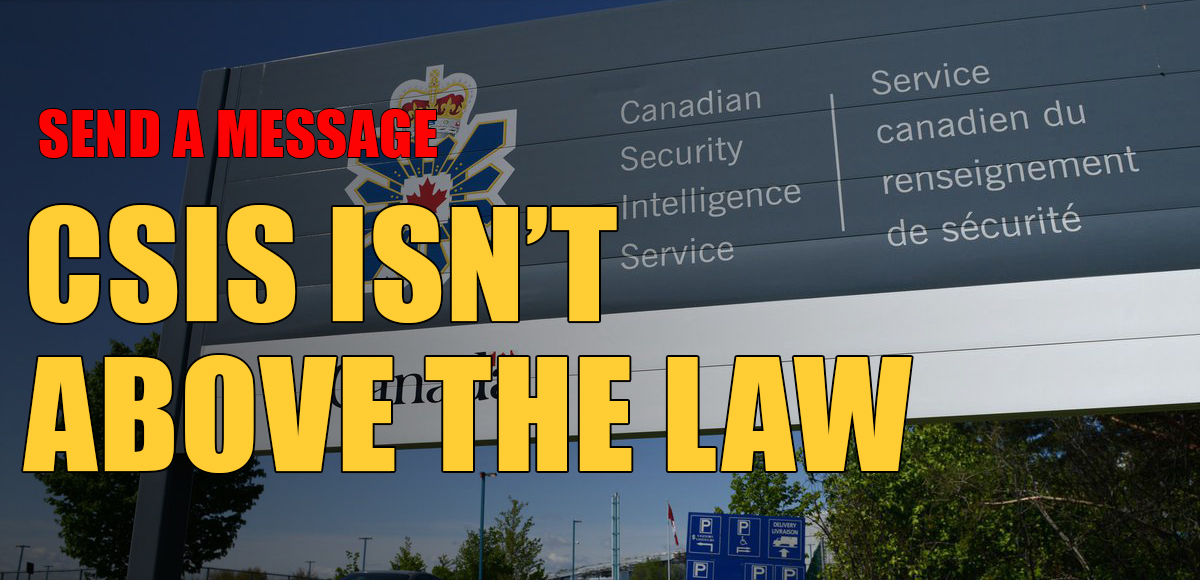
In recent years, at least three court decisions revealed the Canadian Security and Intelligence Service (CSIS) engaged in potentially illegal activities and lied to the courts. This is utterly unacceptable, especially given that this is not the first time these serious problems have been raised. CSIS cannot be allowed to act as though they are above the law.
Send a message to the Public Safety Minister demanding that he take immediate action to put an end to this abuse of power and hold those CSIS officers involved accountable. Your message will also be sent to your MP and to the Minister of Justice.
| | Reform Canada's extradition law now! | |
Canada’s extradition system is broken. One leading legal expert calls it “the least fair law in Canada.” It has led to grave harms and rights violations, as we’ve seen in the case of Canadian citizen Dr Hassan Diab. It needs to be reformed now.
Click below to send a message to urge the Prime Minister, the Minister of Justice and your MP to reform the extradition system before it makes more victims. Thank you!
Version française: Le Canada doit réformer la loi sur l'extradition!
| | Canada must protect encryption! | |
Canada, with other G7 nations, continues to push to weaken our access to strong, reliable encryption, after decades of being supportive of strong encryption. We need encryption to safeguard our data, our online transactions, our communications, and to protect the lives of journalists and human rights activists.
Please send a message to the Prime Minister of Canada, the Minister of Public Safety, as well as your Member of Parliament, to urge them to reverse course and once again commit to protecting encryption.
Regardez la vidéo avec les sous-titres en français + Agir
| | Protect our rights from facial recognition! | Facial recognition surveillance is invasive and inaccurate. This unregulated tech poses a threat to the fundamental rights of people across Canada. Federal intelligence agencies refuse to disclose whether they use facial recognition technology. The RCMP has admitted (after lying about it) to using facial recognition for 18 years without regulation, let alone a public debate regarding whether it should have been allowed in the first place. Send a message to the Prime Minister and the Public Safety Minister calling for a ban now. | | What we've been up to in the first half of 2026! | |
ICLMG 01/07/2026 - Thanks to the support of our members and donors, we were able to do a lot and work on the following issues since January:
- State surveillance bill C-22
- New social media and online harms bill C-34
- Impacts of Countering Terrorism Financing on charities, non-profits, solidarity work and international assistance
- Canada’s complicity in torture
- Islamophobia and anti-Palestinian racism
- Artificial Intelligence regulatory frameworks & national security
- Canada's No Fly List
- Foreign interference regulations
- Xenophobic bill C-12
- Anti-protest and anti-freedom bill C-9
- Review of Canada’s 7th report on the International Covenant on Civil and Political Rights
- UN Global Counter-terrorism strategy
- We were interviewed or quoted in a dozen media pieces
- We published our News Digest every two weeks
-
Our National Coordinator, Tim McSorley, received CMPAC’s 2026 Community Partner Award
Read our full summary of activities for the first half of 2026 and our plan for the rest of the year
| | Les opinions exprimées ne reflètent pas nécessairement les positions de la CSILC - The views expressed do not necessarily reflect the positions of ICLMG. | | |
THANK YOU
to our amazing supporters!
We would like to thank all our member organizations, and the hundreds of people who have supported us over the years, including on Patreon! As a reward, we are listing below our patrons who give $10 or more per month (and wanted to be listed) directly in the News Digest. Without all of you, our work wouldn't be possible!
James Deutsch
Bill Ewanick
Kevin Malseed
Brian Murphy
Colin Stuart
Bob Thomson
James Turk
John & Rosemary Williams
Jo Wood
The late Bob Stevenson
Nous tenons à remercier nos organisations membres ainsi que les centaines de personnes qui ont soutenu notre travail à travers les années, y compris sur Patreon! En récompense, nous nommons ci-dessus nos mécènes qui donnent 10$ ou plus par mois et voulaient être mentionné.es directement dans la Revue de l'actualité. Sans vous tous et toutes, notre travail ne serait pas possible!
Merci!
| | | | |