|
International Civil Liberties Monitoring Group
Coalition pour la surveillance internationale des libertés civiles
August 2, 2025 - 2 août 2025
| | Exposing Canadian military exports to Israel | |
AEN, PYM, WBW 29/07/2025 - For the first time, complementary shipping records and government data provide the most detailed public snapshot to date of Canada’s military support for Israel’s assault on Gaza—contradicting repeated claims that Canada had stopped sending weapons to Israel. As of July 23, 2025, the Gaza Ministry of Health reports that at least 59,219 Palestinians have been killed and 143,045 have been injured in Gaza since October 7, 2023.
As a signatory to the Geneva Conventions and Arms Trade Treaty, Canada is legally obligated to prevent and not be complicit in genocide, and must ensure that its actions, including arms transfers, do not facilitate serious violations of international law.
This report unveils the hidden reality behind Canada’s public statements on arms exports to Israel, revealing a systematic deception that has enabled the flow of Canadian-made weapons directly into one of the deadliest military assaults in modern history. Using two complementary methodologies never before applied to track Canadian arms exports—commercial shipping data tracing direct shipments from Canadian manufacturers to Israel through July 2025, and Israeli Tax Authority (ITA) import data from October 2023 to May 2025—this report exposes a vastly different reality than government claims: a continuous, massive pipeline of Canadian weapons flowing directly to Israel.
While former Foreign Affairs Minister Joly and Prime Minister Trudeau, as well as current Prime Minister Mark Carney have repeatedly insisted that Canada has restricted arms exports to Israel, this report uncovers:
- 47 shipments with detailed commercial shipping records uncovered from manufacturers in Canada selling military-related components to Israeli weapons companies between October 2023 and July 2025;
- 421,070 bullets exported to Israel since the Gaza assault began, including one shipment in April 2025 alone containing 175,000 bullets;
- Three shipments of cartridges from a General Dynamics Ordnance and Tactical Systems (GD-OTS) facility in Repentigny, Quebec, including one that occurred nine days after the then-Foreign Affairs Minister publicly pledged that Canada would block munitions exports from the same Quebec company to the Israeli military;
- 391 shipments including bullets, military equipment, weapons parts, aircraft components, and communication devices exported from Canada to Israel between October 2023 and June 2025, according to data from the Israeli Tax Authority (ITA) – representing only a portion of total exports;
- Shipments from seven Canadian cities destined primarily for Israel’s largest weapons company Elbit Systems and its subsidiaries, along with other Israeli defence firms including Elta Systems, WaldyTech, Snunit Aviation and NIRON Systems;
- Around 100 international flights transporting Canadian components to Israel – 64 of them commercial passenger flights where military cargo was loaded beneath civilian travelers on routes through Frankfurt, Paris, New York, Abu Dhabi, and New Delhi.
The findings confirm the continued export of military goods to Israel in 2025, despite repeated Canadian government statements asserting restrictions or prohibitions on such transfers. They reveal that weapons continued flowing to Israel throughout 2024 and 2025 under the recordbreaking number of permits authorized before the government’s January 2024 pause. The sheer volume of these shipments, detailed in different sections of this report, highlights the scale of pre-approved permits.
By continuing to send arms transfers to Israel, Canada is violating both domestic law and its commitments under international law. Faced with the unfolding ethnic cleansing and the mass starvation of Palestinians in Gaza, and bound by its legal and moral duties, Canada must urgently impose a full two-way arms embargo on Israel. This requires canceling all active arms export permits, closing loopholes for U.S. transfers, banning surveillance and dual-use technology, and canceling all contracts and planned purchases of military goods from Israel. Read more - Lire plus
NEW Demand your MP take real action to sanction Israel and impose a full and immediate arms embargo
Webinar: Arms Embargo Now: Urgent Movement Briefing - go to 41:41 to take action!
26 Canadian Senators call for a full arms embargo following the report
The United Nations is Investigating the US and Canada for Enabling Atrocities in Gaza
NEW Call Your MP to Urge the Government to Take Meaningful Action for Gaza
NEW Call Global Affairs to End Starvation!
NEW Israel is Starving Palestinians to Death - Email Carney to take Immediate Action
NEW Tell Carney to sanction Israel
Letter signed by over 250 Muslim organizations and civil society groups in Canada urging action on Gaza
Joint Open Letter to PM & Minister of Foreign Affairs: Canada Must Act NOW to End the Deliberate and Systematic Starvation of Palestinians in Gaza
Food is a right, not a weapon: Canada must act for Gaza now, starting with a full arms embargo, cancelling our free trade deal with Israel, and imposing biting sanctions
Liberals will recognize Palestine as a state under conditions, maintaining status quo
| | Killed While Waiting on Canada as Son Launches Hunger Strike | |
Rural Refugee Rights Network 28/07/2025 - This gentleman on the left is Abdullah Jarghon. He is the father of Palestinian Canadian permanent resident Hossam Jarghon (on the right).
Hossam's father was killed on July 26 in Gaza, along with his niece, and three of his nephews, when an Israeli airstrike made a direct hit on a tent where the family was sheltering. All of them had been waiting for visas to come to Canada for 564 days, since January 10, 2024.
Had they been Ukrainian, their visas would have been processed within 14 days. The fact that it took 140 times longer to process the applications (and still they are not completed) has led, once more, to a horrific and wholly preventable loss.
In addition, nine of Hossam's nephews were seriously injured, and his brother Samer sustained life-threatening wounds. The blood is not only on Israeli hands but on Canada’s as well. In addition to Canada being a sole-source supplier for F-35 parts used in such bombing strikes, as well as a sole-source supplier of the accelerant used in Israeli weapons, Canada was legally obligated to take provisional measures in January 2024 to prevent further harm and protect vulnerable populations during ongoing legal proceedings when the International Court of Justice ruled a plausible case of genocide was taking place.
One measure Canada should have been taking was prioritizing the emergency exit of Palestinian loved ones from Gaza to their Canadian families. But instead of an emergency humanitarian program, this has been a None is Too Many program, reminiscent of another horrible chapter in our history.
Hossam has now begun an open-ended hunger strike seeking the immediate evacuation of all of his surviving family members, including his mother, sisters, and other children who, he told the Rural Refugee Rights Network, "are still alive but remain trapped under catastrophic conditions — with no access to proper medical care, no food, no medicine, and no safe shelter.”
In a brief statement this morning, Hossam wrote: "In response to this unbearable inaction and to save what remains of my family, I began a peaceful hunger strike on Saturday, July 26, 2025, and I will continue until my surviving family members are safely evacuated and reunited with me in Canada. I appeal to the Government of Canada — a nation known for its compassion and respect for human dignity — to act immediately. Any further delay could mean additional lives lost. I also call on Canadian media outlets to help raise awareness of this urgent humanitarian crisis. My family — like many others — is suffering in silence and needs your voice.”
Hossam's is one of the voices we will take with us when we hold our weekly Ottawa vigil to Evacuate and Reunite all Palestinian families from Gaza with their loved ones in Canada. It takes place Wednesday, August 6th, from 11 am to 1 pm, at Immigration, Refugees and Citizenship Canada, 300 Slater Street (at Kent).
See Gazan Canadians for sit-ins in other cities across Canada! Source
NEW The Canadian Government Must Reunite Gazan Families
| | “Our Genocide”: Israeli Human Rights Groups Accuse Israel of Destroying Palestinian Society in Gaza | | The Great Canadian Rights Grab | To keep the US happy, Mark Carney’s Liberal government is pushing Bill C-2 — expanding surveillance, limiting refugee protections, and eroding privacy in the name of national security. It’s Canada’s own PATRIOT Act, minus the excuse of an actual attack. | |
Jacobin 22/07/2025 - As Canadians began to tune out politics for the summer, Mark Carney’s Liberal government pushed forward with a border bill reminiscent of conservative security crackdowns on both sides of the forty-ninth parallel. Framed as a matter of getting things done at speed and scale — and with an eye toward placating the Trump administration in hopes of securing a trade deal — the Carney government tabled a bill that would grant extraordinary new powers to the state. Critics warn the bill carries significant risks.
The Liberals don’t seem especially troubled by these critiques — but they should be. Amnesty International has denounced the proposed law as an “attack” on the rights of asylum seekers, arguing it “would make it virtually impossible for most people entering Canada via the US to have their refugee claim reviewed by the Immigration and Refugee Board.”
For a party that just won an election by running against Donald Trump and threats to Canadian sovereignty from the Yankee menace — “Elbows Up” and all that — Bill C-2 is a particularly cynical offering. Just months ago, Carney was warning that Trump was trying to “break” Canada, “so that America can own us,” and demanding that the president drop his fifty-first state rhetoric before any cooperation between the two countries would resume. Now Canada is not only open for business — it appears keen to comply with US demands, including a dangerous border security law that won’t bring the country any closer to a fair and lasting trade deal. Not that the legislation would be any better if it did.
Law and Border
The Canadian Civil Liberties Association has joined nearly forty organizations and over 120 experts in calling for the bill to be withdrawn. They argue that it not only “undermines migrant rights” but constitutes “a sweeping omnibus bill that raises significant privacy concerns.” Bill C-2 would empower law enforcement to demand private information from companies without a warrant and with a lower burden of proof. “Law enforcement officials will be able to extract highly revealing information about people with these demands,” the CCLA warns, “including whether they’ve purchased something at any company, interacted with any website, or stayed at any hotel. These demands will occur in secrecy, and organizations are given only 5 days to challenge overbroad demands in court.”
The organization also flags the bill’s broad information-sharing provisions, which allow federal departments to share private data — and raise the prospect of similar arrangements with the United States. These provisions are paired with expanded surveillance powers, a disconcerting development in an era of increasingly invasive digital spying. And just to round things out, Bill C-2 also shields the state from meaningful scrutiny. Legal expert Michael Geist calls it “lawful access on steroids” and warns of “expansive warrantless disclosure with unprecedented secrecy.”
Parliament returns in September, and both the House of Commons and the Canadian public will be paying much closer attention to the border security bill. What happens between Canada and the US in the meantime is anyone’s guess — summer tends to be quiet, but relations are unlikely to thaw. For months, Trump has gone back and forth on his reasons for levying tariffs on Canada — citing everything from fentanyl to “weak” border security, military spending, trade imbalances, the digital services tax, and more. Just as erratic as his reasons have been are the tariffs themselves, which he has alternately imposed and walked back. [...]
Big Brother in Search of a Trade Deal
Faced with real or perceived security and economic threats from the US, the Carney government must explain how it can simultaneously treat the Americans as an existential threat to Canadian sovereignty and propose to neutralize that threat by giving them everything they want. That includes a potential information-sharing arrangement under the guise of border security and deeper military integration — almost guaranteed to follow from the government’s increased defense spending.
Canada’s PATRIOT Act in miniature is reminiscent of the post-9/11 era of American panic and security overreach, which found its mirror in Canada through anti-terror and surveillance laws passed by the Liberal government of Jean Chrétien and the Conservative government of Stephen Harper. This time, however, the overreaction isn’t driven by a terrorist attack but by the hope of a trade deal — one that, in the worst-case scenario, doubles as a performance of Canadian sovereignty by caving into American demands.
The border bill comes at a time when many Canadians, rattled by the specter of Donald Trump’s return, may be more inclined to wave through sweeping changes. That Trump represents a serious external threat may be beyond question — but it’s not a justification for massive security overreach at home. The Liberal government may be counting on the public to overlook the dangers of Bill C-2 while the country remains in a state of shock and worry — just as both the United States and Canada did in the years after 9/11. But one hopes Canadians will recognize the risks for what they are and demand the bill be rescinded or defeated as passions calm.
Right now, the Liberals are trying to have it both ways: treating the US at once as a threat and a foil, and as a trusted partner with whom Canada is keen to do business. In walking that line, they appear willing to sacrifice fundamental privacy rights and migrant protections — all while staying in step with the Trump administration. It’s both bad strategy and bad policy. Scrapping Bill C-2 would be a good place to stop pretending both stories can be true. Read more - Lire plus
ACTION Stop Bill C-2 and protect our rights!
C-2 vise à « restreindre les droits reconnus internationalement », dit un expert
Why Canada’s New Border Policy Will Screw Over Refugees
EFF: Canada’s Bill C-2 Opens the Floodgates to U.S. Surveillance
The Bill C-2 Lawful Access Charter Statement contains incorrect and misleading statements (video)
| | Les données des Québécois [et Canadien.nes] hébergées par Microsoft accessibles au gouvernement américain | |
Le Journal de Montréal 23/07/2025 - Les données des Québécois hébergées sur des serveurs de Microsoft pourraient être consultées par le gouvernement américain, selon l’expert web Bruno Guglielminetti.
«Si les données d’un citoyen canadien sont stockées sur les serveurs de Microsoft, y compris au Canada, elles peuvent être remises au gouvernement américain, sans que les autorités canadiennes n’aient leur mot à dire», s’inquiète Bruno Guglielminetti sur son blogue.
«L’accès aux données se fait de manière silencieuse, sans que le gouvernement en soit informé, l’opposition devient purement symbolique», avance-t-il.
C’est le passage explosif d’un haut dirigeant de Microsoft au Sénat français le 10 juin dernier qui lui fait craindre le pire.
Devant les élus français, Anton Carniaux, directeur des affaires publiques chez Microsoft France, a reconnu que la société Microsoft ne peut pas garantir que les données des Français ne soient pas consultées par les Américains à leur demande.
Cela est possible en vertu du CLOUD Act.
Microsoft n’avait pas répondu à nos questions au moment d’écrire ces lignes mercredi.
Rappelons que mardi dernier, Québec a confirmé que des sites web de l’administration publique pourraient devoir fermer en raison d’une faille de sécurité de Microsoft SharePoint. Source
Microsoft Can't Keep EU Data Safe From US Authorities
ICYMI: A Preliminary Analysis of Bill C-2 and Canada’s Potential Data-Sharing Obligations Towards the United States and Other Countries
| | Canada Awards $169 Million Deal To U.S. Company Sued Over Iraqi Abuse | |
The Maple 24/07/2025 - Canada’s Department of National Defence (DND) announced this month it is awarding two contracts worth a total of $169 million to an American company whose subsidiary a federal jury in the United States last year found legally responsible for the abuse of three Iraqi men at an American-run prison.
CACI is one of the latest American companies to win a major Canadian military contract despite Prime Minister Mark Carney’s promises to move away from deepening defence ties with the U.S.
In a press release published on July 9, DND said it awarded the two contracts to CACI as part of the second phase of its “Counter Uncrewed Aircraft System (CUAS) Urgent Operational Requirement.” The contract is intended to support Canadian troops deployed as part of Operation Reassurance, a NATO mission in Latvia.
“This contract includes the integration and mounting of the CUAS onto a new light armoured tactical vehicle platform, as well as in-service support for the systems for up to 10 years,” the statement reads. Defence Minister David McGuinty was quoted as saying: “This advanced system will [...] enhance Canada’s contribution to NATO’s deterrence and defence initiatives in Central and Eastern Europe.” With around 1,900 Canadian troops involved, Operation Reassurance is Canada’s largest current overseas military mission.
Two contract notices on the federal government’s procurement database list CACI as the vendor for one contract worth approximately $77.1 million and another worth $92 million. Both contracts were awarded competitively, according to the notices. DND also awarded CACI a $19-million contract in February 2024 as part of the first phase of the CUAS project. [...]
CACI is a $7.7 billion USD company that provides many different types of products and services. This included intelligence and interrogation services to support the U.S. Army’s operations in Iraq during the occupation of that country that lasted from 2003 to 2011. Some CACI employees were hired to work as screeners — and eventually as interrogators — alongside U.S. military personnel and other contractors at the now-infamous Abu Ghraib prison.
Abu Ghraib was a prison complex used by former Iraqi president Saddam Hussein to detain political dissidents. The Americans took over the facility and used it to interrogate suspects after they invaded Iraq and overthrew Hussein in 2003.
According to officers cited in a 2004 Red Cross report and as referenced in a New York Times article, “70 to 90 percent” of Iraqis who were detained by American and allied forces “had been arrested by mistake.” Soon after the Americans took over the Abu Ghraib complex, photos emerged of jailed Iraqis suffering abuse at the hands of American guards.
One photo showed an Iraqi civilian, Ali Shallal al-Qaysi, wearing a black hood and standing on a box with wires attached to his hands. He was told he would be electrocuted if he fell off the box. Further investigations uncovered more details about the abuse at Abu Ghraib, which included sexual abuse, rape and torture. The abuse resulted in the death of at least one inmate, Manadel al-Jamadi.
In the years following, 11 U.S. soldiers were charged with various offences over the abuse, and nine were sentenced to time in prison. As reported by the Washington Post last November, a federal jury found CACI shared responsibility with the U.S. Army for abusing Abu Ghraib detainees and awarded $42 million USD in damages to three Iraqi men — Suhail Al Shimari, Asa’ad Al-Zuba’e, and Salah Al Ejaili — who said they were tortured at the complex. All three men had been released from Abu Ghraib without being charged.
The jury decision came after the second trial of the case, as the first was declared a mistrial following a jury deadlock. After the jury’s decision, CACI filed an appeal and stated it was “extremely disappointed” with the verdict. The lawsuit was first filed in 2008 by the Center for Constitutional Rights (CCR), and faced multiple attempts by CACI to have the case dismissed. A fourth plaintiff was dismissed from the case in 2019.
Reports conducted by two generals who testified at trial implicated three CACI employees in connection with wrongdoing at Abu Ghraib, the New York Times noted in its reporting on the first trial in April 2024. The lawyer who led CACI’s defence reportedly acknowledged that “bad things happened at Abu Ghraib.” But, CACI’s defence team argued, none of the company’s employees committed or directed others to commit any abuse, according to the New York Times.
In any case, they argued, the company couldn’t be liable because even if its employees had committed such acts, they would either be rogue employees or under the control and direction of the U.S. military. In a verdict following the second trial, a new jury agreed with the plaintiffs that CACI was liable because it had supplied interrogators who instructed American military police officers to “soften up” the detainees, according to the New York Times.
The jury awarded $3 million USD to each plaintiff in compensatory damages and $11 million USD each in punitive damages. “The landmark ruling puts private military contractors on notice that criminal acts outside the United States can have consequences in US courts,” according to Human Rights Watch researcher Sarah Sanbar, who wrote about the jury’s decision last year. Read more - Lire plus
| | Mark Carney’s AI agenda is a gift to Big Tech | |
The Breach 24/07/2025 - When Evan Solomon took the stage in Ottawa last month to give his inaugural speech as Canada’s first-ever Minister of Artificial Intelligence and Digital Innovation, he was quick to reassure tech leaders that regulating their industry would not be his top priority.
Rather than dwelling on AI’s pitfalls and “over-indexing on warnings and regulation,” his focus would be on unlocking the technology’s economic potential, he said. The regulatory legislation that had been in the works under Justin Trudeau was now fully off the table.
For Canada’s tech elites, this was cause for celebration. After spending much of the past year cozying up to Pierre Poilievre and the Conservatives in search of less regulation and lower taxes, these CEOs could now breathe a sigh of relief.
But for everyone else—from public service workers to artists, gig workers, refugees, and the broader public—Solomon’s message should cause alarm. The government appears poised to speed ahead with adopting AI without considering its proven drawbacks and harms.
Since Mark Carney arrived on the political scene, he’s made AI adoption a cornerstone of his policy program, based on the view that the technology can serve as an essential tool in boosting productivity and addressing the government’s budget deficit. His federal election platform contained plans to increase funding for AI projects, create incentives for workers and businesses to adopt it, and cut “red tape” around the construction of infrastructure like data centres.
Carney’s excitement about AI isn’t new. In his 2021 book Values(s), he outlined his belief that AI, big data, and increases in computing power meant that “smarter machines are already replacing a broader range of human activities than before.” Now, when asked tough questions about government finances, military procurement, and the state of the economy, he often throws out AI as an obvious solution that doesn’t require further detail.
But there’s ample reason to be worried about the consequences of the government’s optimistic embrace of AI at any cost. [...]
The UK Labour Party under Prime Minister Keir Starmer is already months ahead of Canada. It has moved quickly to appease the tech industry, overturning local roadblocks to data centre construction, pushing AI on schools, and announcing plans to roll it out throughout the public service.
The public backlash in the UK to this tech industry-aligned AI agenda has been swift, creating a public relations nightmare for the Labour government. Still, Carney appears determined to follow in the footsteps of his friend Starmer. Last month, he signed an agreement with the UK and the Canadian AI firm Cohere to “deepen” collaboration on AI deployment.
Specifically, Cohere has been tasked with accelerating the adoption of AI in the public service in Canada, though Carney has refused to offer any details about how this might impact public sector jobs or service delivery. The timing raises concerns: paired with the government’s recent announcement about radical cuts to public spending, the move suggests adopting AI could justify layoffs or service reductions under the banner of efficiency. [...]
Elbows down against Big Tech
Carney isn’t just overlooking AI’s pitfalls—he’s deliberately crafting a policy agenda that aligns with the interests of Big Tech.
While he boasted about taking an “elbows up” stance against Trump during the last federal election, his approach to the tech industry—whose leaders have cozied up to the MAGA movement—has been anything but adversarial. His government killed the planned capital gains tax increase that had angered domestic tech executives, rolled out a series of measures seeking to attract more tech investment, and, most recently, killed the digital services tax that had drawn the ire of tech CEOs south of the border.
His gamble is that being friendly to the tech industry will drive economic growth in Canada—the only metric that seems to matter to the former central banker.
In the process, he appears ready to hand over the country’s research agenda to an industry that fuels financial bubbles for its own benefit, expands the scope of surveillance, and is incentivized to hook the public in order to maximize engagement and profits.
Technology can indeed serve the public good, but only if it is developed with that purpose.
Carney’s agenda will allow existing tech harms to fester while new ones are birthed, forcing all of us to pay the price of the industry’s reckless efforts to maximize power and profit at all costs. We can take a different path, but it’s clear the government will not do that unless it faces pressure to change course. Read more - Lire plus
| | Faiza Patel: Peering into the ‘Double Black Box’ of National Security and AI | |
Lawfare 18/07/2025 - Ashley Deeks’s “The Double Black Box” appears at an opportune time. National security agencies are racing to find ways to integrate machine learning (ML) and other forms of artificial intelligence (AI) into their work, most of which is conducted in classified settings. In this context, Deeks seeks to answer the critical question: “[H]ow do we hold the executive branch accountable for its use of AI in national security settings?”
The book amply demonstrates Deeks’s central thesis: that the opaque nature of AI combined with the secrecy endemic to national security programs creates a “double black box.” The result, Deeks explains, is that the traditional actors that are meant to serve as checks on classified executive branch policymaking—such as Congress, the courts, executive branch lawyers, and inspectors general—will have an increasingly hard time doing so. She pulls together a useful overview of several known uses of AI and ML tools in national security activities, highlighting two instances in which public pushback led to a change in agency plans. This is followed by a synopsis of the most common critiques of AI: the use of biased data that leads to incorrect outcomes; the difficulty determining whom to hold accountable when AI-based decisions turn out to be wrong; the tendency of human decision-makers to defer to automated outcomes; and the lack of transparency about how these systems produce decisions or results.
While others have made the point that national security secrecy and AI opacity creates serious challenges for oversight, Deeks contributes significantly to our understanding of the issue by delving into how exactly the double black box impedes accountability in practice. Informed by her deep knowledge of the workings of the executive branch, she details how AI will increasingly hamper government lawyers’ ability to evaluate the legality of AI-powered operations. For example, lawyers will struggle to trace the data being used to train national security algorithms and even more so when the training is undertaken by private contractors.
The national security AI double black box also undermines Congress’s ability to serve as a check on the executive branch. Legislators, for example, will not necessarily know what causes AI-powered weapons systems to fail, the degree of autonomy incorporated into these systems, and the role of autonomous systems in causing collateral damage, or whether intelligence officials produced a key intelligence report using AI tools. As a result, Deeks explains, Congress may not even know which national security incidents to investigate further. Moreover, as Deeks points out, Congress may have little interest in playing its oversight role given the prevalent bipartisan consensus that AI is key to winning a new cold war with China. Using the example of autonomous cyber operations, Deeks demonstrates effectively how easily these tools could lead states to engage in unintended hostile cyber acts resulting in an armed conflict, leaving Congress on its back foot.
In Part II of the book, Deeks pivots to addressing the oversight challenges created by the double black box. She focuses primarily on Congress, proposing a framework statute that would structure and restrict the executive branch’s use of high-risk national security AI systems; impose reporting requirements akin to those that currently exist for covert action and risky offensive cyber operations; establish a notification requirement for certain national security AI decisions, similar to the one mandated by the War Powers Resolution; prohibit AI in nuclear command and control; and establish a Joint Committee on AI.
Reporting to Congress on national security AI use would be an improvement over the status quo. But important questions remain about how the war powers and covert action models could be adapted to cover AI systems. These systems are trained on large volumes of data and themselves generate a multitude of insights and outcomes. Should Congress be privy to any or all of this information, or an inventory of this information, to conduct meaningful oversight? Would legislators need access to case studies or simulations of how these systems work? Do members of Congress and their staffs have the expertise to evaluate this information even if it were provided? Moreover, these notification models presume a discrete set of identifiable actions. In contrast, AI systems, such as those used to support command and control in the battlefield, may always be running in the background 24/7, and Congress will have to establish criteria for the types of AI-facilitated decisions or incidents about which it should be notified.
Deeks makes an important call for “radical transparency” by the executive branch about its intended use of national security AI, citing the Defense Department’s directive on autonomy in weapons systems as an example. The military should, in her view, explain to the public why it is using AI in decision making, how it will ensure that its use of predictive algorithms is consistent with international law, and potentially explain how it tests data, avoids training algorithms on biased data, and trains users to avoid automation bias. Depending on the level of detail included in such explanations, they could either be boilerplate or provide valuable information that advances the public’s understanding. Given national security agencies’ penchant for secrecy, I am not optimistic. These recommendations could also be extended to the intelligence community’s use of AI, which includes social media monitoring and facial recognition programs run by the FBI and the Department of Homeland Security that have direct consequences for Americans’ constitutional rights. [...]
Deeks also explores “nontraditional checks” on executive branch national security decisions, such as technology companies, foreign allies, and state and local governments. With respect to tech companies, it is hard to see how they are likely to constrain government action, given that, as Deeks points out, their involvement “exacerbate[s]” the double black box problem” and they “could be careless or untruthful about the training data they use, misrepresent the efficacy and reliability of their systems, unintentionally embed biases in their systems, or resist sharing their data or algorithms with the government.” AI companies’ full-throated push for the integration of AI as a national security imperative, and their frequent warnings that regulation would hamper innovation, makes it unlikely that they will serve as a check on national security agencies.
Finally, Deeks explains the limits of international efforts in mitigating the double black box because there is little consensus on what rules, if any, are appropriate. Deeks is probably right to be skeptical of the possibility of transnational agreement on national security AI. The United States has been firmly opposed to international efforts to prohibit fully autonomous weapons systems, and even countries that support prohibitions have offered only vague commitments.
But establishing these types of norms often takes decades of painstaking negotiations and pressure. It took 18 years after the adoption of the Universal Declaration of Human Rights for the UN General Assembly to approve the draft text of the International Covenant on Civil and Political Rights and another 10 years for the sufficient number of states to sign on for the treaty to come into force. The hard work of building pressure on governments to commit to AI guardrails and fostering dialogue is happening now. The civil society campaign against “killer robots,” the convening of high-level summits on AI safety, and the UN secretary-general’s informal consultations with states on lethal autonomous weapons—all of these contribute to the slow and halting progress toward international standards.
“The Double Black Box” provides both a useful metaphor for thinking about national security AI and a timely overview of the current known uses of this technology. Deeks’s mastery of the topic shows in her fluency in discussing the internal dynamics affecting AI policy and in her focus on solutions that build mostly on existing mechanisms. Given the enormous risks that national security AI presents, though, even bolder reforms—which may be unattainable in the near term—deserve consideration as well. Read more - Lire plus
Trump's Order Against 'Woke AI' Will Create Real Harm
Border Patrol Wants Advanced AI to Spy on American Cities
| | ICE Is Secretly Tracking Millions of Americans | |
Taylor Lorenz 25/07/2025 - The U.S. government is quietly building the largest surveillance system in modern history. In this episode of Free Speech Friday, I break down how agencies like ICE, DHS are weaponizing your personal data including tax filings, medical records, license plate scans, and more, to hunt innocent people down across the country.
The Department of Homeland Security is also exploring ways to access IRS data on millions of U.S. citizens "associated with criminal activity" or who have shown support for "terrorism." I break down ICE’s growing surveillance empire, the risks of government data abuse, and the terrifying consequences for civil liberties if we don't fight back.
The Government’s Growing Trove of Social Media Data
| | Bush Lawyers’ Legal Arguments for Guantánamo Bay Paved the Way for CECOT | |
Truthout 01/08/2025 - After months of outrage and denouncements from judges, lawmakers, and the general public, 252 Venezuelans sent from the U.S. to a prison in El Salvador have finally been released. For six months, those imprisoned at El Salvador’s notorious Centro de Confinamiento del Terrorismo (CECOT) were denied core human rights, including the right to due process. Former prisoners said they were subject to cruel and inhumane treatment, including state-sanctioned torture. Though Trump has taken the denial of due process to a further extent than recent administrations, he is justifying his deportation strategy using legal frameworks established by the George W. Bush administration during the so-called “war on terror.”
In May, NPR interviewed Berkeley law professor John Yoo about President Donald Trump’s decision to send deportees to CECOT. The decision to specifically interview Yoo was, of course, significant. As Deputy Assistant Attorney General for the Office of Legal Counsel during the George W. Bush presidential administration, Yoo authored a series of legal opinions now infamously known as the Torture Memos. These memos facilitated the Bush administration’s program of torture and indefinite detention during the war on terror by arguing for its legality. According to Yoo, Bush possessed incredibly expansive emergency powers to deal with people who threatened national security. Such people were not protected by the Geneva Conventions, and if they were sent to the U.S. naval base in Guantánamo Bay, they had no access to habeas corpus rights and could be imprisoned indefinitely without trial.
As Ailsa Chang, the host of Yoo’s recent NPR interview, pointed out, these arguments are eerily similar to Trump’s policy against people his administration is sending to CECOT. In fact, one of Trump’s first moves towards accelerating deportations was to expand the migrant detention center in Guantánamo, taking advantage of the site’s legal isolation that Yoo constructed for the purposes of waging an all-out “war on terror.” As Chang notes, Trump also used the Alien Enemies Act to justify expanded presidential power to remove supposedly “dangerous” people from the country and imprison them indefinitely with no legal recourse. Members of the Trump administration also say they’re looking into suspending habeas corpus altogether, with Secretary of Homeland Security Kristi Noem going so far as to incorrectly define habeas corpus as “a constitutional right that the president has to be able to remove people from this country.”
Despite the obvious similarities between the two presidents’ actions, Yoo claimed in his interview that these connections are “superficial,” and that what Trump is doing cannot be compared to Bush’s war on terror. Yoo said that he himself was arguing for expanded presidential powers as strictly wartime measures, while Trump is falsely claiming the pretense of a “war” against violent gang members. Yoo also claimed that, in his memos, he never denied anyone who set foot in the U.S. their habeas corpus rights, only those who were captured abroad. Trump, on the other hand, has deported people on U.S. soil with no due process.
Overall, despite how closely Trump is following the war on terror blueprint for superseding legal processes, Yoo seemed troubled by Trump’s actions. “I think the circumstances and the context of what we’re talking about after 9/11 and this are very different,” he said.
Yoo is not the only U.S. official who has distanced himself from Trump’s ever-expanding presidential power despite contributing to such an interpretation. Take Alberto Gonzales, who served as Bush’s Attorney General and supported Yoo’s legal interpretations. The Republican has openly criticized Trump as “the most serious threat to the rule of law in a generation,” and opted to support Kamala Harris in the 2024 election. In an interview with PBS discussing the danger of Trump’s push against the rule of law, interviewer Amna Nawaz, like Chang with Yoo, pointed out the parallel between Trump and Bush’s “abuse of executive power” that Gonzales enabled. In response, Gonzales argued that the differentiating factor was Trump’s habit of “surrounding himself with loyalists” who give him the answer he wants to hear, as though the Torture Memos did not serve the same purpose.
Indeed, even in trying to mark this difference, Gonzales could not deny the similarities were still present, saying, “I was very loyal to President Bush.” He could only distinguish between the Trump and Bush legal teams using a character assessment: “Nonetheless, hopefully, you have lawyers in place that make a good faith attempt to interpret the law and are honest with the president saying, ‘You don’t have the authority to do this.’”
Jack Goldsmith, who served as Assistant Attorney General for Bush, similarly distinguishes between Trump and Bush’s legal approaches with claims of good faith interpretation on Bush’s side. While he did admit in a May op-ed in the New York Times that Trump’s “claims of untouchable national security authority echo arguments made after the Sept. 11 attacks by George W. Bush’s administration,” the difference Goldsmith identified in another piece is that the Office of Legal Counsel, which he, Yoo, and Gonzales worked with, “has been basically set aside and the White House is interpreting law.”
Notably, however, Goldsmith also distinguishes the Trump administration by claiming “the basic rule appears to be if the president wants to do something, it’s lawful.” Again, while the extent may be greater than the Bush administration’s, the idea that Bush’s legal team did not craft the arguments to serve him best politically is seriously flawed and misleading at best. This was acknowledged by some of Bush’s lawyers themselves. During the formation of the war on terror legal framework, one legal advisor warned Yoo of the “desire to identify legal authority establishing the right of the United States to treat the members of the Taliban Militia in the way it thinks best” rather than the way the law permits. Indeed, during the Bush administration, Yoo expressed that “no treaty” and no law by Congress could limit the president’s power. Contrary to Yoo’s recent claim that he never denied anyone who set foot in the U.S. their habeas corpus rights, this included indefinite detention and torture of even U.S. citizens arrested on U.S. territory, such as Jose Padilla.
Of course, characterizing these similarities between the Bush and Trump regimes as “superficial” is a convenient narrative for these lawyers to adopt. Whether these lawyers are being intentionally misleading or truly believe their own words, the reality is that the war on terror’s legal framework, the very one they built, serves as the foundation of Trump’s deportation strategy. While the differences are noteworthy, they should not distract from this fact, but serve to demonstrate how Trump’s legal framework built on Bush’s to push presidential power and further suppress habeas corpus rights.
The very fact that Trump is exploiting Guantánamo’s legally unique nature, the one Yoo and Gonzales contributed to creating, demonstrates this reality. So does the Trump administration’s declaration of several gangs and cartels as terrorist organizations. The war on terror model of indefinite detention with no due process rests on the narrative of keeping the country safe from terrorists. As Yoo argued in the Torture Memos, once a person was determined to be affiliated with a certain organization, that person was not protected under international human rights law nor were they eligible for a U.S. trial. Of course, once an organization is recognized as a terrorist group, the accusation of affiliation that spurns an arrest does not necessarily need to be true. This was certainly the case in Guantánamo, where many people were swept in simply for being in the wrong place at the wrong time. It remains true in the Trump era, where simply having a tattoo landed people in CECOT. Now that those allegations of torture are coming in from former CECOT prisoners, the parallels only become more impossible to deny.
By classifying these similarities as “superficial” and distancing themselves from Trump by claiming that the Bush administration’s legal framework was made in good faith, Bush’s former legal team once again avoids accountability for the harm they have caused. The fact that they may disagree with Trump’s application of the war on terror model does not negate the fact that these men are significantly responsible for constructing it. The combination of expansive presidential emergency power, securitization of certain classes of people, and the denial of their human rights is a powerful force in the hands of a leader who wants to imprison people without interference. It is exactly the power that Bush’s lawyers helped put in his hands, and now, Trump has seized it as well. Source
Civil Rights Groups Sue Trump Admin for Information on Detention of Immigrants at Guantánamo
Trump’s invocation of the Alien Enemies Act is patently unlawful. When the facts are so clear, and the stakes of judicial deference so high, the courts must not defer.
U.S. Court of Appeals Allows Withdrawal from 9/11 Pleas
New Judge Assigned to 9/11 Case Ahead of 24th Anniversary of Attacks
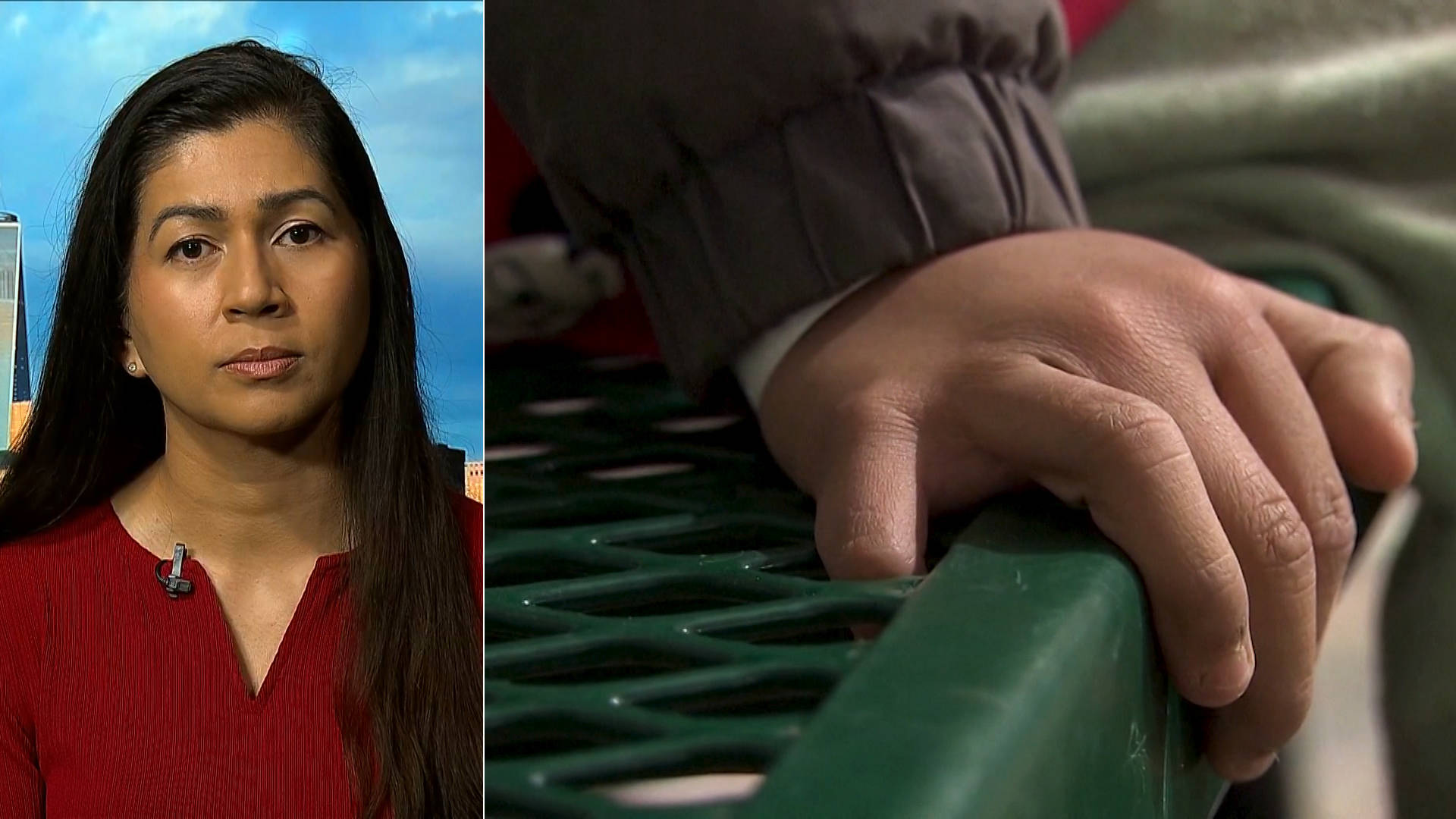
| | ICE Detained 6-Year-Old with Cancer for Over a Month: “He and His Sister Cried Every Night” | |
DemocracyNow! 22/07/2025 - As Congress approved some $45 billion to expand ICE’s immigration detention capacity, including the jailing of families and children, we look at the case of one family. In May, plainclothes ICE agents detained a 6-year-old boy from Honduras who has acute lymphoblastic leukemia, along with his 9-year old sister and their mother, as they left their immigration court hearing in Los Angeles.
In detention, the boy missed a key doctor’s appointment, and the family said his sister cried every night. As pressure grew over their conditions, the family was released on July 2. “The little boy doesn’t want to leave his home. He’s terrified. He sobs, cries and screams when his mother takes him out of the house,” says attorney Elora Mukherjee, who represents the boy and his family and is director of the Immigrants’ Rights Clinic at Columbia Law School. She says the young children are traumatized after their month in ICE detention.
AMY GOODMAN: This is Democracy Now!, democracynow.org. I’m Amy Goodman.
We begin today’s show looking at how the Trump administration is pushing ahead on its aggressive quota of as many as 7,000 daily immigration arrests, up from 3,000. Homeland Security Secretary Kristi Noem spoke Friday at a news conference in Nashville, Tennessee.
DHS SECRETARY KRISTI NOEM: President Trump has been focused, ever since he’s been in office, on making America safe again. And that is what my job is as a secretary, is to make sure that we’re following through on exactly what he promised the American people, to make sure that we’re going after the worst of the worst every single day, get the murderers, the rapists, the child pedophiles and pornographers off of our streets and out of this country.
AMY GOODMAN: “The worst of the worst.” But according to figures from ICE itself that were obtained by the Cato Institute, over 93% of immigrants arrested this fiscal year were never convicted of any violent offense. Read more - Lire plus
Trump Revokes Bond for Asylum Seekers, Forcing Immigrants to Fight Their Cases “Behind Bars”
Military bases in New Jersey and Indiana will be expanded to detain immigrants
The Detention of Families Facing Deportation Proceedings: The expansion of ICE detention facilities raises concerns about the treatment of children.
Human Rights Watch: US: Immigrants Abused in Florida Detention Sites
Feds Make It a Crime to Give PPE to ICE Protesters
The Pentagon Won’t Track Troops Deployed on U.S. Soil. So We Will.
The White House search for partners in its global gulag has grown to 64 nations. Most of them are notorious violators of human rights
| | Judge rules against Trump and extends deportation protections for 60,000 immigrants | |
Associated Press 09/07/2025 - A federal judge has ruled against the Trump administration’s plans and extended temporary protected status (TPS) for 60,000 people from Central America and Asia, including people from Nepal, Honduras and Nicaragua.
TPS is a protection that can be granted by the homeland security secretary to people of various nationalities who are in the United States, preventing them from being deported and allowing them to work.
The Trump administration has aggressively been seeking to remove the protection, thus making more people eligible for removal. It’s part of a wider effort by the administration to carry out mass deportations of immigrants.
Homeland security secretary Kristi Noem can extend TPS to immigrants in the US if conditions in their homelands are deemed unsafe to return due to a natural disaster, political instability or other dangerous conditions. Noem had ruled to end protections for tens of thousands of Hondurans and Nicaraguans after determining that conditions in their homelands no longer warranted them.
The secretary said the two countries had made “significant progress” in recovering from 1998’s Hurricane Mitch, one of the deadliest Atlantic storms in history.
The designation for an estimated 7,000 from Nepal was scheduled to end on 5 August while protections allowing 51,000 Hondurans and nearly 3,000 Nicaraguans who have been in the US for more than 25 years were set to expire on 8 September.
US district judge Trina L. Thompson in San Francisco did not set an expiration date but rather ruled to keep the protections in place while the case proceeds. The next hearing is on 18 November.
In a sharply written order, Thompson said the administration had ended the migrant status protections without an “objective review of the country conditions” such as political violence in Honduras and the impact of recent hurricanes and storms in Nicaragua.
If the protections were not extended, immigrants could suffer from loss of employment, health insurance, be separated from their families, and risk being deported to other countries where they have no ties, she wrote, adding that the termination of TPS for people from Nepal, Honduras, and Nicaragua would result in a $1.4bn loss to the economy.
Lawyers for the National TPS Alliance argued that Noem’s decisions were predetermined by President Donald Trump’s campaign promises and motivated by racial animus.
Thompson agreed, saying that statements Noem and Trump have perpetuated the “discriminatory belief that certain immigrant populations will replace the white population.” Read more - Lire plus
Immigration judges fired by Trump administration say they will fight back
| | Palestine Action co-founder wins permission to challenge ban | |
The Guardian 30/07/2025 - The co-founder of Palestine Action can bring an unprecedented legal challenge to the home secretary’s decision to ban the group under anti-terrorism laws, a high court judge has ruled.
Mr Justice Chamberlain said the proscription order against the direct action group risked “considerable harm to the public interest” because of a potential “chilling effect” on legitimate political speech.
The judge cited the case of Laura Murton, who the Guardian revealed had been threatened with arrest by armed officers for holding a sign saying “Free Gaza” and a Palestinian flag.
Chamberlain’s decision is the first time that an organisation banned under anti-terrorism law has been granted a court trial to challenge proscription.
The judge said: “If, as the claimant says, the proscription order is likely to have a significant chilling effect on the legitimate political speech of many thousands of people, that would do considerable harm to the public interest.
“Reports of the kind of police conduct referred to … are liable to have a chilling effect on those wishing to express legitimate political views. This effect can properly be regarded as an indirect consequence of the proscription order.”
He continued: “I consider it reasonably arguable that the proscription order amounts to a disproportionate interference with the article 10 and article 11 (European convention of human rights) rights (freedom of expression and assembly, respectively) of the claimant and others.”
The group’s co-founder, Huda Ammori, called it a “landmark decision … especially at a time when protesters – mostly elderly citizens – are being dragged off in police vans, held in detention for more than 24 hours, having their homes raided and face criminal prosecution, simply for holding signs that they oppose genocide and expressing their support for Palestine Action”.
More than 200 people are believed to have been arrested since the 5 July ban on Palestine Action, the first on a direct action group, placing it alongside the likes of Islamic State and Boko Haram.
The three-day hearing in November will increase scrutiny on the decision-making of the home secretary, Yvette Cooper, and casts uncertainty over the fate of those recently arrested under the Terrorism Act in relation to Palestine Action – or who might be arrested in future.
The Home Office had argued that the proper forum for Palestine Action to challenge the ban was the POAC (Proscribed Organisations Appeal Commission), which parliament had designated precisely for that purpose, rather than judicial review.
But Chamberlain said POAC would be unlikely to be able to hear the case before the middle of next year whereas a judicial review could be heard this autumn and there was a strong public interest for it to be determined authoritatively as soon as possible.
Otherwise, people charged with criminal offences under the Terrorism Act might seek to challenge the legality of the proscription order in courts that might reach different decisions, creating “a recipe for chaos”, he said.
The second ground on which Chamberlain granted permission for judicial review, in addition to concerns about freedom of speech and protest, was that Cooper had not consulted Palestine Action before proscribing it, finding it reasonably arguable that there was a duty to consult.
The judge refused Ammori permission to challenge the government on six other grounds, including a claim that the home secretary had failed to gather sufficient information on Palestine Action’s activities or the impact of the proscription on people associated with the group.
Chamberlain referred in his judgment to the “deteriorating humanitarian situation in Gaza”. He quoted from a joint statement last week by the foreign secretary, David Lammy, and the foreign ministers of 27 other countries in which they said “the suffering of civilians in Gaza has reached new depths”. Read more - Lire plus
United Nations Special Rapporteur granted permission to intervene in Palestine Action judicial review against terrorism proscription decision
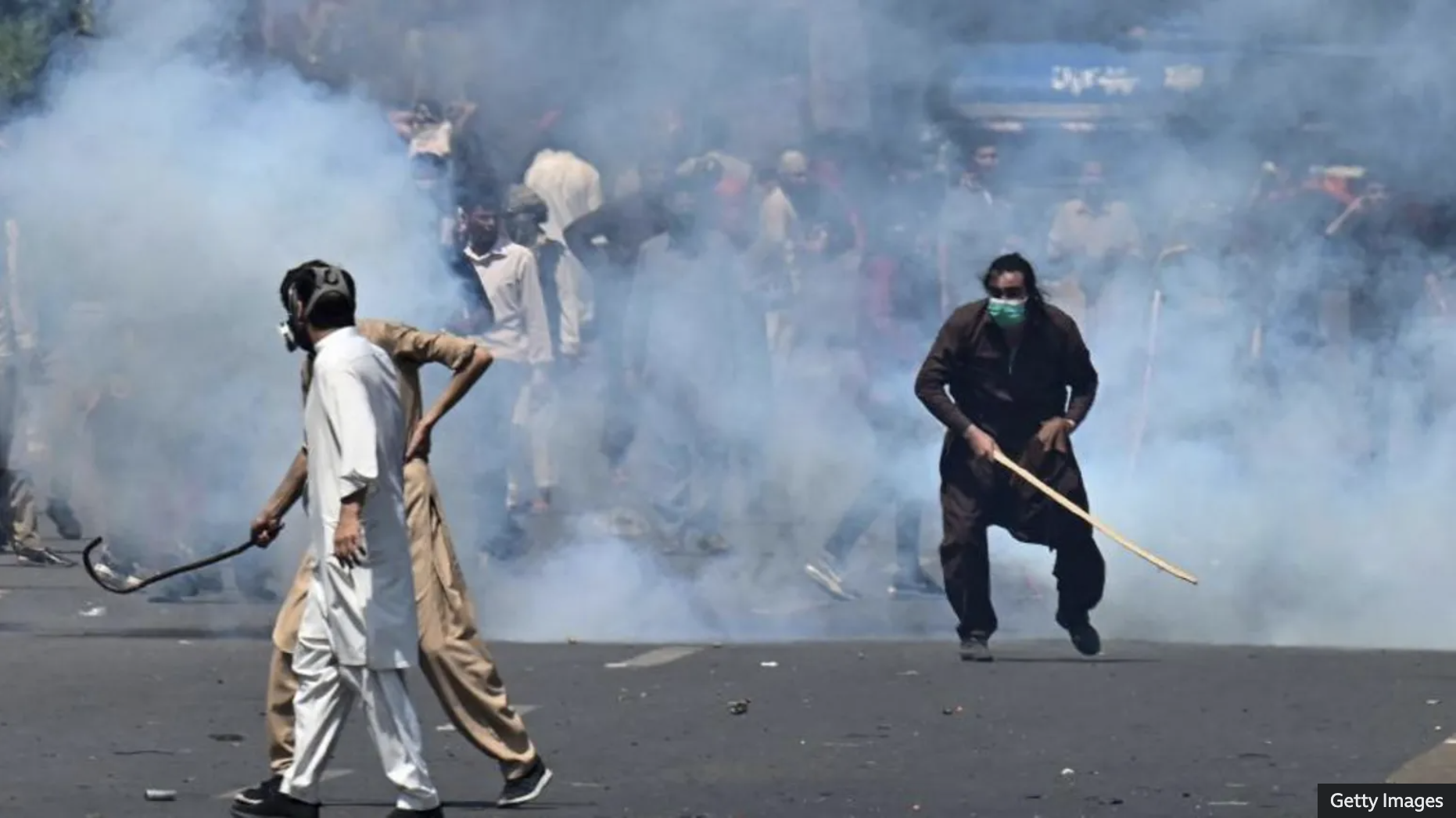
| | Authorities jail 108 members of Imran Khan's party | |
BBC 01/08/2025 - Pakistan has sentenced to prison 108 members of jailed ex-Prime Minister Imran Khan's party, for their involvement in protests against the military in 2023.
Violent protests erupted nationwide in May 2023 after security forces arrested Khan during his court appearance on corruption charges.
Authorities have already handed down dozens of sentences in the last two years, but Thursday's convictions - which include a 10-year term for opposition leader Omar Ayub Khan - deal a major blow to Khan's Pakistan Tehreek-e-Insaf (PTI) party.
Opposition figures have denounced the rulings by the anti-terrorism court, which also disqualified six PTI lawmakers from their seats.
"For the first time in Pakistan's judicial history, such a sad and shameful incident occurred that the leaders of the opposition in both houses [of parliament] were punished solely on the basis that they were loyal allies of Imran Khan's political narrative, public representation, and constitutional struggle," PTI wrote on X.
The party says it will challenge the verdict.
Khan's media advisor Zulfi Bukhari said the latest sentences signified "a black day for democracy", AFP news agency reported.
"Convicting opposition leaders one after another is not a good omen for any democratic system, and it will seriously damage our already fragile democracy," Bukhari said.
Khan, formerly an international cricket star, has been imprisoned since August 2023, but remains hugely popular in Pakistan.
He still faces more than 150 charges ranging from terrorism to leaking state secrets, all of which he and his supporters have decried as politically motivated. Read more - Lire plus
| | Pakistan’s rights group demands withdrawal of terror charges against a 7-year-old boy in Balochistan | |
CityNews 01/08/2025 - Pakistan’s independent human rights commission on Friday called on authorities to drop terrorism charges against a 7-year-old boy, a day after police in the southwestern province of Balochistan sought his arrest for sharing an anti-government speech by a rights activist on social media.
The case has sparked outrage among human rights defenders, who say applying anti-terror laws to a minor highlights an intensifying crackdown on dissent in the volatile region.
The Human Rights Commission of Pakistan condemned the case in a statement on X, calling it “highly reprehensible” and asked the government to protect the rights of the minor. The boy isn’t currently in police custody.
The boy was charged with terrorism by police on Thursday in Gwadar, a port city in the insurgency-hit Balochistan province, according to his lawyer, Jadian Dashti. Such charges in the country are initially filed by police, and suspects are later produced in court for a pretrial hearing.
Dashti said that the child is accused of provoking violence by sharing a video of an anti-state speech that was delivered by a local rights activist, Gulzar Dost, during a rally in Gwadar last month to demand better facilities for education, health and jobs in the region.
Dost, who is known for his fiery speeches against the federal government in Islamabad and security forces as well, was arrested over the speech and was freed on bail this week pending a trial. Police accused him of spreading hate against the government.
The case against the boy comes as supporters of the Baloch Yakjehti Committee, or BYC, a rights group, are rallying in the capital, Islamabad. Rights activists allege that Baloch people advocating for a fair share of the province’s wealth are routinely detained, an accusation that the Pakistani government denies.
The BYC says it wants an end to “enforced disappearances” in Balochistan, which has been the scene of a long-running insurgency, with the separatists seeking independence from the central government in Islamabad. Although Pakistani authorities say they have quelled the insurgency, violence has persisted. Source
Amnesty International action: Free all detained Baloch activists
| | ‘Grave error’: Why Bombay HC acquitted all 12 convicted in 2006 Mumbai train blasts | |
The Hindu 14/07/2025 - The High Court held that the Anti-Terrorism Squad’s case relied on confessions extracted through torture and unreliable witness testimonies.
The Bombay High Court on Monday (July 21, 2025) acquitted all 12 accused in the 2006 Mumbai serial train blasts case, overturning a 2015 verdict by a special Maharashtra Control of Organised Crime Act (MCOCA) court that had sentenced five of them to death and seven to life imprisonment. One died from COVID in prison in 2021.
A Division Bench of Justices Anil S. Kilor and Shyam C. Chandak delivered a scathing indictment of the Mumbai Police’s Anti-Terrorism Squad (ATS), remarking that it had created “a false appearance of having solved a case.” Source
India court acquits seven accused in 2008 Malegaon blast case
| | Court Dispatch: RICO Charge Dropped in 'Northumberland 2' Mink Farm Case | |
Unicorn Riot 26/07/2025 - On July 21, Pennsylvania prosecutors had to present their evidence in the case against Celeste Legere and Cara Mitrano, accused of being behind the October 2024 release of hundreds of mink from the state's last fur farm. The DA ended up dropping the RICO charge and the defense seems poised to poke further holes in the case. Both women still face decades in prison in what a defense attorney calls "an overcharged political case." [...]
Legere and Mitrano each still face one criminal count of Ecoterrorism — under the Pennsylvania state law, not the similar federal statute.) A line of questioning by defense attorneys Jim Best and Natalie Burston seemed to poke holes in this charge, as the subsection charged in this case requires that an “intent to intimidate” be proven on top of the underlying crime. The prosecution was unable to show any communication between the defendants and the victims in this case, and no graffiti, leaflets or manifestos were found at the fur farm.
[Note: ‘Ecoterrorism‘ is a relatively new concept pushed into law shortly after 9/11 by industries that harm animals and/or the environment, eager to criminalize effective anti-corporate activism after the mass protests of the 1990s. Read ‘Green Is the New Red‘ by journalist Will Potter to learn more.] [...]
What’s Next?
After hearing from the four prosecution witnesses, the hearing quickly wrapped up after some exhibits were officially entered into evidence. The defense didn’t call any witnesses. Both sides have 30 days to file briefs and a ruling by Judge Paige Rosini on the defense’s motion is expected, roughly, sometime in the next two months. Judge Rosini’s ruling could in theory throw out the case entirely, or allow it to continue with the same list of charges or with some of the charges thrown out for lack of evidence.
“Be scared – that’s the message the prosecution wants to send,” attorney Carraway told Unicorn Riot. “They’re going to call someone who’s accused of a nonviolent act a terrorist to scare people away from activism in general. The message people should take away from this is to have tenacity and know that there is support for people going through the criminal process, and to not be scared.” Read more - Lire plus
| | OTHER NEWS - AUTRES NOUVELLES | | ICLMG ACTIONS DE LA CSILC | |
Canada: Abolish rights-violating terrorist entities list!
| | |
On October 15, 2024, the Canadian government placed the Samidoun Palestinian Prisoner Solidarity Network on Canada’s terrorist entities list. While ostensibly a tool to protect the safety and security of people in Canada and internationally, the list is an arbitrary political tool that undermines freedom of association, of expression and due process in the courts. Its effectiveness as a national security tool has never been demonstrated in a manner that justifies its use.
Due to these deep flaws, and more, the ICLMG has consistently called for the list to be abolished since the Canadian coalition’s founding in 2002. Please join us in urging the Canadian government to abolish the rights-violating terrorist entities list once and for all. Thank you!
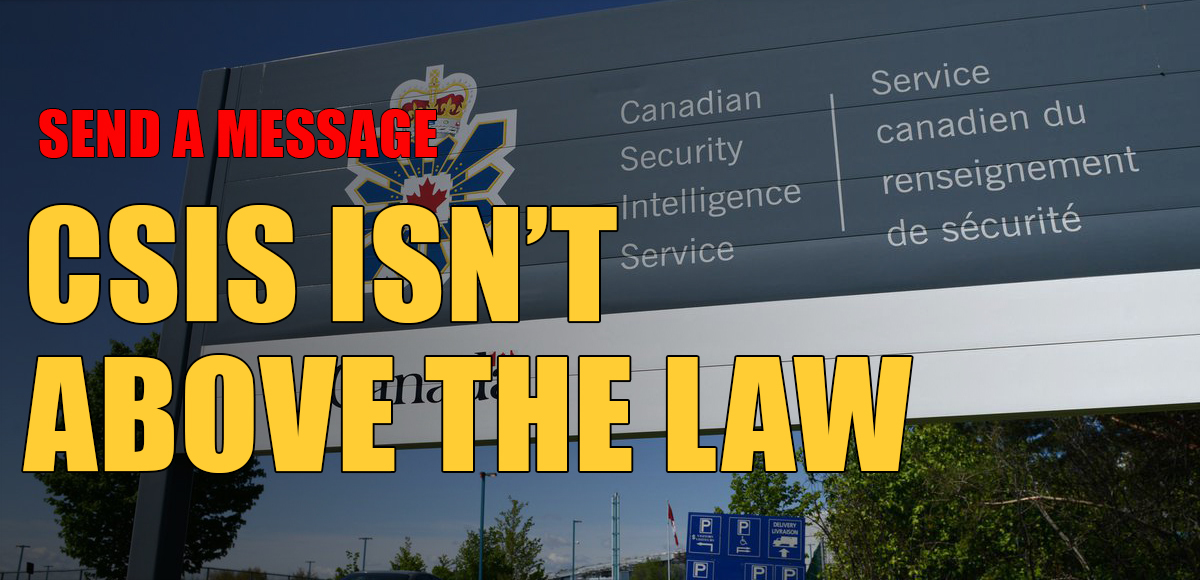
| | CSIS isn't above the law! | | |
In recent years, at least three court decisions revealed the Canadian Security and Intelligence Service (CSIS) engaged in potentially illegal activities and lied to the courts. This is utterly unacceptable, especially given that this is not the first time these serious problems have been raised. CSIS cannot be allowed to act as though they are above the law.
Send a message to the Public Safety Minister demanding that he take immediate action to put an end to this abuse of power and hold those CSIS officers involved accountable. Your message will also be sent to your MP and to the Minister of Justice.
| | Canada must protect Hassan Diab! | | Canada must repatriate all Canadians detained in NE Syria now! | Every day the government fails to bring these Canadians home, it places their lives at risk from disease, malnutrition, violence, and ongoing military conflicts. United Nations officials have even found that the conditions faced by Canadians in prison are akin to torture. Please click below to urge the federal government to repatriate all Canadians illegally and arbitrarily detained in northeast Syria without delay. | | 22 years of fighting deportation to torture: Justice for Mohamed Harkat Now! | | Reform Canada's extradition law now! | |
Canada’s extradition system is broken. One leading legal expert calls it “the least fair law in Canada.” It has led to grave harms and rights violations, as we’ve seen in the case of Canadian citizen Dr Hassan Diab. It needs to be reformed now.
Click below to send a message to urge the Prime Minister, the Minister of Justice and your MP to reform the extradition system before it makes more victims. Thank you!
Version française: Le Canada doit réformer la loi sur l'extradition!
| | Canada must protect encryption! | |
Canada, with other G7 nations, continues to push to weaken our access to strong, reliable encryption, after decades of being supportive of strong encryption. We need encryption to safeguard our data, our online transactions, our communications, and to protect the lives of journalists and human rights activists.
Please send a message to the Prime Minister of Canada, the Minister of Public Safety, as well as your Member of Parliament, to urge them to reverse course and once again commit to protecting encryption.
Regardez la vidéo avec les sous-titres en français + Agir
| | Protect our rights from facial recognition! | Facial recognition surveillance is invasive and inaccurate. This unregulated tech poses a threat to the fundamental rights of people across Canada. Federal intelligence agencies refuse to disclose whether they use facial recognition technology. The RCMP has admitted (after lying about it) to using facial recognition for 18 years without regulation, let alone a public debate regarding whether it should have been allowed in the first place. Send a message to the Prime Minister and the Public Safety Minister calling for a ban now. | | What we’ve been up to from January to May 2025 and our plan for the rest of the year | |
ICLMG 30/05/2025 - Thanks to the support of our members and donors, here is what we were able to work on so far in 2025 :
- Open letter to the new Prime Minister and government
- 2025 federal election and National Security Info Card
- C-20: First independent watchdog for the CBSA
- C-27: Digital Charter Implementation Act, 2022
- Online Harms
- Foreign Interference
- Combatting Racism & Islamophobia
- Canada’s terrorist entities list
- Palestine and the right to dissent
- Impacts of Counter terrorism financing
- Hassan Diab & Extradition
- Civil Society Coalition on Human Rights and Counter-terrorism
- And more!
What we have planned for the rest of 2025!
We have our work cut out for us! In response to threats of tariffs and annexation from the Trump administration, the Canadian government has problematically committed to the rapid expansion of border security, surveillance and information sharing with the US, and expanded the use of rights violating anti-terrorism tools. We also cannot ignore the US crackdown on protesters and migrants under the guise of fighting terrorism and protecting national security. We need to ensure that Canada disentangles itself from the US national security regime, resists US pressure to expand surveillance and counter-terror powers and tools at the expense of our civil liberties, and increases protections for privacy, dissent, migrants and asylum seekers.
We will continue our work on these issues and much more:
- Protecting our privacy from government surveillance, including facial recognition, and from attempts to weaken encryption, along with advocating for good privacy law reform
- Addressing the lack of regulation on the use of AI in national security
- Advocating for restrictions on Canadian information sharing with the US, including the application of the US No Fly List in Canada
- Campaigning for the repeal of secretive and rights violating national security lists, such as the Terrorist Entities List and the Canadian No Fly List
- Halting the rapid expansion of new security measures at the border and continuing to push back against the false narrative depicting migrants and refugees as security risks, and advocating for rights protection and accountability for border agencies, including by monitoring the creation of a new CBSA and RCMP watchdog agency
- Advocating with lawmakers and officials to protect civil liberties from the overall negative impact of national security
- Countering the escalating repression of free expression, dissent and protest in the name of “countering terrorism,” including the crackdown on protests in support of Palestinian human rights and against the genocide in Gaza. This includes countering new “bubble zone” laws at the municipal and federal levels
- Fighting for Justice for Mohamed Harkat, an end to security certificates, and addressing problems in security inadmissibility
- Fighting for Justice for Hassan Diab and reforming Canada's extradition law
- Addressing the impacts of measures to counter terrorism financing on civil society groups, including the CRA’s targeting of Muslim-led charities and restrictions and criminalization of the provision of international assistance and humanitarian aid
- Calling for the return of Canadian citizens and the non-Canadian mothers of Canadian children, who remain indefinitely detained in Syrian camps
- Pushing for restrictions on the implementation of new foreign interference laws
- Keeping you and our member organizations informed via the News Digest
- And much more! Read more - Lire plus
Share on Facebook + Instagram + Bluesky + Twitter
| | Les opinions exprimées ne reflètent pas nécessairement les positions de la CSILC - The views expressed do not necessarily reflect the positions of ICLMG. | | |
THANK YOU
to our amazing supporters!
We would like to thank all our member organizations, and the hundreds of people who have supported us over the years, including on Patreon! As a reward, we are listing below our patrons who give $10 or more per month (and wanted to be listed) directly in the News Digest. Without all of you, our work wouldn't be possible!
James Deutsch
Bill Ewanick
Kevin Malseed
Brian Murphy
Colin Stuart
Bob Thomson
James Turk
John & Rosemary Williams
Jo Wood
The late Bob Stevenson
Nous tenons à remercier nos organisations membres ainsi que les centaines de personnes qui ont soutenu notre travail à travers les années, y compris sur Patreon! En récompense, nous nommons ci-dessus nos mécènes qui donnent 10$ ou plus par mois et voulaient être mentionné.es directement dans la Revue de l'actualité. Sans vous tous et toutes, notre travail ne serait pas possible!
Merci!
| | | | |