|
International Civil Liberties Monitoring Group
Coalition pour la surveillance internationale des libertés civiles
February 28, 2026 - 28 février 2026
| | ICLMG: Government must take immediate action to address serious concerns with Canada’s No Fly List regime following independent review | | |
ICLMG 27/02/2026 - The serious flaws and violations of the law uncovered in the first ever rigorous and independent review of Canada’s secretive No Fly List regime require an immediate response and urgent action on the part of the Canadian government.
For 20 years, Canada has operated a troubling, secretive regime that prevents individuals, including Canadians, from flying out of or returning to Canada, undermining Charter rights and due process in the courts. The newly released report from the National Security and Intelligence Review Agency – the independent federal watchdog tasked with examining Canada’s national security activities – offers an unprecedented look at the internal workings of Canada’s no fly list regime, formally known as the Passenger Protect Program (PPP). NSIRA’s troubling findings reaffirm the fact that secret lists based on overly broad national security concerns are a recipe for rights violations.
Among the report’s findings are that:
- On at least six occasions since the Secure Air Travel Act (SATA), which governs the PPP, came into force in 2015, Public Safety Canada failed to review the list within 90 days, in contravention of the law
- Two individuals continued to be listed despite recommendations of their removal, without evidence as to why
- Three individuals have continued to be listed for reasons that are not in compliance with the Secure Air Travel Act, in contravention of the law
- While, by law, the list is reviewed every 90 days, an unknown number of individual cases are not being updated because the individuals are no longer under investigation
- Government departments that sign-off on the 90 day review are not actually reviewing the list
- The government has failed to appropriately identify or mitigate risks of listed peoples’ mistreatment by foreign entities when the list is shared with foreign airlines, in violation of Canada’s Avoiding Complicity in Foreign Mistreatment Act
- A lack of clear or consistent guidance around risk factors, including those used in deciding when to list or delist an individual, run the risk of unreasonable or unfair treatment
- Decisions at time of boarding a plane did not match decisions taken when an individual was listed
- Even when individuals were able to apply to the Minister for a review of their listing, indicators that an individual posed a risk under the SATA regime were not consistently applied, not clearly interpreted, and decisions made were not consistently documented
- There is a lack of internal oversight or feedback mechanisms to address or reconcile these issues
- There is an overall lack of coordination, leadership and rigour in administering the SATA
- In many cases, even when a listed individual is not subject to a denial of boarding, the result is still that they miss their flight. This is due to, for example, the amount of time that Public Safety takes to decide on what direction to provide to the airline, or the amount of time taken to carry out additional questioning of the listed person.
It is incredibly alarming that, because of a combination of administrative errors, lack of investigation, or incoherent policies, an unknown number of individuals currently on Canada’s No Fly List are essentially in an administrative black hole. Worse still is that individuals who are not deemed a threat under the criteria of the SATA, or who have been recommended to be delisted, remain on the list.
This is especially concerning given the disruptions and impacts that being on the No Fly List can have on an individual’s life: constant secondary screening or denial of boarding can limit the ability to find employment or visit family. Individuals can also be left stranded in foreign countries, unable to return to Canada, including jurisdictions where suspicion of being a national security threat can lead to severe repercussions, including arbitrary arrest, abuse or even torture.
While NSIRA clearly states in its report that these failures constitute unlawful activities, the government has so far failed to comment on how it is addressing these concerns. Moreover, these concerns raise significant questions of the impact on the Charter rights of those listed and the constitutionality of the regime.
NSIRA did point to recent improvements to the management of the PPP:
- A new, centralized system that allows Public Safety, and not airlines, to screen passengers has increased fairness and consistency in decisions made at boarding.
- A new redress system that allows travelers who are “false positives” (i.e. their name is the same or similar to someone on the list) to obtain a unique identifier known as a Canada Travel Number (CTN) to avoid complications has been effective, although the report does not discuss how well-known this option is or how many travellers have applied for a CTN.
It is important to recognize that these changes, especially the CTN, came as the result of years of advocacy from the public, particularly parents of children falsely flagged as terrorist threats when attempting to board flights. Working under the banner of the No Fly List Kids, they and others falsely flagged put considerable amounts of personal time and resources into advocating with Public Safety, members of parliament across parties, and the Prime Minister’s Office to achieve this important, yet basic, safeguard. While these changes may be positive in the immediate circumstances, they do not resolve the underlying problems with the listing regime itself.
It is also worth noting what NSIRA was unable to examine. While this was the first independent review of whether the Passenger Protect Program complies with its governance and legislative framework, and whether in this context the government treats individuals reasonably and fairly, NSIRA did not review the list for either its necessity or efficacy. To date, there has never been an independent study conducted on whether this secretive, rights-impacting list is necessary or even effective in safeguarding air travel or against terrorist activities abroad.
Nor did it examine government of Canada activities that precede a person’s listing, such as decisions to nominate some people to be listed and not others, or original decisions to investigate those people. Given that decisions on whether to even consider listing someone are made in secret, this gives rise to credible risks of discriminatory or discretionary decision-making, including based on race, religion or political beliefs. Strong anecdotal evidence, including testimony shared in parliamentary hearings, also point towards the No Fly List disproportionately impacting Muslims, or those with Arabic (or Arabic sounding) names.
This reflects research and reporting on other areas of Canadian anti-terrorism measures that have raised significant concerns of systemic racism, and particularly of Islamophobia and the targeting of Muslims for greater surveillance, questioning and criminal charges, and underlines the urgent need for greater examination of the No Fly List itself.
This is further exacerbated by the fact that even the number of people listed is kept secret, as well as what portion of the list are Canadian citizens or residents.
All of these problems are inherent to national security and anti-terrorism powers that are exercised in secret, with minimal transparency, oversight or review. While the establishment of NSIRA has brought significantly more substantial and independent review to Canada’s national security activities, limits in their mandates and in resources, coupled with the time required to carry out reviews, means that their work cannot resolve the deep-seated issues of government secrecy. These problems stretch beyond the No Fly List to other areas, including the Terrorist Entities List.
This is why the ICLMG coalition has taken a position, since these tools were established, that they should be repealed in favour of open and transparent measures that ensure the protection of Charter rights, and civil liberties more broadly. In many cases, existing Criminal Code provisions already render illegal the threats to public safety that these secret lists are meant to protect against, and offer at least the guarantee of an independent judicial process.
While we continue to call for the end to secretive measures like the No Fly List and the Terrorist Entities List, in the immediate the government must clearly outline how they are addressing the concerns in the NSIRA report, and launch a broader inquiry into the flaws identified by the review body and the areas it was unable to examine, as well as the broader impacts of secret travel watchlists such as the US Secure Flight Program. This review must not only look at the lawfulness, but also at the necessity and efficiency of these lists, the processes by which individuals come to be nominated to these lists, and the impact that these listing regimes have on the lives of travelers. Source
| | Open Letter to Federal Parliamentarians to remove “Henry the VIII” exemption powers from Budget Bill C-15 | | The ICLMG joined more than a hundred prominent law and human rights experts, labour, sector leaders and civil society organizations warn the proposed amendments to the Red Tape Reduction Act in Bill C-15 set Canada on a dangerous anti-democratic track. | | |
Ecojustice & CCLA 20/02/2026 - Dear Members of Parliament:
The resilience of Canadian democracy and the rule of law is not unshakeable. It is fragile and precious, and it is arguably the most pivotal tool we can wield to protect ourselves and our communities when both our sovereignty and economy are under threat. Yet, Bill C-15, which the federal government has espoused as its answer to the economic attacks that Canada is facing, contains a major threat to the very constitutional underpinning that ensures a thriving democratic governance system.
Buried on page 300 of a more than 600-page long budget implementation bill is a constitutional abomination. Part 5, Division 5 of this bill introduces draconian powers that allow federal ministers to exempt any individual, company or government (including its own federal departments) from the application of any federal law or regulation. No legislation is safe, except the Criminal Code. Not our labour standards. Not our health and safety regulations. Not laws that uphold Indigenous rights and sovereignty. Not environmental protection laws. And not even laws that protect our security and privacy.
These “Henry the VIII” powers — which refer to the ability of the executive (here, ministers) to unilaterally change an act of Parliament — are an affront to the separation of powers: the constitutional architecture that ensures a system where Parliament makes laws, the executive implements them, and the courts interpret them. This balance is a hallmark of a thriving Canadian democracy and one that will define how we as a country resist a troubling trend of democratic decline that we observe around the world.
As many legal experts asserted in testimonies and submissions in the Parliamentary and Senate committee hearings on Bill C-15, the proposed changes to the Red Tape Reduction Act cannot be characterized as “regulatory sandboxing.” They are in fact a dramatic departure from the common regulatory sandbox approach in Canadian law, which temporarily creates targeted, tightly controlled and highly transparent environments that enable the testing of new technologies to better understand their impacts — including how to regulate them. If passed, the amended Red Tape Reduction Act would introduce vague and overbroad notions like “competitiveness” and “economic growth” as legitimate reasons for exemptions from any Act of Parliament. Left for the interpretation of the minister that wants to wield them, these terms can mean anything.
These exemption powers do not streamline regulation — they dynamite the rule of law itself by creating a two-tier legislative system whereby laws debated and enacted by Parliament can be suspended for political convenience with little to no accountability or transparency.
We call on you to stand up for Canada’s democratic tradition and advocate for the removal of Part 5, Division 5 of Bill C-15. These powers, if passed, have the potential to undermine decades of law-making by Parliament and suspend laws that were intentionally designed by you and your colleagues — past and present — to protect our families, our public health, our security, the air that we breathe, our iconic endangered species, and issues that your constituents cherish. They will set Canada on the wrong path toward a weaker Parliamentary democracy, with potentially catastrophic implications.
We urge you to stand up for the Parliament and people you serve. Stand up for the rule of law. Stand up for the constitutional order that can protect our democracy.
Remove Part 5, Division 5 from Bill C-15. Source & signatories
| |
Ratna Omidvar & Allan Rock: Sober second thought is needed on C-12
| | The law would grant cabinet broad authority to suspend, terminate, or cancel entire categories of immigration applications whenever deemed to be in the ‘public interest.’ Without clearer definitions and safeguards, such powers could be exercised in response to short-term political pressures. | | |
The Hill Times 24/02/2026 - Most Canadians expect the government to fix the immigration system. Long processing delays and growing backlogs have created a widespread perception that the system is under strain. Public concern is legitimate. But reforms must not come at the expense of vulnerable people, nor at the cost of the rule of law that underpins public confidence in government.
Bill C-12, the Strengthening Canada’s Immigration System and Borders Act, would make sweeping amendments to the Immigration and Refugee Protection Act. Framed as measures to manage intake, enhance border security, and improve efficiency, some provisions go much further.
Part 7 of the bill grants the Governor in Council broad authority to suspend, terminate, or cancel entire categories of immigration applications and to vary or revoke valid documents—visas, permits and other status documents—whenever deemed to be in the “public interest.” It expands intake-management powers, allowing the government to effectively turn the tap on or off for whole classes of applicants.
Discretion is sometimes necessary in complex administrative systems. But discretion without clear statutory guardrails risks replacing principled decision-making with administrative expediency—or arbitrariness. The bill provides limited guidance on how “public interest” determinations would be made or reviewed. Without clearer definitions and safeguards, such powers could be exercised in response to short-term political pressures rather than evidence and principle.
Lawmakers have seen what happens when complex regulatory regimes are rewritten in haste. Amendments to the Competition Act introduced with limited consultation have since raised concerns among business and legal experts about unintended consequences resulting in costly litigation. Immigration law, with its profound human consequences, deserves at least as much care.
One of the most consequential changes in Bill C-12 is the move toward a strict one-year deadline for filing asylum claims after arrival in Canada. Late claimants would be diverted into narrower, paper-based review processes rather than receiving a full hearing before the Immigration and Refugee Board.
Proponents argue that a one-year rule deters abuse and encourages early disclosure of protection needs. But this rests on a static view of risk, as if the dangers people face are fixed at the moment they cross our border. Refugee law has long recognized that risk can be prospective and evolving.
The recent uprisings in Iran, for example, were followed by a severe crackdown involving widespread arrests, detentions and reported killings. Members of the Iranian diaspora in Canada who participated in solidarity protests have described threats against family members, surveillance and intimidation. Canadian authorities have documented harassment of Canada-based relatives of victims of Iran-linked abuses, including the downing of Flight PS752.
For temporary residents from Iran—students, workers and visitors who arrived before these events and did not initially seek asylum—the calculation of risk may have fundamentally changed. Participation in protests can be videotaped. Family members can be questioned. Return can carry consequences that did not exist at the time of arrival.
A rigid one-year bar, without a clear exception for significant and documented changes in country conditions, risks denying protection to individuals whose fear of persecution only crystallized after they were already here.
Parliament still has time to correct this. Ideally, the most sweeping executive powers proposed in Part 7 should be removed or substantially narrowed. At minimum, the bill should include a carefully drafted exception to the one-year rule—triggered by credible evidence of substantial and durable deterioration in human rights, state repression or armed conflict in a claimant’s country of origin.
Such an exception would preserve the government’s objective of timely and predictable processing while acknowledging a basic reality: new dangers can arise after arrival. It would align administrative efficiency with Canada’s legal and moral obligations under domestic and international refugee law.
The Senate’s constitutional role is not to obstruct but to improve legislation—to ensure that urgency does not eclipse principle. In moments of public anxiety, it is especially important to safeguard the integrity of the legal framework that protects both the public interest and fundamental rights.
Canadians want an immigration system that is fair, orderly, and credible. That credibility depends not only on efficiency, but on fidelity to the rule of law and to the protection of those who genuinely need refuge. We urge parliamentarians to consider amendments to C-12 that will fulfill its purpose while maintaining that crucial balance.
Ratna Omidvar is a retired senator from Ontario. Allan Rock is a former minister of justice and attorney general of Canada, and Canadian Ambassador to the United Nations. Source
Immigration measures stay in border bill with no amendment
‘Dangerous’ Bill C-12’s immigration changes give too much power to cabinet and department: Sen. McPhedran and legal rights groups
UPDATED ACTION Senators: Oppose Bill C-12 and protect rights!
ACTION MISE À JOUR Le Sénat doit dire non à C-12 et protéger nos droits!
Courts Have Ruled 4,400+ Times That ICE Jailed People Illegally; Despite Rebukes, ICE Keeps Doing It
| | Families of Canadian Detainees Transferred to Iraq Demand Answers from Ottawa | |
Homes not Bombs 20/02/2026 - Almost a month after the United States began its illegal transfer of thousands of detainees from arbitrary detention in northeast Syria to arbitrary detention in Iraq, and even after the Iraqi Ministry of Justice has posted that 5 Canadians are in its custody, families of these long-suffering men still have no official confirmation of their location or well-being.
Family members are demanding that Global Affairs Canada (GAC) take immediate steps to confirm the status of their loved ones and repatriate them to Canada.
“We, along with the families, have repeatedly shared with Global Affairs Canada the illegal nature of these forced transfers, the brutal detention conditions in Iraq, our concerns about unfair investigations and trials, and the distinct fear of execution,” explains Stop Canadian Involvement in Torture coordinator Matthew Behrens. “We have also shared the repeated public pleas of both senior Iraqi leaders as well as US Secretary of State Marco Rubio for countries like Canada to repatriate their citizens. But Canada refuses to cooperate with its allies and these families to resolve this decade-long human rights crisis by bringing everyone home.”
Stop Canadian Involvement in Torture recently submitted a brief to the United Nations, urging the global body to call on Canada to immediately repatriate all detainees, some of whom have been held almost 9 years without charge or judicial review of their detention.
“Sayyida,” the mother of one of the detainees, despairs at the fact that Global Affairs Canada has yet to confirm her son’s location either in Syria or in Iraq. “The dreams I had of my son coming back have vanished,” Sayyida says. “The move to Iraq puts my son at risk of enforced disappearance, which could place him at greater risk of being tortured or killed. I send email after email and make call after call to Global Affairs Canada asking about my son’s whereabouts, hoping for an answer that will relieve my pain, but all I receive is a long period of silence followed by the claim that they do not know where he is. I find this difficult to believe when the US knows all of the detainees and has coordinated this whole operation. My family is going through a lot because of this. We miss him so much in everything we do, and there’s a big part of our life gone without him. When will this nightmare end?”
Sally Lane, the mother of Canadian Jack Letts, says she received a letter on February 13 from Global Affairs Canada stating that Canada has “received preliminary information that indicates that your son Jack Letts may be among the individuals transferred. Please note that the information we have received at this time is incomplete and is not a direct match for the name we have on file, so we cannot confirm his identity with certainty.”
“What should I take away from this email sent a week ago?” Lane asks. “Is the Canadian government so inept that it cannot make a simple confirmation of Jack’s location and well-being when our embassy is in the same city that now holds the detainees? Or is a Canadian government that has for 9 years refused the repatriation requests of Jack’s jailers, and fought us all the way to the Supreme Court, still refusing to stand up for the rights of Jack and the other Canadian men because they don’t want them to come home? We know the Federal Court has said there is no evidence that Jack or the other men have committed crimes or acts of violence. What can we conclude here other than that this is state-sponsored Islamophobia?”
John Letts, Jack’s father, points out that the current crisis could have been avoided had Canada acted on repeated requests over 9 years by Kurdish authorities to repatriate his son. “We know the US has interviewed all of the men and never sought to extradite them. The FBI has seen Jack on numerous occasions. It beggars belief that Canada cannot confirm where he is even after the Iraqis have said they have five Canadians in their custody and the US would have a list of everyone it illegally sent to Iraq. It’s not rocket science for the Canadian embassy to demand immediate access to the men and to facilitate visits with us and legal counsel.”
The long-standing issue of Canada’s refusal to repatriate its citizens from northeast Syria (Canada has, under threat of court action, returned 32 women and children) led international human rights lawyer and former Secretary-General of Amnesty International Canada Alex Neve to join a civil society delegation in 2023 (alongside Senator Kim Pate, former GAC official Scott Heatherington, and human rights lawyer Hadayt Nazami) that visited Letts and other detainees.
Neve says he had hoped that the change of government in Damascus in December 2024 would provide “the long overdue opening to address years of contemptuous disregard for human rights throughout the country. It should have become the moment when the Canadian government finally took action to protect the rights of Canadians, including children, unlawfully locked up in prisons and detention camps in the northeast. Instead, the government has consistently refused to intervene. The news that Canadian prisoners are now being illegally transferred to jails in Iraq, where they face a serious risk of torture and the death penalty, must become the turning point. Prime Minister Carney's government must - finally - act, and bring all Canadians home, to safety, to human rights protection, and to face justice when there is evidence of criminality.”
It’s a sentiment also shared by “Israa,” a Canadian woman who notes that she and her family “have been begging Global Affairs Canada for answers. For years we have written emails, made calls, submitted requests, and pleaded for the most basic information that every family deserves: Is he alive? Is he safe? What is being done to protect him? And for years, Global Affairs Canada has responded with silence, delays, and vague empty statements. They have avoided answering our questions and have refused to provide us with clear answers. They have refused to be transparent and have refused to treat our loved one like what he is, a Canadian citizen with rights. This silence is not neutral and has consequences.”
Israa notes that the United Nations as well as international human rights groups including Amnesty International and Human Rights Watch have long shared with Ottawa their findings of the appalling conditions endured by the male detainees in northeast Syria, conditions that are likely to be replicated in Iraq. “These conditions destroy people physically and psychologically. And if our loved one has been transferred to Iraq, the danger is even more severe. Iraq has a well-documented record of torture, unfair trails, and executions. If Canada has allowed that to happen, through action or inaction, then Canada has effectively signed their torture and death certificates.
“Every single day, our family lives with the grief and constant fear of not knowing whether our loved one is alive or dead,” Israa says. “We live with the helplessness and anger we feel and are forced to imagine the worst because the Canadian government refuses to tell us the truth. My loved one is not a file or case number. He is a human being. He is loved. He is missed. And he deserves to come home. We will not stop speaking and fighting. We will not allow him to be forgotten.”
In addition to the nine detained Canadian men whose whereabouts remain unconfirmed, Canada is still refusing to issue temporary residents permits to two women so that they could come to Canada together with their five Canadian children, all of whom have been illegally detained in northeast Syria for six years. They submitted those permit applications three years ago. Source
Human Rights Watch: Iraq: Alleged ISIS Detainees Transferred from Syria at Risk of Abuse: Ensure Fair Trials, Repatriate Foreigners
UPDATED ACTION Repatriate all Canadians from Northeast Syria and Iraq!
ACTION “Canadians are dying": Free Jack Letts & 15 Canadian Kids, Women & Men in Syria
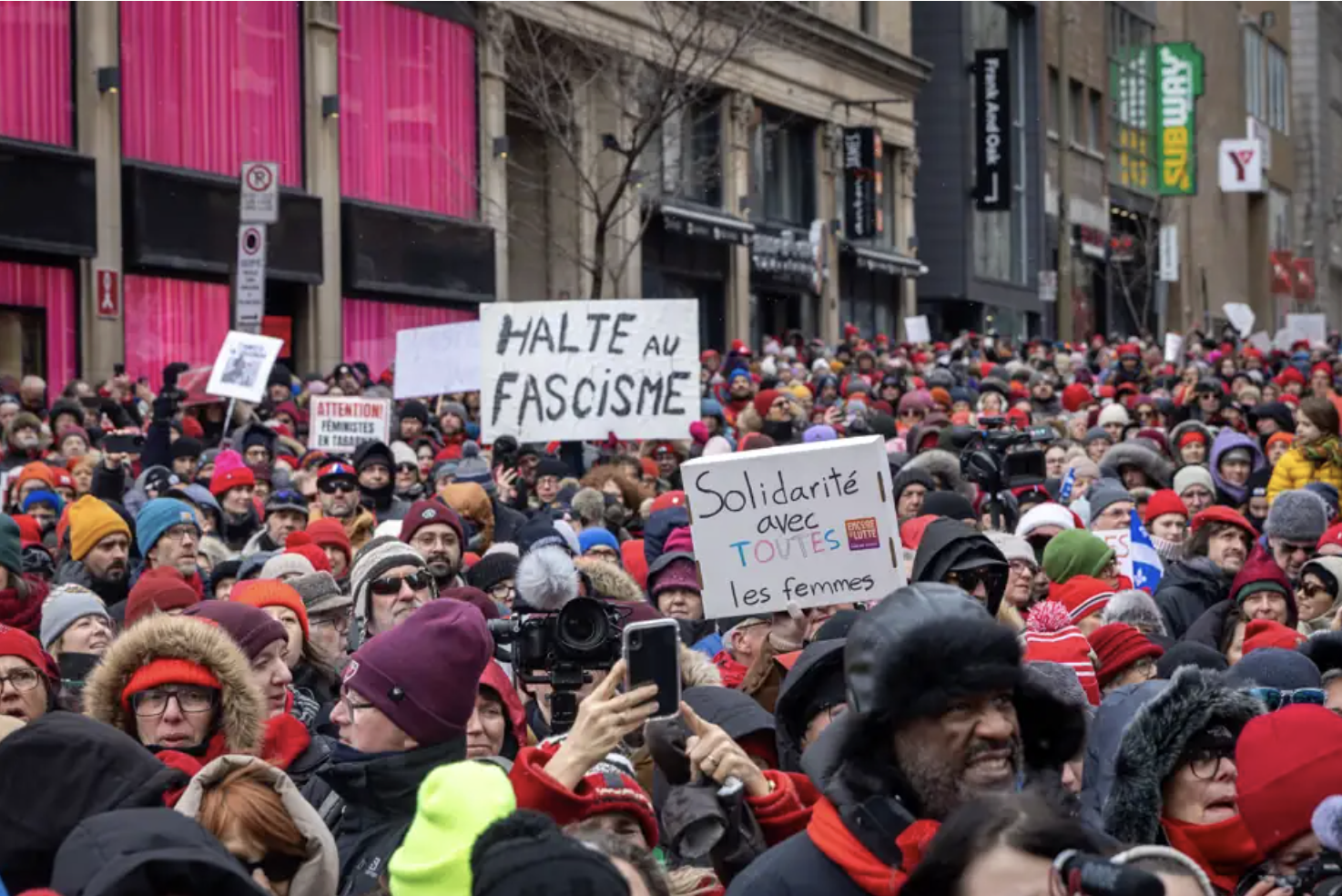
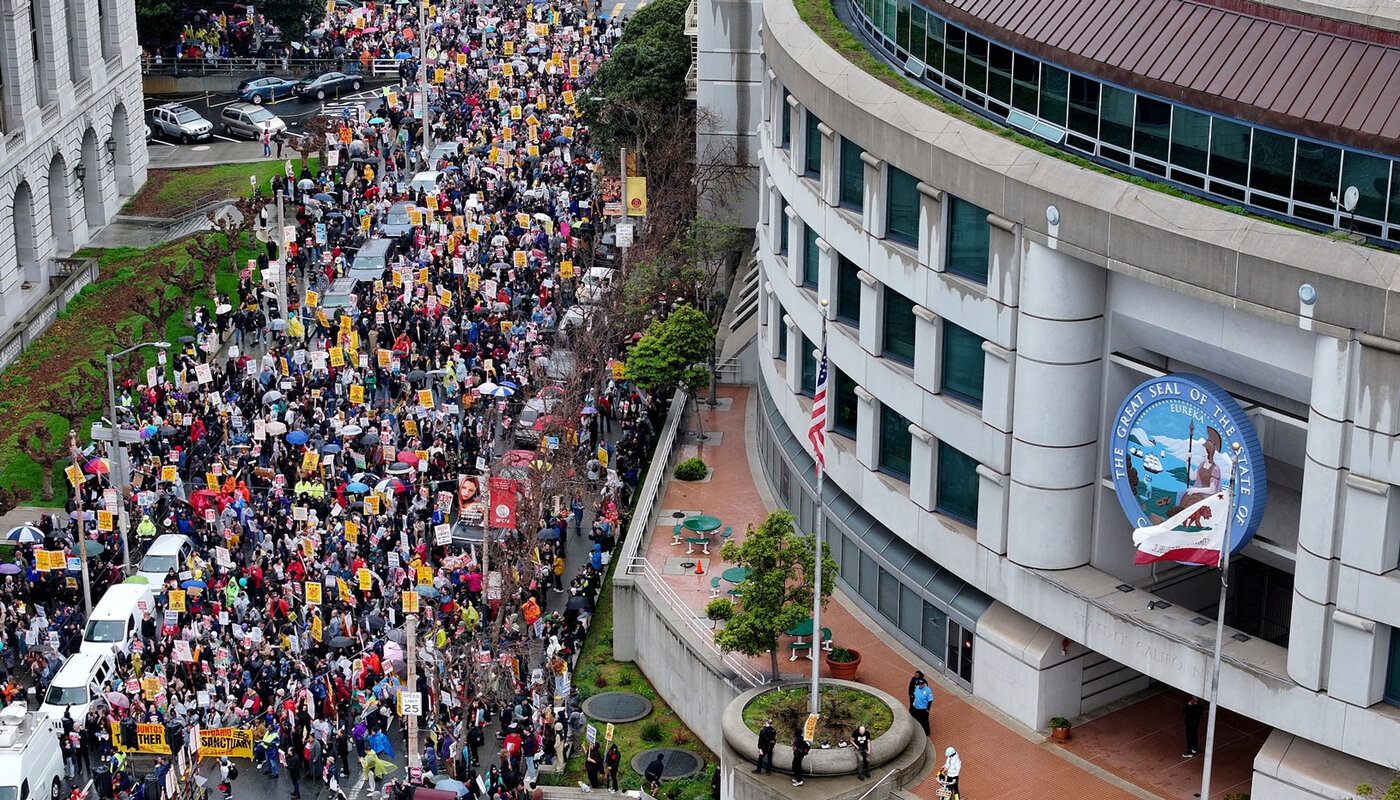
| | Non aux nouvelles limites au droit de manifester | La lettre est co-signée par la Ligue des droits et libertés & l'Association canadienne des libertés civiles et 220 organisations de la société civile canadienne. | |
La Presse 23/02/2026 - Nous, représentantes et représentants de plus de 220 organisations de la société civile, sonnons l’alarme au sujet des dispositions du projet de loi 13 qui portent atteinte aux libertés d’expression et de réunion pacifique et à la protection contre les fouilles et saisies abusives.
Le 10 décembre dernier, le ministre de la Sécurité publique, Ian Lafrenière, a déposé le projet de loi omnibus no13, Loi visant à favoriser la sécurité et le sentiment de sécurité de la population, qui introduit plusieurs restrictions en matière de manifestations. Les consultations en commission à l’Assemblée nationale ont été expéditives : seulement deux jours y ont été consacrés au début du mois, dans un contexte où la société civile est à bout de souffle vu la récente succession de lois liberticides qui affaiblissent les contre-pouvoirs et limitent la capacité de contestation sociale.
Nouveau pouvoir de fouille sans mandat : une porte ouverte à l’arbitraire
Nous nous opposons fermement aux nouvelles interdictions et au nouveau pouvoir de fouille et de saisie sans mandat lors de manifestations.
Le projet de loi 13 interdirait à quiconque d’avoir en sa possession, sans motif valable, un objet ou une substance « pouvant servir à porter atteinte à l’intégrité physique d’une personne, à la menacer ou à l’intimider ou pouvant causer des dommages aux biens », et ce, peu importe l’intention de l’individu et l’absence d’usage menaçant.
Un libellé si large a une portée excessive et ouvre la porte à des applications arbitraires. Des bâtons de bois soutenant des pancartes pourraient être vus comme étant interdits.
En plus de distribuer des amendes salées (500 $ à 5000 $ pour les individus ; 1500 $ à 15 000 $ pour les organisations), les policiers pourraient fouiller sans mandat toute personne s’ils estiment avoir un motif raisonnable de croire que celle-ci a en sa possession un objet ou une substance qu’ils considèrent interdit.
Ce nouveau pouvoir est si large qu’il risque de contrevenir à la protection constitutionnelle contre les fouilles, perquisitions et saisies abusives inscrite dans les chartes québécoise et canadienne. Plutôt que de protéger la sécurité publique, ce pouvoir pave la voie à une application arbitraire et abusive, et risque d’exacerber des pratiques de profilage politique et racial déjà existantes au sein des forces de l’ordre.
En conférence de presse le 10 décembre dernier, le ministre a reconnu que ce nouveau pouvoir de fouille sans mandat est un « volet très sensible » et qu’il serait « à l’écoute ». Or, aucune organisation de la société civile n’a été entendue en commission parlementaire au sujet des nouvelles limites imposées au droit de manifester. La Ligue des droits et libertés et l’Association canadienne des libertés civiles ont demandé à être entendues, en vain. Six associations policières ou corps de police allochtones ont toutefois été invités, constituant près de la moitié des groupes entendus en commission – et ce, alors qu’ils avaient aussi eu le privilège d’être consultés en amont. À l’heure où l’étude détaillée du projet de loi 13 est en cours, nous pressons le ministre d’entendre enfin notre appel.
Protéger le droit de manifester plutôt que l’entraver
La manifestation est au cœur des mobilisations des mouvements sociaux au Québec et partout au Canada. Le droit de manifester, c’est l’exercice des libertés d’expression et de réunion pacifique protégées par nos chartes. Or, le gouvernement propose de limiter ces droits en interdisant d’organiser ou de participer à une manifestation dans l’espace public si celle-ci est à moins de 50 mètres du terrain de la résidence d’une personne élue.
Une manifestation ne menace pas la sécurité ou la vie privée simplement parce qu’elle est près du domicile d’une personne élue. Être exposé à un discours dissident remettant en question le statu quo fait partie intégrante de la vie démocratique.
La Cour d’appel du Québec a d’ailleurs reconnu que la manifestation est une action collective intrinsèquement dérangeante et perturbatrice. Elle a insisté sur le fait que la contrariété temporaire qu’une manifestation peut entraîner ne doit pas être considérée comme un préjudice et ne justifie aucunement de restreindre les libertés d’expression et de réunion pacifique. Ces enseignements valent aussi pour les personnes élues, particulièrement dans un contexte où les crises se multiplient (crise du logement, crise de l’itinérance, crise du coût de la vie, crise climatique, etc.) et exacerbent, au sein de la population, le sentiment d’être ignoré.
Tenir une manifestation dans un quartier huppé, par exemple devant la maison cossue d’un premier ministre, a une forte symbolique lorsque les appels au financement urgent du logement social sont ignorés. La manifestation est alors une manière de montrer que les décisions sont parfois prises par des personnes qui vivent dans des conditions matérielles qui n’ont rien à voir avec celles de la moyenne des locataires du Québec.
Une démocratie ne prospère que lorsqu’elle protège pleinement le droit à la contestation sociale. En affaiblissant le droit de manifester, le projet de loi 13 priverait la population québécoise en entier d’occasions de se faire entendre, à un moment où cela est pourtant cruellement nécessaire. Source & signataires
| | Crown corp. alerted minister's office about U.S. artillery ammunition sale connected to Israel | |
CBC 24/02/2026 - A Crown corporation alerted Canada's international trade minister about the sale of artillery ammunition to the U.S., some of which was destined for Israel, CBC News has learned.
The CEO of the Canadian Commercial Corporation (CCC), which oversees international arms transfers, wrote a letter to Dominic LeBlanc on March 20, 2025.
"As a trusted industry partner, General Dynamics Ordnance [and] Tactical Systems has been the exclusive supplier of propellant for U.S. Department of Defence howitzer ammunition," the CEO, Bobby Kwon, wrote in the letter. U.S. records show the propellant was being used in support of Ukraine and Israel.
CBC News obtained the note through an access to information request asking for correspondence between the corporation and government about Canadian arms that could be used in Gaza. It's the first publicly available documented instance the CCC directly raised the issue of shipments to the U.S. to an elected official. LeBlanc is no longer international trade minister, but maintains responsibility for Canada-U.S. trade as part of his cabinet portfolio.
Kwon explained the CCC was on the cusp of renewing a contract between the General Dynamics plant in Valleyfield, Que., and the U.S. Department of Defence for the manufacture and sale of two orders of propellant, a type of smokeless powder that pushes an artillery cannon's projectile out. He also outlined how a previous agreement from 2023 with the U.S. already existed to expand propellant production capacity at General Dynamics.
A U.S. government website shows an agreement from 2023 signed with the CCC for propellant, mentioning the "effort in support of Ukraine and Israel." The site says $628.5 million US has been spent to date.
A few paragraphs and lines in the letter obtained by CBC News are redacted. The online news outlet The Maple previously reported on a seemingly more redacted version of the letter, making no references to the specific General Dynamics contract.
More than a year prior to Kwon writing the letter, in January 2024, the federal government had declared it was no longer allowing the shipment of lethal arms directly to Israel. However, concerns that Canadian-manufactured arms and ammunition were going to Israel after first being sent to the U.S. were raised by activist groups in a detailed report last fall. At the time, CBC News independently verified a couple of the shipments identified by the groups had indeed made their way to Israel from the U.S.
The CCC itself raised concerns about indirect transfers from the U.S. to Israel in an internal human-rights assessment CBC News and The Maple have previously reported on. The U.S. is largely exempt from Canada's arms-control regime, which the NDP calls a "loophole" it is seeking to shut with a private member's bill that currently has almost no support from other political parties. Read more - Lire plus
NEW ACTION Take the DAILY PHONE PLEDGE to commit to call your MP’s office everyday from Monday to Friday
ACTION Email to support MP Kwan’s bill to close the US Loophole!
Ottawa protest: Shut down the war machine, March 4 at noon at Chateau Fairmont Laurier
Scotiabank Divests From Israeli Arms Company Following Public Pressure
NEW ACTION Parliamentary petition against complicity in Israel's genocide
| | Girl, 8, pleads with Ottawa to help reunite with her mother, stuck in Gaza: ‘Please Canada, try your best to help me’ | The Carney government is being urged to speed up the special immigration program to provide temporary refuge to Palestinians with relatives in Canada. | |
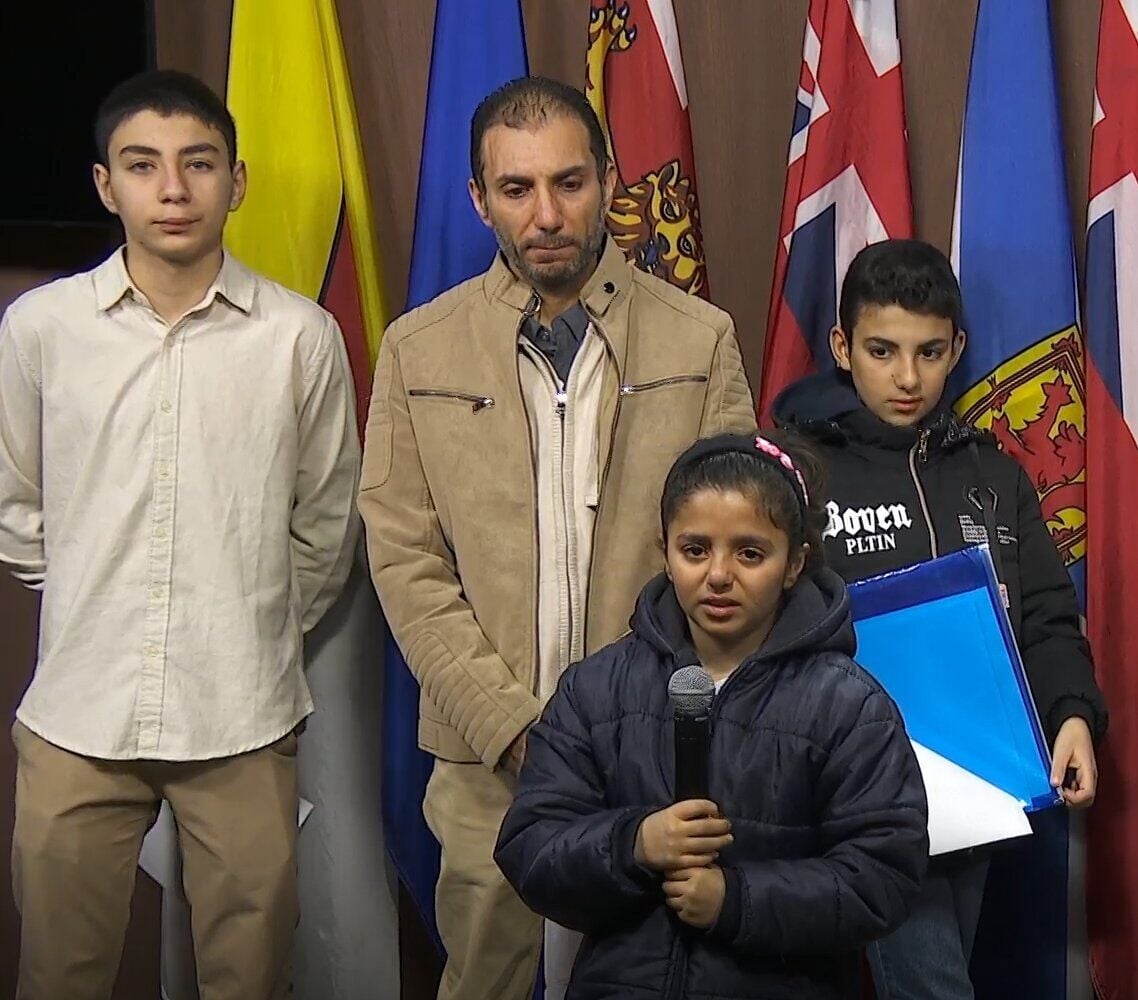
The Toronto Star 26/02/2026 - Standing beside a podium in a roomful of adults, Joury Alyazji begged Canada to help her reunite with her mother, who is still trapped in war-torn Gaza.
“This month is Ramadan and my mom is not with me,” said the eight-year-old girl, with the microphone held tightly in her hands.
“I wish that every time when I wake up, I can see my mom. And I wish Canada can help me to bring my mom. I cannot be alone. I’m trying my best to speak English. I am trying to do everything to bring my mom. I wish Canada can help me. Please Canada, try your best to help me please.”
On Thursday, Joury was speaking at an Ottawa news conference to call on the federal government to urgently reform and speed up the special immigration program launched in January 2024 to provide temporary refuge to Palestinians with relatives in Canada.
Ottawa has capped the intakes for the program at 5,000 applications, which have since been filled, but many applicants are still stranded inside Gaza, unable to submit biometrics for screening or in Egypt awaiting processing.
Advocate Matthew Behrens said to date, only a fraction of the applicants have arrived under the program, even though Israeli border authorities have allowed Gazans’ departures at the request of foreign embassies of refugee-receiving countries.
“We need to step up the pace,” he told reporters. “It takes a couple of hours to run biometrics through a computer system. It does not take two years. Anyone who leaves like this family gets approved by the Israeli authorities … They are not going to let someone leave if they feel that there’s the slightest potential that they are a threat.”
The Immigration Department said due to factors beyond Canada’s control, leaving Gaza remains extremely difficult, posing a significant obstacle to the continued processing of applications. Anyone looking to come to Canada must still meet all admissibility and eligibility requirements, including biometrics and security screening.
“We understand that this can be challenging for residents of Gaza, but these requirements are necessary to ensure the integrity of our immigration system and the safety of Canadians,” it told the Star. As of Dec. 31, 2025, around 1,890 people who exited Gaza and had temporary visa applications in process were able to submit biometrics, complete their application, and have been approved to come to Canada — 970 have arrived.
Joury’s father, Qasem Alyazji, said they had to make the difficult decision to leave behind the girl’s mother, Doaa Nashwan, who was the only person in the family without biometrics prior to the temporary visa applications. “I am deeply grateful to Canada for saving my children’s lives, but my family is not whole,” said Alyazi, flanked by his three children.
“My wife, the mother of my children, was not evacuated with us not because she chose to stay behind, not because we wanted to be separated, but because she was unable to complete biometrics under impossible conditions during the war.”
New Democrat MP Jenny Kwan, who has been assisting Gazan families, said Ottawa needs to reform the special program to ensure transparency accessibility under conflict conditions and equitable processing, along with comprehensive settlement supports to facilitate employment, education and health-care access once the applicants arrive Canada. Source
ACTION These Kids Need Their Moms: Canada Must Immediately Evacuate Doaa and Nariman from Gaza
ACTION Canada is Abandoning Gaza Students
Israel wants to execute Palestinians, and the world will allow it
Israeli Soldiers Killed Gaza Aid Workers at Point Blank Range in 2025 Massacre: Report
A Record 129 Journalists Killed in 2025, Israel Responsible for 2/3 of the Deaths: CPJ
| | Canada’s national amnesia on Islamophobia | |
Policy Options 16/02/2026 - Last month, Canadians marked the ninth anniversary of the Quebec City mosque massacre, in which six men were murdered and many more injured by a white nationalist gunman. Why? Because they were Muslim.
In June, it will be five years since another white supremacist drove his car into five members of the Afzal family while they were out for a walk in London, Ont., killing four and seriously injuring one. They, too, were attacked because they were Muslim.
These are not isolated incidents. A November 2023 Senate of Canada report stated that between 2016 and 2021, Canada led G7 countries in killings motivated by Islamophobia. Yet there remains a persistent refusal to reckon with this reality – a denial that everyday violence against Muslims is anything other than an anomaly in a country that prides itself on its ideal of multiculturalism. Sociologist Jasmine Zine has named it “a national amnesia.”
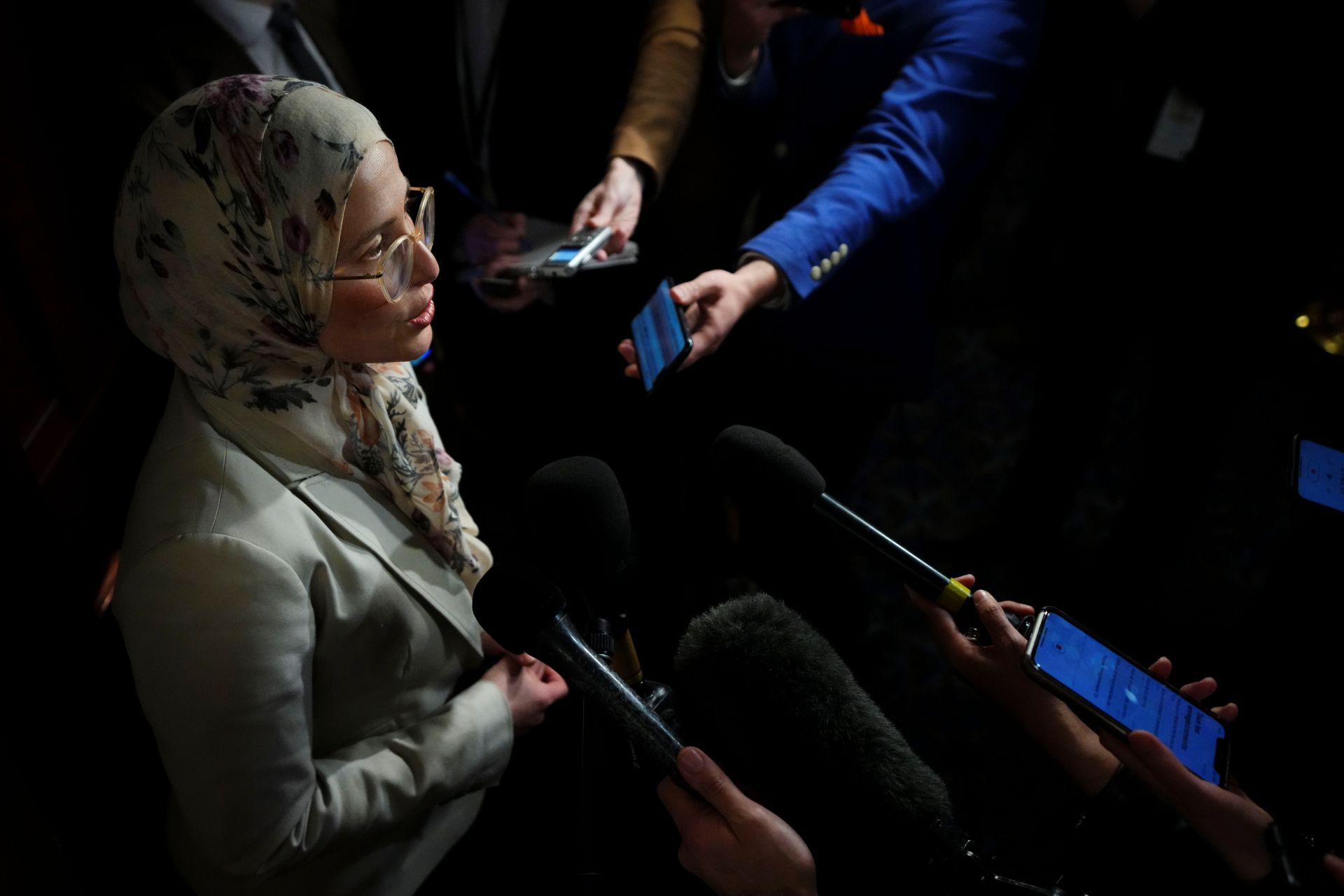
The Carney government’s recent decision to close the Office of the Special Representative on Combating Islamophobia is an extension of this collective amnesia, a signal that Canada still lacks the desire to have an honest conversation about the reality Muslims in Canada face.
Hate crimes against Muslims continue
It was the London attack that prompted a national summit on Islamophobia in 2021, and, ultimately, the creation of the special representative’s office in 2023. Yet just days after this year’s National Day of Remembrance of the Quebec City Mosque Attack and Action Against Islamophobia, Prime Minister Mark Carney shuttered that office without warning or public consultation, eviscerating the groundbreaking and critical work of the special representative, Amira Elghawaby.
Eliminating Elghawaby’s office and position without notice or community input, without measuring the impact of and the increased need for its vital work, reinforces the dangerous narrative that hate crimes against Muslims in Canada are anomalies that require no cohesive national strategy. But the violence is not anomalous – it is ongoing.
Just two weeks ago, Durham police allegedly assaulted a Muslim lawyer in an Oshawa courthouse, slamming her head into a desk and ripping off her hijab. Last October, a 54-year-old Muslim employee at a hotel in Markham, Ont., was brutally beaten in what the National Council of Canadian Muslims has described as one of the worst Islamophobia-motivated assaults they have recorded. The victim suffered severe injuries, including a scarred face and shattered teeth, requiring surgery. Last March, a woman studying quietly in an Ajax library had an unknown liquid poured on her hijab as an attacker attempted to set her on fire.
These are not isolated incidents; they are part of a pattern of bodily violence against Muslims that continues day after day across this country. These expressions of individual violence are accompanied by the systemic targeting of Muslims by Canada’s national security regime, which has constructed them into threats.
Office broke important new ground
Elghawaby’s appointment as special representative was crucial in both reflecting the richness of Muslim life in Canada and creating a record that documents the extent to which Muslims face Islamophobia in this country. As her office’s 2024-2025 annual report made clear, the depth of what she accomplished in such a brief time is nothing short of remarkable.
Most notably, in March 2025, Elghawaby’s office produced the first guide of its kind by any Western government on understanding and addressing Islamophobia. It is an evidence-based resource for policymakers, educators and law enforcement that acknowledges both systemic discrimination and its deadly manifestations. The guide outlines how Islamophobia operates at the system-level (laws and policies that have an anti-Muslim orientation), community-level (the proliferation of hate groups and organized resistance to Muslims’ ways of life) and individual level (interpersonal acts of harassment, abuse, discrimination and violence).
In addition, Elghawaby’s office raised awareness about intersectional challenges of Islamophobia, supported research on economic barriers facing Muslims, advised government agencies on Islamophobia while developing anti-Islamophobia trainings and celebrated Muslim life in Canada. Through the Department of Canadian Heritage, her office facilitated support for our own research project on media coverage of hate crimes against Muslims.
Without the kind of actionable data and insights that the Office of the Special Representative produced, we will have no way of tracking the impact of Islamophobia on everyday Muslim life, nor can we mobilize policy changes and resources. This is precisely the kind of structural accountability problem that this dedicated office was designed to address.
New body dilutes essential Muslim focus
Yet, issues of discrimination and violence against Muslims, who make up almost five per cent of Canada’s population, are now being folded into the prime minister’s Advisory Council on Rights, Equality and Inclusion, an outdated, diffuse model that ensures the focus shifts away from the specific challenges Muslims face.
The experience with the Cross-Cultural Roundtable on Security, established ostensibly to foster dialogue between communities and the government on matters of national security, should have taught us that advisory councils have limited means to ensure accountability and affect policy change. It was not until the government established and resourced the National Security Intelligence and Review Agency in 2019 that Canadians finally began to see meaningful reports on the shortcomings in national security agencies.
This dilution of focus with the Carney government’s establishment of the Advisory Council on Rights, Equality and Inclusion guarantees that Muslims will not get the targeted attention needed to overcome systemic discrimination. Without dedicated data collection and advocacy, structural issues such as Quebec’s Bill 21 – which has nearly three quarters of surveyed Muslim women considering leaving the province due to discrimination and harassment – will continue unchallenged.
As long as political leaders like Quebec Premier François Legault can claim his province is “not Islamophobic” while at the same time defending discriminatory legislation, Canada’s national amnesia will continue, and the work of documenting and confronting anti-Muslim violence will remain invisible.
It is precisely this work of making visible what others deny that may explain the hostility Elghawaby has faced. The very nature of her position, as the government’s voice on Islamophobia, set her up as a lone target for gaslighting politicians and right-wing media, demonstrating the government’s lack of understanding of how racialized and marginalized people are positioned in Canadian politics. Since October 7, 2023, Elghawaby has faced accusations from right-wing voices and media of being “divisive or advocating extremism” for highlighting the rights of Palestinians.
More resources and bold actions required
In 2024, Conservative Leader Pierre Poilievre called the Islamophobia and antisemitism envoy positions “useless.” To see Carney, who promised during the Liberal leadership race to preserve both roles, now fulfill Poilievre’s threat to shut them down is distressing. This is a moment that demands more resources and a renewed commitment to combating Islamophobia, not less.
As recommended in the groundbreaking guide produced by Elghawaby’s office, this is the time for bold individual and organizational actions in solidarity with Muslim communities. We owe it to the victims of Quebec City and London, and to every Muslim Canadian who fears that simply existing while visibly Muslim could cost them their lives. Source
Understanding the Bogus Allegations of Misuse of Funds by Elghawaby’s Office
ACTION We Need Everyone to Speak Out Against the Abuse of the Notwithstanding Clause As 12 Quebec School Workers Lost Their Jobs Because of Bill 94
| |
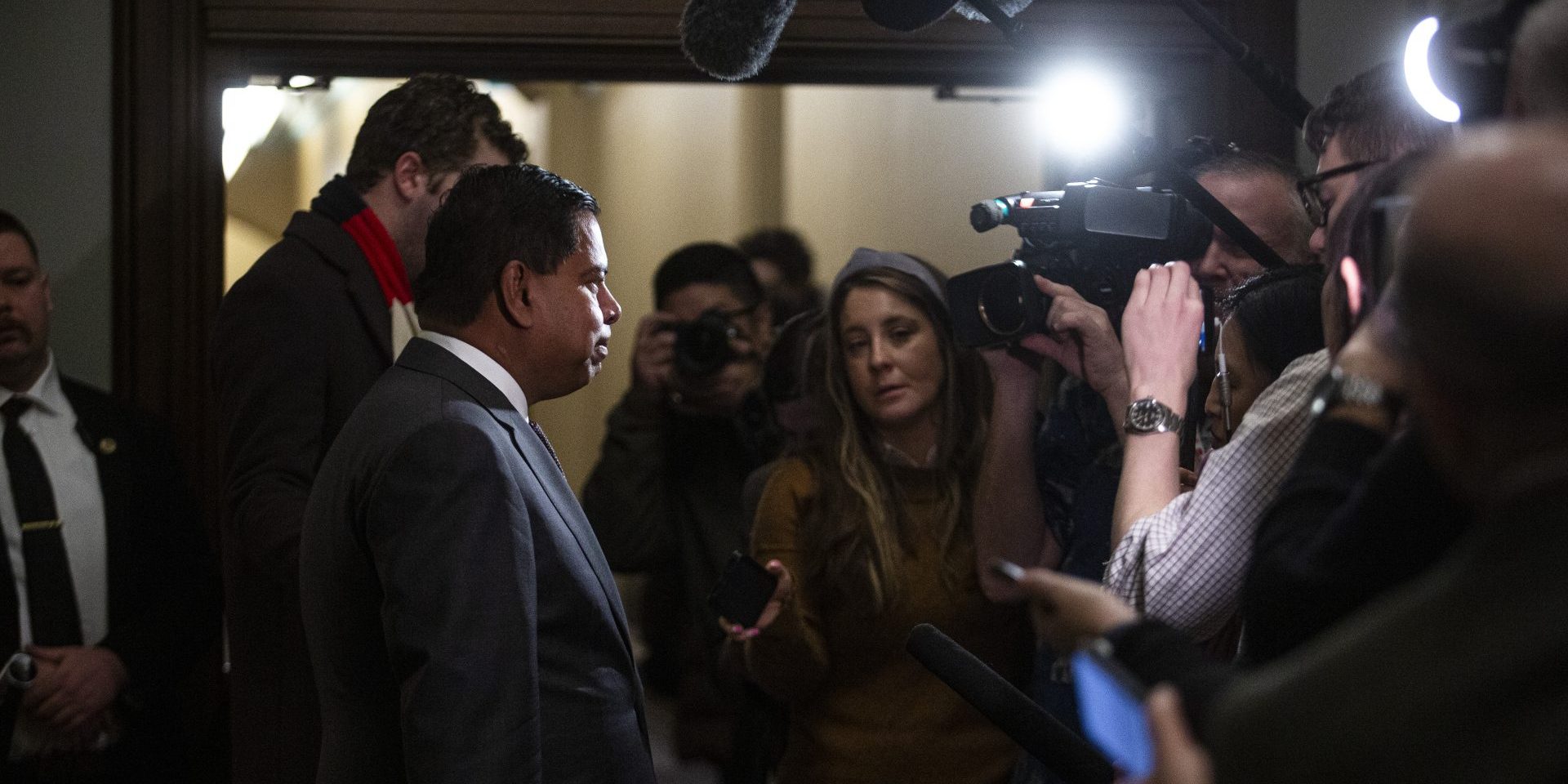
Conservative MP searches for ‘antifa’ in federal government, Canadian Armed Forces | |
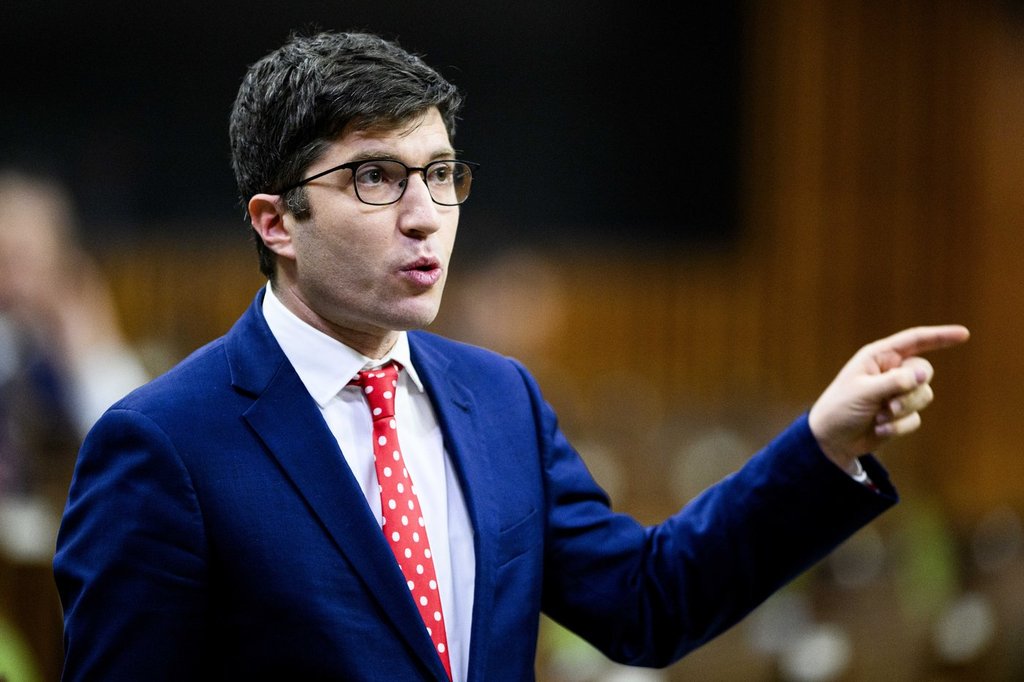
Global News 27/02/2026 - A Conservative MP wants to identify federal public servants or members of the Canadian Armed Forces who sympathize with the left-wing antifa movement.
Edmonton-area MP Garnett Genuis has asked federal departments and agencies, as well as the military, if any of their employees are now, or have ever been, members of the decentralized protest movement that stands in opposition to fascist and far-right ideologies.
“Antifa” is not a formal organization, but an umbrella term for political movements that oppose far-right, racist and fascist groups.
Antifa has become a fixation for U.S. President Donald Trump, and a lightning rod for right-wing websites and commentators, who depict the counter-protesters as violent mobs. The administration has controversially declared antifa a domestic terrorist organization, although the designation does not appear to have a basis in U.S. law.
Genuis has asked the Canadian government for a formal response on whether it permits “membership or involvement” with antifa for public servants or members of the CAF, and how many “people active in Antifa activities” Ottawa employs. The Sherwood Park-Fort Saskatchewan MP also wants to know if any bureaucrats or CAF members have been “disciplined … for Antifa-related activities.”
“The vast majority of Canadians who helped build this country in the last century were [anti-fascist],” Farber said in an interview. “[Antifa is] not a card-carrying organization … it’s a concept. It’s a concept that has been strong ever since democracy has been strong; it’s society’s way of saying strongly and clearly that they are against dictatorship, against hatred and against racism.”
The U.S.-based Centre for Strategic and International Studies noted that violent acts connected to antifa have typically involved groups counter-protesting fascist and far-right groups. But according to a 2025 study by the think tank, while broadly “left-wing” political violence has risen in the U.S. over the last decade, it remains at a lower level than “right-wing” or “jihadist” extremist violence over that same period.
With Trump’s extreme unpopularity in Canada, most Canadian Conservatives try to avoid any appearance of ideological overlap with U.S. Republicans. At the same time, antifa has not become the mainstream political target in Canada to the extent it has south of the border.
On Parliament Hill Monday afternoon, Genuis declined to answer questions about what prompted the antifa probe, suggesting Global News contact his office, which had not responded to Global’s questions as of Thursday morning.
Genuis put his questions to the government via the Order Paper, a process that allows any MP to submit written queries to federal departments and agencies. The written questions are typically used by opposition MPs to get factual and detailed responses about government programs, policy or spending. The government has 45 sitting days to reply, meaning Genuis can expect his response in April.
Public servants are permitted to participate in “any political activity so long as it does not impair, or is not perceived as impairing, the employee’s ability to perform his or her duties in a politically impartial manner,” according to federal law.
That would include peaceful demonstrations against fascist movements and groups, although the government cautions that public servants’ political activity “must be balanced with [their] responsibility to maintain the political impartiality of the public service.”
Regular members of the Canadian Armed Forces are more limited in their extracurricular political activities, requiring permission to participate at the municipal level and being barred from participating in provincial or federal politics.
Reserve members are not restricted from political activities, although they are still subject to the CAF’s general rules when engaging in civilian activity. Source
| | Trump’s Version of “Domestic Terrorism” vs. the First Amendment | |
Brennan Center 13/02/2026 - Immediately after federal immigration agents fatally shot Renee Good and Alex Pretti in Minneapolis, high-level Trump administration officials branded them as “domestic terrorists.” Amid public anger over the killings, President Trump attempted to distance himself from those false accusations. But his retreat in these high-profile cases should not obscure the wider truth: The administration has supercharged the use of domestic terrorism investigations to scare Americans away from using their First Amendment rights to oppose its policies.
These tactics risk criminalizing constitutionally protected activity — from joining a protest march to posting on social media — while inflicting draconian punishments for actions that are far removed from actual terrorism. They represent a natural extension of the government’s long-standing deployment of the domestic terrorism framework to target progressive activists. They’re also a dangerous and unwarranted expansion of the executive’s investigative and punitive authorities. [...]
President Trump’s Orders
Trump is now moving aggressively to expand his authority under the banner of combating domestic terrorism. In September 2025, he issued two orders committing the government to using its domestic terrorism authority to criminalize and investigate groups adhering to a broad range of ideologies. The first was directed at the decentralized antifascist political movement known as “Antifa,” painting it as a highly organized group engaged in coordinated efforts to “execute a campaign of violence and terrorism” and “radicalize” young people. The order designated antifa as a domestic terrorist organization, despite the fact that there is no legal authority to categorize a domestic group as such. Indeed, doing so likely violates the First Amendment — the Supreme Court has long protected the freedom to associate “for the advancement of beliefs and ideas,” and the First Amendment imposes strict constraints upon the government’s ability to punish even speech advocating illegal conduct.
The order also purports — again, without legal authority — to broaden the prohibition on providing financial or other assistance to an act of domestic terrorism, known as “material support.” Under current law, a charge of material support in the domestic context requires that the person being charged have provided support for one of the specifically defined “federal crimes of terrorism.” By contrast, Trump’s order directs federal authorities to investigate the provision of material support to “any and all illegal operations.” This threatens to criminalize a wide range of activity, from handing out water at a protest featuring visible antifa supporters to supplying online messaging or social media services in the usual course of business to people ideologically aligned with antifa.
Three days later, the president issued a far more sweeping memorandum, directing the Departments of State, Justice, Treasury, and Homeland Security to prioritize domestic terrorism. The memo mashes together actual acts of political violence, such as assassination attempts, with constitutionally protected viewpoints, including “anti-Americanism, anti-capitalism, and anti-Christianity; support for the overthrow of the United States Government; extremism on migration, race, and gender; and hostility towards those who hold traditional American views on family, religion, and morality.” The memo makes concrete the conservative fantasy of a coordinated left-wing conspiracy, conjuring up the specter of “sophisticated, organizing campaigns” carried out through a “comprehensive strategy to achieve specific policy goals through radicalization and violent intimidation.” Notably, not only does the overused term “radicalization” not rise to the level of terrorism, it is not even illegal.
The memo includes directions to all the major players in the federal law enforcement and homeland security ecosystem. The FBI’s joint terrorism task forces are directed to oversee a national strategy with the chilling remit to “investigate, prosecute, and disrupt entities and individuals” engaged in any behavior that satisfies the vague category of “intimidation designed to suppress lawful political activity or obstruct the rule of law.” They are also ordered to investigate any funders, officers, and employees of organizations that are “responsible for” or “sponsor or otherwise aid and abet” the activity addressed in the memo — a clear shot across the bow against civil society organizations, charitable foundations, and even individual donors.
Taken together with the laundry list of disfavored ideologies, this language all but commands law enforcement to investigate groups that write, organize, advocate, litigate, or otherwise speak out on any issues that the administration sees as contrary to its interests, as well as anyone who donates to them. Shockingly, the memo even characterizes trespassing — typically a misdemeanor — as a “politically motivated terrorist act.” And the memo doubles down on the antifa order’s effort to invent a domestic terrorist organization category out of whole cloth, giving the attorney general the power to recommend that any group whose members are engaged in acts legally defined as domestic terrorism be designated as a “domestic terrorist organization” — again, a directive that is entirely ungrounded in any statute. [...]
In addition to turning the entire fearsome machinery of the federal law enforcement and homeland security apparatus on civil society organizations, loose affiliations of activists, and donors to progressive causes, this effort will have substantial consequences for people who are tarred as domestic terrorism suspects, regardless of any investigation’s ultimate outcome. They will be placed on federal watchlists and likely face invasive questioning and even searches every time they travel.
Thousands of state and local police departments also have direct access to information on the watchlist, encouraging pretextual and extended law enforcement stops. Being watchlisted can interfere with the ability to carry out basic financial transactions like banking, credit, and money transfers. And the public stigma of being investigated as a domestic terrorist can be severe, as individuals targeted in these investigations risk losing access to employment or housing as employers or landlords learn about the investigation.
In the end, as these investigations ramp up, and as the space for lawful dissent and nonviolent civil disobedience inexorably narrows, it is the American people who will lose. Congress and the public should demand that our federal law enforcement and homeland security agencies protect our core constitutional rights, abide by the rule of law, and be held to account when they fail to do so. Read more - Lire more
Trump wants to prosecute anti-fascists as terrorists. This Texas trial will test his power.
Creating the enemy within
ICE Expands Watchlist Effort
| | Mexico Got Help Killing Drug Lord From Secretive U.S. Campaign Led by FBI and ICE | |
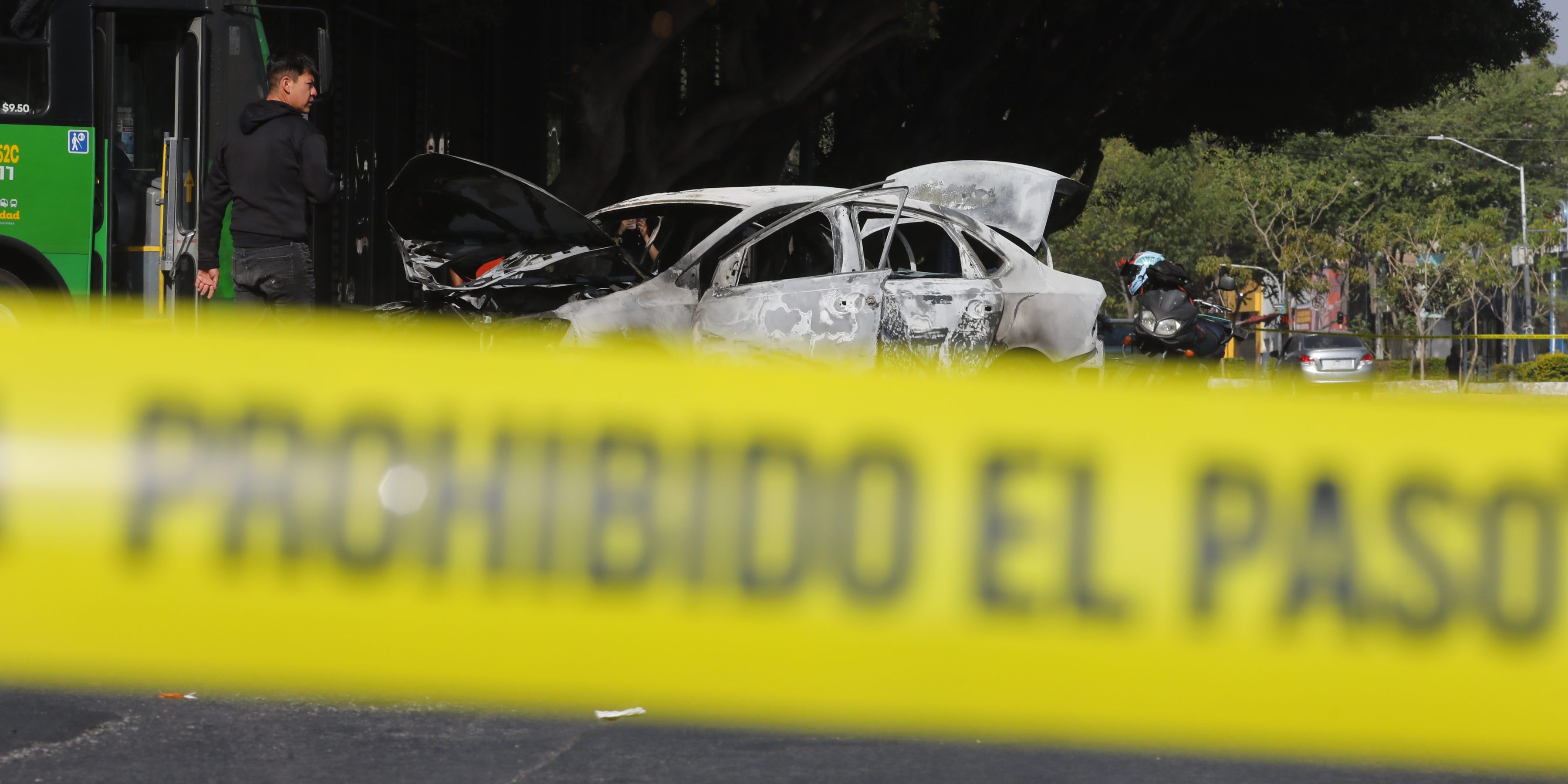
The Intercept 24/02/2026 - A new player in the U.S. military’s decadeslong war on drugs announced itself to the world on Sunday, providing intelligence that supported a Mexican military operation that killed the head of the infamous Jalisco New Generation Cartel.
Though details continue to emerge from the operation, which set off a spasm of violence that left at least 70 people dead, some of the information that led Mexican security forces to Nemesio “El Mencho” Oseguera Cervantes was delivered by a new Joint Interagency Task Force called Counter Cartel, based out of Southern Arizona.
The outfit operates out of Fort Huachuca, a military intelligence hub nestled in a rugged mountain chain 15 miles north of the U.S.–Mexico border. According to media reports, the task force, staffed by a combination of some 300 military and civilian employees, provided its Mexican counterparts with a “detailed target package” in the run-up to Sunday’s operation. The CIA also provided key support for the mission.
Existence of the task force was first revealed in a little-noticed ceremony at the Davis-Monthan Air Force Base in Tucson, Arizona, last month. Its online footprint is slight. The information that is publicly available, however, confirms deepening ties between President Donald Trump’s domestic homeland security agenda and his lethal drug war operations abroad.
Known internally as JIATF-CC, the task force is part of the U.S. Military’s Northern Command, once considered a backwater that today enjoys renewed prominence under Trump and Secretary of War Pete Hegseth. In the past year, Trump and Hegseth have used the Southern Command, NORTHCOM’s counterpart in the Western Hemisphere, as well the Pentagon’s Special Operations Command, to conduct the kinds of targeted killing missions long associated with the war on terror against targets in Latin America.
To date, the military has conducted more than 40 airstrikes against alleged drug traffickers, killing at least 137 people without producing a shred of evidence to support its claims. While those strikes have been concentrated in the Caribbean Sea and eastern Pacific Ocean, the task force involved in Sunday’s Mexico operation is distinct for its focus much closer to U.S. soil.
“What the Trump administration has done more than its predecessors is give NORTHCOM a hugely bigger role,” said Adam Isacson, director of defense oversight at the Washington Office on Latin America, an advocacy group. With that newfound stature has come a greater level of secrecy over what, exactly, the command is up to — and whether its operations might spill back over the border into the U.S.
In years past, when his organization would raise concerns over U.S. operations, the military would make available attorneys who could quote the Posse Comitatus Act — the law restricting military involvement in domestic policing — by chapter and verse, Isacson recalled. No more. Even his contacts on Capitol Hill, staffers working on armed services and homeland security issues, have found their letters to department chiefs met with silence. “It freaks me out when I talk to oversight staff,” he said. “They’re just not getting answers.” [...]
Crossing Borders
For generations, the U.S. military has played a driving role in the drug war abroad, training allied security forces, sharing intelligence on wanted drug traffickers, and facilitating covert kill-capture operations in nations such Colombia and Mexico.
Beginning under President Ronald Reagan and continuing into the administration of Bill Clinton, Northern Command oversaw a steady growth in military counternarcotics operations on the U.S.–Mexico border, including on U.S. soil. Those operations ended when a Marine sniper team killed an American teenager named Esequiel Hernández while he was tending his family’s goats in West Texas in 1997.
Since then, the Pentagon has largely kept its focus south of the border. That, however, may be changing. A defense official speaking to Reuters said the new Arizona task military force is working to map suspected drug cartel networks on both sides of the international divide.
The director of the task force, U.S. Brig. Gen. Maurizio Calabrese, compared his team’s mission to the targeted killing campaigns previously waged against terrorist organizations like Al Qaeda and the Islamic State. The motivations were different, he said, but in terms of sheer size, the drug cartel threat was perhaps even larger.
The general estimated that hundreds of leaders occupied the upper echelons of Mexican organized crime, supported by as many as a quarter-million lower-level operatives, which he referred to as “independent contractors.” Read more - Lire plus
U.S. military kills 11 in triple vessel strike
| | Junta airstrikes kill 5 civilians in central Myanmar | | |
AA 12/02/2026 - The Burma Air Forces carried out airstrikes that killed at least five civilians and injured 13 others in central Myanmar, local media reported on Wednesday.
The junta’s air force targeted Chatkan village in Pauk Township, Magway Region, on Tuesday, according to local outlet DVB.
“One of the bombs landed on a shop, killing five people instantly,” a humanitarian aid worker in Chatkan said, adding that three of the 13 injured civilians were in “critical condition.” Ten other people were also injured in the bombing.
The area is partially controlled by the People’s Defense Force (PDF). Formed in 2021, the PDF is the armed wing of Myanmar’s National Unity Government, established to fight the military junta after the Feb. 1, 2021 coup.
Earlier, the PDF claimed it killed at least 18 junta soldiers in Pauk’s Thichauk village on Feb. 4, as more than 5,000 people were forced to flee their homes due to airstrikes and clashes in the area.
Last month, the UN said at least 170 civilians were killed in more than 400 aerial attacks during Myanmar’s election period.
Ethnic clashes have intensified as the country remains engulfed in civil conflict nearly four years after the February 2021 military coup.
The 2021 military takeover ousted the elected government led by Aung San Suu Kyi’s National League of Democracy and plunged the country into more than four years of emergency rule.
More than 6,000 people have since been killed and nearly three million displaced due to fighting between the junta and opposition groups, according to rights monitors. Source
| | OTHER NEWS - AUTRES NOUVELLES | | ICLMG ACTIONS DE LA CSILC | | |
Following widespread criticism of various aspects of Bill C-2, the Strong Borders Act, the government introduced Bill C-12, the Strengthening Canada’s Immigration System and Borders Act, in October 2025.
Although presented as a solution, C-12 fails to answer any of those concerns. Instead, it only serves to fast-track provisions undermining the rights of refugees and migrants, while allowing Bill C-2’s privacy violating provisions to continue their path through Parliament as well.
| | |
The Liberal government introduced a sweeping new national security and border omnibus bill, Bill C-2, the Strong Borders Act in June 2025.
Under the guise of addressing border security and placating the Trump administration, the government is seeking unrelated powers – some of which they have unsuccessfully attempted to obtain in the past – which will have wide-ranging negative impacts on human rights and civil liberties.
| | UPDATED: Stop Bill C-9 as it will criminalize dissent! | | |
The Liberal government introduced Bill C-9, the Combatting Hate Act, which is aimed at preventing hate crimes but instead threatens the Charter rights and civil liberties of all people in Canada, including those communities that the government wishes to help protect.
- Bill C-9 gives police discretionary powers to determine which symbols are hateful and what are protesters intentions, which will lead to more arbitrary arrests and disruptions of peaceful assemblies, potentially including labour picketing.
- These new broad and discretionary powers, combined with increased jail sentences, will significantly undermine free expression and dissent, sending a chill amongst those who would otherwise take part in protests.
- The removal of the existing requirements for attorney general approval of laying hate propaganda charges, allowing police to make these decisions, compound these concerns.
- This bill is highly alarming, especially in the context of the crackdown on Palestinian solidarity and anti-genocide protests.
| | The Justice Minister must end the injustice against Hassan Diab! | | |
In April 2023, despite clear exculpatory evidence, the French Court of Assize conducted an in absentia trial that unjustly declared Dr. Hassan Diab guilty and sentenced him to life in prison. The proceedings amounted to a sham trial and a mockery of justice.
Since that ruling, Dr. Diab and his family have lived in constant uncertainty, facing the ongoing threat that a second extradition request could be made at any time.
Please click below to send a new letter demanding that Justice Minister Sean Fraser categorically refuse any future extradition request and put an end—once and for all—to this ongoing miscarriage of justice.
| |
Canada: Abolish rights-violating terrorist entities list!
| | |
On October 15, 2024, the Canadian government placed the Samidoun Palestinian Prisoner Solidarity Network on Canada’s terrorist entities list. While ostensibly a tool to protect the safety and security of people in Canada and internationally, the list is an arbitrary political tool that undermines freedom of association, of expression and due process in the courts. Its effectiveness as a national security tool has never been demonstrated in a manner that justifies its use.
Due to these deep flaws, and more, the ICLMG has consistently called for the list to be abolished since the Canadian coalition’s founding in 2002. Please join us in urging the Canadian government to abolish the rights-violating terrorist entities list once and for all. Thank you!
| | Canada must repatriate all Canadians detained in NE Syria/Iraq now! | Every day the government fails to bring these Canadians home, it places their lives at risk from disease, malnutrition, violence, and ongoing military conflicts. United Nations officials have even found that the conditions faced by Canadians in prison are akin to torture. Please click below to urge the federal government to repatriate all Canadians illegally and arbitrarily detained in northeast Syria without delay. | | 23 years of fighting deportation to torture: Justice for Mohamed Harkat! | | CSIS isn't above the law! | | |
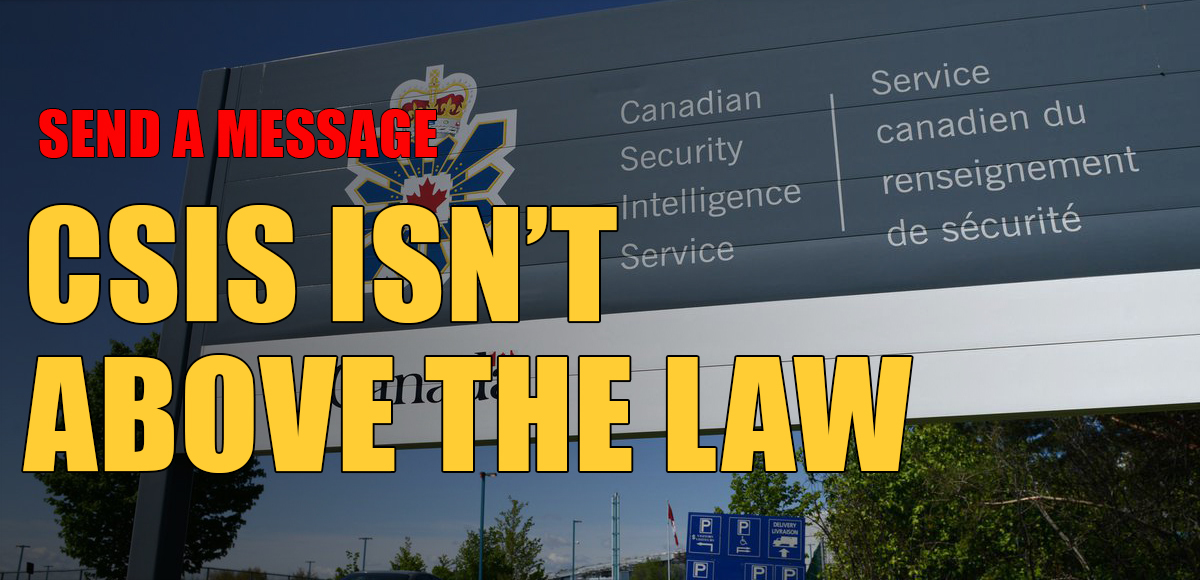
In recent years, at least three court decisions revealed the Canadian Security and Intelligence Service (CSIS) engaged in potentially illegal activities and lied to the courts. This is utterly unacceptable, especially given that this is not the first time these serious problems have been raised. CSIS cannot be allowed to act as though they are above the law.
Send a message to the Public Safety Minister demanding that he take immediate action to put an end to this abuse of power and hold those CSIS officers involved accountable. Your message will also be sent to your MP and to the Minister of Justice.
| | Reform Canada's extradition law now! | |
Canada’s extradition system is broken. One leading legal expert calls it “the least fair law in Canada.” It has led to grave harms and rights violations, as we’ve seen in the case of Canadian citizen Dr Hassan Diab. It needs to be reformed now.
Click below to send a message to urge the Prime Minister, the Minister of Justice and your MP to reform the extradition system before it makes more victims. Thank you!
Version française: Le Canada doit réformer la loi sur l'extradition!
| | Canada must protect encryption! | |
Canada, with other G7 nations, continues to push to weaken our access to strong, reliable encryption, after decades of being supportive of strong encryption. We need encryption to safeguard our data, our online transactions, our communications, and to protect the lives of journalists and human rights activists.
Please send a message to the Prime Minister of Canada, the Minister of Public Safety, as well as your Member of Parliament, to urge them to reverse course and once again commit to protecting encryption.
Regardez la vidéo avec les sous-titres en français + Agir
| | Protect our rights from facial recognition! | Facial recognition surveillance is invasive and inaccurate. This unregulated tech poses a threat to the fundamental rights of people across Canada. Federal intelligence agencies refuse to disclose whether they use facial recognition technology. The RCMP has admitted (after lying about it) to using facial recognition for 18 years without regulation, let alone a public debate regarding whether it should have been allowed in the first place. Send a message to the Prime Minister and the Public Safety Minister calling for a ban now. | | What we've been up to in 2025, and our plans for 2026! | |
ICLMG 03/12/2025 - Thanks to the support of our members and donors, we’ve been able to do a lot and work on the following since June:
- Anti-privacy and xenophobic bills C-2 & C-12
- Anti-protest and anti-freedom bill C-9
- Impacts of Countering Terrorism Financing on charities, non-profits, solidarity work and international assistance.
- Canada’s complicity in torture
- Justice for Hassan Diab
- Artificial Intelligence regulatory frameworks & national security
- The gaps in oversight and review of national security agencies
- Consultations on the UN Global Counter-terrorism strategy & definitions of “terrorism” and “violent extremism"
- We were interviewed or quoted in dozens of media pieces
- And much more!
For all details on our activities, and our plans for 2026, click here.
| | Les opinions exprimées ne reflètent pas nécessairement les positions de la CSILC - The views expressed do not necessarily reflect the positions of ICLMG. | | |
THANK YOU
to our amazing supporters!
We would like to thank all our member organizations, and the hundreds of people who have supported us over the years, including on Patreon! As a reward, we are listing below our patrons who give $10 or more per month (and wanted to be listed) directly in the News Digest. Without all of you, our work wouldn't be possible!
James Deutsch
Bill Ewanick
Kevin Malseed
Brian Murphy
Colin Stuart
Bob Thomson
James Turk
John & Rosemary Williams
Jo Wood
The late Bob Stevenson
Nous tenons à remercier nos organisations membres ainsi que les centaines de personnes qui ont soutenu notre travail à travers les années, y compris sur Patreon! En récompense, nous nommons ci-dessus nos mécènes qui donnent 10$ ou plus par mois et voulaient être mentionné.es directement dans la Revue de l'actualité. Sans vous tous et toutes, notre travail ne serait pas possible!
Merci!
| | | | |