|
International Civil Liberties Monitoring Group
Coalition pour la surveillance internationale des libertés civiles
June 20, 2026 - 20 juin 2026
| Bimonthly news round-up about national security's negative impact on civil liberties in Canada and abroad | | Privacy experts and civil liberties groups denounce the Liberal government’s shut down of much-needed debate on dangerous state surveillance bill C-22 | | |
ICLMG 18/06/2026 - Twenty-one civil liberties organizations, privacy groups and individual experts are deeply alarmed that, late last night, the federal government cut off debate at the Standing Committee on Public Safety and National Security on the very controversial Bill C-22, the Lawful Access Act.
Bill C-22 raises significant privacy and security concerns, including that it will:
- Grant police easier access to our personal information;
- Allow the government to force companies to create backdoors so police and spy agencies can scoop up our personal data and communications, making online protections like encryption meaningless;
- Allow the government to order companies to hold on to our personal information for up to a year, creating a treasure trove of data that would serve as a digital map of everyone in Canada, and could be misused, leaked, or targeted by hackers; and
- Risk more of our information being shared with US intelligence and law enforcement agencies, including for the investigation of acts that are legal in Canada.
MPs have received several thousands of emails from Canadians opposing the bill. Many companies, such as Google, Apple and Meta, have sounded the alarm, especially regarding mandated backdoors into their system that would break encryption. Several, such as Signal, Duck Duck Go and NordVPN, have even threatened to leave Canada if the law passes.
It is even more troubling that the government has passed another undemocratic motion to stop debate on a rights-threatening bill when it faces more than 100 amendments, with only a fraction having been discussed before debate was cut off. The government promised to bring its own amendments to address criticisms of the bill, but they were never fully revealed before the vote, and, because of this motion, did not receive any actual debate at committee.
Bill C-22 is too complex and its impacts too significant to be rushed through. The government should not have used this draconian measure, should have allowed the study of the bill to run its course, and should have ensured that all government and opposition amendments were given full consideration and scrutinized in public. We are urging MPs to denounce the passage of the motion, and the government to change course on C-22 and its undemocratic ways.
Quotes:
“This legislation presents one of the greatest threats to privacy in Canada of the past two decades. Its provisions will weaken the rules governing police access to personal information, all while facilitating a vast expansion of government surveillance. This is another clear case of the decades-long trend of governments using national security as an excuse to erode civil liberties and human rights. We are encouraging all members of parliament to oppose these new powers.” –Tim McSorley, National Coordinator, International Civil Liberties Monitoring Group
“Breaking our own privacy with mandated backdoors is a terrible idea at the best of times; and Canada has chosen one of the worst possible moments. Frontier AI has become so good at finding software vulnerabilities that the US government just pulled the most capable model off the market worldwide because of what it could find. While other countries race to patch their vulnerabilities, Canada is poised to do massive self-inflicted damage to our economy and security, unless we drop Part 2 of C-22.” –Matt Hatfield, Executive Director, OpenMedia
‘’Let’s be clear: the current government’s handling of this bill is an affront to democracy. All Canadians should be concerned about what the Carney government has in store for us with the highly controversial C-22 and numerous other bills that lay the groundwork for a surveillance state in which the primacy of “security” trumps civil liberties and privacy protections. Not only is the government abruptly cutting short the committee debate—and thereby ignoring the serious concerns raised by both privacy advocates and businesses—but it is also hiding behind misleading rhetoric that claims opposing C-22 means siding with criminals rather than victims! Such statements are an insult to the intelligence of Canadians. The Ligue des droits et libertés calls on members of Parliament to oppose these anti-democratic practices and to vote overwhelmingly against this bill.’’ –Dominique Peschard, Spokesperson and activist for the Ligue des droits et libertés
“People in Canada deserve legislation that respects and protects their privacy rights, and legislators deserve the opportunity to satisfy themselves that they fully understand the true consequences of Bill C-22 on informational privacy, cybersecurity, and cross-border information sharing before they are called to vote on it for the last time. It is frankly irresponsible to curtail the committee study process on such a comprehensive and consequential piece of legislation.” –Aislin Jackson, Policy Staff Counsel, British Columbia Civil Liberties Association
Signatories:
International Civil Liberties Monitoring Group
OpenMedia
Ligue des droits et libertés
Privacy and Access Council of Canada
Le Centre de Réfugiés / The Refugee Centre
Centre for Free Expression
British Columbia Civil Liberties Association (BCCLA)
Table de concertation des organismes au service des personnes réfugiées et immigrantes (TCRI)
Canadian Muslim Public Affairs Council (CMPAC)
BC Freedom Of Information and Privacy Association
Clinique pour la justice migrante / Migrant justice clinic
Canadian Civil Liberties Association (CCLA)
Council of Canadians
Start Point Organization
IFEX
Safiyya Ahmad, lawyer
Ümit Kiziltan, researcher
Kate Robertson, Senior Research Associate, Citizen Lab, Munk School of Global Affairs & Public Policy, University of Toronto
Ron Deibert O.C., O.Ont., Professor of Political Science and Director of the Citizen Lab, Munk School of Global Affairs & Public Policy, University of Toronto
Noura Aljizawi, Senior Researcher, Citizen Lab, Munk School of Global Affairs & Public Policy, University of Toronto
Michael Geist, Canada Research Chair in Internet and E-commerce Law, University of Ottawa, Faculty of Law Source
Version française : Des expert·es de la protection de la vie privée et des groupes de défense des libertés civiles dénoncent l’arrêt par le gouvernement libéral du débat indispensable sur C-22, un projet de loi dangereux de surveillance étatique
Michael Geist: Midnight Madness: The Government Rushes Lawful Access Bill Through the House Without Debate or a Recorded Vote
Michael Geist: Gary Anandasangaree’s Vic Toews Moment Shows the Government Has Lost Its Way on Lawful Access
Chayn: Encryption Saves Lives: The Hidden Costs of Bill C-22 for Survivors of Gender-Based Violence in Canada and Beyond
Cynthia Khoo: Canada should keep its data out of U.S. hands
Christine Van Geyn: Privacy isn't a crime, but Bill C-22 acts like it is
Google says changes to Canada’s police search powers bill haven't eased concerns
| | Much Needed Online Safety Rules Must Not be Used as Backdoor to Expand Terrorism, Violent Extremism Definitions | | |
ICLMG 16/06/2026 - A civil liberties coalition is raising concerns that the government’s new Safe Social Media Act, Bill C-34, will serve as a backdoor to broaden the definition of terrorism, introduce a new definition of violent extremism, and extend what counts as a terrorism offence. The inclusion of these new definitions in the Safe Social Media Act – and a lack of adequate safeguards – will result in the censorship and possible removal of otherwise lawful content, including political and human rights advocacy, journalism, education and art.
“We recognize the importance of an overall framework to protect online safety and, in particular, to hold corporations accountable for harms they allow on their online platforms. However, Bill C-34 cannot be allowed to serve as a trojan horse to expand already controversial definitions of what constitutes acts of terrorism, create new definitions for acts of violent extremism, or harmful acts associated with them,” said Tim McSorley.
Previously, the federal government had promised that the online harms in any such legislation would adhere to what is already in the Criminal Code. However, a new definition of “acts of terrorism and violent extremism” expands the scope beyond the definition of acts of terrorism in s. 83.01 (1) of the Criminal Code, and creates a new category of violent extremism. This includes adding “undermining, weakening or destroying fundamental institutions or political, economic or social stability,” an incredibly broad definition that is undefined in either the Safe Social Media Act or the Criminal Code. Moreover, the existing definition of acts of terrorism state that any such actions are an offence if they intentionally cause death or serious bodily harm, endanger an individual’s life or cause a serious risk to the health or safety of the public, among other things. The new definition in Bill C-34 significantly expands the wording to include acts that “could cause” those outcomes.
Language in what will constitute “terrorist and violent extremist (TVE) content” also goes further than what is currently prohibited in the Criminal Code. While both C-34 and the Criminal Code will prohibit content that instructs, recruits or counsels individuals to participate in a terrorism or violent extremism, or the threatening to carry out such acts, the new legislation would also define harmful content as anything that “encourages” or “promotes” such activity. “Terrorist propaganda”, which would be the most direct – and appropriate – parallel in the Criminal Code to “terrorist content” is itself defined as “any writing, sign, visible representation or audio recording that counsels the commission of a terrorism offence.”
These new definitions create in Canadian law new expectations as to what constitutes both acts of terrorism and acts of violent extremism. Moreover, they will serve as the basis for what social media and AI chatbot services are expected to block people in Canada from being exposed to, under threat of serious fines and penalties. Combined, they create a potent recipe for limits of freedom of expression – and access to information – online.
These concerns are exacerbated by limited and confusing exceptions to what constitutes terrorism or violent extremism. For example, Bill C-34 states that TVE content excludes content “whose communication has a legitimate purpose, including a legitimate purpose related to the administration of justice or to journalism, education or art.” Instead of simply excluding the administration of justice, journalism, education or art, this definition will be predicated on the determination of a “legitimate purpose” – raising the question of who will make such a determination? The definition also fails to include anything related to advocacy, protest or dissent, all of which are excluded from the Criminal Code definition of terrorism.
Bill C-34 also states that terrorism or violent extremism does not include “activities undertaken by military forces of a state in the exercise of their official duties.” This narrows, in very problematic ways, a similar provision in the Criminal Code which states that the definition of terrorism does not include either official military duties (however only “to the extent that those activities are governed by other rules of international law”) or acts “committed during an armed conflict and that, at the time and in the place of [their] commission, [are] in accordance with customary international law or conventional international law applicable to the conflict.” The removal of references to international law is unacceptable and must be reversed.
Creating new definitions of terrorism or violent extremism – and expecting social media platforms to adequately interpret and enforce them – is problematic and should be avoided. Luckily, Bill C-34 already presents a clear solution, just as the previous Bill C-63 did: focusing instead on the removal of content that incites violence. Doing so takes away the discretionary and political nature of determining the motivation behind an act of violence, reducing the likelihood of undue censorship and making clearer to both the public and online platforms what content is prohibited.
“While the definition of “incitement to violence” also raises some concerns, it is a much better starting place to work from to prevent content that can lead to some of the most serious forms or harm,” said McSorley. “We look forward to working with the government and MPs from all parties to ensure that social media and AI chatbots are held accountable for their practices that can cause significant harms, all while ensuring people in Canada can share – and access – important content related to world events, political and human rights advocacy, academic debates and more, without undue fear of censorship.” Source
CCLA warns against risks to freedom of expression and privacy posed by Bill C-34, the Safe Social Media Act
OpenMedia: The Safe Social Media Act needs major fixes
The Law to Be Named Later: Bill C-34 Punts 50 Key Decisions to Cabinet and a Digital Safety Commission That Does Not Yet Exist
Bill C-34's Social Media Ban for under 16s is Unconstitutional
| | New federal hate crime legislation misses the mark, threatening free expression and other Charter rights: civil liberties coalition | | |
ICLMG 17/06/2026 - The adoption of Bill C-9, the Combatting Hate Act, without necessary amendments presents a new and significant risk to Charter rights and civil liberties of all people in Canada, including those communities that the government wishes to help protect, says a Canadian civil liberties coalition.
The ICLMG has observed with distress the increase in hate-based violence across Canada over the past several years, and believes greater measures must be taken to address it. But such measures must be targeted and specific, and must not unduly impact civil liberties or Charter rights — including those of the very communities the measures are meant to protect. Unfortunately, several measures in Bill C-9 fail that test.
“The government had the opportunity to ensure that new laws to address the rising number of violent hate acts in Canada were targeted and specific. Instead, new hate provisions involving the use of symbols as hate propaganda and new offences for intimidation or obstruction near religious or cultural places – even when used for unrelated purposes – are so broad that they would be used in discretionary or discriminatory ways to criminalize speech and actions that may be disagreeable or distasteful, or simply critical of the government, but are not hateful or criminal in nature,” said Tim McSorley, national coordinator of the International Civil Liberties Monitoring Group (ICLMG).
Criminalization of the display of “hate” symbols
For example, the bill creates a new offence of wilful promotion of hatred by displaying symbols associated with listed terrorist entities, as well as symbols that closely resemble them. The government has argued that the offence is limited in its scope and would not apply to the mere display of such symbols; rather, they would need to be displayed in a way that also promotes hatred. However, legal and civil liberties advocates, including the ICLMG, have disputed this point, stating that the wording of the offence will allow police to interpret the display of a symbol as in and of itself promoting hatred – a serious infringement on free expression, which, for that very reason, is not even found in Canada’s anti-terrorism laws. Regardless of the breadth of the offence, granting police the discretion to determine what symbols are associated with a terrorist entity – and what is considered “close enough” to resemble one – constitutes a grave risk for discretionary enforcement, overpolicing, and the stifling of free expression and dissent.
Already, political and cultural symbols associated with Palestinian culture and human rights, including the keffiyeh, have illegitimately been associated with terrorist entities or hate. These new provisions would be a license for police to detain people first, and ask questions later, during protests and other gatherings, further undermining freedom of assembly and free expression.
Moreover, basing a hate offence on the terrorist entities list (TEL) is in and of itself deeply troubling. The listing process for the TEL is secretive and discretionary, with governments responding to political pressure in making determinations of which organizations to list and when, while ignoring others. It has a troubling history of being used to target groups that have fought for rights of self-determination and against occupation, all while Canadian governments have failed to act against the much more prevalent and deadly violence enacted by states.
Further restrictions on freedom of assembly
New offenses in Bill C-9 regarding obstruction and intimidation in proximity to certain places, including places of religious worship, schools, community and sports centres – regardless of what these places are being used for – raise similar concerns. For example, groups have pointed out that had this offence already been in place, it could have been used to criminalize protests outside of synagogues during events that were illegally selling occupied land in the West Bank, an event not related to the religious nature of the building. Furthermore, the Criminal Code already allows for police to act on the basis of mischief, intimidation, harassment, or threats, including in regards to protests. This has been made amply clear in the history of policing – and over-policing – of protests across the country, including and especially demonstrations in support of Palestinian rights, such as the disruption of many lawful protests, and the violent dismantling of peaceful encampments. Not only is it clear that these new powers are unnecessary, the wording would also empower police to take discretionary action based on how they interpret the intent of protesters – not protesters’ actions.
The proposed new offences would carry significant penalties, including the threat of jail time, and will result in people who would ordinarily take action to speak out on important social issues refraining from doing so under the fear of being trapped in the dragnet of additional, unclear and broad discretionary powers.
In response, the ICLMG is calling on the government to issue clear guidance to police and prosecutors around the enforcement of the new offences created in Bill C-9 to ensure that they are enacted with restraint and respect for Charter rights. The ICLMG will also monitor the use of these new provisions, and is encouraging individuals to contact the coalition through its website at iclmg.ca/contact-us to help collect and compile examples. Source
Joint Statement: 65 civil liberties, human rights, faith and community organizations express serious concern following passage of Bill C-9
| | Canada Illegally Returning Refugees to the U.S. Amid Widespread Rights Violations | | New court challenge argues government is breaching Charter rights, defying Supreme Court ruling on refugee protection | | |
CCR 17/06/2026 - The Government of Canada is violating the Charter rights of people seeking refugee protection in Canada by handing them over to the United States, despite mounting evidence of rights abuses linked to the Trump administration’s mass deportation agenda, a new court challenge contends.
Filed by the Canadian Council for Refugees, Amnesty International Canada and families who sought safety in Canada, the challenge argues that, by sending at-risk refugees back to danger in the U.S., Canada’s implementation of the Safe Third Country Agreement (STCA) is unconstitutional and ignores a 2023 Supreme Court of Canada ruling.
“Every day, people fleeing danger present themselves at the Canadian border expressing grave fears about what will happen to them if they are returned to the U.S.,” said Asma Faizi, President of the Canadian Council for Refugees. “While their fears are very real, the ‘safety valves’ supposedly offered by the Canadian government do not in practice exist and refugees’ pleas for protection are ignored.”
“Refugees are being turned away at our borders and handed over to the U.S. system of cruelty and chaos,” said Ketty Nivyabandi, Secretary General of Amnesty International Canada. “Instead of protecting people fleeing persecution, Canada is violating their rights and exposing them to harm. Canada must put an end to this unconscionable practice without delay.”
A System with No Effective Safeguards
Under the STCA, most refugee claimants who arrive at the U.S.-Canada land and water border seeking protection in Canada are denied entry and turned back to the U.S. First implemented two decades ago, the agreement is premised on the notion that both countries reliably respect people’s right to seek asylum.
In 2023, however, responding to a constitutional challenge to the STCA, the Supreme Court ruled that Canada must ensure that mechanisms to prevent deportation to the U.S. — so-called “safety valves” — are made available to individuals who would face violations of their rights in the U.S., such as unfair detention or the risk of deportation to another country where their rights or even their lives would be in danger.
In practice, the Canada Border Services Agency (CBSA) has failed to implement these “safety valves.” Consequently, individuals who raise serious concerns are regularly returned to the U.S., without an adequate screening process to avoid unlawful deportations and without access to a judge.
The risks are not abstract. The CCR’s and Amnesty’s co-applicants in the case include a Honduran family denied the opportunity to seek refuge together in Canada. The family told Canadian border officials that their U.S. asylum claims had been cancelled without any decision and that they were at risk of detention and deportation. Neither the family’s individual situation nor the readily available information about the mass campaign of detention and deportation launched by President Trump led Canada to provide them access to the constitutionally-required “safety valves.”
As a result, they were sent back to the United States, where they were immediately detained. Before deporting the family back to Honduras — without any assessment of their asylum claim — U.S. immigration officials held them for two weeks in the notorious Dilley Immigration Processing Center in Texas. Families held at Dilley have reported horrifying conditions, including prolonged incarceration without due process, inadequate access to safe drinking water, denial of medical care, and other violations of people’s basic human rights. These findings have spurred Amnesty International and other human rights organizations to call for the facility’s immediate closure. Still in Honduras, the family now lives in hiding out of fear that they will be discovered by the same criminal gang whose attacks and death threats led them to flee in the first place.
In the U.S., Immigration Detention and Deportations Without Regard to Basic Rights
Since returning to power, the Trump administration has dramatically escalated immigration detention and deportations, including of Canadian citizens. Refugees are among the worst affected and have the most to lose. The U.S. asylum system has been effectively dismantled, many are facing mandatory detention, and the Trump administration has deported people in violation of court rulings.
Migrants detained in the U.S. face overcrowded and unsanitary conditions, solitary confinement, inadequate medical care, and barriers to accessing legal help. Children are at risk of being separated from their parents and of suffering malnourishment and trauma while in detention.
Canada’s Obligations Are Clear
The new legal challenge highlights that Canada is failing to uphold its constitutional and international obligations to protect people from refoulement — the direct or indirect return of individuals to countries where they face persecution or torture — and other serious human rights violations.
In a separate legal case, Amnesty International and the Canadian Council for Refugees, along with the Canadian Council of Churches, continue to challenge the constitutionality of the designation of the U.S. as a safe third country, arguing that it violates refugees’ right to equality.
The organizations once again call on the Canadian government to immediately withdraw from the STCA. Source
ACTION Defend human rights: Tell Canada to withdraw from the Safe Third Country Agreement
CBSA using ‘harsh, unprecedented’ tactics in Quebec for record-breaking deportations
No Human Rights Review for Thomson Reuters’ Big Contracts with ICE
World Refugee Day: A Call to Uphold Canadian Values
The border management fairytale: How the migration control dogma is used to maintain neocolonial rule and commodify human movements
| | Bill C-36 proposes empty privacy protections, broad exceptions for corporate data exploitation, and little to address AI harms | | |
CCLA 16/06/2026 - Yesterday, the government tabled Bill C-36, the Protecting Privacy and Consumer Data Act, which seeks to overhaul Canada’s federal privacy framework for private companies.
The proposal—a “cornerstone” of Canada’s “National Artificial Intelligence Strategy: AI for All”—is intended to provide Canadians with more control over their personal data with the stated objective of providing confidence in, and higher adoption of AI tools.
Many of the bill’s supposed privacy benefits, including the right of deletion, heightened protections for children’s privacy, and banning of inappropriate data practices such as some types of surveillance pricing, simply re-state measures that have been part of Canada’s federal privacy framework since it was first adopted over twenty-five years ago. Other ostensible benefits, such as the law’s claimed recognition of privacy as a “fundamental right”, are purely rhetorical in nature and undermined by other provisions that would create a new imperative to facilitate personal data commodification across all elements of the law.
The bill does offer some improvements to Canada’s existing privacy law, including much over-due enforcement mechanisms and a transparency measure for algorithmic decision-making. But these are weakened by broad exceptions for business activities, an overly permissive framework for personal data that is de-identified but not anonymized, and dilution of the Privacy Commissioner of Canada’s role as steward of commercial privacy protections.
The new regime also continues the government’s failure to make federal pollical parties subject to meaningful privacy laws and suffers from a marked absence of any effective protections against AI systems despite the well-documented harms this emerging suite of technologies is already causing. Equally absent are any transparency or oversight measures to address the ever-growing reliance of police on the vast data troves held by private companies.
Tamir Israel, Director of CCLA’s Privacy, Surveillance and Technology Program, made the following statement:
“While Bill C-36 offers some new protections for our privacy, it also grants businesses the ability to ignore consent requirements and retain personal data indefinitely if superficially de-identified. The proposal offers scant constraints on AI despite the growing challenges these technologies pose to society and embeds commercial interests and trade obligations as core considerations in the proposed law’s application. In the face of escalating data exploitation, Canada deserves meaningful, not illusory, data safeguards.” Source
MP who helps shape AI, auto policy owns Palantir, Tesla stock
On AI Safety Concerns, Mark Carney Is Out of Step with Canadians
Carney government testing use of AI in prisons to create profile reports of offenders
Amnesty International: Joint statement on AI in warfare
| | Do Counter-Terrorism Laws Protect or Undermine Human Rights? Radio interview with Special Rapporteur Ben Saul | | |
BFM 89.9 09/06/2026 - According to the latest Global Terrorism Index, the world is a safer place than it was 10 years ago, with overall terrorist attacks on a declining trend. But the positive trend belies a damaging pattern of states using counter-terrorism as justification for actions that violate international human rights, including in conflicts that are unfolding in the Middle East today. We discuss the real-world implications of inherent tensions between security and liberty with Prof. Ben Saul, the UN Special Rapporteur on the promotion and protection of human rights and fundamental freedoms while countering terrorism. Source
| | U.S.-Nigerian Strikes Killed Dozens of Civilians, Villagers Say | |
Drop Site News 08/06/2026 - On the evening of May 16, the village of Metele in Nigeria’s Borno state was hit by a series of airstrikes carried out in coordination between the U.S. and Nigerian militaries.
“Children were playing, women were preparing meals, and there was nothing to suggest that anything unusual was about to happen,” recalled Goni Ahmed, a local resident who directly witnessed the strikes. He described a scene in which village life was suddenly destroyed by the attack. “First, we heard aircraft overhead. Shortly afterward, there were loud explosions that shook the ground. After the blasts, I could hear people shouting, crying, and calling for assistance. The sounds of panic and confusion continued for quite some time.”
Panic enveloped Metele and villagers fled their homes, not knowing if further strikes would take place. “Many people in the community still remember those days as some of the most difficult we have experienced,” Ahmed recalled.
Ali Zagina lost four relatives in the strike, and his house was destroyed. “We are in great pain, a pain I believe we will never forget,” Zagina said. “As a resident of Metele this is one of the saddest days of my life.” Zagina, his wife and his four children are now renting a home in the Gomari neighborhood of Maiduguri. “I could not recognize my house or many parts of the community because almost the entire area had been reduced to ashes,” he told Drop Site News.
The strikes were part of an expanding war between the Nigerian government and local Islamist groups which has drawn the increased involvement of the Trump administration, with little scrutiny. Metele, a remote community in northern Borno State near the Nigeria-Niger border, has long been affected by insurgent activities. Security sources and local residents have frequently identified the area and its surroundings as locations where fighters affiliated with the Islamic State West Africa Province (ISWAP) operate.
In the days immediately after the bombing of Metele, U.S-Africa Command (AFRICOM) announced strikes across northeastern Nigeria, allegedly killing huge numbers of ISWAP fighters, claiming in a statement posted online that, “In coordination with the Nigerian Armed Forces our #counterterrorism efforts from May 16-18, 2026, eliminated more than 175 ISIS terrorists in Northeastern Nigeria.”
Trump claimed they had killed Abu Bilal al-Minuki, a global commander in the Islamic State, as well as a number of other senior leaders of the group. The Islamic State has not confirmed these or other killings; Nigeria previously claimed in 2024 to have killed al-Minuki. In a post on Truth Social the President described the strikes as “flawlessly executed” and called al-Minuki “the most active terrorist in the world.”
The Nigerian Army echoed these statements, calling it a “landmark joint counter-terrorism operation of historic significance.” The army said the raid in Metele was a “complex precision air-land operation” that killed other “terrorist commanders.”
Yet villagers in Metele said that the attacks hit residential areas and killed innocent people. “The community experienced a tragic airstrike attack recently which caused heavy casualties and destruction in Metele,” Zannah Abba Aji, the village head of Metele told Drop Site News. He was in Maiduguri, the state capital, when the strikes took place. “Many innocent civilians were affected during the incident,” he said.
In the aftermath of the attack, Aji gathered a list of 27 people that he said were civilians that were killed in the attack. The list, which he shared with Drop Site, included 12 women and children.
Other villagers who were injured in the bombings were sent by truck south to Maiduguri for treatment. In an interview, Dr. Adam Asil Tijjani, who works at the University of Maiduguri Teaching Hospital, confirmed that several noncombatants had been killed in the strikes, telling Drop Site that two women and four children received in the aftermath of the bombings had died from their injuries there. Tijjani said that the hospital was overwhelmed with patients with burns, fractures, shrapnel wounds, and trauma-related injuries—forcing them to route some of the casualties to another facility called the State Specialist Hospital. “We received many patients within a short period,” he said. Neither AFRICOM nor the Nigerian army responded to a request for comment on the civilian deaths. Read more - Lire plus
Trump’s War on ISIS Is Failing, No Matter How Gorka Spins It
The Sahel region is less secure than ever: foreign forces just add to the cycle of violence
JD Vance tells Israel ‘you can’t kill your way out’ of security problems
| | Top Pentagon Official Admits Boat Strike May Have Killed Victims of Human Trafficking | | |
The Intercept 10/06/2026 - Nine months into the Trump administration’s deadly campaign against so-called drug boats, there is a pattern to the strikes. And a glaring anomaly.
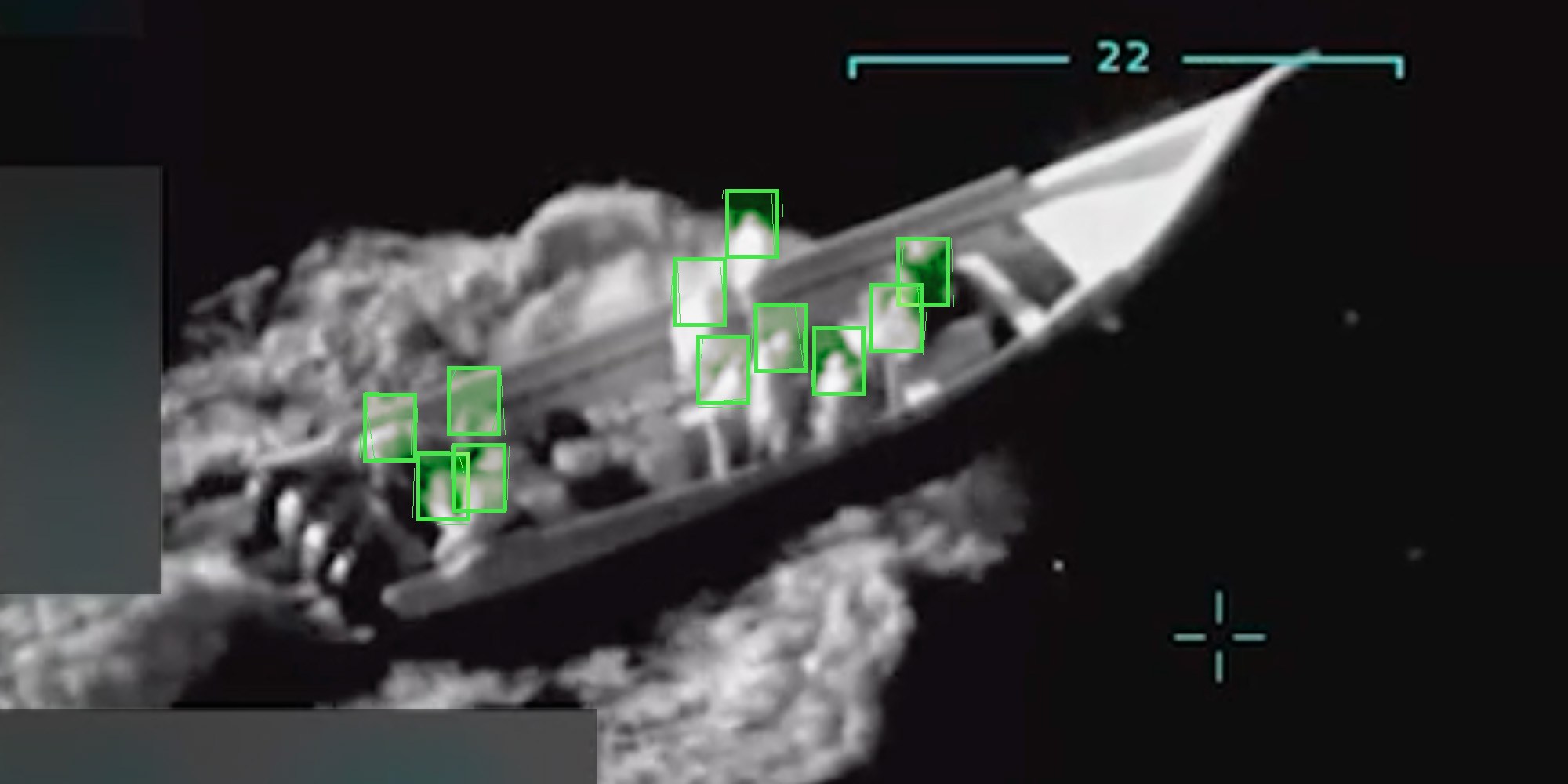
The U.S. military has conducted more than 60 attacks, resulting in over 200 extrajudicial killings in the Caribbean Sea and Pacific Ocean. In almost all the strikes, between one and four people lost their lives. In only one strike did the death toll of a single boat reach double digits: the first attack on September 2, 2025.
Since then, experts, lawmakers, and even military officials behind the scenes have been asking a simple but haunting question: Why was that boat packed with 11 people?
“Why would 11 people be on board a boat carrying drugs?” said a government source who attended a classified briefing where the large crew on the first boat attacked was discussed. “It’s a high risk for the cartels. That always stood out.”
One top military officer provided a plausible explanation, behind closed doors on Capitol Hill, The Intercept has learned. His admission raises even more questions about a strike that a high-ranking Pentagon official called a criminal attack on civilians and resulted in a firestorm in Congress last year.
In the briefing, the high-ranking officer on the Pentagon’s Joint Staff stated that some of the people killed by the U.S. military may have been the victims of human trafficking. Read more - Lire plus
Ben Saul: I condemn the US military's extrajudicial killing of three civilians at sea on 18 June, taking total US murders to at least 211 people since Sept 2025
Trump says US military strike killed leader of Tren de Aragua gang with help from Venezuela
Sebastian Gorka and Stephen Miller, architects of Trump’s pressure on Mexico
U.S. Terrorist Designations of Brazilian Crime Groups
| | Gaza death toll since “ceasefire” tops 1,000 | |
Drop Site News 17/06/2026 - Over the last 24 hours, two Palestinians were killed and five were injured in Israeli attacks across Gaza. Six additional people, who succumbed to wounds sustained from earlier attacks, were added to the cumulative toll after their data was completed, the Palestinian Ministry of Health noted. Since October 11, the first full day of the so-called ceasefire, Israel has killed at least 1,005 Palestinians in Gaza and wounded 3,157, while 784 bodies have been recovered from under the rubble, according to the Ministry. The total recorded death toll since October 7, 2023 has risen to 73,016 killed, with 173,265 injured. Source
Acceleration of Israel’s ethnic cleansing of Palestinians must spur global action to halt West Bank annexation
| | Israeli Displacement & Killings of Civilians in Lebanon Rage On | |
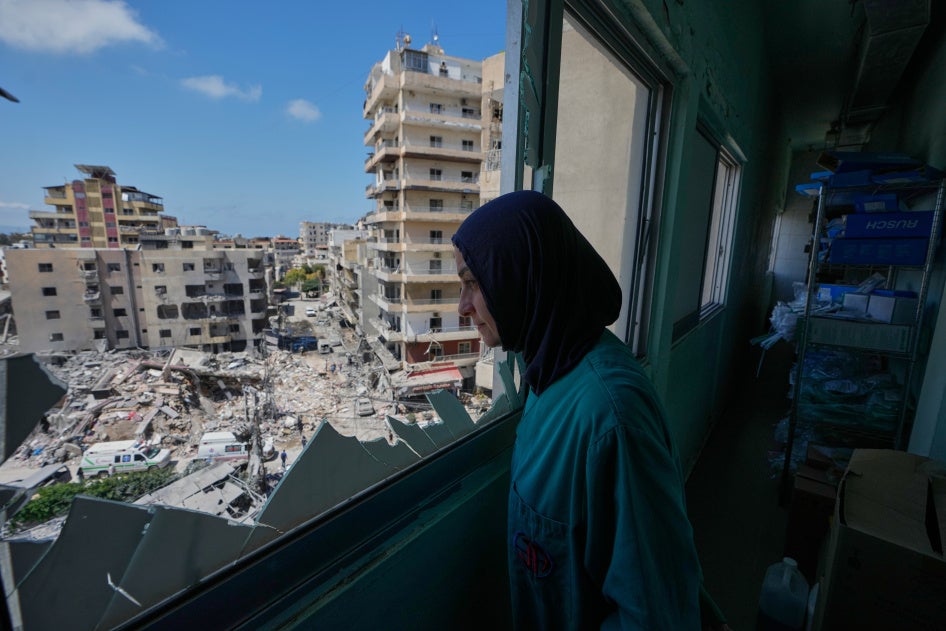
Human Rights Watch 11/06/2026 - Israeli killings of civilians and displacement of hundreds of thousands of Lebanese civilians have continued unabated, despite the declaration of a ceasefire between Israel and Hezbollah on April 17.
On June 7 and June 9, Israel ordered all residents of the southern Lebanese city of Tyre and its surrounding towns and refugee camps to leave their homes. This came a week after Israeli forces ordered more than 34,000 families out of Lebanon’s South and Nabatieh Governorates, and 50,000 families out of Beirut’s southern suburbs. The Israeli military declared on May 27 nearly 14 percent of Lebanon’s territory, the entire area south of the Zahrani river, as a “combat zone”, ordering residents to leave the area. Around one million people remain displaced in Lebanon today. These deliberate acts of displacement may amount to war crimes of forced displacement.
Since the escalation of the hostilities on March 2, Israeli attacks have killed at least 3,711 people in Lebanon, including 132 healthworkers and 247 children, according to Lebanon’s Health Ministry. At least 1,417 people, more than a third of the total death toll since March 2, were killed in Israeli attacks since April 17. This includes 32 health workers, nearly one in four of all those killed since March 2, and at least 70 children, more than 1 in 4 of all those killed since March 2. On average, Israeli forces killed more than one child every day since April 17.
Since October 7, 2023, Israeli forces have committed numerous violations of the laws of war in Lebanon with total impunity, including apparently deliberate or indiscriminate attacks on journalists, civilians, medics, financial institutions, reconstruction-related facilities, and peacekeepers, in addition to the widespread and unlawful use of white phosphorus in populated areas, among other violations.
To save civilians, urgent action is needed. Israel’s allies, should immediately halt arms sales, arms transit, and military assistance to Israel, suspend their trade deals—including the EU-Israel Association Agreement—and adopt targeted sanctions against Israeli officials credibly implicated in ongoing abuses.
Pathways for accountability should be opened as well. Lebanon’s government should urgently ratify the Rome Statute and file a declaration providing the International Criminal Court with the jurisdiction to investigate and prosecute all crimes committed in Lebanon since at least October 2023. To enable domestic judicial investigations, Lebanon’s parliament should enact a law criminalizing war crimes, crimes against humanity and genocide, in line with international standards.
Unless Israel’s impunity is brought to an end, more unlawful bloodshed will continue. Source
Lebanon: Israel radically expands use of unlawful mass ‘evacuation’ orders and commits war crime of unlawful transfer
| | The Palestine Action Appeal Decision is Not a Surprise | |
IHRC 15/06/2026 - IHRC’s head of Advocacy, Abed Choudhury, briefly explains why no-one should be surprised at the Court of Appeal’s decision in the Palestine Action case. Human rights activists and lawyers need to understand that the issues unfolding before us are structural and systemic. Without the understanding that it is the law and the politics behind the law which are at issue, and that none of this is new, cases such as that of the Filton 5 and Palestine Action will continue to arise.
I have come across various reactions to the Palestine Action decision: that it is corruption, that it represents an inversion of the role of judges as guardians of our civil liberties, that it is anti-democratic, and so on. The problem with all of these viewpoints is that they miss the point of the legal system. The judiciary may be institutionally independent, but it cannot be independent of the legal framework it is tasked with enforcing. Judges are still required to apply the laws passed by Parliament.
The current decisions were inevitable once the legislation was passed and the definition of terrorism established – the legal framework for today’s decision. In 2005, the IHRC stated in its report British Anti-Terrorism: A Modern Day Witch-hunt:
“It is important to note that the definition of “terrorism” used in the legislation is that incorporated from the Terrorism Act 2000. This definition is extremely broad and vague and potentially outlaws any type of political activism: “For the purpose of advancing a political, religious or ideological cause”, the use or threat of action “designed to influence a government or to intimidate the public or a section of the public” which involves any violence against any person or serious damage to property, endangers the life of any person, or “creates a serious risk to the health or safety of the public or a section of the public, or is designed seriously to interfere with or seriously to disrupt an electronic system.” (pp. 14–15)
On proscription, the report warned:
“Due to the broad definition given to “terrorism”, this is an extremely dangerous development as it opens the door for non-violent groups to be proscribed for defending the right of resistance under international law.” (p. 19)
It also noted:
“Both the wide definition of terrorism and the vagueness of the grounds for proscription could lead to this being abused to shut down legitimate protest organisations. Proscription occurs without a case being proved in court. The organisation does not get to defend itself against the proscription. It can only appeal against proscription after the fact. Thus, the Home Secretary can in effect criminalise the members and supporters of an organisation without even having to prove any wrongdoing on their part.” (p. 56) [Emphasis added]
The problem is not the judicial/legal system itself (well not primarily). Courts are there to uphold the law, and if the law criminalises certain conduct, judges will generally apply it.
The problem is the primary legislation. It was deliberately drafted in broad terms to grant the government as much discretion and power as possible. At the time, the government argued that such powers were necessary and would be exercised carefully. Many activists and commentators, particularly within Muslim communities, did not believe those assurances, and they were right to be sceptical.
We now have politicians willing to wield those powers aggressively to silence dissent, and yet we act surprised. But the power was always there. More importantly, it was always being used, just primarily against communities whose experiences were ignored, dismissed, or treated as politically insignificant. What is new today is not the existence of these powers, but the growing visibility of their application beyond those communities that first warned about them.
The solution, as argued in the report, is straightforward:
“The existing legislation should be repealed and terror suspects prosecuted under pre-existing criminal legislation through the normal criminal justice system.” (p. 111)
Terrorism isn’t a separate species of crime, it is murder, criminal damage, kidnapping, etc., and should be treated as such under standard criminal frameworks. What we do not need is a sprawling regime of laws that hands the government sweeping powers to suppress civil liberties under the guise of security, often without the safeguards and protections afforded to the accused under normal criminal procedures. The PA/Filton cases illustrate this very well.
The government wants us to believe we live in a liberal democracy, even as it has been surreptitiously adopting the legal frameworks of dictatorships. If you think the judges are the problem, then you have accepted the government’s narrative and are failing to see how anti-terror legislation has been eroding our civil liberties long before this decision. It will continue until those laws are challenged and repealed.
If the PA decision upsets you, the solution is not to demand that judges become better at applying anti-terror laws enacted by Parliament. The solution is to demand politicians stop eroding our rights through draconian legislation. Source
Filton 5: These Palestine Activists Weren’t Convicted of Terrorism, But Got Sentenced as Terrorists Anyway
What a UK court’s backing of the Palestine Action ‘terror’ ban means
Germany Is Staging Its Own Palestine Action ‘Show Trial’
| | Feds wrapped U-M protest case in baseless terrorism rhetoric, attorneys say | |
Detroit Metro Times 11/06/2026 - Federal prosecutors are portraying eight pro-Palestinian activists tied to the University of Michigan as extremists who carried out a coordinated campaign of threats and vandalism against university officials, businesses, and the Jewish Federation of Metropolitan Detroit.
But the indictment raises a question that should not be lost in the government’s rhetoric: Are prosecutors pursuing true threats, or are they using protest slogans, online posts and property damage to build a broader case against pro-Palestinian activism?
The indictment, filed in the U.S. District Court for the Eastern District of Michigan, charges the defendants with conspiracy to transmit threats in interstate and foreign commerce. Two of the defendants also are charged with conspiracy to tamper with a witness, and one is charged with destruction of property to prevent seizure.
For all the government’s alarming language, the indictment includes no terrorism counts, no assault counts, and no hate crime counts. Yet from its opening pages, the indictment repeatedly invokes Hamas, the Oct. 7, 2023, attack on Israel, red triangles, red handprints, “martyrs,” “intifada,” and the Weather Underground, the 1960s radical group that bombed government buildings. That framing is not accidental. It is the spine of the government’s case.
The defendants are Zainab Aliasgar Hakim, 23; Amatullah Aliasgar Hakim, 21; Paige Elizabeth Feyock, 26; Ahmet Kerem Korkaya, 28; Jonathan Hongru Zou, 22; Alexander Matthew Sepulveda, 23; Mariam Muhammed Odeh, 24; and Colin Hunter Weger, 24. An indictment is not evidence. It is the government’s version of events, and all defendants are presumed innocent unless proven guilty.
Federal prosecutors allege the defendants and unnamed co-conspirators targeted U-M leaders, regents, police, and businesses because of the university’s refusal to divest from Israel and companies connected to Israel. The indictment says the group researched addresses, mapped routes, purchased supplies, vandalized homes and businesses, posted photos online, and used social media to amplify threats. [...]
But defense attorneys and civil liberties advocates say the government is doing more than alleging crimes. They say prosecutors are sweeping protected speech, protest activity, and anti-Israel advocacy into a case designed to make the defendants look like terrorists. The Michigan chapter of the Council on American-Islamic Relations (CAIR-MI) says the indictment raises serious concerns because it appears to fold lawful political expression and advocacy into the government’s criminal narrative.
“Our justice system must carefully distinguish between alleged criminal acts and constitutionally protected political advocacy,” Dawud Walid, executive director of CAIR-Michigan, says. “Regardless of one’s views on the underlying issues, students do not lose their First Amendment rights because their speech is controversial or unpopular. We are concerned by any prosecutorial approach that appears to broaden criminal allegations by incorporating lawful advocacy and political expression into the narrative.”
The FBI’s involvement is puzzling, says John Philo, executive and legal director of the Sugar Law Center for Economic & Social Justice, which represents students and protestors who have been targeted by the University of Michigan.
“The actions of law enforcement appear to be a new low in the criminalization of student opposition to the human rights violations, war crimes, and genocide in Gaza,” John Philo, executive and legal director of the Sugar Law Center, says. “Based on evidence that the government appears to have had for more than a year and for actions occurring nearly two years ago, the federal government is seeking to bring federal charges for acts traditionally reserved to local prosecutors. It must be asked why and why now.” [...]
Before laying out the charges, prosecutors devote space to Hamas’s Oct. 7 attack, the terrorist group’s federal designation, the alleged use of Hamas symbols on college campuses, and what prosecutors describe as increased support for Hamas at U-M and other universities. They also cite phrases used at pro-Palestinian protests, including “from the river to the sea” and “long live the intifada.”
The indictment does not allege the defendants were members of Hamas, took orders from Hamas, or were charged with providing support to Hamas. Instead, prosecutors use Hamas as the backdrop for a case that does not allege terrorism. That is where the case may collide with First Amendment concerns, lawyers and activists say. Read more - Lire plus
They Shut the Golden Gate Bridge for 4 Hours. Now They Face Up to 15 Years in Prison.
U.S. Treasury Imposes Counterterrorism Sanctions on Peaceful Gaza Aid Flotilla Activists
Palestinian Activist Mohsen Mahdawi: Trump Admin “Weaponizing Immigration Laws” to Deport Me
| | Trump’s Spaghetti-Against-the-Wall Indictment Against ICE Protesters — and How to Fight It | Trump’s indictment of 15 Minneapolis protesters is a well-worn strategy to criminalize political resistance as a “conspiracy.” | |
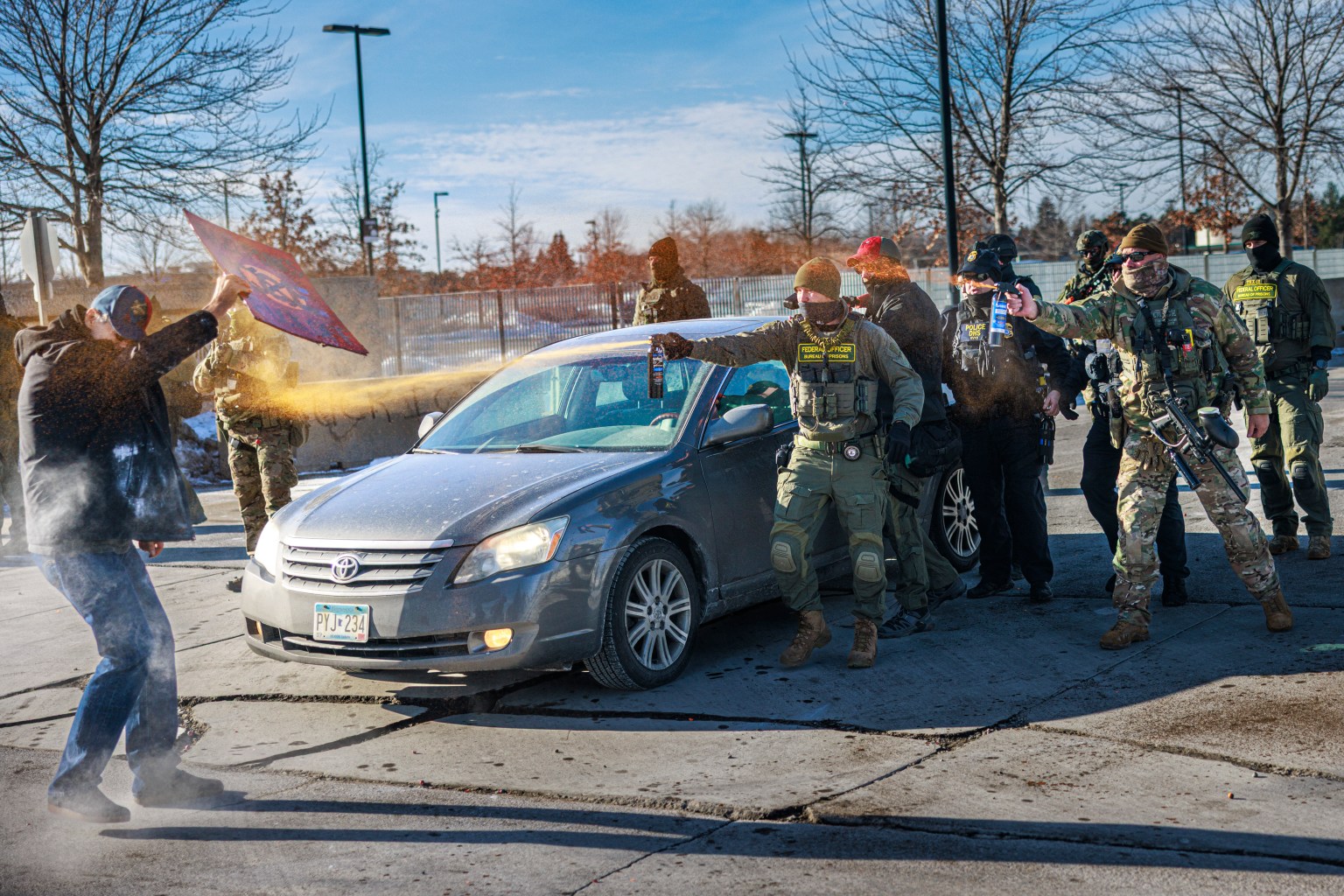
The Intercept 17/06/2026 - Donald Trump’s Department of Justice unsealed a federal indictment on Tuesday announcing hefty charges against 15 antifascist protesters for alleged actions taken in response to the brutal U.S. Immigration Customs and Enforcement surge in Minneapolis earlier this year.
The federal prosecutor in the case, Minnesota U.S. Attorney Daniel Rosen, warned that more arrests and charges could follow. Once again, prosecutors are throwing extreme and overreaching charges at activists in a scrambling effort to criminalize organized, collective opposition to Trump’s most violent policies.
The Minneapolis indictment exemplifies the Trump regime’s escalating strategy: Criminalize whole political movements with claims of collective liability and “conspiracy,” and treat typical acts of protest, constitutionally protected speech, association, and political identification as criminal acts.
Call it the spaghetti-against-the-wall approach.
The indictment, Rosen said, is a part of Trump’s National Security Presidential Memorandum-7, or NSPM-7, initiative to target and prosecute leftists and antifascists as terrorists. Minneapolis is not an incidental target for Trump’s Department of Justice. The city unleashed an oftentimes-inspiring response to the ICE crackdown: mutual aid organizing, confrontational protest, blockades, and strikes in response to brutality set a national example for how to fight back when federal agents descend on a city to kidnap our immigrant neighbors.
“Conspiracy” to What?
The “conspiracy” in Minneapolis according to the government, involves purported antifa activists acting with the aim of impeding ICE operations and injuring officers. The indictment names no federal officer injuries, and only minor incidents of property damage — like a protester leaving a dent in an ICE vehicle from kicking it. Among other pieces of evidence cited for the alleged criminal conspiracy are the most basic protest strategies, including self defense, nonviolent tactics, and First Amendment-protected activity.
The use of encrypted Signal chats to communicate protest plans is cited again and again in the indictment.
The government points out that organizers employed phrases like “become ungovernable” — a liberatory slogan so common it has spread to cute animal memes. Demonstrators are accused of building and advocating for the use of shields at protests outside an ICE detention facility — the sort of protests in which, in Minneapolis and nationwide, federal agents have beaten people and fired rubber bullets and tear-gas canisters directly at heads and bodies.
The indictment even claims that people tracking ICE vehicles and alerting others to their presence, as agents prowled neighborhoods looking for immigrants to kidnap, is evidence of criminal conspiracy. That certain protest activities may have indeed impeded ICE in its efforts to ruin lives and whiten the country do not make those activities illegal. Minor violations and property damage may involve unlawful acts, but do not constitute a mass criminal conspiracy.
Certainly, none of it calls for unleashing the vast resources of the federal government against protesters. The Trump administration, however, has made its own strategy clear: Make the stakes of association with political movements dangerously high. And if the cases fall apart? Well then, movements have still been disrupted by lengthy, frightening, and expensive legal processes; antifascist political activity is chilled nonetheless. [...]
When the Spaghetti Sticks
Sometimes the spaghetti does stick. In March, a Texas jury found eight defendants guilty of terrorism charges for simply being present and wearing black at a protest in which a shooting took place outside ICE’s Prairieland Detention Facility in Northern Texas. The ruling was a major victory for the Justice Department — a case in a Trump-friendly jurisdiction, presided over by a Trump-appointee judge, the government’s flimsy effort won through.
In Spokane, Washington, three anti-ICE demonstrators were convicted in May on conspiracy charges for impeding federal officers in a case with similarities to the Minneapolis indictment. The original federal prosecutor in the Spokane case resigned instead of signing indictments against protesters; he did not believe they were warranted, he said. As is a pattern with Trump’s Department of Justice, however, the prosecutor’s successor moved forward with charges. Six people took plea deals, but three refused, wanting to defend their First Amendment rights in court. For typical protest activity, they were convicted of federal conspiracy charges. They face up to six years in prison.
Trump’s lawyers are not famed as skilled practitioners, but they know how to navigate an unjust system with brute force, willing to pour unending resources into crushing ideological enemies and symbols of resistance.
Antidote to Collective Guilt
Cases like Prairieland threaten to set frightening precedents, but the lesson they offer is not that federal prosecutors have somehow now cracked the mass-prosecution code after other collective liability efforts had failed. Rather, the lesson is an older one, about solidarity. Prosecutors in the Prairieland case relied heavily on the testimony of cooperating defendants, who testified against co-defendants as a part of plea deals. Without that testimony, the case would likely not have played out the same way.
“If people hadn’t cooperated in Prairieland, the case would’ve been extraordinarily different,” said Xavier T. de Janon, an attorney with the People’s Law Collective, which is representing Stop Cop City protesters in state-level cases. “Their entire prosecution was made possible by cooperators, and their investigation was successful because people cooperated very quickly.” De Janon nonetheless stressed that, while the federal government was successful in the Prairieland trial, the Justice Department has accrued “hundreds of failures.”
In Stop Cop City cases so far, as was the case in the mass federal prosecution against the so-called J20 protesters at Trump’s first inauguration, no defendants aided prosecutors as cooperating witnesses. Efforts to isolate and criminalize “bad protesters” failed, and collective prosecutions, based on the flimsiest of claims, collapsed.
The response to ICE in Minneapolis and St. Paul was powerful precisely because residents blended tactics of mutual aid, community support, mass mobilization, and militancy. The worst possible response to the Justice Department’s sweeping indictment would be for certain elements of the movement to follow the government’s lead and demonize antifa associations and confrontational protest.
The government is escalating a well-worn strategy to disarticulate and defang movements. “This is a fascist society, not just the government, but the fabric of society,” said de Janon. “People thinking, ‘If I go to a rally, I might be charged with a federal felony and spend 25 years in prison’ — it is outrageous.”
There is no denying that the Department of Justice is attempting to make the stakes devastatingly high for even minimal association with today’s liberatory movements, from antifascist immigrant defense to Palestine solidarity. The price for failing to stand together against this fascist overreach is, however, far higher still. Read more - Lire plus
DHS Is Getting Sued For the Truth About Its “Domestic Terrorism Watchlist”
| | A terrorism law, and the children it swept up | In Chattogram, schoolboys as young as 16 say they were detained under sweeping new powers written for militants — then beaten, made to confess on camera and packed into a detention centre they called the ‘ilish file’. | |
Netra News 07/06/2026 - On the afternoon of October 10th last year, Yeasin, 16, had just been reunited with his childhood friend Wasif after two years apart. The two boys were spilling out of Baitush Sharaf Mosque in Chattogram with the rest of the Friday crowd, when the street around them dissolved into panic.
A procession by the Awami League was passing through the Monsurabad neighbourhood. “I saw a massive procession passing by,” Yeasin recalled in a recent interview. “People were running everywhere.”
Within minutes, the two teenagers had been forced into the back of a police vehicle alongside dozens of others. By nightfall they had been booked under the Anti-Terrorism Act — a statute written for insurgents and bombers, turned in their case on schoolboys.
Their arrests were part of a nationwide crackdown carried out under the Anti-Terrorism Ordinance 2025, which parliament ratified on April 8th and which handed law enforcement expanded powers. Police have leaned on it heavily to enforce a ban on the activities of the Awami League, the party ousted in the 2024 uprising.
Children have been caught in the net. Under the Children Act 2013, minors are meant to be held apart from adults, in one of the country’s three Child Development Centres — located in Gazipur and Jashore — and detained only ever as a last resort.
The records tell a different story. At the Tongi (Gazipur) centre alone, 137 children were detained under the Anti-Terrorism Act during the 2024 uprising, and a further 127 in 2025, according to its own records. The centre now holds 698 detainees; of those, 11 are being kept under the Anti-Terrorism Act, down from 29 two months earlier.
Meanwhile, when contacted the Konabari (Gazipur) centre — designated for girls — the Superintendent Md Sataruzzaman initially said he would share the relevant total number and ATA case number, if it exists. However, subsequent calls went unanswered.
The Jashore Child Development Centre currently houses 227 children. However, when recently asked how many of them were being held under the ATA, Superintendent Monjurul Hasan said the facility does not maintain separate records for such cases. Source
| | OTHER NEWS - AUTRES NOUVELLES | | ICLMG ACTIONS DE LA CSILC | | The Justice Minister must end the injustice against Hassan Diab! | | |
In April 2023, despite clear exculpatory evidence, the French Court of Assize conducted an in absentia trial that unjustly declared Dr. Hassan Diab guilty and sentenced him to life in prison. The proceedings amounted to a sham trial and a mockery of justice.
Since that ruling, Dr. Diab and his family have lived in constant uncertainty, facing the ongoing threat that a second extradition request could be made at any time.
Please click below to send a new letter demanding that Justice Minister Sean Fraser categorically refuse any future extradition request and put an end—once and for all—to this ongoing miscarriage of justice.
| |
Canada: Abolish rights-violating terrorist entities list!
| | |
On October 15, 2024, the Canadian government placed the Samidoun Palestinian Prisoner Solidarity Network on Canada’s terrorist entities list. While ostensibly a tool to protect the safety and security of people in Canada and internationally, the list is an arbitrary political tool that undermines freedom of association, of expression and due process in the courts. Its effectiveness as a national security tool has never been demonstrated in a manner that justifies its use.
Due to these deep flaws, and more, the ICLMG has consistently called for the list to be abolished since the Canadian coalition’s founding in 2002. Please join us in urging the Canadian government to abolish the rights-violating terrorist entities list once and for all. Thank you!
| | Canada must repatriate all Canadians detained in NE Syria/Iraq now! | Every day the government fails to bring these Canadians home, it places their lives at risk from disease, malnutrition, violence, and ongoing military conflicts. United Nations officials have even found that the conditions faced by Canadians in prison are akin to torture. Please click below to urge the federal government to repatriate all Canadians illegally and arbitrarily detained in northeast Syria without delay. | | 23 years of fighting deportation to torture: Justice for Mohamed Harkat! | | CSIS isn't above the law! | | |
In recent years, at least three court decisions revealed the Canadian Security and Intelligence Service (CSIS) engaged in potentially illegal activities and lied to the courts. This is utterly unacceptable, especially given that this is not the first time these serious problems have been raised. CSIS cannot be allowed to act as though they are above the law.
Send a message to the Public Safety Minister demanding that he take immediate action to put an end to this abuse of power and hold those CSIS officers involved accountable. Your message will also be sent to your MP and to the Minister of Justice.
| | Reform Canada's extradition law now! | |
Canada’s extradition system is broken. One leading legal expert calls it “the least fair law in Canada.” It has led to grave harms and rights violations, as we’ve seen in the case of Canadian citizen Dr Hassan Diab. It needs to be reformed now.
Click below to send a message to urge the Prime Minister, the Minister of Justice and your MP to reform the extradition system before it makes more victims. Thank you!
Version française: Le Canada doit réformer la loi sur l'extradition!
| | Canada must protect encryption! | |
Canada, with other G7 nations, continues to push to weaken our access to strong, reliable encryption, after decades of being supportive of strong encryption. We need encryption to safeguard our data, our online transactions, our communications, and to protect the lives of journalists and human rights activists.
Please send a message to the Prime Minister of Canada, the Minister of Public Safety, as well as your Member of Parliament, to urge them to reverse course and once again commit to protecting encryption.
Regardez la vidéo avec les sous-titres en français + Agir
| | Protect our rights from facial recognition! | Facial recognition surveillance is invasive and inaccurate. This unregulated tech poses a threat to the fundamental rights of people across Canada. Federal intelligence agencies refuse to disclose whether they use facial recognition technology. The RCMP has admitted (after lying about it) to using facial recognition for 18 years without regulation, let alone a public debate regarding whether it should have been allowed in the first place. Send a message to the Prime Minister and the Public Safety Minister calling for a ban now. | | What we've been up to in 2025, and our plans for 2026! | |
ICLMG 03/12/2025 - Thanks to the support of our members and donors, we’ve been able to do a lot and work on the following since June:
- Anti-privacy and xenophobic bills C-2 & C-12
- Anti-protest and anti-freedom bill C-9
- Impacts of Countering Terrorism Financing on charities, non-profits, solidarity work and international assistance.
- Canada’s complicity in torture
- Justice for Hassan Diab
- Artificial Intelligence regulatory frameworks & national security
- The gaps in oversight and review of national security agencies
- Consultations on the UN Global Counter-terrorism strategy & definitions of “terrorism” and “violent extremism"
- We were interviewed or quoted in dozens of media pieces
- And much more!
For all details on our activities, and our plans for 2026, click here.
| | Les opinions exprimées ne reflètent pas nécessairement les positions de la CSILC - The views expressed do not necessarily reflect the positions of ICLMG. | | |
THANK YOU
to our amazing supporters!
We would like to thank all our member organizations, and the hundreds of people who have supported us over the years, including on Patreon! As a reward, we are listing below our patrons who give $10 or more per month (and wanted to be listed) directly in the News Digest. Without all of you, our work wouldn't be possible!
James Deutsch
Bill Ewanick
Kevin Malseed
Brian Murphy
Colin Stuart
Bob Thomson
James Turk
John & Rosemary Williams
Jo Wood
The late Bob Stevenson
Nous tenons à remercier nos organisations membres ainsi que les centaines de personnes qui ont soutenu notre travail à travers les années, y compris sur Patreon! En récompense, nous nommons ci-dessus nos mécènes qui donnent 10$ ou plus par mois et voulaient être mentionné.es directement dans la Revue de l'actualité. Sans vous tous et toutes, notre travail ne serait pas possible!
Merci!
| | | | |