|
International Civil Liberties Monitoring Group
Coalition pour la surveillance internationale des libertés civiles
January 31, 2026 - 31 janvier 2026
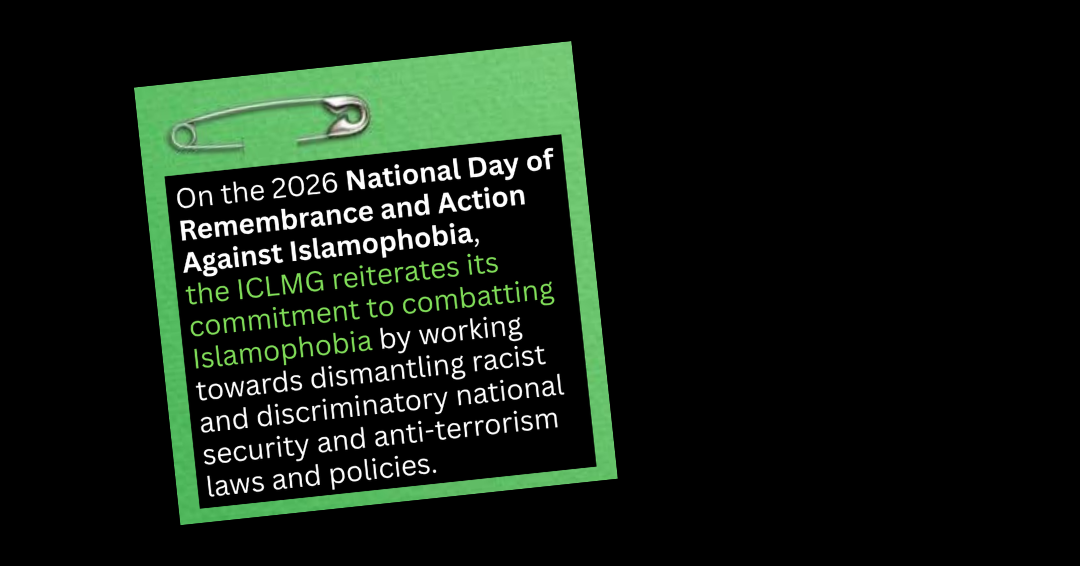
| | ICLMG renews commitment to fight Islamophobia on National Day of Remembrance and Action against Islamophobia | | |
ICLMG 29/01/2026 - Today, January 29th, 2026, we remember the victims of the deadly 2017 attack on the Quebec City Mosque: Mamadou Tanou Barry, Ibrahima Barry, Khaled Belkacemi, Aboubaker Thabti, Abdelkrim Hassane, and Azzeddine Soufiane, along with the survivors, including Aymen Derbali, and their loved ones. Today also marks the National Day of Remembrance and Action Against Islamophobia, so we also remember the Afzaal family, murdered in London, Ontario, and all victims of crimes motivated by Islamophobia.
In our coalition’s work to counter the harmful impacts of anti-terrorism laws, we see how tropes and stereotypes drive xenophobia and Islamophobia. We also see how Canadian government laws and actions, under the guise of combating terrorism, continue to result in the targeting, surveillance, othering and criminalization of Muslim communities, further entrenching Islamophobia. This includes the ongoing and unjustified impacts of counter-terrorist financing efforts on Muslim-led charities as well as international aid organizations working in Muslim-majority countries, undermining crucial support and services both at home and abroad.
We are also particularly alarmed by the actions of governments at all levels that threaten freedom of expression by limiting protest and dissent, and that have been aimed specifically at Palestinians and those who support Palestinian human rights and oppose the genocide in Gaza, and at Muslim communities more broadly.
This includes the introduction of Bill C-9, the so-called Combatting Hate Act. The proposed legislation is supposedly aimed at preventing hate crimes but instead threatens the freedom of expression, freedom of assembly and right to dissent of all people in Canada, including those communities that the government says it wishes to protect.
While it is clear that more needs to be done across Canada to prevent violence motivated by hate, this cannot be accomplished through legislation or enforcement activities that label entire communities or movements as violent or as in support of terrorism. Such efforts must ensure that they do not further entrench Islamophobia or anti-Palestinian racism; disappointingly, many government efforts are currently failing at this task.
On today’s day of remembrance and action, we remind officials not only of the importance of tackling individual acts of Islamophobia and hatred, but that they must also address systemic racism and Islamophobia that exists within government, law enforcement and national security agencies.
The International Civil Liberties Monitoring Group remains committed to combatting Islamophobia by working towards dismantling racist and discriminatory national security and anti-terrorism laws and policies, including by:
- Countering government officials', politicians' and the media's continued false portrayal of Muslims, including refugees and migrants, as a "security threat";
- Protecting the civil liberties of those who protest human rights abuses, including in support of Palestinian human rights;
- Rescinding national security programs that reinforce systemic Islamophobia, including the No Fly List and other border measures; the Terrorist Entities List; security certificates; and others;
- Advocating for justice for Canadian Muslims who have and continue to face the disproportionate brunt of anti-terrorism policies and the "War on Terror," including Mohamed Harkat and his fight against deportation to torture in Algeria;
- Supporting Hassan Diab's quest for justice and against a new extradition to France; Abousfian Adbelrazik, still fighting for justice regarding Canada’s complicity in his detention and torture in Sudan; and the repatriation of Canadian men, women and children in indefinite detention in northeastern Syria;
- Ending the CRA's unfounded and prejudiced targeting of Muslim charities; and much more.
We will continue to work tirelessly with our coalition members and community partners to fight Islamophobia, racism, and all forms of hate, along with human rights and civil liberties abuses, in Canada and abroad. Source
To learn more about the origins, impacts and what you can do about Islamophobia in Canada, visit our resource page.
Vidéo : Un survivant de l'attentat de Québec fait de l'islamophobie son combat
Quebec mosque attack anniversary renews call to end anti-Muslim hate
UPDATED ACTION Withdraw Bill C-9, the Combatting Hate Act: a threat to our rights and freedoms!
CMPAC’s New Bill C-9 Online Portal
Access denied: why Muslims worldwide are being ‘debanked’; Innocent people are being frozen out of basic banking services – and it all traces back to reforms rushed through after 9/11
| | Parents of Canadian held in Syria urge Ottawa to act as prisoners are sent to Iraq | |
The Canadian Press 22/01/2026 - The mother of a Canadian man detained in Syria says he risks going from “one legal black hole into another” as prisoners in the strife-torn country are transferred to Iraq.
Sally Lane has been calling on Ottawa for years to facilitate the release of her son Jack Letts from a Syrian prison.
Letts is among the foreign nationals held in ramshackle detention centres long run by Kurdish forces that reclaimed the war-ravaged area from the militant group Islamic State of Iraq and the Levant.
The decision to move prisoners to Iraq came after a request by officials in Baghdad that was welcomed by the U.S.-led coalition and the Syrian government, officials said Thursday.
American and Iraqi officials told The Associated Press about the Iraqi request, a day after the U.S. military said it had started transferring some of the 9,000 detainees held in more than a dozen detention centres in northeastern Syria.
U.S. Central Command said in a statement Wednesday that the first transfer involved 150 prisoners who were taken from the Syrian province of Hassakeh to “secure locations” in Iraq. As many as 7,000 detainees could be transferred to Iraqi-controlled facilities, the statement added.
Letts became a devout Muslim, went on holiday to Jordan at age 18, then studied in Kuwait before winding up in Syria. His family says he was captured by Kurdish forces while fleeing the country with a group of refugees in 2017.
Letts’ parents have said they are aware of no evidence their son became a terrorist fighter, adding that Jack stood against ISIL and was even put on trial for publicly condemning the group.
Some Canadian women and children have been repatriated from Syria in recent years with help from Canadian officials and the co-operation of Kurdish authorities.
Ottawa has declined to help repatriate Canadian men.
The Federal Court of Appeal ruled that Ottawa was not obligated under the law to repatriate Letts and three other Canadian men. The Supreme Court of Canada declined in 2024 to hear an appeal of the ruling.
The Canadian Press has asked Global Affairs Canada about steps Ottawa might take in response to the latest developments in Syria.
Amnesty International has warned of serious rights violations and poor conditions in Iraq, including overcrowded and unsanitary prisons, unfair trials and mass executions.
In a statement issued Thursday by the group Stop Canadian Involvement in Torture, Lane accused the Canadian government of “complete abandonment of our loved ones.”
She said Canada could open the door to her son’s release by making a request to his jailers and providing the necessary travel documents.
John Letts, Jack’s father, said in the statement that when it comes to Muslim Canadians, the federal government has not only looked away, it has actively fought the efforts of families.
“Unless they act in the coming days, will our families be condemned to another decade of this torturous black hole?” he asked. Source
UPDATED ACTION Canada must urgently repatriate all Canadians from NE Syria before they are rendered to potential torture in Iraq!
ACTION “Canadians are dying": Free Jack Letts & 15 Canadian Kids, Women & Men in Syria
Former UN Special Rapporteur: We Told You So: Now What for Northeast Syria? States must repatriate their own nationals
Rojava Is Fighting for Its Survival
| | Legal experts warn proposed immigration bill marks shift away from rule of law | | Canadian Immigration Lawyers Association calls Bill C-12 profound threat to human rights obligations | | |
Canadian Lawyer Magazine 16/12/2025 - As federal lawmakers prepare for a sweeping new immigration bill, the Canadian Immigration Lawyers Association is sounding the alarm over what it describes as a profound threat to parliamentary scrutiny, administrative law, and Canada’s human-rights obligations.
Pantea Jafari, founder and lead counsel at Jafari Law, and a member of CILA's Bill C-12 committee, which is studying the legislation, says the bill represents an unprecedented consolidation of executive power – one that could reshape immigration decision-making for years to come.
“We believe the Charter applies broadly – not only to citizens, but also to people with temporary or permanent status, and even to applicants seeking such status,” Jafari says. “There are sections of the bill that might be encroaching on Charter-compliance issues, especially when you consider the removal of parliamentary scrutiny from the powers being provided.
“The bill aims to integrate immigration processing and decision-making into a national security framework, potentially resulting in an overreach of Public Safety Canada’s statutory role. It does so at the cost of basic tenets and principles of administrative law and the rule of law.”
A bill built on suspended oversight
Among the most troubling aspects, according to Jafari, is the bill’s systematic pullback from established oversight mechanisms. The legislation exempts key decision-making powers from the Statutory Instruments Act, removing safeguards that ensure government actions are subject to Charter and Bill of Rights review and do not unduly infringe on existing rights.
“The overarching concern is the removal of scrutiny, the removal of the ordinary review mechanisms,” Jafari says. “These amendments take decision-making away from long-ingrained concepts of administrative law and the rule of law.”
The bill substantially expands the Governor-in-Council's authority, giving the cabinet untrammelled power to suspend, terminate, or refuse to process entire categories of immigration applications. These powers could be exercised based on nationality or program stream, without prior review for legality or compliance with rights. The expanded authorities include the unilateral cancellation, suspension or variation of immigration documents, broadened enforcement capabilities, and new pathways for information sharing between government bodies. “With these concerns about the lack of ordinary review comes the concern about how these powers might be exercised,” Jafari warns.
A presumption of risk
A central theme in the committee’s analysis of the proposed bill, Jafari explains, is that it appears to treat immigrants through a national-security lens.
“The bill creates the presumption that immigrants are an inherent security threat,” they say. “Rather, they are often very deserving and capable. Moving immigration processing into a national-security framework risks reinforcing an inaccurate and harmful narrative – one that will come at the cost of many deserving immigrants and would-be immigrants being denied status they ought to have or having those statuses taken away without public and judicial oversight.”
Consequences for refugee claimants
Despite government assertions that the reforms will address backlogs and inefficiencies, Jafari cites the CILA analysis, which suggests that the bill does nothing to alleviate existing processing delays and may even worsen outcomes for many legitimate refugee claimants.
“The proposed amendments do nothing to address the actual backlog,” they say. “They will also cause many deserving claimants to be deprived of the opportunity to make a refugee claim.”
The restrictions surrounding refugee eligibility are raising significant concerns for CILA, which Jafari notes may violate both Charter rights and international legal obligations. “We are very concerned about the refugee eligibility parameters.”
Claimants who would have had access to the Immigration and Refugee Board would instead be diverted to the Pre-Removal Risk Assessment (PRRA) system, which Jafari describes as “far inferior” in procedural fairness and decision-making expertise.
People from countries under a removal moratorium would also be disproportionately impacted. Because Canada has temporarily suspended removals to those countries for safety reasons, individuals from these countries are not considered “removal ready” and therefore cannot access a PRRA. Under the new regime, they would also be barred from making a refugee claim.
“Without eligibility for a refugee claim and without eligibility for a PRRA, they will be left in a state of limbo,” Jafari says. “They will have tenuous rights, temporary work permits they must constantly renew, but no peace of mind about their future.”
Oversight gaps and the road ahead
Concerns are compounded by the fact that Canada still lacks two key accountability mechanisms: the long-promised Canadian Border Services Agency (CBSA) public oversight body, which remains non-operational, and the often-requested Immigration, Refugees and Citizenship Canada (IRCC) ombudsman, which has yet to be established.
“We are extremely concerned about the expansion of these powers without parliamentary scrutiny and without even practical oversight,” Jafari says.
The bill is moving quickly. Clause-by-clause review, as expected, was “perfunctory” and expedited, Jafari notes, and has swiftly moved to the Senate, where it completed first reading on December 11, 2025.
What needs to change
The committee’s recommendations are clear: repeal the bill. If the government insists on moving forward, Jafari says safeguards must be built into the legislation.
“We’ve asked for the bill to be repealed, as have hundreds of other organizations,” they say. “But at the very minimum, if these expanded authorities are retained, there must be specified triggers for their use, time limits for their exercise, and independent oversight of the decisions and policy positions taken through them.”
As the legislative process accelerates, Jafari hopes the public grasps the stakes. “The bill represents a significant regression of Canada’s immigration system,” they say. “It will erode the deeply entrenched principles of administrative law and the rule of law that our legal system is built on.”
A critical need to review the designation of the US as a Safe Third Country
Jafari notes that the escalating conditions south of the border cast serious doubt over whether the US remains a safe country for refugee claimants. The news reports of the mistreatment of even citizens in the rush to deport immigrants paint a picture of a country no longer safe and welcoming to refugees. In fact, the US has now suspended all refugee hearings as of late November, Jafari notes.
“It is beyond doubt that the US’s designation as a safe third country must be revisited. The continued lack of eligibility for people coming from the US to make a claim risks denying very genuine and deserving claimants the right to seek protection,” Jafari says. Source
NEW ACTION Senators: Oppose Bill C-12 and protect rights!
NOUVELLE ACTION Le Sénat doit dire non à C-12 et protéger nos droits!
Canada bill targeting refugees feared to signal new era of US-style border policy
How does Canada decide if the U.S. is safe for refugees? This federal ruling may pull back the curtain
| | Civil Society Initiative Launches Public Consultation on AI | |
People's AI Consultation 21/01/2026 - The People’s Consultation on AI launches today, a collaborative civil society initiative created in response to the federal government’s failure to provide a meaningful consultation process during the development of a national AI strategy in October 2025.
In 2025, the government hastily assembled a task force to develop its AI national strategy. It was heavily skewed towards industry with very few participants able to speak to the broader ethical, social and political implications of the technology.
An accompanying public consultation allowed just 30 days for feedback, impeding those most impacted by AI from effectively participating. The government’s consultation survey questions prioritized economic benefits over AI’s many negative impacts and responses are now being assessed by AI rather than public officials.
These and other shortcomings were detailed in an open letter signed by over 160 civil society organizations and experts in October 2025, protesting the government’s “national sprint” on AI and documenting the many negative impacts that are already occurring as AI technologies become embedded in every aspect of Canadian society.
The People’s Consultation on AI offers a meaningful alternative. Beginning today, public interest groups, academics, impacted communities, and people across Canada have a meaningful opportunity to have their say on whether–and how–AI should be adopted and governed in Canada.
Designed for broad participation, the People’s Consultation on AI welcomes everything from the results of neighbourhood discussions about AI’s everyday impacts to in-depth expert analyses. The consultation website provides resources on current implications of AI alongside general guidance and community facilitation tools to help people craft submissions collaboratively.
Submissions will be published on the consultation website, shared with the federal government, and support civil society efforts to build a comprehensive response to the threats posed by AI.
The People’s Consultation on AI will be accepting submissions until March 15, 2026.
Participate in the consultation here:
English: https://www.peoplesaiconsultation.ca/
Français : https://www.consultationpopulairesurlia.ca/
Selected Quotes: Quotes represent the views of the individuals or organizations quoted
“Law enforcement and security agencies are increasingly relying on AI tools to supercharge surveillance, in an attempt to assess situations in real time and to even claim to predict future behaviour. Too often these AI tools are biased and their continued unregulated adoption will continue to have devastating impacts on people. It is imperative that communities affected by these technologies have the opportunity to weigh in on their impacts and possible safeguards – and that the Canadian government listen to what they have to say.” – Tim McSorley, National Coordinator, International Civil Liberties Monitoring Group
“The Canadian government is pushing AI hard as a boon to our economy. It seeks our trust but fails to make a good case for AI’s benefits. It avoids addressing the many serious pitfalls, especially of generative AI, and makes only token efforts to engage Canadians broadly in this important policy debate. The People’s Consultation on AI, in providing Canadians with a more open, inclusive and informed basis for expressing their views, offers a powerful corrective. Government should heed the coming results.”
– Andrew Clement, Professor emeritus, University of Toronto
“The collateral damage around the intoxicated rush to embrace AI can be measured in laid-off workers, psyop campaigns in the service of corrupt oligarchs and autocrats, women and vulnerable minorities bullied into silence by swarms of deep fakes, and teen suicides. It is entirely unacceptable to allow tech platforms to experiment on billions of people for private gain with no meaningful restraints. We urgently need mandated transparency requirements, independent auditing of AI platforms, and stronger privacy and consumer protection laws.”
– Ronald J. Deibert, OC, OO, Professor of Political Science & Director, the CitizenLab, The Munk School, University of Toronto
“The government’s rush to automate services with unregulated AI could cement systemic biases, disproportionately harming vulnerable Canadians. Refugees and immigrants face the gravest risk of being left behind, potentially thrust into deeper precarity by algorithmic systems.”
– Debbie Douglas, Executive Director, OCASI – Ontario Council of Agencies Serving Immigrants
“We need workers and the public to have a real say in shaping a public vision for AI in Canada. It’s the only way to make sure AI serves workers and ordinary folks, not just big tech corporations. CUPE is calling for strong laws and regulations to protect workers, the public and the environment.”
– Mark Hancock, CUPE National President
“Proponents of novel technologies celebrate speed in embracing change without regard to consequences, but this is a catastrophic approach to legislation. The government puts our fundamental rights at risk — including the equality and privacy rights that are essential to a free and democratic society — when they allow the development of AI regulation to be rushed or dominated by industry interests.”
– Aislin Jackson, Policy Staff Counsel, BC Civil Liberties Association Source
Some media coverage:
The Canadian Press: Critics, pollsters warn Canadians are wary of AI, want government to set guardrails
Canadian Lawyer Magazine: People’s Consultation on AI offers alternative to 30-day public consultation on national AI strategy
How Big Tech Spearheads the US Threat to Canada
NEW ACTION Tell Minister Solomon: We Don’t Need Israel’s Genocidal AI
| | ‘No justification’ for ICE purchase of Brampton-made armoured vehicles, says anti-war group | |
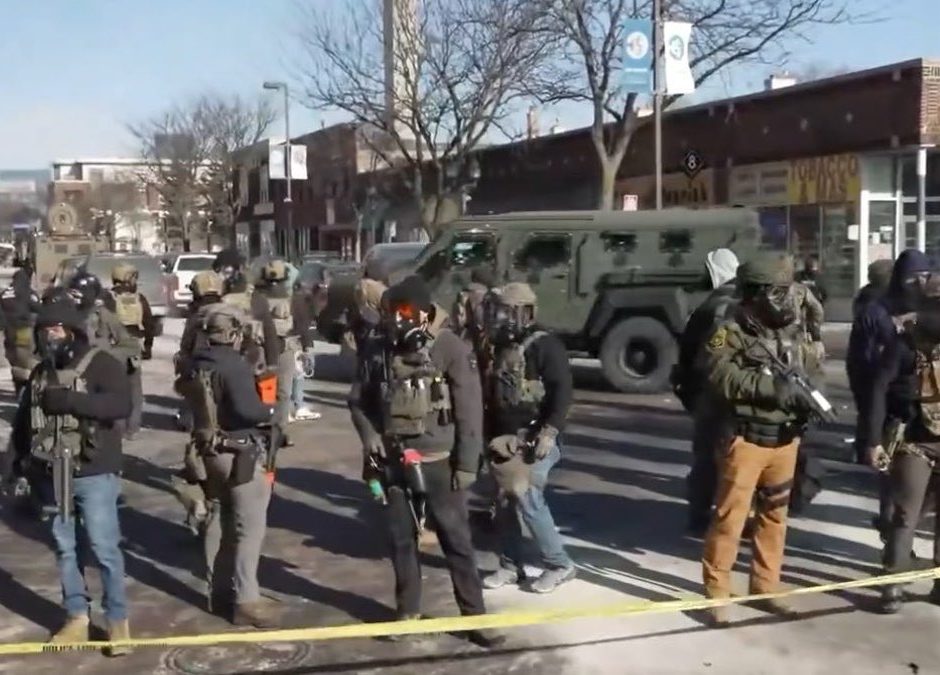
inSauga 27/01/2026 - Calls are rising to scrap the sale of armoured vehicles made in Brampton that are being used on U.S. streets by ICE agents.
“There is no way anybody can look at what ICE is doing in the U.S. right now and think this is an acceptable place for Canadian weapons to be used,” World Beyond War Canada organizer Rachel Small told INsauga.com.
“It’s just absolutely horrific,” Small says of the Brampton-made Senator armoured vehicles now being seen used by Immigration and Customs Enforcement amid growing tensions and violence against citizens in the U.S.
World Beyond War Canada is calling for the government to scrap the sale of 20 Senator vehicles made in Brampton by Roshel Inc. to U.S. Immigration and Customs Enforcement for some $10 million, as reported late last year.
Procurement documents said the company can complete the order within 30 days, but requests for comment on the status of the sale have not been returned by Roshel or ICE.
Global Affairs Canada declined to comment on the sale, and Foreign Affairs Minister Anita Anand has previously said the federal government was not “contacted regarding any permits for this transaction.”
Tensions between citizens and federal immigration officers continued to rise in Minneapolis after the fatal shooting of Renee Good by an ICE agent. A mother of three, Good was shot multiple times and killed by an ICE officer in a shooting on Jan. 7.
Alex Pretti, a nurse at a veteran’s hospital, was shot dead by ICE agents on Saturday while trying to provide aid to another protester. Both were U.S.-born citizens.
Rochel says its Senator APC can support a wide range of functions, including as an armoured personnel carrier, mobile command and control units, law enforcement vehicles, and medical evacuation vehicles.
It can also be equipped with mine-resistant technology that can withstand up to a 6 kg explosive activated under any wheel and beneath the centre of the chassis.
Ontario NDP Leader Marit Stiles has joined World Beyond War’s call to cancel the Roshel deal, saying this week that ICE “has been unleashing lawlessness in the streets and killing civilians in broad daylight.”
British Columbia’s attorney general also says business leaders in the province need to consider whether their decisions could contribute to an immigration crackdown in the United States that she and others are watching “in horror.”
But Ontario Premier Doug Ford took a different stance when the sale was announced, calling the deal between Roshel and ICE “fantastic.”
“We’ll take orders anywhere in the world, and thank goodness the Americans are ordering it from us,” Ford said. He distanced himself from the sale on Tuesday, saying he doesn’t direct companies to sell military vehicles to the U.S. Stiles fired back at Ford, saying Ontario needs to “cancel the ICE contract.”
“We need to stop compromising our values,” she said in a post on social media. Small called Canada’s recent pledge to increase its military budget ” an enormous gift to Trump,” and a commitment to “a whole foreign policy that’s based on warmongering in lockstep with the U.S.”
“We see a completely different vision for Canada, and we think that if there was a time to separate genuine investment in our economy and the genuine threats to our security – to separate those from the self-interested goals of Trump and the weapons industry – we think this is that time,” Small told INsauga.com.
World Beyond War Canada, which uses nonviolent activism to promote an end to war and demilitarize Canada, has previously blockaded the Roshel plant in Brampton over the now-halted export of more than 30 armoured vehicles to Israel.
Small tells INsauga.com she has met with hundreds of workers in the arms industry who’ve said they would rather use their technical skills to make anything other than weapons. “We’re not against vehicles and planes, we just don’t think that where Canada should be trying to build expertise is in weapons of war,” Small said. Source
NOUVELLE ACTION Pas un véhicule blindé de plus pour l'ICE!
NEW ACTION Tell Hootsuite: No Tech for ICE!
ICE has killed 35 people in 2025. 9 so far in 2026
“Let Us Out”: ICE Detention of Children Sparks Protests at Immigration Jail in Dilley, TX
ICE memo authorizes home entries without judge’s warrant
Abolish ICE: Rep. Delia Ramirez Calls for Defunding DHS & Defends Rep. Ilhan Omar After Attack
Senate Dems Finally Realized They Shouldn’t Fund ICE
“ICE Out”: Tens of Thousands March in Minnesota in General Strike Against Immigration Raids
| |
Israel returns 15 bodies to Gaza as the Israeli military accepts Gaza death toll of 71,667 | |
Drop Site News 29/01/2026 - The Israeli military has accepted the figures issued by Gaza’s Health Ministry on the number of Palestinians killed in Israel’s war on Gaza, according to Haaretz. Gaza’s health ministry puts the confirmed toll at 71,667 and acknowledges it as an undercount with many more missing under the rubble.
Over the course of the war, Israeli authorities have publicly blasted Gaza’s health ministry as misleading and unreliable. In January 2024, Israeli journalist Yuval Abraham first reported that the Israeli military found the ministry’s numbers reliable and regularly used them internally in intelligence briefings.
The bodies of 15 Palestinians arrived at Al-Shifa hospital on Thursday after being released by Israeli authorities through the Red Cross, according to Gaza’s Health Ministry, bringing the number of bodies returned by Israel to 360. Source
Israeli fire strikes journalists and children on one of Gaza’s deadliest days since ceasefire
What Ceasefire? There Have Been 1,244 Israeli Violations Since the So-Called Peace Deal
Living Hell: The Israeli Prison System as a Network | B'Tselem
Exclusive: Leaked “Board of Peace” Resolution Outlines U.S.-Led Plan to Rule Over Gaza
Ex-CIA Chief David Petraeus Briefs Officials in Israel Overseeing "New Gaza"
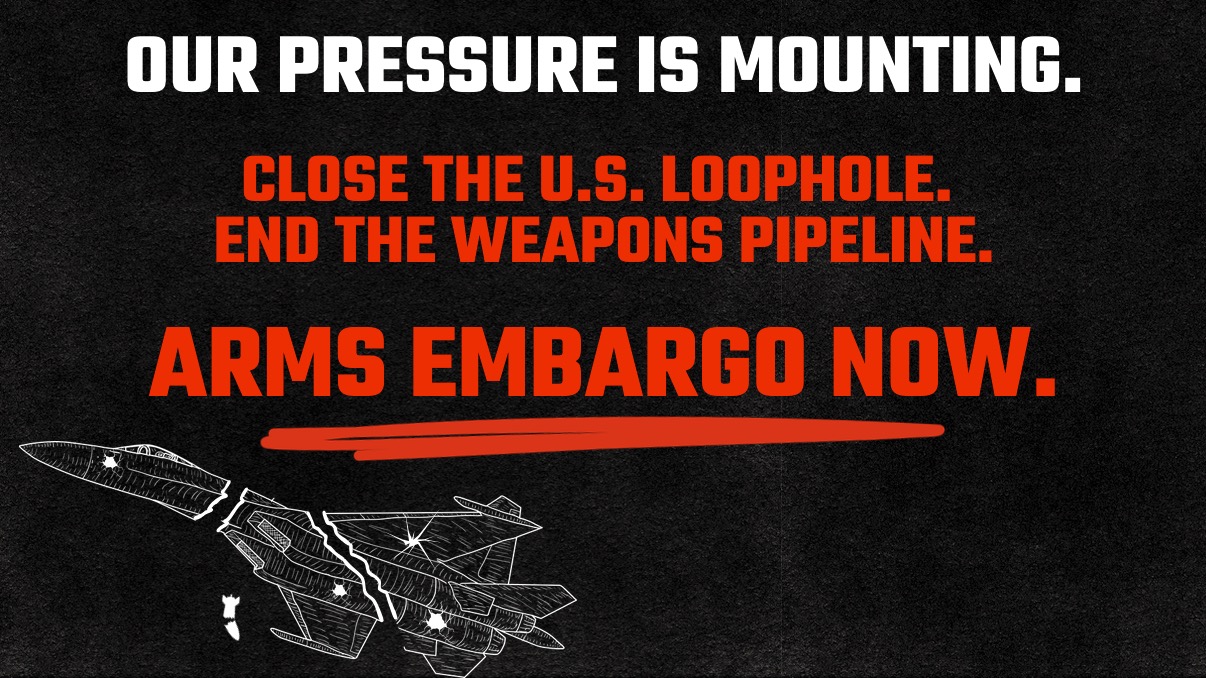
Montreal protestors accuse Canada of using loopholes to arm Israel
NEW ACTION Close the loopholes in Canada’s arms exports
NEW Ottawa protest: Global Day of solidarity with Palestinians, Sat Jan 31, 1pm ET
ACTION Canada is Abandoning Gaza Students
| | PBI-Canada continues to monitor the Civilian Review and Complaints Commission systemic investigation of the RCMP C-IRG | |
PBI-Canada 26/01/2026 - PBI-Canada has been monitoring the “systemic investigation” of the Royal Canadian Mounted Police (RCMP) Community-Industry Response Group (C-IRG) since the Civilian Review and Complaints Commission (CRCC), a federal watchdog agency, launched their review on March 9, 2023.
Background
That investigation was launched after the CRCC received nearly 500 formal complaints about the RCMP C-IRG.
As CBC journalist Brett Forester has previously reported: “More than 100 grievances accepted for investigation contain allegations of excessive force, illegal tactics, unprofessional behaviour, racism, discrimination and charter violations by the force’s Community-Industry Response Group (C-IRG).”
“Final stages” of investigation
In an emailed response received on January 23, 2026, the CRCC tells PBI-Canada: “The CRCC’s systemic investigation is in its final stages; however, it cannot be finalized in the absence of a Chairperson, Vice-Chairperson or Members.”
“Absence of a Chair”
On October 30, 2025, CBC News journalist Catharine Tunney reported: “The watchdog body meant to investigate Mounties’ conduct has been without a chairperson for months [since January 2025], stalling investigations and weakening transparency about how the country’s police force interacts with Canadians across the country.”
That article further noted: “While teams of investigators and lawyers are still working, a spokesperson for the CRCC said the review body is unable to issue any decisions in the absence of a chair or other senior decision-makers.”
The CRCC has confirmed with us that as of January 1, 2026, a new Chairperson has not been appointed. They also confirmed that there is no indication at this point as to when a new Chairperson will be appointed.
And the CRCC tells us: “A Chairperson, Vice-Chairperson or Members of the CRCC must sign such reports.”
In a subsequent email from the CRCC to PBI-Canada, we were told: “Under the RCMP Act, the CRCC can consist of a Chairperson and not more than four other Members, one of whom may be a Vice-chairperson, appointed by the Governor in Council. The Chairperson may delegate authorities to the Vice-chairperson or, in the absence of a Vice-chairperson, a Member. All these positions are currently vacant.”
It might be further noted that the Canadian Press has previously reported: “The [Carney government] budget [tabled on Tuesday November 4, 2025] does not say whether Ottawa will fill vacant positions such as the climate change ambassador, the envoy for women, peace and security, and the ombudsperson responsible for investigating reports of forced labour abroad [CORE].” This might suggest that there is a pattern of other key positions that have been left vacant.
Investigation Update anticipated in March 2026
The CRCC released its first and only Investigation Update into the systemic investigation on November 23, 2023.
At that time, they noted: “The CRCC is reviewing materials and records received from the RCMP, including policies and training. Interviews with RCMP program areas have begun. The investigation is progressing, though significant delays in receiving the relevant materials from the RCMP continue. The CRCC has received little information or records from the RCMP “E” Division since July 2023, despite regular follow-ups and requests for updates.”
The CRCC now tells PBI-Canada: “We anticipate providing an update on the status of the systemic investigation in March.” We continue to follow this. Source
| | Activist Ellen Gabriel warns of ‘propaganda’ as CSIS officials tout agency’s new approach to Indigenous people | |
CBC News 26/01/2026 - The Canadian Security Intelligence Service acknowledges its past investigating of Indigenous people has left a legacy of mistrust that persists today, but officials at the spy agency say the organization is mending its ways.
That’s the main message two CSIS officials, speaking on the condition they not be identified, impressed on CBC Indigenous during a recent sit-down discussion at the agency’s Ottawa headquarters.
Long gone are the days, they said, of CSIS’s expansive “Native extremism” program, in which CSIS officers labelled Indigenous activists as domestic extremists and potential terrorists in sweeping countrywide investigations.
“What you saw in the 1990s is not the situation today,” said the first CSIS person, who described recent reporting by CBC Indigenous as “a portal to the past” and “a learning experience for us.”
Newly declassified documents have shown this shadowy Indigenous surveillance program became more intrusive over more than a decade between 1988 and 1999, and included previously unconfirmed involvement during the contentious Ipperwash and Gustafsen Lake standoffs in 1995, respectively.
The agency maintained a “network of directed sources, protected contacts and police liaison” in place as late as 1998-99, according to one document. Academic analysts described the program as overreaching and biased.
The CSIS officials touted a new approach, where the agency aims to repair that broken trust and partner with organizations like the Assembly of First Nations and Inuit Tapiriit Kanatami. The agency embarked on this program in 2022 with outreach to Inuit leaders, amid concerns about foreign interference and espionage in the North.
In the past, CSIS would have taken “an intelligence-collection approach” in that scenario, they said. That is, CSIS would have simply snooped on Inuit affairs. Now CSIS shares information instead. Even so, the reception has been “quite mild," the second official said. There’s been even less progress building bridges with First Nations, the person added. “Mistrust, you hear it more,” they said.
Katsi'tsakwas Ellen Gabriel can explain why. The Kanien'kehá:ka (Mohawk) activist questions whether it’s possible for Canada’s security intelligence service to change its ways. When presented in an interview with CSIS’s latest comments, she said bluntly, “I don't believe them.”
“It's just another form of propaganda. This is their specialty,” she said by phone last week.
“The national interest has always been the excuse for the violence and brutality conducted by the state. So we have no reason to trust CSIS or the government of Canada.”
Gabriel was the Kanien'kehá:ka spokesperson during the Canadian military’s 1990 siege of Kanehsatà:ke and Kahnawà:ke, commonly called the Oka Crisis in Quebec. In the aftermath, she was repeatedly surveilled and says CSIS passed a dossier on her to the Japanese consulate in Montreal, in a bid to stop her from travelling to that country.
“It's their job to protect the national security of Canada and as the trend is going nowadays, anyone who stands in the way of resource development, particularly for rare earth minerals, will be considered a domestic terrorist or whatever,” she said.
She also questioned CSIS’s motivation for contacting the Assembly of First Nations, a national advocacy organization that represents chiefs across the country. Grassroots people have often accused the organization of being out of touch.
“To go through the national Aboriginal organization means nothing because they're not the ones on the front line." she said.
"It's the grassroots activists who are on the front line.”
The first CSIS official said the main message to such organizations is one of partnership —that national security is no longer “just the purview of guys in grey suits” in Ottawa. The person said CSIS has a standing invite for AFN to meet, but that the national chief hasn’t taken them up.
A spokesperson for National Chief Cindy Woodhouse Nepinak didn’t respond to emailed questions about whether she intends to take such a meeting.
Asked what prompted this shift, the CSIS official listed several events over the last decade: prime minister Justin Trudeau’s reconciliation agenda, the Truth and Reconciliation Commission in 2015, and the impact of the late Murray Sinclair.
Then came the reckoning with racism that followed the murder of George Floyd, an unarmed Black man, by a Minnesota police officer in 2020. After that, the locating of potential unmarked graves at the former Kamloops Indian Residential School in British Columbia in 2021 shocked the country’s conscience, the person said.
The Trudeau Liberals then passed legislation implementing the UN Declaration on the Rights of Indigenous Peoples, and the CSIS officials were keen to cite commitments CSIS made under the law. They said this makes theirs the only intelligence agency in the world to have adopted such progressive policies.
But Gabriel was equally keen to point out what’s missing. There is no apology, no voluntary transparency (CBC News had to file a court application before getting access to the requested internal documents), and no guarantee CSIS won’t backslide into old habits should the political situation shift.
“Everything that CSIS has done and said is unforgivable,” she said. “There's no apology from CSIS for invading our privacy, for labelling us as criminals or terrorists.” Source
| | At least 6,159 people killed in Iran's crackdown on nationwide protests, activists say | | |
The Associated Press 28/01/2026 - Tuesday's new figures came from the U.S.-based Human Rights Activists News Agency, which has been accurate in multiple rounds of unrest in Iran. The group verifies each death with a network of activists on the ground in Iran.
It said the 6,159 dead included at least 5,804 protesters, 214 government-affiliated forces, 92 children and 49 civilians who weren't demonstrating. The crackdown has seen over 42,200 arrests, it added.
The Associated Press has been unable to independently assess the death toll given authorities cutting off the internet and disrupting calls into the Islamic Republic.
Iran's government has put the death toll at a far lower 3,117, saying 2,427 were civilians and security forces, and labelled the rest "terrorists." In the past, Iran's theocracy has undercounted or not reported fatalities from unrest. Read more - Lire plus
NEW ACTION Amnesty International: Stop Protest Massacres In Iran
| 'Blood-curdling accounts' of killings and sexual violence: What we know about landmark Rohingya genocide case | |
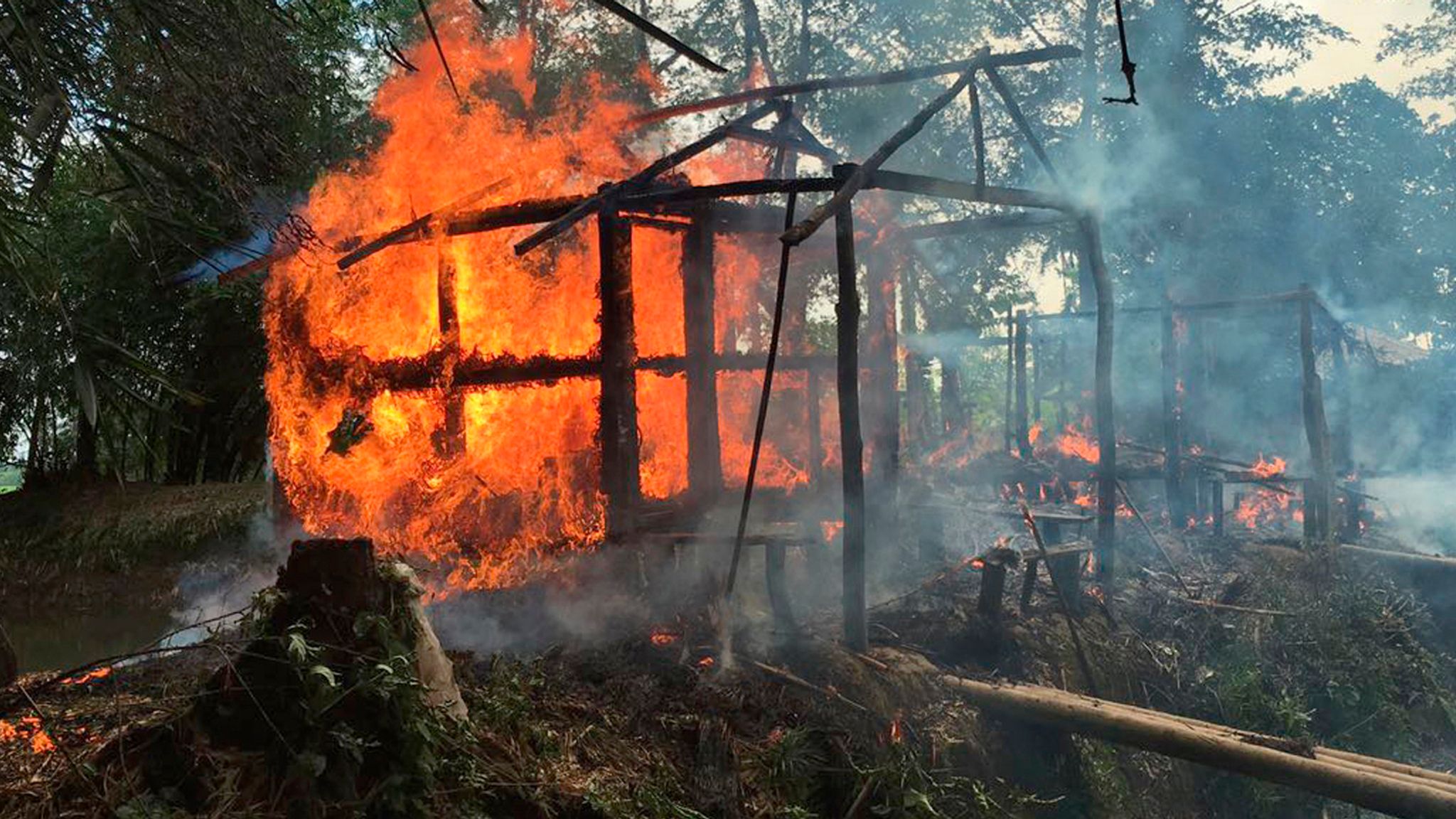
Sky News 24/01/2026 - When Dr Ronan Lee spoke to members of the Rohingya community, he heard "blood-curdling accounts" of killings and sexual violence allegedly carried out by Myanmar's security forces.
They described how hundreds of villages were burned to the ground, with Myanmar's military treating Rohingya males "as fair game for extermination", the author and academic said.
Thousands of people were killed and a "monstrous campaign of sexual violence" was unleashed against women and girls from the mainly-Muslim minority group, alleged victims told Dr Lee.
Now their stories are being heard directly in an international court for the first time in a landmark case, where Myanmar stands accused of committing genocide.
More than 700,000 Rohingya refugees fled the Southeast Asian country into neighbouring Bangladesh during the 2017 military crackdown.
Myanmar, which says it launched the campaign after an attack by a Rohingya insurgent group, has denied allegations of genocide.
The long-awaited International Court of Justice (ICJ) hearings began last week in The Hague, and the case is expected to set precedents about how a genocide can be defined and proven.
It was first filed by the Gambia, which has argued that Myanmar's military engaged in a "clearance operation" that violated the 1948 Genocide Convention.
The Gambia's justice minister, Dawda Jallow, said his country had brought the case out of "a sense of responsibility" following its own experience with a military government.
At the opening of the case last week, Mr Jallow told the court the Rohingya people had "endured decades of appalling persecution, and years of dehumanising propaganda".
"They have been targeted for destruction," he said. "Myanmar has denied them their dream - in fact, it turned their lives into a nightmare, subjecting them to the most horrific violence and destruction one could imagine."
What has Myanmar said?
Myanmar, which has been under military control since 2021, opened its defence in the case, with representative Ko Ko Hlaing telling the court the country was "not obliged to remain idle and allow terrorists to have free rein of northern Rakhine State".
Who are the Rohingya?
More than a million Rohingya people lived in Myanmar at the start of 2017, with the majority in Rakhine State in the west of the country. With their own language and culture, they say they are descendants of Muslim traders who have lived in the region for generations.
But Myanmar, a predominantly Buddhist country, has long considered the Rohingya people to be illegal immigrants from neighbouring Bangladesh and denied them citizenship. Following the 2017 crackdown, more than a million Rohingya people are now in chaotic, overcrowded camps in Bangladesh.
A UN fact-finding mission concluded the military offensive had included "genocidal acts". Myanmar authorities rejected that report, saying the military offensive was a legitimate counter-terrorism campaign. Read more - Lire plus
Expert testifies at ICJ that Myanmar military actions demonstrate Genocidal Intent
| | Leaked Doc: Homeland Security's Domestic Terror Obsession | |
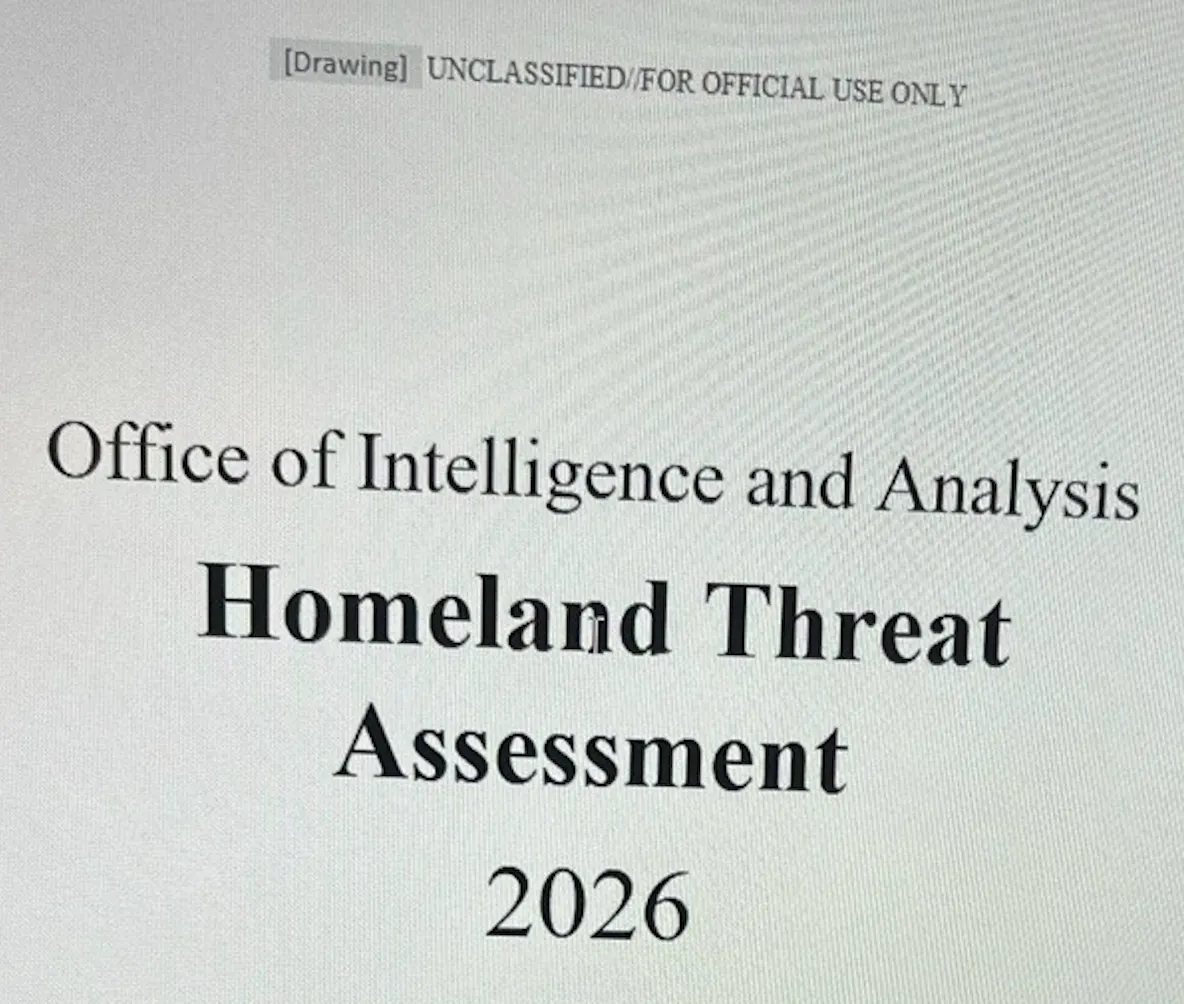
Ken Klippenstein 21/01/2026 - Despite Donald Trump’s fixation with Greenland and the suggestion that military action is imminent, the 2026 Homeland Threat Assessment, a draft of which was leaked to me, focuses instead on domestic terrorism.
The annual assessment, which has been prepared since 2020, purports to offer a holistic assessment to threats to the Western Hemisphere. These assessments have consistently focused on what you imagine: southern border security, the drug trade, immigration, and critical infrastructure protection in the United States.
But this year’s assessment, marked “For Official Use Only” and not yet released to the public, identifies violent extremism on the part of American citizens as the priority and greatest threat. One phrase in particular stands out to me as new: potential terrorism based upon “class-based or economic grievances.” (The term has not appeared in any previous assessment.)
The reference to first appears in the executive summary, in a section summarizing public safety threats. Per the assessment:
“Of threat actors with ideological motivations, domestic violent extremists in recent years have been the most active plotters. They are motivated to conduct attacks by a wide range of factors, including anti-government sentiment, racial and ethnic grievances, anti-Israel and anti-Semitic beliefs, and class-based or economic grievances … The threat from US-based individuals inspired by foreign terrorist organizations has also risen to its highest level in five years, fanned by the ongoing Israel-HAMAS conflict and a resurgence in English-language terrorist media.”
The term again appears a second time in the full section on public safety threats.
“In recent years domestic violent extremists have been the most active terrorist attackers and plotters, and we expect this will remain the case in 2026. They are motivated to conduct attacks by a wide range of factors, including anti-government sentiments, racial and ethnic grievances. anti-Israel and anti-Semitic beliefs, and class-based or economic grievances.”
The assessment doesn’t define what it means by “class-based or economic grievances.” The phrase could as much refer to an angry MAGA Midwesterner as it could any Mamdani-supporting urban dweller. But the focus is clear: the main threat to the “homeland,” DHS thinks, is the American people. The threat assessment is broken into four sections: Border and Immigration Security, Critical Infrastructure Security, Threats to Economic Security, and Public Safety and Security.
The latter section emphasizes the administration’s obsession with domestic terrorism, saying it has been and will remain the leading terrorist threat. Examples it cites include the assassinations of a Minnesota legislator, two Israel Embassy staffers in Washington, DC, as well as various attacks on ICE facilities and personnel.
“In recent years domestic violent extremists have been the most active terrorist attackers and plotters, and we expect this will remain the case in 2026,” the assessment says. In contrast, foreign terrorist groups like ISIS are said to “have a diminished capability.”
Further bolstering the government’s new obsession with “domestic” terrorists, the assessment also says that foreign terrorists are attempting to cross the border at the lowest rate in decades. And when it comes to migrants, the number of “encounters” with foreign terrorists at the border are said to be at an historic low.
As the Department of Homeland Security sees it, 2026 is a year when southern border immigration as an issue takes a back seat in the Trump administration’s national security focus on North America and the Western Hemisphere.
But not Greenland. The closest the Trump administration’s 2026 assessment comes to even mentioning the Arctic nation and other northern ‘threats’ to the Western Hemisphere is one reference to China’s “stranglehold of rare earth minerals,” the very stone age war that Donald Trump has become so obsessed with.
The assessment does mention the ongoing aggressive actions against alleged drug boats, Venezuelan tankers and the usual kitchen sink list of perennial threats — gangs, human smuggling, weapons trafficking, transnational criminal organizations, small drones, money laundering, small drones, cyber threats, technology transfer, intellectual property theft, and on and on.
But what makes this still secret assessment really stand out is the certainty with which it states that the greatest “area of considerable concern to us in the coming year is the threat of mass casualty attacks and targeted violence.” From the World Cup to the 250th anniversary of the Declaration of Independence, homeland security is preparing for the “threat.” That threat is you. Source
| | Exclusive: ICE's Secret Watchlists of Americans | | |
Ken Klippenstein 28/01/2026 - “We have a nice little database and now you’re considered a domestic terrorist,” a masked federal agent taunted a protester filming him in Maine last week.
Department of Homeland Security spokesperson Tricia McLaughlin’s response was firm: “There is NO database of ‘domestic terrorists’ run by DHS.” There’s just one problem: She’s lying.
Two senior national security officials tell me that there are more than a dozen secret and obscure watchlists that homeland security and the FBI are using to track protesters (both anti-ICE and pro-Palestinian), “Antifa,” and others who are promiscuously labeled “domestic terrorists.”
I can reveal for the first time that some of the secret lists and applications go by codenames like Bluekey, Grapevine, Hummingbird, Reaper, Sandcastle, Sienna, Slipstream, and Sparta (including the ominous sounding HEL-A and HEL-C reports generated by Sparta).
Some of these, like Hummingbird, were created to vet and track immigrants, in this case Afghans seeking to settle in the United States. Slipstream is a classified social media repository. Others are tools used to link people on the streets together, including collecting on friends and families who have nothing to do with any purported lawbreaking.
There’s practically nothing available that further describes what these watchlists do, how large they are, or what they entail.
“We came out of 9/11 with the notion that we would have a single ‘terrorist’ watchlist to eliminate confusion, duplication and avoid bad communications, but ever since January 6, not only have we expanded exponentially into purely domestic watchlisting, but we have also created a highly secretive and compartmented superstructure that few even understand,” says a DHS attorney intimately familiar with the subject. The attorney spoke on the agreement that their identity not be disclosed.
Prior to 9/11, there were nine federal agencies that maintained 12 separate watchlists. Now, officially there are just three: a watchlist of 1.1 million international terrorists, a watchlist of more than 10,000 domestic terrorists maintained by the FBI, and a new watchlist of transnational criminals, built up to more than 85,000 over the past decade.
The new domestic-related watchlists—a set of databases and applications—exist inside and outside the FBI and are used by agencies like ICE and the Border Patrol to organize the Niagara of information in possession of the federal government. Collectively, they create ways to sort, analyze, and search information, a task that even artificial intelligence has failed to conquer (so far).
Among other functions, the new watchlists process tips, situation reports and collected photographs and video submitted by both the public and from agents in the field; they create a “common operating picture” in places like Minneapolis; they allow task forces to target individuals for surveillance and arrest; and they create the capacity for intelligence people to link individuals together through geographic proximity or what is labeled “call chaining” by processing telephone numbers, emails, and other contact information. [...]
Impeding federal law enforcement has emerged as the Trump administration’s primary justification for actions against people like Renee Good and Alex Pretti.
As part of its new effort to support its operations in places like Minneapolis and Los Angeles, the Homeland Security Department, working with the Justice Department, has started more methodically tracking what it calls “aggressive protesters.” According to one senior official, this is a new designation the agency uses to describe the supposed threat posed by people on the streets.
Both Good and Pretti were considered aggressive protesters; in Good’s case, for criticizing ICE officers while operating a vehicle; and in Pretti’s case, getting up close to immigration officers while filming them.
Deputy Attorney General Todd Blanche alluded to the term in a recent CNN interview, saying: “He [Alex Pretti] was not protesting peacefully—he was screaming in the face of ICE, he had a phone up right into ICE’s face. You tell me: is that protesting peacefully?”
When the CNN host pointed out that Pretti wasn’t violent, Blanche actually agreed, but went on to argue that there’s a third category for protest that is neither violent nor peaceful. “I did not say that he was violent,” Blanche interjected, adding: “I said that he was not protesting peacefully.”
When I asked civil liberties experts what might be the legal justification for the expanded watchlisting, Rachel Levinson-Waldman, the Brennan Center’s Liberty and National Security Program director said that NSPM-7 and Attorney General Pam Bondi’s December 5 memo implementing the presidential directive “might be their justification.”
Under the Privacy Act, Levinson-Waldman explains, the government is prohibited from collecting and retaining information about Americans exercising their First Amendment rights. There can exceptions to that, but the question is whether DHS and FBI have articulated which exceptions they believe apply here.
The DHS lawyer, who helped to reveal the many secret watchlists and applications that are now being built and used to create the new American dragnet, says that sorting out the data being collected—rather than some explicit order to collect the data—is what’s driving the process.
“We over collect and everyone agrees we should create this or that list or application to wrestle the information to submission lest we miss something important,” the lawyer said. “So the data people do their thing and pretty soon you actually have Big Brother.”
A senior intelligence official, who confirmed the existence of the watchlists described earlier, characterized the problem another way.
“Lists of this and that—this social media post, that video taken of someone videoing ICE, the mere attendance at a protest—gets pulsed by federal cops on the beat to check for criminality but eventually just becomes a list itself of criminality, with the cops thinking that indeed they are dealing with criminals and terrorists.”
“Watchlists, and the whole watchlisting process, should be as transparent as possible, not the other way around. If we don’t explore more why all of these secret lists exist, even more of an environment of paranoia on the ground and more tragic killings.” Read more - Lire plus
ICE Agents Film Minnesota Protesters & Immigrants as Part of Massive Facial Recognition Push
ICE’s Facial Recognition App Misidentified a Woman. Twice
Feds Create Drone No Fly Zone That Would Stop People Filming ICE
| | Families of Boat Strike Victims Sue U.S. for “Manifestly Unlawful” Killings | |
The Intercept 27/01/2026 - Family members of Chad Joseph, 26, and Rishi Samaroo, 41 — two Trinidadian men killed in a U.S. boat strike on October 14, 2025 — are suing the U.S. government for wrongful death and extrajudicial killing. Lawyers from the American Civil Liberties Union, the Center for Constitutional Rights, the ACLU of Massachusetts, and Seton Hall Law School professor Jonathan Hafetz called the entire campaign of attacks in the Caribbean Sea and Pacific Ocean “unprecedented and manifestly unlawful” in a complaint filed on Tuesday.
The suit will be brought in U.S. federal admiralty court under the Death on the High Seas Act, a congressional statute that covers wrongful maritime deaths. The plaintiffs are also bringing claims for extrajudicial killing under the Alien Tort Statute, which gives federal courts jurisdiction over violations of the law of nations, including extrajudicial killing. Another federal statute, the Suits in Admiralty Act, waives U.S. sovereign immunity — which ordinarily protects the federal government from being sued — over both claims.
“This allows the families of victims to bring a claim for wrongful or negligent death committed on the high seas. And in our case, this is murder,” Steven Watt, a senior staff attorney with the ACLU Human Rights Program, told The Intercept. “It was a murder. These were both homicides. Both men were killed without any due process.”
A total of six civilians were reportedly killed in the October 14 strike on a boat in the Caribbean. “Under my Standing Authorities as Commander-in-Chief, this morning, the Secretary of War, ordered a lethal kinetic strike on a vessel affiliated with a Designated Terrorist Organization,” Trump announced on Truth Social that same day. “The strike was conducted in International Waters, and six male narcoterrorists aboard the vessel were killed in the strike.”
The Intercept spoke with Lenore Burnley, Joseph’s mother, shortly after she learned her son had been killed. “I don’t want to believe it. Not my child,” she said. “Somebody called us. They said he was on the boat.” Burnley said she had nothing to say to Trump. “I put it in God’s hands,” she told The Intercept at the time.
Joseph and Samaroo were returning from Venezuela to their homes in Las Cuevas, Trinidad, on October 14. Joseph, who had a wife and three children, often traveled to Venezuela to fish and do farmwork. Two days before he was killed, Joseph called his wife to let her know that he had found a boat ride home from Venezuela and would see her soon.
Samaroo was also working on a farm in Venezuela, caring for goats and cows and making cheese. On October 12, he told his sister, Sallycar Korasingh, that he was coming home to take care of his mother, who had fallen ill.
“Rishi used to call our family almost every day, and then one day he disappeared, and we never heard from him again,” said Korasingh. “If the U.S. government believed Rishi had done anything wrong, it should have arrested, charged, and detained him, not murdered him. They must be held accountable.”
Burnley hoped that the lawsuit would offer her family answers. “Chad was a loving and caring son who was always there for me, for his wife and children, and for our whole family. I miss him terribly. We all do,” she said. “We know this lawsuit won’t bring Chad back to us, but we’re trusting God to carry us through this, and we hope that speaking out will help get us some truth and closure.”
The U.S. military has carried out 36 known attacks, destroying 37 boats, in the Caribbean Sea and eastern Pacific Ocean since September, killing at least 126 civilians. The most recent attack occurred in the Pacific Ocean on January 23, killing two people and leaving one survivor. The Coast Guard was unsuccessful in locating the shipwrecked man and called off the search on January 25. He is now presumed dead.
Experts in the laws of war and members of Congress, from both parties, say the strikes are illegal extrajudicial killings because the military is not permitted to deliberately target civilians — even suspected criminals — who do not pose an imminent threat of violence.
The administration insists the attacks are permitted because the U.S. is engaged in “non-international armed conflict” with “designated terrorist organizations,” or DTOs. The Justice Department’s Office of Legal Counsel has also produced a classified opinion that provides legal cover for the lethal strikes, with a secret list of the DTOs attached. “Whatever that secret memorandum states, it cannot render the patently illegal killings lawful,” reads the complaint, which was shared with The Intercept prior to publication. Read more - Lire plus
| | OTHER NEWS - AUTRES NOUVELLES | | ICLMG ACTIONS DE LA CSILC | | The Justice Minister must end the injustice against Hassan Diab! | | |
In April 2023, despite clear exculpatory evidence, the French Court of Assize conducted an in absentia trial that unjustly declared Dr. Hassan Diab guilty and sentenced him to life in prison. The proceedings amounted to a sham trial and a mockery of justice.
Since that ruling, Dr. Diab and his family have lived in constant uncertainty, facing the ongoing threat that a second extradition request could be made at any time.
Please click below to send a new letter demanding that Justice Minister Sean Fraser categorically refuse any future extradition request and put an end—once and for all—to this ongoing miscarriage of justice.
| |
Canada: Abolish rights-violating terrorist entities list!
| | |
On October 15, 2024, the Canadian government placed the Samidoun Palestinian Prisoner Solidarity Network on Canada’s terrorist entities list. While ostensibly a tool to protect the safety and security of people in Canada and internationally, the list is an arbitrary political tool that undermines freedom of association, of expression and due process in the courts. Its effectiveness as a national security tool has never been demonstrated in a manner that justifies its use.
Due to these deep flaws, and more, the ICLMG has consistently called for the list to be abolished since the Canadian coalition’s founding in 2002. Please join us in urging the Canadian government to abolish the rights-violating terrorist entities list once and for all. Thank you!
| | Canada must repatriate all Canadians detained in NE Syria now! | Every day the government fails to bring these Canadians home, it places their lives at risk from disease, malnutrition, violence, and ongoing military conflicts. United Nations officials have even found that the conditions faced by Canadians in prison are akin to torture. Please click below to urge the federal government to repatriate all Canadians illegally and arbitrarily detained in northeast Syria without delay. | | 22 years of fighting deportation to torture: Justice for Mohamed Harkat Now! | | CSIS isn't above the law! | | |
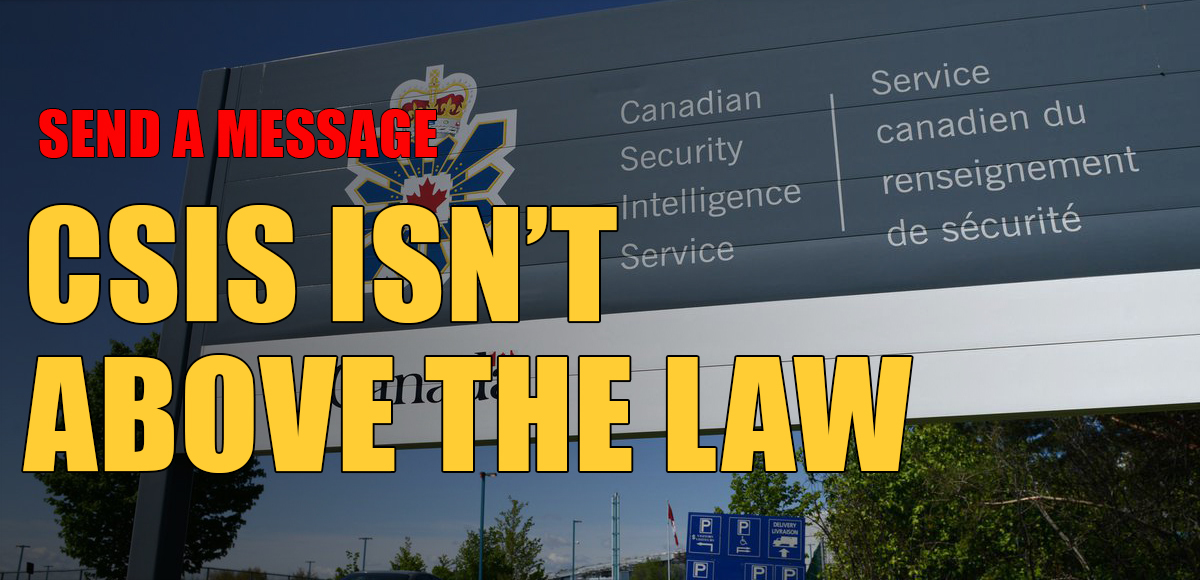
In recent years, at least three court decisions revealed the Canadian Security and Intelligence Service (CSIS) engaged in potentially illegal activities and lied to the courts. This is utterly unacceptable, especially given that this is not the first time these serious problems have been raised. CSIS cannot be allowed to act as though they are above the law.
Send a message to the Public Safety Minister demanding that he take immediate action to put an end to this abuse of power and hold those CSIS officers involved accountable. Your message will also be sent to your MP and to the Minister of Justice.
| | Reform Canada's extradition law now! | |
Canada’s extradition system is broken. One leading legal expert calls it “the least fair law in Canada.” It has led to grave harms and rights violations, as we’ve seen in the case of Canadian citizen Dr Hassan Diab. It needs to be reformed now.
Click below to send a message to urge the Prime Minister, the Minister of Justice and your MP to reform the extradition system before it makes more victims. Thank you!
Version française: Le Canada doit réformer la loi sur l'extradition!
| | Canada must protect encryption! | |
Canada, with other G7 nations, continues to push to weaken our access to strong, reliable encryption, after decades of being supportive of strong encryption. We need encryption to safeguard our data, our online transactions, our communications, and to protect the lives of journalists and human rights activists.
Please send a message to the Prime Minister of Canada, the Minister of Public Safety, as well as your Member of Parliament, to urge them to reverse course and once again commit to protecting encryption.
Regardez la vidéo avec les sous-titres en français + Agir
| | Protect our rights from facial recognition! | Facial recognition surveillance is invasive and inaccurate. This unregulated tech poses a threat to the fundamental rights of people across Canada. Federal intelligence agencies refuse to disclose whether they use facial recognition technology. The RCMP has admitted (after lying about it) to using facial recognition for 18 years without regulation, let alone a public debate regarding whether it should have been allowed in the first place. Send a message to the Prime Minister and the Public Safety Minister calling for a ban now. | | What we've been up to in 2025, and our plans for 2026! | |
ICLMG 03/12/2025 - Thanks to the support of our members and donors, we’ve been able to do a lot and work on the following since June:
- Anti-privacy and xenophobic bills C-2 & C-12
- Anti-protest and anti-freedom bill C-9
- Impacts of Countering Terrorism Financing on charities, non-profits, solidarity work and international assistance.
- Canada’s complicity in torture
- Justice for Hassan Diab
- Artificial Intelligence regulatory frameworks & national security
- The gaps in oversight and review of national security agencies
- Consultations on the UN Global Counter-terrorism strategy & definitions of “terrorism” and “violent extremism"
- We were interviewed or quoted in dozens of media pieces
- And much more!
For all details on our activities, and our plans for 2026, click here.
| | Les opinions exprimées ne reflètent pas nécessairement les positions de la CSILC - The views expressed do not necessarily reflect the positions of ICLMG. | | |
THANK YOU
to our amazing supporters!
We would like to thank all our member organizations, and the hundreds of people who have supported us over the years, including on Patreon! As a reward, we are listing below our patrons who give $10 or more per month (and wanted to be listed) directly in the News Digest. Without all of you, our work wouldn't be possible!
James Deutsch
Bill Ewanick
Kevin Malseed
Brian Murphy
Colin Stuart
Bob Thomson
James Turk
John & Rosemary Williams
Jo Wood
The late Bob Stevenson
Nous tenons à remercier nos organisations membres ainsi que les centaines de personnes qui ont soutenu notre travail à travers les années, y compris sur Patreon! En récompense, nous nommons ci-dessus nos mécènes qui donnent 10$ ou plus par mois et voulaient être mentionné.es directement dans la Revue de l'actualité. Sans vous tous et toutes, notre travail ne serait pas possible!
Merci!
| | | | |