|
International Civil Liberties Monitoring Group
Coalition pour la surveillance internationale des libertés civiles
March 28, 2026 - 28 mars 2026
| Bimonthly news round-up about national security's negative impact on civil liberties in Canada and abroad | |
| ICLMG’s submission to the People’s Consultation on AI | | |
ICLMG 23/03/2026 - On March 23, 2026, the ICLMG made a submission to the People’s Consultation on Artificial Intelligence. The PCAI was launched by a group of 160 civil society organizations, including the ICLMG, in response to the federal government’s woeful track record on public consultations regarding artificial intelligence policy and regulations, specifically its Fall 2025 30-day “national sprint” consultation on AI. The submissions will be sent to the Canadian government in the following weeks.
To read our full submission, click here.
Excerpt: Concerns and recommendations
Through our work, we have documented how a lack of regulation of artificial intelligence tools and how they are used can have significantly negative impacts on the rights and livelihoods of people in Canada and internationally. This includes its use to power surveillance tools, to profile individuals, to attempt to predict unlawful activity or to make potentially life-altering decisions in a wide-range of sensitive areas, including employment, immigration, border security, law enforcement, and intelligence gathering. We are particularly aware of the interest among government, law enforcement and intelligence agencies to harness AI tools, and to work with private contractors developing those tools, for counter-terrorism and national security purposes. We’ve seen how AI models are inaccurate, biased, and misleading. A study from September 2025 shows that every AI model of every major AI company deliberately lies to users: OpenAI Google’s Gemini, Anthropic’s Claude, xAI’s Grok, and Meta’s Llama all showed the same deceptive behavior. The paper seems to suggest that it’s unclear if safety training actually stops deception, or just teaches AI to hide it better.” We have also seen how such tools can be used to violate fundamental rights and can either be shared with, sold to, leaked, or stolen by a wide range of actors who can use the tools for their own nefarious purposes. Given all this, we are acutely aware of the need to regulate the development and use of AI tools in the private and public sectors.
We believe that the government should bear in mind the following concerns and principles in developing any further legislation or regulations to govern the use of AI overall, and specifically in the areas of national security and law enforcement.
Specific areas of concern:
A. Regulation of AI must be grounded in human rights, Charter rights and international human rights law
B. Definitions
I. AI legislation should clearly define terms and categories (such as high impact systems)
II. Definition of harms must include group-based harms
C. The government must develop AI legislation that includes regulations for the national security-related use of AI in both the public and private sectors
D. Need for more consultation
E. Need for independent oversight and review
F. Banned uses of AI
Recommendations
-
AI regulation must be grounded in a human rights-first approach, should include human rights-based assessments, and ensure that rights protections are built into the legislation, especially protection of privacy rights.
-
AI legislation should take an approach that addresses the roots of AI companies’ algorithms and business models and their significant human rights implications.
-
AI legislation should clearly define terms and categories (such as high impact systems). Those definitions should not be left to regulation nor to “people responsible for AI systems.”
-
Definition of harms must include group-based harms.
-
AI legislation should apply to both the public and private sectors, including government national security, intelligence and law enforcement agencies; and there should be no exemption in AI regulations for national security related technology.
-
The government must hold open, inclusive and meaningful consultations, before and after tabling legislation, with a broad range of stakeholders and the public.
-
The consultations should not be led by the Minister of AI or the Ministry of Industry.
-
The enforcement of AI regulations should fall to an independent regulator, and AI regulations should be periodically reviewed for effectiveness and impact, especially given that AI technology, and its usage, will continue to evolve.
- The government should, via legislation, establish a list of banned uses of AI, with the possibility of adding more banned uses by regulation. We recommend that the initial list include:
- deploying subliminal, manipulative, or deceptive techniques to distort behaviour and impair informed decision-making;
- exploiting vulnerabilities related to age, disability, or socio-economic circumstances to distort behaviour;
- biometric categorisation systems inferring sensitive attributes (race, political opinions, trade union membership, religious or philosophical beliefs, sex life, or sexual orientation)
- social scoring, i.e., evaluating or classifying individuals or groups based on social; behaviour or personal traits, causing detrimental or unfavourable treatment of those people;
- assessing the risk of an individual committing criminal offenses solely based on profiling or personality traits;
- compiling facial recognition databases by untargeted scraping of facial images from the internet or CCTV footage;
- inferring emotions in workplaces or educational institutions;
- ‘real-time’ remote biometric identification (RBI) in publicly accessible spaces for law enforcement.
- decision-making regarding people’s lives (immigration status/removal orders, social benefits, health-related decisions, etc.).
- decision-making regarding the deployment and/or the control of autonomous weapons.
To read the rest of our submission, click here. Source
All submissions made to the People's Consultation on AI
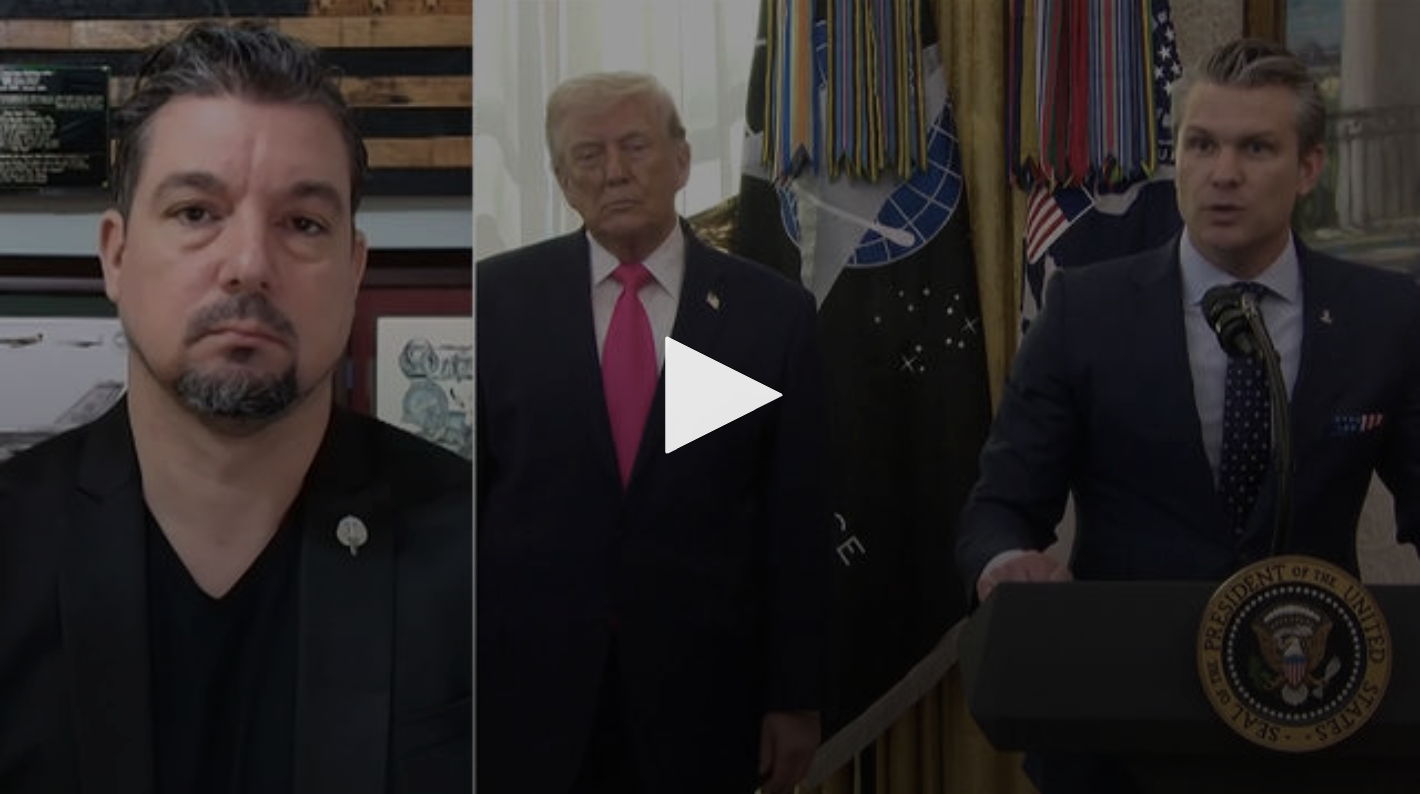
Speeding Up the “Kill Chain”: Pentagon Bombs Thousands of Targets in Iran Using Palantir AI
How EU Funding and Exports of High-risk AI Systems Exacerbate Severe Human Rights Violations in Palestine and the Broader Region
Europe Is Looking To Water Down AI Protections. It Should Reinforce Them.
This Company Is Secretly Turning Your Zoom Meetings into AI Podcasts
| | Passing of Bill C-12 is an Attack on Refugee and Migrant Rights in Canada | | |
ICLMG 27/03/2026 - A broad coalition of human rights, civil liberties, refugee and migrant rights, gender justice, and data privacy organizations have denounced the adoption of Bill C-12, which became law yesterday. This egregious bill marks a significant attack on refugee and migrant rights in Canada, and has been criticized by the UN Human Rights Committee for undermining critical procedural safeguards for refugees.
Bill C-12, otherwise known as the Strengthening Canada’s Immigration System and Borders Act, sets the current and future governments on a dangerous path by limiting the ability to seek refugee protection in Canada, enabling the mass cancellation of immigration documents and applications, and facilitating the sharing of personal information within and outside the country. Bill C-12 will put thousands of individuals at risk of persecution, violence and precarity.
Civil society organizations have consistently demanded the withdrawal of this dangerous legislation, including when over 300 organizations urged the government to withdraw Bill C-2, its predecessor, in June 2025. However, these concerns were ignored, and these groups were largely excluded from the legislative process in the House of Commons.
After a broad range of experts and individuals with lived experience appeared in the Senate to underline the harmful effects of Bill C-12, the Standing Senate Committee on Social Affairs, Science and Technology recommended deleting parts of Bill C-12 that would make changes to immigration and refugee protection laws, due to human rights, privacy and due process concerns. However, these recommendations were ignored, and no significant amendments were made as the government fast-tracked this deplorable piece of legislation.
This government is replicating US-like anti-migrant sentiment and policies in Canada. As we look ahead, we are concerned about the dangerous trend towards discretionary power and the further erosion of refugee and migrant rights slated in future legislative and policy reforms, including imminent changes to the Interim Federal Health Program coming into effect on May 1st.
As a coalition, we will continue to fight back against this attack on refugee and migrant rights in Canada when refugees and migrants are scapegoated for the crises that governments at all levels have created.
Signatories:
- Action Réfugiés Montréal
- Amnesty International Canada, English Section
- Amnistie internationale Canada francophone
- Ansari Immigration Law
- Canadian Association of Refugee Lawyers
- Canadian Civil Liberties Association (CCLA)
- Canadian Council for Refugees
- Canadian Muslim Lawyers Association
- Canadian Muslim Public Affairs Council (CMPAC)
- Canadian Union of Public Employees
- Clinique pour la justice migrante – Migrant justice clinic
- Community Legal Services of Ottawa
- Council of Canadians – Ottawa Chapter
- Doctors of the World Canada
- International Civil Liberties Monitoring Group
- Jafari Law
- Journey Home Community
- Leadnow
- Matthew House Refugee Services, Toronto
- Migrant Rights Network
- National Union of Public and General Employees (NUPGE)
- Rainbow Refugee
- Refugee Lawyer’s Association
- Solutions Justes – MCM
- Table de concertation des organismes au service des personnes réfugiées et immigrantes (TCRI)
- The Refugee Centre
- The Women’s Legal Education and Action Fund (LEAF)
-
Uganda Community Centre Canada (UCCC) Source
Version française : L’adoption du projet de loi C-12 constitue une atteinte aux droits des personnes réfugiées et migrantes au Canada
Vivre sur le bras des autres: L’adoption de lois anti-migrant·es est une catastrophe humanitaire pour les réfugié·es et une nécessité économique pour les classes dominantes
Le Canada abandonne les plus vulnérables pour financer l’armée
NEW ACTION Keep ICE Out of Toronto
| | UN Calls on Canada to Repatriate Detainees from North-eastern Syria and Iraq | | |
Stop Canadian Involvement in Torture 24/03/2026 - The United Nations Human Rights Committee has called on Canada to repatriate 14 Canadian men and children (as well as two mothers of the children) in order to end what has in some cases been upwards of a decade of arbitrary detention under appalling conditions in north-eastern Syria and, more recently, in Iraq.
In a concluding report (Online Link) from its 145th session, the Committee noted that Canada had already repatriated from north-eastern Syria 30 Canadians (22 children and 8 women) since 2020, but expressed concern “about reports indicating that at least nine men and five Canadian children continue to be held in very difficult conditions in north-eastern Syria, together with two mothers who are not Canadian nationals.” The Committee also raised concerns that Canada has made repatriation of the children contingent on forced separation from their mothers.
Multiple Violations
While pointing out this crisis violated Articles 6 (inherent right to life), 7 (prohibition on torture and cruel, inhuman and degrading treatment or punishment ) and 24 (non-discriminatory guarantees of child protection) of the International Covenant on Civil and Political Rights, the Committee called on Canada to “intensify its efforts to repatriate all its nationals currently held in armed conflict zones, in particular in the Syrian Arab Republic, together with the mothers of the Canadian children, through a clear and fair procedure that upholds the principle of the best interests of the child and ensures adequate access to rehabilitation services and care upon repatriation.”
In response to the report, human rights activist and international human rights lawyer Alex Neve, who visited some of the Canadian detainees in north-eastern Syria as part of a civic delegation in August 2023, declared: “The Human Rights Committee has, in fact, been generous in calling on Canada to ‘intensify its efforts’ to repatriate all of the Canadians the government has abandoned in north-eastern Syria for years, and now also in Iraq. The truth is that there are no efforts of any kind underway at all. Clearly this exhortation from the body responsible for overseeing one of the world's most important human rights instruments must finally catalyze action from the federal government. Given the precarious and rapidly evolving political, security and human rights situation in the region, it has never been more important - but also there has never been a clearer opportunity - to bring all Canadians home.”
The UN recommendations come in response to a brief (Online Link) submitted earlier this year by Stop Canadian Involvement in Torture, which for years has led a campaign to repatriate the detainees. Group spokesperson Matthew Behrens noted that the Canadian detainees were on the verge of being illegally transferred to Iraq at the time the group’s brief was submitted, adding that the Committee’s reference to “armed conflict zones” is clearly intended to include those now held in Iraq.
Canada Backtracks on Repatriation Pledge
Earlier this month, Canada’s ambassador in Baghdad led Iraqi officials to believe Canada would repatriate its citizens, only to see Global Affairs Canada (GAC) walk back that commitment once the office of Iraqi national security adviser Qasim Al-Araji posted online about Canada’s “readiness to receive its nationals among the detainees who were recently handed over” to Iraq.
"Canada is not currently in the process of repatriating any detained Canadians from Iraq," GAC subsequently wrote to Sally Lane, the mother of the longest held detainee, Canadian Jack Letts.
“Canada has subcontracted my son Jack’s arbitrary detention and torture to Kurdish authorities in northeast Syria and now Iraq for almost nine full years in complete violation of his Charter rights and this country’s international human right commitments,” Lane said. “Will Canada continue to defy the calls from many United Nations Special Rapporteurs on human rights, and now this committee, to repatriate my son and the other Canadians?”
Lane is especially incensed that Canada did nothing to prevent the illegal transfer of her son and other Canadians to Iraq where, in addition to arbitrary detention, they face the prospect of torture, unfair trials based on brutally coerced statements, and possible execution under a judicial system widely condemned for its failure to uphold international fair trial standards.
“Is Canada really going to allow my son’s death by hanging?” asked Lane, who has not seen the 30-year-old Jack since he was 18 and traveled to Syria to assist those under attack by the former Assad regime. “Canada refuses to justify its deliberate inaction to me; perhaps they can now explain to the UN why they condone arbitrary detention, torture and, possibly, execution?”
The UN’s report is the latest in a significant body of repatriation calls from a diverse set of voices, from the US State Department, UN Special Rapporteurs, Human Rights Watch, Save the Children, former Canadian Justice Minister Allan Rock and hundreds of Canadian legal professionals, to the International Committee of the Red Cross, a Canadian Parliamentary committee, the Kurdish jailers in NE Syria, and, more recently, Iraqi officials currently holding five Canadian men who were illegally transferred to their custody by the US in January and February, 2026.
“Every day, Foreign Affairs Minister Anita Anand posts that Canada is there for its citizens in the region, and has rightly expended considerable resources to help with evacuations,” Behrens says. “But while even Canadian troops have pulled out of Iraq because it has been deemed too dangerous for them, Anand has chosen to abandon these unarmed, defenceless, and traumatized Canadians in detention centres that are perilously close to the bombing.”
Canada’s Ongoing History of Obstruction
The issue of Canadians illegally detained in north-eastern Syria and now Iraq has previously been challenged at the Federal Court, which in January 2023 issued a decision calling on Ottawa to take the necessary steps to repatriate the men. Notably, the Court wrote: “The [Government of Canada] Respondents filed no evidence identifying the Applicants’ motives for their travel or of their activities in the region. Notably the Respondents do not allege any of the Applicants engaged in or assisted in terrorist activities. The Respondents affirmed this position at the hearing,” adding that “Canadians are entitled to have political opinions, no matter how abhorrent they may be to other Canadians. The limitation is when Canadian opinion holders take actions, whether inside or outside of Canada, that constitute offences against Canadian law including the Criminal Code of Canada. However there is no evidence to that effect before this Court.”
That decision was appealed and overturned by the Federal Court of Appeal which, while declining to rule in favour of the detainees, nonetheless reminded the government that “these reasons should not be taken to discourage the Government of Canada from making efforts on its own to bring about [repatriation].” The Supreme Court twice refused to hear an appeal.
In November 2024, Global Affairs Canada invited representatives of the male detainees to make submissions on the question of whether Canada would consider repatriation under a widely criticized “Policy Framework” that was found to discriminate against the men by the Federal Court (that Framework is also the subject of a Canadian Human Rights Commission complaint launched in May 2025). Despite the brutal conditions endured by the men and the passing of 15 months, Global Affairs Canada and Public Safety have yet to render a decision after receiving extensive submissions.
The toll this has taken on families is severe. John Letts, father of Jack Letts, said: “Mr. Carney claims he wants Canada to lead a new democratic world order based on genuinely ethical values, but it seems he wants to outsource Canada’s dirty work abroad. He’d prefer Canadian citizens to be burned as witches out of sight, far from home, rather than be returned and investigated to see if they’ve actually done something wrong. We know the Federal Court of Canada has said there’s no evidence they've committed a crime. This injustice has been going on for 10 years. My Canadian son is dying of torture and neglect, and Canada won't lift a finger to help. When is this nightmare going to end?” Source
UPDATED ACTION The UN Human Rights Committee calls on Canada to repatriate all Canadians from NE Syria & Iraq
| | Ottawans should be concerned about privacy, police access in federal lawful access bill: lawyer | | |
Ottawa Citizen 24/03/2026 - An Ottawa lawyer is raising concerns over a proposed federal bill that would give law enforcement the ability to obtain Canadians’ private information and intercept communication, and he says Ottawans should be concerned.
Bill C-22, the lawful access bill, proposes limited unwarranted and broader warranted powers to authorities. Under the bill, law enforcement and Canadian Security Intelligence Service (CSIS) can approach telecommunication companies and ask them, yes or no, if someone is a client before obtaining a warrant to get more information.
This is a step back from the original proposal in Bill C-2, which would have allowed police and CSIS officers to approach any service provider to ask, without a warrant, if an individual was a client and if the company knew of other service providers who had dealt with that individual. This included service providers that were protected by privilege, such as doctors and lawyers.
Michael Geist, Canada Research Chair in Internet and E-Commerce Law at the University of Ottawa, says the bill may be unconstitutional. “What matters is whether or not we provide the tools to law enforcement, but at the same time ensure that we strike an appropriate balance by protecting people’s privacy consistent with the Charter of Rights and Freedoms,” he told the Ottawa Citizen.
“The provisions are ultimately going to be struck down, and that doesn’t help law enforcement or privacy. I mean, that really doesn’t help anyone.” Geist’s comments came more than a week after the federal Liberal government tabled the bill on Thursday, March 12. [...] Geist said Bill C-22 would lower the standard that police had to meet in order to obtain production orders for digital information.
Currently, Ottawa police have to prove to a judge that they have reasonable grounds to believe that they need to obtain someone’s information from a telecommunication company for a criminal investigation. The new bill only requires police to prove that they have reasonable grounds to suspect that a crime is about to be committed to obtain a production order for that information.
“The bill effectively lowers the standard that police have to meet. Sure, law enforcement says they’re happy, but that means they need less evidence and need to do less work to get the information about subscribers, and I don’t think that’s that’s a good thing. It’s the lowest standard in Canadian criminal law,” Geist said.
“The standard that we currently have in place … law enforcement have been using for many, many years to obtain information on hundreds of thousands of (telecommunication) subscribers where needed. It’s not clear there’s a problem with the standard that we have right now, because it’s been working for years.”
Privacy risks around personal information
Bill C-22 also proposes new legislation that would compel telecommunication companies to store and retain client metadata, like device location, for a year and to make it available to law enforcement and CSIS with a warrant. The metadata can be used to track a person’s live location in case they pose a national security threat or are considered to be in danger.
This will be the first law of its kind in Canada if Bill C-22 receives royal assent, and Geist says it poses large privacy risks because telecommunication companies will be required to store large amounts of highly sensitive personal information.
For example, wireless providers will be forced to disclose location information for every subscriber for up to a year. Assuming that everyone keeps their phone in their bags or pockets all the time, that data traces everywhere they go.
“There may be value in specific telecommunications information in certain circumstances, but the notion that telecommunication providers should be retaining data on everyone for the proverbial needle in a haystack instance where they need that information creates a huge privacy risk to 99.9 per cent of Canadians, where that data will not be sought or needed,” he said.
Geist added that other countries had introduced similar provisions that had been struck down in court for being disproportionate. The European Union Data Retention Directive, which was first introduced in 2006, was struck down by the Court of Justice of the European Union in 2014 for being a disproportionate interference with fundamental rights.
“This (provision) in particular comes as a surprise because the government did not include metadata in Bill C-2. It’s one of the major new additions to the bill, and in some ways this effort to recalibrate the privacy balance in Bill C-22 as opposed to Bill C-2 is badly undermined by the standards to get subscriber information and the mandatory retention policies on metadata,” Geist said.
So why should Ottawans care?
Geist argued that Ottawans should care about the bill because privacy is a fundamental right in Canada. “If we undermine some of those principles, then we’re all the worse off for it,” he said. Security breaches affect everyone, no matter if someone is a lawful civilian or a criminal, he added.
“You can end up being harmed by virtue of the fact that this data is being retained for up to a year. It puts everyone’s privacy at risk regardless of whether or not they have something to hide or whether they’re a subject or target of an investigation,” he explained.
“This bill is essentially saying that we need to swoop up everyone’s data on the off chance that we need to target one individual, but that one-in-a-million chance puts a lot of people’s personal information at risk.
“There are real risks associated with that misuse, and that’s not even getting into issues around phishing and other kinds of stuff, where, once the data is there, what other uses can be made of it? What is a potential misuse of data that is retained for these long periods of time.”
Geist also said more evidence was needed to prove that these provisions worked. “My view would be that law enforcement needs to be regarded, really simply, as one other lobby with a vested interest in a particular outcome,” Geist said.
“Frankly, this debate would be, I think, far more robust if law enforcement did less cheerleading and more evidence ranking. There’s often a lot of talk from law enforcement about how they need this, but far less actual evidence about instances where the current system has proved to be a barrier to do their jobs.
“Of course, you want to know what law enforcement thinks, but let’s recognize they are not the whole part of the story here, when the privacy interests of all Ottawans, and all Canadians, are potentially at risk.”
Source
NEW ACTION Stop the Surveillance State: Stop Bill C-22
| | Parliament Passes Bill C-9 Despite National Outcry from Faith and Civil Liberties Groups | | |
CMPAC 26/03/2026 - Bill C-9, the Combatting Hate Act, passed in the House of Commons last night with 186 Members of Parliament voting in favour, 137 opposed and 10 paired. The Liberals and Bloc Québécois voted in favour, while Conservatives and NDP largely opposed the bill. The Canadian Muslim Public Affairs Council (CMPAC) expresses serious concern with both the substance of the legislation and the manner in which it was advanced.
The passage of this legislation, led by the Liberal government, represents a significant failure to adequately respond to credible, widespread, and sustained concerns raised throughout the legislative process. Broad opposition to Bill C-9 has been consistent and clear across Canada. Despite repeated warnings and substantive concerns from legal experts, faith communities, labour groups, and civil liberties organizations, Bill C-9 was advanced without the level of scrutiny and deliberation that legislation of this consequence demands.
This bill raises serious and unresolved risks to freedom of religion and freedom of expression, including the removal of longstanding legal protections and the introduction of broadly defined offences related to “intimidation” and “obstruction.” The expansion of these provisions introduces a level of ambiguity that risks uneven and discriminatory enforcement, particularly for communities already subject to heightened scrutiny.
“Members of Parliament were clearly presented with the legal risks and the breadth of opposition to this bill,”said Khaled Alqazzaz, CMPAC executive director. “It is deeply concerning that these issues were not meaningfully addressed prior to passage. The responsibility of Members of Parliament is not only to legislate, but to ensure that legislation withstands constitutional scrutiny and does not erode the rights of the people it purports to protect. In this instance, that responsibility towards constituents has not been met.” Alqazzaz added.
While Bill C-9 has passed the House of Commons, it has not yet become law. Its progression to the Senate represents a critical juncture. The Senate must now undertake the rigorous, independent review that was lacking in the House and give full and serious consideration to the legal and constitutional implications of this bill. We remain hopeful that this next stage will provide an opportunity to correct the course and address the significant deficiencies that remain. Source
IJV: Criminalizing Protest Won’t Protect Us: Jewish Canadians Stand Against Bill C-9
NEW ACTION Stop Bill C-9, Defend Civil Liberties
Al-Quds Day rally in Toronto goes ahead after judge tosses injunction bid; Premier ‘extremely disappointed’
Protest Restrictions in Toronto Violate Civil Liberties: ARPCF
| | Justice for Hassan Diab: A webinar | | |
Peace Alliance Winnipeg 20/03/2026 - A webinar entitled Justice for Professor Hassan Diab was hosted by Peace Alliance Winnipeg and other social justice organizations.
We heard from Professor Diab and his lawyer Donald Bayne about how this case is an especially egregious example of the failures of the Canadian justice system and our biased extradition laws. The injustice began in 2008 when the then University of Ottawa Professor was arrested by the RCMP for a 1980 Paris synagogue bombing.
He has always maintained his innocence. Canada extradited Professor Diab to France in 2011, where he was imprisoned for more than three years, most of it in solitary confinement, despite never being charged with a crime. Today Diab is still being relentlessly pursued by the French legal system.
Although in 2018 he was finally permitted to return home to Canada, as recently as April 2023 Professor Diab was convicted in absentia in France after an unfair trial.
ACTION Justice Minister Sean Fraser must act now to end the injustice against Dr. Hassan Diab!
| | Cops with rifles to be deployed to key locations in Toronto as police create new "counter-terrorism" unit, task force | |
CBC News 24/03/2026 - Toronto police say they are creating a counter-terrorism unit and a specialized task force that will see officers with semi-automatic rifles stationed at key locations in the city.
The locations include places of worship, tourist attractions, high traffic public spaces and critical infrastructure, police told reporters at a news conference Tuesday.
Police Chief Myron Demkiw said the dedicated counter-terrorism security unit and "task force guardian" are not being set up in response to any one threat but are security measures to "prevent, detect and disrupt" extremism violence and terrorism. [...]
Police with long guns will 'terrify' many people: advocate
At least one advocate, however, said the security measures are not the answer to isolated acts of violence.
John Sewell, co-ordinator of the Toronto Police Accountability Coalition, said he is "disturbed" by the news of the security measures. The coalition, an advocacy group, encourages debate about issues concerning police policy and is focused on making the police more accountable to the public.
"I think we don't have a terrorism problem in Toronto where we need a counter-terrorism unit. I think we have a few instances of very individual people who have been firing shots at synagogues. And of course that's entirely wrong. But I don't think a counter-terrorism unit is what's required," he said.
"Secondly, I think the idea of having police on the streets with long guns is going to terrify an awful lot of people. I know that people right now feel frightened when police have guns and there's various things in protocol to try and make sure they don't draw them very often, but they do and it causes problems," he added. The measures are a "big over-reaction," Sewell said. "This is not going to make our city feel like a safer place." Read more - Lire plus
| | Silence not an option, says Canadian Sikh activist after fresh threats | |
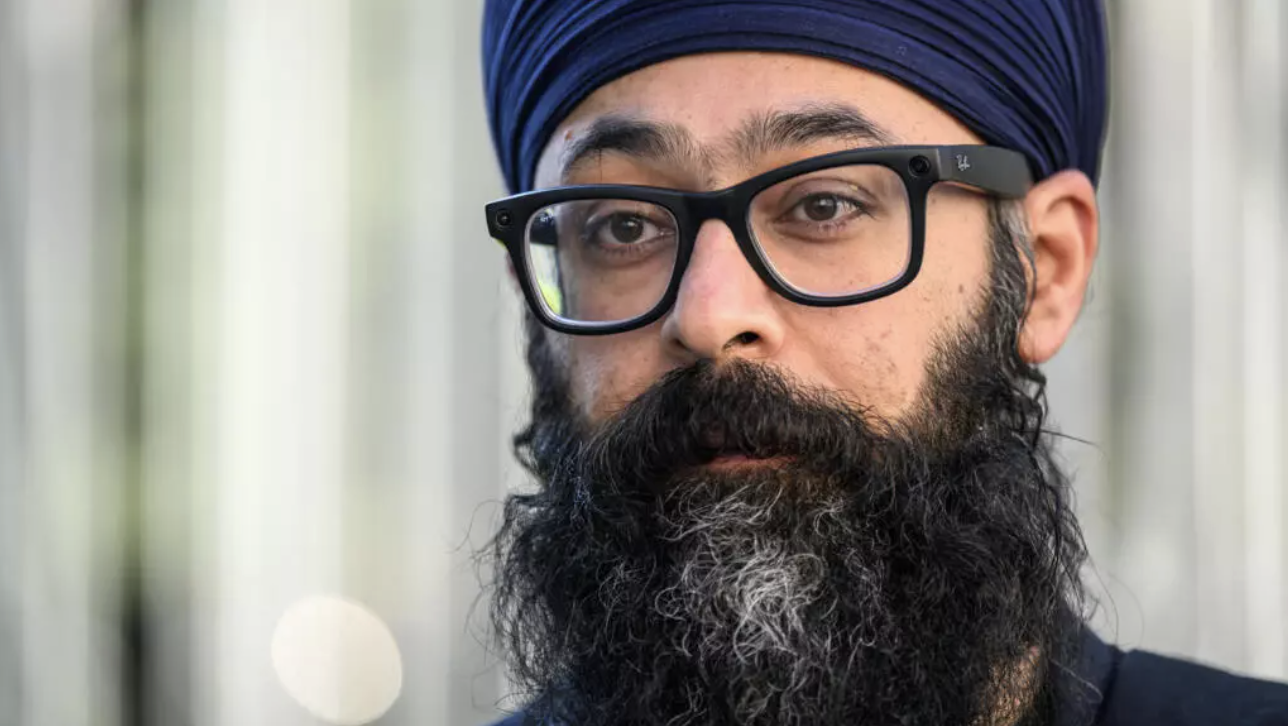
AFP 24/03/2026 - "We won't be silenced," the chairman of the Sikh Federation of Canada told AFP.
Singh was speaking at the United Nations' European headquarters in Geneva, where he has been appealing for international action against India's alleged targeting of Sikh activists abroad, and against so-called transnational repression more broadly.
Sikh activists accuse India of targeting members of their community around the world, including alleged killings using organised crime groups -- charges India denies. The best-known case was the 2023 killing of Hardeep Singh Nijjar, a friend of Singh's who was gunned down near the Sikh temple he led in a Vancouver suburb. Canada's then-prime minister, Justin Trudeau, publicly accused India of involvement in that assassination, a charge later repeated by Canadian intelligence.
India denied the allegations, which chilled ties between the two nations, and saw each expelling a string of diplomats in 2024. Relations improved after Prime Minister Mark Carney took office last year, culminating with an India visit this month to sign a string of trade deals, and as Canadian authorities downplayed their previous threat assessment.
'Deeply disturbing'
Singh, a 44-year-old Canadian-born citizen, said it was "deeply disturbing" the Canadian government normalised diplomatic relations so quickly "without anything changing". "We're going into India and shaking hands with the very people that have Canadian blood on their hands," he charged.
Like Nijjar, Singh is part of a fringe group advocating for an independent Sikh state called Khalistan. It has been a bitter issue between India and several Western nations with large Sikh populations.
A year before Nijjar was killed, Canadian authorities had informed him and Singh of credible threats against their lives. "We didn't know how to react," Singh told AFP last week. "We didn't think that India would resort to assassinations on foreign soil... We were obviously wrong."
Singh said he was inspired by his friend's courage, and determined not to go quiet. "I have taken it in the opposite way, (deciding) now is the time to actually double down," he said.
'Imminent' assassination threat
Since then, Singh has received three more so-called "duties to warn" from Canadian police, informing him of a "credible threat to his life". The last one, last month, was before he left to participate in the UN Human Rights Council's main annual session in Geneva.
He said that an informant working within a criminal syndicate had told police of an "imminent threat of assassination to myself, my wife and my two children". Singh said he was convinced India was behind the threat.
Canadian police have not confirmed that, although the officer who delivered the warning to Singh seemed to agree with his assessment that he was being targeted for his political activism, according to a recording of the call shared with AFP.
On the call, the officer said that the threat "extended to you, your wife and your two children". "Am I worried about the safety of my wife and kids? Of course," Singh told AFP, stressing however, that that "is not going to be enough to make me stop".
UN experts 'alarmed'
Singh and other Sikh activists are urging the council to appoint an expert to investigate transnational repression, or for existing special rapporteurs to focus more on the issue. "I think stronger focus would be a positive thing," Ben Saul, the UN special rapporteur on protecting rights while countering terrorism, told AFP.
He was among five independent UN rights experts who sent a communication to the Indian government in 2024 to enquire about Nijjar's assassination. In it, they asked what steps it had taken to investigate the killing, and why the activist had been listed as a "terrorist".
Saul said the experts were "absolutely not satisfied with the response from the Indian authorities", who essentially denied there was a problem. "We're still alarmed," he said. "Their oppression against Sikhs in exile has, far from diminishing, seemed to have gotten worse." Source
| | CRCC systemic investigation into the RCMP C-IRG now completed, but unreleased due to “absence of a decision-maker” | |
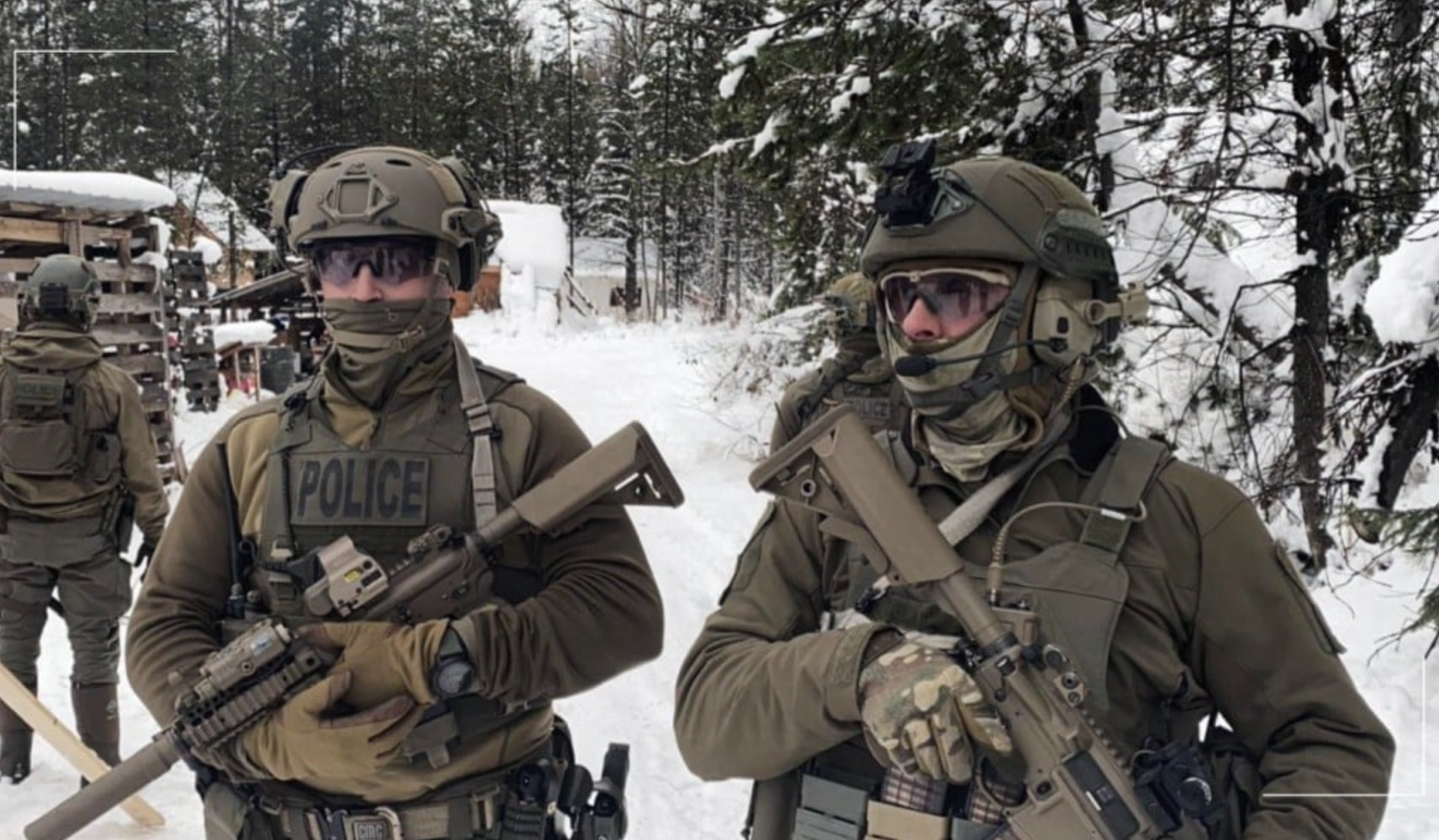
PBI Canada 19/03/2026 - Peace Brigades International-Canada continues to be concerned about impunity and the potential for continued violence and human rights violations by the Royal Canadian Mounted Police (RCMP) against Indigenous land and environmental defenders opposing megaprojects on their territories within Canada.
This week, Sleydo’ Molly Wickham, Wing Chief of Cas Yikh, a house group of the Gidimt’en Clan of the Wet’suwet’en nation in British Columbia, told APTN News: “The police would just terrorize and come in at all hours of the night, two o’clock in the morning, drag everybody out of bed, shining lights, hiding in the bushes, just really trying to enforce the fact that they were there and that they had full control over our lives. Most of the people that have lived through this experience on the Yintah [territory] have experienced extreme PTSD [Post-Traumatic Stress Disorder].”
Now, the Civilian Review and Complaints Commission for the RCMP (the CRCC) has posted an “Investigation Update (March 2026)” on its “systemic investigation” of the RCMP Community-Industry Response Group (C-IRG).
When it was launched more than three years ago, that “systemic investigation” into the RCMP C-IRG was intended, in part, to “examine whether relevant policies, procedures, guidelines and training … are consistent with applicable jurisprudence/case law and the Canadian Charter of Rights and Freedoms”, “assess whether or to what extent the activities and operations of the C-IRG are carried out in accordance with legal standards”, and “identify the extent to which C–IRG’s operations and actions meet, reflect, consider or are consistent with the standards and expectations set by … the United Nations Declaration on the Rights of Indigenous Peoples (UNDRIP)…”
The CRCC Update, posted on March 18, 2026, notes: “A report outlining the CRCC’s investigative findings is now complete. However, the CRCC’s systemic investigation cannot be finalized in the absence of a decision-maker. The CRCC Chairperson position has been vacant since January 2025.” The CRCC has also now posted: “Update on the status of C-IRG-related public complaints and reviews (as of March 1, 2026)”.
That Update notes: “Between 2019 and 2022, the CRCC received 572 public complaints related to the RCMP’s enforcement of civil injunctions in British Columbia associated with: Coastal GasLink pipeline project on Wet’suwet’en Traditional Territory; Teal Cedar Products Limited logging operation in the Fairy Creek Watershed; Cooper Creek Cedar Limited logging operation in Argenta-Johnson’s Landing.”
That Update also notes the “top five allegation categories for complaints related to the RCMP’s enforcement at the three sites, in descending order” include Neglect of Duty, Oppressive Conduct, Improper Attitude, Improper Use of Force/ Irregularity in Procedure, Mishandling of Property, and Improper Arrest.
Again, that Update highlights: “The authority to issue Satisfied, Interim and Final Reports rests with the Chairperson. In the absence of any other CRCC members, reports cannot be issued due to the lack of a decision-maker.” [...]
The call to suspend the C-IRG
Shortly after the systemic investigation was launched on March 9, 2023, the Abolish C-IRG coalition stated: “Given the nature of the complaints and substantial evidence supporting them, we argue for the suspension of all C-IRG deployment in BC pending investigation and resolution of all complaints currently before the CRCC.
The CRCC reviews can take years to complete, and it is irresponsible to have this unit continue operations during that time, enabling the continuation of unlawful use of force, arrests, detentions, and assaults that have sparked such an investigation.”
At that time, The Kimberly Bulletin also reported: “Noah Ross, a lawyer who represents [Last Stand West Kootenay], told the Nelson Star that he thinks the CIRG should be disbanded, or at least its operations should be stopped, while the investigation is underway, because the unit committed a number of human rights violations while making its Argenta arrests.”
Rebranding and expanding the C-IRG
Instead of abolition or suspension, the C-IRG has been well-funded, rebranded and seen an expansion of its mandate. On March 10, 2023, just a day after the systemic investigation was launched, The Tyee reported that the British Columbia government had allocated $36 million to the RCMP C-IRG as of April 1, 2023. Then on January 1, 2024, the RCMP announced that the C-IRG was “renamed as the Critical Response Unit – British Columbia (CRU-BC) to better reflect the scope of work and service that its members are called to.”
In early March 2026, The Breach reported: “Just a few months before encampments had sprung up for Gaza, C-IRG had rebranded and expanded its role to include ‘civil and public order incidents.’ Now operating as the Critical Response Unit (CRU), the unit showed up across B.C. university campuses, including UBC’s campuses in Vancouver (UBC) and Okanagan (UBCO), the University of Victoria (UVic), and Vancouver Island University (VIU).” Read more - Lire plus
Podcast: Press Freedom in Canada on Trial w/ journalist Justin Brake
| |
NDP Demands Accountability Following "Jaw-Dropping" Revelations of RCMP Surveillance of Indigenous Leaders
| |
Jenny Kwan 24/03/2026 - The recent media reports about the RCMP’s so-called “Native extremism program” are deeply troubling, not just as a matter of history, but for what they say about Canada’s institutions and their racist relationship with Indigenous peoples.
What these documents show is not targeted security work against credible threats, but a sweeping, intrusive campaign that treated legitimate political advocacy as something to be monitored, controlled, and even disrupted. It is jaw-dropping to hear about Intelligence dossiers stuffed with documents, wiretaps. paid informants, covert operatives with code numbers. Dozens of First Nations leaders were put under surveillance.
Indigenous leaders and organizations were engaged in lawful, democratic efforts—advocating for land rights, self-determination, and fair treatment. To label that as “extremism” reflects a profoundly biased and colonial mindset. The scale of surveillance—wiretaps, informants, and infiltration into private spaces—raises serious concerns about violations of basic civil liberties, including privacy, freedom of association, and political expression. It also begs the question of the extent of surveillance today by the Canadian government of legitimate political advocacy by Indigenous activists and organizations.
Equally concerning is the intent behind the intelligence gathering. These were not just passive observations; the files were used to divide movements, withdraw funding, and interfere with organizing. That crosses a line from intelligence into active political interference.
This history matters today because trust in public institutions remains fragile in many Indigenous communities. When the state is seen to have weaponized its power in this way, it leaves a lasting legacy of suspicion and harm. With the Carney governments new Bill C-22, we once again see the hallmarks of government overreach.
I'm calling today on the Minister of Public Safety to release all the remaining files on this issue and commit to holding public hearings with witnesses on these disturbing revelations so that Indigenous communities can have accountability for the harms that have been done by Canadian law enforcement and security agencies. Source
How RCMP spies infiltrated the 1970s Indigenous rights movement
Why Mounties paid 5 informers to spy on Dene leaders: Inside a secret surveillance operation
Getting access to RCMP 'Native extremism' files took 4-year fight: 'National security' cited in 42-month delay by Library and Archives Canada
| | Carney must prevent Israeli annexation and genocide in Lebanon | | |
CJPME 24/03/2026 - Canadians for Justice and Peace in the Middle East (CJPME) is urging the Canadian government to forcefully oppose Israel’s escalating acts of aggression against the Lebanese people, and is particularly alarmed about the rise of genocidal rhetoric from Israeli officials. CJPME urges Canada to impose a full two-way arms embargo on Israel and ensure that no Canadian technology is implicated in Israeli crimes.
“Israel is pursuing ethnic cleansing and annexation in Lebanon, while threatening to turn its cities into Gaza, a clear indication of its genocidal intent,” said Yara Shoufani, President of CJPME. “Canada has done nothing to discourage Israel’s actions, but has only proven itself to be a booster for illegal US-Israeli aggression in the region. Instead of empty talk about de-escalation, Canada must impose sanctions and a full arms embargo on Israel.”
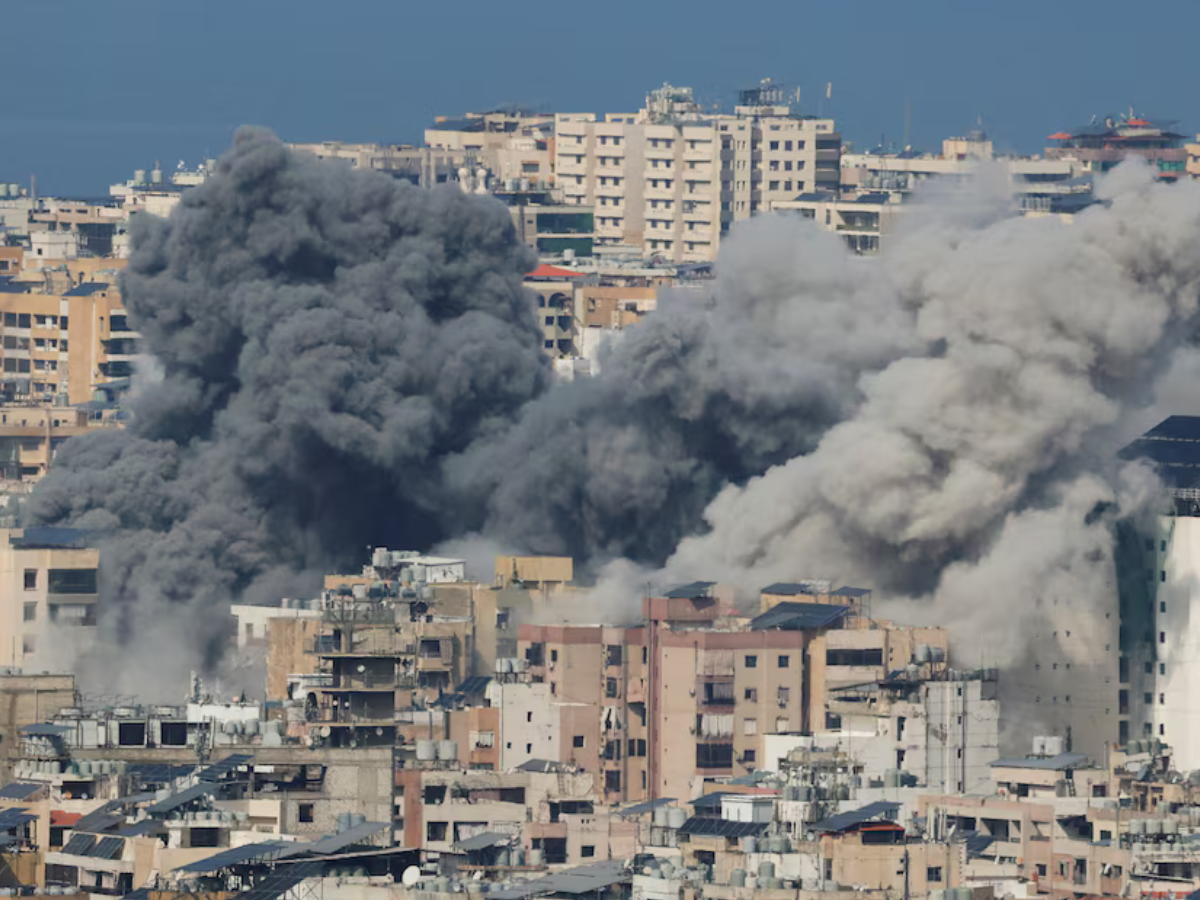
Israel has killed over 1,000 people in Lebanon and forcibly displaced over 1 million in its latest assault, and is currently planning a land invasion and occupation of Southern Lebanon. Israeli military officials have described their strategy as “the Gaza model, but in Lebanon,” indicating plans to replicate criminal acts that amount to genocide. Israel’s Defence Minister confirmed today that Israel is seeking to occupy territory up to the Litani river and indefinitely prevent residents from returning to their homes, explicitly based on Israel’s approach to the annihilated Gazan cities of Rafah and Beit Hanoun. Israel’s finance minister said yesterday that Israel should annex the territory and result in a permanent “change of Israel’s borders.”
“The world already failed to respond to genocidal rhetoric from Israeli leadership about Gaza, which was later put into practice. Our leaders are standing by as the same threats are made about Lebanon. It appears that Canada is content to be a bystander, or worse, an accomplice to genocide given our ongoing arms transfers to Israel," added Yara.
CJPME urges Canada to move beyond empty statements and finally back up its words with action. Although Canada signed a joint statement last week warning against a possible Israeli ground invasion, it has failed to play a meaningful de-escalatory role in the region, and instead has given political cover to US-Israel aggression. Canada immediately endorsed the blatantly illegal US-Israel attacks on Iran, has refused to rule out the possibility of Canadian military involvement in the conflict, and is allowing US military aircraft to refuel in Canadian airspace thereby facilitating their illegal bombing campaigns. Source
United Nations treaty body calls on Canada to strengthen its arms export regime
Amnesty International: Lebanon: Israeli air strikes on al-Qard al-Hassan financial institution must be investigated as war crimes
ACTION Ottawa 2026 Land Day Rally - March 28th at 3PM
Israeli Military Showcased Its Gaza Tactics To Canadian Troops
Israel has crushed UNRWA in Gaza – and the rest of the world has done nothing
| | Afghan–Pakistani border: UN experts urgently call for lasting peace | |
The Intercept 23/03/2026 - UN experts* today urged Pakistan and Afghanistan to declare a fresh ceasefire and reach a peace agreement following the eruption of fighting in late February and the collapse of an October 2025 ceasefire.
“We urge Pakistan and the de facto Afghan authorities to commit to a permanent ceasefire, resolve the root causes of conflict, and ensure accountability for violations of international law,” the experts said.
Since 26 February 2026, there have been at least 289 civilian casualties in Afghanistan, including 76 killed and 213 injured, and over 115,000 people have been displaced. Civilian infrastructure has been damaged, including medical facilities, homes, markets, and sites for displaced people. Schools and borders have been closed and trade suspended.
On 16 March, a Pakistani airstrike that hit a drug rehabilitation facility likely killed 400 and injured many more. “We condemn this attack, express our deepest condolences to the families of the victims, and wish a speedy recovery to the injured,” the experts said. They also expressed concern about a number of civilian casualties from Taliban attacks in Pakistan, as well as the displacement of civilians and school closures.
The experts called on the parties to respect international human rights law and international humanitarian law, including the protection of civilians and civilian objects. They called for prompt, independent and transparent investigations of all alleged violations, accountability for perpetrators, and remedies for victims, in line with international standards.
The latest hostilities erupted after airstrikes by Pakistan on Tehreek-e-Taliban Pakistan (TTP) camps on 21-22 February, retaliatory attacks by Afghanistan’s de facto authorities at the border on 26 February, and an offensive by Pakistan on 27 February against Kabul, Kandahar, and dozens of other locations. Pakistan’s attacks have reportedly killed and injured significant numbers of Taliban and TTP personnel.
Pakistan claimed its attacks were in response to the Taliban authorities’ alleged support for TTP, a group under Security Council counter-terrorism sanctions. The de facto Afghan authorities deny supporting the TTP. Attacks by the TTP in Pakistan have escalated since 2021, with hundreds of deaths in 2025 and tens of thousands displaced in the ensuing conflict.
“All authorities, including the Taliban, must diligently prevent terrorist groups like the TTP from threatening the human right to life, including outside their own borders,” the experts said. They stressed that international law requires all authorities to refrain from tolerating, acquiescing in, or supporting terrorist activities in their territories directed against other countries, which constitute prohibited interventions or use of force.
“Pakistan’s attack on Afghanistan violates the prohibition on the use of force under article 2 of the United Nations Charter and customary international law. There is no right of self-defence unless the Taliban first attacked Pakistan or sent the TTP to attack it,” the experts said. “Pakistan has not published credible evidence that TTP attacks within its territory were directed or controlled by the de facto Afghan authorities,” they said.
The International Court of Justice has rejected arguments that merely tolerating the presence of armed groups gives another country a right of self-defence. Pakistan has not notified the Security Council that it claims self-defence, as required by the UN Charter. “The unlawful use of force means that Pakistan has violated the human right to life of all individuals killed in these attacks,” they said. “Some attacks resulting in civilian casualties may have also violated international humanitarian law.”
“While States have a duty to protect their populations from terrorist threats, they must do so in full compliance with international law,” the experts said. “Cross-border infiltration by terrorist groups may be lawfully addressed through the proportionate use of force inside Pakistan, and peaceful counter-measures against the Taliban authorities.”
“Under international law, the parties must seek the peaceful settlement of disputes that endanger international security,” they said. The latest violence follows Pakistani attacks on Afghanistan in October 2025 in retaliation for alleged terrorist attacks originating in Afghanistan, with subsequent heavy clashes between the two countries before a ceasefire. The experts have been in touch with the Government of Pakistan and Afghanistan’s de facto authorities on these issues. Source
ACTION Pakistan: Baloch Activists Face Secret Trials and Ongoing Detention
| | Pentagon Reveals Attacks in Latin America Are Just the Beginning | |
The Intercept 23/03/2026 - As the Trump administration continues to bombard Iran, a top Pentagon official revealed that U.S. wars in the Western Hemisphere are also expanding, unveiling an effort dubbed “Operation Total Extermination.”
Attacks on Latin American drug cartels are “just the beginning” Joseph Humire, the acting assistant secretary of war for homeland defense and Americas security affairs, told members of the House Armed Services Committee last week.
Humire indicated that many more strikes in Latin America are on the horizon. The comments came a day after President Donald Trump again teased American annexation of Cuba. “I do believe I’ll be the honor of — having the honor of taking Cuba,” Trump said last week. “Whether I free it, take it, I think I can do anything I want with it.”
Humire announced that the Department of War supported “bilateral kinetic actions against cartel targets along the Colombia-Ecuador border” — Pentagon-speak for March 3 strikes on unnamed “Designated Terrorist Organizations” previously reported by The Intercept. “The joint effort, named ‘Operation Total Extermination,’ is the start of a military offensive by Ecuador against transnational criminal organizations with the support of the U.S.,” he said.
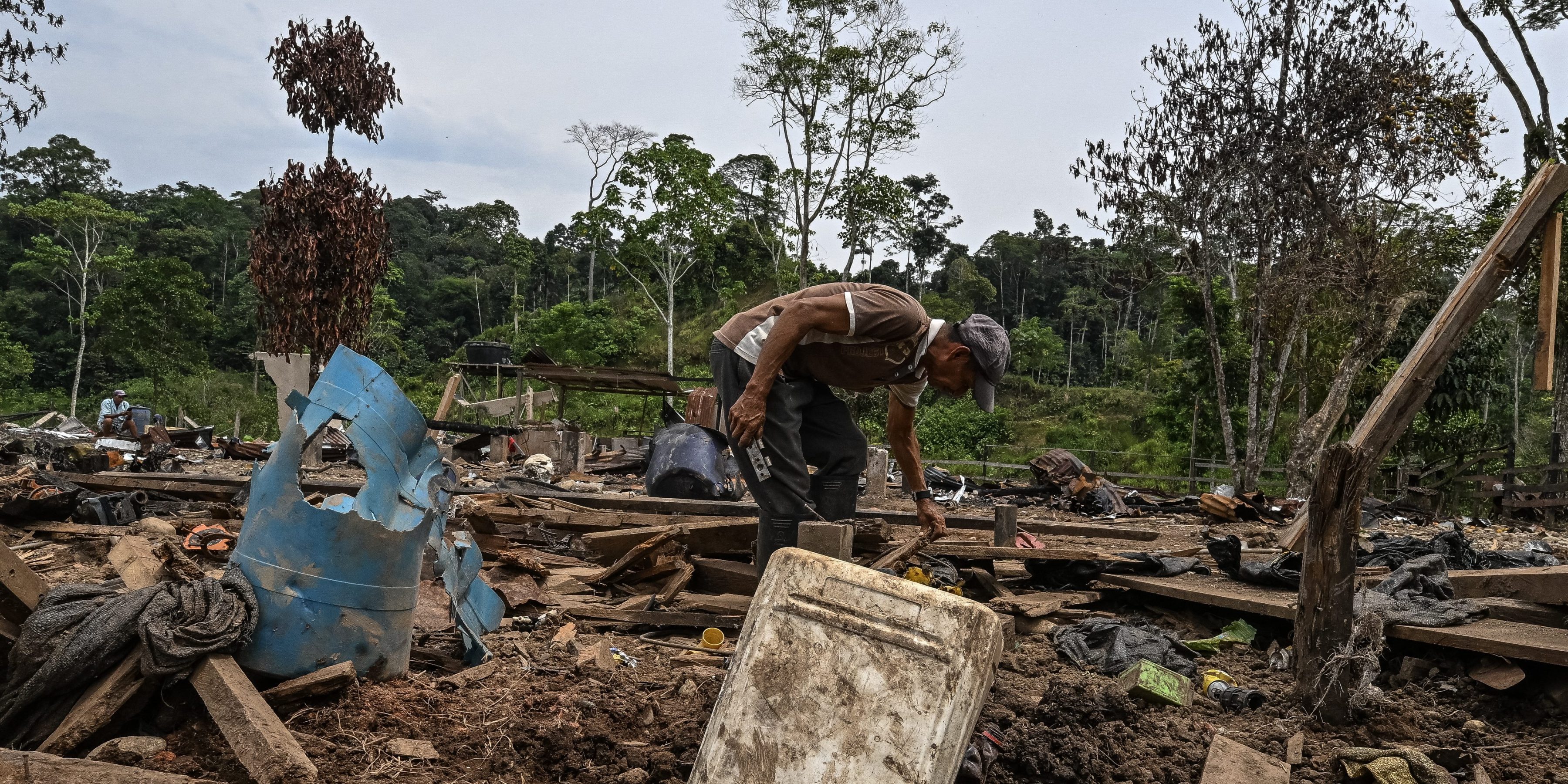
The U.S.–Ecuadorian campaign has already strayed into Colombia after a farm was bombed or hit by “ricochet effect” on March 3, leaving an unexploded 500-pound bomb lying in Colombia’s border region. In response to a request for comment, U.S. Southern Command referred The Intercept to a statement on X by the Ecuadorian Ministry of Defense confirming the bomb landed in Colombia.
Humire referred to the attacks as “joint land strikes” and said that America was providing Ecuador with “capabilities that they otherwise would not have.” The U.S. has since conducted at least one more strike with Ecuador. “Yes — as @POTUS has said — we are bombing Narco Terrorists on land as well,” self-styled War Secretary Pete Hegseth wrote on X on March 6, announcing the new strike. Days later, in a war powers report announcing the introduction of U.S. armed forces into “hostilities” in that country, the White House informed Congress of “military action taken on March 6, 2026, against the facilities of narco-terrorists affiliated with a designated terrorist organization.”
The attacks in Ecuador are also part of, and an expansion of, Operation Southern Spear: the U.S. military’s illegal campaign of strikes on boats in the Caribbean Sea and Eastern Pacific Ocean. The U.S. has conducted 46 attacks since September 2025, destroying 48 vessels and killing almost 160 civilians. The latest strike, on March 19 in the Pacific, killed two more people and left one survivor. The Trump administration claims its victims are members of at least one of 24 or more cartels and criminal gangs with whom it claims to be at war but refuses to name.
“This Administration is barely paying lip service to the constitutional or international law governing the use of force. But we have these rules for a reason,” said Rebecca Ingber, a former State Department lawyer and now a law professor at Cardozo Law School in New York. “Rushing to war on one man’s whims is the exact opposite of what the Constitution demands.”
Gen. Francis Donovan, the SOUTHCOM commander, told lawmakers last week that “boat strikes are not the answer,” but teased an even larger campaign. “What we’re moving for right now might be an extension of Southern Spear, but really a counter-cartel campaign process that puts total systemic friction across this network,” he told members of the Senate Armed Services Committee. “I believe these kinetic [boat] strikes are just one small part of that.”
Humire could not say how many land strikes were being conducted across almost 20 Latin American and Caribbean nations. “I don’t have an exact number,” he replied to a question. But when asked by Rep. Adam Smith, D-Wash., the ranking member of the House Armed Services Committee, if the War Department would “be moving to a lot more terrestrial strikes,” Humire replied, “Yes, ranking member.” The Office of the Secretary of War did not respond to a request to clarify how great that increase might be. Read more - Lire plus
Pentagon’s Boat Bombings Are Illegal, Human Rights Panel Is Told
Nicolás Maduro appears again in New York court on ‘narco-terrorism’ charges
‘Beyond the Pale’: General Says US Military Will Create a ‘Camp’ at Gitmo to ‘Deal With’ Cubans Fleeing Trump Blockade
ACTION Canada: Defy Trump. Sell oil, food, and medicine to Cuba!
| | Venezuelans deported by US issue fresh claims of torture and abuse in El Salvador prison | | |
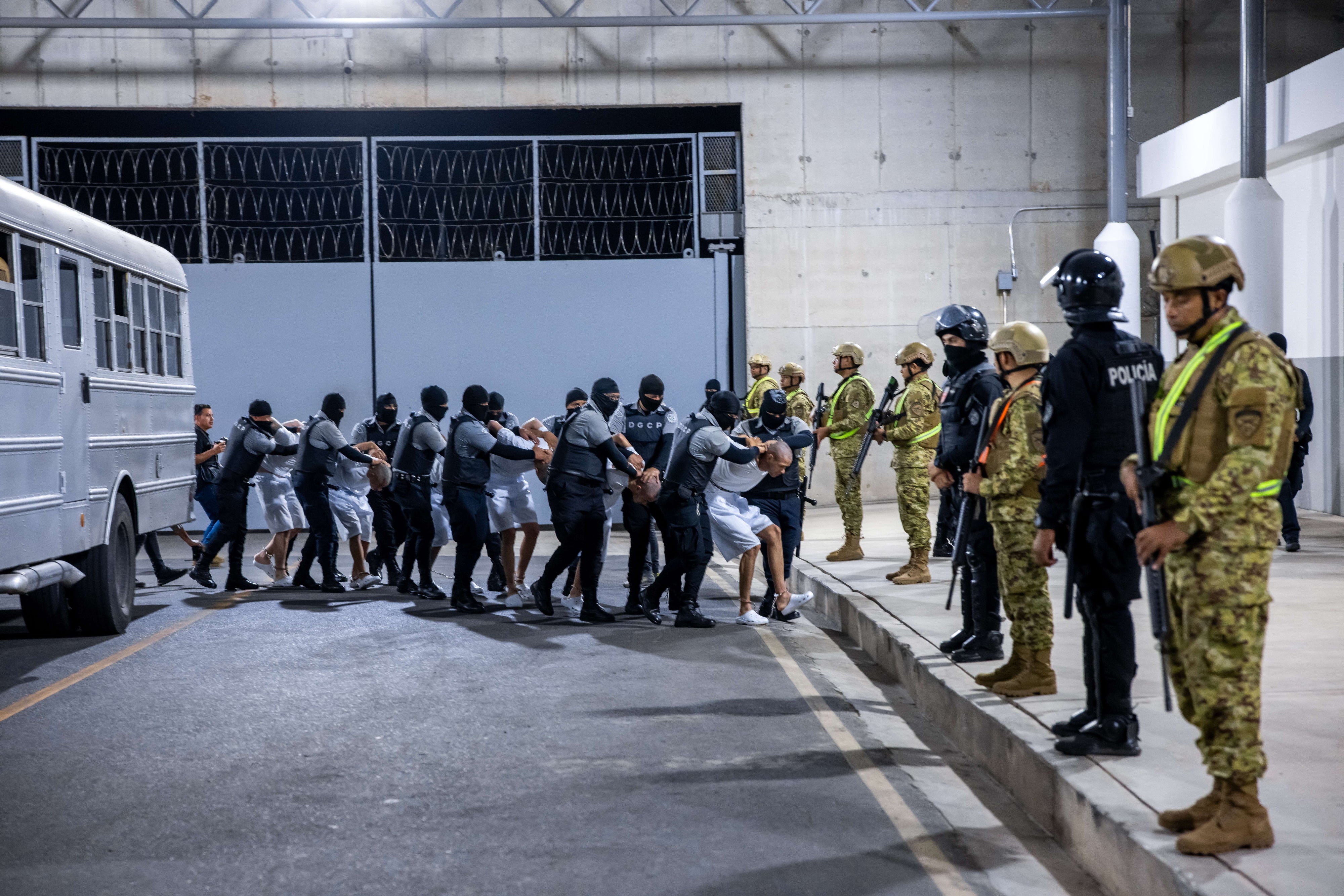
The Mirror US 26/03/2026 - A group of 18 Venezuelan men deported to El Salvador's notorious CECOT prison without charge by the Trump administration included new allegations of torture, sexual assault and medical neglect in a petition filed Thursday, calling for accountability from international bodies over human rights violations.
The petition filed with the Inter-American Commission on Human Rights (IACHR) describes a “pattern of abuse, including beatings, humiliation, and sexual assault” inside the prison, which the 18 men said inflicted a lasting mental and physical toll nearly one year after their release.
Their accounts follow a report by Human Rights Watch last year that found the 250 Venezuelan detainees, many of whom had no criminal record, endured "constant beatings and other forms of ill-treatment, including some cases of sexual violence," abuses that constitute torture under international human rights law. Some said they were beaten immediately after former Homeland Security Secretary Kristi Noem visited the prison in March for a photoshoot in front of their cells.
Before deporting them to El Salvador, the Trump administration falsely accused the men of being members of the Tren de Aragua gang using evidence such as their tattoos, the men claimed. The group spent four months inside the prison before they were released and returned to Venezuela, where many faced the danger and persecution they had fled.
"The governments of the United States and El Salvador accused most of these people of being 'terrorists,' part of Tren de Aragua, a Venezuelan organized crime group that the United States has designated as a foreign terrorist organization," HRW found. Its review of criminal record background documents, however, indicated that "many of them had not been convicted of any crimes by federal or state authorities in the United States, nor in Venezuela or other Latin America countries where they had lived."
"Human Rights Watch and Cristosal found that the 252 Venezuelans were subjected to what amounts to arbitrary detention and enforced disappearance under international human rights law," HRW reported. "People held in CECOT were subjected to inhumane prison conditions, including prolonged incommunicado detention, inadequate food, denial of basic hygiene and sanitation, limited access to health care and medicine, and lack of recreational or educational activities, in violation of several provisions of the United Nations Standard Minimum Rules for the Treatment of Prisoners, also known as the 'Mandela Rules.'"
The petition filed this week asks the IACHR to declare that the prison transfer agreement between the U.S. and El Salvador violates El Salvador's requirements under the American convention on human rights. It also asks that El Salvador issue a public apology, make reparations to the men and provide them with psychiatric and psychological rehabilitation resources.
In addition to testimony from the former detainees, the petition includes corroborating accounts of their allegations from medical workers, former U.S. officials and United Nations experts on the human rights of migrants. The former U.S. officials wrote that the Trump administration knowingly sent the men to a country known for its human rights abuses.
The depiction of immigrants with no criminal convictions as dangerous, violent criminals comes as part of a broader messaging tactic by the Trump administration since last year. Since retaking office, Trump and his appointees have falsely characterized Democratic-led American cities as centers of violent crime, protestors as anti-American terrorist networks and large swaths of undocumented immigrants as "criminal illegal aliens" at risk of putting citizens in mortal danger. Read more - Lire plus
Human Rights Watch report: US/El Salvador: Deportees Forcibly Disappeared
Exclusive: ICE's Bounty Hunters
| | How Trump’s DOJ is Targeting Anti-ICE Protesters and Leftists | |
Inkstick 23/03/2026 - [...] In September, President Trump labeled Antifa — shorthand for the anti-fascist movement — a domestic terrorist organization and issued National Security Presidential Memorandum 7 directing the Justice Department to investigate leftist organizations and activists.
NSPM-7 names “anti-Americanism, anti-capitalism, and anti-Christianity,” as well as “extremism on migration, race, and gender,” as beliefs held by “domestic terrorism organizations.” The memorandum calls for a “new law enforcement strategy that investigates all participants in these criminal and terroristic conspiracies — including the organized structures, networks, entities, organizations, funding sources, and predicate actions behind them.”
It’s not a new strategy for the Justice Department or the FBI, German says. One only has to look anywhere in the FBI’s history to find evidence of the agency going after trade unionists, environmentalists, civil rights activists, and on and on. NSPM-7 is both marketing and a true escalation, German explains, the verbalization of a policy that has given the agency enormous authority to surveil and infiltrate groups without evidentiary predicates.
Between 1956 and 1971, the FBI’s Counter Intelligence Program (COINTELPRO) included illegal and covert actions, such as infiltrating political groups, surveillance, and harassment. COINTELPRO ended in name after it was publicly exposed, but the work of sabotaging and defanging political movements intensified. After the attacks on Sept. 11, 2001, the FBI remade itself under the banner of counterterrorism. Whatever guardrails existed were excised.
German saw the Bureau “target groups because of their ideas rather than any type of threat that they pose,” using a discredited theory that justified the perpetual surveillance and suppression of groups the FBI deemed political adversaries. The radicalization theory holds that to address political violence, you have to go left of boom — take aim at everyone professing certain ideologies and you’ll capture the few people who will eventually commit violence.
“It’s less about winning convictions and more about suppressing protests.” – Mike German
The theory, German points out, is bunk. But it’s useful because it allows the government to “label their political opposition as dangerous terrorists and discredit any ideas that challenge the government policies that they are instituting.” German says the FBI does not collect data on domestic terrorist violence because it would reveal how malformed its approach is.
It’s how you catch a felony charge for bringing face shields to a protest where police are shooting protesters in the head with kinetic impact projectiles, or “less lethals.” It’s how throwing a rock makes you a part of a conspiracy.
“The tools you would use to conduct an investigation into a bombing are very different than the tools you would need to evaluate people’s political opinions and associations,” German says. And the difference in the number of people investigated in either instance is giant. “It justifies a mass surveillance approach to suppress political advocacy and association.” And, according to critics and experts, it distorts the reality of what the FBI calls domestic terrorism.
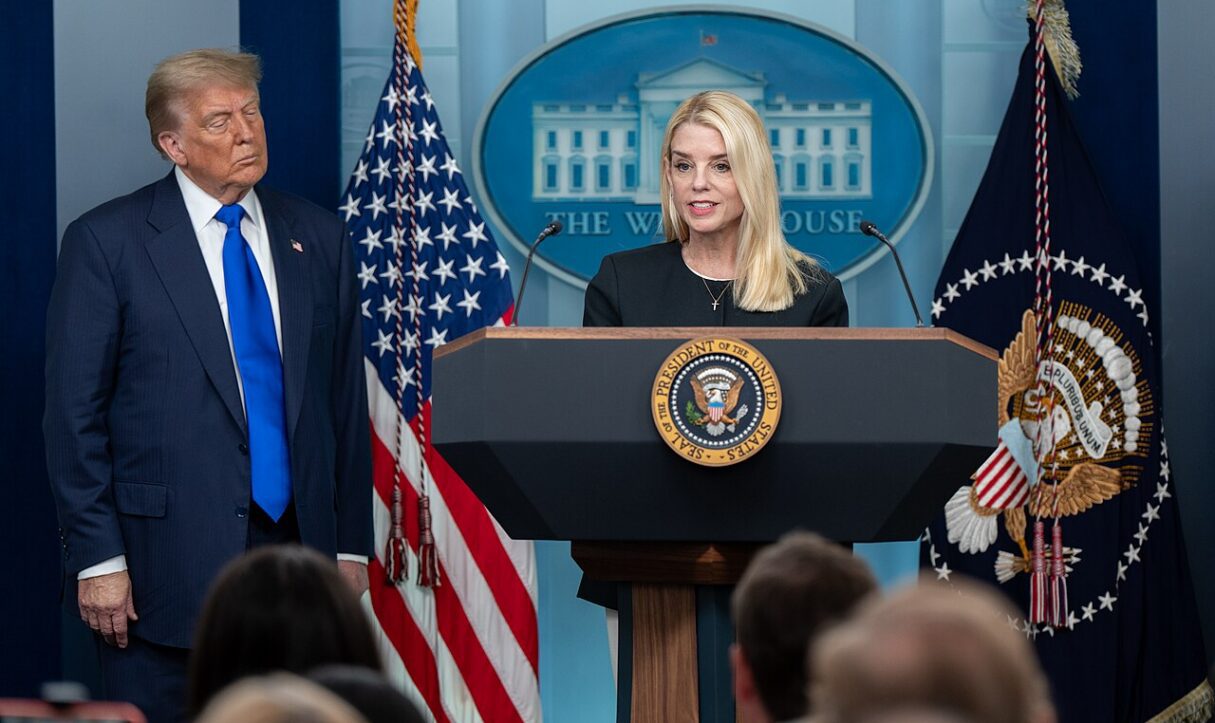
Following NSPM-7, Attorney General Pam Bondi directed Justice Department agencies to compile a database of organizations under investigation for “domestic terror.” There are at least 27 open NSPM-7 investigations at FBI divisions across the country, according to an October memorandum obtained by Party of the People.
The first NSPM-7 case to be litigated ended last week in victory for the Justice Department — eight people who protested the Prairieland Detention Center in Texas last July were convicted of providing material support for terrorists. In all, 18 people have been charged in connection to the non-fatal shooting of a police officer during the demonstration. Only one of the defendants was named as a shooter, but federal prosecutors crafted an ambush conspiracy, drawing together a loosely connected group by criminalizing what is otherwise completely legal behavior. It’s a guilt by association case leaning on the government’s claim that Antifa, a broad political category, is in fact an organized terrorist cell.
“This is a successful attack against anyone who dares to protest injustice in the U.S., especially the ongoing violence being committed by DHS and ICE,” the NLG wrote after the verdict. In Los Angeles, NSPM-7 guided the investigation that led to the arrest of four people on terror charges. A paid FBI informant and undercover agent infiltrated a Signal chat where the Justice Department alleges an “anti-capitalist and anti-government” group called Turtle Island Liberation Front was plotting to set off pipe-bombs at “Amazon-type logistic centers” on New Years Eve, and ICE agents at some future date.
Publicly available information on the case is limited, particularly on the FBI’s involvement, details that could help identify a genuine plot from an FBI-manufactured one. There are reasons to squint at the Justice Department’s account of things, according to attorneys.
“The government portrays a conspiracy of indiscriminate violence. The evidence depicts a planned property crime with explicit precautions to avoid harm,” one defense attorney argued, a fact corroborated in an FBI agent’s criminal complaint. The complaint itself casts doubt on the likelihood of the plot ever happening. In the government’s telling, the defendants didn’t have the right materials or the experience and they expressed doubt about how little time they had to prepare.
More broadly, there’s ample examples of FBI agents orchestrating the crimes they in turn investigate.
To implement NSPM-7, Bondi instructed agencies to offer greater cash rewards for tipline callers, “establish cooperators” within these groups under investigation to gather information and testify against them, and incentivize state and local police to implement NSPM-7 through grants.
The relationship between federal authorities and local police has been forged over the past 40 years, according to German. It benefits local police to link arms with federal agencies. Post-9/11, the FBI expanded its authority and access through partnerships with local and state police via Joint Terrorism Task Forces and fusion centers.
They may bicker, but local police still consider federal agents their brothers and sisters. The Los Angeles Police, the Los Angeles County Sheriff’s Department, and the California Highway patrol fired 10,000 less-lethal munitions at demonstrators last June, effectively doing the grunt work of ICE and CBP — brutalizing protesters and forming skirmish lines around detention centers — while also sharing intelligence and investigative resources.
LAPD Chief Jim McDonnell has complained about not receiving forewarning about ICE raids due to the risk of accidental “blue on blue” fire. As LA County Sheriff, he delivered people to ICE directly and argued against a state sanctuary law. He says local police won’t enforce a new California law requiring DHS agents to lose their masks. “The reality of one armed agency approaching another armed agency to create conflict over something that would be a misdemeanor at best or an infraction, it doesn’t make any sense,” he said.
Demonstrators wearing face masks are the “people doing the violence,” McDonnell claimed. They “do this all the time, they go out there from one civil unrest to another… and they are connected. Some would call them anarchists.”
Such contradictions might be increasingly common, but they reveal the anxiety animating the Department of Justice and its partner agencies, how they lost control and the lengths they will go to to reclaim it, how Essayli, for instance, can claim that anti-ICE protests were unsuccessful and insist “our agents were overwhelmed … our buildings at night were viciously attacked. They were almost able to breach the building and get inside.” Read more - Lire plus
UN Special Rapporteurs call for NSPM-7 to be rescinded
Why We Have to Fight Back Against ICE Protesters’ Terror Convictions
‘Go Big and Go Loud’: Inside the Justice Dept.’s Push to Prosecute Protesters
FBI and IRS to investigate nonprofit groups for domestic terrorism links, sources say
| | OTHER NEWS - AUTRES NOUVELLES | | ICLMG ACTIONS DE LA CSILC | | The Justice Minister must end the injustice against Hassan Diab! | | |
In April 2023, despite clear exculpatory evidence, the French Court of Assize conducted an in absentia trial that unjustly declared Dr. Hassan Diab guilty and sentenced him to life in prison. The proceedings amounted to a sham trial and a mockery of justice.
Since that ruling, Dr. Diab and his family have lived in constant uncertainty, facing the ongoing threat that a second extradition request could be made at any time.
Please click below to send a new letter demanding that Justice Minister Sean Fraser categorically refuse any future extradition request and put an end—once and for all—to this ongoing miscarriage of justice.
| |
Canada: Abolish rights-violating terrorist entities list!
| | |
On October 15, 2024, the Canadian government placed the Samidoun Palestinian Prisoner Solidarity Network on Canada’s terrorist entities list. While ostensibly a tool to protect the safety and security of people in Canada and internationally, the list is an arbitrary political tool that undermines freedom of association, of expression and due process in the courts. Its effectiveness as a national security tool has never been demonstrated in a manner that justifies its use.
Due to these deep flaws, and more, the ICLMG has consistently called for the list to be abolished since the Canadian coalition’s founding in 2002. Please join us in urging the Canadian government to abolish the rights-violating terrorist entities list once and for all. Thank you!
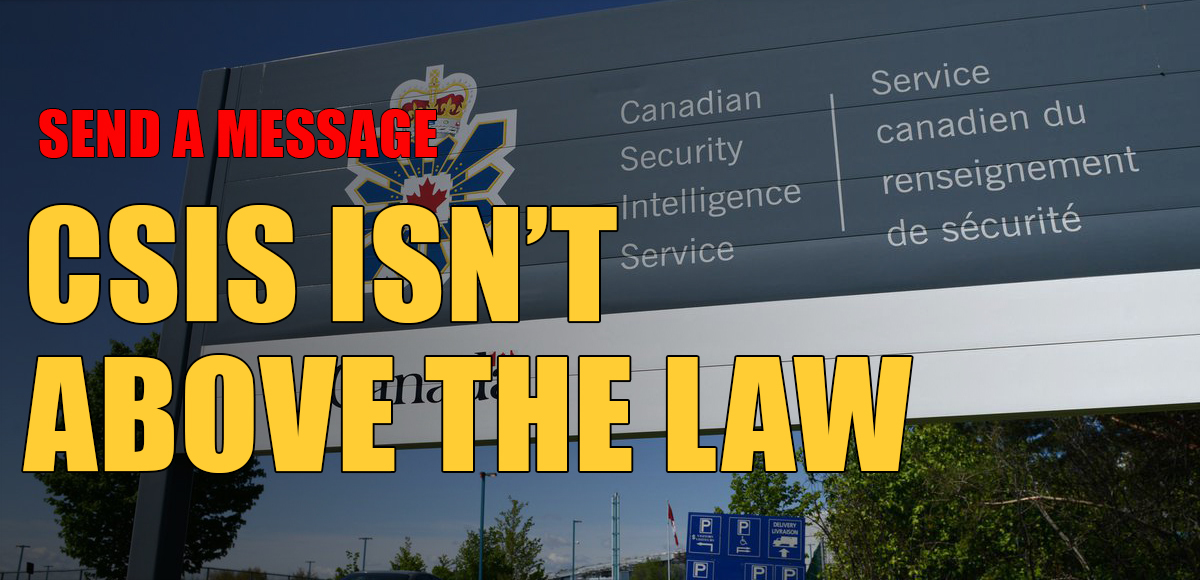
| | Canada must repatriate all Canadians detained in NE Syria/Iraq now! | Every day the government fails to bring these Canadians home, it places their lives at risk from disease, malnutrition, violence, and ongoing military conflicts. United Nations officials have even found that the conditions faced by Canadians in prison are akin to torture. Please click below to urge the federal government to repatriate all Canadians illegally and arbitrarily detained in northeast Syria without delay. | | 23 years of fighting deportation to torture: Justice for Mohamed Harkat! | | CSIS isn't above the law! | | |
In recent years, at least three court decisions revealed the Canadian Security and Intelligence Service (CSIS) engaged in potentially illegal activities and lied to the courts. This is utterly unacceptable, especially given that this is not the first time these serious problems have been raised. CSIS cannot be allowed to act as though they are above the law.
Send a message to the Public Safety Minister demanding that he take immediate action to put an end to this abuse of power and hold those CSIS officers involved accountable. Your message will also be sent to your MP and to the Minister of Justice.
| | Reform Canada's extradition law now! | |
Canada’s extradition system is broken. One leading legal expert calls it “the least fair law in Canada.” It has led to grave harms and rights violations, as we’ve seen in the case of Canadian citizen Dr Hassan Diab. It needs to be reformed now.
Click below to send a message to urge the Prime Minister, the Minister of Justice and your MP to reform the extradition system before it makes more victims. Thank you!
Version française: Le Canada doit réformer la loi sur l'extradition!
| | Canada must protect encryption! | |
Canada, with other G7 nations, continues to push to weaken our access to strong, reliable encryption, after decades of being supportive of strong encryption. We need encryption to safeguard our data, our online transactions, our communications, and to protect the lives of journalists and human rights activists.
Please send a message to the Prime Minister of Canada, the Minister of Public Safety, as well as your Member of Parliament, to urge them to reverse course and once again commit to protecting encryption.
Regardez la vidéo avec les sous-titres en français + Agir
| | Protect our rights from facial recognition! | Facial recognition surveillance is invasive and inaccurate. This unregulated tech poses a threat to the fundamental rights of people across Canada. Federal intelligence agencies refuse to disclose whether they use facial recognition technology. The RCMP has admitted (after lying about it) to using facial recognition for 18 years without regulation, let alone a public debate regarding whether it should have been allowed in the first place. Send a message to the Prime Minister and the Public Safety Minister calling for a ban now. | | What we've been up to in 2025, and our plans for 2026! | |
ICLMG 03/12/2025 - Thanks to the support of our members and donors, we’ve been able to do a lot and work on the following since June:
- Anti-privacy and xenophobic bills C-2 & C-12
- Anti-protest and anti-freedom bill C-9
- Impacts of Countering Terrorism Financing on charities, non-profits, solidarity work and international assistance.
- Canada’s complicity in torture
- Justice for Hassan Diab
- Artificial Intelligence regulatory frameworks & national security
- The gaps in oversight and review of national security agencies
- Consultations on the UN Global Counter-terrorism strategy & definitions of “terrorism” and “violent extremism"
- We were interviewed or quoted in dozens of media pieces
- And much more!
For all details on our activities, and our plans for 2026, click here.
| | Les opinions exprimées ne reflètent pas nécessairement les positions de la CSILC - The views expressed do not necessarily reflect the positions of ICLMG. | | |
THANK YOU
to our amazing supporters!
We would like to thank all our member organizations, and the hundreds of people who have supported us over the years, including on Patreon! As a reward, we are listing below our patrons who give $10 or more per month (and wanted to be listed) directly in the News Digest. Without all of you, our work wouldn't be possible!
James Deutsch
Bill Ewanick
Kevin Malseed
Brian Murphy
Colin Stuart
Bob Thomson
James Turk
John & Rosemary Williams
Jo Wood
The late Bob Stevenson
Nous tenons à remercier nos organisations membres ainsi que les centaines de personnes qui ont soutenu notre travail à travers les années, y compris sur Patreon! En récompense, nous nommons ci-dessus nos mécènes qui donnent 10$ ou plus par mois et voulaient être mentionné.es directement dans la Revue de l'actualité. Sans vous tous et toutes, notre travail ne serait pas possible!
Merci!
| | | | |