|
International Civil Liberties Monitoring Group
Coalition pour la surveillance internationale des libertés civiles
February 14, 2026 - 14 février 2026
| | ICLMG testifies against Bill C-12 at Senate Committee | | |
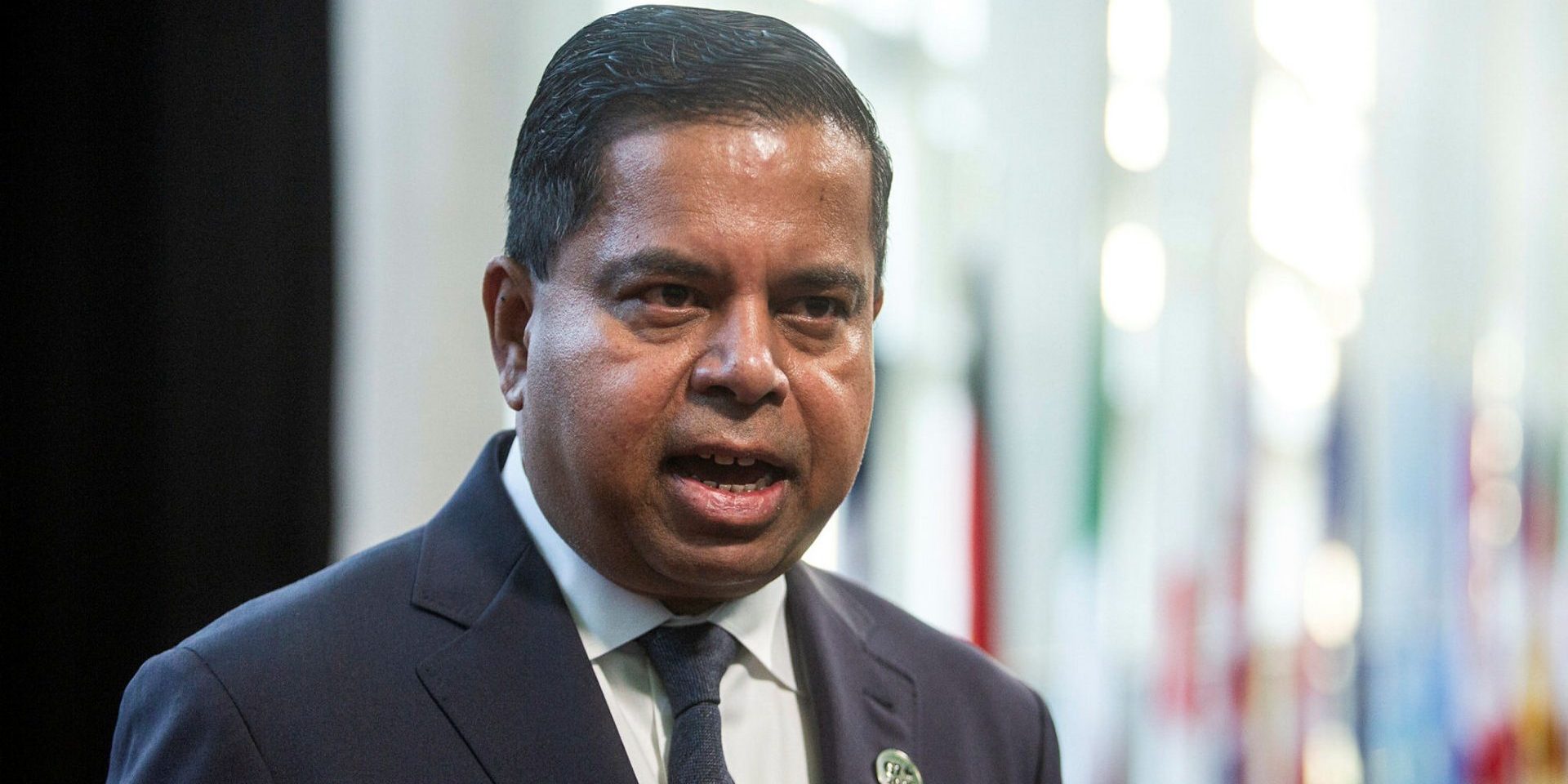
ICLMG - On February 10, 2026, ICLMG’s National Coordinator testified at the Standing Senate Committee on Social Affairs, Science and Technology (SOCI) for their study of the rights-violating and xenophobic Bill C-12, the Strengthening Canada’s Immigration System and Borders Act.
Watch his 5-minute intervention above or read the transcript of his remarks below.
Read our full briefs to the SOCI committee here or the SECD committee here.
TRANSCRIPT
Good morning and thank you for this opportunity to share concerns and feedback regarding Bill
C-12 on behalf of the International Civil Liberties Monitoring Group, a coalition of 44 Canadian
civil society organizations that works to defend civil liberties in the context of national security
and counter-terrorism measures.
Since the introduction of Bill C-12, and of Bill C-2 before that, we have expressed our urgent concern that this legislation poses a danger to the rights and livelihoods of migrants and refugees in Canada, as well as the privacy rights of nearly all people across the country.
As a coalition focused on national security and civil liberties, it may not be apparent why we would speak out over legislation relating to changes in the immigration and refugee system. In our work, though, we have seen time and again how migrants and refugees are used as scapegoats for challenges we face in society, and how quickly and easily they are unjustly framed as national security or public safety threats. We cannot forget the roots of this legislation: it is the follow-up to $1.3 billion announced in December 2024 to increase surveillance, law enforcement and other security measures at our border as a response to accusations from the United States that Canada poses a severe security threat to our southern neighbor, despite clear evidence that this simply is not true.
It is unacceptable that Canada would erode fundamental rights or dismantle systems meant to welcome newcomers and protect those fleeing injustice because of trumped up pressure and manufactured emergencies.
Given all of this, we believe Bill C-12 is fundamentally flawed, and must be withdrawn. Barring that, there are specific areas of the bill that we believe deserve attention.
I’m glad to be on this panel with so many esteemed colleagues who will be able to speak to various aspects of Bill C-12. For my part, I would like to focus on two crucial areas.
First, we are opposed the changes in part 7 of Bill C-12, that would grant Cabinet the extraordinary ability to issue orders to, among other things, suspend or terminate applications for various forms of visas or other immigration documents, as well as to cancel, vary or suspend existing immigration documents, including temporary visas and permanent residency cards, based on the vague notion of “Public Interest.”
Such broad powers, with no safeguards apart from public reporting, are ripe for abuse, particularly given the lack of a specific definition of “public interest.” Instead, the bill puts forward a non-exhaustive list of areas that fall under the “public interest”, including administrative errors, fraud, public health, public safety or national security. Even if we were to believe that the government would limit itself to acting in these areas, they are so broad as to be able to capture nearly any situation. “Public Safety” and “National Security” alone can, and have been, used by governments to excuse policies that target populations from specific countries, or of specific cultural or ethnic background, or that espouse particular political or religious beliefs.
Being able to mass cancel the documents of individuals already in the country raises horrendous possibilities of mass deportations based on tenuous allegations of “public safety,” all under the guise of protecting the “public interest.”
We may be told that the current government would not use these powers in this manner; that may well be true. But this cannot be guaranteed for future governments.
It is difficult to see how such powers can be saved through amendments. We would recommend that Part 7 be struck from Bill C-12.
Second, we are also critical of provisions in Part 5 that would expand the ability of Immigration, Refugees and Citizenship Canada to share private information across federal, provincial and territorial governments, as well as with foreign entities. These changes would have a significant impact on the privacy of all people in Canada, regardless of status. For migrants and refugees, the powers could inhibit their ability to access critical services without fear or harm, as well as pose serious risks for those fleeing persecution by foreign states. Permanent residents and Canadian citizens could also see their privacy impacted, including the sharing of personal details collected in residency or passport applications.
While the categories of what information can be shared may appear narrow, it could in fact be quite revealing, and could also be used in ways that would significantly impact an individual’s well-being and security far beyond the immigration and refugee system. This becomes especially true if information about changes to status, identity, or the refusal, termination or revocation of documents are shared with law enforcement or other provincial or municipal authorities, or foreign entities.
Moreover, once information is shared widely, it becomes nearly impossible to control its flow.
While Canadian laws may impose restrictions domestically, this is not the case once information is shared internationally. While officials have claimed C-12 will not permit foreign information sharing, we disagree, and I would be happy to share further details during the question and answer session.
Given all of this, and the fact that information disclosure powers already exist at the federal level, we would also argue that Part 5 should simply be removed.
Thank you for your time and I look forward to your questions. Source
UPDATED ACTION Senators: Oppose Bill C-12 and protect rights!
Version française : La CSILC témoigne contre C-12 devant un comité du Sénat (vidéo)
ACTION MISE À JOUR Le Sénat doit dire non à C-12 et protéger nos droits!
Diab says C-12 could ease some refugee claims, critics call it a two-tier system
Podcast: What Canadians can learn from U.S. resistance to ICE terror, with Harsha Walia
ACTION No More Armoured Vehicles for ICE!
| | ICLMG raises concerns with the proposed regulations for the Foreign Influence Registry | |
ICLMG - On February 2nd, 2026, the International Civil Liberties Monitoring Group sent the following comments to the federal government in the context of their 30-day consultation on their proposed Regulations for the Foreign Influence Transparency and Accountability Act (which was part of Bill C-70, the Combatting Foreign Interference Act, which was rushed through Parliament in May and June 2024):
Concerns
The Foreign Influence Transparency and Accountability Regulations as currently drafted fail to clarify some key aspects of the Foreign Influence Transparency Registry that were raised during the legislative process and that are necessary for ensuring clarity and specificity regarding the conditions under which individuals and organizations must register.
In particular, there is concern regarding the term “foreign principal” and what constitutes an “arrangement,” as well as the lack of inclusion of any clear exceptions to the requirement to register beyond those in the Act, which are currently insufficient.
These concerns are acknowledged in the “Consultation” subsection under “Regulatory Development”, where it states that “Lastly, civil society organizations and diaspora groups had questions about registration requirements for individuals linked to foreign-funded institutions or media outlets. Clarification on this issue will be shared through future outreach materials.”
However, future “outreach” will not adequately serve the purpose of providing the certainty necessary for individuals and organizations around whether their activities require registration with the foreign influence transparency registry that can only be achieved in either regulations or in the law. Moreover, during consultation sessions and engagement around the Combatting Foreign Interference Act, there were assurances given that certain areas would be further defined under regulation, including what constitutes a foreign principal, further specifics around what constitutes an arrangement with foreign principals, and entities or kinds of arrangements that would be excluded from the need to register.
Without further clarifications or carve-outs, Canadian organizations that work in association with, for example, the United Nations, NATO, the World Health Organization, the International Labour Organization, La Francophonie or any other host of organizations whose members are States may face a requirement to register their activities with the foreign influence transparency registry. Canadian individuals and organizations who work in association with State controlled/funded academic institutions or media could also be required to register their activities. For example, countries, including France, Germany, Mexico, Australia, have extensive and robust publicly funded university systems. Others, like the UK, France and Australia, also feature publicly funded media.
Because of the lack of clear definition of what constitutes “working in association with” under the definition of an “arrangement” in the Foreign Influence Transparency and Accountability Act, there is no clarity around what consists of an “association.” As the Canadian Civil Liberties Association pointed out in their brief on Bill C-70, there is no requirement for an association to consist of a subordinate relationship between the Canadian and foreign entity, where the foreign entity exerted a degree of control over the Canadian entity. Would, therefore, simply being in contact with a multilateral organization, an academic at a foreign university or with a journalist at a publicly funded broadcaster about an issue that raises public policy concerns, require registration? The lack of clarity in both the law, and in regulation, leaves this open to misinterpretation and a quashing of Canadian civil society engagement in multi-lateral platforms and discussions.
Given the significance of the administrative monetary penalties proposed in the regulations, this could result in a high degree of over-compliance and will also require the expenditure of valuable time and limited resources and capacity. It would also result in a large number of international cooperation activities that are in no way under “foreign influence” being labeled as such, and therefore stigmatizing work that is otherwise to be encouraged and supported.
This would also have an impact on freedom of expression, given that organizations that work with international partners who fall under the definition in the Act may refrain from speaking out on issues that they would normally engage on, because of the concern that they would now need to register.
Finally, the ICLMG remains concerned that the registry could be used to surveil international engagement instead of fulfilling its declared purpose. The information organizations will be required to submit would be a trove of data that government agencies would never otherwise be privy to. While on its own innocuous, it could be used to map legitimate activities for other national security or foreign affairs purposes that are at best case unrelated, but could also be either detrimental, harmful or at odds with the work being carried out. For example, information regarding international human rights work could reveal to government officials partnerships that would otherwise remain confidential to protect identities. While this may not be publicly listed in the registry, it could be accessed by national security agencies under other legislation. This information could be This information could be abused for political reasons, or used in ways that place the work or people’s lives in jeopardy.
Recommendations
It is imperative that regulations address these concerns before any future registry is established. We would encourage the government to re-open consultations with civil society stakeholders in advance of adopting these regulations. We would also recommend that the government look to other countries to examine what kind of carve outs and exceptions currently exist that could be integrated into this regime. This includes, for examples, carve outs for humanitarian aid and charities, for scientific, academic and religious pursuits, for news media, among others, in US, Australian and UK regimes. Source
| | ICLMG reacts to Federal Government Eliminating the Position of Special Representative on Combatting Islamophobia
| |
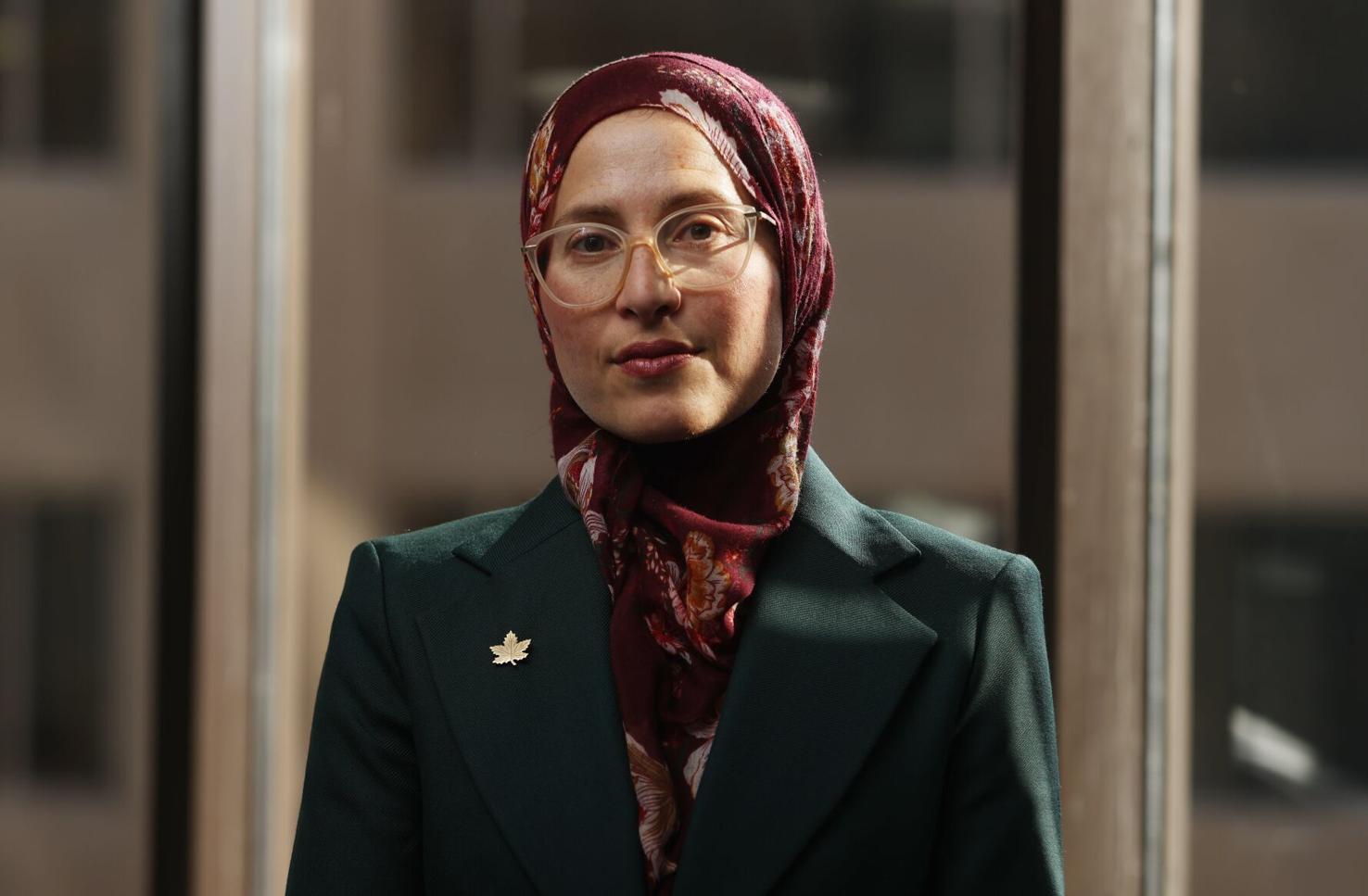
ICLMG 05/02/2026 - We at ICLMG have had the pleasure to work alongside Amira Elghawaby and her colleagues at the Office of the Special Representative on Combatting Islamophobia (OSRCI). Their work over a very short period of time has made important contributions to how we understand and view Islamophobia in Canada. They have presented important and concrete proposals on how Canada and Canadians can do more to fight against not just hatred directed towards Muslim communities, but to combat xenophobia, racism and hatred overall.
It is very disappointing that at a time when the we see rising levels of hated-based violence - whether Islamophobia, antisemitism, or anti-2SLGBTQIA+, misogynistic, anti-Black or other forms of hatred - that the government would move to limit the agencies taking on this important work. It is also particularly disappointing to see this announcement come just days after the National Day of Remembrance of the Quebec City Mosque Attack and Action against Islamophobia.
The ICLMG coalition has long worked to address the impacts of Canada’s national security and anti-terrorism laws in propagating systemic Islamophobia, xenophobia and racism. Agencies like the OSRCI are crucial tools to researching, analyzing and proposing solutions to these kinds of problems.
The closure of this office will be felt acutely. We remain committed to continuing this work outside of government and hope that as the government moves forward with the new Advisory Council on Rights, Equality and Inclusion that they will continue the important work that the OSRCI has started. Source
Canada’s axed Islamophobia envoy says Muslims’ need for support from federal government ‘hasn’t gone away’
CMPAC Statement on Federal Government’s Decision to Eliminate the Position of Special Representative on Combatting Islamophobia
| | Ken Rubin: Documents reveal more about powerful forces behind push for warrantless lawful access | |
The Hill Times 12/02/2026 - The Strong Borders Act, Bill C-2, introduced in June 2025, faced criticism about its proposed warrantless lawful access provisions that would make it easier for police and intelligence agencies to access Canadians’ internet data without judicial sign-off. Critics said that included access to medical, hotel and car rental, and many other personal records.
After backlash from civil society groups, Public Safety Minister Gary Anandasangaree [presented Bill C-12 as a "solution" to C-2 but in effect C-12 exists to rushed though the xenophobic provisions and slow down on the surveillance aspects of C-2. The current fate of C-2 is unknown b]ut the minister also indicated that that he would be introducing a separate warrantless lawful access bill in 2026.
Bill C-2 would have allowed law and intelligence agencies to make information demands to a wide range of electronic service providers for general service data on specific internet subscribers, though seeking the actual content of those records would have required court authorization and oversight.
Tim McSorley of the International Civil Liberties Monitoring Group said he;s concerned that “Bill C-2 would undermine more than a decade of Canadian privacy-related jurisprudence to enable a massive expansion of domestic surveillance. Without a warrant, police and spy agencies could demand information about our online activities based on the low threshold of ‘reasonable suspicion.’ ”
The pressure for lawful warrantless access to surveil internet-subscriber data is long-standing, and began in the late 1990s. It had been part of previous unsuccessful legislation attempts, reputedly, as a means of staying apace with the changing crime and national security landscape. Recently acquired access-to-information documents shed some light on some of the actors driving the push for more lawful access.
One set of records confirmed that CSIS was one key driving force behind then Bill C-2’s broad warrantless legal access lawful access provisions though many have believed the police were the main force behind this.
The records show how CSIS worked hand in hand with the RCMP, the Department of Justice, and the Privy Council Office to get such powers.
CSIS indicated that if the RCMP would get this access to basic internet data through changes to the Criminal Code, so should they through amendments to the CSIS Act for national security purposes. CSIS downplayed criticism that the new warrantless access powers in Bill C-2 are as sweeping as opponents claim as they already could get much data.
Their talking points claim that there was no real change in Bill C-2 in CSIS’s ability to collect information and the amendments to their act—just an effort at tidying up information demands within their existing mandate. The courts, they said, would still be involved in CSIS collection of more detailed personal data of targeted individuals. But the courts in recent times have reacted to lawful access overreach attempts by law and intelligence agencies as too invasive.
Nonetheless, CSIS, as reported in The Globe and Mail, greeted the warrantless information demand provisions embedded in the Strong Borders Act as “great news,” and their work on pressing from the inside for proposed warrantless access amendments as a “great job”.
What was unusual is that CSIS released such internal communications about their role in drafting the warrantless legal access provisions in Bill C-2. Though partly redacted, normally next to nothing would be disclosed, especially since many records were labelled as cabinet confidences and Canadian-eyes-only top secret.
Having partners privately decide how a future lawful-access system works is controversial
Another set of access-to-information documents obtained provides yet a further glimpse of behind-the-scenes discussions of those in policing and security, including CSIS, working with the private sector—on how to make lawful access procedures more effective and workable.
The records are from the minutes of a little-known Lawful Access Advisory Committee whose members include the RCMP, CSIS, and provincial and local police forces, as well as major telecommunications and internet providers. There are no public, consumer, bar association or civil liberty representatives. One matter that preoccupied them in the obtained 2024 and 2025 meetings was how to pay for lawful access work.
That included a discussion on funding models with the group expressing a preference for a centralized funding model administered by an unidentified governing body. This was necessary given the likely significant costs in the millions of dollars to re-engineer electronic service providers’ platforms to allow CSIS and the police greater access to internet related information.
They discussed seeking expedited purchase orders where needed, and going to the Public Safety minister to lobby for urgent funding and better lawful access. The summary minutes also examined related matters like data cloud storage arrangements, vendor vetting, and better tracking information systems to make the lawful access system more operative.
Rogers brought up having non-disclosure agreements about production orders to achieve the re-engineering.
The RCMP representative noted that changes would mean dealing with United States-Canada data sharing arrangements. One meeting-minute entry indicated they needed to address and face how organized criminal elements were getting into the act by using cell-site/stingray unauthorized technical access to personal data.
Knowing that criminal organizations work across borders and online, the cooperation of the private sector was sought in dealing with this issue of illegal invasive access outside the legal channels. So, away from the public eye, through such an advisory committee, police and intelligence agencies could privately discuss the technical cooperation they needed from the private communications sector to get more direct access to personal data held by these commercial third parties. The end goal they sought was to have more expansive internet surveillance access for suspected internet subscribers.
And the private sector communication providers were looking to their law enforcement/security partners for acceptable and better security standards. The lawful access advisory committee co-chairs are, on the government side, the RCMP, and either Rogers or Bell on the private sector side. The committee set up technical, operation and governance subcommittees tasked to come up with action plans. One thing revealed is that the Canadian Radio-television and Telecommunications Commission—of all agencies—attended the meetings as observers. So did the Public Prosecution Service of Canada.
They were aware, too, that they had to consult privately with ATIP and privacy review officials, knowing their lawful access advisory committee—consisting of government-corporate partners—would face transparency and privacy issues. Having willing partners privately put together how a further/future lawful access system would operate—even before legislation is enacted—is controversial. But it sets the stage in which everyone has a stake for an upcoming renewed legislation battle—with powerful forces wanting to create the means for and finally wanting to win greater and easier legalized access to personal data. Source
| | The Repatriation of Jack Letts and other Canadian Citizens Arbitrarily Detained in Northeast Syria/Iraq | Submission concerning Canada’s compliance with the International Covenant on Civil and Political Rights, on the Occasion of the United Nations Human Rights Committee’s 145th Session |
 | | Stop Canadian Involvement in Torture 02/02/2026 - Overview: The Government of Canada’s (“Canada”) refusal to take necessary steps to repatriate and thereby end the arbitrary detention of its nine male and five child nationals from northeast Syria (and, likely, Iraq, as renditions to that country are actively occurring at the time of writing); Canada’s ongoing reliance on discriminatory policies to prevent repatriation; and Canada’s policy of making the repatriation of children contingent upon forced separation from their non-citizen mothers violate the ICCPR Articles 2 (2-1, non-discrimination; 2-3a, remedy for rights violations), 6 (inherent right to life), 7 (non-derogable prohibition on torture and cruel, inhuman and degrading treatment or punishment), 9 (non-derogable prohibition on arbitrary detention), 12(4) (arbitrary deprivation of right to enter one’s country), 17.1 (prohibition of arbitrary/unlawful interference with family as well as unlawful attacks on honour and reputation), 23.1 (“The family is the natural and fundamental group unit of society and is entitled to protection by society and the State.”) and 26 (equal protection of the law without discrimination).
Recommendations
- The Government of Canada must take immediate steps to block the refoulement to Iraq of its citizens detained in northeast Syria.
- The Government of Canada must immediately implement the long-established steps to end the arbitrary detention of its nine detained male citizens in northeast Syria (or, if illegal transfers have taken place, from Iraq) and repatriate them in response to longstanding requests of the detaining authorities and the United States.
- The Government of Canada must grant temporary resident permits to the non-Canadian mothers of five Canadian children to enable the repatriation of the children within family units.
- The Government of Canada must end the use of discriminatory policies that create a two-tier standard of citizenship rights for Canadians detained abroad.
- The Government of Canada must initiate an independent investigation into the death in custody of Canadian mother of 6 and former detainee FJ.
Note: The first three of these recommendations are consistent with the January 29, 2026 recommendations of seven UN Special Rapporteurs and two UN Working Groups who expressed alarm at the “rapid, mass rendition of 7,000” detainees from Syria to Iraq “without any publicly known screening or legal process, oversight or protection for human rights,” adding that the “international obligation of non-refoulement precludes transfers where there is a risk of serious harm, including inhumane prison conditions, unfair trial for vague terrorism offences, and the death penalty in Iraq.” The UN Experts also called on “over 50 other countries to urgently repatriate, rehabilitate and reintegrate the thousands of foreign nationals in detention, while ensuring accountability in line with international law.” Read more - Lire plus
ACTION Repatriate all Canadians from NE Syria before they are rendered to potential torture in Iraq!
ACTION “Canadians are dying": Free Jack Letts & 15 Canadian Kids, Women & Men in Syria
And then they came to Baghdad
Iraq receives over 4,500 ISIS detainees, calls on countries to repatriate nationals
| | Sandra Wiens: Upholding human rights for Hassan Diab | |
Quaker Concern Winter 2026 - In November 2025 I went to the Hassan Diab Support Committee’s public event, Seeking justice for Hassan Diab: almost 20 years of violated human rights. CFSC has long supported Hassan and continues to ask that the Government of Canada refuse any second extradition request from France. At this event I was able to meet Hassan, his family, and the community that supports him. It was a hopeful evening full of nourishing food, information, and most of all—caring. Caring for Hassan and his family as well as caring for justice and human rights.
The Support Committee invited Alex Neve (CBC Massey Lecturer and former Amnesty International Canada Secretary General) and Donald Bayne (Hassan’s lawyer) as guest speakers. On the heels of speaking dates across Canada for the Massey Lecture series, Alex remarked on the connection between universal human rights and the precarity Hassan faces.
In 2023 French courts disregarded evidence of his innocence and convicted him in absentia, using intelligence that would not be admissible in Canada. This marks 17 years and counting for Hassan and his family, living with uncertainty and being denied the universal rights that we are all supposed to have. His family continues to live in a prolonged state of limbo and distress.
Donald Bayne clarified the current situation, identifying that while it should be a justice issue independent of politics, Hassan’s case can be characterised by two problems: one legal, one political.
The legal problem is the reality of extradition in Canada. Unlike a court case that has an outcome and finishes, an extradition case has no finality. It can come up again and again, as has occurred with Hassan. Also, while Canada allows the extradition of its citizens, France does not. This is something that could be changed through long-needed reforms to Canada’s Extradition act.
The political problem is one that should not exist, as politicians should not direct an independent process. Yet Hassan’s case has become politicised. The evidence in the case has been ignored for emotional and political ends. His experience is best described, then, as relentless persecution. While currently Hassan remains in limbo, a change in the Canadian government is all it would take to reactivate the case and cause a possible negative outcome, depending on the party in power.
That’s a frustrating and deeply unjust reality for Hassan and his family. However, hope was present throughout the night. Care linked everyone there—and that gives me hope. Hope that support for Hassan will remain resilient and tenacious in the face of injustice. Hope that leaders in government will not allow an extradition of Hassan again.
As the support committee states:
“It is time for Canada to take a principled stand. The government must unequivocally reject any future extradition of Hassan Diab and reaffirm its commitment to justice, human rights, and the protection of its citizens from wrongful persecution.”
ACTION If you feel led to support Hassan Diab you can take the following actions:
-
Visit https://JusticeForHassanDiab.org to join the postcard campaign urging Canada to refuse any future extradition request and reform the Extradition act. Email diabsupport@gmail.com to request that postcards be mailed to you (for free!).
-
Send a letter to Minister of Justice Sean Fraser, to urge him to refuse any future extradition request and put an end—once and for all—to this ongoing miscarriage of justice: https://iclmg.ca/support-diab Source
| |
As Tumbler Ridge Mourns, Anti-Trans Misinfo Spreads | |
The Tyee 12/02/2026 - One of Canada’s worst mass shootings in history took place in the small community of Tumbler Ridge, B.C., on Tuesday. A shooter killed eight other people and injured at least 25 more at the town’s secondary school and a nearby residence before taking her own life. It marks the third-deadliest mass shooting in Canadian history.
This is a senseless act of violence that will leave a dark stain on the close-knit rural community of around 2,400 people for generations. It’s also a rapidly developing news story with very little confirmed information so far.
In a news conference today, BC RCMP identified 18-year-old Jesse Van Rootselaar, a trans woman, as the shooter. “We understand that the community has questions, and want to understand the motive behind this tragic incident,” Dwayne McDonald, deputy commissioner, said. McDonald confirmed Van Roostelaar’s trans identity during the presser.
But before it was even confirmed, in the immediate hours following the shooting, far-right media, online commentators and even at least one elected official in Canada were already blaming the tragedy on trans people and using this incident as evidence to argue for restricting gender-affirming care, walking back sexual orientation and gender identity education and rolling back trans rights at large.
Much like with the wave of dangerous misinformation that swirled in the hours following the murder of conservative commentator Charlie Kirk last year, nothing good is going to come from this rush to centre Van Rootselaar’s identity in this story. And it’s another dark example of how pervasive anti-trans misinformation around violence has become even in Canada.
Conservatives quick to fan the flames
Just hours following the shooting, Kelowna-Lake Country-Coldstream MLA Tara Armstrong — who left the provincial Conservative party in 2024 and now sits as an Independent — claimed in a sweeping post on X that the then-unnamed shooter was trans, connected transness to mental illness and suggested that gender-affirming care is connected to this “epidemic of violence.”
And while Conservative Party of Canada Leader Pierre Poilievre didn’t make any direct reference to trans people in his X post offering condolences to the victims and their families, you’ll find similar misinformation and calls for restrictions on trans rights running rampant in the replies.
This narrative has been boosted by far-right voices south of the border too, including YouTuber Benny Johnson and influencer Andy Ngo, who also used the lack of information about the suspect to suggest Canadian officials were hiding that the person was trans to their millions of followers.
A dangerous jump to conclusions
As of this writing, we have very little confirmed information about Van Rootselaar’s identity or her motivations. This specific rhetoric around Van Rootselaar being trans is birthed from police alerts during the incident identifying a possible suspect as a “gunperson” and a “female in a dress with brown hair,” along with unverified reports from far-right media about social media accounts allegedly connected to a possible suspect.
In the coming days, we will know more about Van Rootselaar. But regardless, this senseless act of violence will be used to argue for further restrictions on the rights of trans people in Canada, just as similar incidents have in the U.S.
Misinformation about violence by trans people is such a pervasive trend that it has its own Wikipedia page. In recent years, it has become increasingly common for far-right media and anti-trans advocates to immediately rush to draw connections between trans people, our care and mass violence even when there is nothing there.
An analysis by Wired last year found at least 12 violent events between 2022 and 2025 that were falsely blamed on trans people by prominent right-wing figures in America, including Republican congressman Paul Gosar incorrectly claiming that the 2022 Uvalde, Texas, school shooting was perpetrated by a “transsexual leftist illegal alien” and Libs of TikTok founder Chaya Raichik calling the 2024 Lakewood Church shooting in Texas “another act of trans terrorism.”
I wrote about this trend in September when American commentator Charlie Kirk was assassinated at a university event in Utah. In the hours following Kirk’s death, misinformation around the shooter and false reports that the bullet cases included “transgender ideology” made their way even into mainstream media like the Wall Street Journal.
Those reports ended up being largely debunked as the shooter was found to be — as is the case in more than 98 per cent of mass shootings in the United States — a cis man. But even after these reports were debunked, dozens of outlets had repeated the initial reports from the Wall Street Journal.
The fact that this tragic event in Tumbler Ridge immediately inspired calls for restrictions on gender-affirming care and trans rights at large in Canada should raise huge alarm bells for trans people and our allies. South of the border, this sort of dangerous jumping to conclusions has led to calls to ban trans people from owning firearms and continued misinformation linking trans identity to mental illness.
The focus should be on mourning, not weaponizing
Canada has largely been shielded from this specific flavour of anti-trans rhetoric simply because mass shootings on this level rarely happen here. But this incident shows that the toxic sludge of anti-trans discourse has a firm hold in our political and online sphere here too. And that can have a tangible impact on government policy.
Armstrong’s post directly connects misinformation about trans people being inherently dangerous or mentally ill to broader perceptions of trans people. Transness as mental illness is a road that society has been down before, and it’s a dangerous narrative to bring back into public discourse.
The shooter’s identity will likely be used in legislatures across Canada to argue against life-saving medical care for young people, inclusive education in schools and the outlawing of harmful conversion therapy practices. Much like debunked medical studies like the Cass Review, politicians often turn to isolated news events to justify their restrictive policies.
An entire community is mourning a horrific loss in Tumbler Ridge this week. And how it is being talked about online, and the dangerous links being made to trans people at large, will have resounding and dangerous impacts in the months and weeks to come. Right now the focus should be on supporting the community in mourning, not weaponizing this event as hate against a vulnerable group at large. Source
Russia: Authorities seeking to use “extremism” laws as pretext to ban leading LGBTI organizations
| | Justin Ling: For years, Canada has used a secret US-run terror watchlist. Now Trump could use it against us | |
The Toronto Star 06/02/2026 - For decades, Canada has been using a secret, expansive, junk-ridden database of suspected terrorists, operated by the United States government. Known as Tipoff U.S./Canada — or TUSCAN — it serves as a form of no-fly list. Only this one is easier to be added to and harder to get removed from.
As U.S. President Donald Trump cracks down on dissent and labels critics domestic terrorists, there’s an enormous risk that Canadian border and immigration officials could end up interrogating, detaining or even refusing entry to peaceful protesters. Worse yet: through TUSCAN, Canada can actively collect and share intelligence with the U.S. about these alleged (but unlikely) terrorists. This is a civil-liberties nightmare. Ottawa must put a stop to it.
TUSCAN has been around since 1997, though there’s a good chance you’ve never heard of it: in all my years covering national security, I’ve never seen the federal government try so hard to keep such a vast program secret. What began as an informal agreement to share intelligence on cross-border travellers was greatly expanded after the 9/11 terrorist attacks. The U.S. centralized responsibility for tracking known and suspected terrorists in a new FBI unit, the Terrorist Screening Center. Law enforcement and intelligence agencies can nominate anyone to this database — American or foreign — as long as they have a “reasonable suspicion” that the person has participated in “terrorist activities.”
It’s called the Terrorist Watchlist, and it serves as a master list for America’s national-security apparatus. A subset of its data is fed into the U.S. government’s official No Fly List, while other subsets are sent to foreign partners: Canada, via TUSCAN; and Australia, via a database called TACTICS. When Canada set up its own no-fly list in 2007 with the Secure Air Travel Act, it kept using TUSCAN in secret.
This is no mere spreadsheet. By 2011, Canada’s homemade no-fly list had about 2,000 names on it, while the American equivalent had some 16,000. Meanwhile, the broader Terrorist Watchlist contained more than 400,000 names (it’s unclear whether the entire list is disseminated through TUSCAN, or only a portion of it).
Anyone who enters or applies to enter Canada by any land, sea, or air border is checked against TUSCAN. According to briefing notes for the public-safety minister, “If there is a match, the officer communicates with U.S. counterparts to confirm an identity match to the list.” But that officer won’t know why a given name has appeared in TUSCAN until they contact the FBI about it. Standard operating procedure is that Canadian officials must request “derogatory information” from their American peers “to assist in traveller processing activities and admissibility determinations.” In intelligence parlance, “derogatory information” refers to what a suspect is actually accused of — having provided material support to a terror group, say.
Appearing in TUSCAN or on the Terrorist Watchlist doesn’t prove wrongdoing, and the FBI isn’t required to go through any legal process to add more names, even of Americans or Canadians. But it is grounds for subjecting listees to additional screening measures, including detention and interrogation, and it can also be used to deny work and study visas, permanent residencies and even refugee applications.
Databases like these have faced considerable scrutiny over the years. Canada’s own no-fly list, for example, long had a habit of flagging children as suspected terrorists. But the Terrorist Watchlist is particularly tricky: the criteria for inclusion are vague, and as the U.S. won’t confirm or deny who’s on the list, getting your name removed from it is notoriously difficult. A 2025 watchdog report found that over a two-year period, nearly 300 people appealed to the FBI to have their name removed. Of those, only 30 per cent were successful.
In the early 2000s, the Malaysian-born, Stanford University-educated architect and academic Rahinah Ibrahim was placed on the list and her work visa revoked on suspicion that she’d joined the Indonesia-based terror group Jemaah Islamiyah. In fact, she was a member of Jemaah Islah Malaysia, a moderate political organization. It took eight years of litigation before a American judge finally ordered her name removed from all U.S. terror watchlists, including TUSCAN.
Canadians who find themselves on the Secure Air Travel Act list can apply to Ottawa to have their name removed, but Ottawa can only request the FBI remove a name from TUSCAN — and according to the database’s official operating manual, the FBI is under no obligation to acquiesce. TUSCAN was expanded in 2016, and today Canadian officials are explicitly permitted to share intelligence about listees with the FBI on a “case-by-case basis.” That means they can share information obtained from their interviews or searches (arrangements with “certain foreign partners... can be used to create nominations” or to “enhance” an existing entry, an FBI memo explains).
In recent years, the Terrorist Watchlist (and with it, TUSCAN) has grown massively. Today, it contains between one million and two million names, yet evidence for its efficacy is scarce. In 2025, the Privacy and Civil Liberties Oversight Board — an independent, bipartisan watchdog established by the U.S. Congress — published a sprawling, six-year study, concluding that it was too easy to add names to the list and noting that several journalists had been marked as terrorist suspects. One member of the board called the Terrorist Watchlist “bloated and outdated,” adding it was a “disservice to national security as well as civil liberties.”
That feeling is shared up here. As one Canada Border Services Agency official told me last year: “The TUSCAN list is filled with such B.S.; it’s not even funny.” In regular times, all this would be cause for concern: Canada is not only using but also contributing to a massive anti-terrorism database over which it has no control. Ottawa persists in trying to keep the program more or less a secret. TUSCAN has faced scrutiny from the Privacy Commissioner of Canada and the National Security and Intelligence Committee of Parliamentarians, yet neither body has made its findings fully public. Indeed, no public information about TUSCAN of any kind existed until I published a pair of articles for the Guardian in 2018. Since then, the federal government has fought tooth and nail to avoid revealing further details of the program.
Emails between various Public Safety Canada bureaucrats reveal attempts at “redacting all things TUSCAN.” And a 2023 investigation by the Information Commissioner shows that the department was concerned “any release of information related to TUSCAN could frustrate the U.S. administration” at a time when “there were strains in Canada’s relationship with the U.S.” Now our relationship with the U.S. is even more strained, thanks to a president who has a penchant for calling his detractors terrorists.
Over the past year, the Trump administration has listed “Antifa” (a catch-all term for antifascism) as a domestic terror group, cancelled visas for “pro-jihadist” students who’d protested the war in Gaza, smeared undocumented migrants as “terrorist gang members” and expanded the U.S. government’s definition of domestic terrorism to include “organized doxing campaigns, swatting, rioting, looting, trespass, assault, destruction of property, threats of violence and civil disorder.”
Recent investigations by Talking Points Memo and the Guardian reveal substantial efforts by the Trump administration to lay terrorism charges against left-wing dissidents. And the White House has been explicit about weaponizing America’s post-9/11 security apparatus to crush dissent. FBI Director Kash Patel last year declared, “we’re expanding the watchlist,” and the Terrorist Screening Center was renamed the Threat Screening Center to reflect its new mandate.
One intelligence official who spoke to journalist Ken Klippenstein last year warned that the U.S. government was already developing “protocols and rules to create a whole new category of people to watchlist” through this expanded unit. Meanwhile, oversight bodies that once reviewed and raised the alarm over intelligence-related abuses, including the Privacy and Civil Liberties Oversight Board, have been gutted. And in its quest to criminalize left-wing organizing, the Trump administration has shut down investigations into extremist right-wing violence — a primary threat to Canada’s national security.
Last month, I asked Public Safety Minister Gary Anandasangaree whether he was concerned about Canada sharing an anti-terror database with a hostile state that increasingly considers peaceful protesters domestic terrorists. His office ignored that question; a department spokesperson followed up to say that “TUSCAN is an invaluable tool for both Canada and the U.S.” and that while Ottawa has “no intention” of expanding the program, it won’t be restricting it either.
Yet it’s not as if ripping up the TUSCAN agreement would impair our national security. After all, Canada has its own expansive anti-terrorism database, built up over the past two decades with help from a saner version of America. But today’s America is quite different: the White House is drawing up lists of enemies internal and external, based on paranoid delusions about what constitutes a threat. As Trump pursues his schemes for territorial expansion, Canadians may even find themselves on a list of threats to U.S. national security one day. This is not the kind of program Canada should be participating in, practically or ethically. The federal government needs to cancel TUSCAN now. Source
| | Trump pushes Cuba toward catastrophe | |
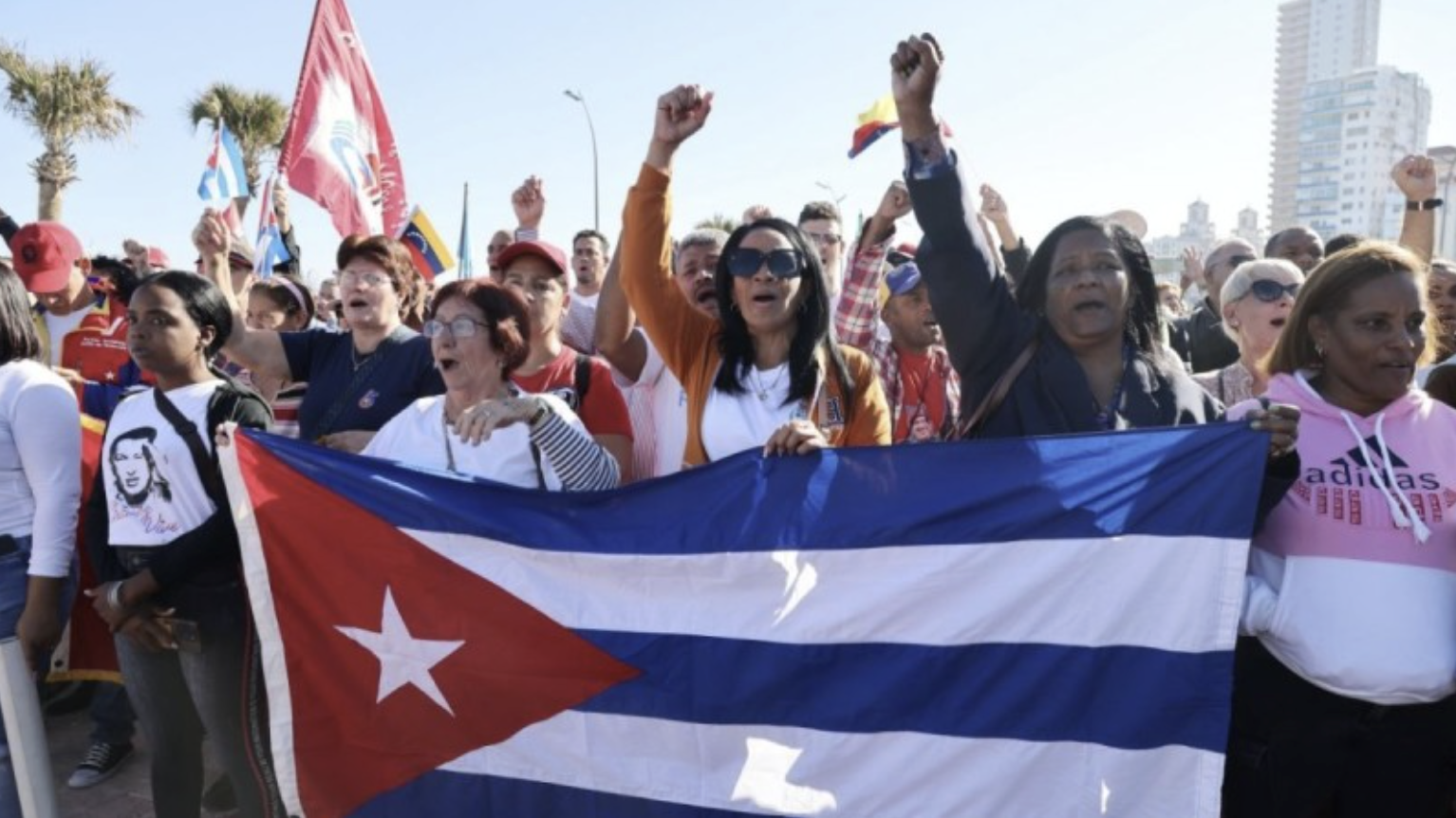
Canadian Dimension 07/02/2026 - In late January, the Trump administration dramatically escalated its long-running economic war on Cuba, signing an executive order that threatens punitive tariffs against any country that supplies the island with oil. Framed by the White House as a national security measure, the order declares a state of emergency and accuses Cuba of ties to hostile foreign powers. In practice, the policy aims to choke off Cuba’s access to fuel, a lifeline for electricity generation, hospitals, food distribution, and water sanitation, in an already fragile economy strained by decades of brutal US sanctions.
The impact was immediate. Mexico’s state oil company suspended shipments, and other suppliers appeared to hesitate under threat of US retaliation. With Cuba able to meet only a fraction of its domestic energy needs, the prospect of a full-scale fuel cut-off has raised alarms about prolonged blackouts, humanitarian collapse, and the risk of military escalation in the Caribbean. As Washington openly speaks of regime change, the order amounts to collective punishment that could reshape not only Cuba’s future, but power dynamics across Latin America and the Global South.
What follows is a conversation between Cam Scott, Samantha Hislop & Rob Crooks, members of the Canadian Network on Cuba, on what the new sanctions mean, why Cuba remains a target, and what international solidarity looks like when the margins for survival grow dangerously thin. Read more - Lire plus
ACTION Canada: Defy Trump. Sell oil, food, and medicine to Cuba!
| | Lloyd Axworthy & Allan Rock: Why are Canadian arms fuelling foreign conflicts? | | |
The Globe and Mail 03/02/2026 - Canadians take pride in our country’s role as a principled voice for international law, arms control and responsible multilateralism. In 2019, when Canada acceded to the Arms Trade Treaty (ATT), there was strong public support for our government’s pledge that Canadian arms exports would never contribute to human-rights abuses.
Most of Canada’s defence exports around the world, including to the U.S., are comprised of parts and components that are not commonly found to be used in abusive or controversial ways. Generally, importers have to provide information on end-use which includes what the technology is used for, and who the technology would be used by (e.g. the U.S. Coast Guard, ICE, etc.)
But Canada’s current arms-export system contains a loophole so large that it undermines the very values we claim to uphold. This gap allows weapons, components and technologies made in Canada to enter global conflicts through indirect channels. Because roughly half of Canada’s defence exports go to the U.S., and because those exports are exempt from the permitting and assessment rules applied everywhere else, most Canadian military goods face no case-by-case review and no public reporting.
Canada calls its system rigorous. Yet for much of our export activity, there is effectively no oversight at all. The consequences are not theoretical. Canadian-made parts are reportedly contained in weapons sold to Israel, which has killed civilians in Gaza. Arms bearing the logo of a Canadian manufacturer have appeared in the hands of paramilitary groups in Sudan. The United Nations and human-rights observers have repeatedly warned that unmonitored arms flows have fuelled some of the world’s gravest humanitarian crises.
Now, a private member’s bill tabled in the House of Commons aims to address this issue. Bill C-233 (the End the Loopholes Act) was introduced by NDP MP Jenny Kwan. The bill would amend the Export and Import Permits Act to ensure that weapons, components and explosives exported to the United States receive the same level of oversight as those sent anywhere else. Its premise is simple: Canadian standards should be consistent and universal.
Opponents argue that Bill C-233 would cripple Canada’s defence industry. It would not. The bill does not restrict manufacturing, sales or innovation. It merely standardizes reviews so that exports to the United States undergo the same process as all others. Factories will continue to operate, jobs will remain secure, and responsible oversight will strengthen – rather than weaken – confidence in the sector.
Others claim the bill would weaken Canada’s role in NATO. This, too, is mistaken. Nearly every NATO country is a party to the ATT, and many apply oversight to all exports, including those to the United States. Canada’s blanket exemption is the outlier, not the norm. Aligning Canadian practice with that of our allies would reinforce our credibility and commitment to shared principles.
Some suggest the bill would hinder military aid to Ukraine. It would not. Assistance to Ukraine is delivered through a separate, expedited process in the Department of National Defence. Bill C-233 affects only commercial exports to the United States, not transfers to Europe or Ukraine. Conflating those systems is misleading. Nor would the bill, which would govern exports and not imports, affect how the Canadian Armed Forces procure equipment.
Without a permitting process, Canada cannot ensure that components shipped south are not later incorporated into weapons sold to high-risk end-users. While the treaty allows administrative flexibility, it does not allow countries to exclude specific partners from core assessment requirements. Canada’s exemption is inconsistent with both the spirit and the letter of the ATT.
Addressing this gap is especially urgent because of Donald Trump’s military recklessness. American forces have violated international law repeatedly. Mr. Trump has also deployed troops and armed ICE agents to American cities, resulting in violence and loss of life. We ought not to be sending military gear to Mr. Trump’s America without assurance that it will not be used unlawfully.
Canadians deserve transparency about where our weapons go and how they are used. Ensuring that Canadian-made goods do not contribute – directly or indirectly – to atrocities abroad is both a moral duty and a strategic necessity. Closing this gap would ensure that Canadian values do not stop at the border.
Parliament now faces a clear choice: maintain an outdated exemption that undermines Canada’s credibility, or adopt a modern, principled system that reflects our commitments and responsibilities. Bill C-233 is the responsible path. We urge Members of Parliament to support it. Source
EVENT Rallye virtuel Outaouais pour la Palestine - Outaouais 4 Palestine Virtual Rally, Feb 17 at 7PM ET
ACTIONS No More Loopholes: Cross country actions on Feb 17: From East to West
Canada discreetly puts money down on 14 additional US-built F-35s
Canada’s elite media wants you to serve in the military, but further militarization is a concession to Trump, not a defence against him
Pentagon Makes Largest Known Arms Purchase From Israel — For Banned Cluster Weapons
| Israel used weapons in Gaza that made thousands of Palestinians evaporate | |
AlJazeera 10/02/2026 - At dawn on August 10, 2024, Yasmin Mahani walked through the smoking ruins of al-Tabin school in Gaza City, searching for her son, Saad. She found her husband screaming, but of Saad, there was no trace.
“I went into the mosque and found myself stepping on flesh and blood,” Mahani told Al Jazeera Arabic for an investigation that aired on Monday. She searched hospitals and morgues for days. “We found nothing of Saad. Not even a body to bury. That was the hardest part.”
Mahani is one of thousands of Palestinians whose loved ones have simply vanished during Israel’s genocidal war on Gaza, which has killed more than 72,000 people. According to the Al Jazeera Arabic investigation, The Rest of the Story, Civil Defence teams in Gaza have documented 2,842 Palestinians who have “evaporated” since the war began in October 2023, leaving behind no remains other than blood spray or small fragments of flesh.
Experts and witnesses attributed this phenomenon to Israel’s systematic use of internationally prohibited thermal and thermobaric weapons, often referred to as vacuum or aerosol bombs, capable of generating temperatures exceeding 3,500 degrees Celsius [6,332 degrees Fahrenheit]. [...]
A ‘global genocide, not just an Israeli one’
Legal experts said the use of these indiscriminate weapons implicates not just Israel but also its Western suppliers. “This is a global genocide, not just an Israeli one,” said lawyer Diana Buttu, a lecturer at Georgetown University in Qatar. Speaking at the Al Jazeera Forum in Doha, Buttu argued that the supply chain is evidence of complicity. “We see a continuous flow of these weapons from the United States and Europe. They know these weapons do not distinguish between a fighter and a child, yet they continue to send them.”
Buttu emphasised that under international law, the use of weapons that cannot distinguish between combatants and noncombatants constitutes a war crime. “The world knows Israel possesses and uses these prohibited weapons,” Buttu said. “The question is why are they allowed to remain outside the system of accountability.”
Collapse of international justice
Despite the International Court of Justice issuing provisional measures against Israel in January 2024, ordering it to prevent acts of genocide, and an arrest warrant from the International Criminal Court issued against Israeli Prime Minister Benjamin Netanyahu in November 2024, the killing intensified. Tariq Shandab, a professor of international law, argued that the international justice system has “failed the test of Gaza”.
“Since the ceasefire agreement [in October], more than 600 Palestinians have been killed,” Shandab said. He highlighted that the war has continued through siege, starvation and strikes. “The blockade on medicine and food is itself a crime against humanity.” Shandab pointed to the “impunity” granted to Israel by the US veto power at the UN Security Council. However, he noted that universal jurisdiction courts in countries like Germany and France could offer an alternative path to justice, provided there is political will.
For Rafiq Badran, who lost four children in the Bureij refugee camp during the war, these technical definitions mean little. He was only able to recover small parts of his children’s bodies to bury. “Four of my children just evaporated,” Badran said, holding back tears. “I looked for them a million times. Not a piece was left. Where did they go?” Read more - Lire plus
Now that Israel has admitted the Gaza death toll is accurate, don’t let apologists move the goalposts
More Than 100 Gazans Have Been Accepted to Canadian Universities. Canada Isn’t Letting Them In.
ACTION Canada is Abandoning Gaza Students
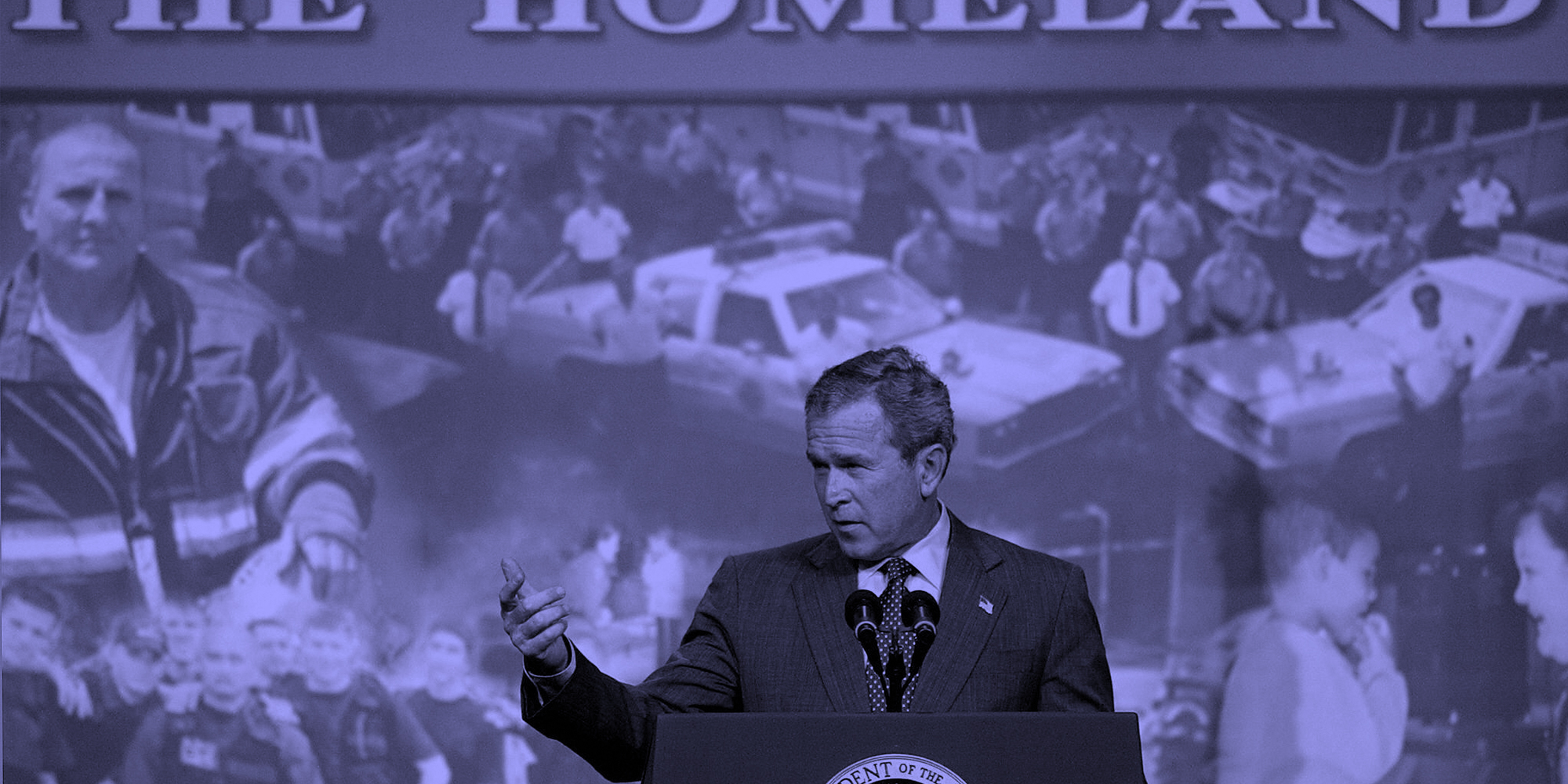
| | “Terrorist”: How ICE Weaponized 9/11’s Scarlet Letter | Podcast: Spencer Ackerman on how the politics of counterterrorism led to ICE and CBP completing their transformation into a death squad — and why the agencies are unreformable. | |
The Intercept Briefing 06/02/2026 - The word “terrorist” wasn’t coined on September 11, 2001, but the defining event of the early 21st century ushered it in as the United States’ go-to term for demonizing outsiders and dissenters alike. The so-called “war on terror” transformed the way the U.S. wields power at home and abroad, enabling mass surveillance and a crackdown on the right to free speech. It became reflexive for the U.S. to disparage immigrants and protesters as supporters of terrorism.
President Donald Trump has embraced this model and manipulated it for his own ends, as author Spencer Ackerman points out. The Trump administration often peddles spurious accusations of terrorism against the targets of its immigration raids. “There’s nothing about any of their action that’s remotely anything at all like terrorism,” Ackerman says. “But that is the fire in which ICE, CBP, and the Department of Homeland Security was forged. You are going to find this in its DNA.”
This week on the Intercept Briefing, host Jordan Uhl speaks with Ackerman, a leading expert on the concept of terrorism and its weaponization by the state. Ackerman’s 2021 book, “Reign of Terror, How the 9/11 Era Destabilized America and Produced Trump,” traces the legal and cultural evolution of the last 25 years, and how the boomerang has come back home.
“Before 9/11, not only was there no ICE, there wasn’t really much in the way of a robust internal mechanism for finding and deporting people who were in the country illegally. When it did exist, it was for people who were serious criminals, traffickers, and so on,” says Ackerman. Now, he says, the contemporary terrorism paradigm has transformed immigration enforcement into something “operating like a death squad.”
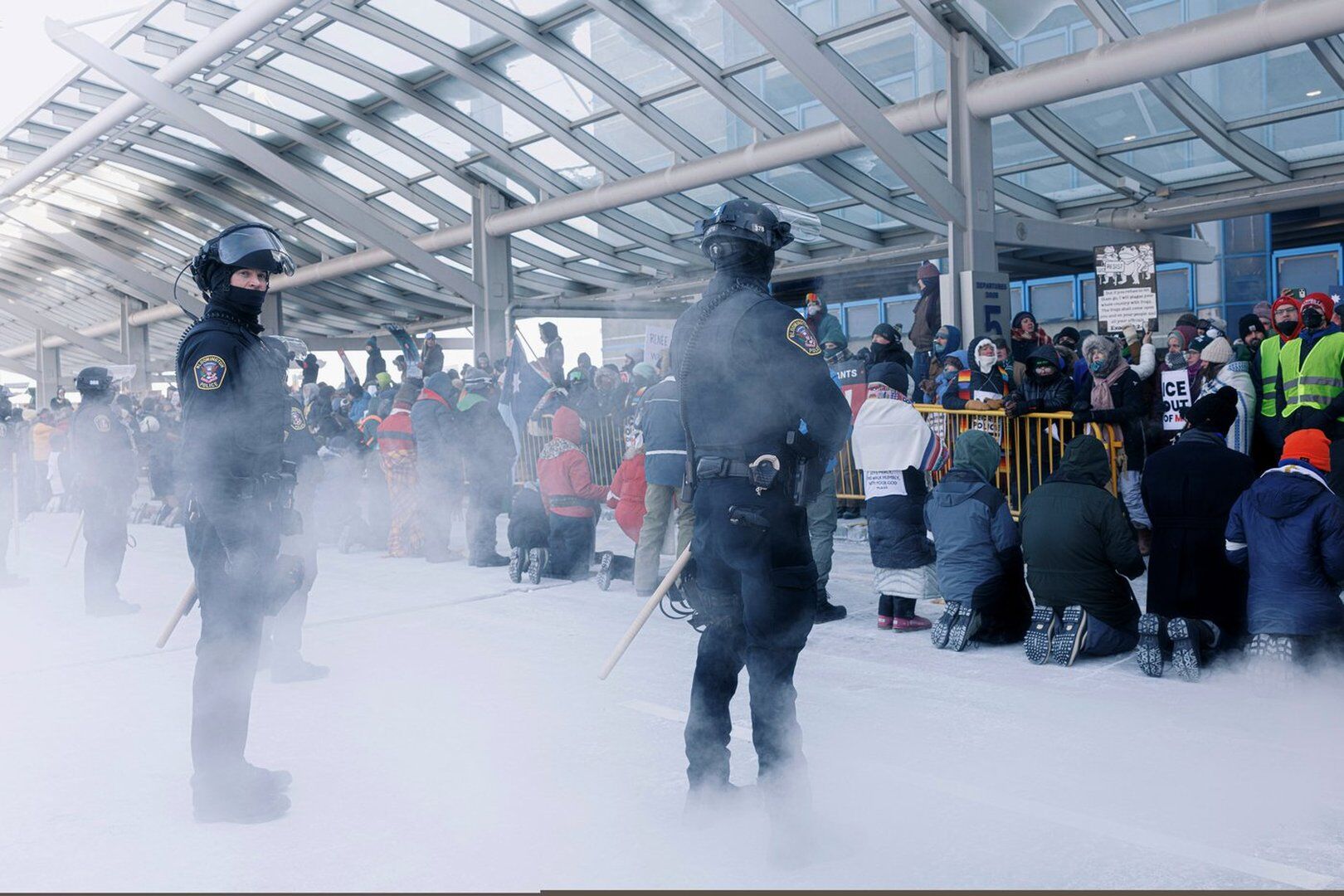
“What we are seeing on the streets of Minneapolis is what ICE has done to the undocumented for a very long time,” he says. “And now we’re seeing this happen to white people on the streets of Minneapolis for little more than filming ICE.” With the recent killings of Renee Good and Alex Pretti, “I worry that a tremendous amount of our political system is geared toward either, on the Republican side, rationalizing it, justifying it, or on the Democratic side, pretending as if this is some kind of abuse that can be exceptionalized, rather than something that has to do with this 25-year history of coalescing immigration enforcement in the context of counterterrorism.”
As Democrats in Congress struggle to leverage DHS funding for changes to ICE policy — like a ban on face masks for ICE agents, an idea on which they’ve already softened — Ackerman says the parallels with the early 2000s are clear. “We can’t move in reformist directions when the thing talked about being reformed laughs at killing Americans,” advises Ackerman. “Reformist politics under two Democratic administrations got us to where we are now. These are accommodationist politics, and the thing being accommodated wants to kill you.” Listen - Écouter
ACTION USA: Stop militarized immigration enforcement
Le boomerang impérial(iste) : L’occident subit aujourd’hui la violence qu’il n’a jamais cessé d’employer dans le reste du monde
Trump Calls His Enemies Terrorists. Does That Mean He Can Just Kill Them?
Feds Identify “Leader of Antifa”: The list they're creating says so, anyway
Pam Bondi Admits DOJ Has a Secret Domestic Terrorist List
“I Have Never Felt So Much Fear”: Immigrant Children Speak Out on Life Inside ICE Jail in Dilley, TX
Refugees relive the trauma they fled as ICE targets them in Minnesota
“Uptick in Abductions”: ICE Ramps Up Targeting of Minneapolis Legal Observers
Shot, Harassed & Threatened: U.S. Citizens Describe Surviving Violent Attacks by Immigration Agents
Exclusive: ICE Masks Up in More Ways Than One - Feds could be in your group chat
| | UK Palestine Action ban ruled unlawful, in humiliating blow for ministers | | |
The Guardian 13/02/2026 - Judges have humiliated ministers by insisting Palestine Action should not be banned under anti-terrorism laws in a ruling that has left thousands of its alleged supporters in legal limbo.
The high court said on Friday the government’s proscription of the direct action group was “disproportionate and unlawful” and that most of their activities had not reached the level, scale and persistence to be defined as terrorism.
The home secretary, Shabana Mahmood, was urged to respect the court’s decision after the three judges said the ban, introduced by her predecessor Yvette Cooper, impinged on the right to protest and should be quashed. However, the fate of more than 2,500 people, arrested for supporting Palestine Action since proscription, remained uncertain after Mahmood said she would appeal against the ban.
Additionally, the three judges, led by the president of the king’s bench division, Dame Victoria Sharp, said the banning order would not be quashed until both sides had been allowed to make representations.
In the meantime, the Met police said they would stop arresting people immediately for showing support for Palestine Action after the high court ruling but would gather evidence for potential future prosecution.
Huda Ammori, a co-founder of Palestine Action, who brought the high court challenge, called it a “monumental victory”. She said: “We were banned because Palestine Action’s disruption of Israel’s largest weapons manufacturer, Elbit Systems, cost the corporation millions of pounds in profits and to lose out on multibillion-pound contracts.
“We’ve used the same tactics as direct action organisations throughout history, including anti-war groups Keir Starmer defended in court, and the government acknowledged in these legal proceedings that this ban was based on property damage, not violence against people.
“Banning Palestine Action was always about appeasing pro-Israel lobby groups and weapons manufacturers, and nothing to do with terrorism … Today’s landmark ruling is a victory for freedom for all, and I urge the government to respect the court’s decision and bring this injustice to an end without further delay.”
The judgment is the first time that an organisation banned under anti-terrorism law has successfully challenged proscription in court. The judges allowed the challenge on two of four grounds. They were that there was “a very significant interference” with the rights to freedom of speech and freedom of assembly and that Cooper’s decision to proscribe Palestine Action was not consistent with her own policy, which required her to take into account factors including the nature and scale of the organisation’s activities, and the specific threat that it posed to the UK.
Sharp described Palestine Action as an organisation “that promotes its political cause through criminality and encouragement of criminality”, but added: “The court considered that the proscription of Palestine Action was disproportionate. A very small number of Palestine Action’s activities amounted to acts of terrorism within the definition of section 1 of the 2000 [Terrorism] Act.
“For these, and for Palestine Action’s other criminal activities, the general criminal law remains available. The nature and scale of Palestine Action’s activities falling within the definition of terrorism had not yet reached the level, scale and persistence to warrant proscription.” About 100 people who had gathered outside the high court building in central London cheered and chanted “free Palestine” when they heard the decision.
The UN special rapporteur on human rights and counter-terrorism, Ben Saul, Amnesty International UK and Liberty, who all intervened in the case, called for Mahmood to respect the court’s decision. Saul said accepting the judgment “will enable the relevant authorities to take no further action against those who legitimately expressed their beliefs about Israel and Palestine since 5 July 2025 and were caught up in the policing of the unlawful ban; and also, to apologise to those affected for stigmatising them as terrorists”. Read more - Lire plus
Palestine Action's Filton 6 activists cleared of aggravated burglary at Israeli defence firm site
UK Crown Prosecution Service to seek a retrial against victorious Filton 24 activists
| | UN report warns of “existential threat” to civil liberties | |
statewatch 09/02/2026 - The July 2025 report by Gina Romero, the UN Special Rapporteur on the rights to freedom of peaceful assembly and of association, describes an “existential threat” to civic freedoms and urges coordinated international action to reverse it.
The report, based on interviews and discussions with various stakeholders and 65 submissions, outlines key principles for building a sustainable and just aid architecture that would sustain and empower a vibrant civil society and civic engagement.
Despite the fundamental threats to basic rights and freedoms the report describes, it appears to have received no coverage in mainstream media.
Aid cuts and rising securitisation
The report warns that the global aid system is being dismantled as states redirect funds from development and civil society towards defence and security. The crisis deepened in early 2025 when the United States froze or terminated foreign assistance, dismantling the United States Agency for International Development (USAID) and the Bureau of Democracy, Human Rights and Labor.
A February 2025 survey cited in the UN report found that 55% of NGOs lost staff and 67% reduced or shut down essential services, affecting millions of people worldwide. The trend extends beyond the US. The Group of Seven (G7) countries — which provide three-quarters of all official development assistance — plan to reduce contributions by 28% in 2026 compared with 2024, the largest drop since 1960.
The UN itself faces a $2.4 billion budget shortfall in 2025, forcing layoffs and limiting humanitarian operations. At the same time, states are reallocating resources to military budgets: global military expenditure rose by 9.4% in 2024, while funds for development, democratisation, and civic participation declined.
Repressive laws and self-censorship
The Special Rapporteur documents the growing misuse of counter-terrorism powers to restrict civic action.
Governments have expanded surveillance, arbitrary detention, transnational repression and asset freezes, often invoking the Financial Action Task Force (FATF) standards on money-laundering.
The report highlights recent examples from Nigeria, Sri Lanka, Hungary, El Salvador, Peru and Bosnia and Herzegovina, where “foreign agent” or “foreign influence” laws have been introduced or revived to restrict civil-society participation and access to funding.
These measures have fostered widespread self-censorship, with many organisations reducing visibility, avoiding sensitive language, and stepping back from public advocacy to evade surveillance or reprisals. [...]
Communities most affected
The report highlights the disproportionate impact on marginalised communities:
- LGBTQI+ groups: 120 grants in 42 countries have been suspended, cutting violence-prevention, healthcare and legal-aid services;
- women-led and youth-led organisations: according to UN Women, 90 % of surveyed groups in 44 countries report reduced funding, with nearly half expecting to close within six months; and
- anti-corruption NGOs: surveys by the Civil Society Friends of the UN Convention against Corruption (UNCAC) show sharp declines in operating capacity after the US funding freeze.
Romero cautions that such losses further weaken accountability and deepen inequalities.
Emerging responses and principles for reform
Despite mounting pressure, the report notes that civil society groups are developing new, locally rooted forms of resilience. These include community-based fundraising, cooperative models of support, and cross-sector alliances to protect shared civic space. The report closes with a call for transparent, inclusive reform of the global aid system to sustain civic freedoms.
Romero urges states and donors to repeal restrictive funding laws, institutionalise civil society participation, and embed civic space protections into all aid and security frameworks. She calls for human rights-based security policies, predictable multilateral financing, and for at least half of aid to reach local actors directly. Funding, she concludes, must prioritise human dignity, equality, and sustainability over short-term or profit-driven interests. Read more - Lire plus
| | OTHER NEWS - AUTRES NOUVELLES | | ICLMG ACTIONS DE LA CSILC | | The Justice Minister must end the injustice against Hassan Diab! | | |
In April 2023, despite clear exculpatory evidence, the French Court of Assize conducted an in absentia trial that unjustly declared Dr. Hassan Diab guilty and sentenced him to life in prison. The proceedings amounted to a sham trial and a mockery of justice.
Since that ruling, Dr. Diab and his family have lived in constant uncertainty, facing the ongoing threat that a second extradition request could be made at any time.
Please click below to send a new letter demanding that Justice Minister Sean Fraser categorically refuse any future extradition request and put an end—once and for all—to this ongoing miscarriage of justice.
| |
Canada: Abolish rights-violating terrorist entities list!
| | |
On October 15, 2024, the Canadian government placed the Samidoun Palestinian Prisoner Solidarity Network on Canada’s terrorist entities list. While ostensibly a tool to protect the safety and security of people in Canada and internationally, the list is an arbitrary political tool that undermines freedom of association, of expression and due process in the courts. Its effectiveness as a national security tool has never been demonstrated in a manner that justifies its use.
Due to these deep flaws, and more, the ICLMG has consistently called for the list to be abolished since the Canadian coalition’s founding in 2002. Please join us in urging the Canadian government to abolish the rights-violating terrorist entities list once and for all. Thank you!
| | Canada must repatriate all Canadians detained in NE Syria now! | Every day the government fails to bring these Canadians home, it places their lives at risk from disease, malnutrition, violence, and ongoing military conflicts. United Nations officials have even found that the conditions faced by Canadians in prison are akin to torture. Please click below to urge the federal government to repatriate all Canadians illegally and arbitrarily detained in northeast Syria without delay. | | 22 years of fighting deportation to torture: Justice for Mohamed Harkat Now! | | CSIS isn't above the law! | | |
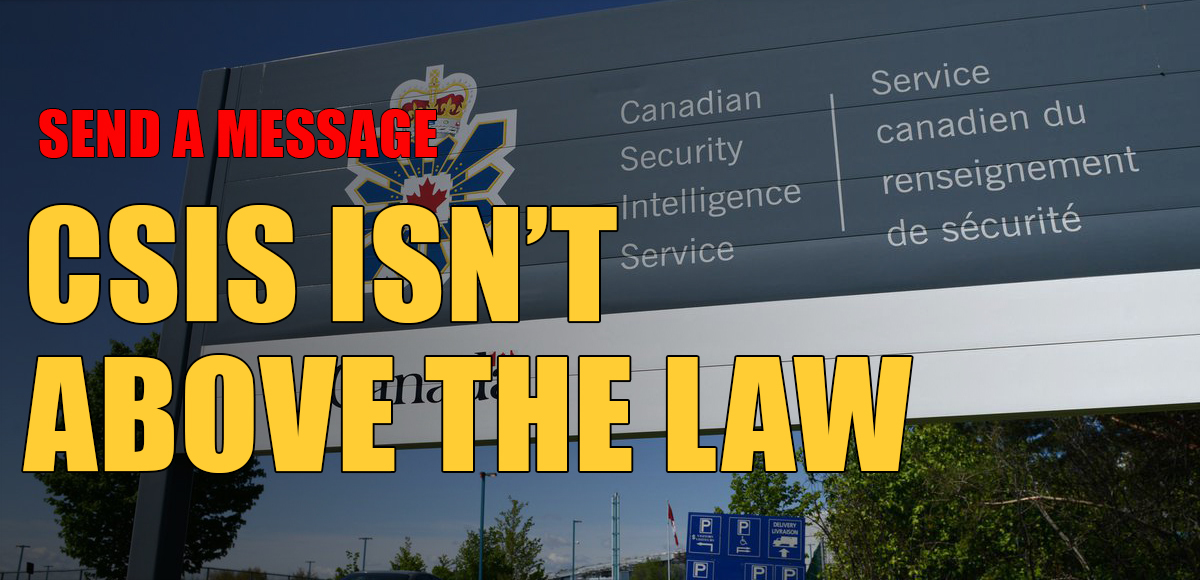
In recent years, at least three court decisions revealed the Canadian Security and Intelligence Service (CSIS) engaged in potentially illegal activities and lied to the courts. This is utterly unacceptable, especially given that this is not the first time these serious problems have been raised. CSIS cannot be allowed to act as though they are above the law.
Send a message to the Public Safety Minister demanding that he take immediate action to put an end to this abuse of power and hold those CSIS officers involved accountable. Your message will also be sent to your MP and to the Minister of Justice.
| | Reform Canada's extradition law now! | |
Canada’s extradition system is broken. One leading legal expert calls it “the least fair law in Canada.” It has led to grave harms and rights violations, as we’ve seen in the case of Canadian citizen Dr Hassan Diab. It needs to be reformed now.
Click below to send a message to urge the Prime Minister, the Minister of Justice and your MP to reform the extradition system before it makes more victims. Thank you!
Version française: Le Canada doit réformer la loi sur l'extradition!
| | Canada must protect encryption! | |
Canada, with other G7 nations, continues to push to weaken our access to strong, reliable encryption, after decades of being supportive of strong encryption. We need encryption to safeguard our data, our online transactions, our communications, and to protect the lives of journalists and human rights activists.
Please send a message to the Prime Minister of Canada, the Minister of Public Safety, as well as your Member of Parliament, to urge them to reverse course and once again commit to protecting encryption.
Regardez la vidéo avec les sous-titres en français + Agir
| | Protect our rights from facial recognition! | Facial recognition surveillance is invasive and inaccurate. This unregulated tech poses a threat to the fundamental rights of people across Canada. Federal intelligence agencies refuse to disclose whether they use facial recognition technology. The RCMP has admitted (after lying about it) to using facial recognition for 18 years without regulation, let alone a public debate regarding whether it should have been allowed in the first place. Send a message to the Prime Minister and the Public Safety Minister calling for a ban now. | | What we've been up to in 2025, and our plans for 2026! | |
ICLMG 03/12/2025 - Thanks to the support of our members and donors, we’ve been able to do a lot and work on the following since June:
- Anti-privacy and xenophobic bills C-2 & C-12
- Anti-protest and anti-freedom bill C-9
- Impacts of Countering Terrorism Financing on charities, non-profits, solidarity work and international assistance.
- Canada’s complicity in torture
- Justice for Hassan Diab
- Artificial Intelligence regulatory frameworks & national security
- The gaps in oversight and review of national security agencies
- Consultations on the UN Global Counter-terrorism strategy & definitions of “terrorism” and “violent extremism"
- We were interviewed or quoted in dozens of media pieces
- And much more!
For all details on our activities, and our plans for 2026, click here.
| | Les opinions exprimées ne reflètent pas nécessairement les positions de la CSILC - The views expressed do not necessarily reflect the positions of ICLMG. | | |
THANK YOU
to our amazing supporters!
We would like to thank all our member organizations, and the hundreds of people who have supported us over the years, including on Patreon! As a reward, we are listing below our patrons who give $10 or more per month (and wanted to be listed) directly in the News Digest. Without all of you, our work wouldn't be possible!
James Deutsch
Bill Ewanick
Kevin Malseed
Brian Murphy
Colin Stuart
Bob Thomson
James Turk
John & Rosemary Williams
Jo Wood
The late Bob Stevenson
Nous tenons à remercier nos organisations membres ainsi que les centaines de personnes qui ont soutenu notre travail à travers les années, y compris sur Patreon! En récompense, nous nommons ci-dessus nos mécènes qui donnent 10$ ou plus par mois et voulaient être mentionné.es directement dans la Revue de l'actualité. Sans vous tous et toutes, notre travail ne serait pas possible!
Merci!
| | | | |