|
International Civil Liberties Monitoring Group
Coalition pour la surveillance internationale des libertés civiles
October 25, 2025 - 25 octobre 2025
| | Rejecting Bill C-9, the 'Combatting Hate Act' webinar, featuring ICLMG's Tim McSorley | | C-12: Controversial border bill in Canada is 'about pleasing Trump,' says non-profit | |
Daily Hive 20/10/2025 - Earlier this month, the federal government introduced Bill C-12, which addresses border security in Canada, and human rights organizations are sounding the alarm.
According to Public Safety Canada’s announcement from Oct. 8, Bill C-12, or Strengthening Canada’s Immigration System and Borders Act, draws on elements of Bill C-2 to “combat transnational organized crime, stop the flow of illegal fentanyl, crack down on money laundering, dismantle criminal networks, and improve the integrity of our immigration system.”
The same human rights organizations that argued that Bill C-2 was an attack on refugees and migrants is calling Bill C-12 “Trump-like” and say its introduction “solves none of Bill C-2’s problems.”
A statement released by the coalition of civil liberties, data privacy, refugee, migrant rights and gender justice organizations “strongly opposes” the introduction of the border security bill and suggests that it “seeks to fast track, rather than address, many aspects of Bill C-2’s myriad problems.”
“Prime Minister Carney is showing that his government continues to be aligned with conservative Trump-like anti-migrant sentiment,” states Karen Cocq, spokesperson for the Migrant Rights Network. “But civil society groups remain united in rejecting this agenda and calling for the withdrawal of both bills.”
Cocq argues that Bill C-12 is the government’s “repackaging” of Bill C-2 that “leaves intact the measures to block refugee hearings, impose arbitrary retroactive one-year bars, and grant ministers mass immigration status-cancellation powers.”
“The story of this legislative package is the same today as it was on day one of Bill C-2’s introduction; it’s about pleasing President Trump,” said Matt Hatfield, executive director of OpenMedia, a North American non-profit that focuses on digital rights and online surveillance.
“Canadians reject this multi-layered concession of our rights and freedoms to American pressure, and we expect lawmakers to resoundingly vote against both bills.”
This comes as Canada’s neighbours down south are protesting violent U.S. Immigration and Customs Enforcement (ICE) deportation raids.
Here’s what you should know about the new border security bill Ottawa wants tabled in Canada.
How the border security bill could affect immigrants in Canada
The Canadian Immigration Lawyers Association (CILA) argue that Bill C-12 introduces “sweeping changes to immigration law under the guise of border security.”
In an article published on Oct. 16, the organization says that the proposed measures “undermine established immigration legal processes and expand the government’s discretionary powers.”
Some of the measures in question include:
- Giving Immigration, Refugees, and Citizenship Canada (IRCC) the authorization to share client information like identity, status, and immigration documentation with federal, provincial, and territorial partners
- Allowing the government to cancel, suspend or change immigration documents, and to suspend, cancel or stop accepting new applications when such action is determined to be in the public interest
- Pause acceptance of new visas, permits, PR applications
- Pause or cancel the processing of visas, permits, PR applications already in the inventory
- Asylum claims made by people more than one year after first arriving in Canada after June 24, 2020, won’t be processed. This would apply to students and temporary residents, regardless of whether they left the country and returned
- Asylum claims from people who enter Canada from the U.S. along the land border between ports of entry and make a claim after 14 days won’t be processed
CILA stresses that Bill C-12 would provide the government the power to impose these measures without review, notice or giving people the opportunity to respond.
“The legislation, if passed, would cause Canada to compromise fundamental principles in a way that mirrors concerning developments in the United States,” stated the association.
Measures affecting digital privacy
One of the major points of contention in Bill C-2 is a measure that would allow law enforcement to gather Canadians’ personal information from telecommunication companies without a warrant. This includes names, addresses and telephone numbers of a customer associated with a particular IP address.
Ottawa didn’t include these controversial measures from Bill C-12 in the hopes that it would allow other rules to pass quicker.
“The government has badly burned public trust and left the distinct impression that privacy is not a priority,” wrote University of Ottawa law professor Michael Geist in a recent blog post.
He adds that this new potential legislation was likely introduced not because the government “came to its senses on the privacy implications,” but because in a minority government, the Liberal Party couldn’t find collaborators to get Bill C-2 passed in its original form.
“Our government has made it abundantly clear that they will continue to fight for every privacy-violating measure Bill C-2 still contains, and are only introducing Bill C-12 to get restrictions on migrant and refugee rights adopted sooner,” echoes International Civil Liberties Monitoring Group national coordinator Tim McSorley.
Human rights organizations call for full withdrawal of both Bill C-2 and Bill C-12
Both Bill C-12 and Bill C-2 need to pass both the House of Commons and the Senate and receive Royal Assent before these changes can be implemented.
The coalition of human rights organizations, including Amnesty International, reiterated its call for a full withdrawal of both bills in a statement on Oct. 14.
Migrant Rights Network has also created a petition, urging Canadians to prevent the new border security bill from passing in Canada. Source
NEW ACTION Amnesty International: Canada is attacking our rights – fight back against Bill C-2 & C-12
ACTION Stop Bill C-2, Bill C-12 and protect our rights!
ACTION Non aux projets de loi C-2 et C-12 : protégez nos droits!
Le projet de loi C-12 jugé «très préoccupant» pour les immigrants
LeadNow: Let’s talk about the scapegoating of migrants in Canada
Getting it Right the First Time: Exploring the False Economy of Bill C-12's Refugee Process Shortcuts
CCLA Renews Call for Government to Drop its "Strong Borders" Package
CCLA: Bill C-2 information resources outline significant privacy concerns
| |
The Palestine Tribunal on Canadian Responsibility, featuring ICLMG's Tim McSorley | |
PURPOSE
To document the multiple ways that Canadian entities – including government bodies, corporations, universities, charities, media, and other cultural institutions – have enabled and continue to enable the settler colonization and genocide of Palestinians, and to articulate what justice and reparations would require. Disrupting the victim/expert dichotomy, testimonies by survivors from Palestine will be woven throughout the hearings as a source of expert knowledge on what justice would entail. A Panel of Eminent Elders will be invited to listen to the witness testimonies and draft a report outlining the Tribunal’s findings.
DATE AND LOCATION
November 14 and 15, 2025; Ottawa (specific location will be sent to registered attendees before the hearings). You can also watch the livestream.
PARTICIPANTS (in anticipated order of appearance) - and more to be announced
WITNESSES: Ahed and Taha Bseiso | Ghada Ageel | Dr Hani Bseiso | Nadera Shalhoub-Kevorkian | Mazin Qumsiyeh | Hilal Elver | Ibrahim Abu Saqer | Michael Lynk | Ardi Imseis | Richard Falk | Balakrishnan Rajagopal | David Whyte | Dyala Hamzah | John Quigley | Mohammed Khrais | James Yap | Boutaïna Chafi | Alex Cosh | Shane Martinez | Rachel Small | Debbie Rachlis | Jeremy Wildeman | Iyas Abu Hajjar | Yavar Hameed | Tim McSorley | Karen Rodman | Alex Neve | Uahikea Maile | Maya Wind | Zahraa Al-Akhrass | Samira Mohyeddin | Yasmin Jiwani
PANEL OF EMINENT ELDERS: Kamari Clarke | Ellen Gabriel | Mireille Fanon Mendès-France | Atif Kubursi | Gayatri Spivak | Françoise Vergès
PROGRAM (details to follow)
DAY ONE (9:30 am - 4:00 pm EST): Factual, Conceptual, Legal, and Historical Foundations
Session One: Testimonies from Palestine
Session Two: Facets of Genocide
Session three: The Legal Framework: Its Potential and Limitations
Session four: Canada’s History of Enabling the Settler Colonization of Palestine
DAY TWO (10:00 AM - 5:30 pm EST): Dimensions of Canadian Responsibility and Reparations
Session One: Arms Transfers and Foreign Fighters
Session Two: Immigration and Refugee Blocks
Session three: Foreign Aid and the Charitable Sector
Session four: Corporations Including Universities
Session five: Media and Cultural Institutions
CLOSING: What Would Reparation Entail? Reflections from Palestinians in Conversation with Elders Source
MANIFESTATION 26 OCTOBRE à Montréal : La complicité du Canada avec le génocide doit cesser!
Canadian Forces Scheduled Missile Training In Israel Last Year
NEW ACTION Stop the Loopholes! End Canada’s Arms Flow to Israel
NEW ACTION Israel is violating the ceasefire: Send a message to Carney: Sanction Israel Now
Would Netanyahu be arrested if he travelled to Canada? 'Yes,' Carney says
NDP MP calls for probe into statement banning Irish hip-hop trio Kneecap
Inside the network funding Canary Mission, the shadowy website targeting pro-Palestine activists
A Pattern of Anti-Palestinian Racism and Genocide Denial at the Centre for Israel and Jewish Affairs
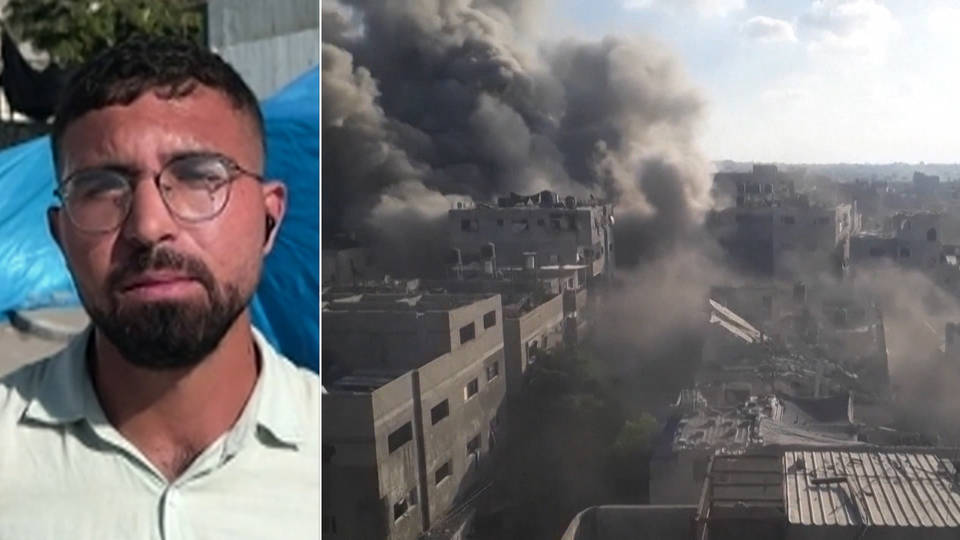
| | “The War Has Not Really Ended”: Gaza Reporter on Israeli Attacks & Reuniting with Imprisoned Brother | |
Democracy Now! 20/10/2025 - We begin today’s show in Gaza, where repeated Israeli attacks have killed nearly 100 Palestinians and wounded over 200 since a Trump-backed ceasefire deal went into effect over a week ago.
On Friday, Israeli military forces opened fire at a civilian bus, killing 11 members of a Palestinian family attempting to return home into Gaza City.
Among the Abu Shaaban family victims were seven children between the ages of 5 and 13, in an attack many have decried as the deadliest truce violation yet. Israel also bombed the headquarters of the Palestine Media Production Company in central Gaza, killing the broadcast engineer Ahmed Abu Matar.
Israel accused Hamas of killing two Israeli soldiers in Rafah, but Hamas says there are reports the soldiers died when their bulldozer ran over unexploded ordnance and that they’re not active in Rafah.
Gaza officials report Israel has breached the fragile U.S.-brokered agreement some 80 times. Despite the wave of Israeli strikes this weekend, President Trump said the ceasefire is still in place. Israel has also continued to hinder the flow of humanitarian aid into Gaza, again suspending the entrance of aid over the weekend, but Israeli officials are now saying aid distribution in Gaza and the ceasefire have resumed.
This all comes as more Palestinians recently released from Israeli prisons have described torture while in Israeli jails. In a minute, we’ll be joined by Al Jazeera reporter Ibrahim al-Khalili, who reunited with his brother Mohammed last week, after Mohammed was released following 19 months in Israeli prison. This is his report on Al Jazeera, his brother held without charge. Read more - Lire plus
International Court of Justice: As Occupying Power, Israel Must Allow U.N. Aid into Gaza
The US allowed Netanyahu to create four key loopholes in the deal to ensure Israel can continue its Gaza genocide – regardless of the 'ceasefire' agreement
At least 135 mutilated bodies of Palestinians had been held at notorious Israeli jail, say Gaza officials
“Taken Hostage by the Israeli Military”: Freed Palestinian Prisoners Describe Widespread Torture
The Forgotten Captives: Israel Still Imprisoning 9,000 Palestinians Even After Hostage Deal
What Happened in Gaza Might Be Even Worse Than We Think
Pakistani Security Forces Hunted and Killed Anti-Israel Protestors While Prime Minister Nominated Trump for Nobel Peace Prize
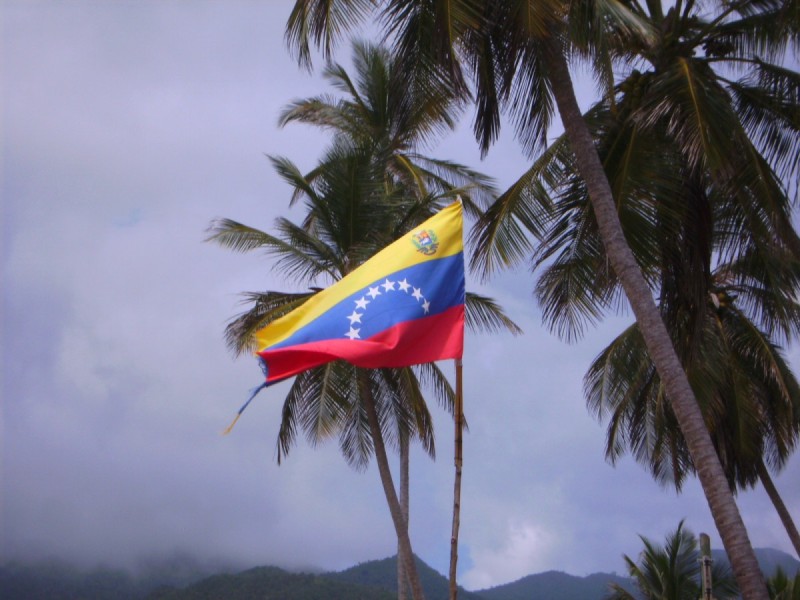
| | Is Canada complicit in Trump’s illegal war in Venezuela? | |
Canadian Dimension 09/10/2025 - In his very public campaign for a Nobel Peace Prize, US President Donald Trump has frequently boasted, not only that he has ended so many “un-endable wars,” but that he is “the first President in decades who has started no new wars.” True or false, that may be about to change.
While the United States has been bombing small boats off the coast of Venezuela under the pretext of disrupting the flow of drugs into the country by drug cartels, US Special Envoy Richard Grenell said that he was continuing to talk to the administration of Venezuelan President Nicolás Maduro. But on October 2, Trump called Grenell and ordered him to stop all diplomatic outreach to Caracas.
The end of diplomatic efforts, combined with Trump’s notification to Congress that the US is now in formal “armed conflict” with the cartels, and his insistence that Maduro is the head of the “Cartel of the Suns” (Cártel de los Soles) crime organization, seems to indicate that war and regime change in Venezuela are possibilities on the planning horizon.
The New York Times reports that the termination of diplomacy was partially motivated by the fact that “Mr. Trump has grown frustrated with Mr. Maduro’s failure to accede to American demands to give up power voluntarily.” American officials say that, as a result, “the Trump administration has drawn up multiple military plans for an escalation. Those operations could also include plans designed to force Mr. Maduro from power.”
This intensification fits within a long-standing pattern of US regime change efforts in Venezuela. Washington has for years justified its actions through the “narco-state” narrative—branding the Maduro government as a criminal cartel to rationalize economic sanctions, covert operations, and now open military aggression. These claims rest on unproven indictments and recycled intelligence from defectors and discredited sources, forming a propaganda framework that merges the “war on drugs” with renewed attempts at oil-driven intervention.
The US has already militarized the waters off the coast of Venezuela, having moved in Aegis guided-missile destroyers, a nuclear-powered fast-track submarine, P-8 spy planes and F-35 fighter jets. Those forces have already fired on and destroyed four small speed boats, killing 21 people the Trump administration claims, without evidence, were drug smugglers affiliated with the cartels the US has designated as terrorist organizations and were, therefore, “unlawful combatants.”
Recent coverage by the CBC has revealed a report by the peace research institute Project Ploughshares that strongly suggests that Canadian technology was used in the bombing of the first two boats.
The Ploughshares report, written by senior researcher Kelsey Gallagher, says that aerial footage of the first two attacks posted on Truth Social by Trump shows that “both operations relied on advanced electro-optical/infrared (EO/IR) sensor systems built in Hamilton, Ontario, by L3Harris WESCAM.” The sensors “are designed to surveil below aircraft, identify potential targets, and coordinate airstrikes with precision.”
American officials have not yet said what legal authority they had to destroy the boat and kill its crew. Designating “Tren de Aragua as a ‘foreign terrorist organization’ does not itself provide the authority for using military force,” says Brian Finucane, a former State Department lawyer and specialist in the law of war.
“The fact that US officials describe the individuals killed by the US strike as narco-terrorists does not transform them into lawful military targets,” Professor Michael Becker of Trinity College Dublin told BBC Verify. “The US is not engaged in an armed conflict with Venezuela or the Tren de Aragua criminal organization.” The attack on the boat, Becker says, “stretches the meaning of the term beyond its breaking point… There’s no serious argument that what the Trump administration has done here is legal. It basically amounts to the president of the United States handing out a licence to kill.”
And that raises the question of whether Canada is complicit in illegal military strikes because of the involvement of Canadian-supplied technology. Ploughshares points out that “Canada is legally bound to ensure that its export of military goods does not contribute to violations of international law.” Alexander Avina, associate professor of history at Arizona State University, told CBC that “International legal experts could make the argument that Canada is complicit in a way in the type of war crimes that the Trump administration has committed in the Caribbean basin.”
It is deeply concerning that Washington is contemplating war with Venezuela despite the absence of credible evidence linking the country or its leadership to the drug trade, and in clear contradiction of international law. The lack of evidence offered by the Trump administration has led many analysts to conclude that regime change is really about the desire to control Venezuela’s oil—it possesses the largest proven reserves in the world, estimated at 303 billion barrels.
Trump once told a Republican Party rally that when he left office, “Venezuela was ready to collapse. We would have taken it over; we would have gotten to all that oil…. But now we’re buying oil from Venezuela. So we’re making a dictator very rich. Can you believe this? Nobody can believe it.”
Canada must take immediate steps to ensure that its technologies and policies do not make it complicit in another unlawful US military campaign. Source
Canada flying in lockstep with the United States: Carney’s defence choices will deepen dependence and weaken sovereignty
| | ‘Kill them’: Trump says no Congress nod needed to attack ‘narco-terrorists’ | |
Al Jazeera 24/10/2025 - President Donald Trump has said United States attacks on alleged ‘narco-terrorists’ do not need a declaration of war, and while Congress will be briefed on operations, the recent spate of bombings of vessels in the Caribbean Sea and Pacific Ocean will be followed by strikes on land.
“Well, I don’t think we’re going to necessarily ask for a declaration of war,” Trump told reporters at the White House on Thursday.
“I think we’re just going to kill people that are bringing drugs into our country. OK? We’re going to kill them,” Trump said.
“Now they [drugs] are coming in by land … you know, the land is going to be next,” the US president added, echoing similar threats he has made in recent weeks to extend his administration’s attacks to the territories of countries Washington accuses of enabling drug cartels to smuggle narcotics to the US.
So far, the US military has carried out attacks on at least nine vessels in the Caribbean and Pacific since early September, killing at least 37 people in what Washington has branded a military operation against “narco-terrorists” – without providing any evidence to support its allegations of criminality.
Washington’s intensifying operation against so-called Latin American drug cartels has seen the deployment of US naval ships, F-35 fighter jets, a nuclear submarine and thousands of troops to the Caribbean region.
The US has also escalated rhetoric against the leaders of Venezuela and Colombia, accusing President Nicolas Maduro in Caracas and Gustavo Petro in Bogota of involvement in drug trafficking.
Venezuela has accused the US of launching its anti-cartel campaign as part of a plot to overthrow President Maduro, who said on Wednesday that his armed forces have 5,000 Russian surface-to-air missiles to counter any US military intervention in his country.
The AFP news agency reported that at least one US B-1B bomber flew over the Caribbean Sea off the coast of Venezuela on Wednesday, according to flight tracking data, the second such show of airpower by the US in a week.
Data from tracking website Flightradar24 showed a B-1B bomber flying towards the Venezuelan coast on Wednesday afternoon before making a U-turn and heading north, after which it disappeared from view.
Asked during a White House event about the reported B-1Bs near Venezuela, Trump responded that “it’s false”, before adding that the US is “not happy with Venezuela for a lot of reasons”.
Last week, US-based B-52 bombers circled off Venezuela’s coast for several hours, with the military describing the mission as a demonstration of Washington’s commitment “to proactively deter adversary threats, enhance crew training, and ensure the global force readiness necessary to respond to any contingency or challenge.”
‘All international law is broken’
Trump also said on Thursday that “it should now be clear to the entire world” that drug cartels – several of which the US has designated as “foreign terrorist organisations” – are the “ISIS [ISIL] of the Western Hemisphere”.
US Defense Secretary Pete Hegseth also drew comparisons between the US’s so-called “war on terror” and Trump’s growing operations against Latin American drug gangs. “Just as Al Qaeda waged war on our homeland, these cartels are waging war on our border and our people,” Hegseth said in a post on social media on Wednesday, adding, “There will be no refuge or forgiveness – only justice.”
Mexico’s President Claudia Sheinbaum and Colombia’s president are among a chorus of voices criticising Washington’s attacks on vessels in international waters – suspected of smuggling drugs – as a contravention of international law.
“Obviously, we do not agree. There are international laws governing how operations must be carried out when facing alleged illegal drug or weapons transportation in international waters. We have made this clear to the government of the United States,” Sheinbaum said on Thursday.
Colombia’s Petro, who has engaged in a public war of words with Trump since being labelled a drug trafficker “thug” by the US president, said on Thursday that the US was “carrying out extrajudicial executions” that “violate international law”.
“Amnesty International opposes missile bombings in the Caribbean. All international law is broken in the Caribbean,” Petro said in a post on social media above a news report on Trump’s attacks on vessels in the Caribbean, and which has now expanded to the Pacific. Source
Trump Approves Lethal Covert CIA Operations in Venezuela as Another Strike in the Caribbean Kills Six
The U.S. Isn’t Even Bothering With Its Usual Lies to Sell Its Regime Change War in Venezuela: The days of justifying American military intervention anywhere in the world are on their way out.
ACTION VENEZUELA: No War, No Overthrow, No Coup, No Sanctions / Ni guerra, ni derrocamiento, ni golpe, ni sanciones
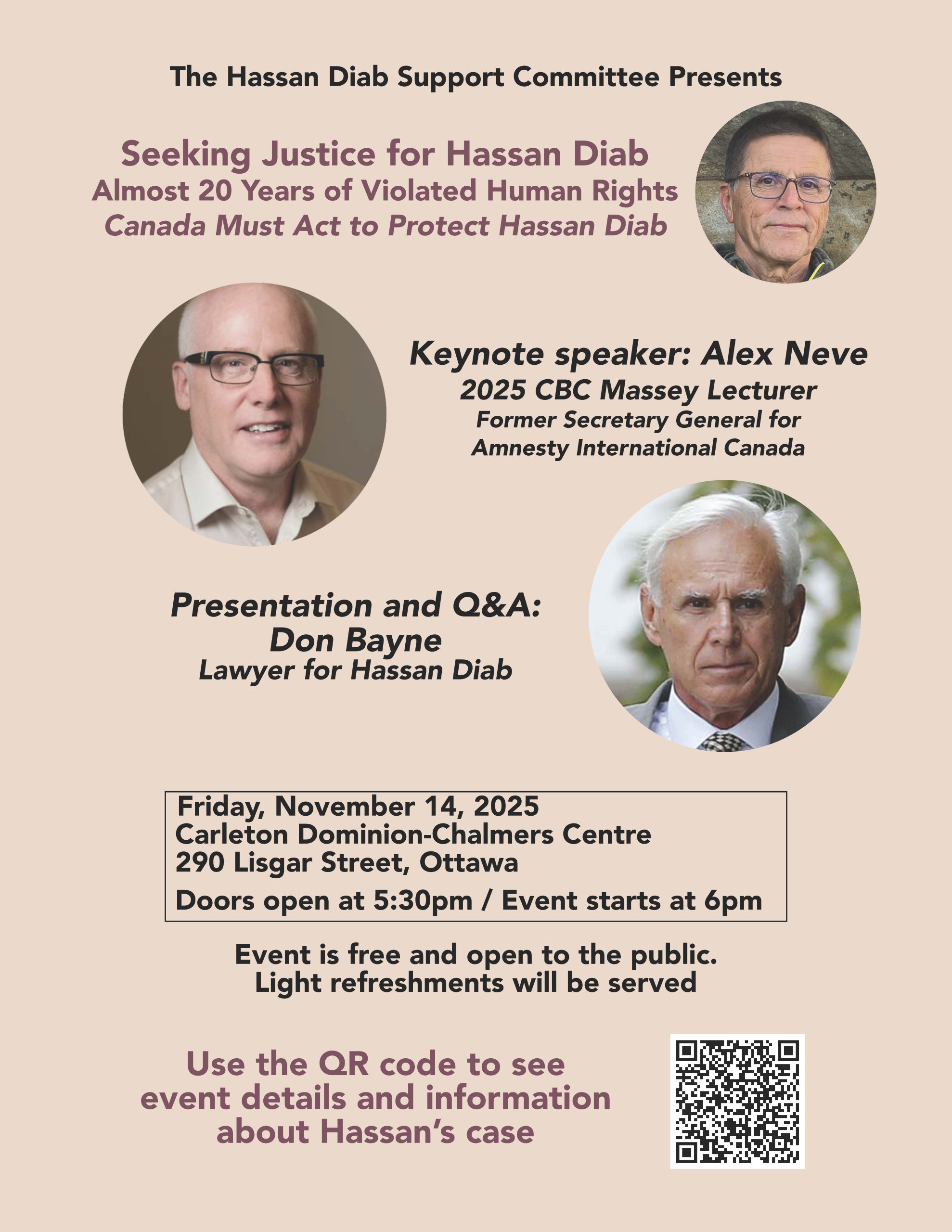
| | Seeking Justice for Hassan Diab: Event in Ottawa, November 14, 2025 | |
The Hassan Diab Support Committee 18/10/2025 -
Seeking Justice for Hassan Diab Almost 20 Years of Violated Human Rights: Canada Must Act to Protect Hassan Diab
Keynote speaker: Alex Neve, 2025 CBC Massey Lecturer, Former Secretary General for Amnesty International Canada
Presentation and Q&A: Don Bayne, Lawyer for Hassan Diab
Friday, November 14, 2025
Carleton Dominion-Chalmers Centre
290 Lisgar Street, Ottawa
Doors open at 5:30pm / Event starts at 6pm
Event is free and open to the public.
Light refreshments will be served
Background
In 2014, Hassan Diab, a Canadian academic, was extradited to France in connection with the 1980 bombing of a Paris synagogue. The extradition was based on evidence that has since been widely criticized, including questionable handwriting analysis and allegations later contradicted by solid alibi evidence and fingerprint exclusions.
After a thorough investigation, two senior French investigative judges—Jean-Marc Herbaut and Richard Foltzer—concluded there was insufficient evidence to proceed to trial. In January 2018, following 38 months of detention in France without charge, Dr. Diab was released and returned home to Canada.
However, in April 2023, shockingly a French court convicted Dr. Diab in absentia, overturning the earlier findings of the investigative judges. The trial has been widely criticized for relying on unsourced ‘intelligence’, disregarding exculpatory evidence, and including testimony that has been challenged as unreliable. Legal experts and human rights advocates have raised serious concerns about the fairness of the proceedings.
After nearly two decades of legal and personal hardship, Dr. Diab continues to face uncertainty. The Canadian government has not provided a clear commitment to protect him from a second extradition request. This has left Dr. Diab and his family in a state of prolonged distress and insecurity.
It is time for the Canadian government to take a firm stand. Canada must affirm that it will not authorize a second extradition in this case and uphold its commitment to justice and human rights. Source
ACTION Hassan Diab is innocent. Join the postcard campaign to urge Prime Minister Carney to right an historical wrong. To get copies for you and your friends, contact diabsupport@gmail.com
| | CSIS failed to disclose use of new 'intrusive' technology to minister and court: watchdog | The report comes as the government proposes granting CSIS sweeping new warrantless powers to obtain information | |
The National Post 15/10/2025 - Canada’s spy agency possibly broke the law when it failed to disclose its use of an “intrusive” new technology to capture sensitive information to both the government and a judge, according to an intelligence watchdog.
In a newly released review, the National Security and Intelligence Review Agency (NSIRA) said that the Canadian Security Intelligence Service’s (CSIS) handling of the technology and capture of sensitive data “raises concerns about how well prepared it is for the deployment of other novel technologies.”
The report comes as the government proposes granting CSIS and other law enforcement powers sweeping new warrantless powers to obtain information via its Strong Borders Bill (C-2).
The heavily redacted review was released to National Post in response to an access to information request. The study began as an assessment of how CSIS collected, handled, stored and retained sensitive information obtained through a specific court-sanctioned (warranted) operation.
But during its review, NSIRA found that CSIS had deployed a new technical capability to collect the information under the warrant. NSIRA said CSIS twice failed to tell the watchdog about the novel tool beforehand.
Technical capabilities are CSIS’s secret tools and techniques used to collect intelligence, whether they require a warrant or not. All details about the nature and use of the technical capability studied in the review are redacted, although NSIRA notes that it introduced both a “significant expansion of collection capabilities” and “operational risks.”
An unredacted portion of the glossary refers to an IMSI catcher, which is used “for intercepting mobile phone traffic and obtaining location data of mobile phone users,” though there are no further unredacted mentions of that tool.
The report notes that CSIS began thinking about the new technology in 2018 but first deployed it later as part of a warranted operation, meaning the operation had been approved by a Federal Court judge. But, NSIRA noted, CSIS didn’t tell the judge (or the public safety minister) about the new technology it would be deploying as part of the warrant.
CSIS also failed to advise the deputy minister of public safety canada (PSC) that it had acquired the new capability, possibly contravening both the CSIS Act and a 2019 ministerial directive, it noted. “The Court was not informed of the planned use of (redacted) new intrusive technique, to execute these powers. CSIS should have advised the Court in a timely manner,” read the report.
“PSC disclosed that it was unaware of CSIS’s (technology) and that the technology seemed both novel and potentially controversial” until a September 2022 meeting, the watchdog added. “CSIS only informed PSC about its new capability after using it, thus creating a fait accompli.”
At the time, CSIS said it considered the new technology as an extension of existing capability and not a novel tool that needed to be disclosed, the review noted. But Public Safety Canada, NSIRA and even an internal CSIS review committee disagreed. [...]
According to a memo advising the minister of the technology, CSIS has deployed the new tool a number of times in both warranted and non-warranted operations since 2022 and “further operational uses are being contemplated,” NSIRA wrote.
NSIRA also studied CSIS’s handling of sensitive information collected via the new capabilities. The agency found that CSIS retained information without clearly articulating under which legal authority and that the teams tasked with ensuring data is managed lawfully “face challenges.” Read more - Lire plus
| | RCMP admits they “overstepped authority” at Fairy Creek, but will anything change? | |
BCCLA 17/10/2025 - The RCMP’s controversial and heavily-criticized Community Response Unit (CRU-BC) – formerly known as the Community-Industry Response Group (“C-IRG”) – was recently back in the headlines as it will be policing opposition to BC’s new and widely opposed resource and infrastructure “fast-tracking” laws.
An internal RCMP background document obtained by The Breach reveals that CRU-BC is participating in two secretive provincial committees, the Critical Incident Secretariat and the Civil Disobedience/Public Order, each focused on “coordination, planning, and resource readiness” across BC.
This is disturbing news given that the RCMP’s oversight body, the Civilian Review and Complaints Commission (CRCC), has yet to complete its systemic investigation of the activities and operations of CRU in BC. This investigation stems from hundreds of formal complaints about CRU’s excessive use of force, abuse of authority, and racism during its enforcement of injunction orders obtained by private corporations to protect contested pipeline projects and old-growth logging operations, most notably at Fairy Creek.
Why I submitted my own complaint against the RCMP
Back in 2023, I submitted a complaint to CRCC about the actions of (then) C-IRG in the Caycuse watershed near Fairy Creek. My visit to the Caycuse Valley in June 2021, followed an open letter we sent to RCMP and the province raising concerns about C-IRG’s conduct, particularly that it had established an exclusion zone blocking public and media access and an emergency route of the Ditidaht First Nation. My complaint focused on an interaction between me and two officers, Staff Sergeant Brenton Brady and Corporal Andrew Blakeman, at this exclusion zone.
When I was at camp with Indigenous land defenders, I heard stories about people being stopped by the RCMP. So, when I encountered the RCMP checkpoint for myself I felt compelled to confront the officers and challenge the exclusion zone, as I was sure they did not have the legal authority to block access to the road or the area based on the terms of the injunction order.
RCMP admits they “overstepped authority” at Fairy Creek
Almost two years after I submitted my complaint, I received a final report detailing the findings of the investigation from Inspector Terry Christiansen, Conduct Authority “E” Division RCMP. Buried deep within the report, Inspector Christiansen agreed with the investigator’s finding that the RCMP overstepped its authority, stating that
“police erred in establishing an exclusion zone that was beyond the scope of the authority granted by the injunction order, and which was not aligned with the expectations of the courts.”
Inspector Christiansen further agreed that my rights were violated
“as well as the rights of the protesters, journalists and other members of the public, including any members of the Pacheedaht and Ditidaht First Nations who were restricted from accessing larger areas of the Fairy Creek watershed than may have otherwise been acceptable to the CRCC and the courts.”
This admission is an unusual win – very rarely does RCMP come clean about their wrongdoing. Not only does this confirm that C-IRG exceeded the scope of an injunction obtained by private company, Teal Jones, but it shows that they blocked the road to conceal active logging operations from the public. This confirmed my suspicions that the RCMP were not merely acting in service of the injunction, but in support of private interests.
As for Sgt. Brady and Cpl. Blakeman, they managed to evade consequences because it was determined that they were simply following their orders. Instead, I received an apology on behalf of the RCMP for any “distress or discomfort” I may have experienced. An individual apology does not provide any true accountability for the actions of C-IRG, nor inspire confidence that C-IRG — a unit already heavily-criticized for violent and unlawful conduct — will not “overstep their authority” again.
Not good enough
Although BCCLA welcomes the RCMP’s findings as it relates to the unlawful exclusion zone, we were left dismayed by many of Inspector Christiansen’s comments in the Final Report regarding my “suspicious demeanor” during the interaction with the Officers. People who understand the law and their rights should not be treated as if they are a threat.
Likewise, we are dissatisfied by the finding that the Officers did not violate my privacy rights when they recorded my license plate with the intent to find out who they were “dealing with”. We maintain that the Officers did not have a justifiable reason for recording my personal information. As a result, I requested CRCC to conduct a review of RCMP’s handling of my complaint.
What’s going on at the CRCC? No Decision Makers, No Accountability
Although I received confirmation from the CRCC that it accepted my Request for Review, CRCC does not currently have a Chairperson – the position has been vacant since at least January 6, 2025. When I emailed CRCC to inquire about how that might affect the review process, the CRCC Program Officer responded saying:
Please also note that the Commission does not currently have a Chairperson or Member appointed by the Governor in Council. Decisions about complaints reviewed by the Commission are made by the Chairperson or Commission Members. While Commission staff has reviewed the materials relevant to your complaint and ensured that all relevant evidence has been obtained, the Commission will not be able to issue a report about your complaint until a decision maker is appointed.
This signals that the federal government is not prioritizing even the appearance of police accountability for Canada’s national police service.
In the wake of the federal and BC and Ontario’s misguided decisions to legislate “fast-tracked” resource extraction and development, seemingly at all costs, the news of CRU-BC’s role is extra chilling. With the unacceptable gap in accountability at CRCC, no decision has been issued with respect to the systemic investigation into C-IRG(CRU), yet the government continues to utilize and invest in the controversial unit as a key tool in supressing freedom of expression and Indigenous resistance.
Recent history has shown that Indigenous-led land and water defence, has been met with particularly heavy-handed, state-sanctioned militarized violence under the guise of what is purportedly in Canada’s “national interest” but is in effect ongoing colonization.
BCCLA will remain vigilant and continue to support those who are exercising their inherent and Charter-protected rights on the frontlines of land defence, at the necessary intersection of human rights and environmental protection. Source
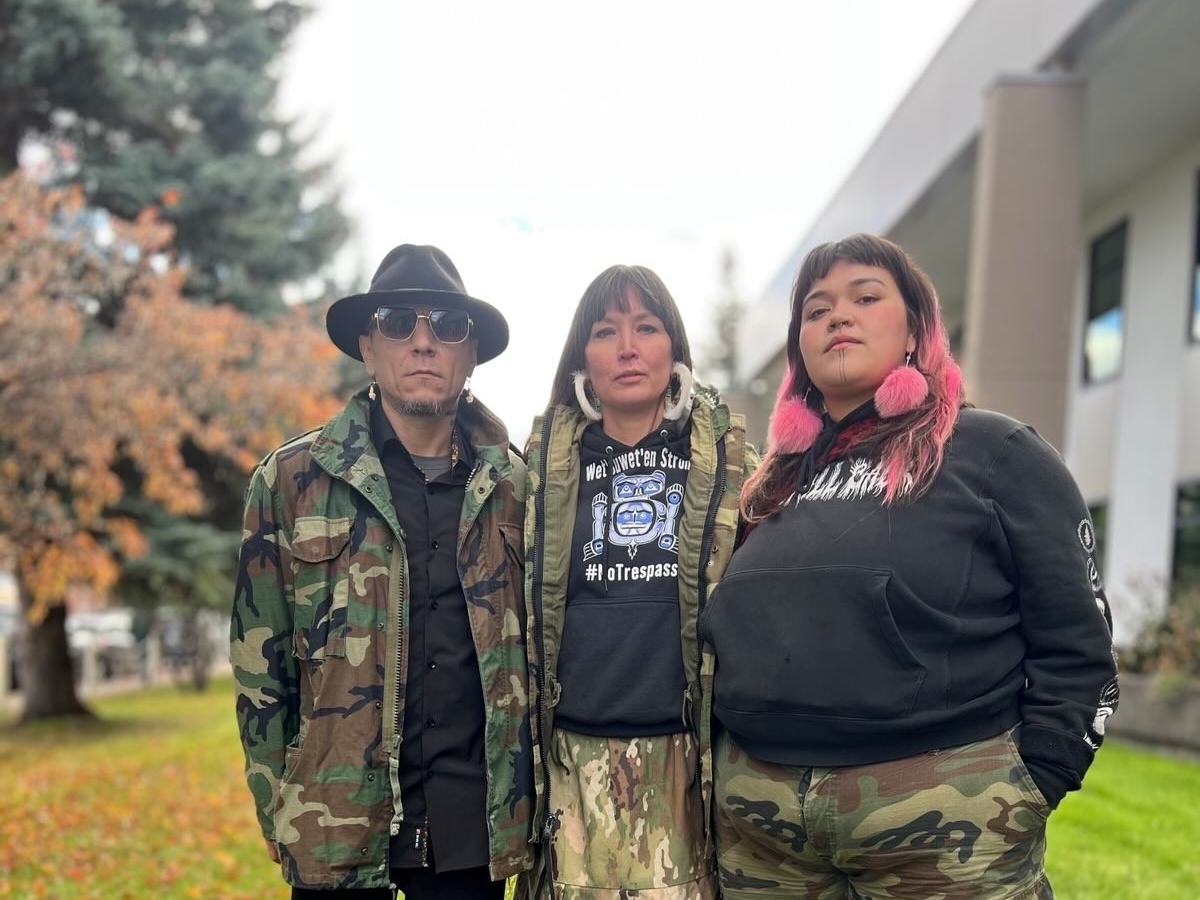
| | Sentencing of land defenders sends ‘chilling message’ about Indigenous rights in Canada | |
Amnesty International 17/10/2025 - On Friday, a British Columbia judge handed down sentences for three Indigenous land defenders who were arrested in November 2021 during a heavily militarized Royal Canadian Mounted Police (RCMP) raid on the unceded ancestral territory of the Wet’suwet’en Nation. Sleydo’ (Molly Wickham), a Wing Chief (Cas Yikh or Grizzly Bear House) of the Gidimt’en Clan of the Wet’suwet’en Nation, Shaylynn Sampson, a Gitxsan with Wet’suwet’en family connections, and Corey “Jayohcee” Jocko, a Kanien’kehá:ka (Mohawk) from Akwesasne, were later charged and convicted for allegedly breaching a B.C. court injunction that banned land defence actions near the construction of the Coastal GasLink (CGL) liquefied natural gas pipeline.
Each of the land defenders’ sentences include jail time: 17 days in jail for Sleydo’, 12 for Jocko, and nine for Sampson. However, the judge suspended the implementation of those sentences and ordered the defenders to complete 150 hours of community service rather than serve time behind bars. In explaining his decision to suspend the defenders’ jail sentences, the judge said he took into account the Province of British Columbia’s and the Government of Canada’s disrespect for the rights and interests of the Wet’suwet’en Nation.
“While we are relieved that Sleydo’, Shaylynn and Corey were allowed to walk free, the application of jail sentences – suspended or not – sends a chilling message to land defenders who act to protect Indigenous rights and territory in the face of destructive mega-projects,” said Ana Piquer, Americas Director at Amnesty International. “These courageous defenders should never have been arrested in the first place for exercising their rights and defending the natural environment we all depend on. Canada must stop criminalizing Wet’suwet’en and other Indigenous defenders amid a global climate emergency.”
Amnesty International has documented the human rights violations experienced by Wet’suwet’en land defenders and their allies, including Sleydo’, Sampson and Jocko, since 2020. Amnesty International’s research has found that the injunction order that led to their arrest unduly restricts the human rights of the land defenders and the Indigenous rights of the Wet’suwet’en Nation. The arrests, prosecutions and sentencing of the land defenders therefore constitute serious violations of their rights.
Land defenders’ rights infringed during heavily militarized police raid on Wet’suwet’en territory
In February 2025, the B.C. Supreme Court found that Sleydo’, Sampson and Jocko’s rights had been infringed during their arrests. In response to an abuse-of-process claim filed by the defenders’ legal team, the Court ruled that the conduct, including anti-Indigenous racist statements, of some RCMP members during the November 2021 raid violated the Canadian Charter of Rights and Freedoms. However, the judge declined to stay all charges against the defenders.
“In our law, the land defenders who were on trial would have been rewarded for their actions, but under Canadian law, they face punishment,” said Wet’suwet’en Hereditary Chief Na’Moks. “The land defenders did exactly what they were supposed to do to uphold ‘Anuk niwh’it’en [Wet’suwet’en law]. They followed our law and our way of life. Our law stands for “land, air, water.” Their law stands for punishment. We are slowly getting them to recognize our process, and while it’s taken us years to get to this point, this is a huge shift. Do I applaud their law? Absolutely not. But we are making a difference.”
“Sleydo’, Shaylynn and Corey have been convicted for peacefully protecting Wet’suwet’en territory against the construction of the Coastal GasLink pipeline – something they should never have been prosecuted for in the first place,” said Ketty Nivyabandi, Secretary General of Amnesty International Canada’s English-speaking section. “Even though the Court recognized that they were subjected to racist and violent treatment during their arrests, the three defenders find themselves being punished. Unfortunately, the systemic racism that led to their arrests remains unaddressed. The governments of B.C. and Canada have denied the Wet’suwet’en their right to free, prior, and informed consent, violated their freedom of movement across their ancestral lands, and threatened their traditional way of life. These ongoing injustices are painful reminders of Canada’s enduring legacy of colonial violence against Indigenous Peoples.” Read more - Lire plus
| | The Danger in Designations: U.S. Terrorism Designation Lists in Gaza and Beyond | |
American University National Security Law Brief 2025 - What is “terrorism”? The term has surged in U.S. political discourse following Hamas’s attack on Israel on October 7, 2023, Israel’s subsequent onslaught of Gaza, and escalating violence in the region involving Iran and similarly aligned groups like Hezbollah and the Houthis. U.S. politicians and thought leaders have characterized U.S. support for Israel’s bombardment as a fight against “terror,” described the violence conducted by Palestinians and their backers as “terrorism,” and accused pro-Palestinian U.S. protestors of “supporting terrorism.”
More than mere political rhetoric, “terrorism” is a term that carries big legal consequences. This is in large part because the U.S. government holds enormous power to officially designate individuals, groups, and governments as terrorists or supporters thereof and enact severe penalties on them as a result. This Article examines the primary mechanisms by which the executive branch compiles lists of terrorists and discusses the legal consequences of these designations, including economic sanctions, immigration prohibitions, criminal consequences, and private litigation.
Further, this Article explores the subjective factors undergirding the very concept of “terrorism” in American law and policy, including U.S. geopolitical aspirations and race. Finally, this Article utilizes the ongoing crisis in Gaza as a case study to demonstrate how the practical impacts of terrorist designation lists suppress speech and dissent, prolong suffering, and prevent peaceful conflict resolution. Consequently, this Article proposes abandoning list-based counterterrorism altogether. [...]
SOLUTION: ELIMINATE THE TERRORISM DESIGNATION LISTS
In the context of the crisis in Gaza, U.S. terrorist designations have created an untenably lopsided reality. There are no terrorism designations stopping U.S. actors from engaging in diplomatic discussions or conflict resolution efforts with Israeli officials, including traveling to Israel to meet them, inviting them to the United States for events and Congressional addresses, or otherwise engaging in dialogue. By contrast, civil society peacebuilders must tiptoe around layers of sanctions to engage in any contact with Hamas, Hezbollah, or other players related to the underlying conflict.
There are no hurdles in place that prevent Americans from sending money to Israel, whether for humanitarian purposes, to help paramilitary units with tactical equipment used in combat, or even to intentionally support violent settler activities. Conversely, U.S. persons hoping to make a donations to help alleviate the creeping famine in Gaza must first navigate byzantine sanctions, not to mention risk criminal prosecution or a private lawsuit for material support of terrorism if their donation is processed or received by a listed person or entity, or an entity that may be controlled by a listed entity. U.S. individuals and organizations engaging in activism to express their political opinions about Israel’s actions in Gaza and the United States’ role are met with completely different consequences depending on the opinions they espouse. For example, those encouraging the United States to stop supporting Israel’s military campaign could face investigation or prosecution for materially supporting Hamas and, as a result, have their assets frozen or lose immigration benefits if they are foreign nationals. On the other hand, those rallying in support of Israel face none of these same risks. In addition to the death and destruction wrought by the U.S.-backed Israeli bombs themselves, Palestinians, Muslims, and Arabs are disproportionately suffering the spiraling consequences of the terrorist designation lists.
Dissolution of the terrorism designation lists is the surest way to reduce these inequities and mitigate these harms. This strategy would require policymakers to eliminate the authorities that establish the FTO, SDGT, SST, and immigration terrorist designation lists. Additionally, policymakers would need to repeal the E.O.s and statutes that depend on or reference them, including the criminalization of “material support” to FTOs, the “terrorism bars” to immigration, the ATA’s secondary liability provision, and the Foreign Sovereign Immunity Act’s exemption for SSTs.
Some have argued that the inherent flaws in terrorist designations and their harmful consequences can be mitigated by simply reforming the lists. Proposed reforms include sunsetting FTO designations and expanding judicial review of such designations; legislatively protecting humanitarian and peacebuilding activities from material support prosecutions; creating additional, lower-level lists of state terrorism sponsors to supplement the main SST list; and expanding the terrorism designation lists to include more white nationalists.
However, no reform can repair the fundamental flaw in the very premise of designation lists. The futility of a list-based approach to counterterrorism has been widely recognized by both those who believe the tools should be stronger and those who believe they are already too stringent. Indeed, so long as the U.S. government holds discretionary power to make lists of terrorists that are used for punitive purposes, it will continue to produce these same results. There is no procedural reform or substantive expansion that can cure these defects.
Even if judicial review were expanded to improve oversight, courts are fundamentally deferential to the executive branch on national security matters and have declined to use the full scope of their already limited review power regarding designations. Thus, precedent has shown there is little reason to believe that increasing judicial review authority would lead to vigorous judicial challenges to designation decisions. Unless courts can force the executive to include all entities that meet relevant “terrorist” definitions on terrorist designation lists, this review would still be inherently limited to cases in which the executive actually chose to make a designation in the first place.
Codified carve-outs to the prohibition on material support are not enough to truly safeguard equal access to humanitarian and peacemaking efforts in conflict zones. Disputes over what constitutes legitimate, good faith humanitarian and peacebuilding work as opposed to undercover financial support for designated groups are sure to follow. To further complicate matters, financial institutions have already demonstrated a reticence to engage in areas where FTOs operate, even if a particular transaction is expressly permitted. As long as the fundamental sanction regimes and criminalization exist, no exceptions can ensure unobstructed avenues to unfettered humanitarian aid and peacebuilding.
Some argue that expanding the terrorist designation lists to include more eligible countries and more white nationalist groups could have an important symbolic impact toward improving the lists. Proponents also argue that this change would demonstrate that the United States government is serious about addressing political violence whether the perpetrators are allies, adversaries, foreign, domestic, Muslim, or Christian. Though it is an admirable goal to eradicate the racialized and politicized impacts of these designations, giving the federal government authority to call more entities “terrorists” cannot solve this problem. After all, looking more broadly at all U.S. counterterrorism authorities, there is nothing currently stopping U.S. officials from applying rhetoric and resources equally to all acts of political violence, regardless of the perpetrators’ race, religion, or nationality. Thus, there is no reason to believe a lack of authority is the problem, or that the U.S. government would apply additional designation authority more evenly. Until the political forces underlying these designations change, including the U.S. goal of maintaining global primacy and the implicit pull of white supremacy, discretionary “terrorist” lists will continue to reflect those same dynamics. Further, even if the executive were to designate all entities that objectively meet the applicable criteria to the terrorist designation lists, it is no justice at all to subject more people to the same overly broad effects of designation discussed throughout this Article, including potential economic ruin, criminal prosecution, and erosion of First Amendment protections for those not involved in violent activity yet loosely associated with designees.
It is not so difficult to imagine a world without these lists; in fact, it was not so long ago that most of them did not even exist. Further, there is little to no evidence to suggest that they have been effective in achieving their stated goals, or that they are critical security tools that must be preserved. In a 2020 report, the Combating Terrorism Center at West Point evaluated the results of FTO and SDGT designations and called their efficacy “unclear at best.” Former Director of National Intelligence James Clapper admitted, “I can’t think of a case where somehow [listing an entity] facilitated our ability to track them better.” Read more - Lire plus
ACTION Canada: Abolish rights-violating terrorist entities list!
UK removes Hay'at Tahrir al-Sham from terrorist organisation list enabling closer engagement with the new Syrian government
Amnesty International: Pakistan: Inclusion of Baloch activists on terrorist watchlist an affront to human rights
Amnesty International: Russia: Move to label Navalny’s Anti-Corruption Foundation a “terrorist organization” puts thousands in danger
| | FIDH publishes a report on the repression of the solidarity movement with Palestine |
-
The International Federation for Human Rights (FIDH) is publishing a new report on violations of fundamental freedoms committed in the context of the repression of the solidarity movement with Palestine.
- Conducted between October 2023 and September 2025, this research covers four countries: France, Germany, the United Kingdom, and the United States. It highlights the growing criminalisation of expressions of solidarity with Palestine, in a context of polarisation and shrinking civic space.
- This report is an urgent call to defend – rather than repress – the rights of those who speak out for peace and justice in Palestine and elsewhere around the world.
Paris, 14 October 2025. Behind the fight against hate, a trend of repressing dissenting voices is emerging. Titled Solidarity as a Crime: Voices for Palestine Under Fire, the report documents how across all the countries studied, the dynamics observed since 7 October 2023 have intensified pre-existing structural trends: the continued shrinking of civic space, the weakening of democratic safeguards, the normalisation of Islamophobia, and the institutionalisation of racial profiling.
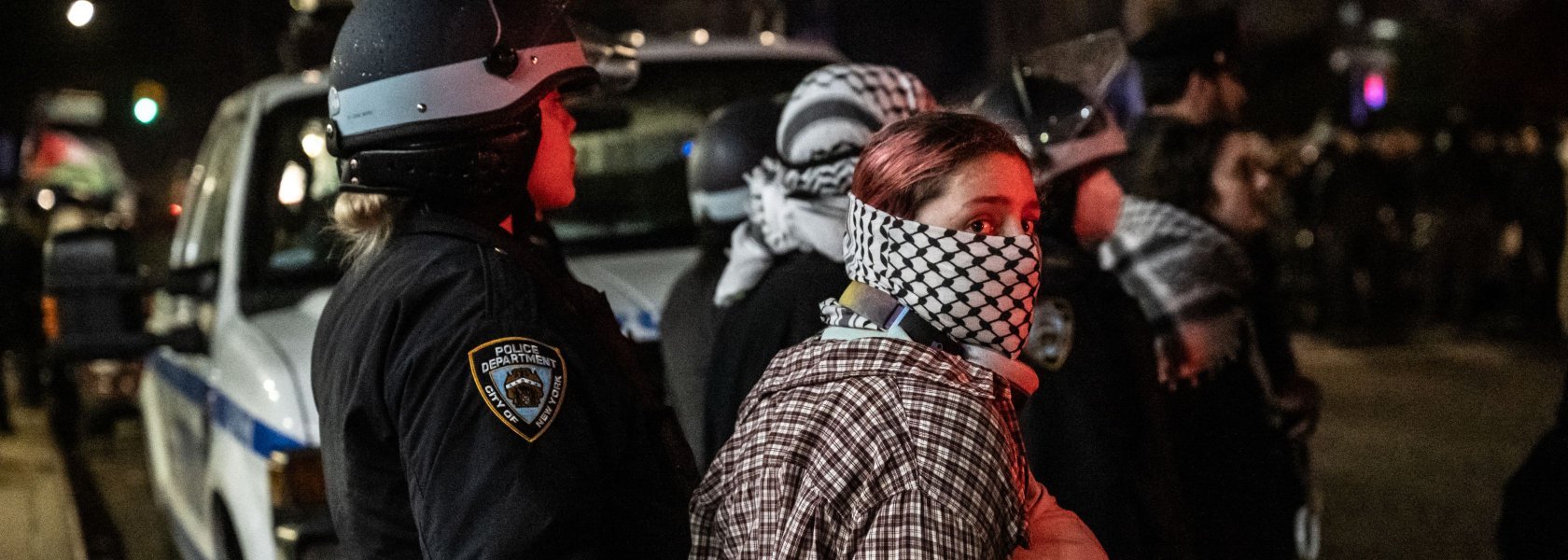
Under the guise of maintaining public order, fighting antisemitism, or protecting national security, authorities have resorted to exceptional measures such as bans on demonstrations, arbitrary arrests, repression within academic institutions, media censorship, and legislative threats. These measures often directly violate international human rights obligations. They have created a widespread chilling effect on freedom of expression and public debate, further undermining democratic participation and the voices of minority groups.
"This trend," according to Yosra Frawers, Head of the Maghreb and Middle East Desk at FIDH, "reflects a worrying shift towards the normalisation of exceptional measures in dealing with dissenting voices."
"States must guarantee everyone the right to express themselves and to mobilise peacefully, on all causes. The defence of human rights ought not to be constrained by political sensibilities," said Alice Mogwe, President of FIDH.
FIDH stresses that the growing conflation of antisemitism with legitimate criticism of Israeli state policies is one of the key drivers of this repression. By equating denunciations of violations of international law with hate speech, several governments are delegitimising critical voices and fostering a climate of fear. In the countries examined, activists, journalists, academics, and elected officials have been targeted for peacefully expressing support for Palestinian rights.
A call for state accountability
FIDH reminds states that the fight against racism and antisemitism is a fundamental obligation under international law, but that it must not be misused to justify arbitrary restrictions on freedoms. The organisation calls on the relevant states to ensure the effective protection of civil liberties, to prevent any political instrumentalisation of anti-hate measures, and to guarantee the safety of human rights defenders.
This report is based on a rigorous analysis of open sources, reports from international bodies, and direct testimonies gathered from those affected. It was produced in collaboration with several FIDH member and partner organisations, including the Ligue des droits de l’Homme (France), the Center for Constitutional Rights (United States), and the Committee for the Administration of Justice (Northern Ireland). Read more - Lire plus
King’s College London Withdraws Pro-Palestine Student’s Visa, Risking His Torture in Egypt, After Pressure From Israel Lobby Group
Human rights official urges UK to review laws after Palestine Action placard arrests
UK’s Palestine Action group wins legal bid to challenge ban
28 plead not guilty in court over alleged support of Palestine Action; judges face trying to find time and courtrooms to hold 400 trials of those accused of taking part in protests
U.S. Sanctions on Palestinian Human Rights Organizations Erodes International Law, Civil Society Warns
| | First “Antifa” Protesters Charged With Terrorism for Constitutionally Protected Activity | |
The Intercept 17/10/2025 - Federal prosecutors are making good on the Trump administration’s threat to treat antifa-related activity as terrorism.
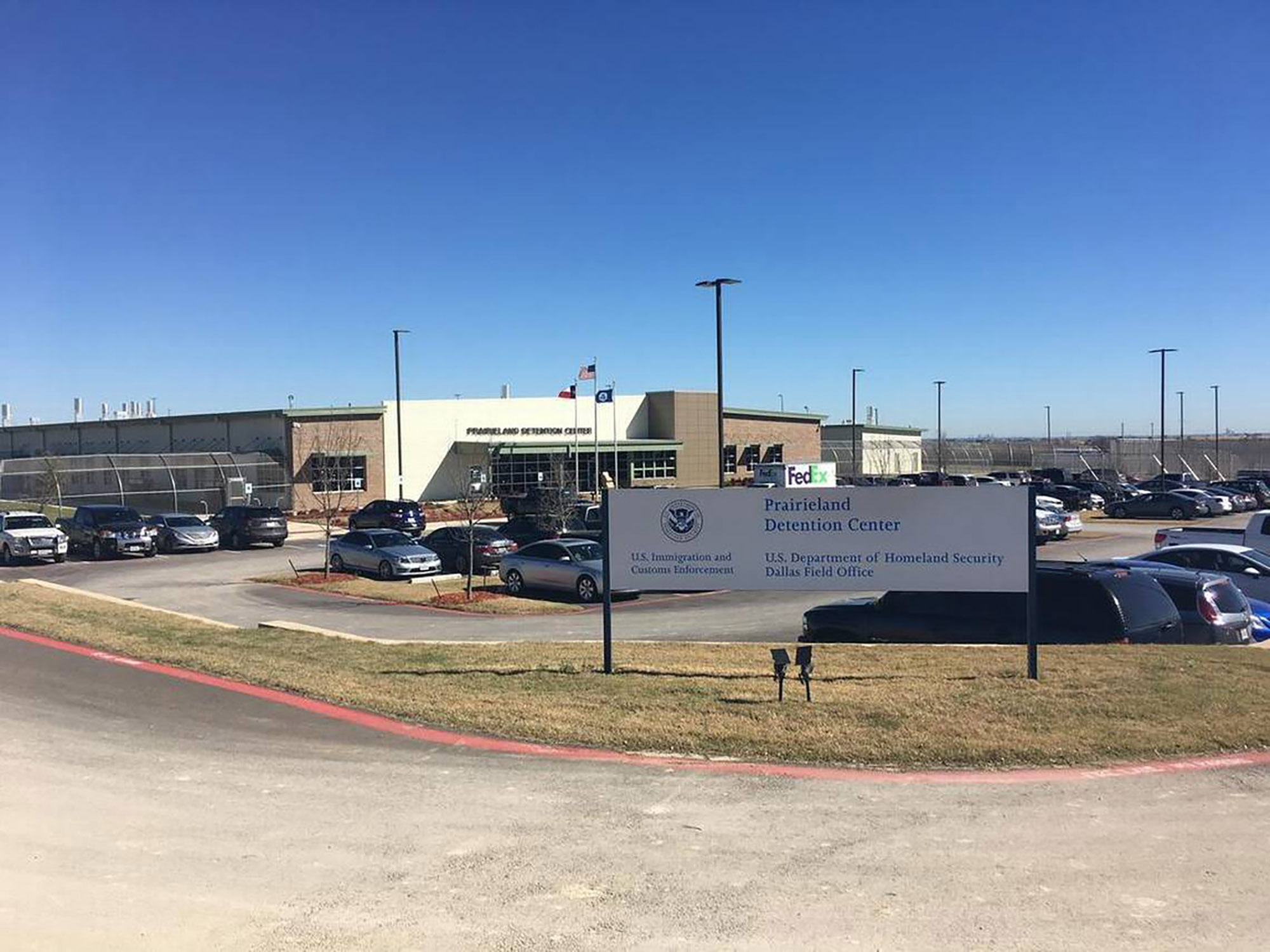
On Thursday afternoon, prosecutors in Texas announced that terrorism charges had been filed against two people for alleged involvement in a shooting during a July 4 protest against the U.S. Immigration and Customs Enforcement Prairieland Detention Center in Alvarado, Texas, in which a local police officer was injured.
This is the first time federal terrorism charges have been deployed in association with the “antifa” label, just a month after President Donald Trump announced that he was designating antifa a “major terrorist organization” — a designation that does not exist under law for domestic groups.
The Prairieland case is setting a chilling example for how the government will use so-called counterterrorism efforts to crush anti-fascist dissent. Neither of the people named in the indictment are accused of shooting the gun. Instead, Zachary Evetts and Autumn Hill are accused of “providing material support to terrorists” and having “aided and abetted” the alleged attempted murder of government officers.
The federal indictment accuses Hill, who prosecutors dead-named, and Evetts as being part of an “antifa cell.” The terrorism charges are an escalation of government efforts to criminalize protest movements by attempting to attribute collective guilt.
With tactics like using RICO laws built to combat organized crime, the government has made a habit of mass-prosecuting activists for individual, individuated crimes alleged to have taken place in the context of legal protest activity — even when there is no direct link between those charged and the alleged crimes. Though such charges frequently don’t stick, the lengthy prosecutions hamper protest movements and chill dissent.
“The framing of the case by the federal government should worry all of us,” a support committee for arrested protesters said in a statement on its website. “The glaring inconsistencies in the official narrative and the alarmist accusations are a clear attempt to bolster the Trump administration’s claims that the United States is on the verge of chaos, and to excuse a dramatic increase in militarized police action.”
“Investigation by Proclamation”
On the night of July 4, protesters from Dallas-Fort Worth held a noise demonstration and set off fireworks outside the ICE facility. Federal officers called local police to the scene. There was an exchange of gunfire between an Alvarado police officer and one other person, in which the officer was injured. The cop was taken to a hospital and released within a few hours.
In a lengthy preliminary federal hearing in September, an FBI official told the court that he could not say for certain whether or not the police officer shot first.
Nine people were arrested that night in the area, and numerous others were arrested in the days that followed, including during aggressive multiagency raids on homes and community spaces. Seventeen people in all now face a mixture of state and federal charges relating to the event, including state terrorism charges.
Neither of the two people now charged with federal material support for terrorism were arrested at the detention center. Members of a support committee for friends and loved ones of the arrestees fear that further federal terrorism and other hefty charges are in the pipeline. Read more - Lire plus
VIDEO: FBI Agents Visit Anti-ICE Protester
Inside the War on Antifa: Feds target "affinity" groups, informant networks, the Tides Foundation, and more.
You Can’t Designate ‘Antifa.’ Banks and Platforms Will Act Like You Did Anyway.
Francis Dupuis-Déri : Halloween : déguiserez-vous vos enfants en antifas?
European far right follows Trump in calling for antifa to be declared terrorists
| | Fighting For LGBTQ Rights is Terrorism Now | |
Taylor Lorenz's Free Speech Friday 17/10/2025 - Recently, Trump signed a little-noticed national security directive identifying a slew of views like “anti-Christian” and “anti-American” beliefs as indicators of "radical left violence" and terrorism. The directive is called NSPM-7.
NSPM-7carries serious implications for freedom of speech and opens the door to dangerous levels of censorship. In NSPM-7, Trump directs the Justice Department, the FBI, and other national security agencies to fight his version of political violence, retooling a network of Joint Terrorism Task Forces to focus on “leftist” political violence in America.
Ken Klippenstein has been covering all this. He joined me today to break down NSPM-7 and what it means for speech in America. Under the new directive, anyone expressing views that could be construed as any of the following, could be classified by the government as a terrorist:
1. anti-Americanism,
2. anti-capitalism,
3. anti-Christianity,
4. support for the overthrow of the United States Government,
5. extremism on migration,
6. extremism on race,
7. extremism on gender
8. hostility towards those who hold traditional American views on family,
9. hostility towards those who hold traditional American views on religion, and
10. hostility towards those who hold traditional American views on morality. Source
Leak: Feds Think Protests Hide Terrorism: “No Kings” protest eyed amid NSPM-7 domestic terror panic
"No Kings" Protest (and Arrests) Have Begun: NSPM-7 is already being used to detain protesters over speech
"No Kings" Is About More Than Trump: Americans are rejecting the national security state
As 'No Kings' protests denounce Trump, surveillance worries emerge
| | Trump “National Police Force” Built on ICE Partnerships With Local Agencies Like… Wildlife Commissions? | |
The Intercept 20/10/2025 - In addition to deploying tens of thousands of federal agents from across the federal government to carry out his deportation agenda, President Donald Trump is rapidly expanding the network of state and local police going after immigrants through partnerships with U.S. Immigrations and Customs Enforcement.
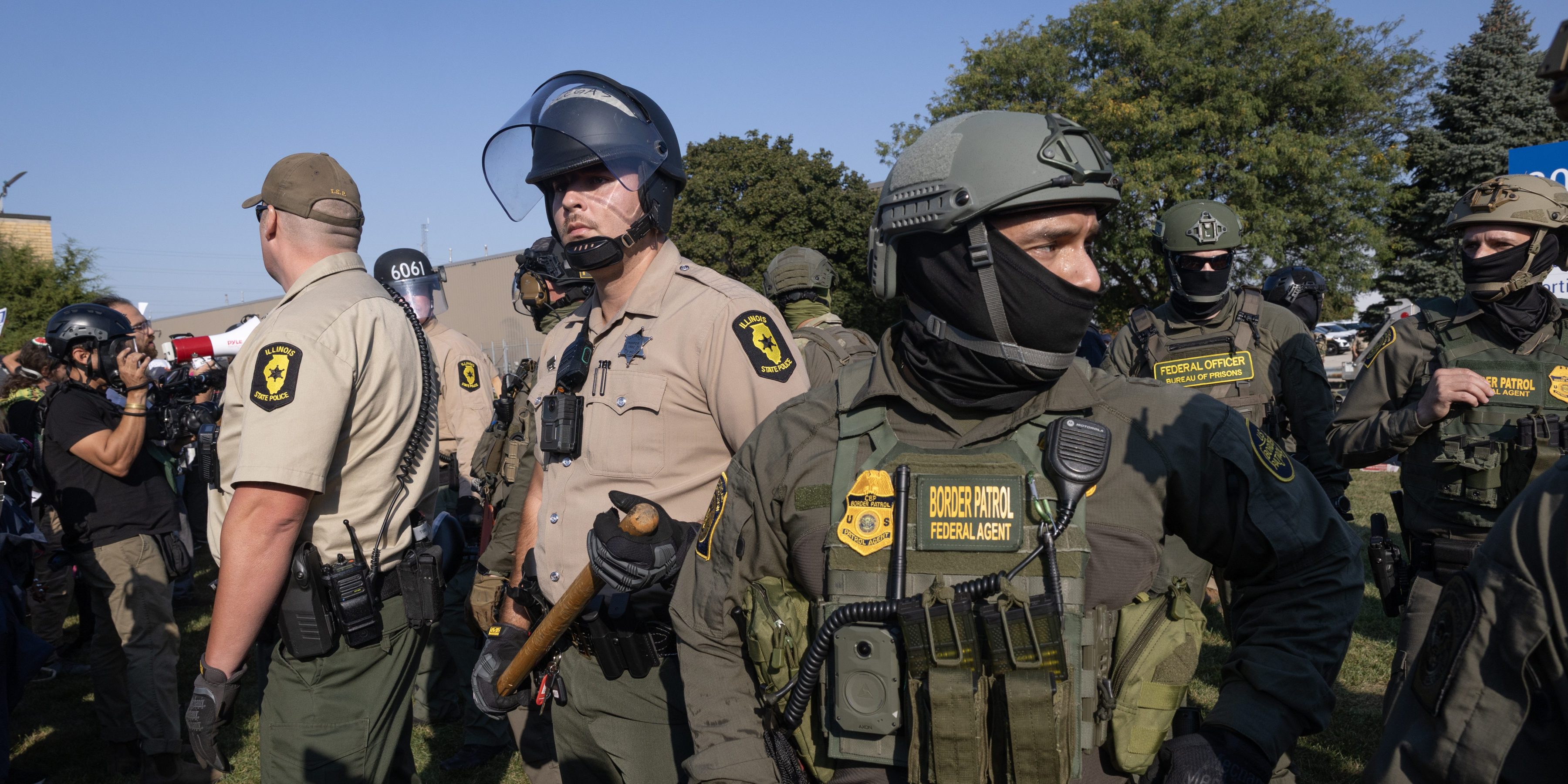
The aggressive, nationwide law enforcement regime, all taking place under orders from the White House, amounts to what scholars, attorneys, and now a federal judge say are steps toward the creation of a national police force. And the ranks of ICE partners won’t be filled with just local cops: In at least three states, the administration is joining forces with agencies typically tasked with environmental and marine protection, lottery control, and gaming to target immigrants.
“This is quite a common tactic,” said Charis Kubrin, a professor at the University of California, Irvine who studies immigration and crime. ”There’s this idea that we’re going to get local, not just police officers, but nurses and teachers and other public officials involved in enforcing immigration laws.”
It started largely with immigration, using federal agents and a little-remarked-upon program known as 287(g) to funnel funding to local law enforcement for partnerships. The widespread ICE incursions and local police partnerships, however, have also been justified by the myth of an immigrant crime wave.
“There is this moral panic now about migrant crime. This is rhetoric that is at odds generally with what we know about immigration and crime,” Kubrin said. “The research is pretty unequivocal that these policies have no impact on public safety whatsoever.”
“We didn’t really need this increased cooperation,” she said. “The foundational assumption of this widespread immigrant criminality upon which all of these policies and practices are based, is patently not true.”
Recruiting and paying local police to do immigration work, however, is just one part of the bigger project of creating such a national police force, said the American Civil Liberties Union’s Naureen Shah. And critics are worried that with Trump’s willingness to leverage state power for his own ends, such a security force could become a tool for carrying out the president’s political agenda.
Shah, who leads the ACLU’s policy and advocacy work on immigration, said, “Their larger project is to blur the lines between different law enforcement agencies in the military and create one national police force that is essentially under the command of the president.” Read more - Lire plus
“This Is Ethnic Cleansing”: Civil Rights Icon Dolores Huerta Decries Trump’s Targeting of Immigrants
Appeals court allows Trump's deployment of National Guard in Portland
“We Are Under Attack”: Rep. Delia Ramirez on Immigration Crackdown in Chicago, Gov’t Shutdown & More
ICE raids are coming to San Francisco
Google Calls ICE Agents a Vulnerable Group, Removes ICE-Spotting App ‘Red Dot’
| | OTHER NEWS - AUTRES NOUVELLES | | ICLMG ACTIONS DE LA CSILC | | |
UPDATED: The government has now introduced Bill C-12, the Strengthening Canada’s Immigration System and Borders Act. This new bill simply copies over C-2's anti-migrant and anti-refugee provisions. At the same time, Bill C-2 - with its privacy-violating measures absent in C-12 - will continue through Parliament.
Please send a quick email to your MP, the Public Safety Minister, the Justice Minister, the Immigration Minister and the Prime Minister urging them to withdraw these dangerous bills. Thank you!
| |
Canada: Abolish rights-violating terrorist entities list!
| | |
On October 15, 2024, the Canadian government placed the Samidoun Palestinian Prisoner Solidarity Network on Canada’s terrorist entities list. While ostensibly a tool to protect the safety and security of people in Canada and internationally, the list is an arbitrary political tool that undermines freedom of association, of expression and due process in the courts. Its effectiveness as a national security tool has never been demonstrated in a manner that justifies its use.
Due to these deep flaws, and more, the ICLMG has consistently called for the list to be abolished since the Canadian coalition’s founding in 2002. Please join us in urging the Canadian government to abolish the rights-violating terrorist entities list once and for all. Thank you!
| | CSIS isn't above the law! | | |
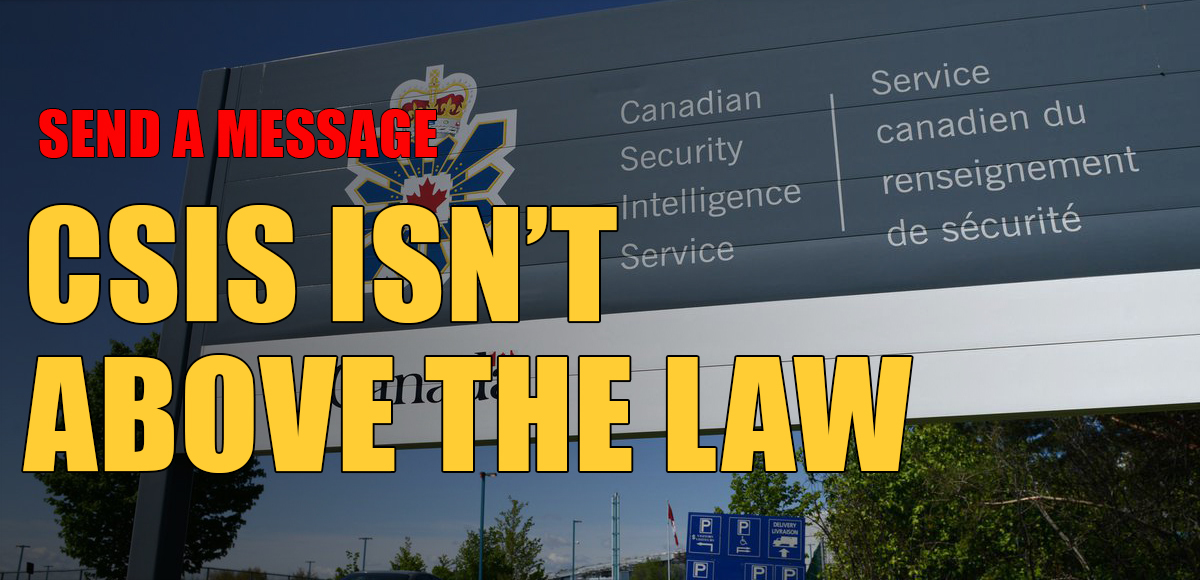
In recent years, at least three court decisions revealed the Canadian Security and Intelligence Service (CSIS) engaged in potentially illegal activities and lied to the courts. This is utterly unacceptable, especially given that this is not the first time these serious problems have been raised. CSIS cannot be allowed to act as though they are above the law.
Send a message to the Public Safety Minister demanding that he take immediate action to put an end to this abuse of power and hold those CSIS officers involved accountable. Your message will also be sent to your MP and to the Minister of Justice.
| | Canada must protect Hassan Diab! | | Canada must repatriate all Canadians detained in NE Syria now! | Every day the government fails to bring these Canadians home, it places their lives at risk from disease, malnutrition, violence, and ongoing military conflicts. United Nations officials have even found that the conditions faced by Canadians in prison are akin to torture. Please click below to urge the federal government to repatriate all Canadians illegally and arbitrarily detained in northeast Syria without delay. | | 22 years of fighting deportation to torture: Justice for Mohamed Harkat Now! | | Reform Canada's extradition law now! | |
Canada’s extradition system is broken. One leading legal expert calls it “the least fair law in Canada.” It has led to grave harms and rights violations, as we’ve seen in the case of Canadian citizen Dr Hassan Diab. It needs to be reformed now.
Click below to send a message to urge the Prime Minister, the Minister of Justice and your MP to reform the extradition system before it makes more victims. Thank you!
Version française: Le Canada doit réformer la loi sur l'extradition!
| | Canada must protect encryption! | |
Canada, with other G7 nations, continues to push to weaken our access to strong, reliable encryption, after decades of being supportive of strong encryption. We need encryption to safeguard our data, our online transactions, our communications, and to protect the lives of journalists and human rights activists.
Please send a message to the Prime Minister of Canada, the Minister of Public Safety, as well as your Member of Parliament, to urge them to reverse course and once again commit to protecting encryption.
Regardez la vidéo avec les sous-titres en français + Agir
| | Protect our rights from facial recognition! | Facial recognition surveillance is invasive and inaccurate. This unregulated tech poses a threat to the fundamental rights of people across Canada. Federal intelligence agencies refuse to disclose whether they use facial recognition technology. The RCMP has admitted (after lying about it) to using facial recognition for 18 years without regulation, let alone a public debate regarding whether it should have been allowed in the first place. Send a message to the Prime Minister and the Public Safety Minister calling for a ban now. | | What we’ve been up to from January to May 2025 and our plan for the rest of the year | |
ICLMG 30/05/2025 - Thanks to the support of our members and donors, here is what we were able to work on so far in 2025 :
- Open letter to the new Prime Minister and government
- 2025 federal election and National Security Info Card
- C-20: First independent watchdog for the CBSA
- C-27: Digital Charter Implementation Act, 2022
- Online Harms
- Foreign Interference
- Combatting Racism & Islamophobia
- Canada’s terrorist entities list
- Palestine and the right to dissent
- Impacts of Counter terrorism financing
- Hassan Diab & Extradition
- Civil Society Coalition on Human Rights and Counter-terrorism
- And more!
What we have planned for the rest of 2025!
We have our work cut out for us! In response to threats of tariffs and annexation from the Trump administration, the Canadian government has problematically committed to the rapid expansion of border security, surveillance and information sharing with the US, and expanded the use of rights violating anti-terrorism tools. We also cannot ignore the US crackdown on protesters and migrants under the guise of fighting terrorism and protecting national security. We need to ensure that Canada disentangles itself from the US national security regime, resists US pressure to expand surveillance and counter-terror powers and tools at the expense of our civil liberties, and increases protections for privacy, dissent, migrants and asylum seekers.
We will continue our work on these issues and much more:
- Protecting our privacy from government surveillance, including facial recognition, and from attempts to weaken encryption, along with advocating for good privacy law reform
- Addressing the lack of regulation on the use of AI in national security
- Advocating for restrictions on Canadian information sharing with the US, including the application of the US No Fly List in Canada
- Campaigning for the repeal of secretive and rights violating national security lists, such as the Terrorist Entities List and the Canadian No Fly List
- Halting the rapid expansion of new security measures at the border and continuing to push back against the false narrative depicting migrants and refugees as security risks, and advocating for rights protection and accountability for border agencies, including by monitoring the creation of a new CBSA and RCMP watchdog agency
- Advocating with lawmakers and officials to protect civil liberties from the overall negative impact of national security
- Countering the escalating repression of free expression, dissent and protest in the name of “countering terrorism,” including the crackdown on protests in support of Palestinian human rights and against the genocide in Gaza. This includes countering new “bubble zone” laws at the municipal and federal levels
- Fighting for Justice for Mohamed Harkat, an end to security certificates, and addressing problems in security inadmissibility
- Fighting for Justice for Hassan Diab and reforming Canada's extradition law
- Addressing the impacts of measures to counter terrorism financing on civil society groups, including the CRA’s targeting of Muslim-led charities and restrictions and criminalization of the provision of international assistance and humanitarian aid
- Calling for the return of Canadian citizens and the non-Canadian mothers of Canadian children, who remain indefinitely detained in Syrian camps
- Pushing for restrictions on the implementation of new foreign interference laws
- Keeping you and our member organizations informed via the News Digest
- And much more! Read more - Lire plus
Share on Facebook + Instagram + Bluesky + Twitter
| | Les opinions exprimées ne reflètent pas nécessairement les positions de la CSILC - The views expressed do not necessarily reflect the positions of ICLMG. | | |
THANK YOU
to our amazing supporters!
We would like to thank all our member organizations, and the hundreds of people who have supported us over the years, including on Patreon! As a reward, we are listing below our patrons who give $10 or more per month (and wanted to be listed) directly in the News Digest. Without all of you, our work wouldn't be possible!
James Deutsch
Bill Ewanick
Kevin Malseed
Brian Murphy
Colin Stuart
Bob Thomson
James Turk
John & Rosemary Williams
Jo Wood
The late Bob Stevenson
Nous tenons à remercier nos organisations membres ainsi que les centaines de personnes qui ont soutenu notre travail à travers les années, y compris sur Patreon! En récompense, nous nommons ci-dessus nos mécènes qui donnent 10$ ou plus par mois et voulaient être mentionné.es directement dans la Revue de l'actualité. Sans vous tous et toutes, notre travail ne serait pas possible!
Merci!
| | | | |