News From the Field (SPRING 2022)
National child welfare policy, practice and research
|
|
As spring begins, we prepare for the academic year to end, and for our cohort of interdisciplinary students to head off to their summer placements, doctoral research and practice in the field after graduation. We know that they are well equipped with the tools of interdisciplinary practice after a year of challenging assumptions about the child welfare system and expanding their perspective to incorporate disciplines beyond their own. The complexity of the child welfare system has always mandated an interdisciplinary response and our team’s year-long inquiry into proposals for abolition and reform highlighted the necessity of this approach to achieving systemic change for families and children. It has also required us to reconsider whose voices are heard in these discussions of reform and to think beyond our silos of practice and profession.
Over the past decade, interdisciplinary practice and research in the child welfare system has increasingly included the perspective of individuals with lived experience. Parents impacted by the foster care system share their experience fighting for their children to be returned to their care and trying to navigate a complicated and often alienating process. Youth who have lived in foster care provide perspective on aging out of the system worried that they will be homeless and unable to support themselves financially. Many state and county child welfare agencies have parent and youth advisory boards comprised of individuals with lived experience, a promising practice for reform if the advisory boards are provided with meaningful participation, access to leadership and compensation for their time and efforts.
Every year, a group of advocates from Youth Fostering Change, a youth advocacy program of the Juvenile Law Center, present to my seminar class of law students and social work students enrolled in the Interdisciplinary Child Advocacy Clinic. The youth advocates discuss their local and national reform efforts and share their experience appearing in Family Court feeling without a voice or a say in the decisions that directly impact their life. The class is by far the most engaging and successful in teaching students how to be client-centered and trauma-informed advocates for children and families. Each semester, students comment on the transformational impact of learning from their clients. This spring, I am hopeful that we will continue to incorporate and elevate the voices and perspective of individuals with lived experience in our interdisciplinary research, practice and policy. |
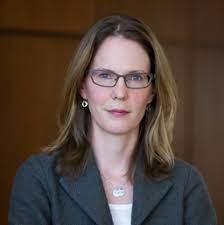
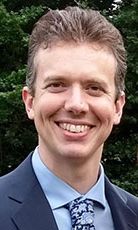
Kara R. Finck
Practice Professor of Law
Director, Interdisciplinary Child Advocacy Clinic
University of Pennsylvania Law School
|
FIELD CENTER FACULTY DIRECTORS OFFER TRAINING TO MSW STUDENTS |
In 2014, The School of Social Policy and Practice launched a new specialization in Child Well-Being and Child Welfare (CW2). One of eleven Certificate Programs & Specializations offered at SP2, the CW2 specialization uniquely trains social work graduate students to work with vulnerable children and youth. Enrolled students may be in either the Clinical or Macro Master of Social Work programs, but all students gain a broad understanding of practice methods and the continuum of services and policies that are intended to protect children and preserve families.
CW2 was developed and is directed by Dr. Johanna Greeson, Managing Faculty Director at the Field Center. Although select Macro students in the CW2 specialization are eligible to complete internships with the Field Center, all students receive cross-disciplinary training in the diverse fields represented by Field Center Faculty Directors. During the Spring seminar course taken in the final year of the MSW program, Field Center faculty offer guest lectures and classroom instruction in their respective disciplines of law, medicine, nursing, education, psychology, and social work. This innovative approach aims to develop highly skilled, trauma-informed child welfare social work practitioners and leaders who are committed to practice, management, and advocacy in a range of children’s services.
To learn more about the Child Well-Being and Child Welfare Specialization (CW2), click here.
PHD STUDENT JOHN GYOURKO WINS 2022 HAL LEVIN AWARD
|
Field Center student John Gyourko has been selected as SP2’s 2022 Hal Levin award recipient. The Hal Levin Award is presented to a meritorious doctoral student who is continuing the process of completing coursework. Dr. Herman (Hal) Levin was a professor in the School of Social Work and this prestigious award is conferred by nomination and voting of the SP2 faculty.
Nominated by his PhD Advisor, Field Center Managing Faculty Director Dr. Johanna Greeson, John has co-authored 4 articles in peer-reviewed journals and 3 conference presentations in his time at SP2 thus far. His work at the Field Center has involved pro bono data analysis for Think of Us, a nationally recognized advocacy organization for children and youth in foster care, producing state-specific data reports intended to inform state child welfare agencies’ allocations of federal relief funds during the pandemic. Alongside his advisor and other scholars, John worked to plan, convene, and co-host a virtual summit titled Bringing Science to Bear on Child Welfare Reforms in October 2021 and is currently working to produce a summary report detailing key concepts emerging from the summit.
In addition to his academic contributions, last year John served on the University of Pennsylvania's Social Responsibility Advisory Committee and this year is serving in SP2’s student government as the PhD program representative. John is an exemplary doctoral student, and the Field Center congratulates him on his receipt of this award! |
|
Managing Faculty Director Wins Research Challenge Grant with CAFO Research Affiliate Program |
Dr. Greeson, who was previously appointed as a CAFO Research Affiliate, will work with her assigned non-profit to develop a research and evaluation strategy, creatively bridging the gap between research and frontline services. The Field Center looks forward to supporting this global work!
|
Our vital work depends on you
|
To assure the well-being of abused and neglected children and ensure that children are loved, nurtured, and families have access to the resources they need to thrive, please consider a donation to the Field Center for Children’s Policy, Practice & Research. All donations will be generously matched by the Joseph and Marie Field Foundation. 100% of your donation supports our critical work.
To learn more about how you can support our work, please contact our Director of Development Hannah Rawdin at hrawdin@upenn.edu or 267-432-9938.
For more information click
|
Stay Connected and Stay Informed
Stay up to date with the latest in child welfare by following the Field Center on social media. Click the buttons below to follow The Field Center:
|
Upcoming Child Welfare Conferences
2022 National Title IV-E Roundtable for Child Welfare Training and Education
May 17-19, 2022
Bowling Green, KY
QPI Virtual Conference: Building the Movement Together: Excellent Parenting for Every Child, Every Day
May 24-26, 2022
Virtual
29th APSAC Colloquium "Celebrating Resilience"
June 6-10, 2022
New Orleans, LA
National Adoption Conference
June 15-17, 2022
Indianapolis, IN
Family Focused Treatment Association (FFTA) 36th Annual Conference on Treatment Family Care
July 17-20, 2022
New Orleans, LA
National Association of Council for Children 45th National Child Welfare Law Conference
Aug 22-24, 2022
Baltimore, MD
Sept 21-23, 2022
Virtual
|
|
JUST RECOVERY FROM COVID: FOCUS ON YOUTH & YOUNG ADULTS
Perspectives From Young Adults with Foster Care Experience
|
|
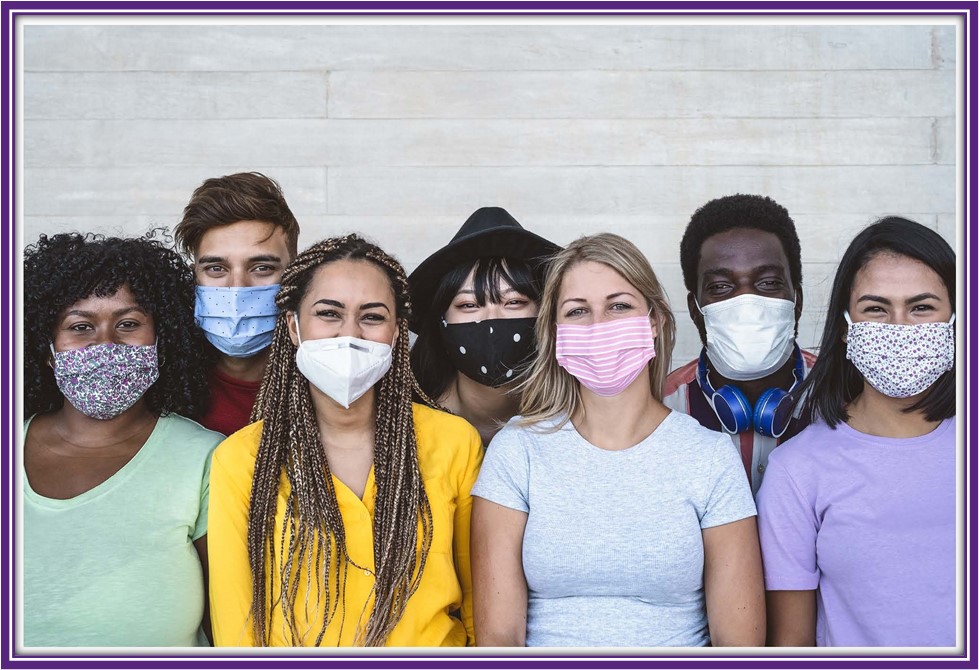
As the COVID pandemic enters its third year of impact, donors and foundation funders may face uncertainty about how to ensure a more just recovery from COVID-19. The 2022 High Impact Giving Guide from the Center for High Impact Philanthropy (CHIP) is designed to do just that – help grantmakers turn good intentions into high social impact.
Following the methodology of prior work, the expertise of individuals with lived experience dealing with a particular circumstance is recognized as critical to informing a philanthropic strategy. Building on the concept of centering the insights, data and experiences of individuals who will become the beneficiaries of future programming, CHIP partnered with The Field Center for Children’s Policy, Practice & Research to learn about the mental health needs of older youth with foster care experience during the pandemic.
The resulting qualitative study involved 26 semi-structured interviews of young adults currently in or aged out of foster care. Four domains emerged as critical to their overall well-being: Interpersonal Relationships, Impact of the Pandemic, Managing Mental Health, and Systemic Interactions. The voices and experiences of the young adults with foster care experience that the Field Center team spoke with elevate and reinforce the importance of four key strategies that are critical to a just recovery for youth:
- Support mental health and well-being, given the increase in mental health challenges due to COVID-19
- Help youth and young adults make needed connections to survive and thrive
- Meet basic needs for the many who are facing extreme hardship due to the pandemic
- Create paths to sustainable livelihoods so that young people have the resources to care for themselves
Learn more about the opportunities for intervention and read the full post on the CHIP website here. |
|
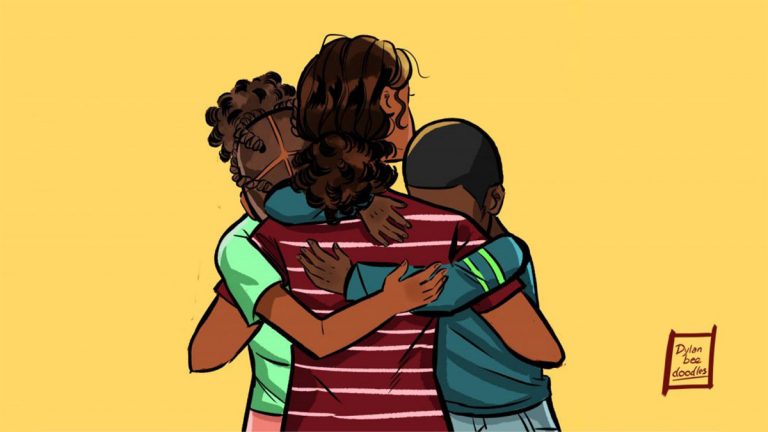
BRACKEEN V. HOLLAND HEADS TO THE SUPREME COURT - WILL ICWA’s CONSTITUTIONALITY BE UPHELD?
By Nimo Ali, Field Center Lerner Fellow in Child Welfare Policy
|
|
- Whether the 5th Circuit erred by invalidating key ICWA provisions as violating the Tenth Amendment, specifically, whether ICWA’s standards of implementation – providing ‘active efforts” to reunify native children to the Native parent, family, or Tribe and the placement-preference and recordkeeping provisions – are constitutional.
- Whether the 5th Circuit erred by affirming the merits of the individual plaintiffs’ claim that ICWA’s placement preferences for “other Indian families” and for “Indian foster home[s],” violate the Equal Protection clause.
- Whether the 5th Circuit erred by affirming the district court’s judgment invalidating two of ICWA’s placement preferences – “other Indian families,” and “Indian foster home[s]” – as failing to satisfy the requirement for legislation to “rationally relate” to a legitimate governmental interest (by an equally divided court).
What does this actually mean for Native children and families? It depends. One reading of the case is as a challenge to the non-preferential treatment of non-native families who want to foster and adopt native children…
Click here to read the full article.
|
|
Through the Multidisciplinary Student Training Institute, The Field Center provides research, internship and field placement opportunities for selected students across multiple disciplines. Students receive training, career mentorship, and hands-on work experience within the field of child welfare. Meet our Spring 2022 volunteer intern here: |
|
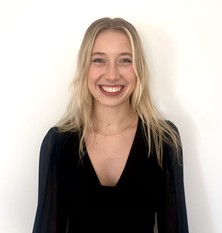
Isabelle Seymour joined the Field Center for the Spring of 2022 as part of her independent study on the Child Welfare System with Field Center Faculty Director and Nursing Professor Dr. Cynthia Connolly. Isabelle is a junior in the traditional BSN program at the University of Pennsylvania School of Nursing pursuing minors in both Global Health and Anthropology. She has been dedicating most of her time to the Foster Care to College Initiative, gathering resources for high school students with foster care experience interested in going to college. Read Isabelle’s full bio on our website here. |
|
FIELD CENTER RECENT PUBLICATIONS, PRESENTATIONS & GRANTS |
|
Faculty Director Dr. Cindy Christian was this year’s Otto Faust, MD Visiting Professor at Albany Medical College in Albany, NY. She also presented at Pediatric Grand Rounds at the Capital District Pediatric Society.
Program Manager Sarah Wasch presented a training on College Access and Success for Youth in Foster Care for the Delaware Valley Adoption Council.
Field Center experts recently published the following:
Rothschild, C.B., Chaiyachati, B.H., Finck, K.R., Atwood, M. A., Leuthner, S.R., & Christian, C.W. (2022). A Venn diagram of vulnerability: The convergence of pediatric palliative care and child maltreatment a narrative review, and a focus on communication. Child Abuse & Neglect, 128, 105605.
Greeson, J.K., Gyourko, J.R., Jaffee, S.R., & Wasch, S. (2022). The experiences of older youth in and aged out of foster care during the COVID-19 pandemic: Material and financial well-being by foster care status, gender identity, sexual orientation, ethnicity, and race. American Journal of Orthopsychiatry.
Garcia, A.R., Watts, C.L., Carlough, S.L., Christian, C.W., Finck, K.R., Jaffee, S.R., Greeson, J.K.P., & Connolly, C. (in press). A template for implementing interprofessional education in child advocacy. Journal of Social Work Education.
Recent external grants received by faculty directors:
Faculty Director Caroline Watts is the P.I. for the William Penn Foundation Family Recovery Grant. The title of the project is “Bridging Gaps and Building Capacity: Student and Educator Supports for School Reopening in Learning Network 2.” It is a two-year grant to fund continuation of PennGSE-Netter Center summer programming for over 200 elementary students in West/Southwest Philly for summers 2022 and 2023.
|
|
The Field Center in the Media |
|
 |
Pennsylvania lawmakers are trying to limit damage awards to kids injured in the child welfare system
Billy Penn
Advisory Board Member Nadeem Bezar provided testimony to the PA House Legislation Committee that newly-proposed legislation capping damage awards for child welfare-involved children further harms child victims.
|
|
|
|
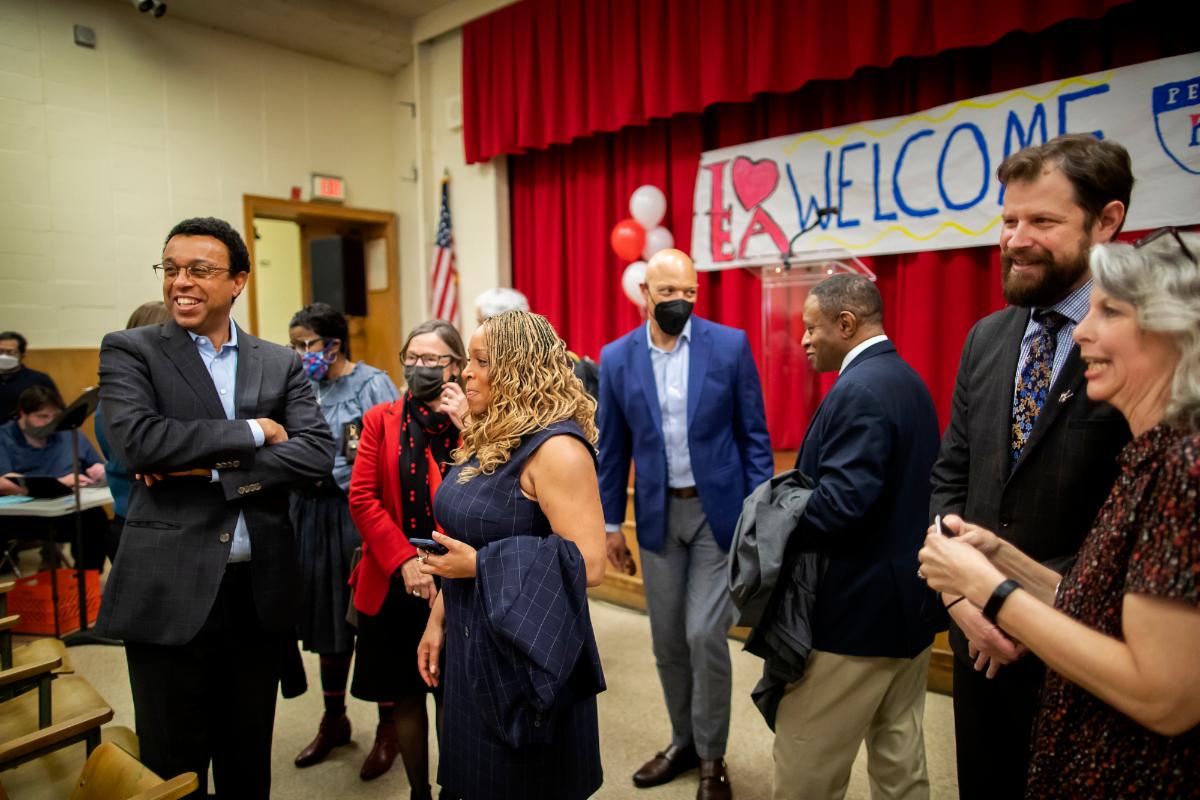
Penn and Lea School Celebrate Signing of 4 Million Dollar Commitment
University of Pennsylvania Almanac
Faculty Director Caroline Watts and colleagues at the Penn Graduate School of Education formalized a new agreement providing $4.1 million in support to a local K-8 school in West Philadelphia.
|
|
|
|
Protecting Children, Preserving Dreams |
|
The Field Center is a collaboration of |
|
The Field Center is a member of |
|
3815 Walnut Street
Philadelphia, PA 19104
(215) 573 9779
|
|
|
|
|
|
|